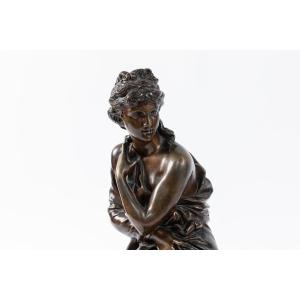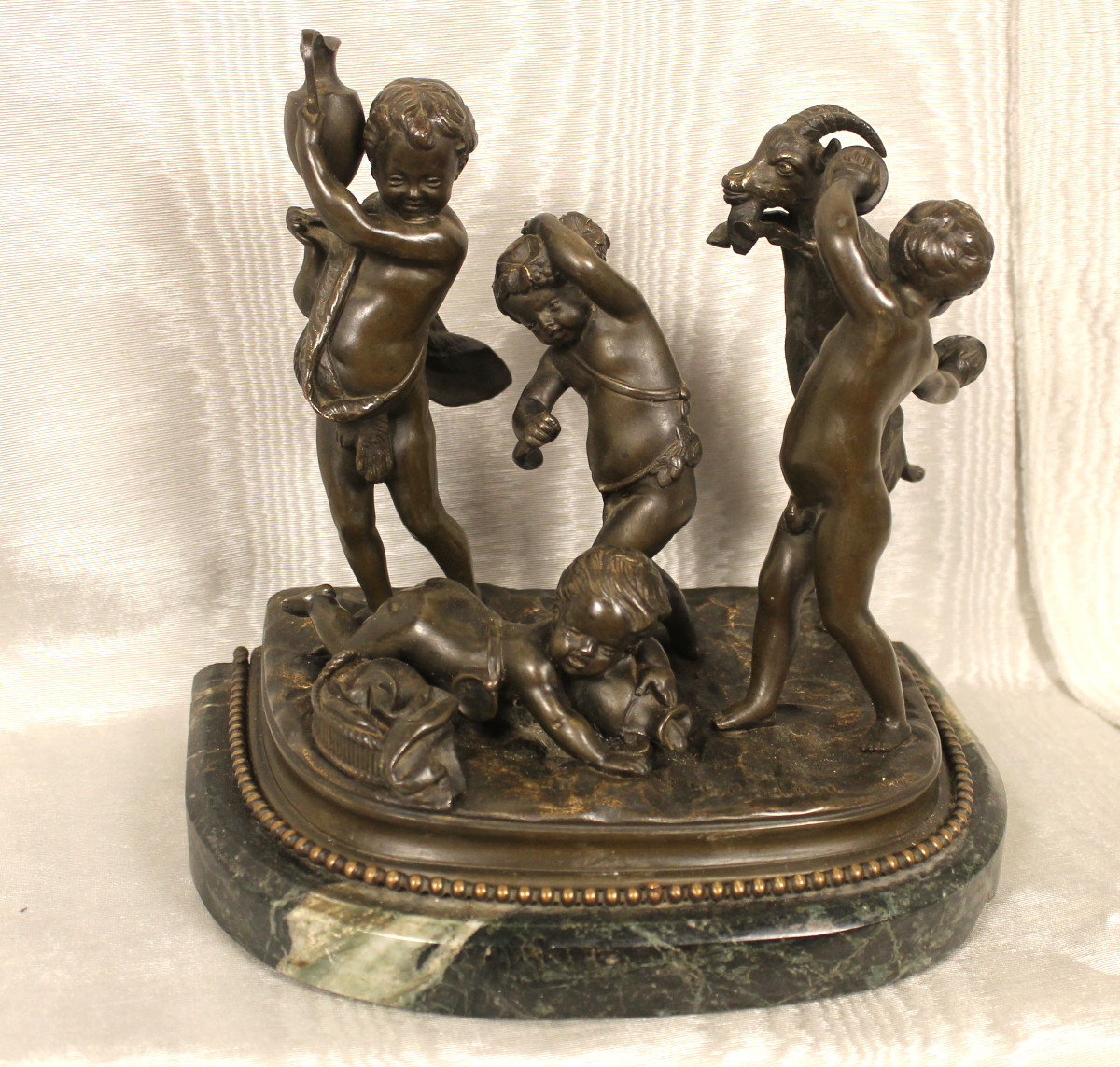
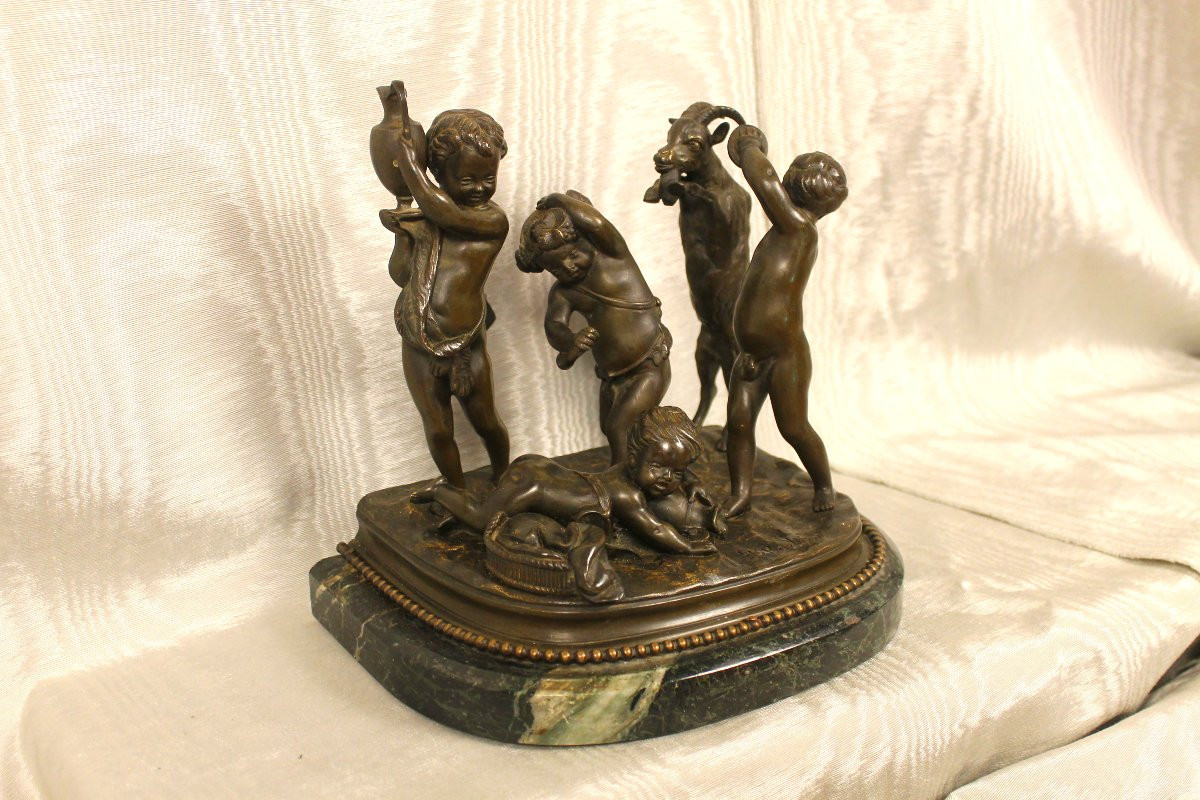
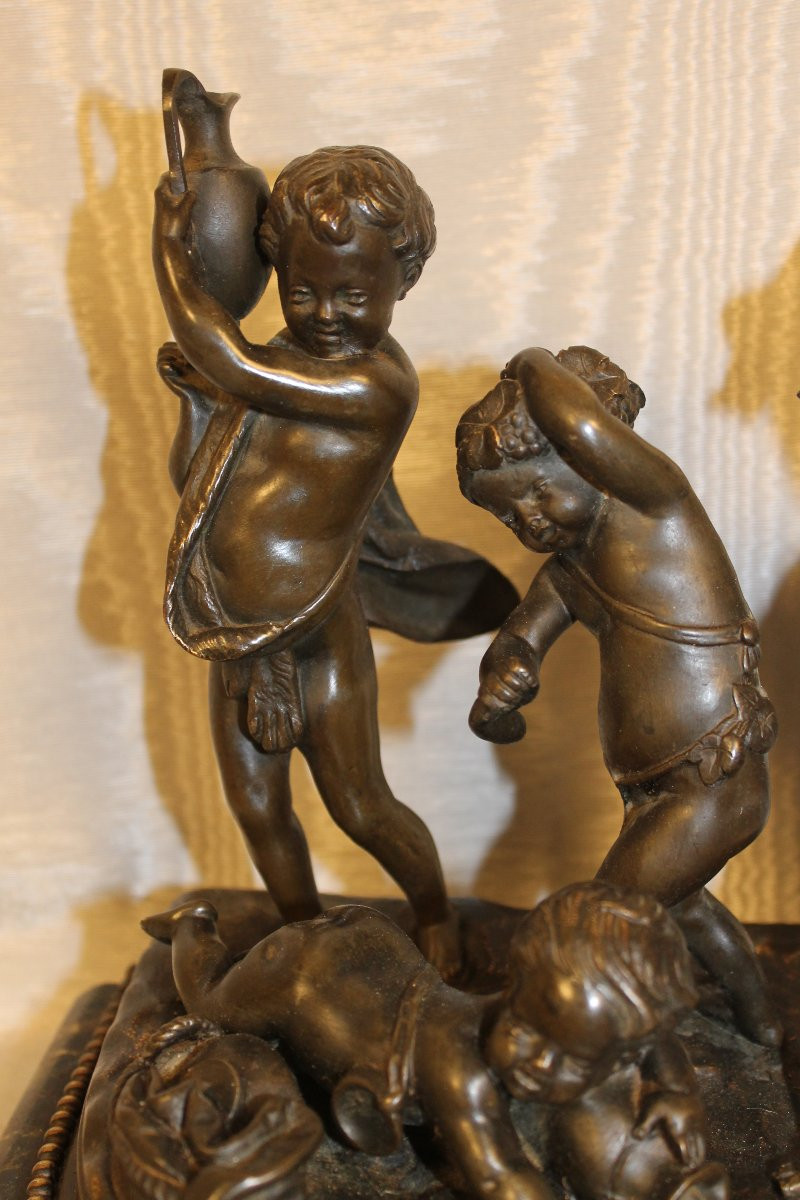
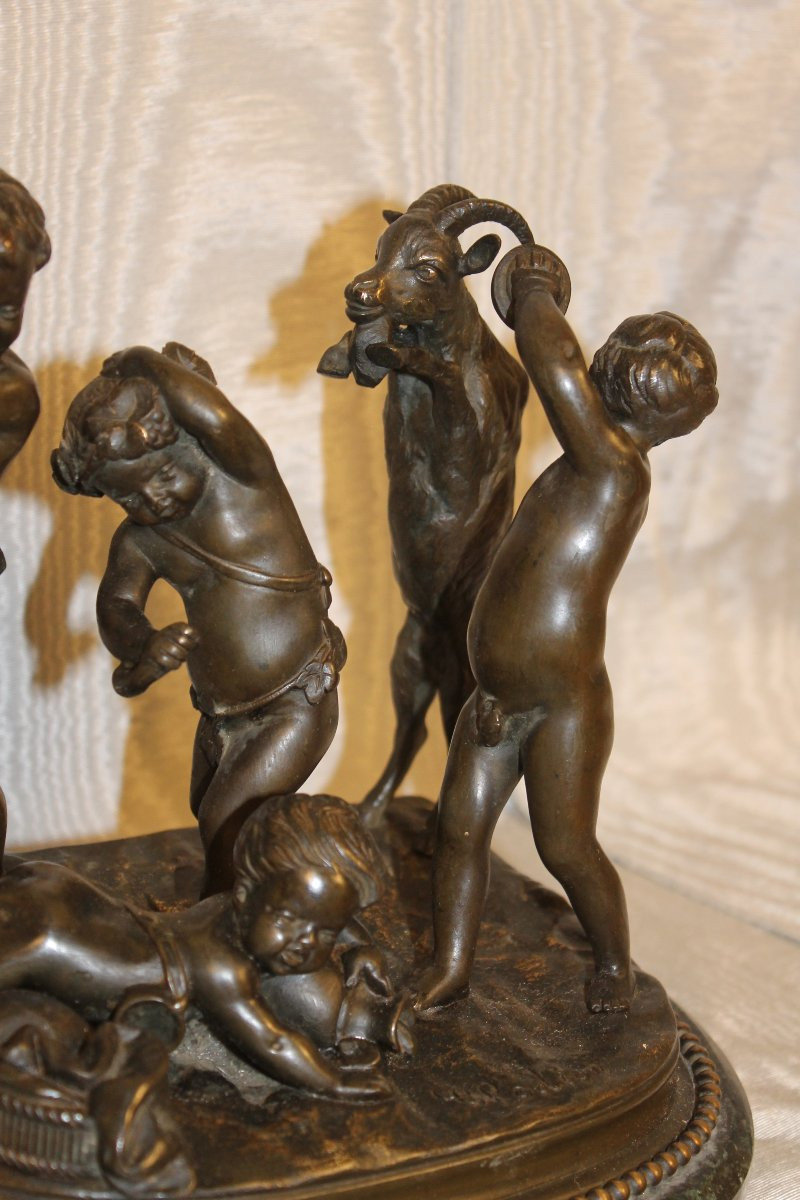
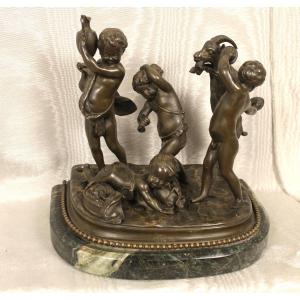


Bronze Group On Marble Base Sculpture By Clodion Putti Or Children And The Goat
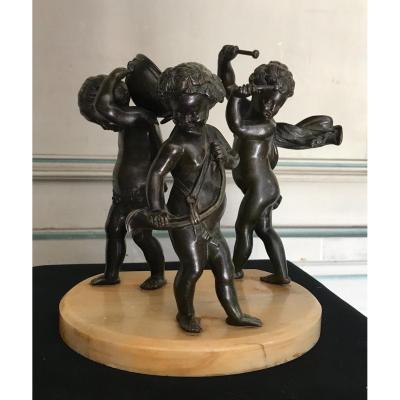
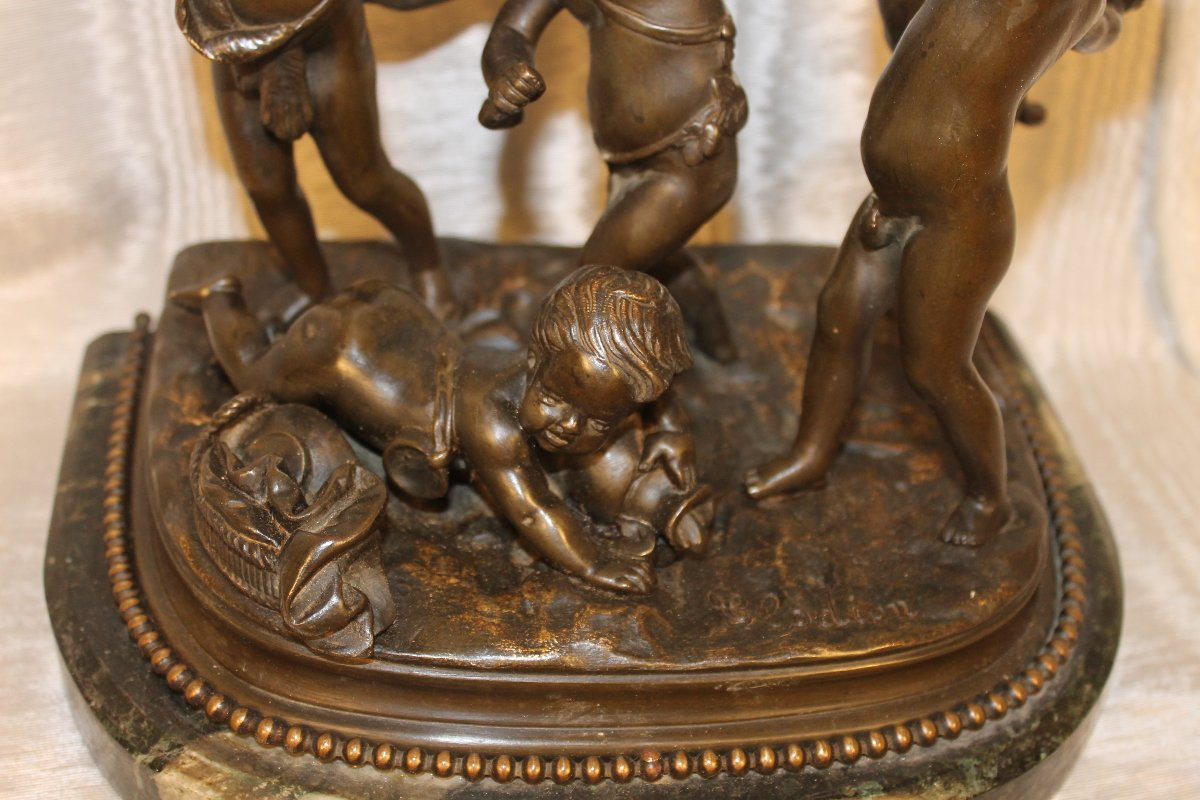
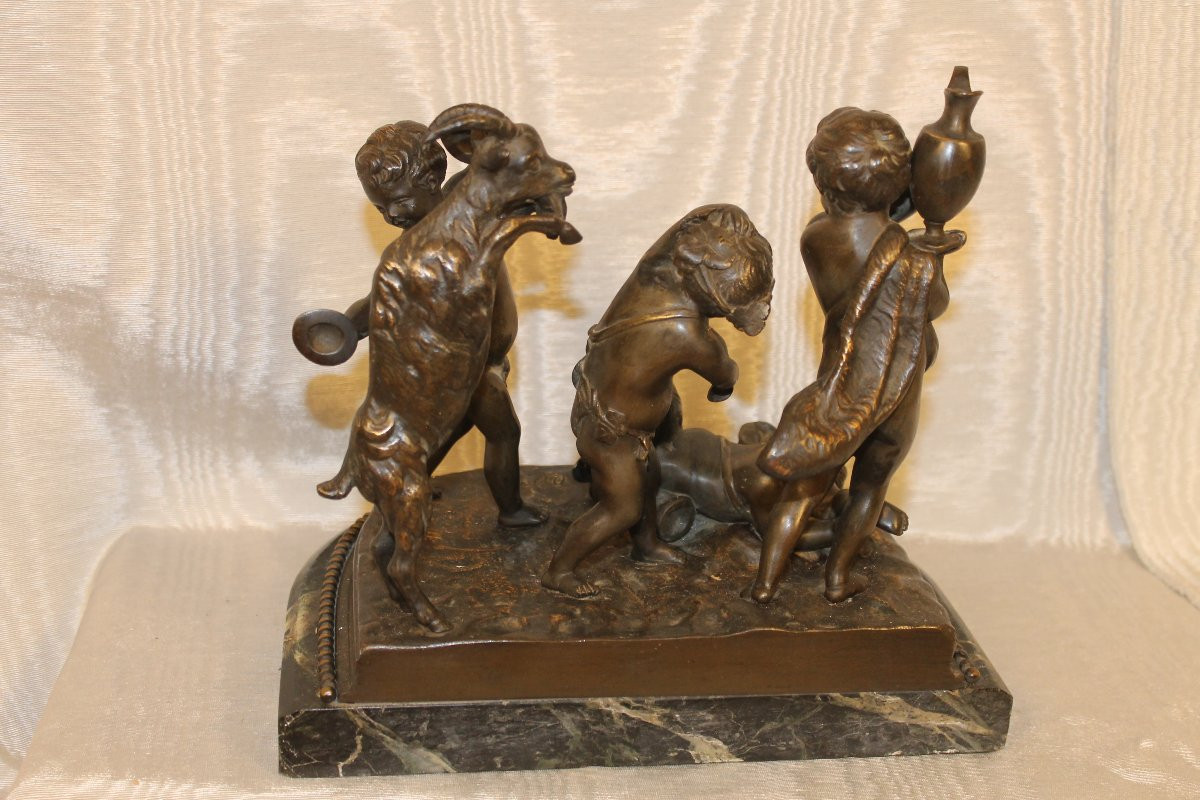
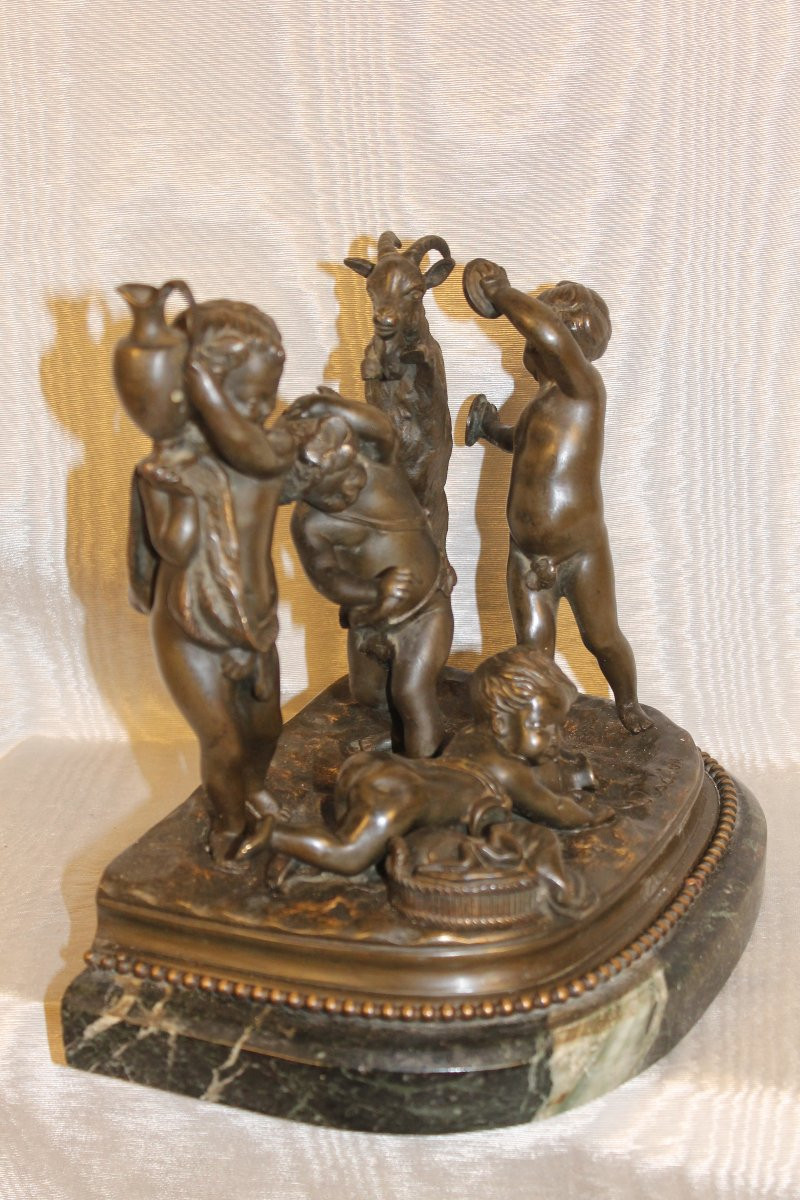
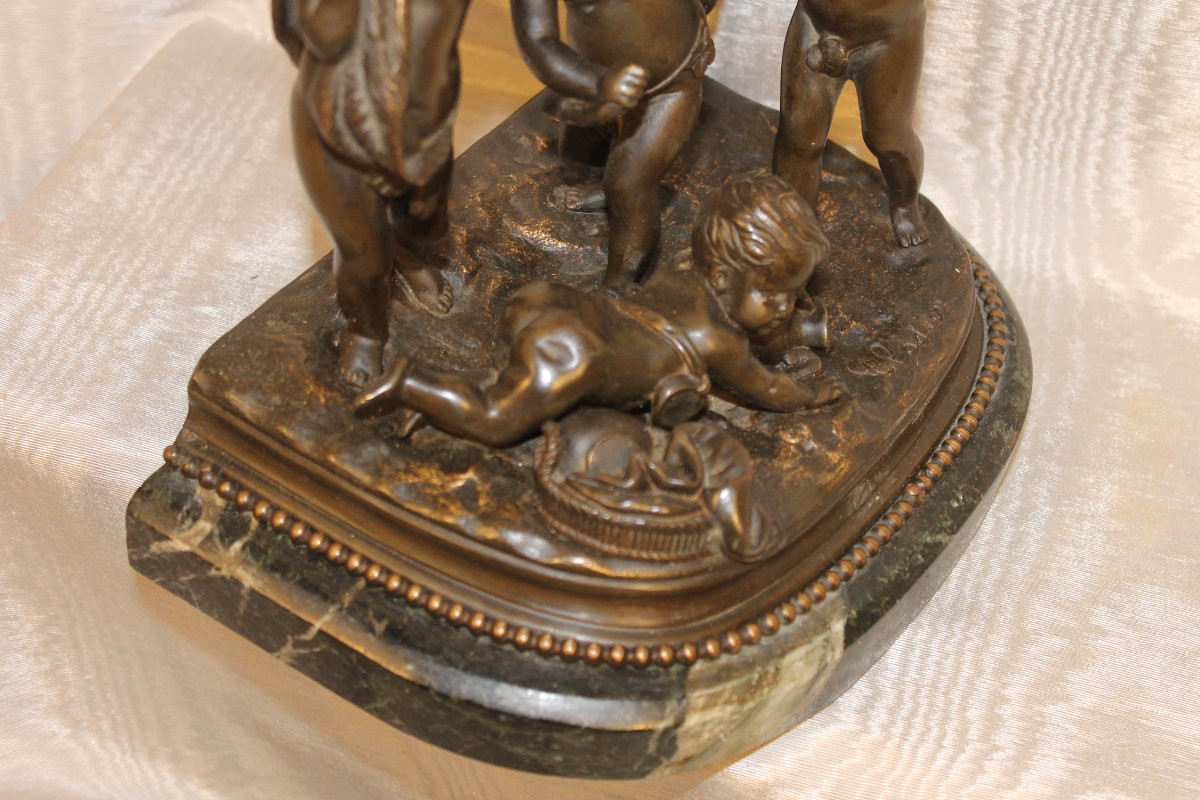
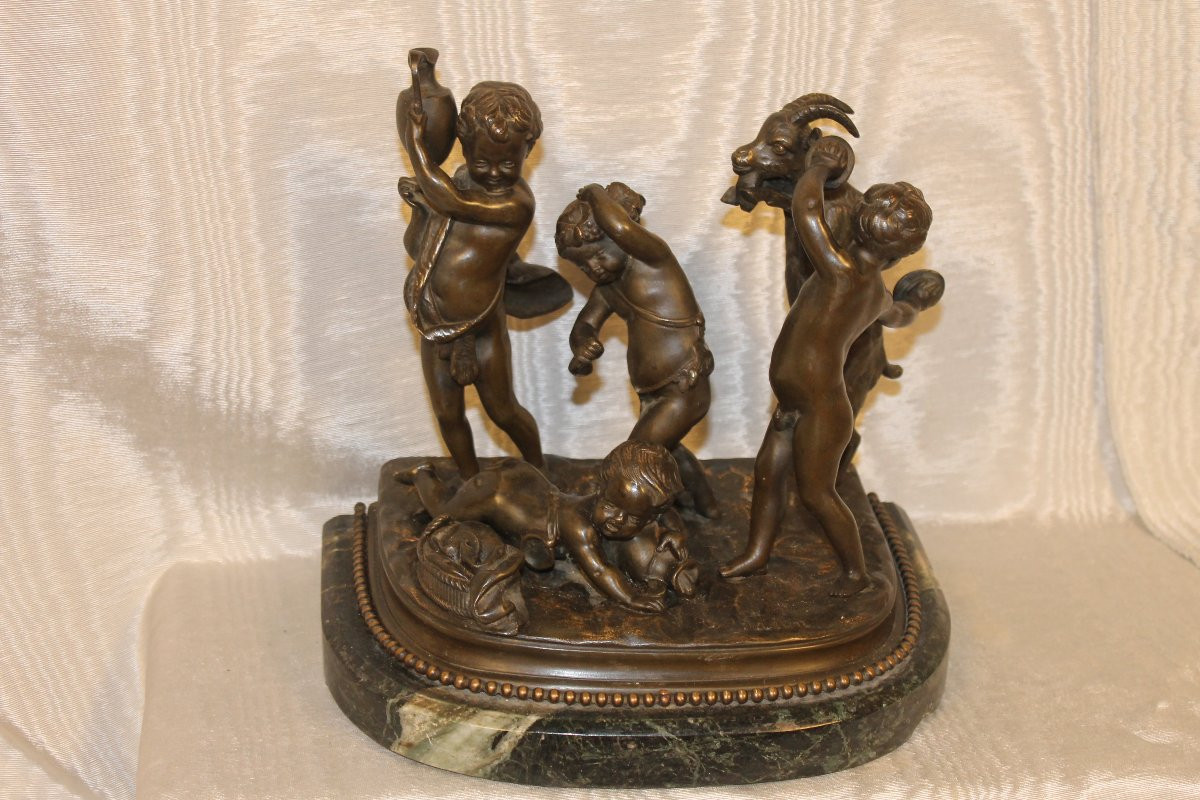
Very harmonious group with a cherub carrying a water jug on one side, another putting flowers in his hair, another playing music while a goat rears up as if about to dance, the last cherub is lying on the grass next to his basket with his water jug
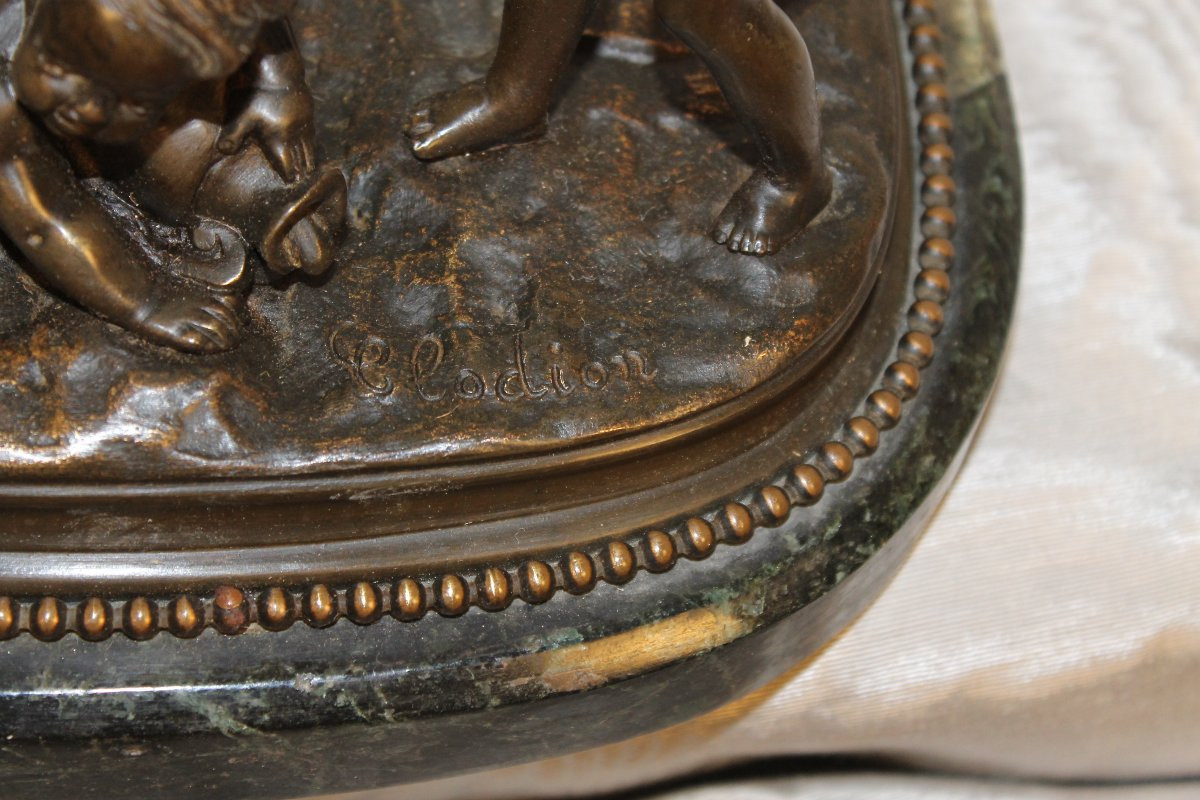
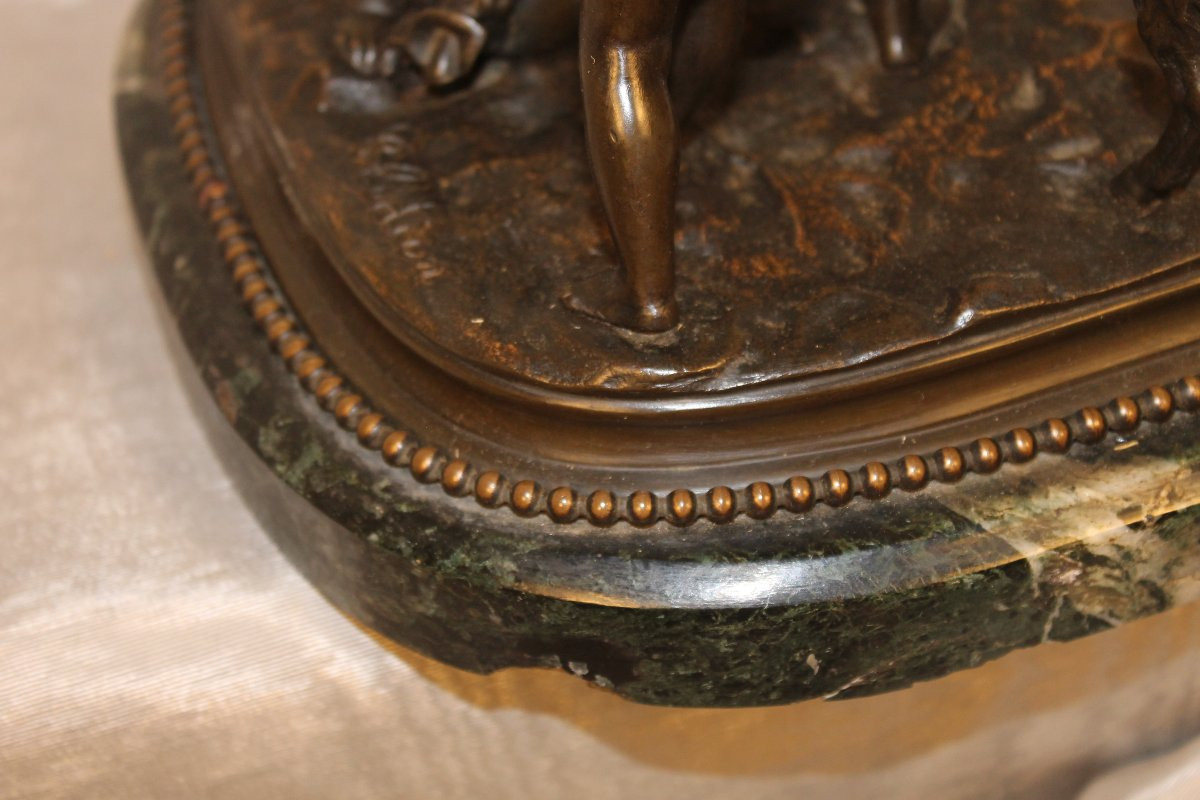
The base is edged with a string of pearls
Signature in front to the right on the terrace
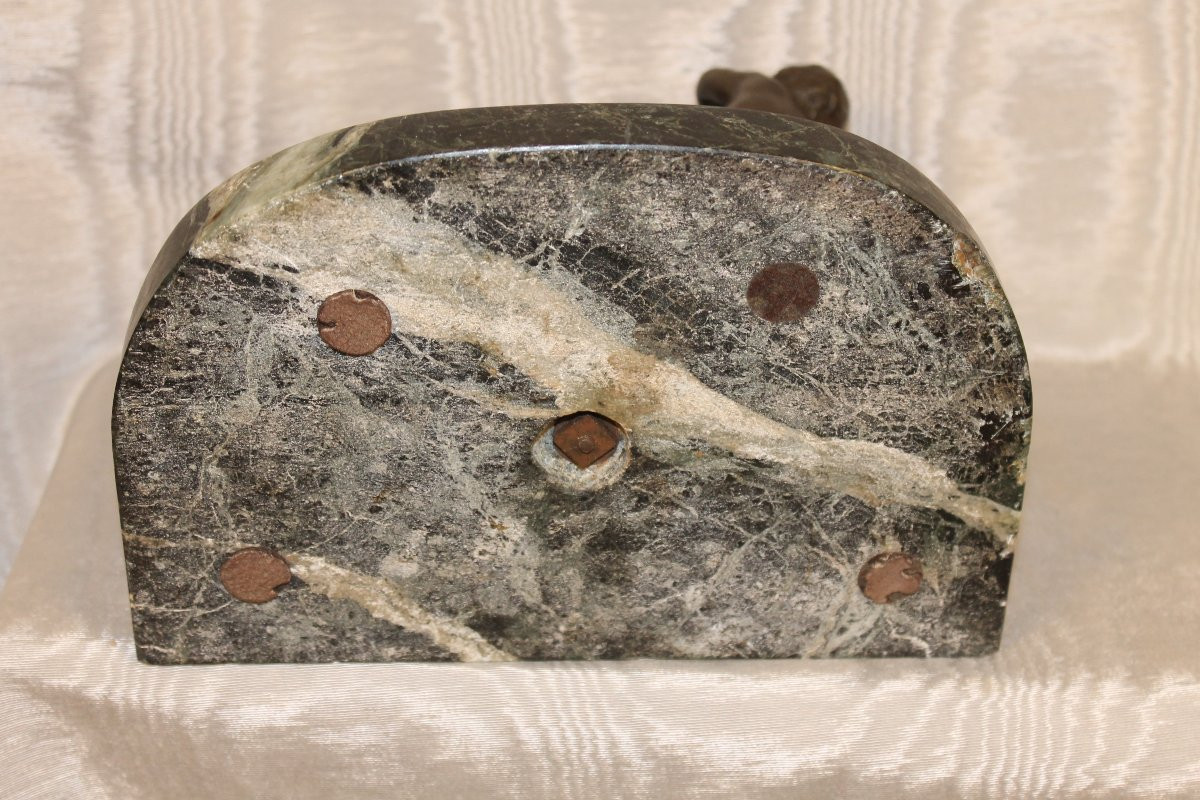
Large base in green veined marble
1 mini chip underneath at a corner
Very fine piece
Superb patina
long: 24 cm
width: 17 cm
h: 22.5 cm
For info:
Claude Michel, known as Clodion, was born on December 20, 1738 in Nancy, the son of Thomas Michel and Anne Adam, and thus part of the Adam dynasty of sculptors along with his brothers Sigisbert François (1728-1811) and Pierre Joseph Michel (1737-1787). He soon became known as "Clodion",i.e. "Little Claude", to differentiate him from an older brother.older brother.
From 1756, he was a student at the model school of the Académie royale de peinture et de sculpture, staying with his uncle Lambert Sigisbert Adam. On the latter's death in 1759, he became a pupil of Jean-Baptiste Pigalle. On September 1, 1759, he won first prize for sculpture with a bas-relief depicting Absalon, who has his brother Amnon killed in the feast, before becoming a boarder at the École royale des élèves protégés from December 1759.
On August 6, 1762, he received his brevet for the Académie de France in Rome. A brilliant modeler, he produced small terracotta subjects thatto the delight of enthusiasts. One of his earliest masterpieces is the Minerve (1766), a reference to the antique Minerve in the Giustiniani collection.
Clodion stands out for his charm and elegance, both as aas a modeler, but also as a marble cutter. In 1766, he was commissioned commissioned a marble group for the Duc de la Rochefoucauld, and in 1768 a Vestale for Catherine II of Russia. He decided to extend his stay in Rome beyond the prescribed three years, and did not leave until March 1771.
In 1773, he showed a selection of works at the Académie royale de peinture et de sculpture, thus obtaining the agrégation.
Between 1773 and 1774, he visited Rome for the second time, wherewhere he created delicate terracotta bas-reliefs.
His career took off after the accession of Louis XVI in 1774. Indeed, Clodion established himself in the world of wealthy amateurs building private mansions in the new Parisian districts. He executed major bas-reliefs for the architect Alexandre-Théodore Brongniart, including the Triomphe de Galatée.
In 1782, he executed two stucco friezes for the courtyard of the Hôtel de Bourbon-Condé.
In 1778, he received his first royal commission for a portrait of Montesquieu seated, part of the "Great Men of France" series planned to adorn the Grande Galerie of the Louvre. The twenty-seven statues created for this project were never installed.
Multiplying light, virtuoso works right up to the Revolution, his clientele was such that he no longer needed to exhibit at the Salon until1801. With the advent of the Revolution, he kept a low profile.From 1795, his career took off again and, during the Empire, he continued to produce brilliant terracottas, alongside prestigious, sometimes monumental commissions.
In 1781, he married Catherine Flore Pajou (1764-1841), daughter of sculptor Augustin Pajou and Angélique Roumier, and sister of Jacques-Augustin-Catherine Pajou; they divorced in 1794.
He died on March 28, 1814 in Paris.
Period: 19th century
Style: Louis 16th, Directory
Condition: Excellent condition
Material: Bronze
Length: 24 cm
Width: 17 cm
Height: 22,5 cm
Reference (ID): 1748974
Availability: In stock