THIS OBJECT WAS SOLD
Attributed To Niccolò Circignani, Known As Il Pomarancio, The Resurrection
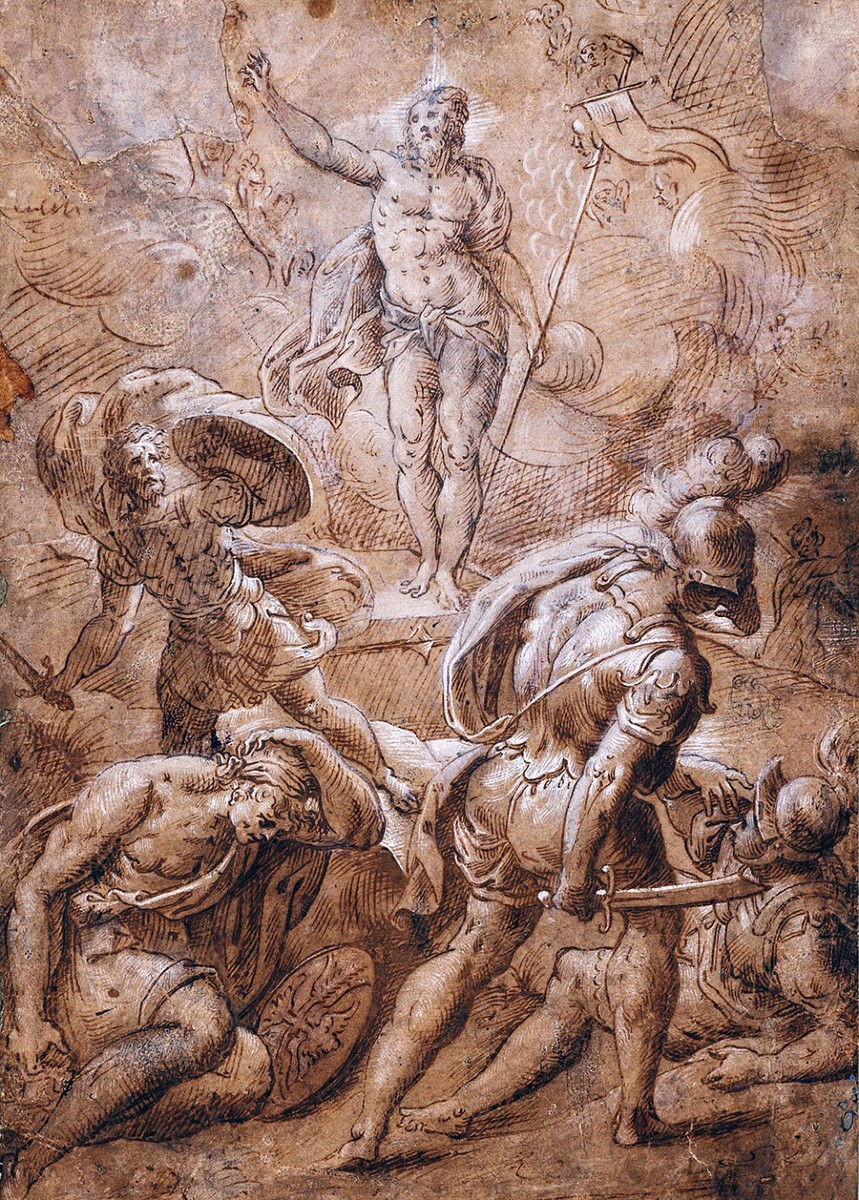


Attributed to NICCOLÒ CIRCIGNANI, called Il Pomarancio
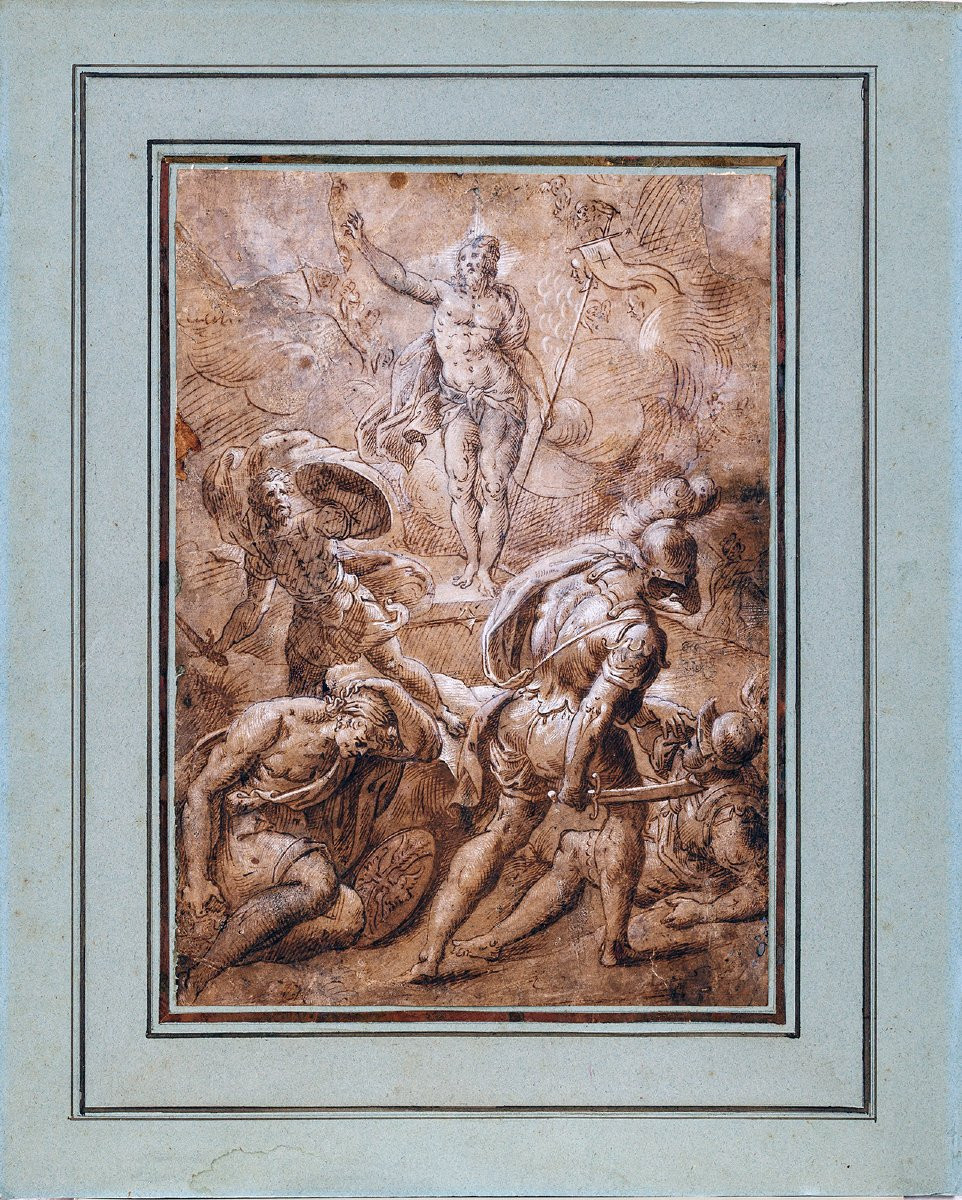
THE RESURRECTION
NICCOLÒ CIRCIGNANI, called Il Pomarancio
Pomarance, circa1530 – circa 1597, Città della Pieve
Pen in grey and brown ink, brown wash, white highlights
28.2 × 20 cm /11.1 × 7.9 inches, with mount: 40.5 × 32.5 cm /15.9 × 12.8 inches
Which subject do you think Michelangelo transformed most radically in Western art? Undoubtedly, the image of Christ.
After the monumental Last Judgment in the Sistine Chapel, Christ was no longer perceived as an abstract symbol, but as a figure of flesh and blood — almost tangible, charged with physical presence and inner energy. This vision had a profound and lasting impact on European painting.
Its influence is especially evident in one of the most important Christian subjects — the Resurrection.
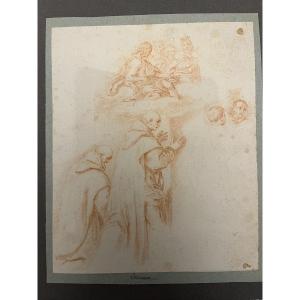
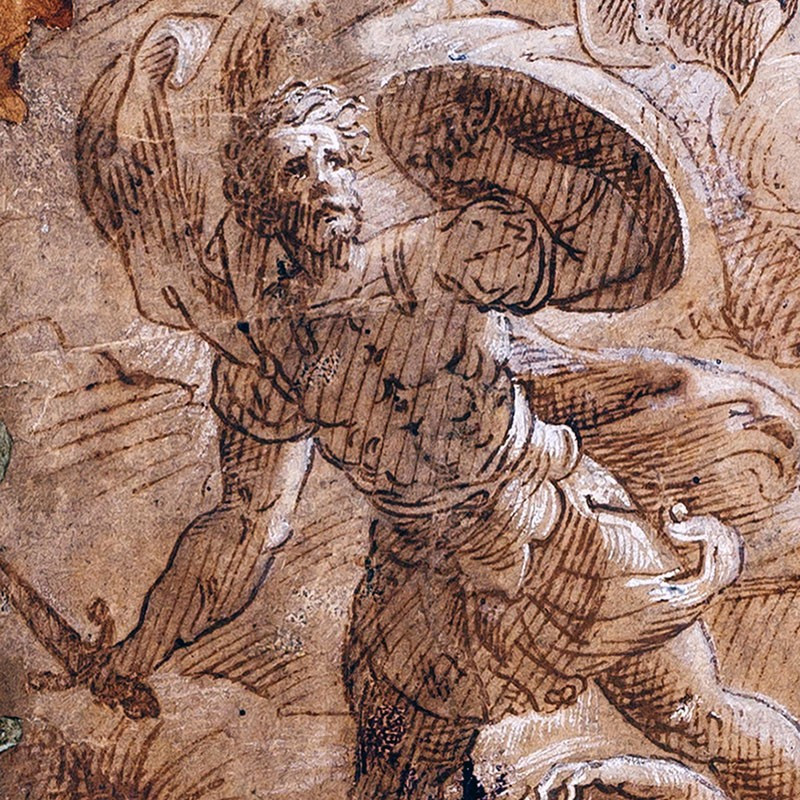
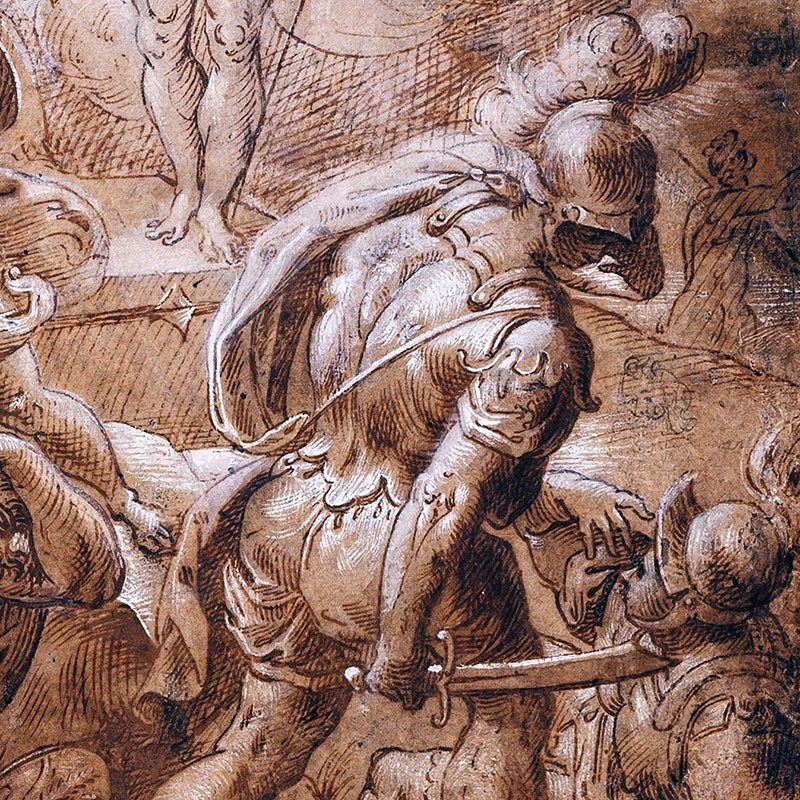
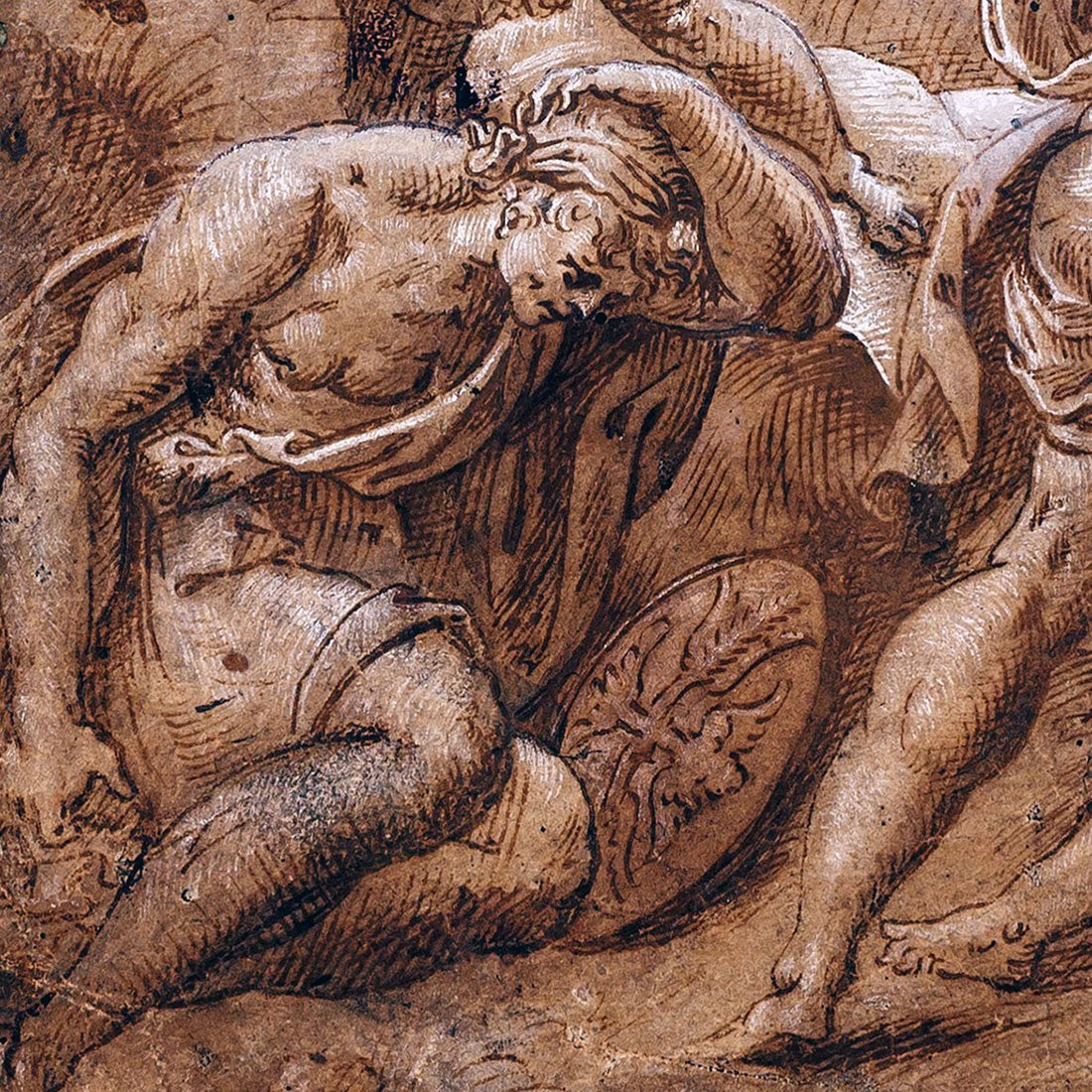
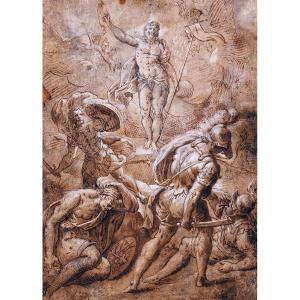
The present drawing, attributed to the circle of Niccolò Circignani, called Il Pomarancio, is closely related to his fresco of the Resurrection of Christ (1569) in the church of Santa Maria di Mongiovino.
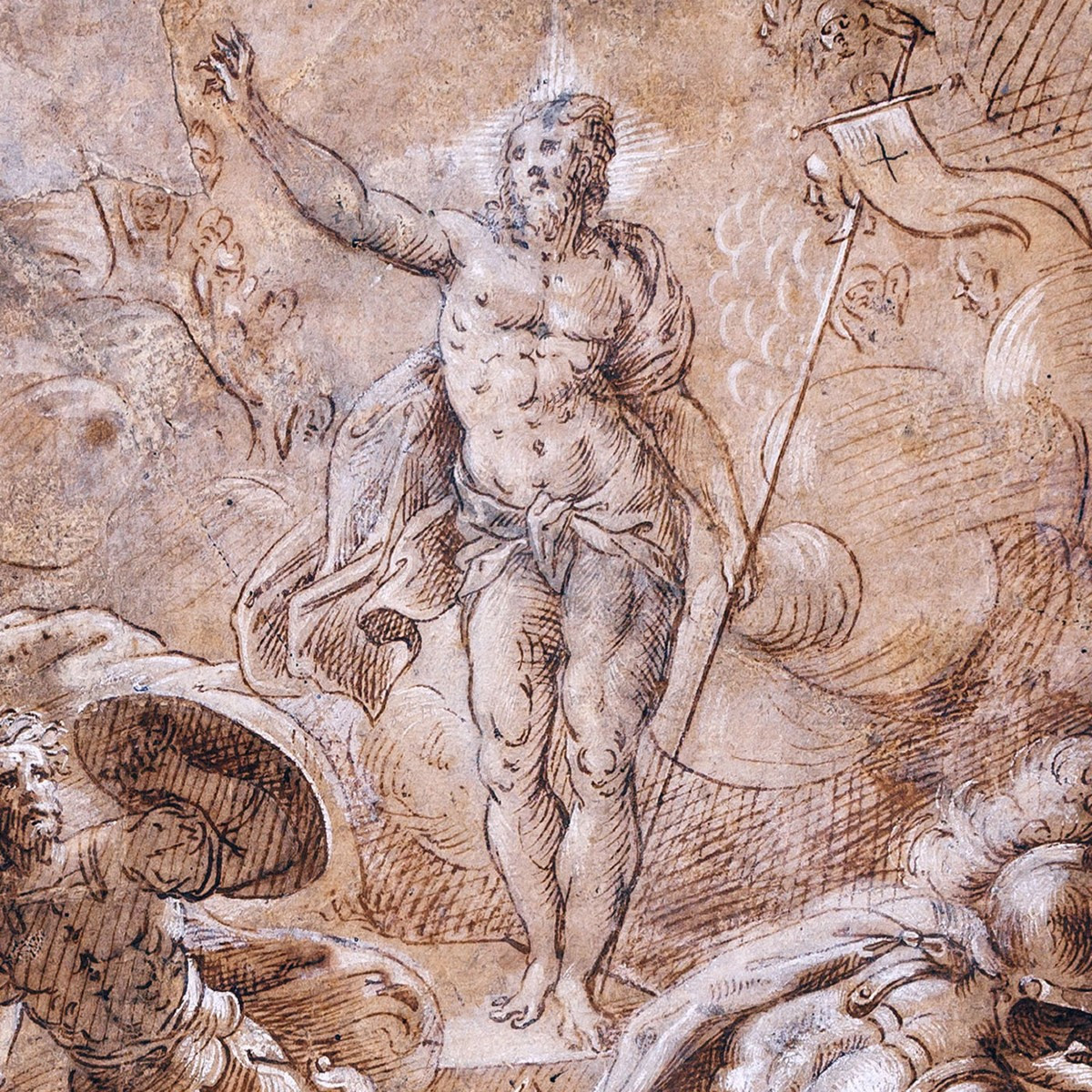
It offers a vivid example of how Mannerist artists reinterpreted Michelangelo’s legacy. Even in this relatively small sheet, Christ appears as a sculptural, almost palpable figure, his gesture unfolding in space and giving the composition a powerful sense of movement. The theme of the Resurrection thus takes on a more dramatic and immediate presence.
Niccolò Circignani (c. 1530–1597), known as Il Pomarancio, was an important representative of Roman Mannerism. Active in Rome and throughout Central Italy, he produced numerous fresco cycles in which the monumentality of the Roman tradition is combined with expressive figuration. His work often reflects a synthesis of Michelangelesque influence and Mannerist dynamism.
This drawing may be seen as a characteristic example of that synthesis — where Renaissance clarity meets Mannerist tension, giving the scene its particular expressive force.
THE RESURRECTION
NICCOLÒ CIRCIGNANI, called Il Pomarancio
Pomarance, circa1530 – circa 1597, Città della Pieve
Pen in grey and brown ink, brown wash, white highlights
28.2 × 20 cm /11.1 × 7.9 inches, with mount: 40.5 × 32.5 cm /15.9 × 12.8 inches
Which subject do you think Michelangelo transformed most radically in Western art? Undoubtedly, the image of Christ.
After the monumental Last Judgment in the Sistine Chapel, Christ was no longer perceived as an abstract symbol, but as a figure of flesh and blood — almost tangible, charged with physical presence and inner energy. This vision had a profound and lasting impact on European painting.
Its influence is especially evident in one of the most important Christian subjects — the Resurrection.
The present drawing, attributed to the circle of Niccolò Circignani, called Il Pomarancio, is closely related to his fresco of the Resurrection of Christ (1569) in the church of Santa Maria di Mongiovino.
It offers a vivid example of how Mannerist artists reinterpreted Michelangelo’s legacy. Even in this relatively small sheet, Christ appears as a sculptural, almost palpable figure, his gesture unfolding in space and giving the composition a powerful sense of movement. The theme of the Resurrection thus takes on a more dramatic and immediate presence.
Niccolò Circignani (c. 1530–1597), known as Il Pomarancio, was an important representative of Roman Mannerism. Active in Rome and throughout Central Italy, he produced numerous fresco cycles in which the monumentality of the Roman tradition is combined with expressive figuration. His work often reflects a synthesis of Michelangelesque influence and Mannerist dynamism.
This drawing may be seen as a characteristic example of that synthesis — where Renaissance clarity meets Mannerist tension, giving the scene its particular expressive force.
Explore similar pieces and discover your ideal find:
drawings