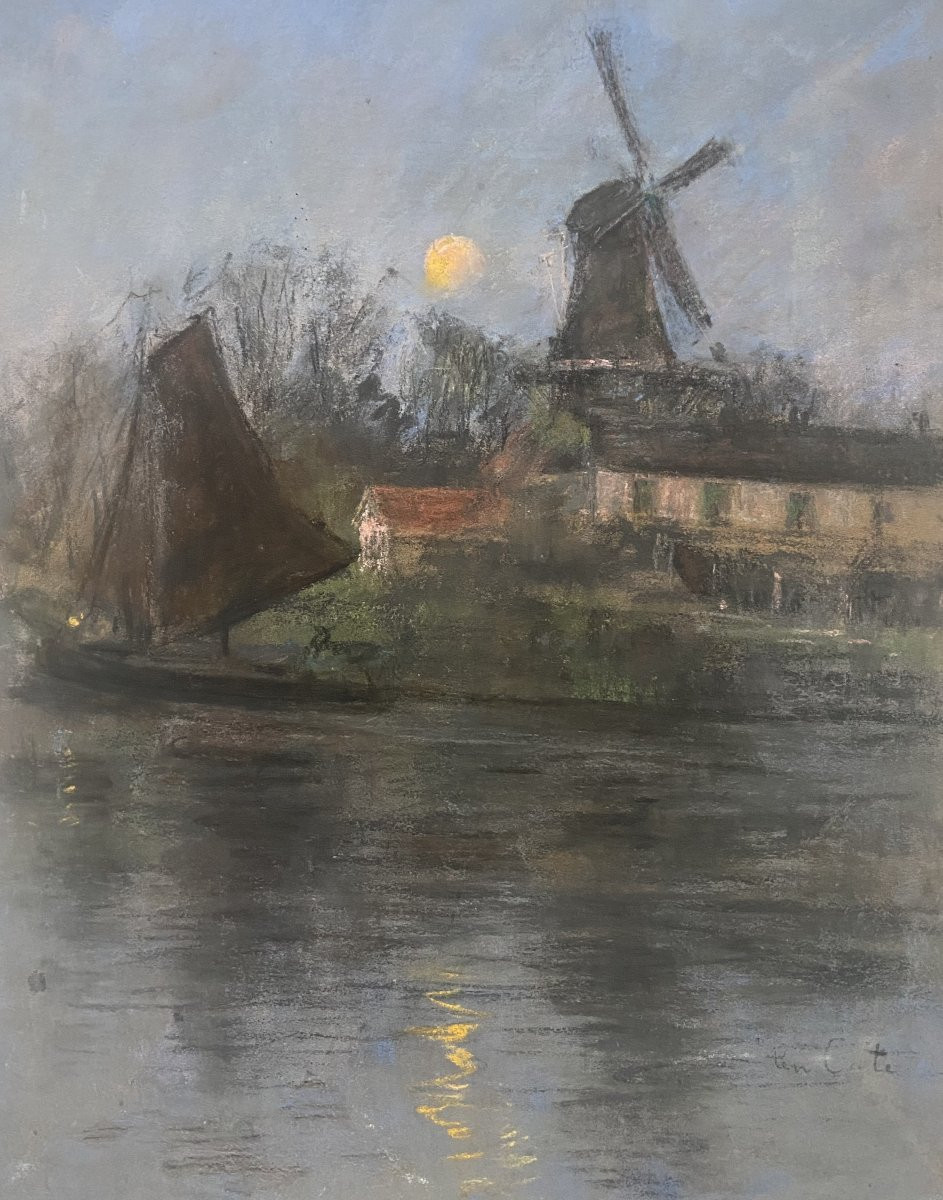
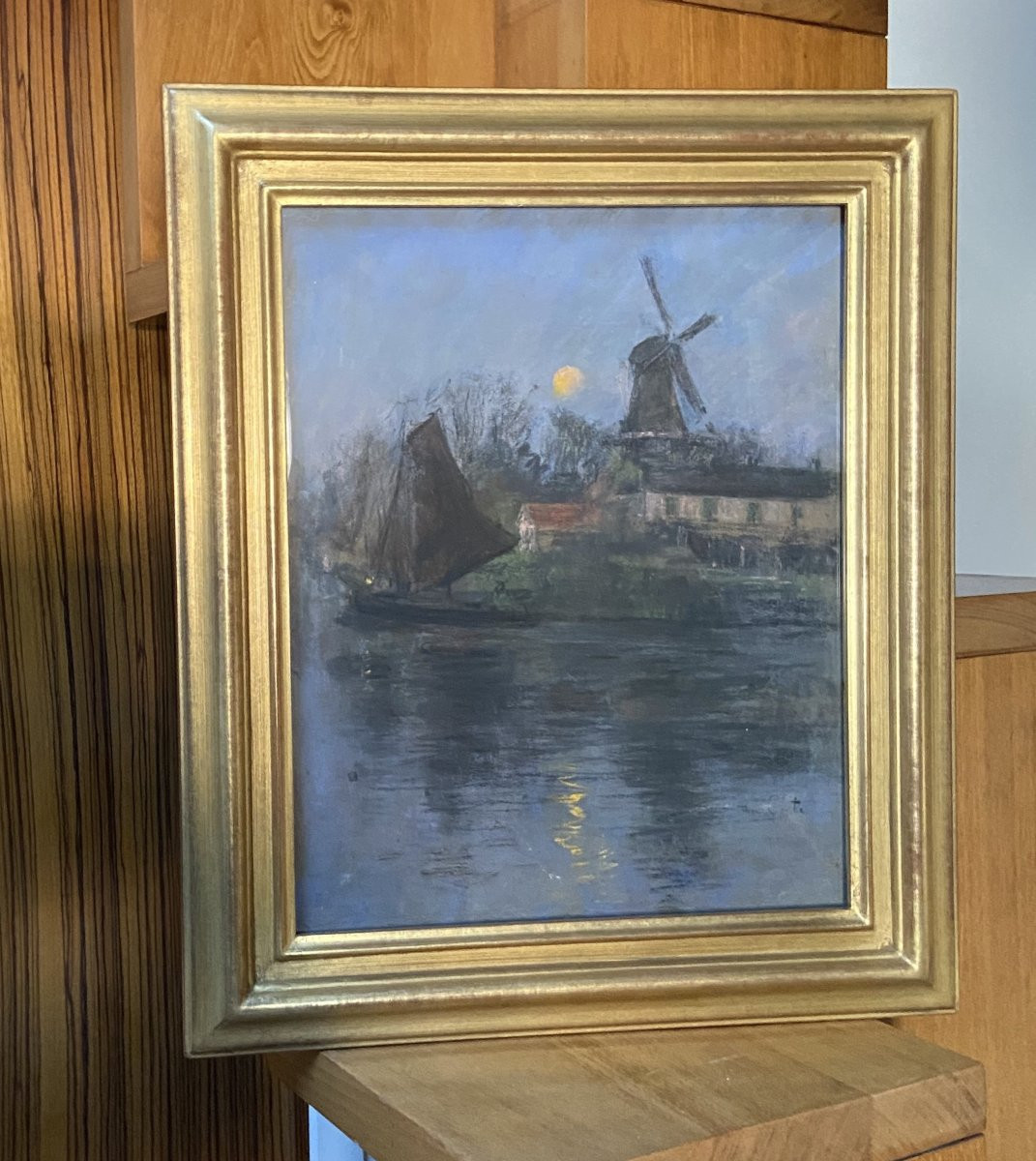
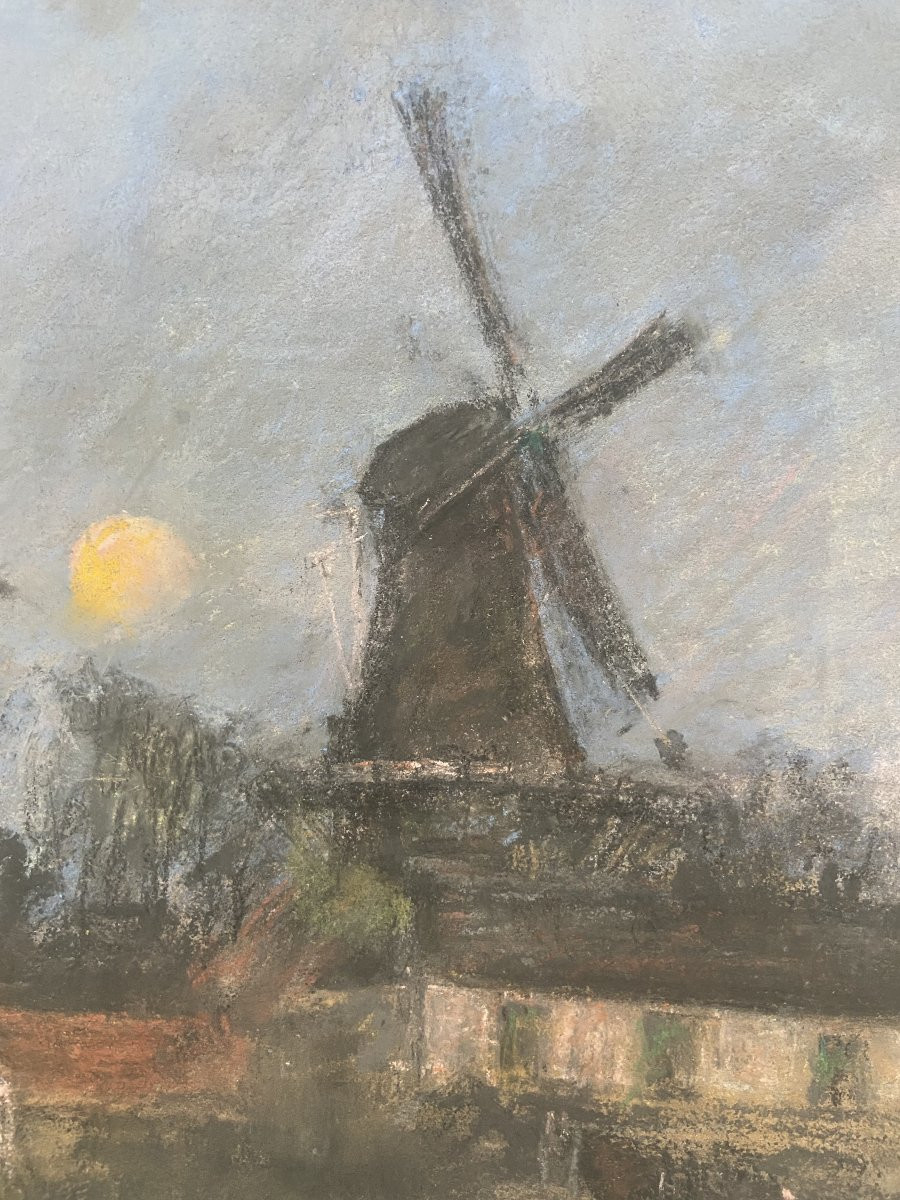
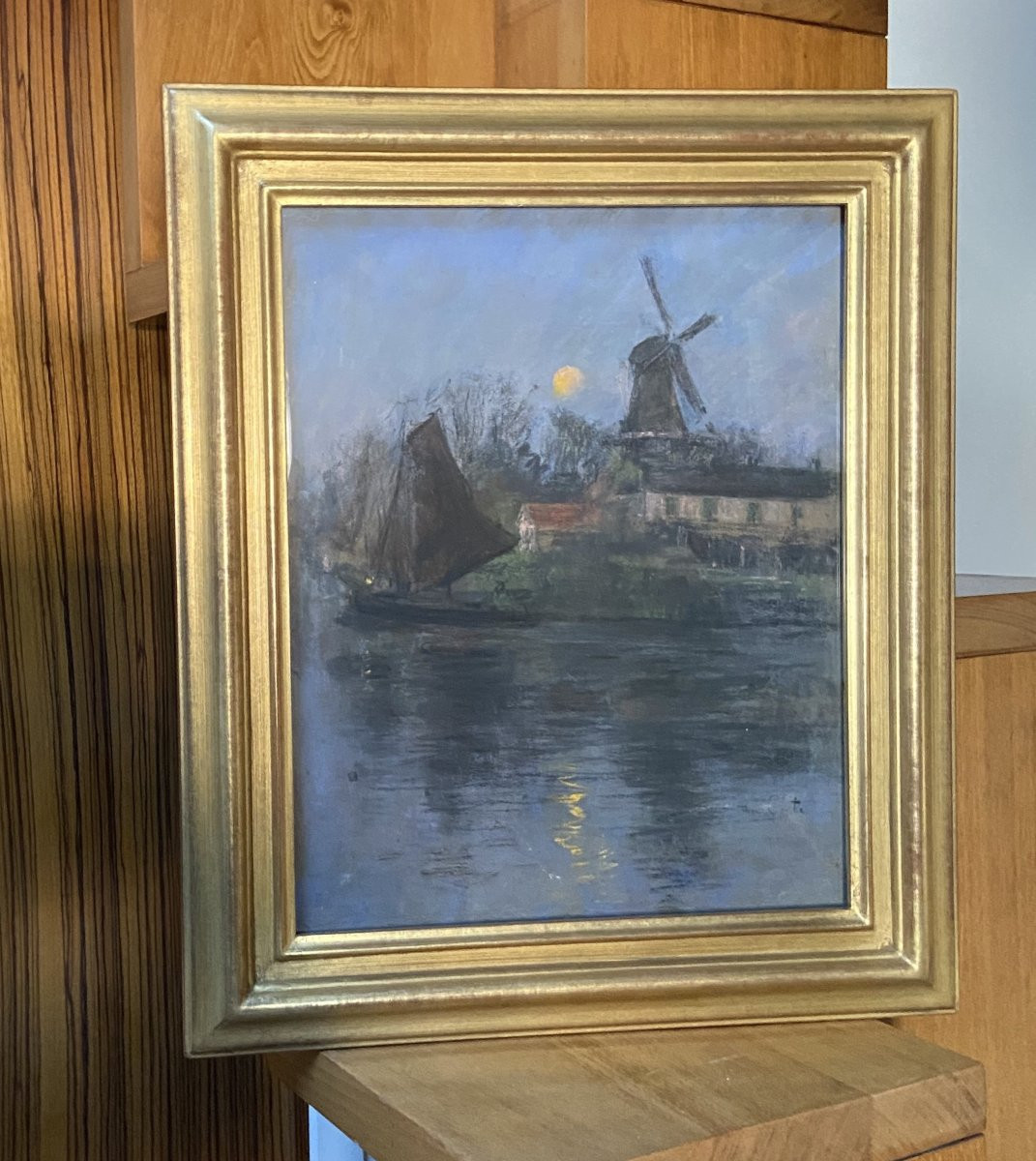


Siebe Johannes Ten Cate (1858-1908) Windmill And Sailboat In The Moonlight, Pastel Signed
Artist: Siebe Johannes Ten Cate (1858-1908)
Siebe Johannes ten Cate (1858-1908)
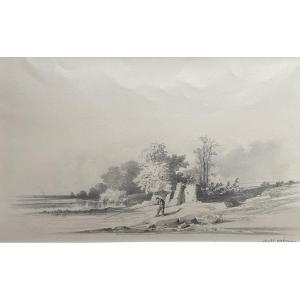
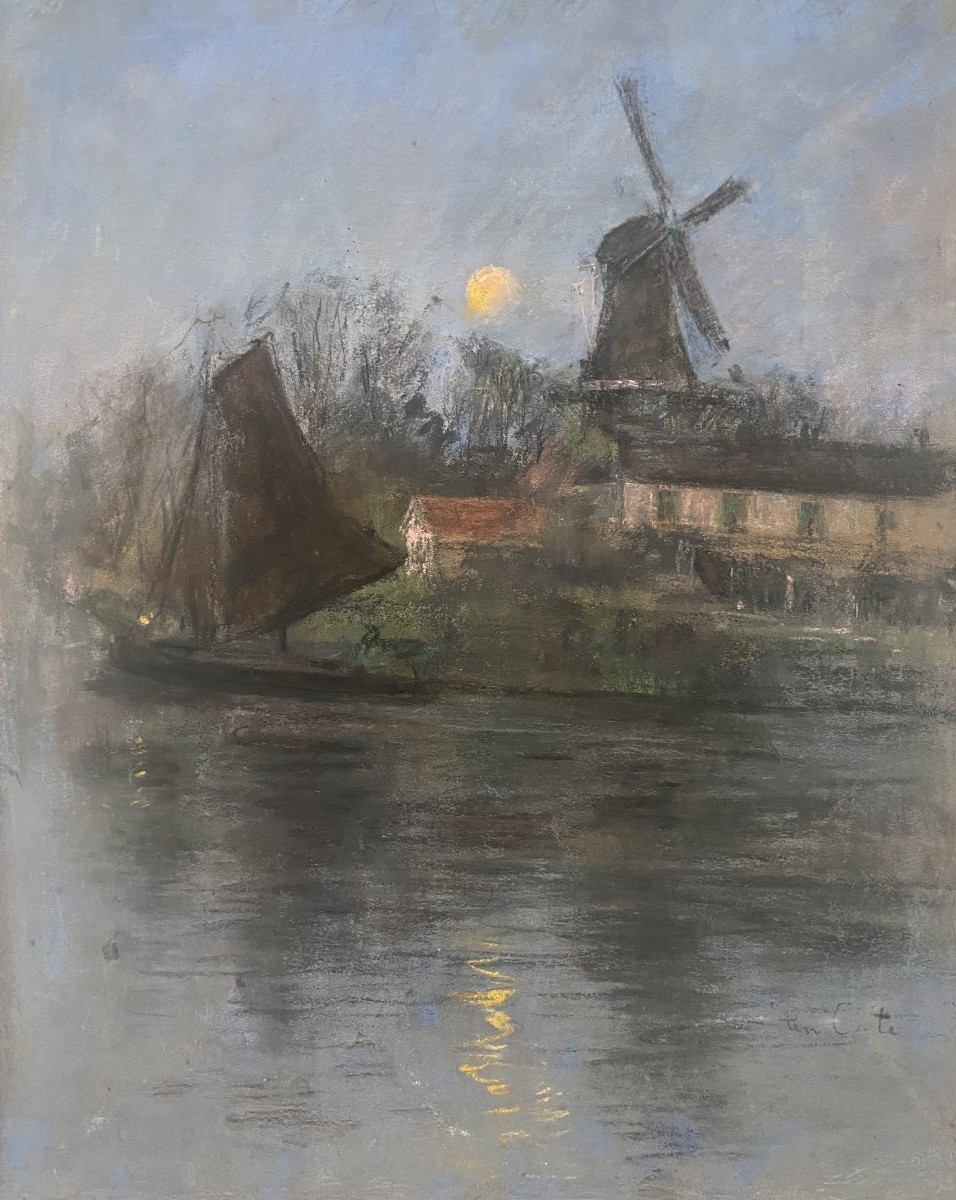
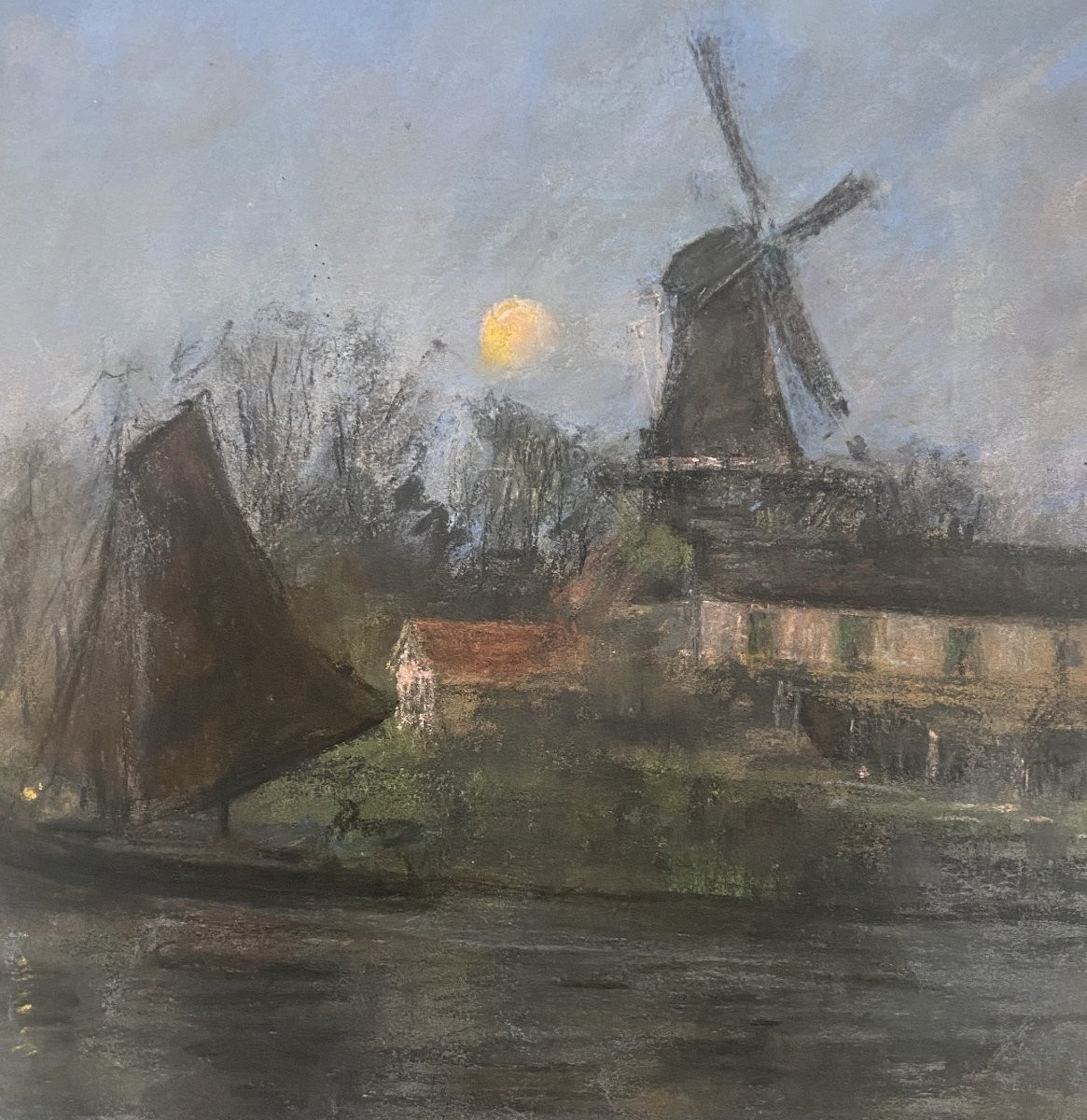
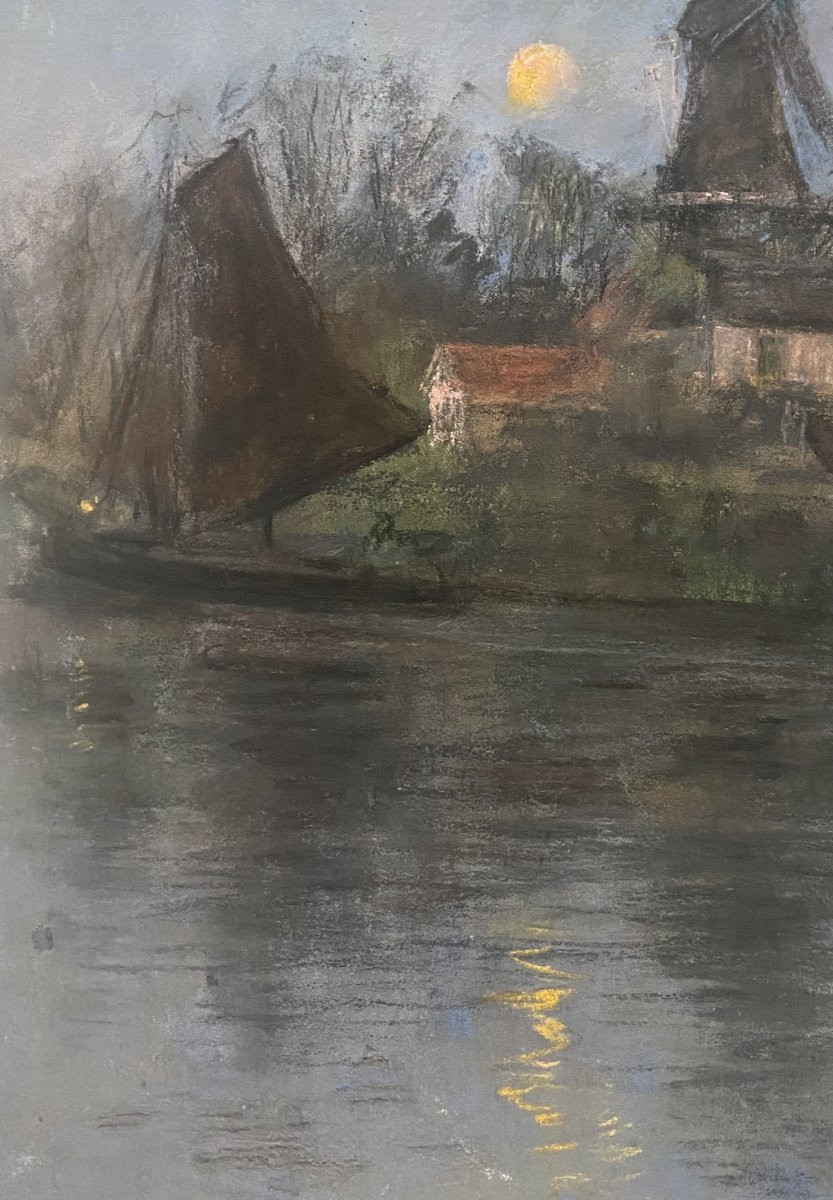
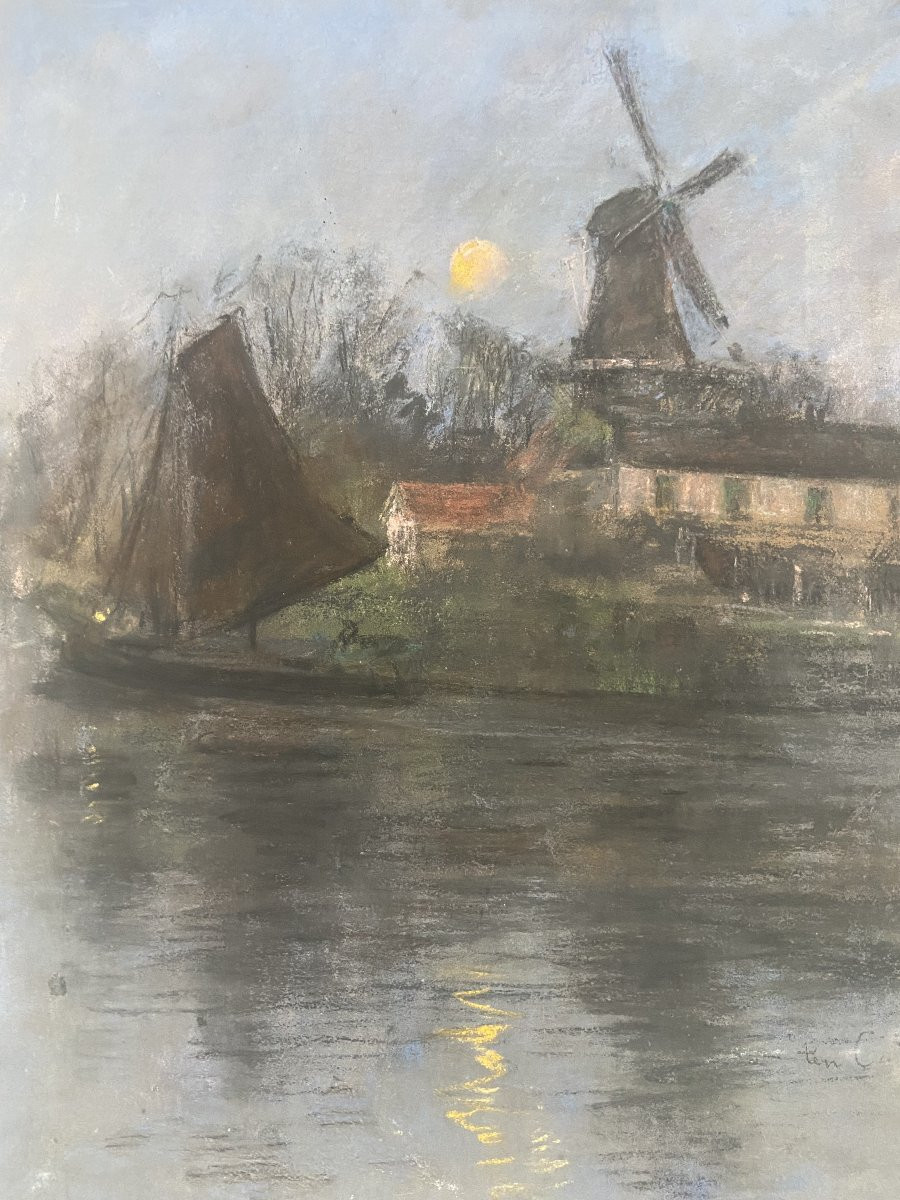
Moonlight windmill and sailboat,
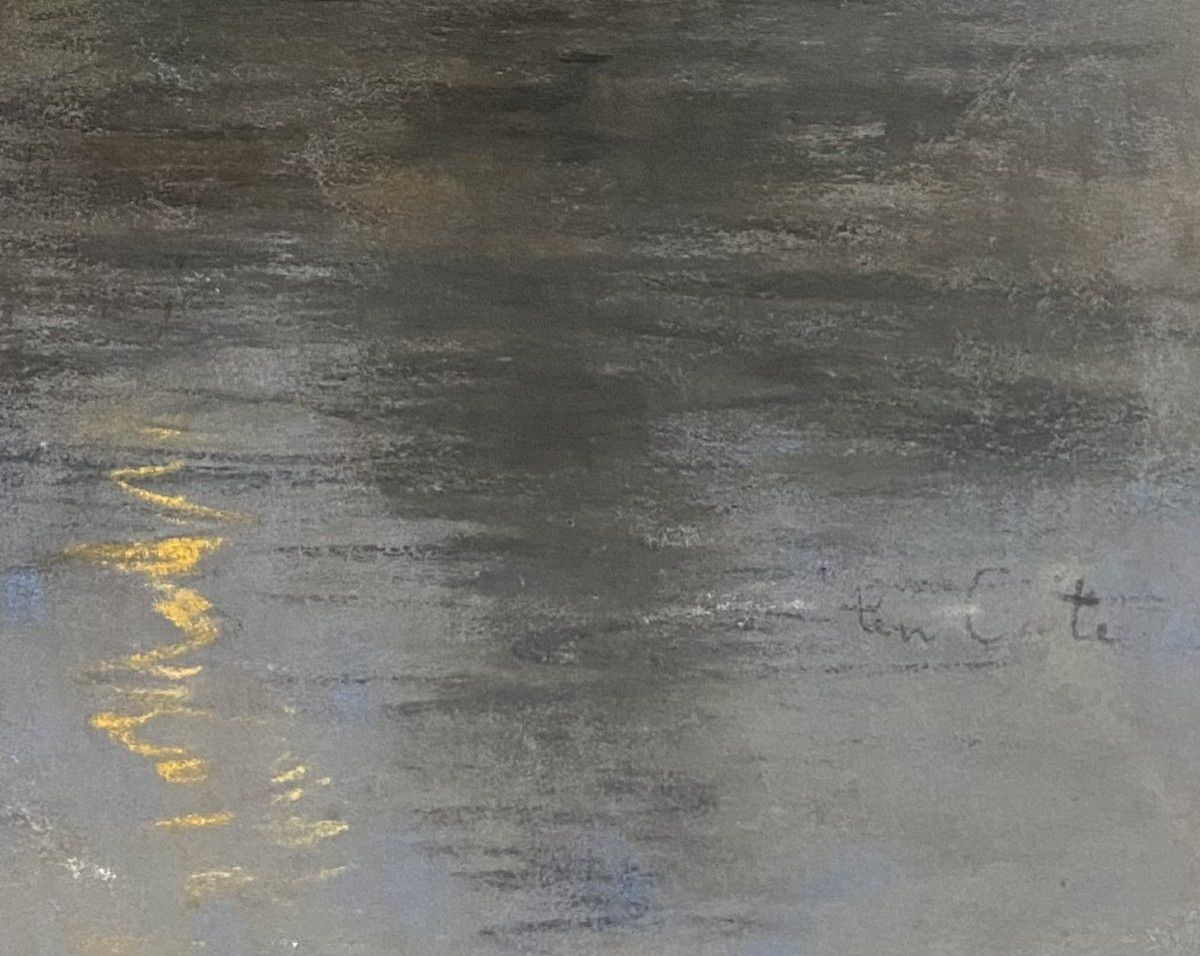
Signed lower right
Pastel on paper
40 x 31 cm
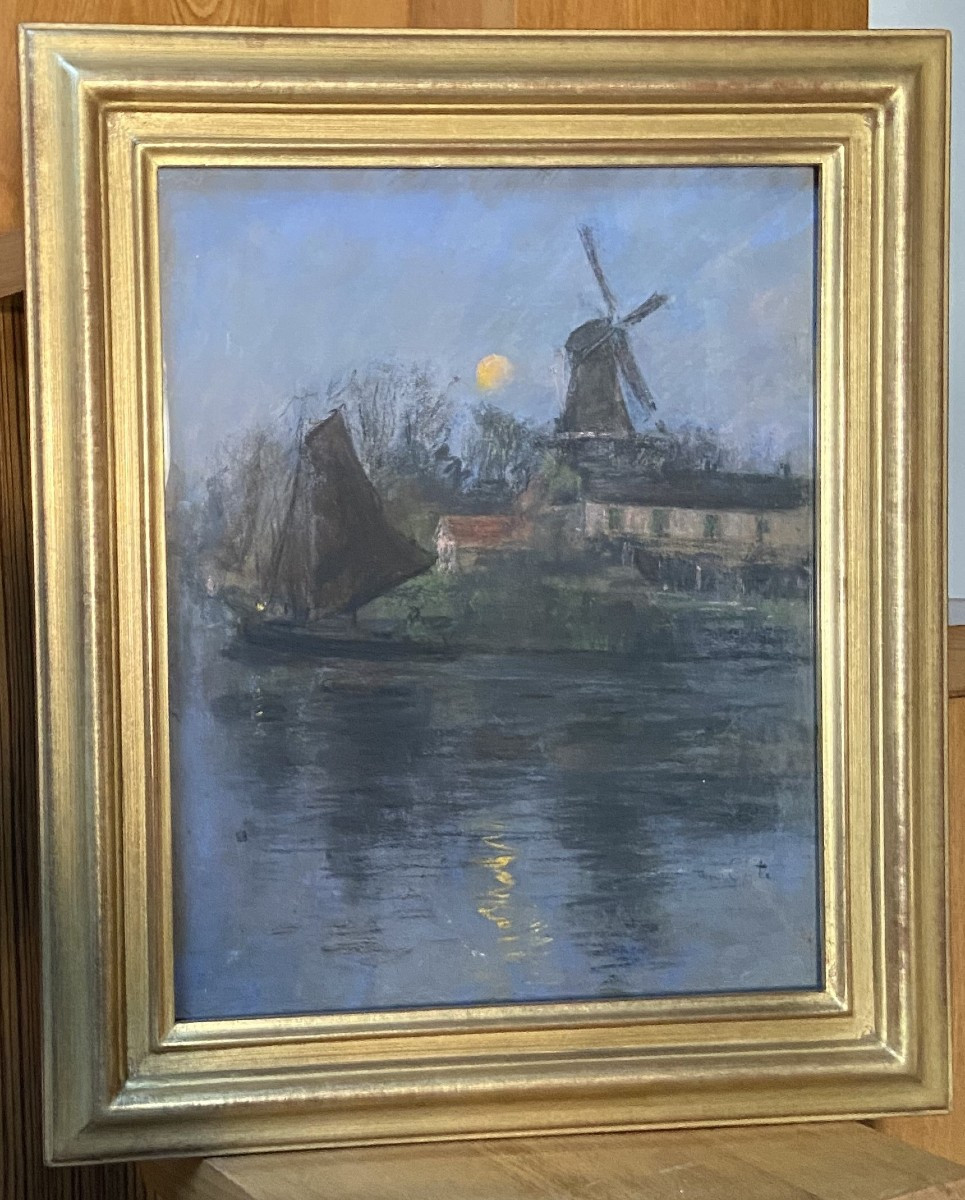
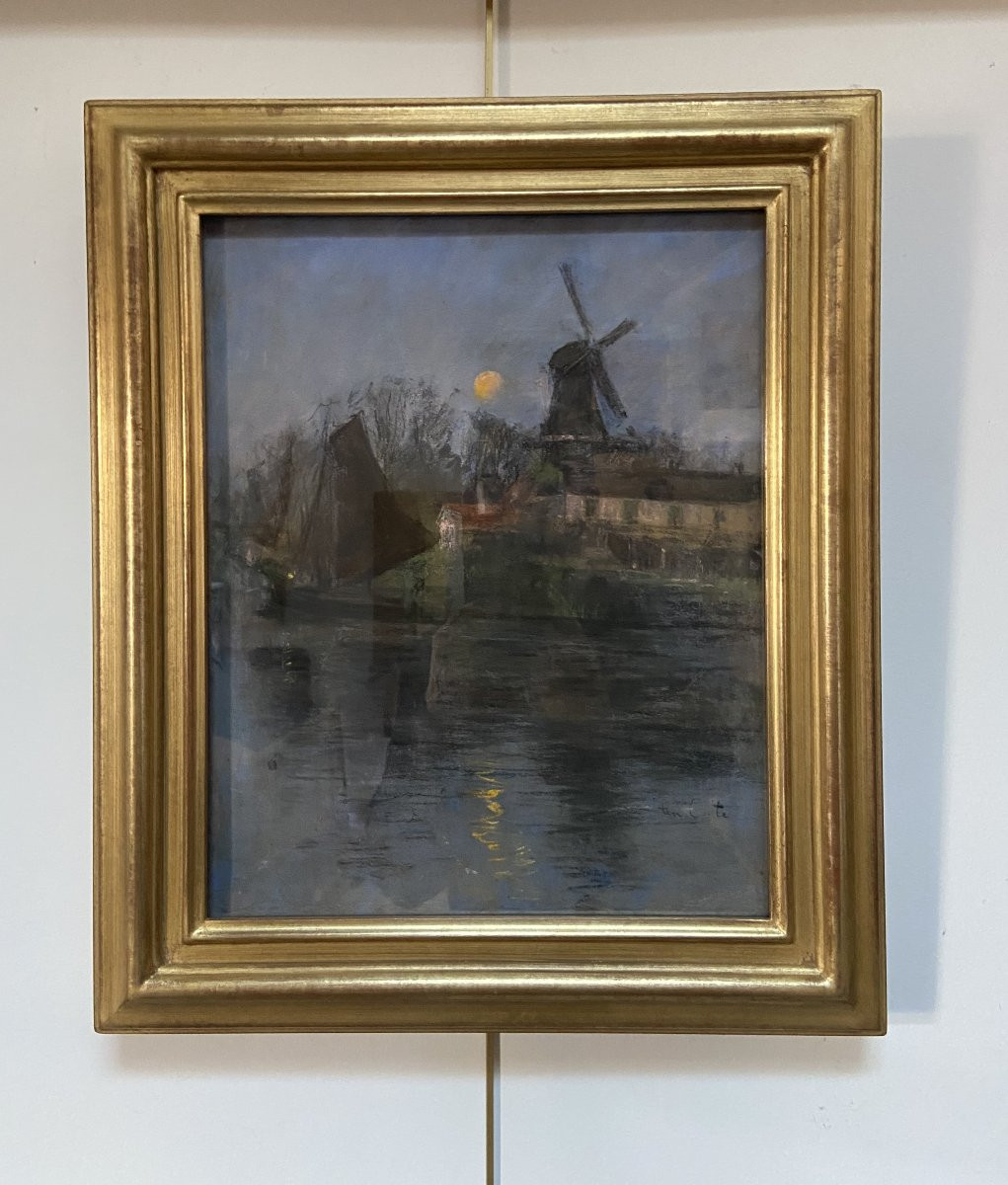
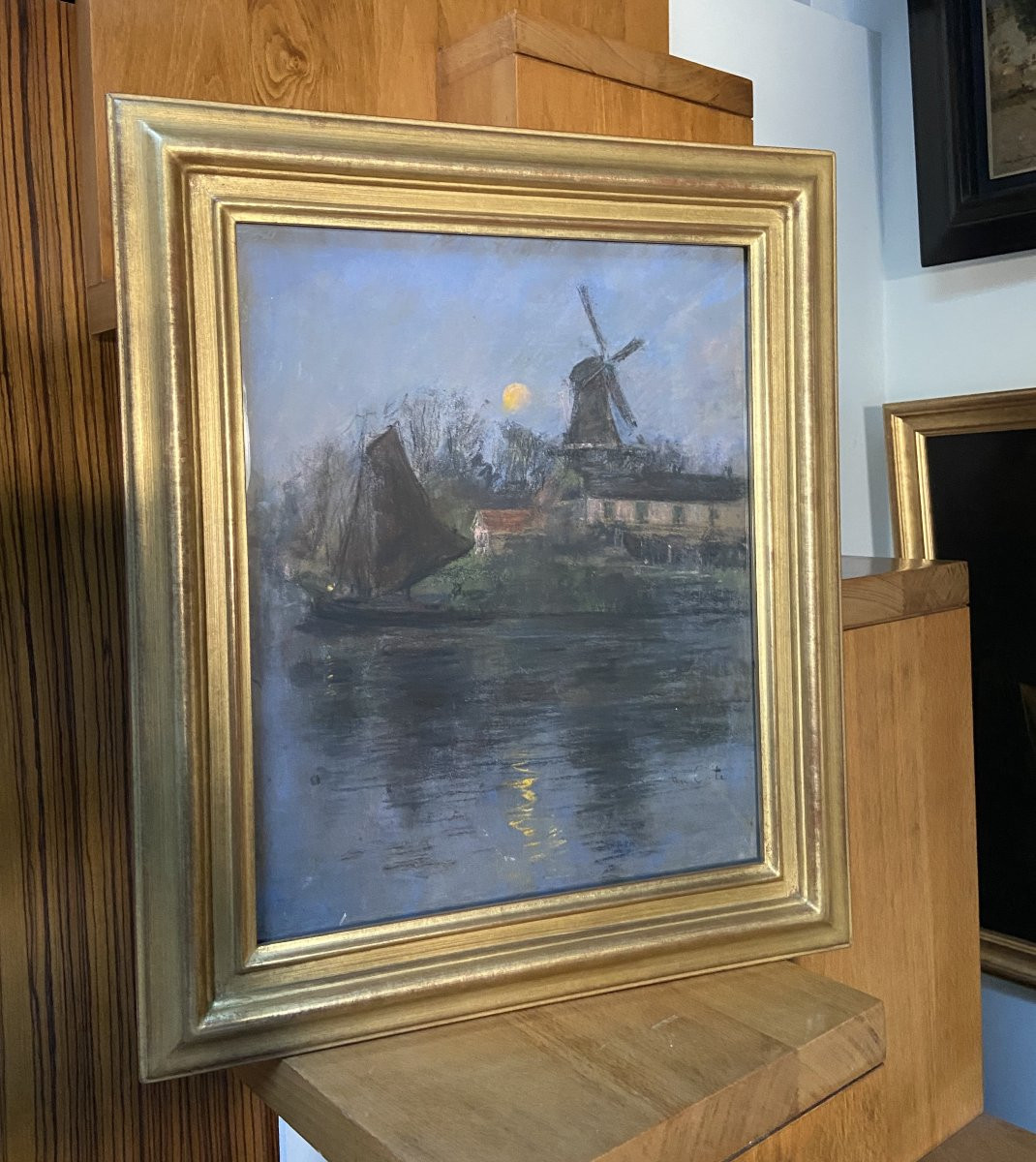
Framed under glass: 52 x 44 cm
Our pastel is listed in the catalogue raisonné of Ten Cate’s work, published online by the RKD. The publication notes that it was once part of Ambroise Vollard’s collection, as were other works by Ten Cate. The RKD’s website dedicated to the artist is full of highly detailed information about his life and work.
This landscape depicts the surroundings of the town of Dordrecht, famous for its windmills. Although Ten Cate lived in Paris during his life as an artist and made a career there, it's clear that he remained attached to his native country. Throughout his career, he was particularly fond of depicting rivers and streams and the play of reflections they offer; the reflection of the moon in the canal water is a fine example of his typically Impressionist pastel work.
"A realist, Ten Cate pays scrupulous attention to details, impressions, the bustle of crowds and the solitude of deserted places. We've mentioned the variations in tone linked to the time of day and the seasons. Rainy and snowy weather, water and ice are generally chosen by the painter, who uses pastels for this purpose."
Véronique Prest in "Catalogue des pastels du Musée Carnavalet"
Siebe Johannes Ten Cate was born in Sneek (Netherlands) on February 27, 1858. His father was mayor of the town.
In 1876, Siebe decided to enter the Academy of Fine Arts in The Hague and, after graduating, continued his studies in Antwerp and Brussels. At the age of twenty-two, he moved to Paris and opened his own studio.
He soon found himself influenced by Impressionism.
He traveled frequently in search of inspiration, visiting England, Scandinavia, Switzerland, North Africa and North America. However, his home remained 65 rue de Malte in Paris, where he lived with his cats and dog. Ten Cate led a reclusive life, devoting himself to an impressive body of work in which landscapes and cityscapes are most often immersed in an atmosphere of rain and snow.
He exhibited frequently, notably at the Salon d'Automne, but his work was not as highly regarded in the Netherlands as it was in France; so, although he went there on numerous occasions, he never returned.
The French press was full of praise for Ten Cate. He was dubbed, for example, "the new Jongkind". After his death, an English newspaper headlined "Sad end to a genius".
French museums and galleries began to take an interest in Siebe ten Cate's work in the 1890s.
The Louvre bought no fewer than four paintings from him, and the Musée Carnavalet even acquired a good twenty. Art dealers such as Durand-Ruel and Ambroise Vollard exhibited ten Cate in their galleries alongside famous Impressionists. Ten Cate befriended Alfred Sisley, Camille Pissarro and Vincent van Gogh. Van Gogh described Ten Cate as "a very neat man, dressed entirely in black".
His paintings and pastels were exhibited at the Salon d'Automne alongside those of Jean-Baptiste Corot.
His favorite subjects were landscapes, views of towns and ports, often populated by figures. Le Havre was one of his favorite places. He also produced a number of engravings and lithographs.
He died in a Paris street of a sudden attack of "congestion". Later, unfounded rumors circulated that he had died of starvation or had been shot by a rival artist. For many years, his work was neglected in the Netherlands. A major retrospective was held at the Fries Scheepvaart Museum in 2012.
Injustifiably forgotten for some time, he has fortunately returned to the favor of art lovers, who are now giving him his rightful place. His works are held in various museums: Amsterdam (Rijksmuseum), Paris (Musée Carnavalet, Musée d'Orsay, Fondation Custodia) and Geneva (Petit Palais), Cleveland (Cleveland Museum of Art)
.
Moonlight windmill and sailboat,
Signed lower right
Pastel on paper
40 x 31 cm
Framed under glass: 52 x 44 cm
Our pastel is listed in the catalogue raisonné of Ten Cate’s work, published online by the RKD. The publication notes that it was once part of Ambroise Vollard’s collection, as were other works by Ten Cate. The RKD’s website dedicated to the artist is full of highly detailed information about his life and work.
This landscape depicts the surroundings of the town of Dordrecht, famous for its windmills. Although Ten Cate lived in Paris during his life as an artist and made a career there, it's clear that he remained attached to his native country. Throughout his career, he was particularly fond of depicting rivers and streams and the play of reflections they offer; the reflection of the moon in the canal water is a fine example of his typically Impressionist pastel work.
"A realist, Ten Cate pays scrupulous attention to details, impressions, the bustle of crowds and the solitude of deserted places. We've mentioned the variations in tone linked to the time of day and the seasons. Rainy and snowy weather, water and ice are generally chosen by the painter, who uses pastels for this purpose."
Véronique Prest in "Catalogue des pastels du Musée Carnavalet"
Siebe Johannes Ten Cate was born in Sneek (Netherlands) on February 27, 1858. His father was mayor of the town.
In 1876, Siebe decided to enter the Academy of Fine Arts in The Hague and, after graduating, continued his studies in Antwerp and Brussels. At the age of twenty-two, he moved to Paris and opened his own studio.
He soon found himself influenced by Impressionism.
He traveled frequently in search of inspiration, visiting England, Scandinavia, Switzerland, North Africa and North America. However, his home remained 65 rue de Malte in Paris, where he lived with his cats and dog. Ten Cate led a reclusive life, devoting himself to an impressive body of work in which landscapes and cityscapes are most often immersed in an atmosphere of rain and snow.
He exhibited frequently, notably at the Salon d'Automne, but his work was not as highly regarded in the Netherlands as it was in France; so, although he went there on numerous occasions, he never returned.
The French press was full of praise for Ten Cate. He was dubbed, for example, "the new Jongkind". After his death, an English newspaper headlined "Sad end to a genius".
French museums and galleries began to take an interest in Siebe ten Cate's work in the 1890s.
The Louvre bought no fewer than four paintings from him, and the Musée Carnavalet even acquired a good twenty. Art dealers such as Durand-Ruel and Ambroise Vollard exhibited ten Cate in their galleries alongside famous Impressionists. Ten Cate befriended Alfred Sisley, Camille Pissarro and Vincent van Gogh. Van Gogh described Ten Cate as "a very neat man, dressed entirely in black".
His paintings and pastels were exhibited at the Salon d'Automne alongside those of Jean-Baptiste Corot.
His favorite subjects were landscapes, views of towns and ports, often populated by figures. Le Havre was one of his favorite places. He also produced a number of engravings and lithographs.
He died in a Paris street of a sudden attack of "congestion". Later, unfounded rumors circulated that he had died of starvation or had been shot by a rival artist. For many years, his work was neglected in the Netherlands. A major retrospective was held at the Fries Scheepvaart Museum in 2012.
Injustifiably forgotten for some time, he has fortunately returned to the favor of art lovers, who are now giving him his rightful place. His works are held in various museums: Amsterdam (Rijksmuseum), Paris (Musée Carnavalet, Musée d'Orsay, Fondation Custodia) and Geneva (Petit Palais), Cleveland (Cleveland Museum of Art)
.
1 850 €
Period: 19th century
Style: Art Nouveau
Condition: Good condition
Material: Pastel
Width: 40
Height: 31
Reference (ID): 1744115
Availability: In stock
Print