


Eugène Devéria (1805-1865) Dona Clarice, Drawing Of 1828, Signed And Dated
Artist: Eugène Devéria (1805-1865)
Eugène Devéria (1805-1865)
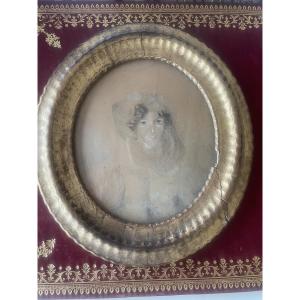
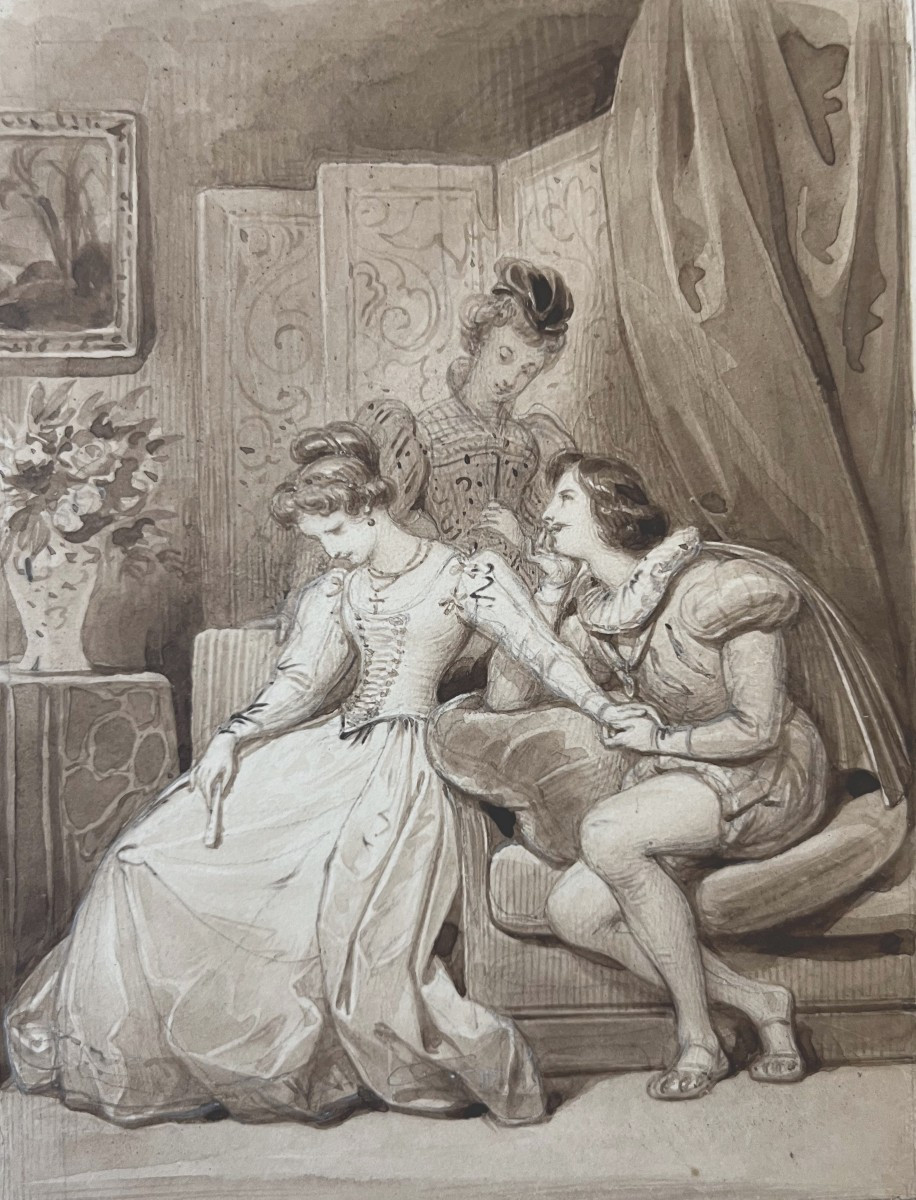
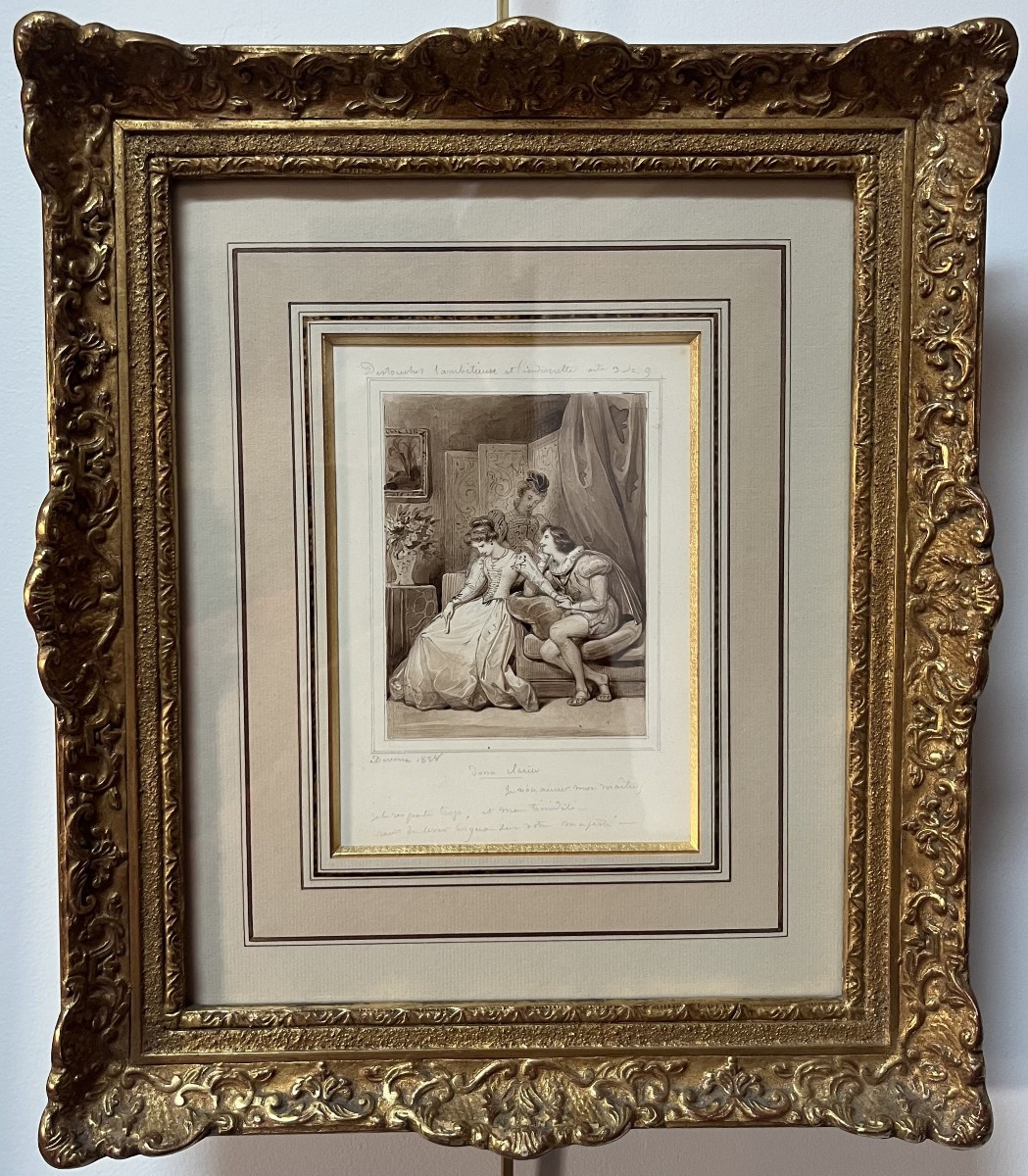
Dona Clarice, 1828
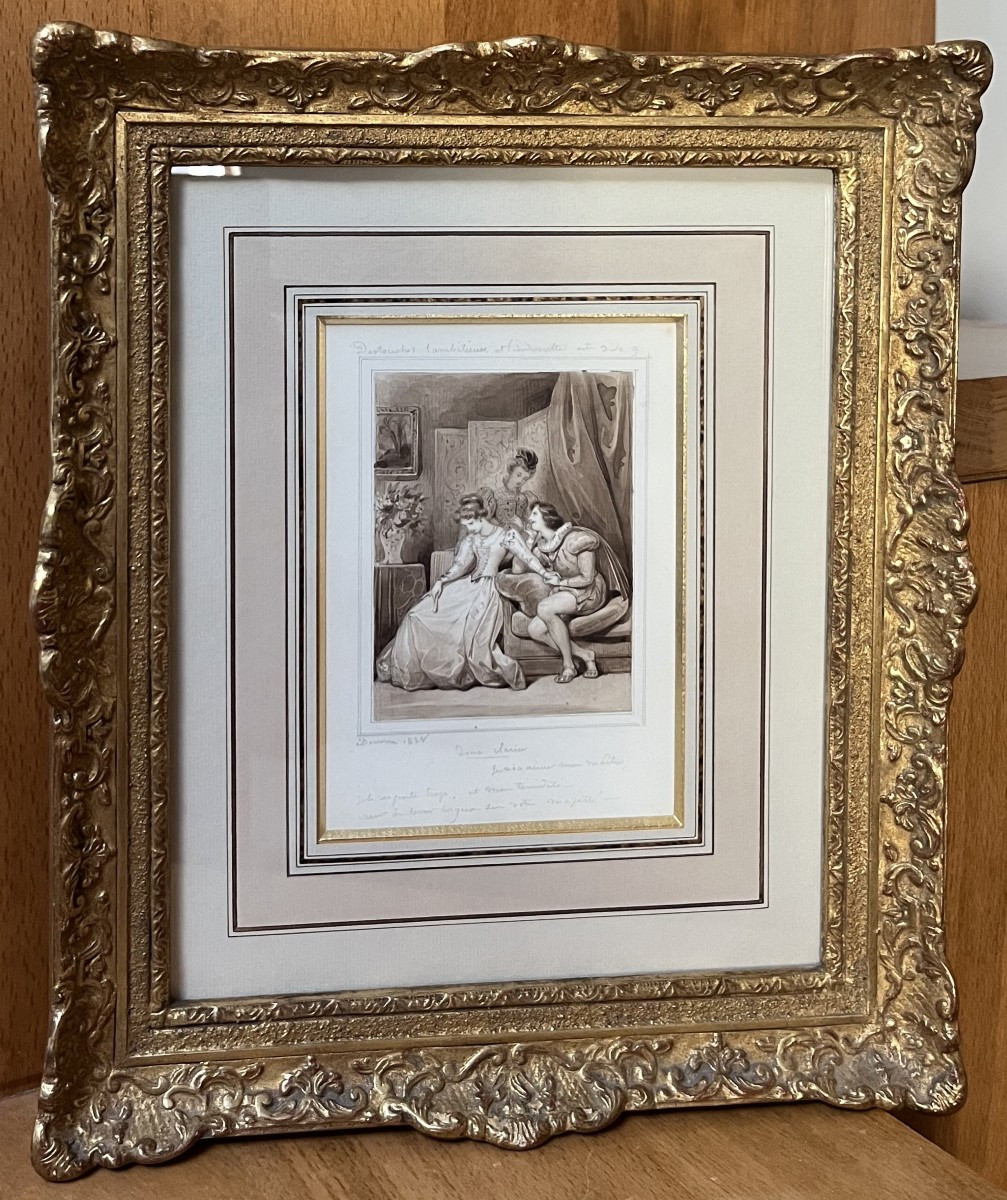
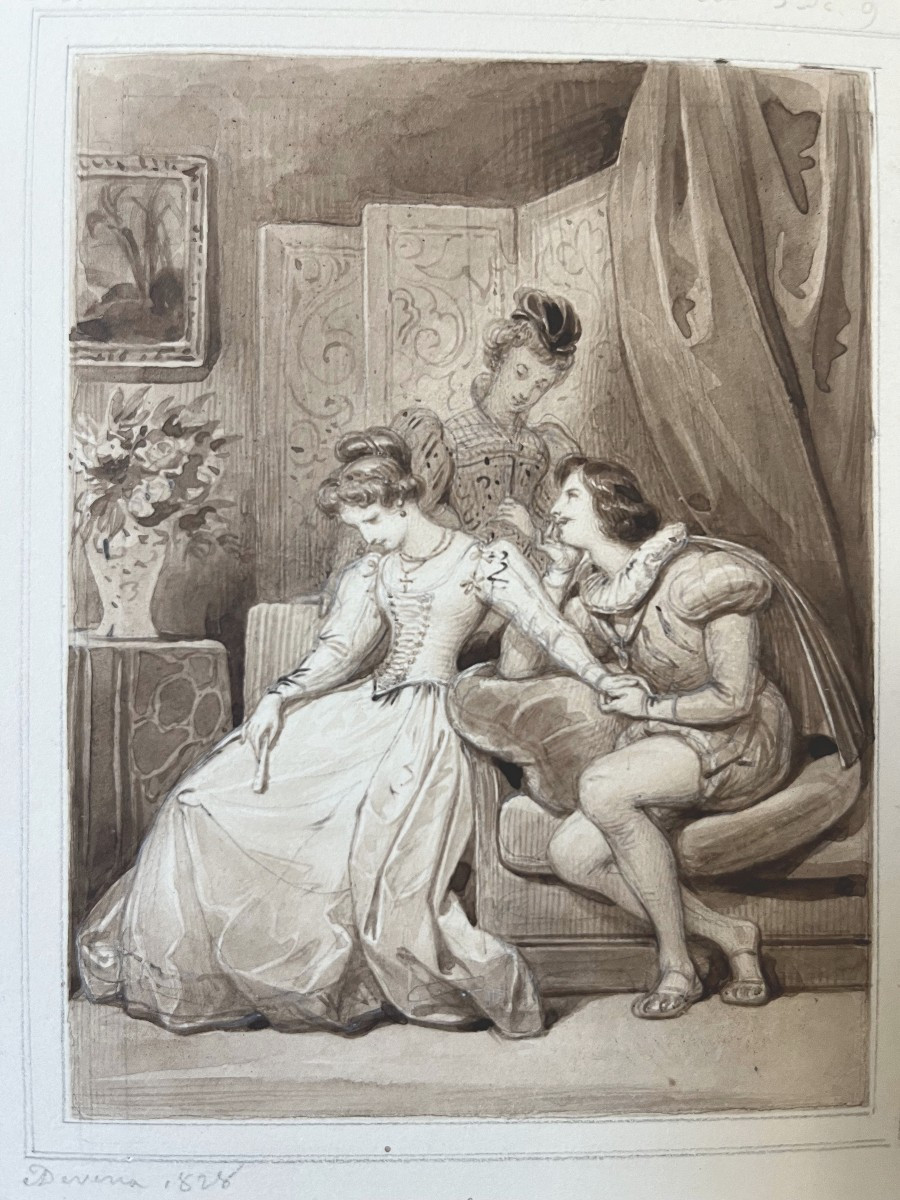
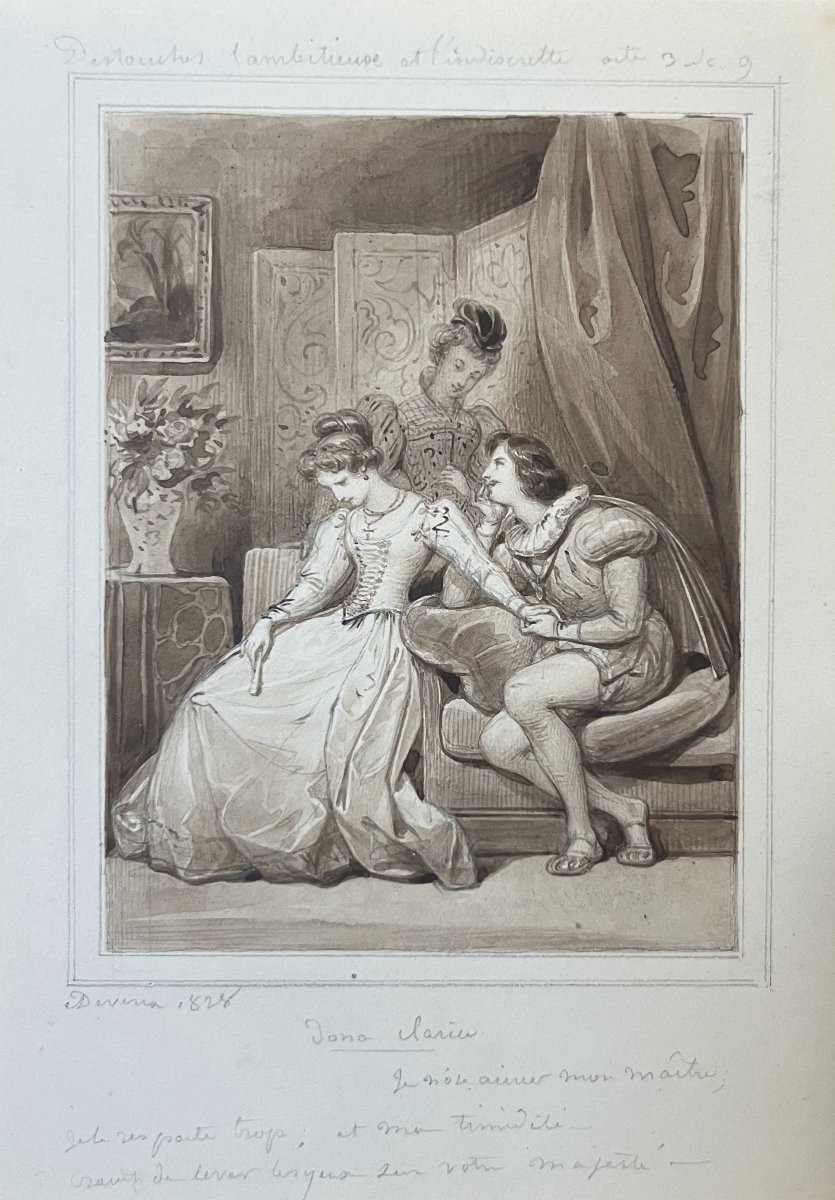
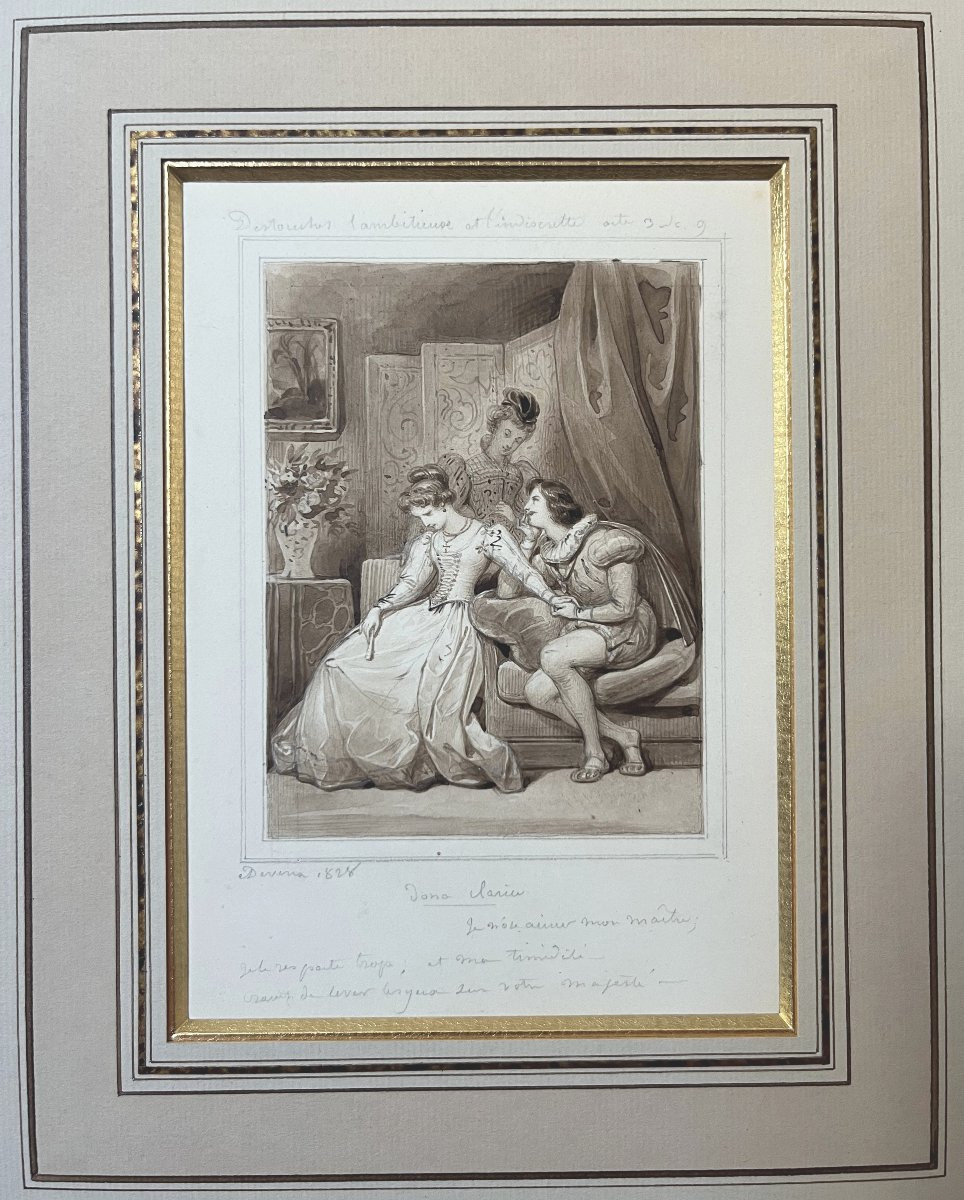
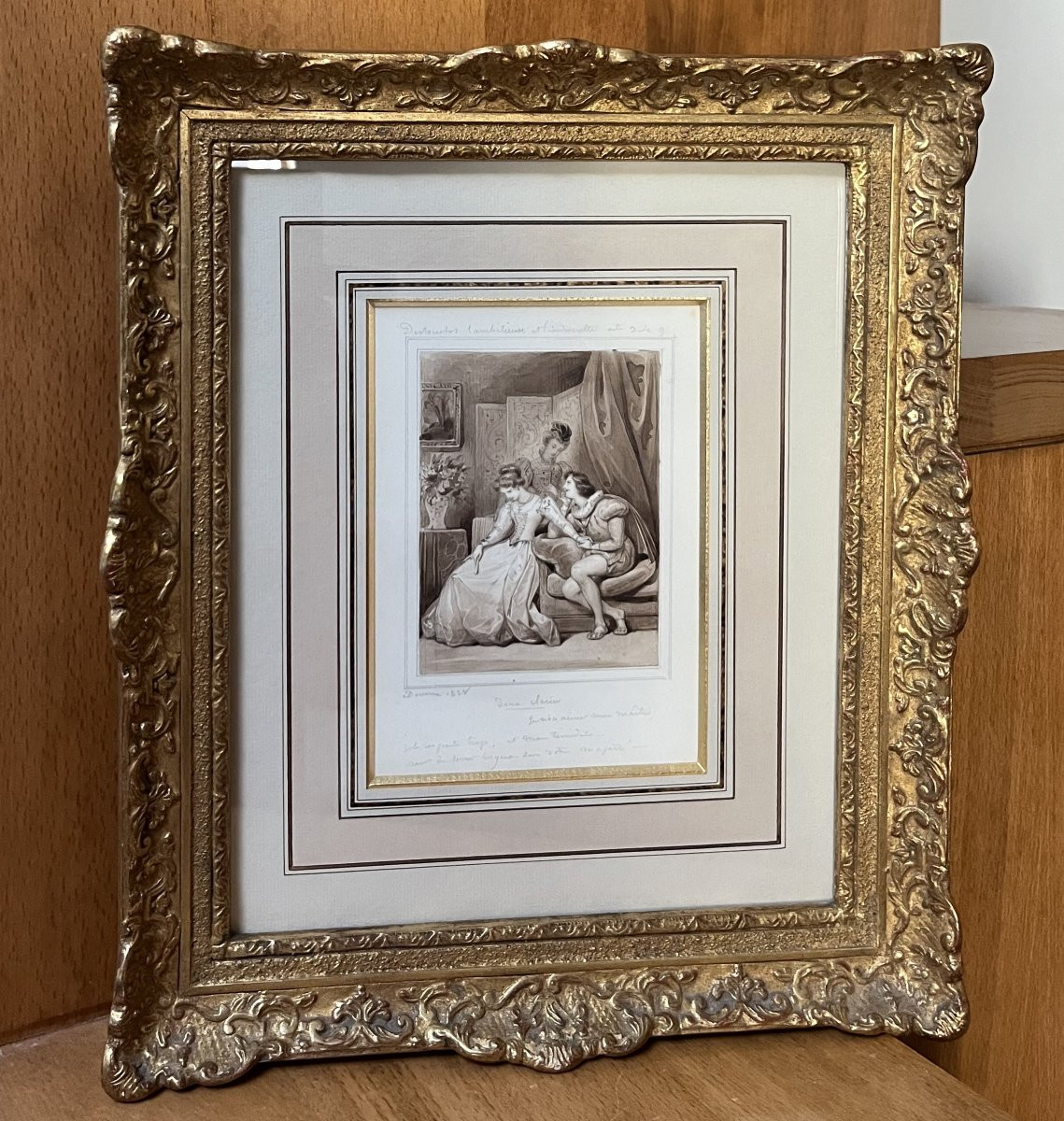
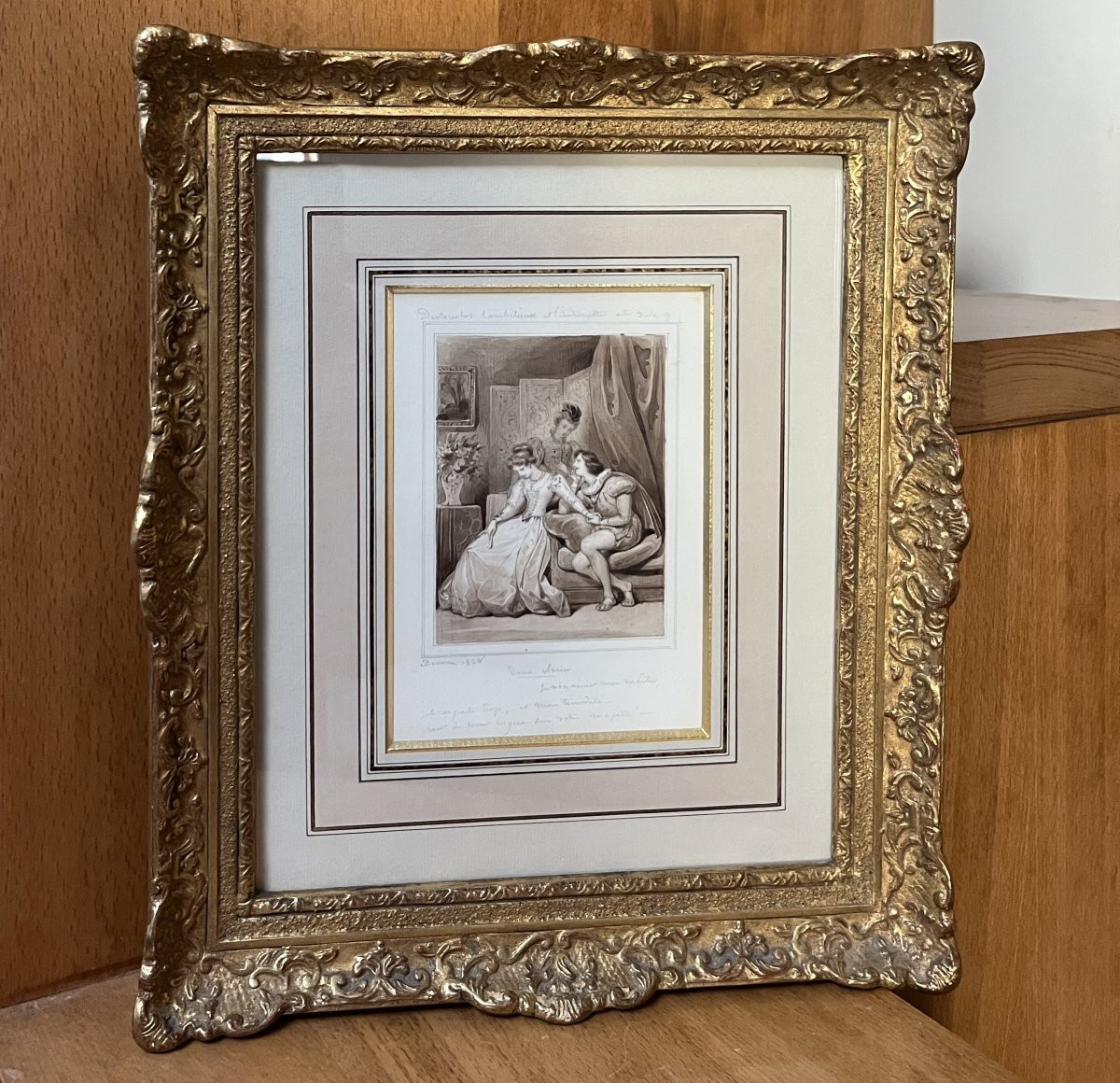
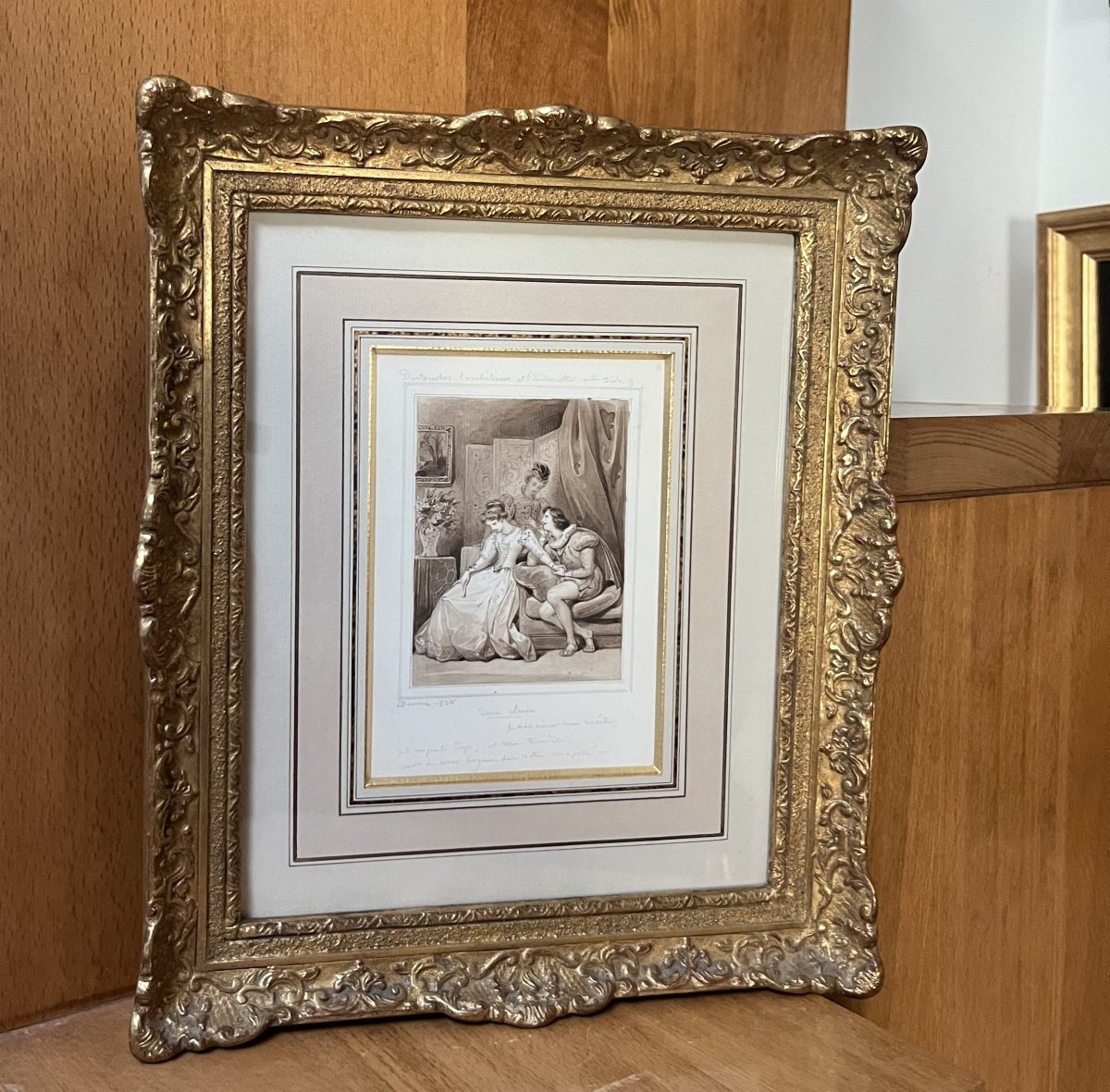
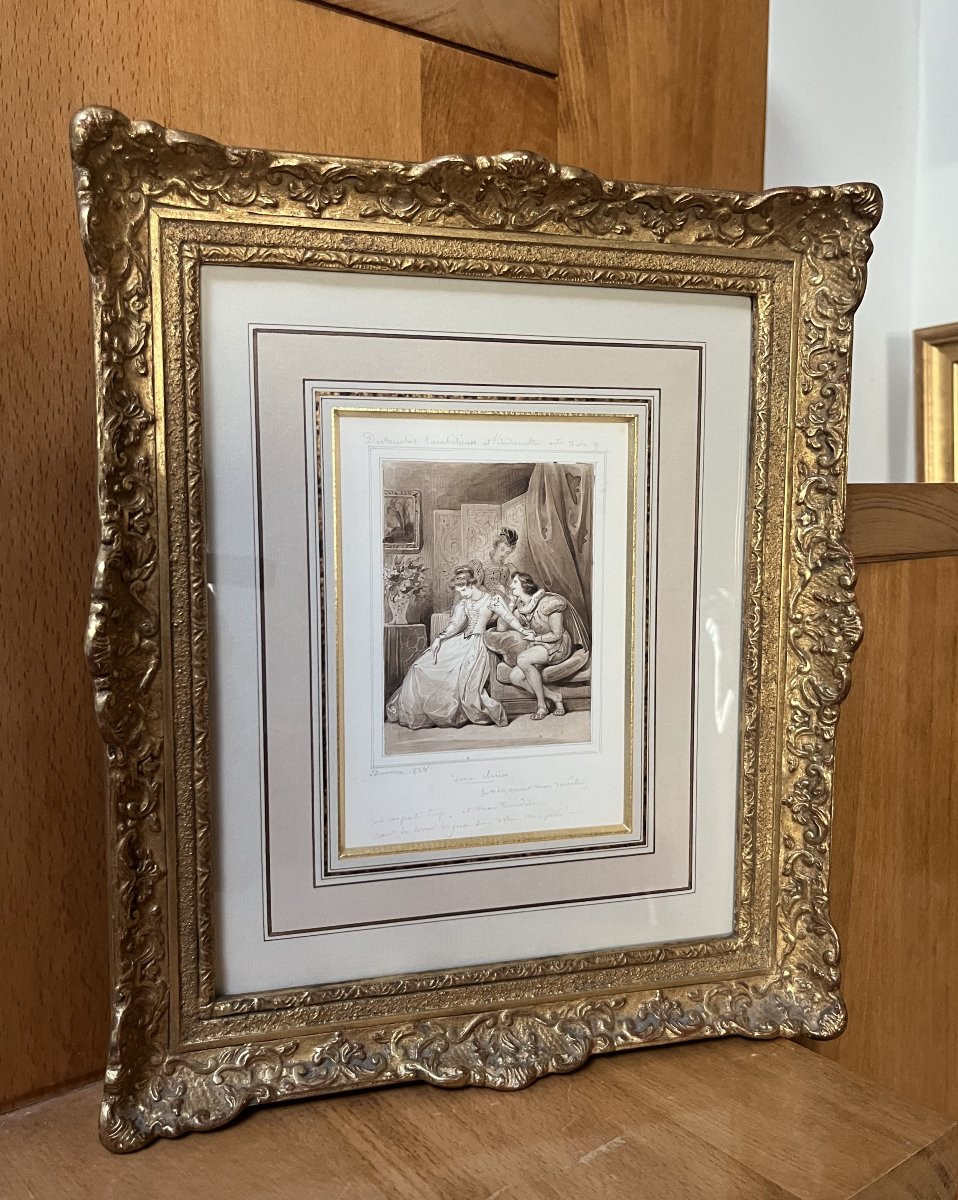
Title in pencil at top: "Destouches, l'ambitieuse et l'indiscrete, Acte III, Scène IX" Signed and dated at bottom, "Deveria 1828", and accompanied by an annotation repeating the extract from the play corresponding to this scene: "Dona Clarice: I dare not love my master; I respect him too much, and my shyness prevents me from raising my eyes to Your Majesty. "
Pen, brown ink and brown ink wash on paper
11 x 8.5 cm for the drawn part
16.5 x 11.5 cm for the sheet dimensions
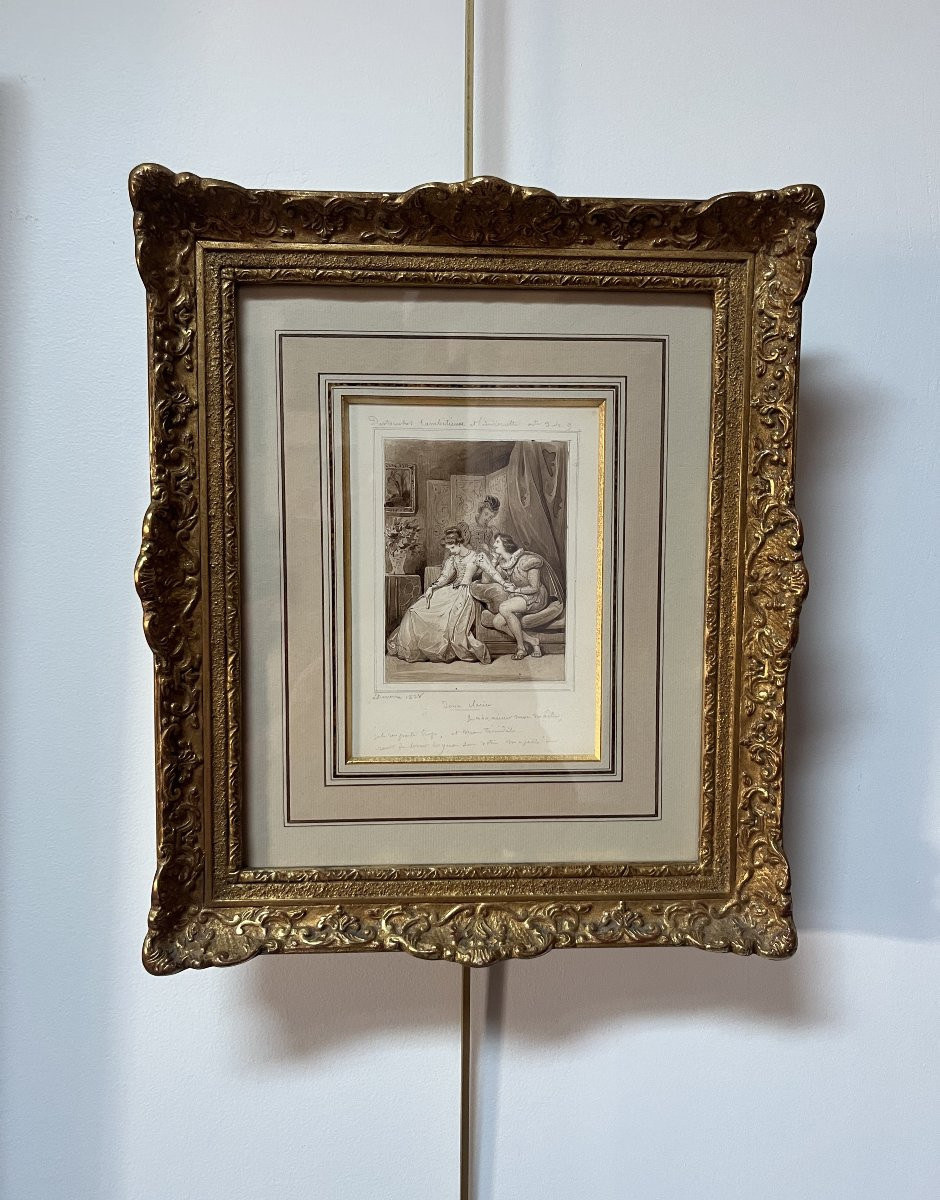
Framed: 34 x 29 cm
Eugène Devéria was inspired, for this delicate and particularly refined scene, by a passage from Philippe Néricault Destouches' play, *L'ambitieux et l'indiscrète*.
The play, which dates from 1737, tells how the planned marriage between the King of Castile and the Infanta of Aragon is thwarted by the intrigues of Dona Beatriz, who tries to make him succumb to the charms of her niece, Dona Clarice.
The Machiavellian aunt is seen in the background of the scene, while the King is depicted holding Dona Clarice's hand.
This work is fully in the spirit of French Romanticism, of which Eugène Devéria was a leading exponent, given his passion for theater and history.
First and foremost, he demonstrates his artistic talent through his ability to depict scenes with great precision on a small scale, using the demanding technique of Indian ink.
Eugène Devéria was born in Paris on April 22, 1805 and died in Pau in February 1865. Along with Eugène Delacroix and Louis Boulanger, he was one of the leading exponents of the French Romantic movement in painting.
The Devéria family was a family of artists that included not only Achille and Eugène, but also Laure, the youngest, who demonstrated a real talent for drawing and exhibited successfully at the Salon. She died prematurely in May 1838.
In the 1820s and 1830s, the Devéria's Parisian home attracted artists and musicians: "Romanticism was at home with the Devéria's, as they said then...", the poet Théophile Gautier, Eugène's great friend, recalled years later.
He studied at the École des Beaux-Arts in Paris under Girodet-Trioson and Guillaume Guillon-Lethière.
The young painter received numerous official commissions: a painting for the ceiling of a room in the Louvre, entitled "Puget presenting his Milon de Crotone to Louis XIV"; portraits of historical figures for the Musée de l'Histoire de France that Louis-Philippe wished to create in Versailles; he took part in the construction of the Notre-Dame-de-Lorette church in Paris. In 1838, he accepted a proposal to leave the capital for Avignon, where he was asked to redo the entire painted decoration of Notre-Dame-des-Doms cathedral. The scale of the task, the insalubrious conditions and a terrible flood in which he and his family almost perished, exhausted the painter who, ill and weakened, left the papal city to recuperate in Béarn. In 1841, having recovered, he settled permanently in Pau, where he remained until his death.
His works are held in several museums, including the Louvre in Paris, the Metropolitan Museum of Art in New York and the Museum of Fine Arts in Houston.
Dona Clarice, 1828
Title in pencil at top: "Destouches, l'ambitieuse et l'indiscrete, Acte III, Scène IX" Signed and dated at bottom, "Deveria 1828", and accompanied by an annotation repeating the extract from the play corresponding to this scene: "Dona Clarice: I dare not love my master; I respect him too much, and my shyness prevents me from raising my eyes to Your Majesty. "
Pen, brown ink and brown ink wash on paper
11 x 8.5 cm for the drawn part
16.5 x 11.5 cm for the sheet dimensions
Framed: 34 x 29 cm
Eugène Devéria was inspired, for this delicate and particularly refined scene, by a passage from Philippe Néricault Destouches' play, *L'ambitieux et l'indiscrète*.
The play, which dates from 1737, tells how the planned marriage between the King of Castile and the Infanta of Aragon is thwarted by the intrigues of Dona Beatriz, who tries to make him succumb to the charms of her niece, Dona Clarice.
The Machiavellian aunt is seen in the background of the scene, while the King is depicted holding Dona Clarice's hand.
This work is fully in the spirit of French Romanticism, of which Eugène Devéria was a leading exponent, given his passion for theater and history.
First and foremost, he demonstrates his artistic talent through his ability to depict scenes with great precision on a small scale, using the demanding technique of Indian ink.
Eugène Devéria was born in Paris on April 22, 1805 and died in Pau in February 1865. Along with Eugène Delacroix and Louis Boulanger, he was one of the leading exponents of the French Romantic movement in painting.
The Devéria family was a family of artists that included not only Achille and Eugène, but also Laure, the youngest, who demonstrated a real talent for drawing and exhibited successfully at the Salon. She died prematurely in May 1838.
In the 1820s and 1830s, the Devéria's Parisian home attracted artists and musicians: "Romanticism was at home with the Devéria's, as they said then...", the poet Théophile Gautier, Eugène's great friend, recalled years later.
He studied at the École des Beaux-Arts in Paris under Girodet-Trioson and Guillaume Guillon-Lethière.
The young painter received numerous official commissions: a painting for the ceiling of a room in the Louvre, entitled "Puget presenting his Milon de Crotone to Louis XIV"; portraits of historical figures for the Musée de l'Histoire de France that Louis-Philippe wished to create in Versailles; he took part in the construction of the Notre-Dame-de-Lorette church in Paris. In 1838, he accepted a proposal to leave the capital for Avignon, where he was asked to redo the entire painted decoration of Notre-Dame-des-Doms cathedral. The scale of the task, the insalubrious conditions and a terrible flood in which he and his family almost perished, exhausted the painter who, ill and weakened, left the papal city to recuperate in Béarn. In 1841, having recovered, he settled permanently in Pau, where he remained until his death.
His works are held in several museums, including the Louvre in Paris, the Metropolitan Museum of Art in New York and the Museum of Fine Arts in Houston.
600 €
Period: 19th century
Style: Louis Philippe, Charles 10th
Condition: Good condition
Material: Paper
Width: 8.5
Height: 11
Reference (ID): 1745653
Availability: In stock
Print