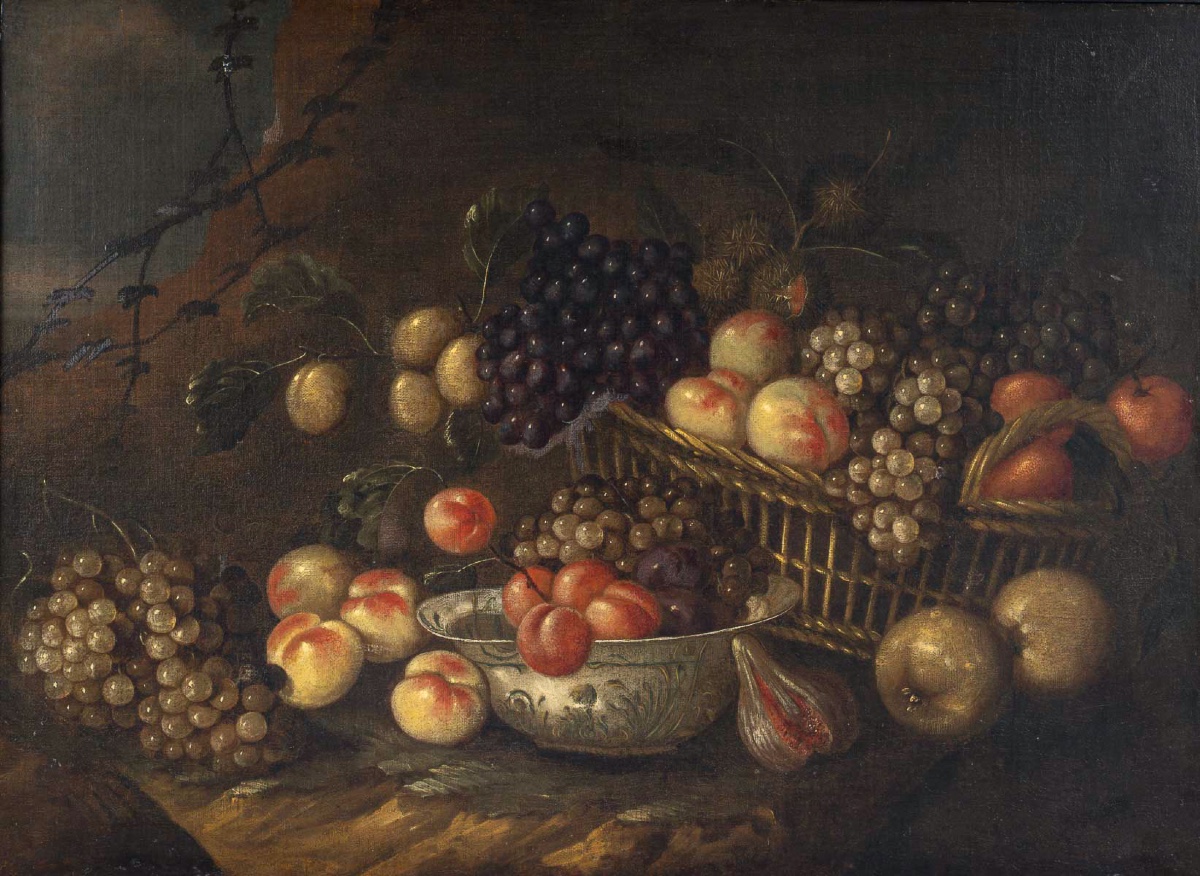
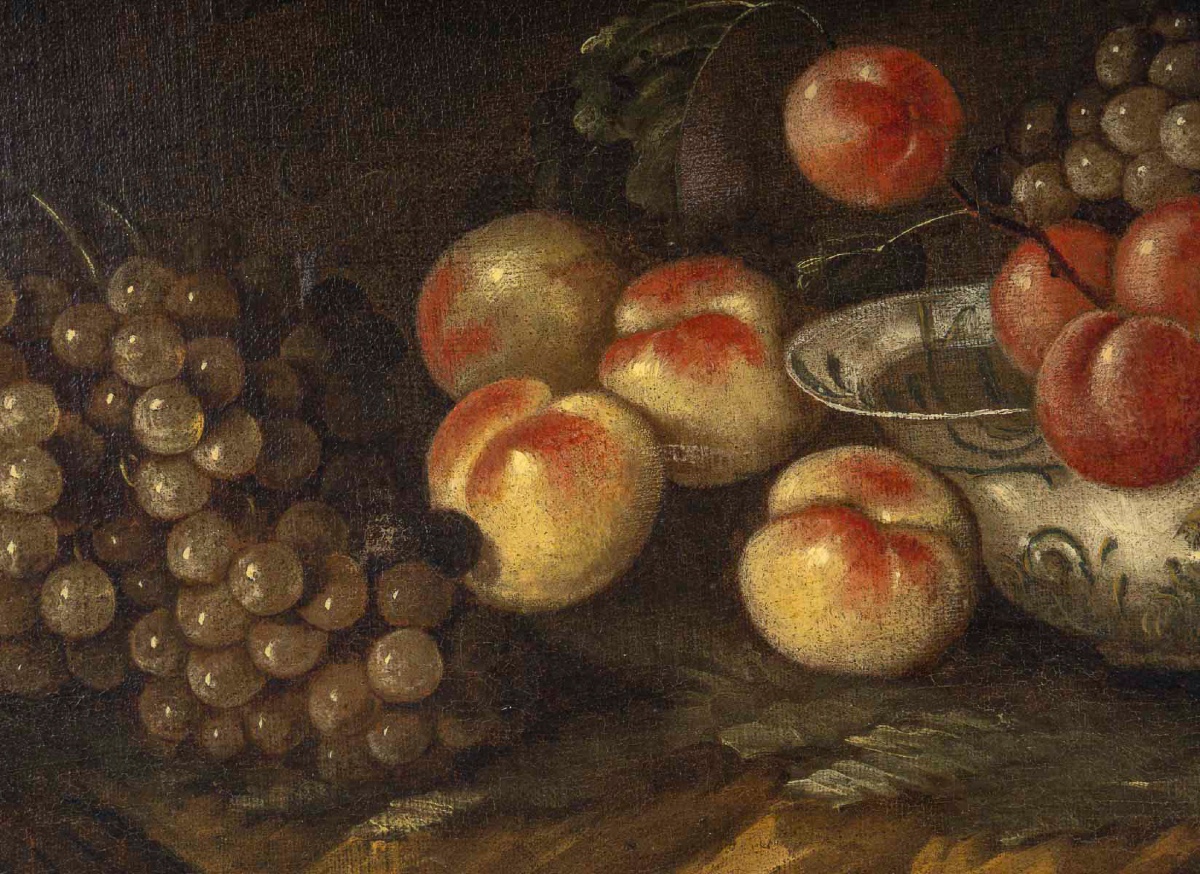
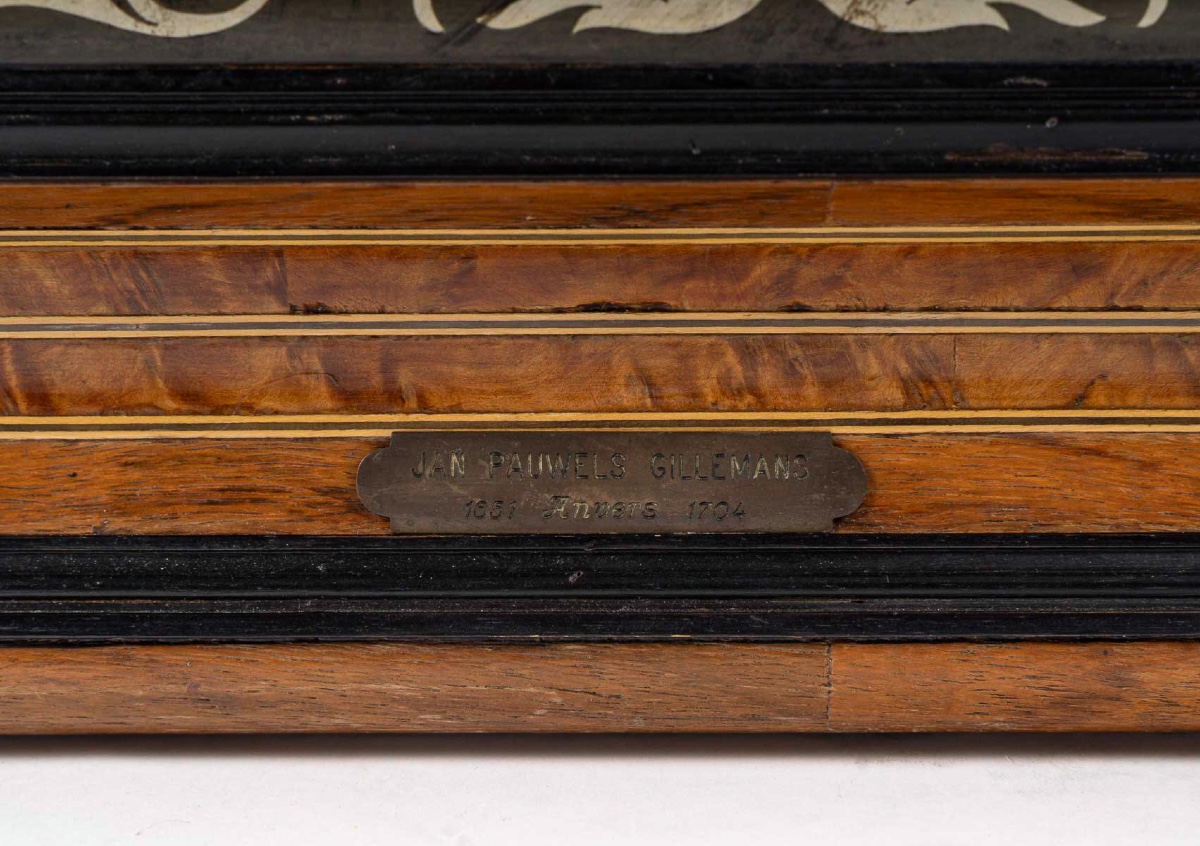


Jan Pauwels Gillemans (1651-1704) Still Life With Fruit And Grapes Oil On Canvas, Circa 1700
Jan Pauwels Gillemans (1651–1704) – Still Life with Fruits and Grapes, Oil on Canvas, c. 1690–1700
Description:
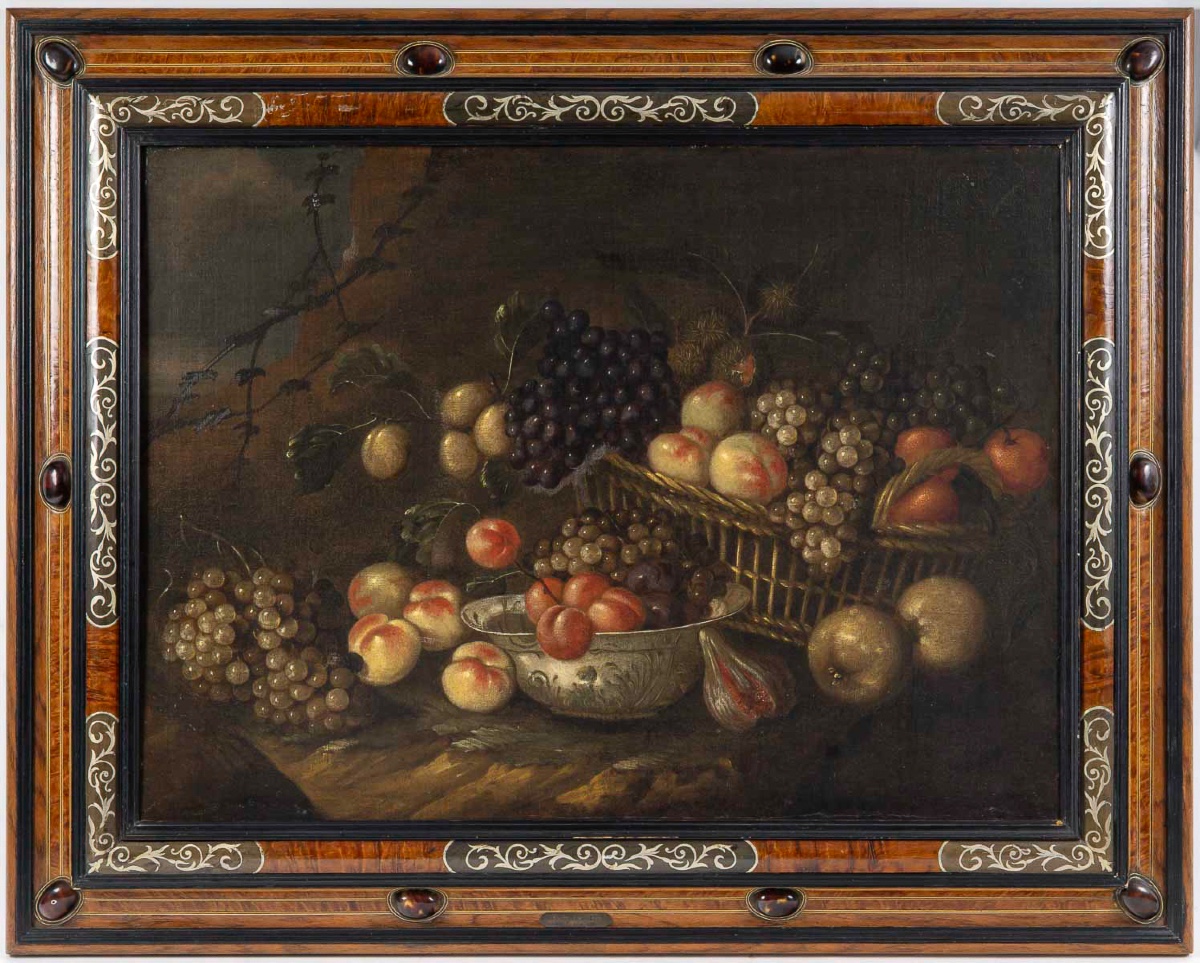
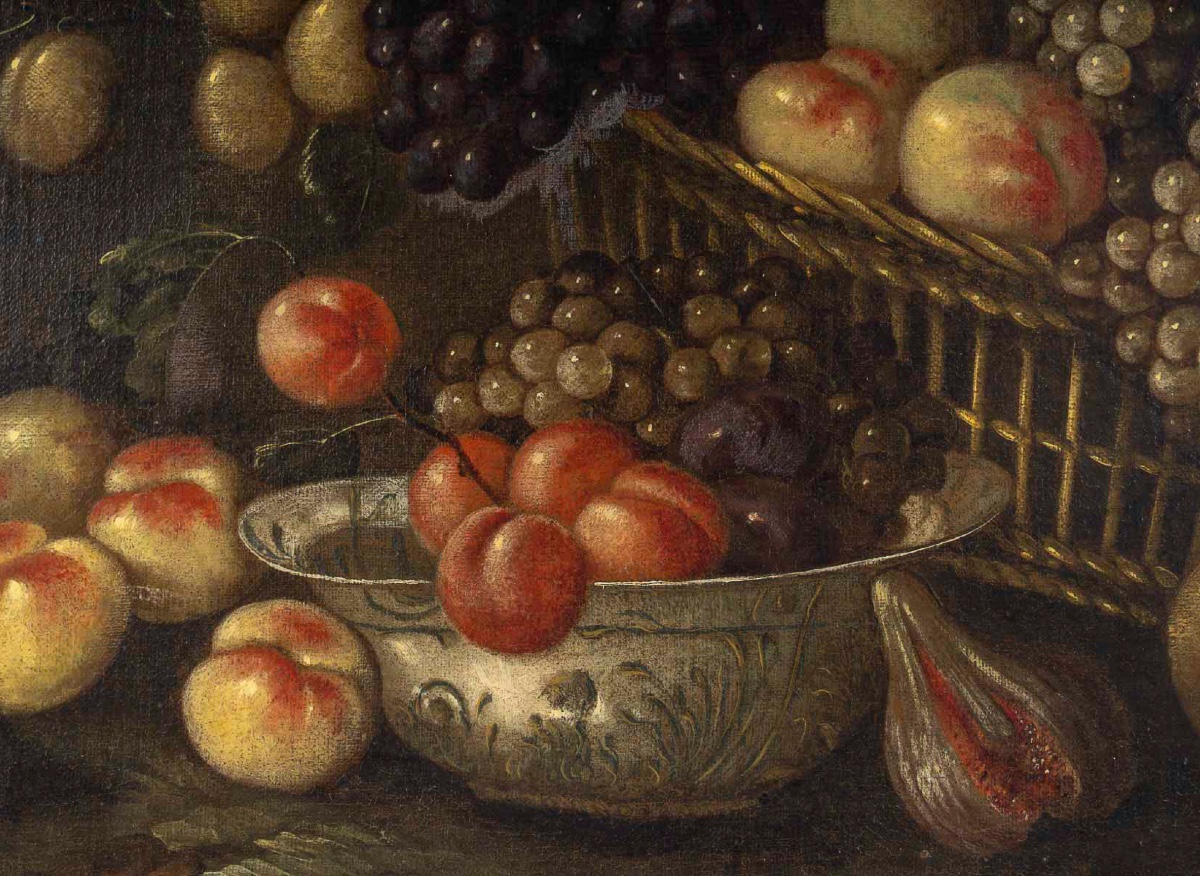
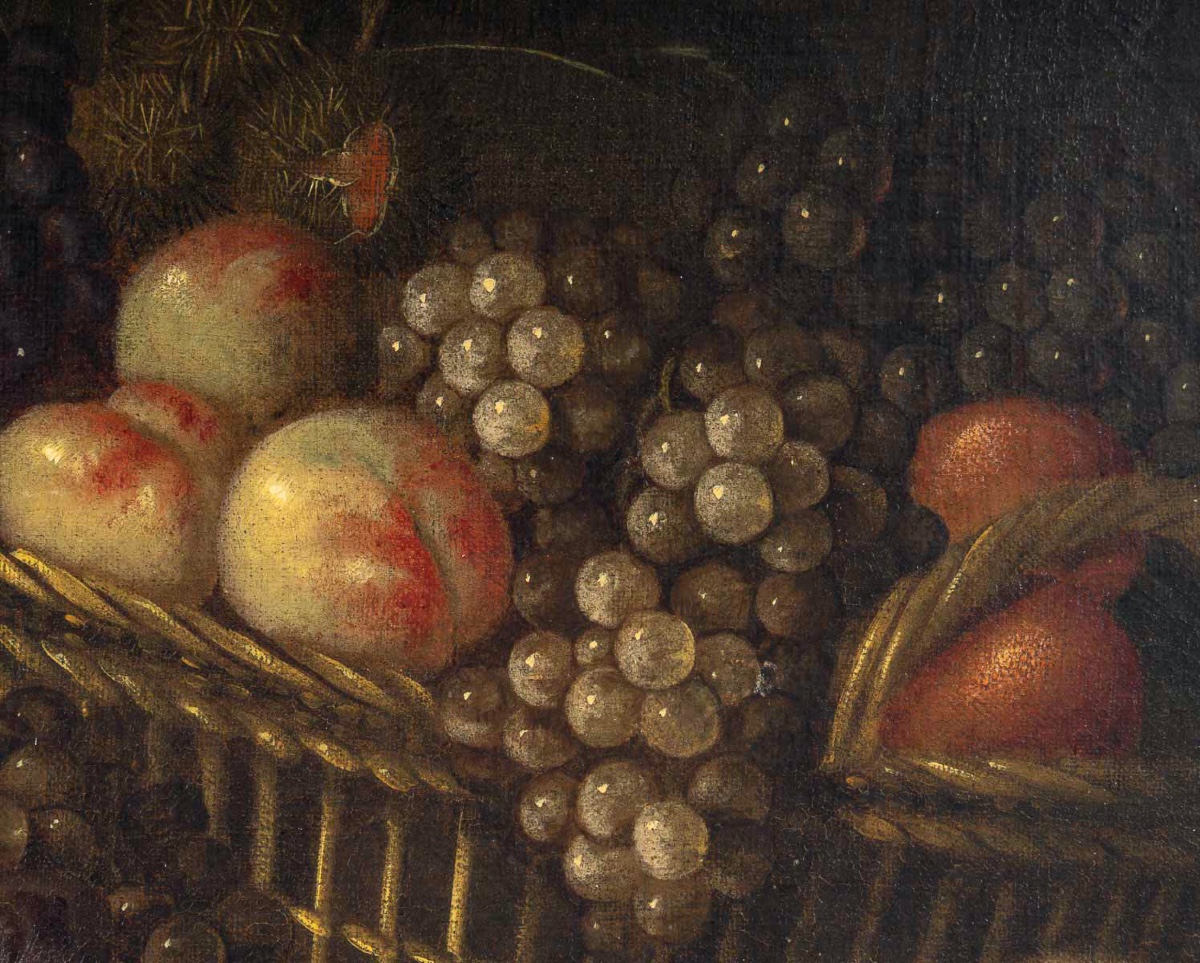
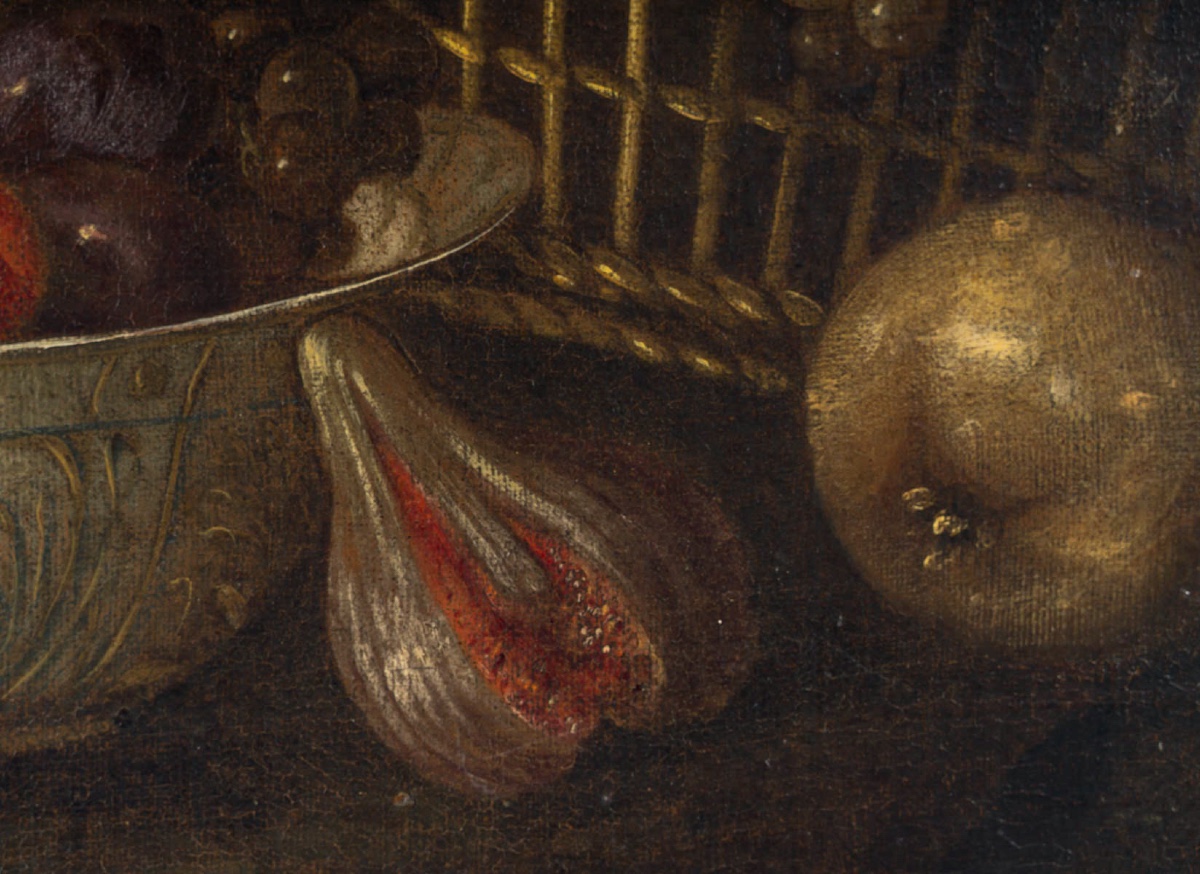
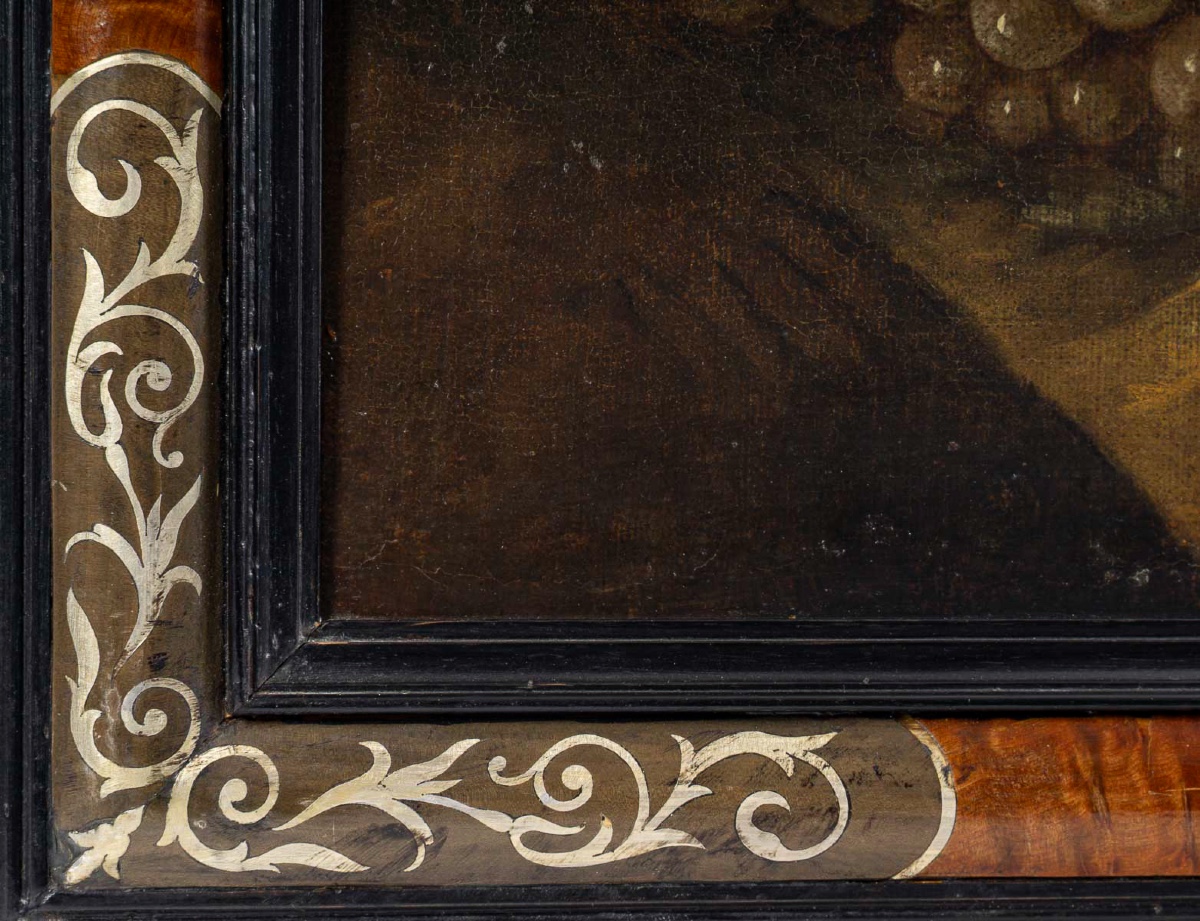
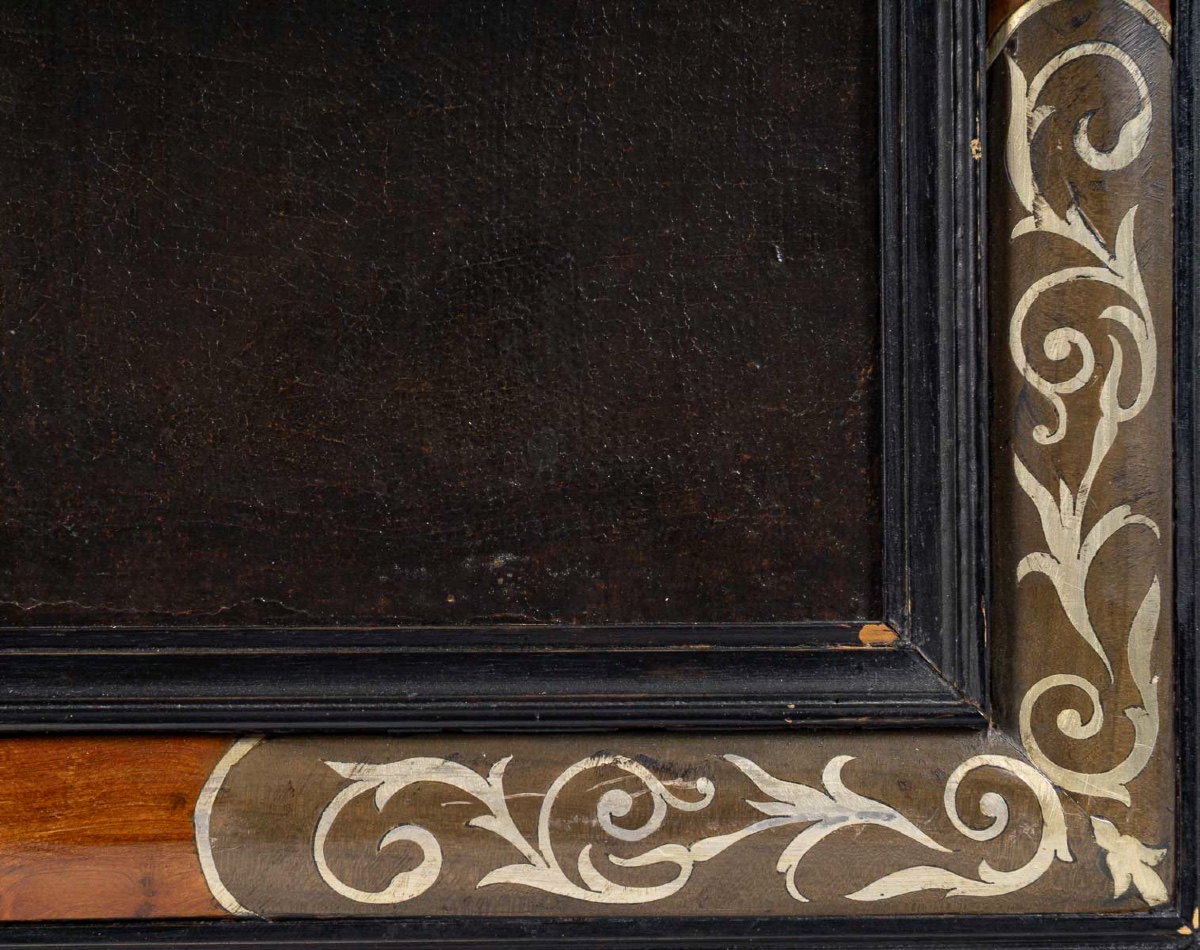
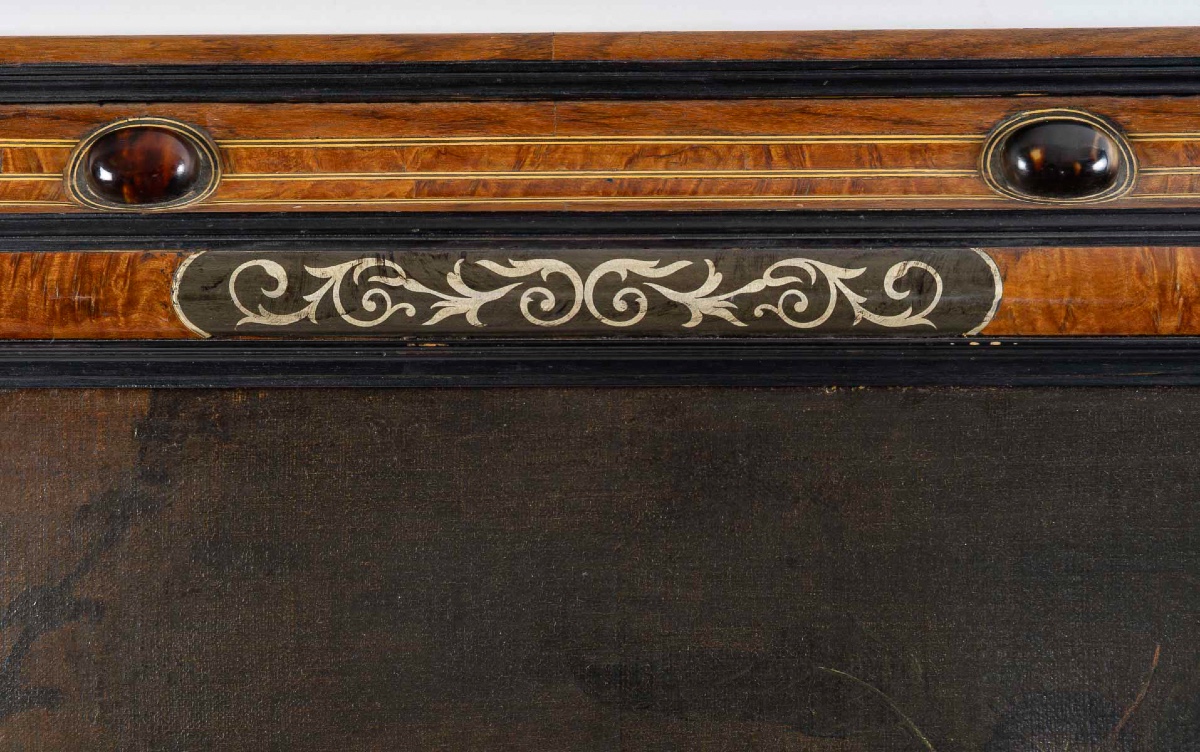
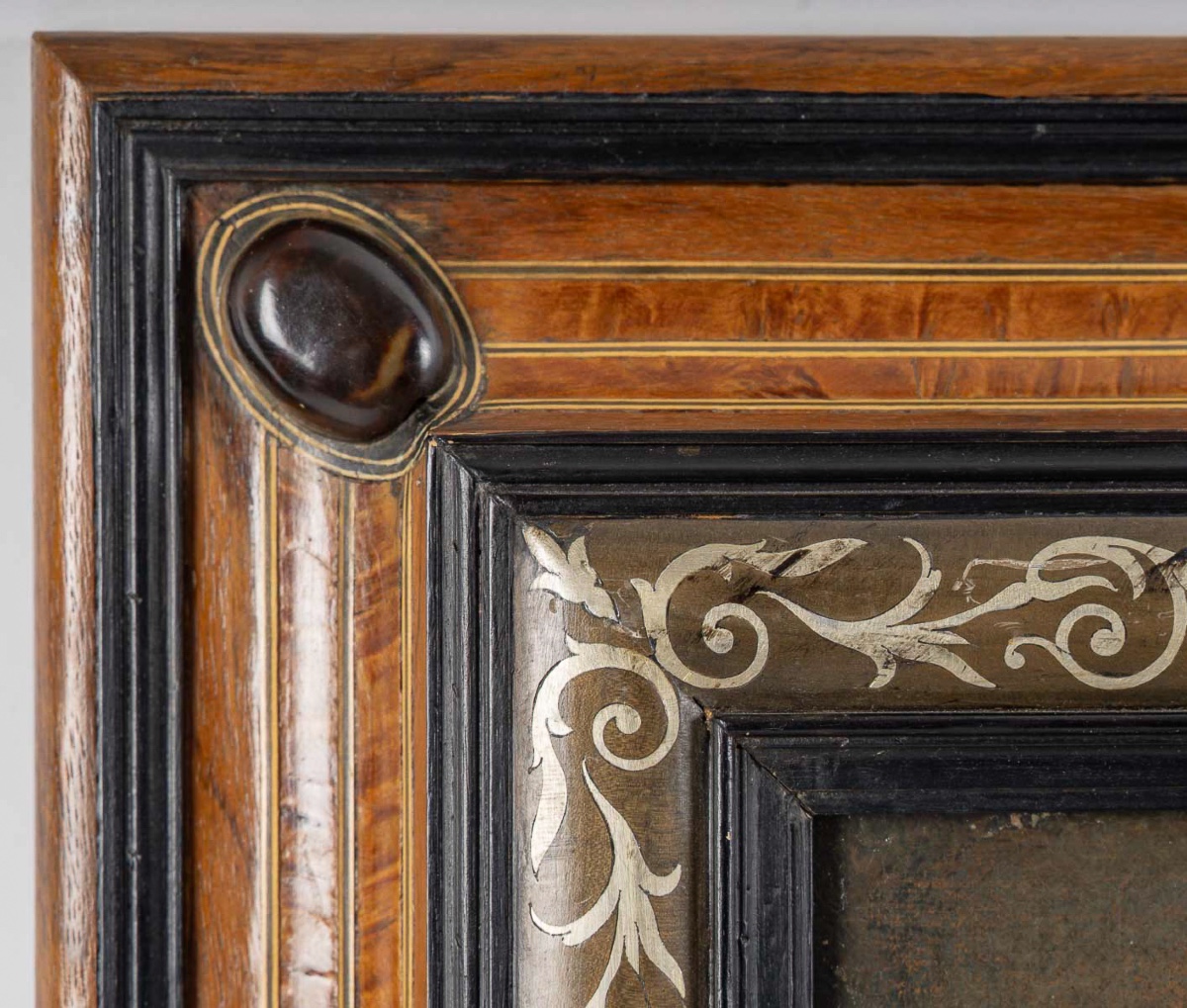
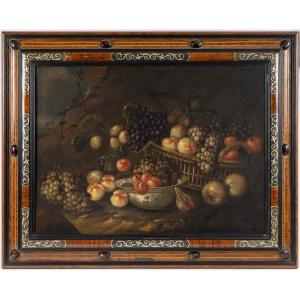
This Flemish still life combines abundance and realism. A wicker basket, filled with black and white grapes, golden peaches, chestnuts, figs and oranges, balances a porcelain bowl of delicate fruits. The play of light on the skins, the translucency of the grapes, and the depth of the dark background create a striking contrast. The walnut and burl walnut frame, inlaid with boxwood fillets and rare amber cabochons, adds a touch of refinement to the composition. A quintessential work of 17th-century Flemish painting, showcasing the artist’s technical skill.
Dimensions:
Unframed: Height 57.5 cm (22⅝ in) – Width 78.5 cm (30⅞ in)
Framed: Height 80 cm (31½ in) – Width 100 cm (39⅜ in)
Condition:
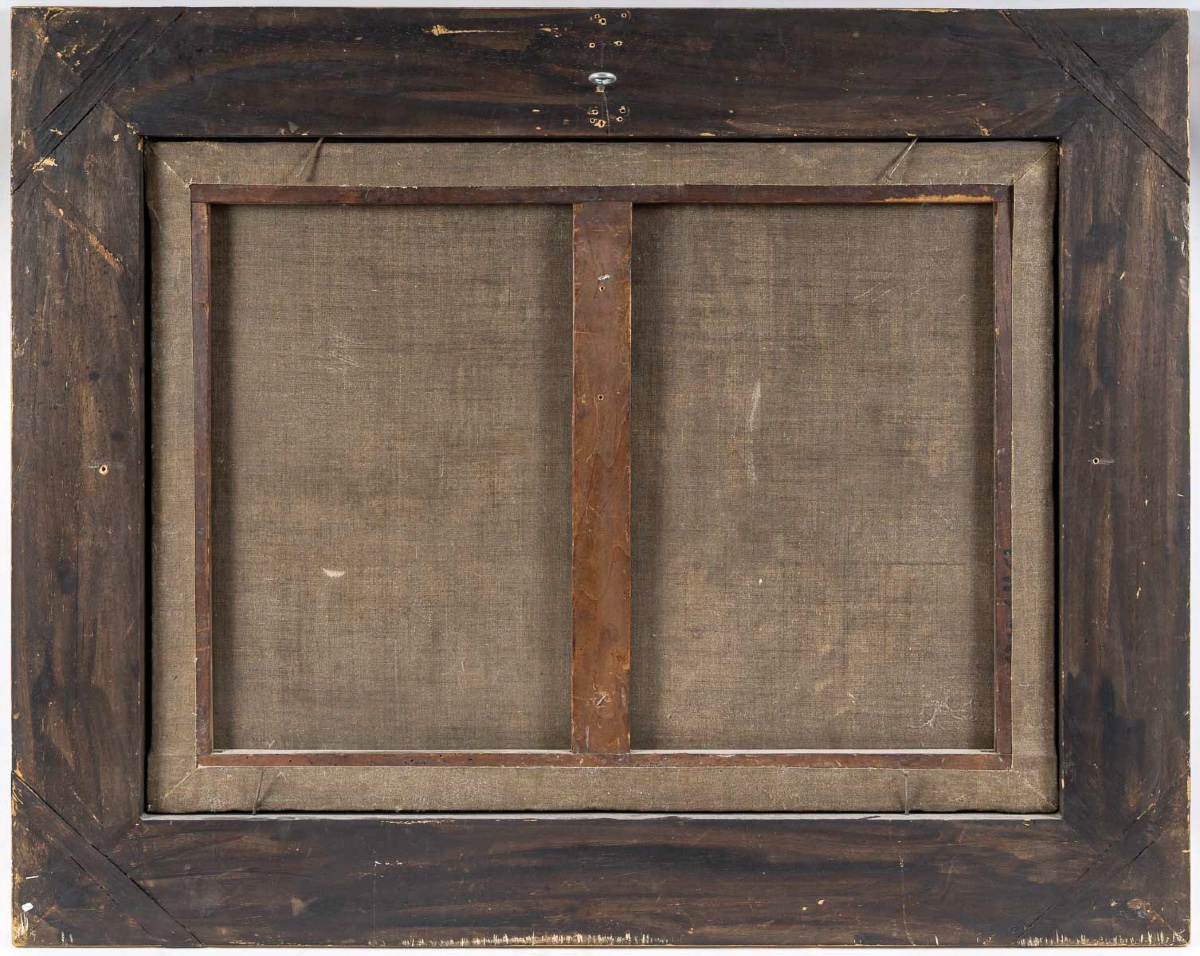
In very good condition. A recent professional cleaning has restored the painting’s original clarity and brilliance. Minor, unobtrusive restorations, typical for works of this period, confirm its authenticity.
Biography:
Jan Pauwels Gillemans the Younger (1651–1704) – Heir to a Flemish Artistic Tradition.
Born in Antwerp in 1651, Jan Pauwels Gillemans the Younger belonged to a distinguished family of Flemish artists. Son of Jan Pauwels Gillemans the Elder (1618–1675), a painter and goldsmith, he inherited a family tradition focused on still life. His father, a specialist in floral and fruit compositions, passed on a keen sense of detail and staging.
Training and Career.
He joined the Guild of Saint Luke in Antwerp in 1673–1674, marking the official start of his career. His brother, Peter Mathys Gillemans, a flower painter, likely shared his workshop. In 1675, he briefly worked in Middelburg, where he was fined for practicing without registering with the local guild, revealing his ambition and mobility.
Style and Collaborations.
Gillemans the Younger is known for his still lifes of fruits and flowers, often set within imaginary landscapes or architectural frameworks. His early works drew inspiration from lavish banquets, while his later compositions incorporated mythological elements, animals, and allegorical figures. He collaborated with landscape painters, such as Pieter Rijsbraeck, and figure painters, like Peter Ykens, to enrich his canvases with narrative scenes or elegant settings.
Unlike his father, who favored neutral backgrounds, he placed his still lifes within architectural settings (fountains, columns, gardens), creating an atmosphere that is both lush and theatrical. Some of his works, such as those held at the Musée Jeanne d’Aboville, exemplify his balance between realism and imagination.
Legacy and Posterity.
Though less famous than some contemporaries, Gillemans the Younger embodies the vitality of the Antwerp school of still life painting at the turn of the 18th century. His work, characterized by a mastery of textures (metal, glass, fruit) and a rich palette, continues the tradition of the great Flemish masters. He died in Antwerp in 1704, leaving behind a diverse body of work that blends family heritage with personal innovation. Today, his paintings, sought after for their quality, feature in European collections and underscore Antwerp’s central role in the history of still life painting.
Period: 17th century
Style: Other Style
Condition: Excellent condition
Material: Oil painting
Length: 78,5
Height: 57,5
Reference (ID): 1739264
Availability: In stock