


Sculptor From Beyond The Alps, Mid-18th Century, Saint James The Greater
Sculptor from beyond the Alps, mid-18th century
Saint James the Greater
Painted and gilded wood, height 69 cm
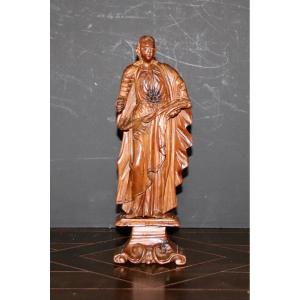
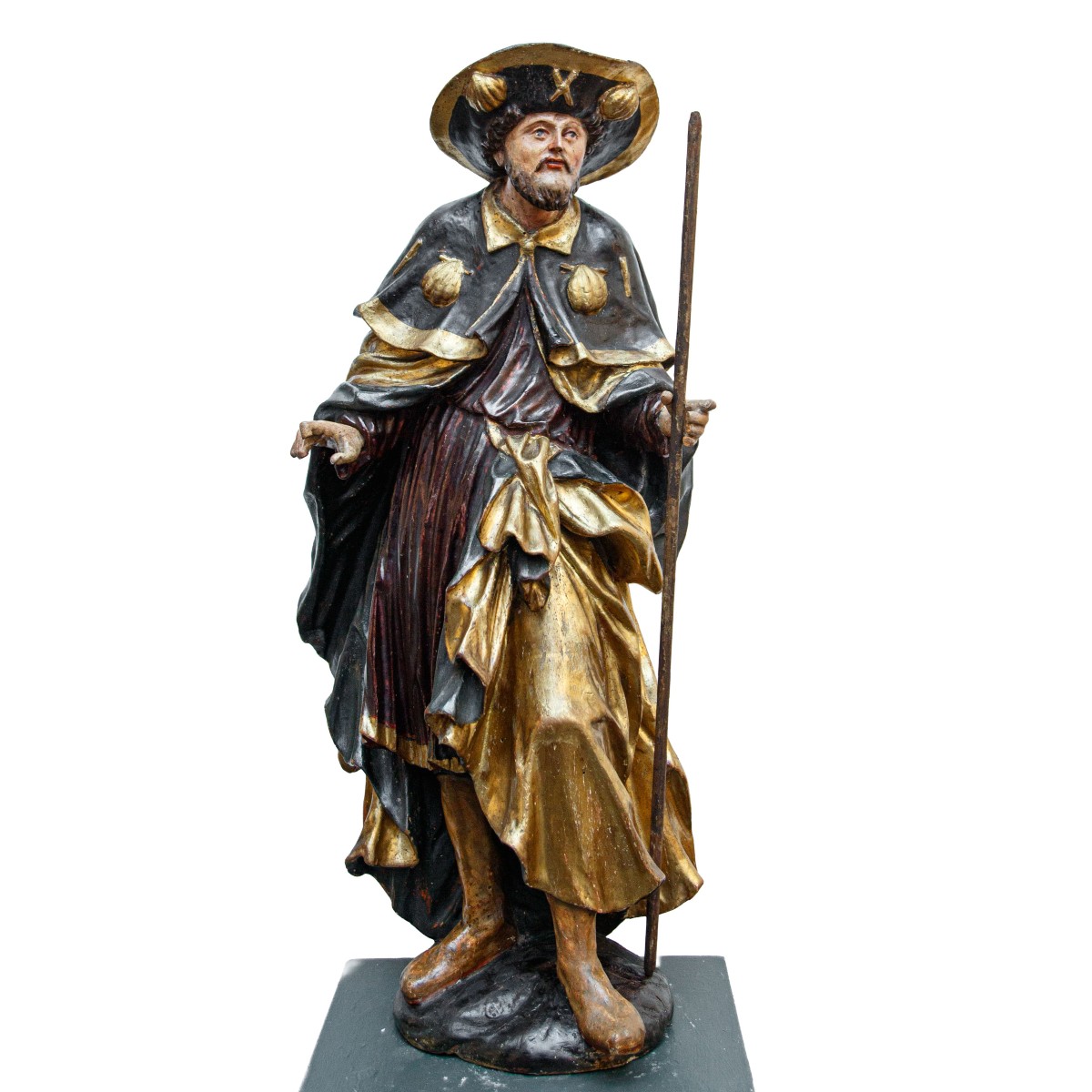
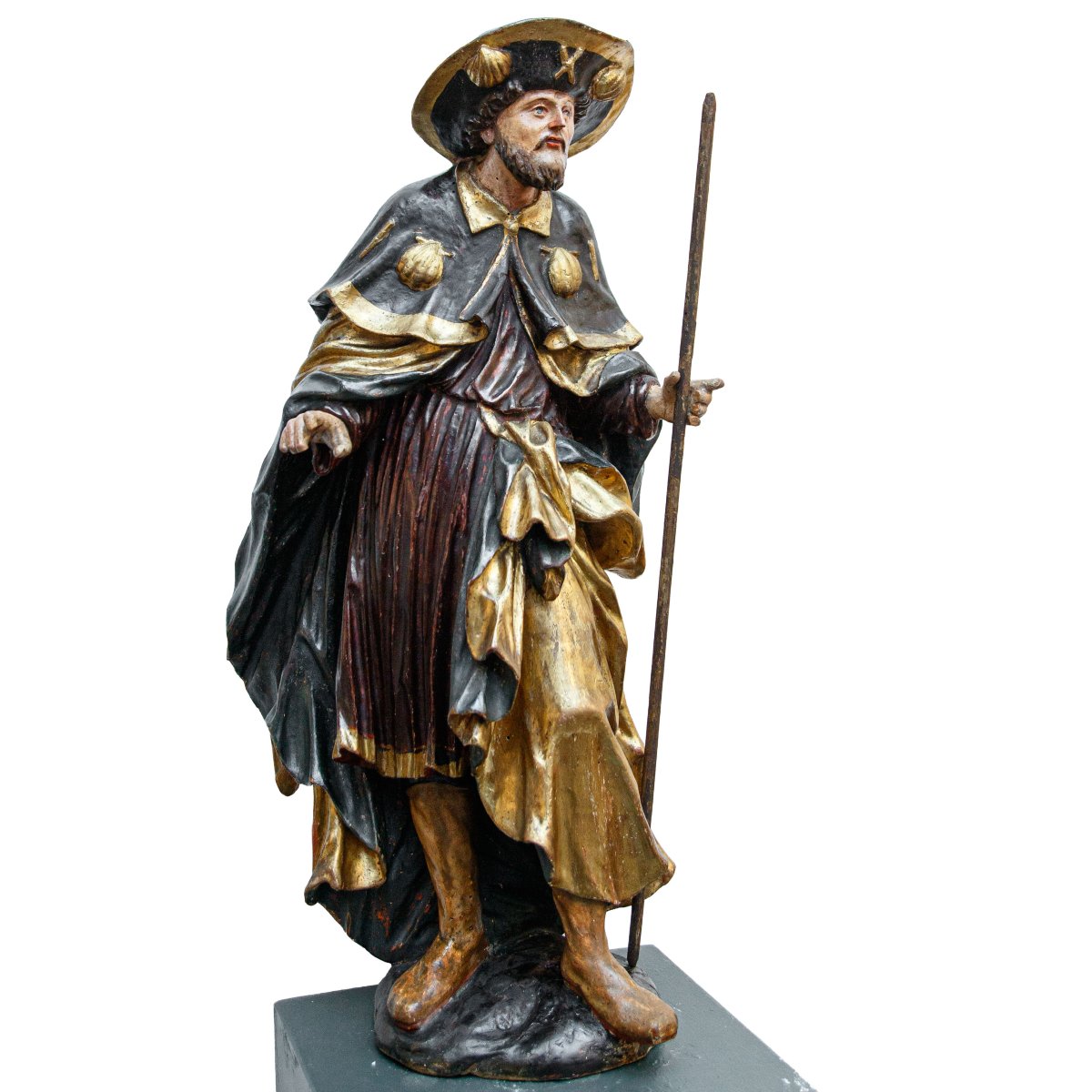
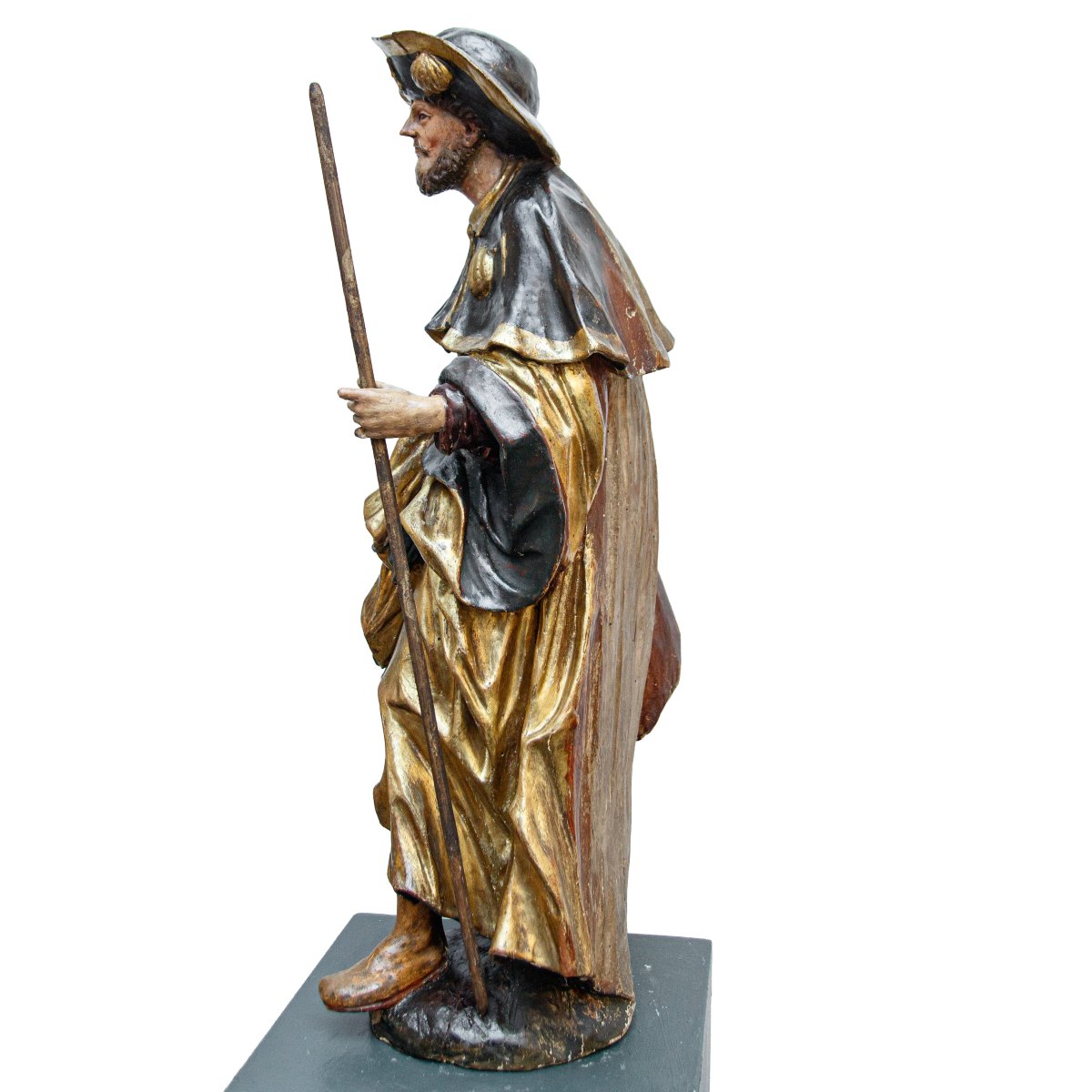
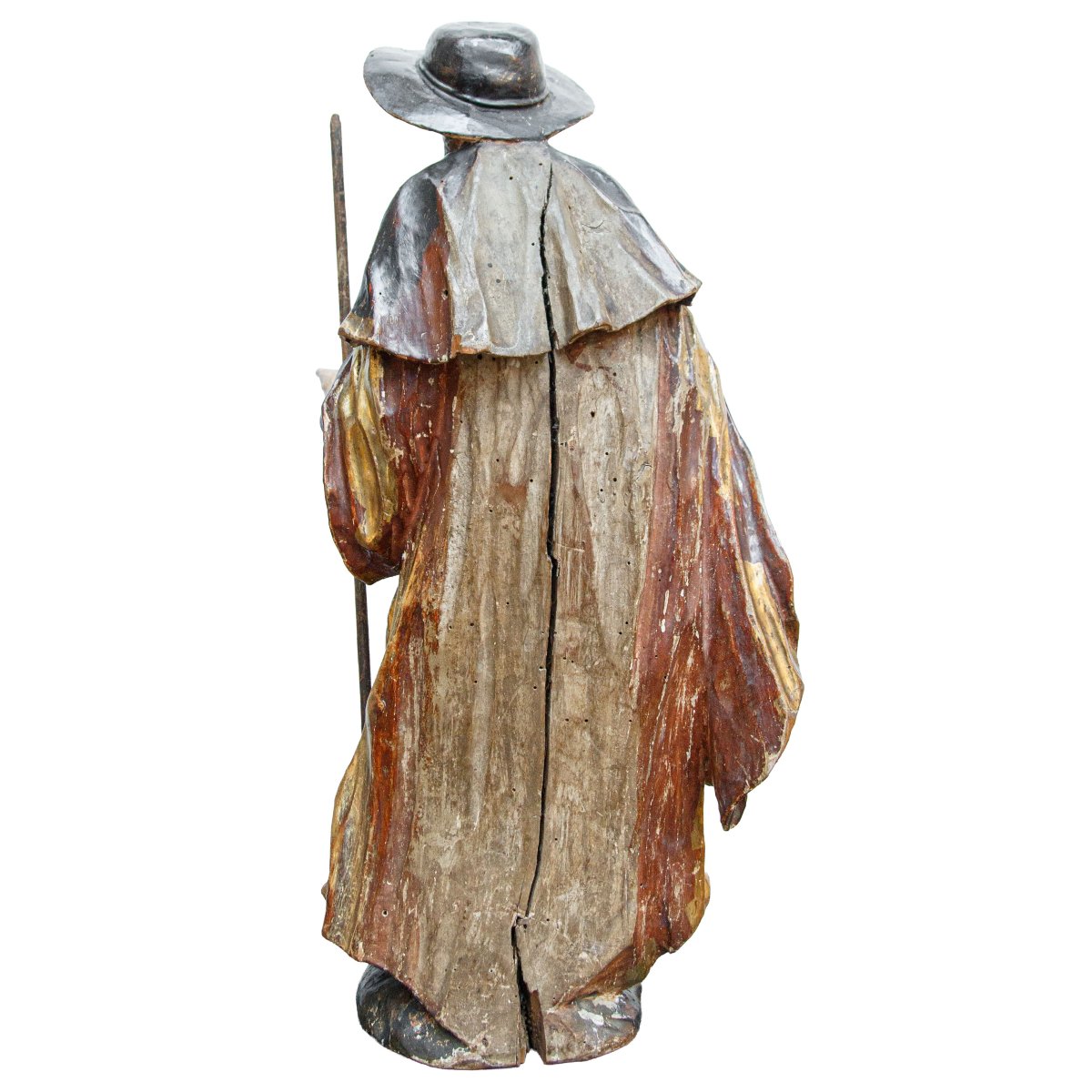
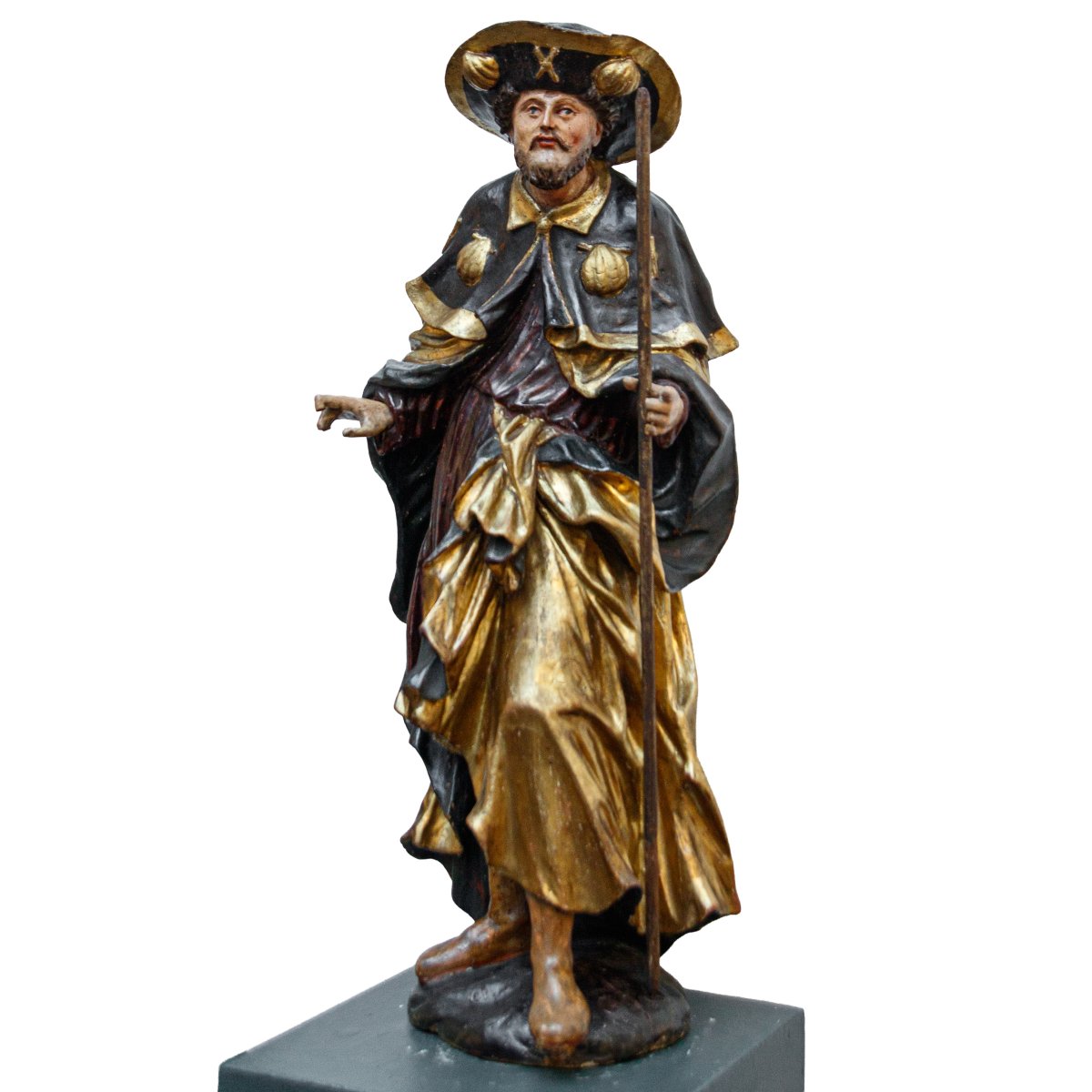
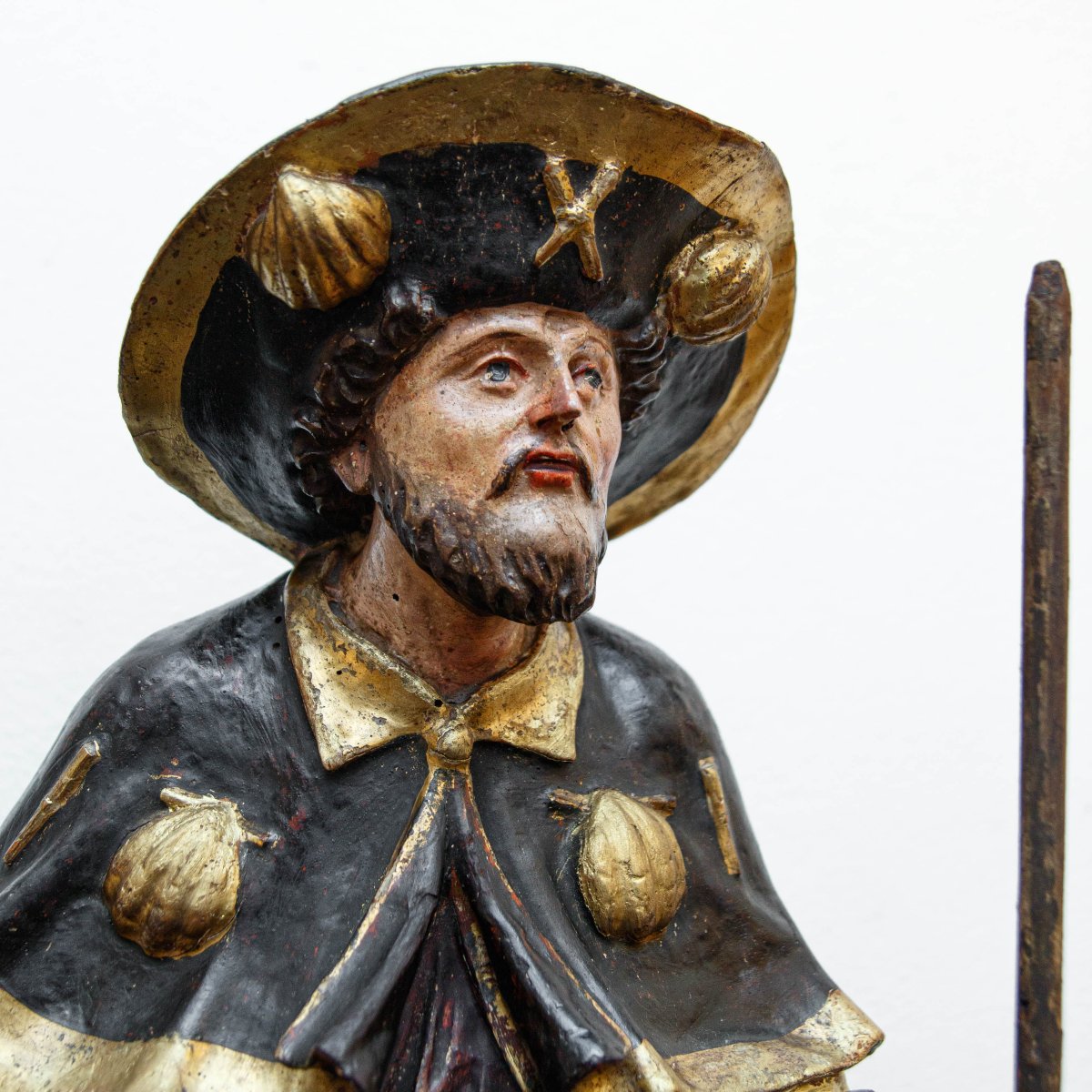
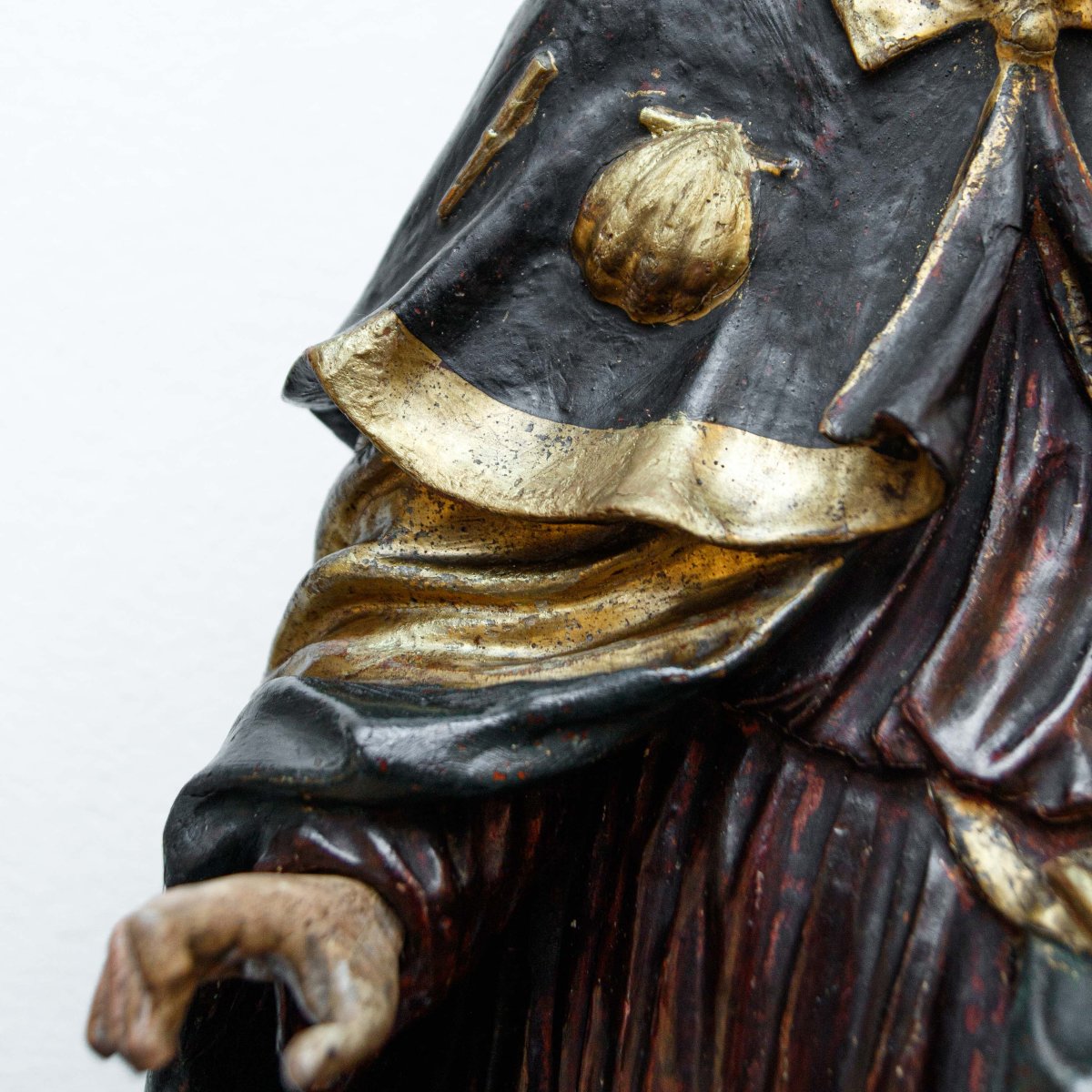
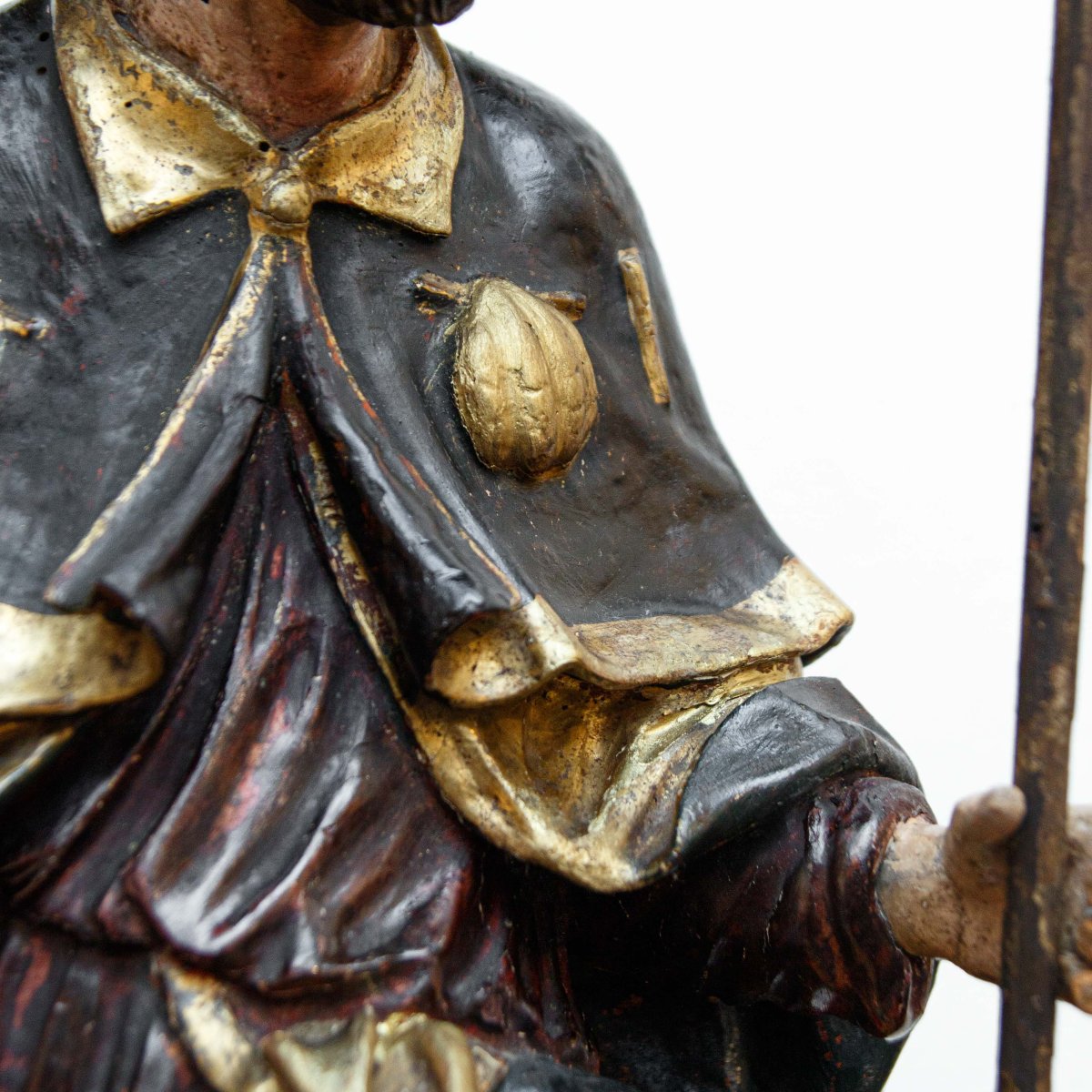
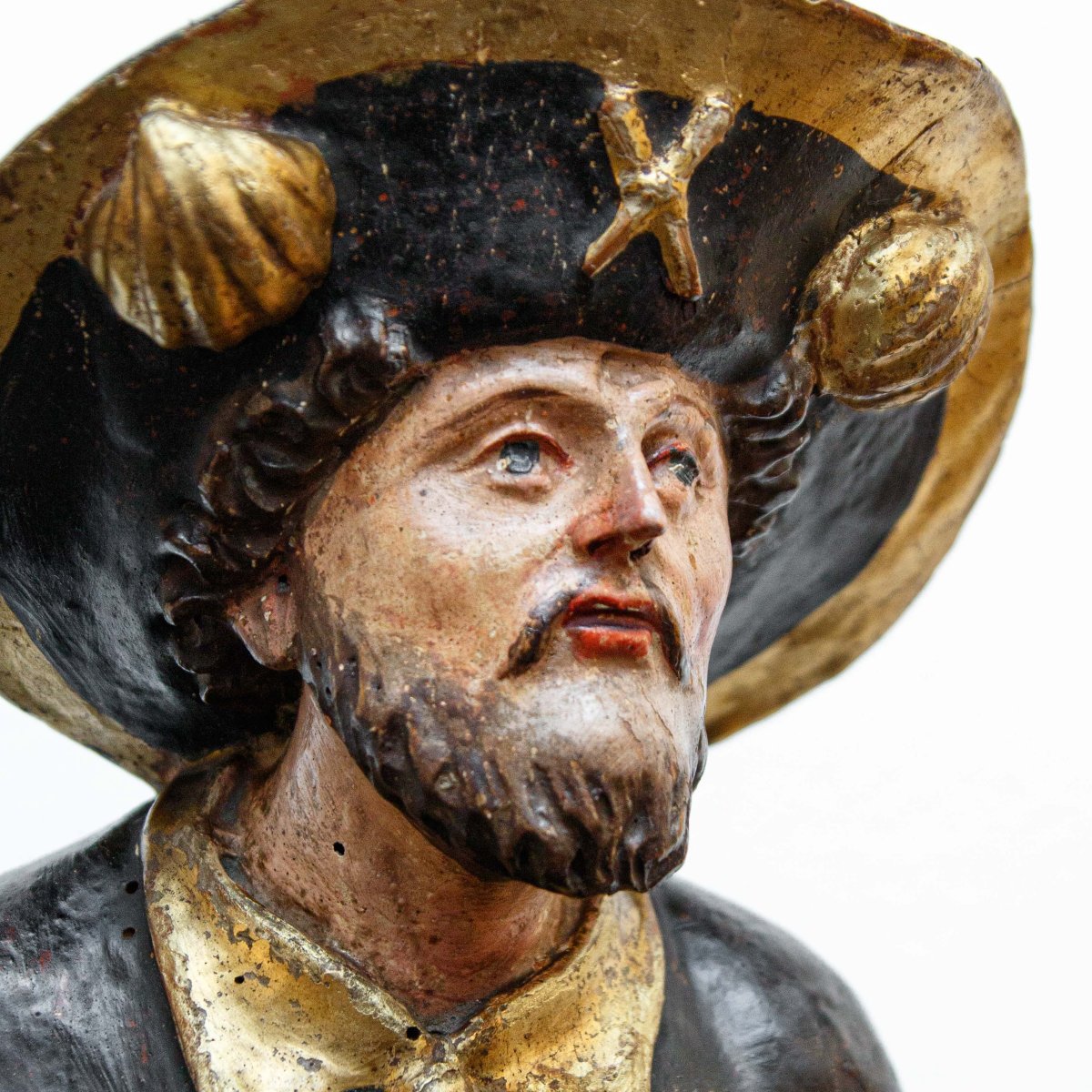
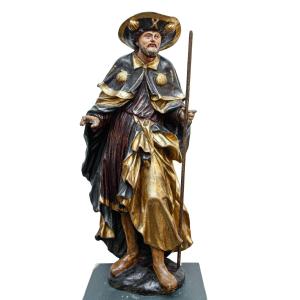
This painted and gilded wooden sculpture depicts St. James the Greater as a pilgrim, a work that skillfully combines popular devotion with 18th-century plastic sophistication. The figure presents itself in a dynamic pose, characterized by a slight contrast that suggests the idea of the path: the left leg is advanced, while the torso rotates slightly to accommodate the gesture of the right hand, extended in an act of exhortation or indication of the way. The saint wears a long dark tunic on which rests a short cape, the slave, bordered by a precious golden profile that illuminates the volumes of the drapery. A cape falls over the shoulders and swells into deep, jointed folds. From a stylistic point of view, especially in the rendering of the folds of the Saint's habit, it seems to indicate that the sculptor is familiar with the work of the sculptor Veit Stoss, active in Central Europe between the 15th and 16th centuries and who influenced wooden sculpture throughout the Germanic area for the following centuries. The iconography is defined with extreme precision through the typical attributes of peregrinatio: the long staff or drone, vigorously held by the left hand, the wide-brimmed hat to protect oneself from the elements, and the shells, a universal symbol of the pilgrimage to Santiago de Compostela, which adorn both the headdress and the lapel of the robe. The face, framed by a thick, well-defined beard, expresses a severe but serene concentration, with the gaze turned upwards. Historically and biblically, James the Greater, son of Zebedee and brother of John the Evangelist, was one of the first apostles chosen by Jesus and the first to suffer martyrdom. His iconographic transformation from apostle to pilgrim is due to the legend of the discovery of his body in Galicia, an event that gave rise to one of the most important devotional migratory flows of the Middle Ages. In this sculpture, this legacy merges with the figurative language of the second half of the 18th century, placing the work within the context of Alpine wooden production. The quality of the carving, particularly evident in the rendering of the sturdy footwear and the plasticity of the garments that seem to react to the movement of the body, is typical of the workshops active between the valleys of Tyrol and the Adige. Here, the skillful use of leaf gilding had not only an ornamental function, but served to elevate the wooden figure, transforming the humble pilgrim into a sacred and luminous presence within the altar machines or devotional niches. The polychromy, played on brown and gold tones, finally gives a chromatic unity that exalts the monumental dignity of the small statuary, testifying to the persistence of a cult, that of Saint James, deeply rooted in European identity and in the trade and pilgrimage routes that crossed the Alps.
Saint James the Greater
Painted and gilded wood, height 69 cm
This painted and gilded wooden sculpture depicts St. James the Greater as a pilgrim, a work that skillfully combines popular devotion with 18th-century plastic sophistication. The figure presents itself in a dynamic pose, characterized by a slight contrast that suggests the idea of the path: the left leg is advanced, while the torso rotates slightly to accommodate the gesture of the right hand, extended in an act of exhortation or indication of the way. The saint wears a long dark tunic on which rests a short cape, the slave, bordered by a precious golden profile that illuminates the volumes of the drapery. A cape falls over the shoulders and swells into deep, jointed folds. From a stylistic point of view, especially in the rendering of the folds of the Saint's habit, it seems to indicate that the sculptor is familiar with the work of the sculptor Veit Stoss, active in Central Europe between the 15th and 16th centuries and who influenced wooden sculpture throughout the Germanic area for the following centuries. The iconography is defined with extreme precision through the typical attributes of peregrinatio: the long staff or drone, vigorously held by the left hand, the wide-brimmed hat to protect oneself from the elements, and the shells, a universal symbol of the pilgrimage to Santiago de Compostela, which adorn both the headdress and the lapel of the robe. The face, framed by a thick, well-defined beard, expresses a severe but serene concentration, with the gaze turned upwards. Historically and biblically, James the Greater, son of Zebedee and brother of John the Evangelist, was one of the first apostles chosen by Jesus and the first to suffer martyrdom. His iconographic transformation from apostle to pilgrim is due to the legend of the discovery of his body in Galicia, an event that gave rise to one of the most important devotional migratory flows of the Middle Ages. In this sculpture, this legacy merges with the figurative language of the second half of the 18th century, placing the work within the context of Alpine wooden production. The quality of the carving, particularly evident in the rendering of the sturdy footwear and the plasticity of the garments that seem to react to the movement of the body, is typical of the workshops active between the valleys of Tyrol and the Adige. Here, the skillful use of leaf gilding had not only an ornamental function, but served to elevate the wooden figure, transforming the humble pilgrim into a sacred and luminous presence within the altar machines or devotional niches. The polychromy, played on brown and gold tones, finally gives a chromatic unity that exalts the monumental dignity of the small statuary, testifying to the persistence of a cult, that of Saint James, deeply rooted in European identity and in the trade and pilgrimage routes that crossed the Alps.
2 800 €
Period: 18th century
Style: Other Style
Condition: Good condition
Material: Painted wood
Height: 69
Reference (ID): 1739249
Availability: In stock
Print