




"Roman School Of The 18th Century, Still Life With Flowers And Fruit "
Roman School of the 18th centuryStill life with flowers and fruit
Oil on canvas, 40.5 x 64.5 cm
With the frame, 46 x 70.5 cm
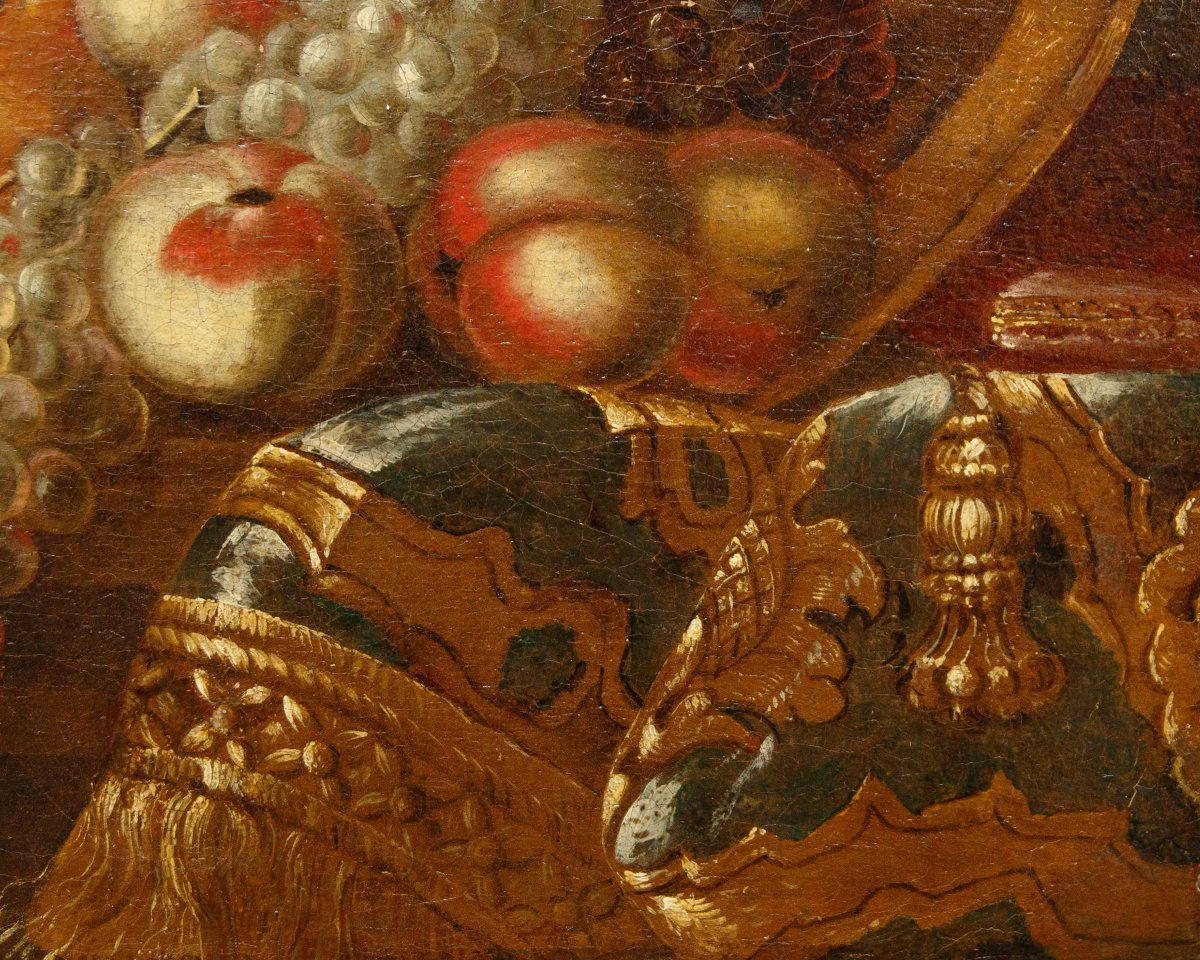
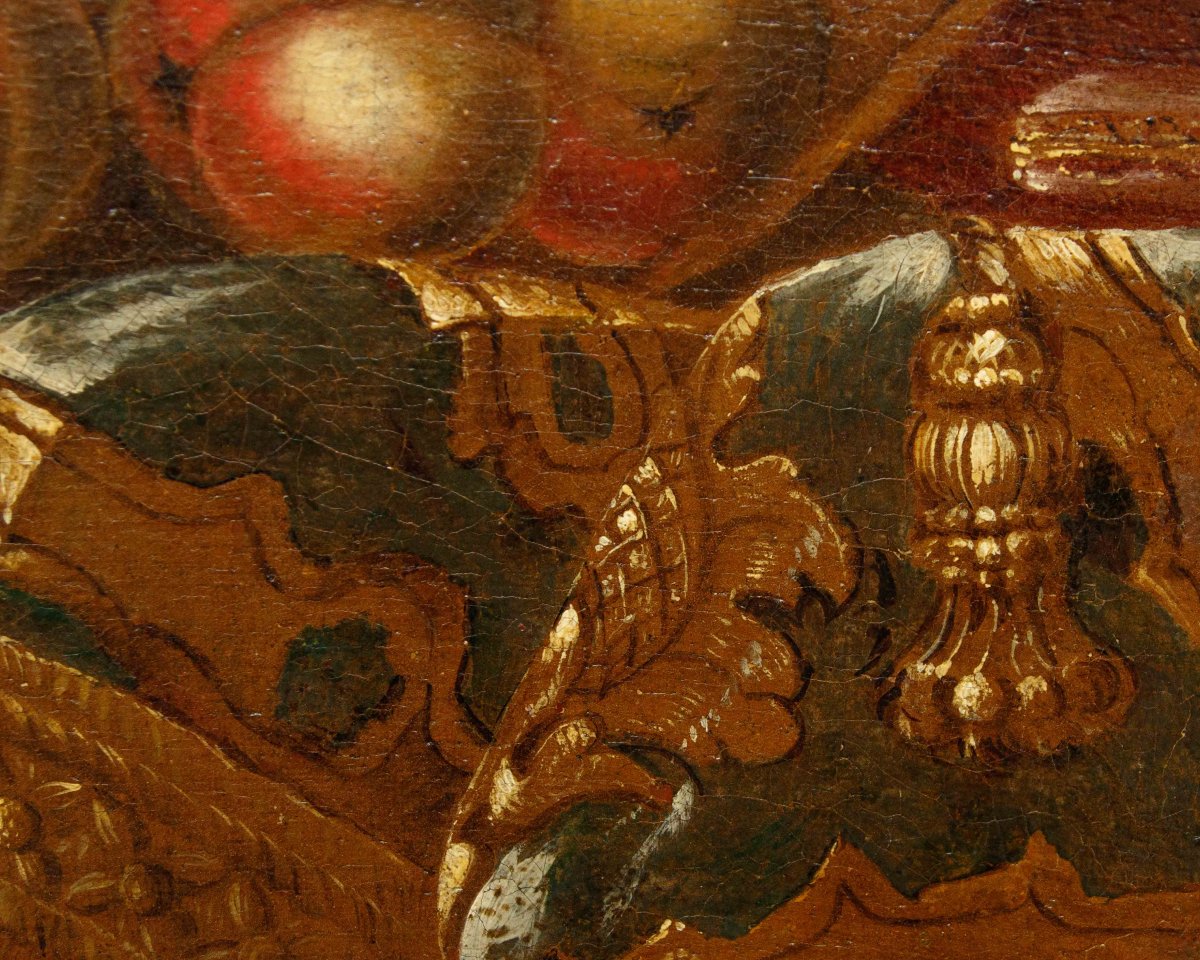
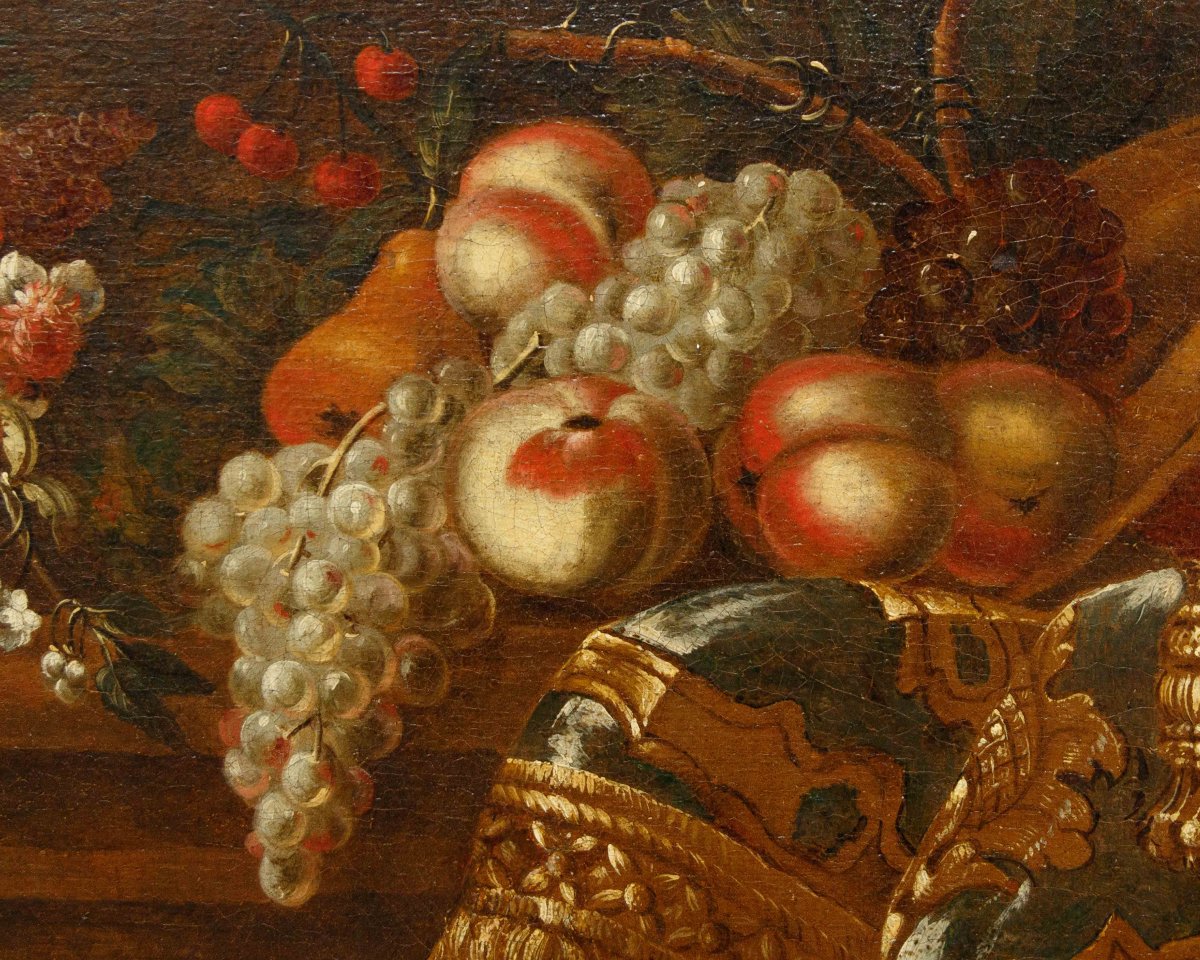
This Still Life with Flowers and Fruit fits fully into the tradition of genre painting cultivated in Rome during the eighteenth century, when still life, while remaining a relatively limited field compared to other Italian centers, assumed a significant role within aristocratic collecting. The work expresses a clear continuity with seventeenth-century naturalistic culture, tempered by a more calm and elegant language, typical of late Roman Baroque sensibilities. The composition unfolds on a stable and well-calibrated horizontal plane: on the left, an architectural vase houses a rich bouquet of flowers, while on the right, a floor covered with a precious fabric houses bunches of grapes, apples, and other fruits arranged with studied naturalness. From a chromatic point of view, warm and brown shades prevail, which form the backdrop to more lively touches of red, white and green. The light, soft and controlled, caresses surfaces without violent chiaroscuro contrasts, helping to restore the tactile texture of objects: the velvety skin of the fruit, the transparency of the grapes, the fragility of the floral petals. Particularly refined is the rendering of materials, such as the basket, the vase and the decorated drape, elements that allude to a context of measured luxury, typical of Roman patrons of the time. The work seems intended for private use, designed for cultured and harvested environments. The traditional theme of vanitas appears toned down: while the presence of ripe fruits and cut flowers implicitly recalls the passage of time, the contemplative and aesthetic intent prevails, aimed at celebrating the order, harmony, and beauty of the natural world. Overall, this still life represents a significant example of 18th-century Roman painting, characterized by compositional sobriety, high execution quality, and a pictorial language that, while looking to the past, opens up to a more elegant taste, in tune with the cosmopolitan cultural climate of 18th-century Rome.







 Le Magazine de PROANTIC
 TRÉSORS Magazine
 Rivista Artiquariato