

France. Antique Line Cavalry Officer’s Sword. Model 1896
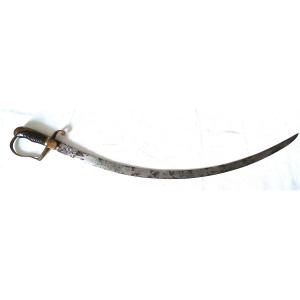
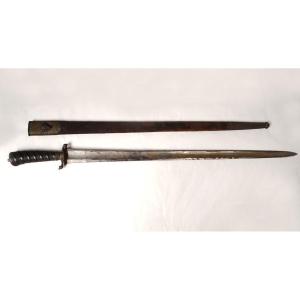
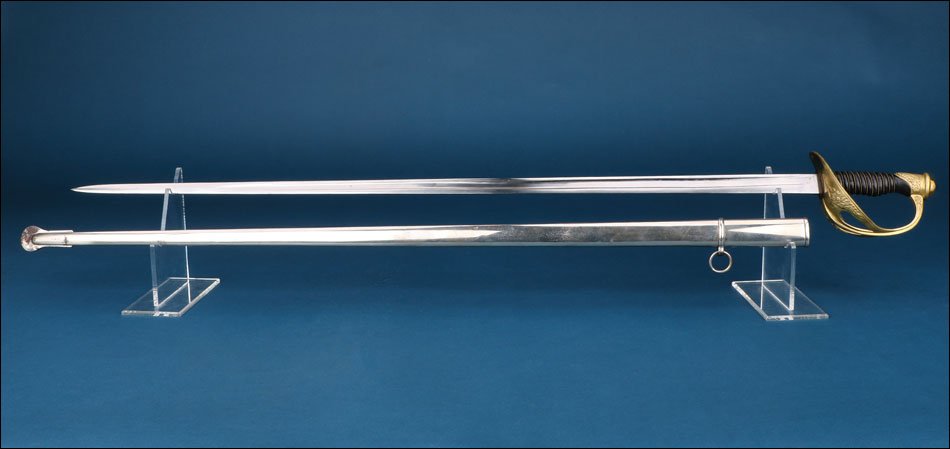
Antique French line cavalry officer’s sword, corresponding to the Model 1896, a piece of great elegance and marked military presence, highly representative of French officership in the late nineteenth and early twentieth centuries. It is a regulation weapon of distinguished appearance, conceived for cavalry officers and characterised by a highly enveloping hilt, a long and powerful blade and a refined silhouette that combines functionality, hand protection and a clear aesthetic sense.
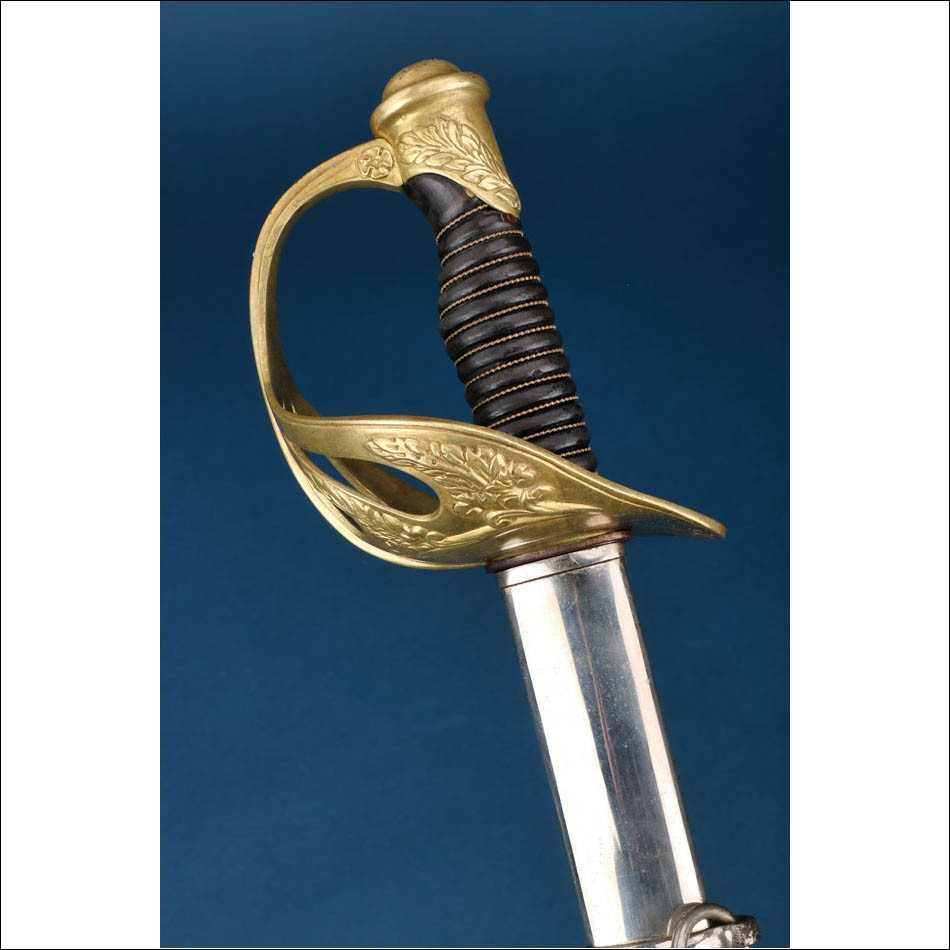
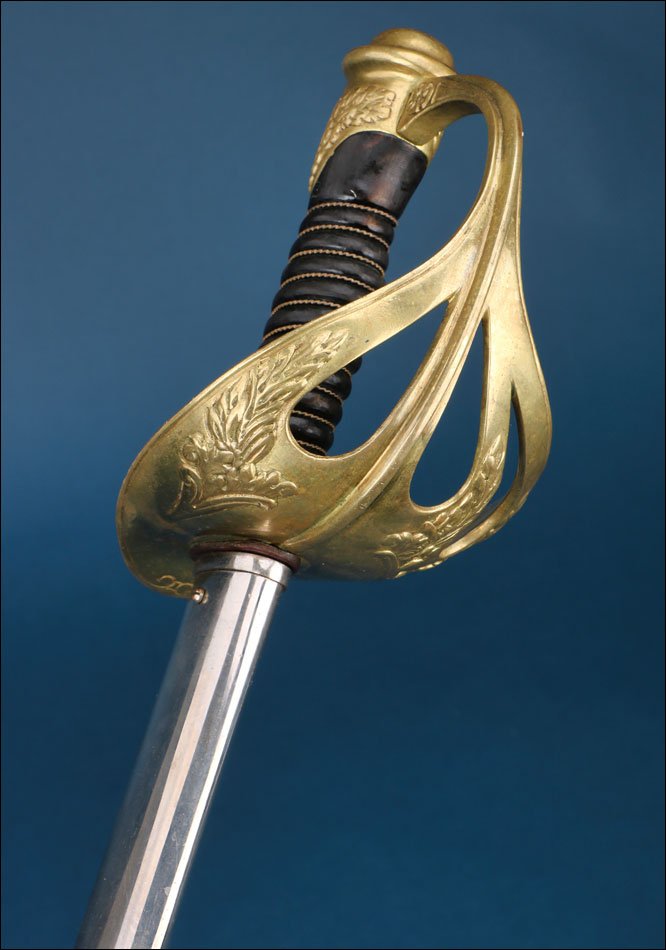
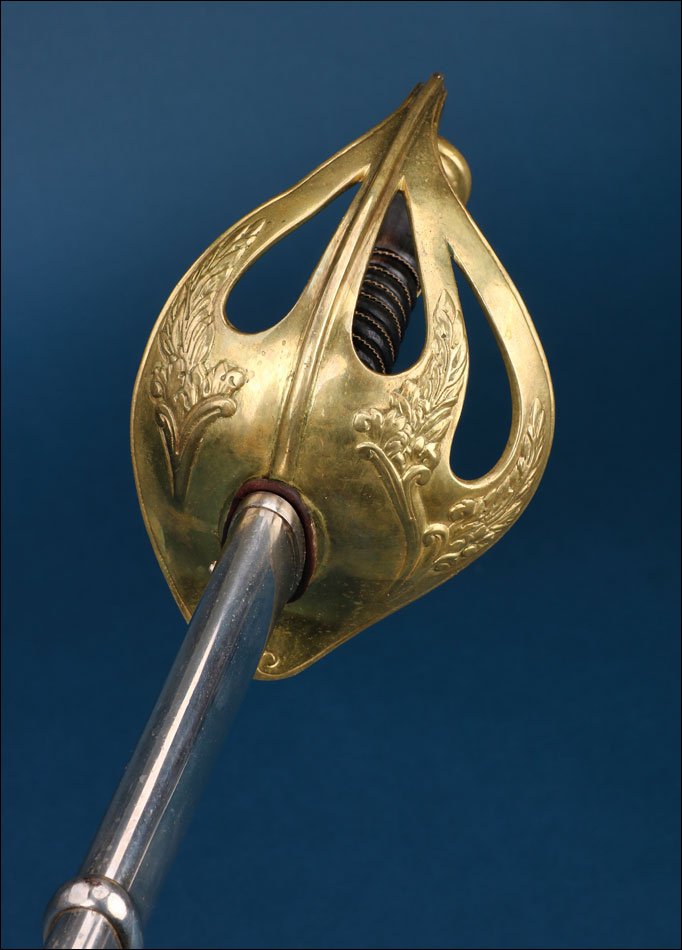
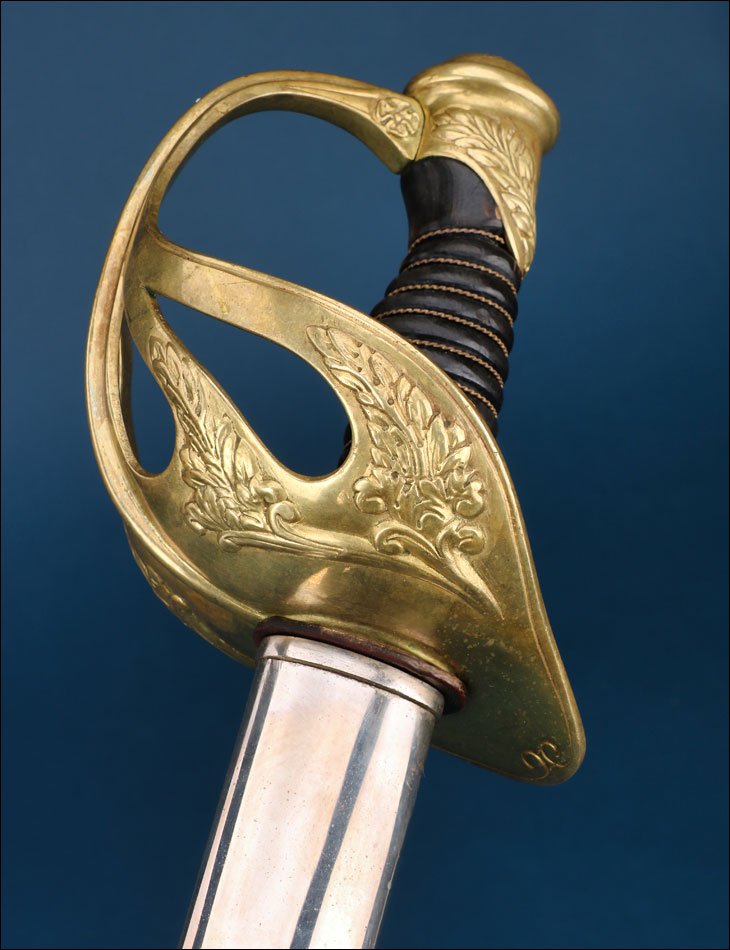
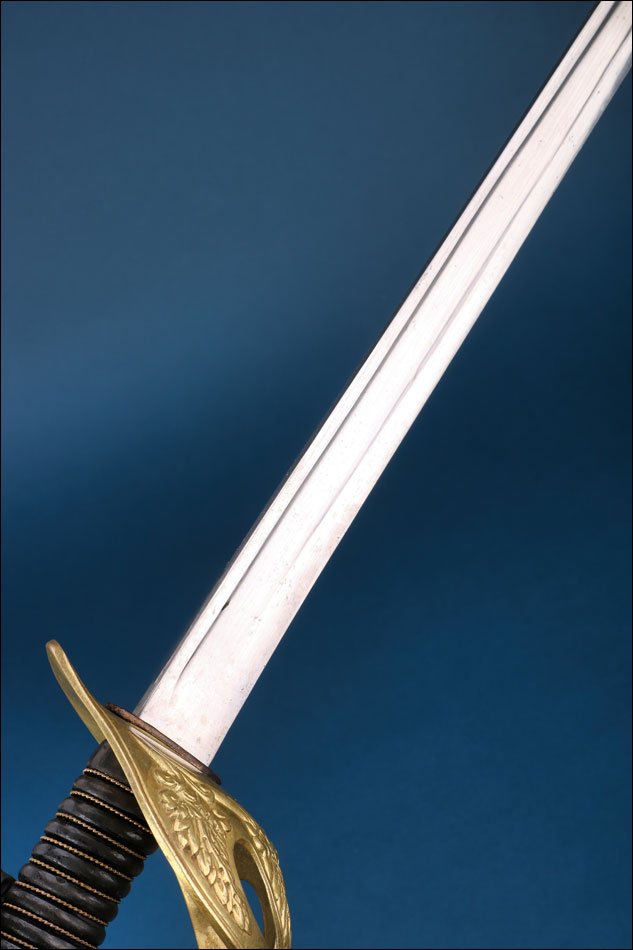
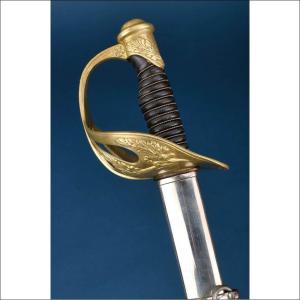
The hilt is made of gilt brass and presents a configuration very characteristic of the model, with a broad guard plate and a pierced counterguard forming a harmonious ensemble of strong personality. The structure protects the hand well and develops three broad openings, following an elegant and dynamic design that clearly distinguishes this family of French swords. The chiselled decoration, visible on the hilt, is organised around vegetal motifs of laurel leaves, adding visual richness.
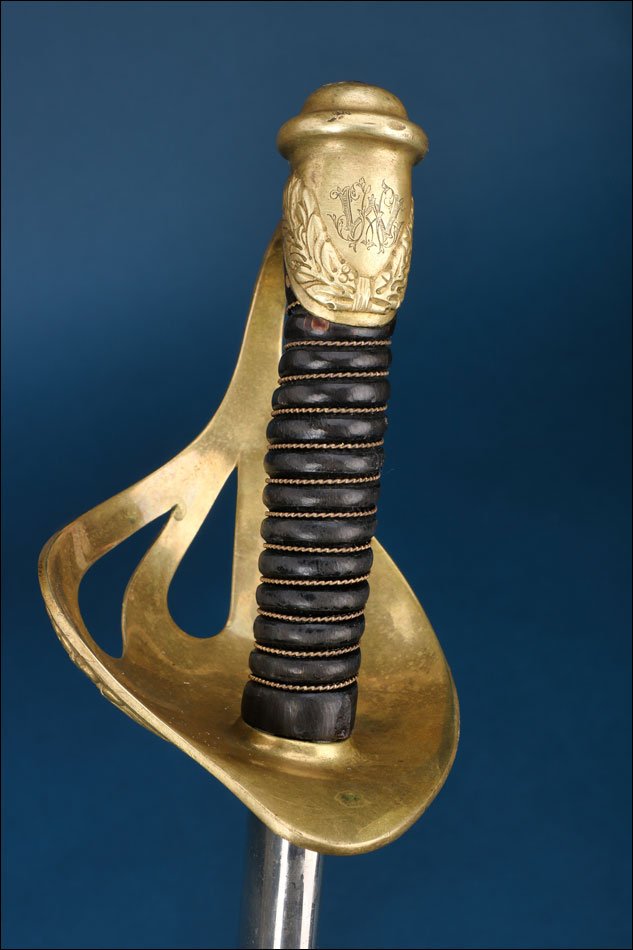
The grip is made of horn or antler and shows pronounced fluting, between which the twisted metal wire binding can be seen. The pommel, with its rounded profile and button finial, also preserves an engraved monogram, probably corresponding to its former owner, a detail that adds historical personality to the example.
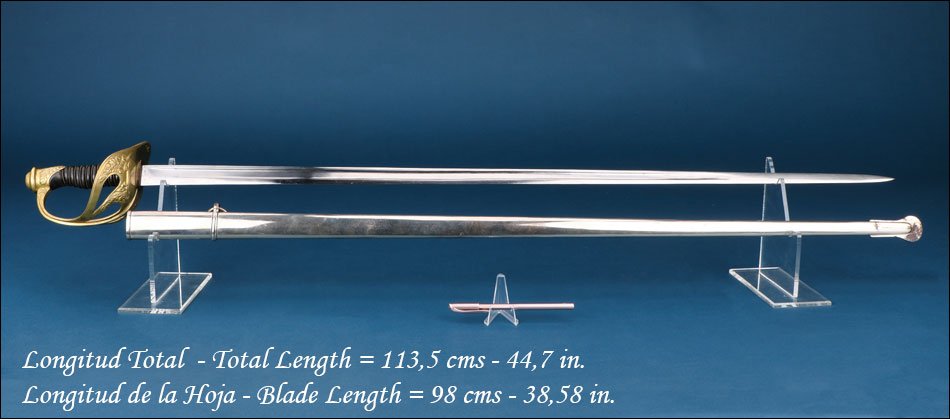
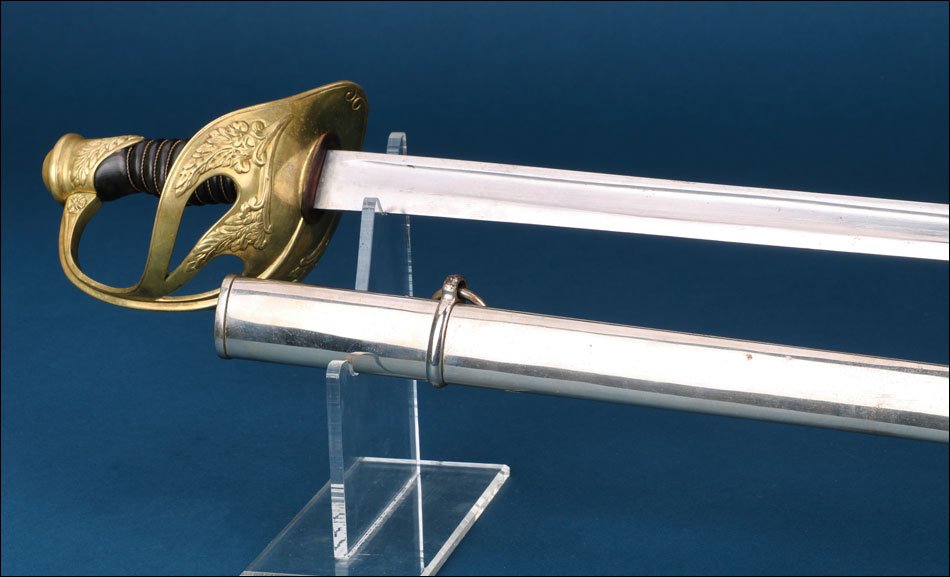
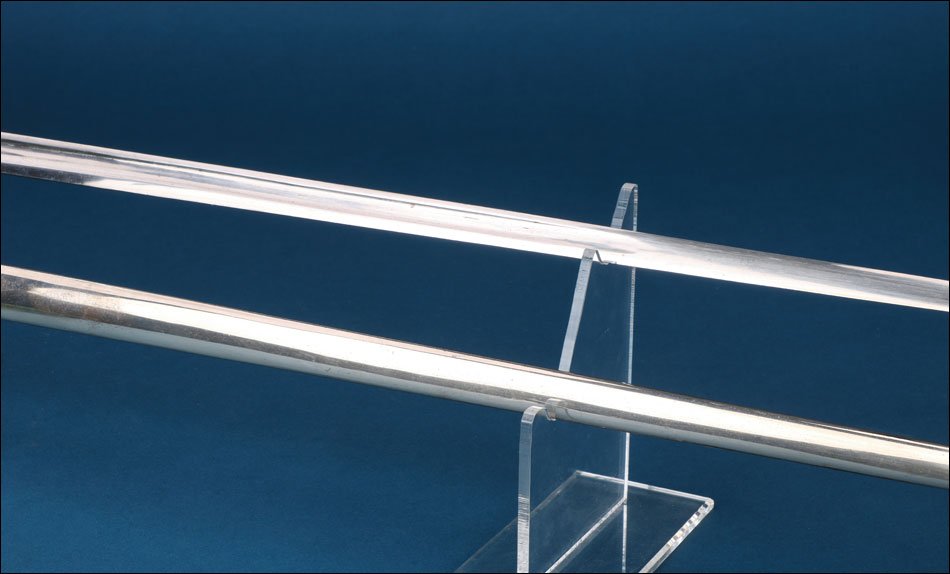
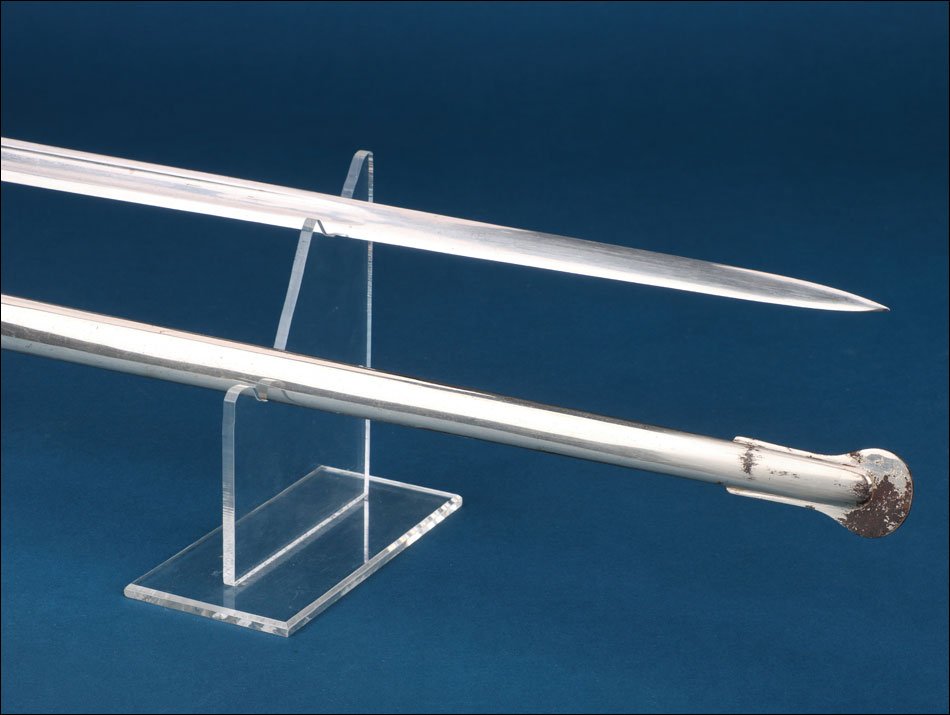
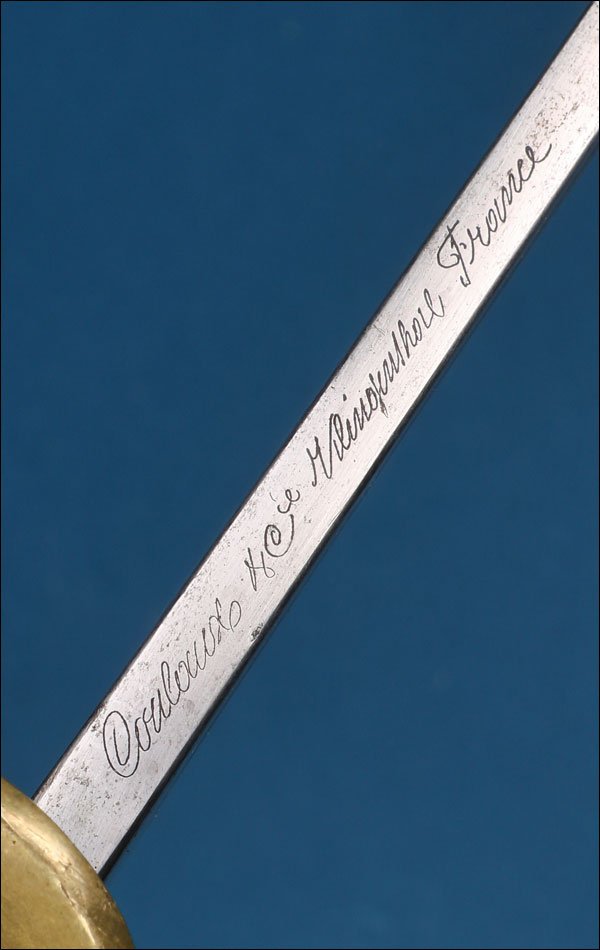
The blade is long, straight, highly elegant and is in excellent state of preservation. On the back appears the signature Coulaux & Cie Klingenthal France, a particularly important detail, as it links the piece to one of the great names in the manufacture of French edged weapons. The scabbard is metal, with a single suspension band and ring. It shows normal surface wear from use and age, with some visible marks and rubbing, especially toward the tip.
The overall condition is very good within its age. The hilt preserves its structure extremely well and retains much of its gilt finish, the grip and blade show very good preservation and the scabbard still forms with the sword a complete, elegant and well balanced ensemble. It is therefore a particularly attractive piece because of its quality and because of the presence of such a relevant signature as Coulaux & Cie of Klingenthal.
In short, this is an antique French line cavalry officer’s sword, Model 1896, of very elegant typology, with a signed blade, good overall preservation and marked historical personality. It is a very interesting piece for collectors of French militaria, cavalry edged weapons and regulation swords of European officership in the late nineteenth century.
Measurements: Total length of the sword: 113.5 cm, (44.7 in). Blade length: 98 cm, (38.58 in).
History of the Model 1896 for Line Cavalry
The Model 1896 line cavalry officer’s sword was born in France at a time when the cavalry arm was seeking a more effective and protective solution than some earlier models. The Cavalry Committee, faced with the failure of the Model 1882 sword, requested at the end of the nineteenth century the study of a new model that would better protect the combatant’s hand in both third and fourth position. Thus the Model 1896 was created.
In the minds of its promoters, this sword was intended to replace earlier cavalry models. However, it did not achieve complete success, and line cavalry remained faithful for quite some time to previous models, such as those of 1854, 1882 and even the Model 1822, which remained in service for longer, especially in the Garde Républicaine. This places the Model 1896 within a transitional phase, in which the French army sought to renew its cavalry weaponry without fully breaking with deeply rooted traditions.
The Model 1896 line cavalry officer’s sword is a sword whose manufacture followed the guidelines of the ministerial note of 22 December 1896, confirmed by the note of 20 August 1897. It describes a gilt brass hilt, with a cap pommel finished by a rivet button and a short tail ornamented with a vegetal motif. The grip is of blackened buffalo horn, with twisted brass wire filigree. The hilt is formed from a single piece that integrates the knuckle guard and, from two notches in the front part and another below, develops the secondary branches of the counterguard. This sword was assigned to cuirassiers and dragoons in replacement of the Model 1882 sword, which confirms its clear link with French line cavalry.
To meet the needs of the army, the Model 1896 was not manufactured only by the Manufacture d’Armes de Châtellerault, but also by numerous suppliers, which perfectly explains the presence of signatures such as Coulaux & Cie Klingenthal France, one of the best known houses of the French arms making tradition.
Taken as a whole, the Model 1896 represents very well the evolution of French cavalry at the end of the nineteenth century. It is a sword that sought to improve hand protection, maintain the elegance proper to officership and adapt to new regulation requirements, without entirely abandoning the formal heritage of the great tradition of European cavalry. For that reason, pieces like this are of special interest today, since they combine regulation value, manufacturing quality, visual appeal and a clear connection with French military history.
The hilt is made of gilt brass and presents a configuration very characteristic of the model, with a broad guard plate and a pierced counterguard forming a harmonious ensemble of strong personality. The structure protects the hand well and develops three broad openings, following an elegant and dynamic design that clearly distinguishes this family of French swords. The chiselled decoration, visible on the hilt, is organised around vegetal motifs of laurel leaves, adding visual richness.
The grip is made of horn or antler and shows pronounced fluting, between which the twisted metal wire binding can be seen. The pommel, with its rounded profile and button finial, also preserves an engraved monogram, probably corresponding to its former owner, a detail that adds historical personality to the example.
The blade is long, straight, highly elegant and is in excellent state of preservation. On the back appears the signature Coulaux & Cie Klingenthal France, a particularly important detail, as it links the piece to one of the great names in the manufacture of French edged weapons. The scabbard is metal, with a single suspension band and ring. It shows normal surface wear from use and age, with some visible marks and rubbing, especially toward the tip.
The overall condition is very good within its age. The hilt preserves its structure extremely well and retains much of its gilt finish, the grip and blade show very good preservation and the scabbard still forms with the sword a complete, elegant and well balanced ensemble. It is therefore a particularly attractive piece because of its quality and because of the presence of such a relevant signature as Coulaux & Cie of Klingenthal.
In short, this is an antique French line cavalry officer’s sword, Model 1896, of very elegant typology, with a signed blade, good overall preservation and marked historical personality. It is a very interesting piece for collectors of French militaria, cavalry edged weapons and regulation swords of European officership in the late nineteenth century.
Measurements: Total length of the sword: 113.5 cm, (44.7 in). Blade length: 98 cm, (38.58 in).
History of the Model 1896 for Line Cavalry
The Model 1896 line cavalry officer’s sword was born in France at a time when the cavalry arm was seeking a more effective and protective solution than some earlier models. The Cavalry Committee, faced with the failure of the Model 1882 sword, requested at the end of the nineteenth century the study of a new model that would better protect the combatant’s hand in both third and fourth position. Thus the Model 1896 was created.
In the minds of its promoters, this sword was intended to replace earlier cavalry models. However, it did not achieve complete success, and line cavalry remained faithful for quite some time to previous models, such as those of 1854, 1882 and even the Model 1822, which remained in service for longer, especially in the Garde Républicaine. This places the Model 1896 within a transitional phase, in which the French army sought to renew its cavalry weaponry without fully breaking with deeply rooted traditions.
The Model 1896 line cavalry officer’s sword is a sword whose manufacture followed the guidelines of the ministerial note of 22 December 1896, confirmed by the note of 20 August 1897. It describes a gilt brass hilt, with a cap pommel finished by a rivet button and a short tail ornamented with a vegetal motif. The grip is of blackened buffalo horn, with twisted brass wire filigree. The hilt is formed from a single piece that integrates the knuckle guard and, from two notches in the front part and another below, develops the secondary branches of the counterguard. This sword was assigned to cuirassiers and dragoons in replacement of the Model 1882 sword, which confirms its clear link with French line cavalry.
To meet the needs of the army, the Model 1896 was not manufactured only by the Manufacture d’Armes de Châtellerault, but also by numerous suppliers, which perfectly explains the presence of signatures such as Coulaux & Cie Klingenthal France, one of the best known houses of the French arms making tradition.
Taken as a whole, the Model 1896 represents very well the evolution of French cavalry at the end of the nineteenth century. It is a sword that sought to improve hand protection, maintain the elegance proper to officership and adapt to new regulation requirements, without entirely abandoning the formal heritage of the great tradition of European cavalry. For that reason, pieces like this are of special interest today, since they combine regulation value, manufacturing quality, visual appeal and a clear connection with French military history.
590 €
Period: 19th century
Style: Other Style
Condition: Good condition
Length: 113,5 cm, (44.7 in)
Reference (ID): 1738064
Availability: In stock
Print