

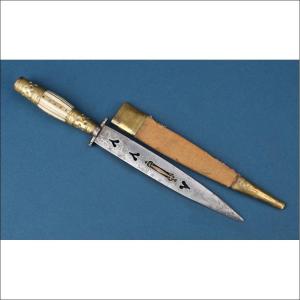


Spain. Antique Knife Made In Albacete. Circa 1850
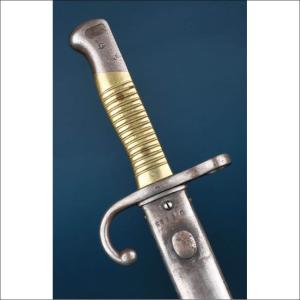
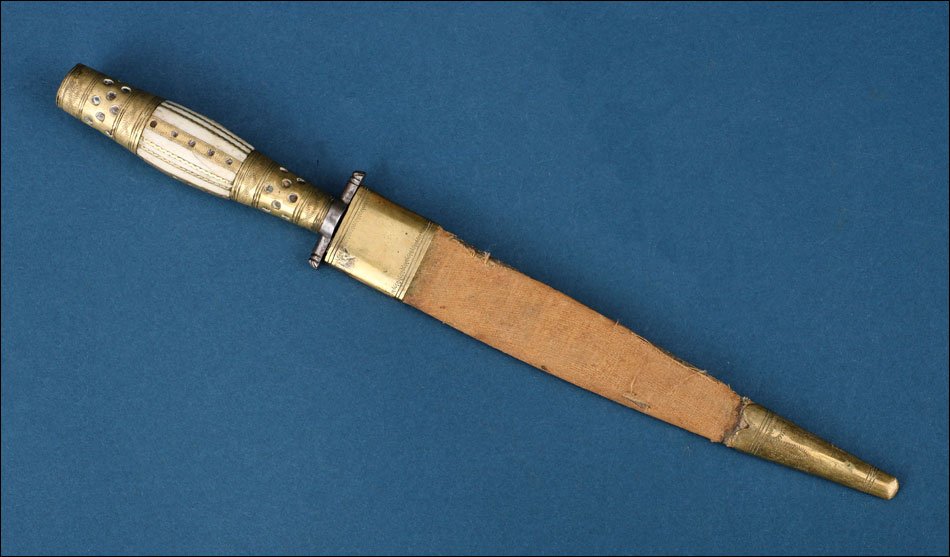
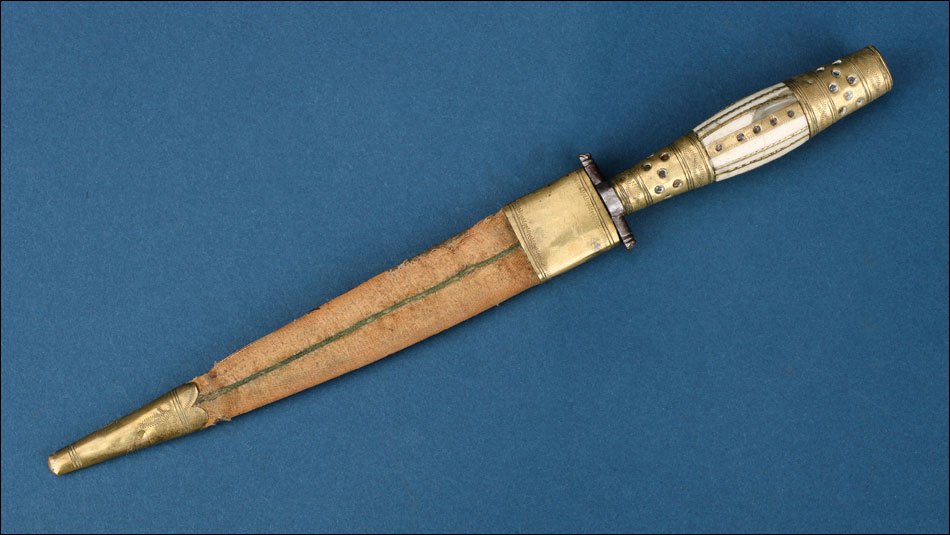
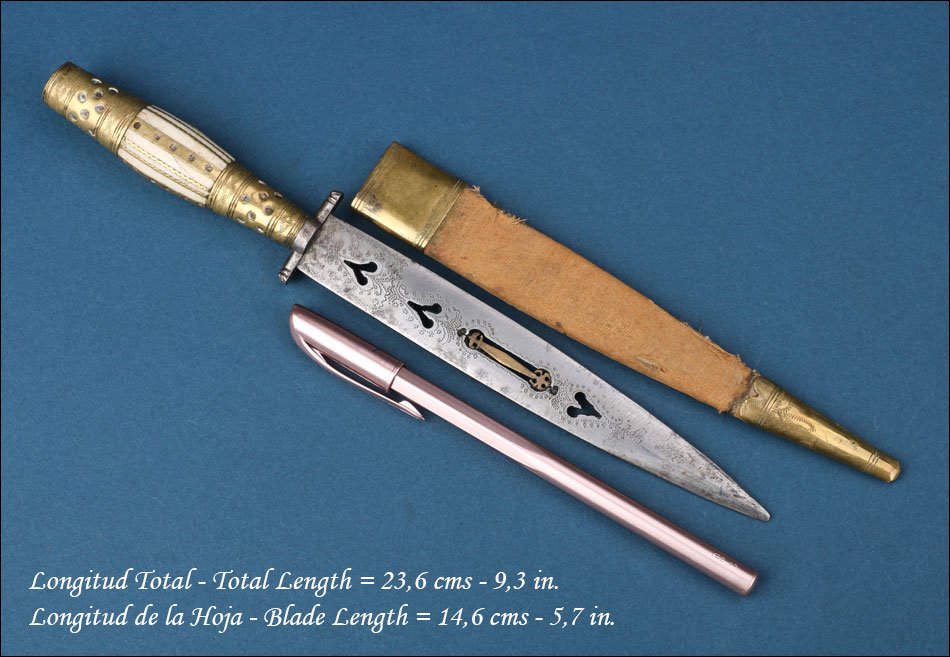
Rare and attractive Spanish civilian defence knife clearly attributable to the Albacete cutlery tradition, dating to the mid-19th century, circa 1850. This piece represents an important example of Spanish material culture of the period, conceived both as a functional personal weapon and as an object expressing social identity.
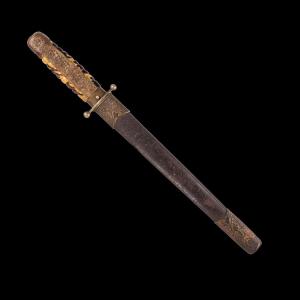
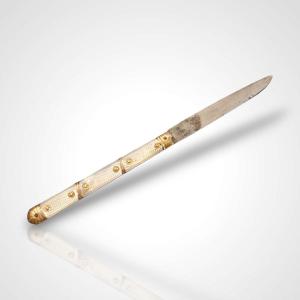
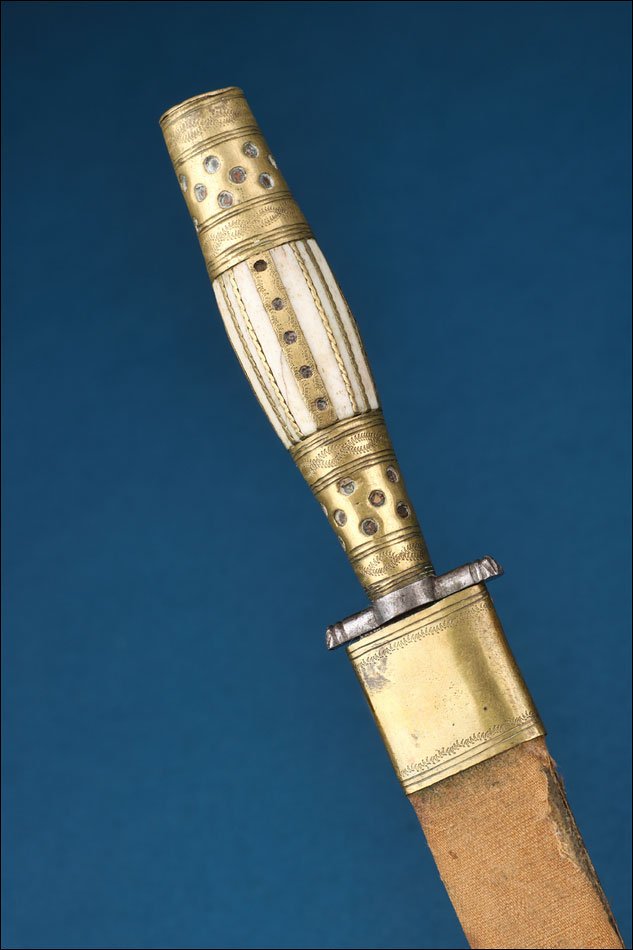
The hilt is constructed through the alternation of bone and brass plates, forming a robust structure highly characteristic of Albacete production. This modular system reflects traditional construction techniques typical of regional knife-making.
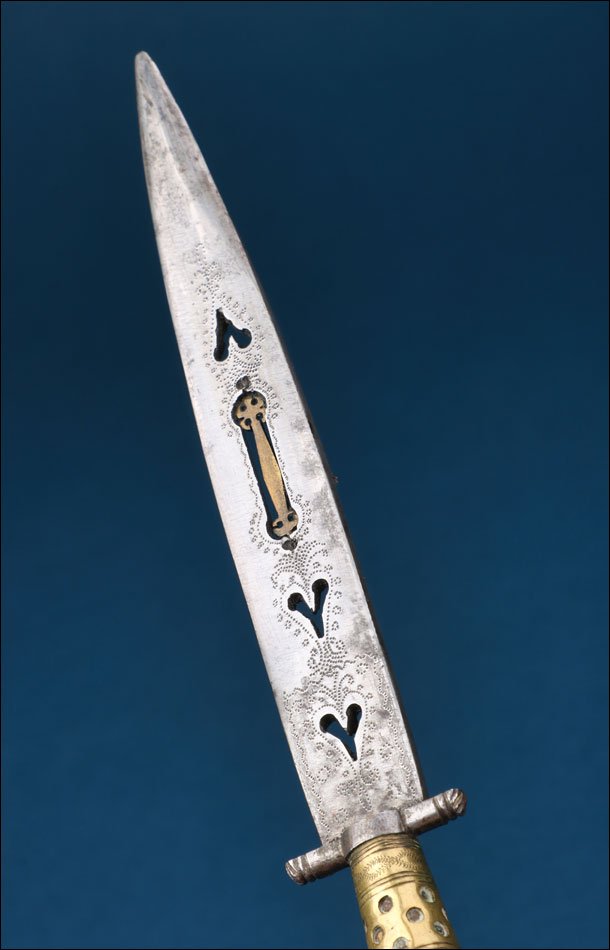
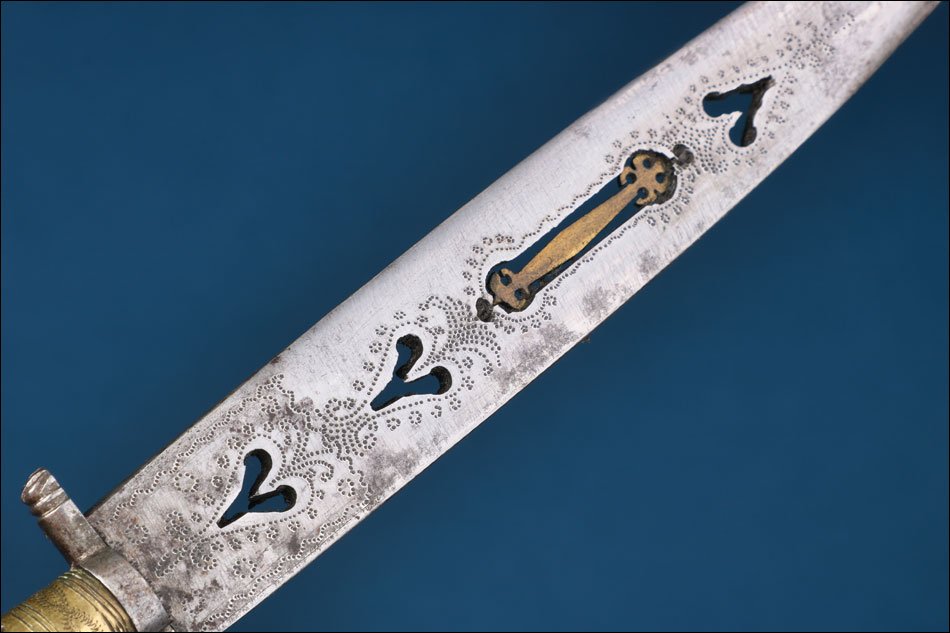
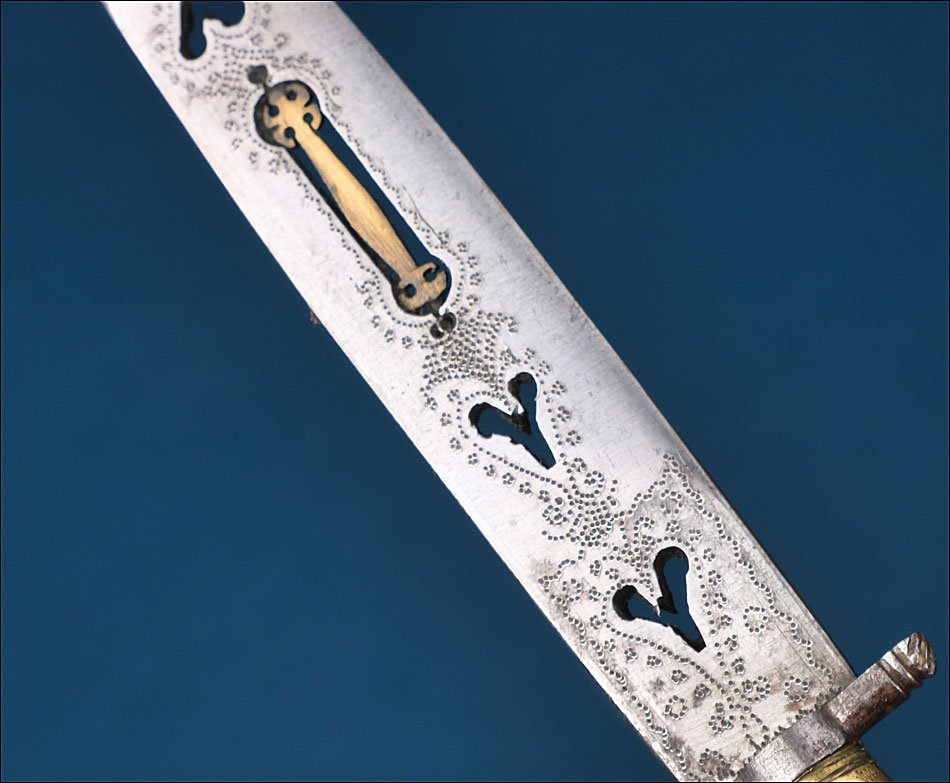
The blade has a triangular section with a double edge towards the tip, and is particularly notable for its elaborate pierced decoration with heart motifs. At the centre of the blade appears a distinctive brass tongue inlay, a relatively uncommon ornamental feature that gives the piece exceptional typological character within 19th-century Spanish cutlery.
The knife retains its complete original scabbard, covered in textile and fitted with metal mounts. Overall condition is excellent for its age, preserving structural integrity and strong visual presence. The combination of pierced blade, metal inlay and fully preserved scabbard places this example among the most interesting within its typology.
Civilian Albacete knives of the 19th century are today a specialised collecting field due to their historical value, ethnographic significance and formal individuality. Examples with complex decorative solutions such as this are considerably scarcer on the current market.
A piece of notable typological rarity, strong historical identity and striking visual appeal.
Measurements: 23.6 cm (9.3 in). Blade: 14.6 cm (5.7 in).
History of Civilian Knives from Albacete
During the 19th century, Albacete developed an intense cutlery production aimed at the civilian market, manufacturing a wide variety of personal defence knives. These pieces combined practical functionality with distinctive formal solutions reflecting the craftsmanship of regional workshops.
The use of materials such as brass, bone or horn, together with occasional pierced or decorated blades, created a typological identity unique within the European context. In some cases, craftsmen incorporated complex ornamental features such as metal inlays to distinguish their work in a competitive market.
Today, these knives represent important material testimonies of 19th-century Spanish popular culture and are highly valued within the international field of historical edged-weapon collecting.
The hilt is constructed through the alternation of bone and brass plates, forming a robust structure highly characteristic of Albacete production. This modular system reflects traditional construction techniques typical of regional knife-making.
The blade has a triangular section with a double edge towards the tip, and is particularly notable for its elaborate pierced decoration with heart motifs. At the centre of the blade appears a distinctive brass tongue inlay, a relatively uncommon ornamental feature that gives the piece exceptional typological character within 19th-century Spanish cutlery.
The knife retains its complete original scabbard, covered in textile and fitted with metal mounts. Overall condition is excellent for its age, preserving structural integrity and strong visual presence. The combination of pierced blade, metal inlay and fully preserved scabbard places this example among the most interesting within its typology.
Civilian Albacete knives of the 19th century are today a specialised collecting field due to their historical value, ethnographic significance and formal individuality. Examples with complex decorative solutions such as this are considerably scarcer on the current market.
A piece of notable typological rarity, strong historical identity and striking visual appeal.
Measurements: 23.6 cm (9.3 in). Blade: 14.6 cm (5.7 in).
History of Civilian Knives from Albacete
During the 19th century, Albacete developed an intense cutlery production aimed at the civilian market, manufacturing a wide variety of personal defence knives. These pieces combined practical functionality with distinctive formal solutions reflecting the craftsmanship of regional workshops.
The use of materials such as brass, bone or horn, together with occasional pierced or decorated blades, created a typological identity unique within the European context. In some cases, craftsmen incorporated complex ornamental features such as metal inlays to distinguish their work in a competitive market.
Today, these knives represent important material testimonies of 19th-century Spanish popular culture and are highly valued within the international field of historical edged-weapon collecting.
570 €
Period: 19th century
Style: Other Style
Condition: Good condition
Length: 23,6 cm (9,3 in)
Reference (ID): 1737844
Availability: In stock
Print