THIS OBJECT WAS SOLD
Spain. Antique Defensive Knife Or Dagger. Ivory Hilt. 19th Century
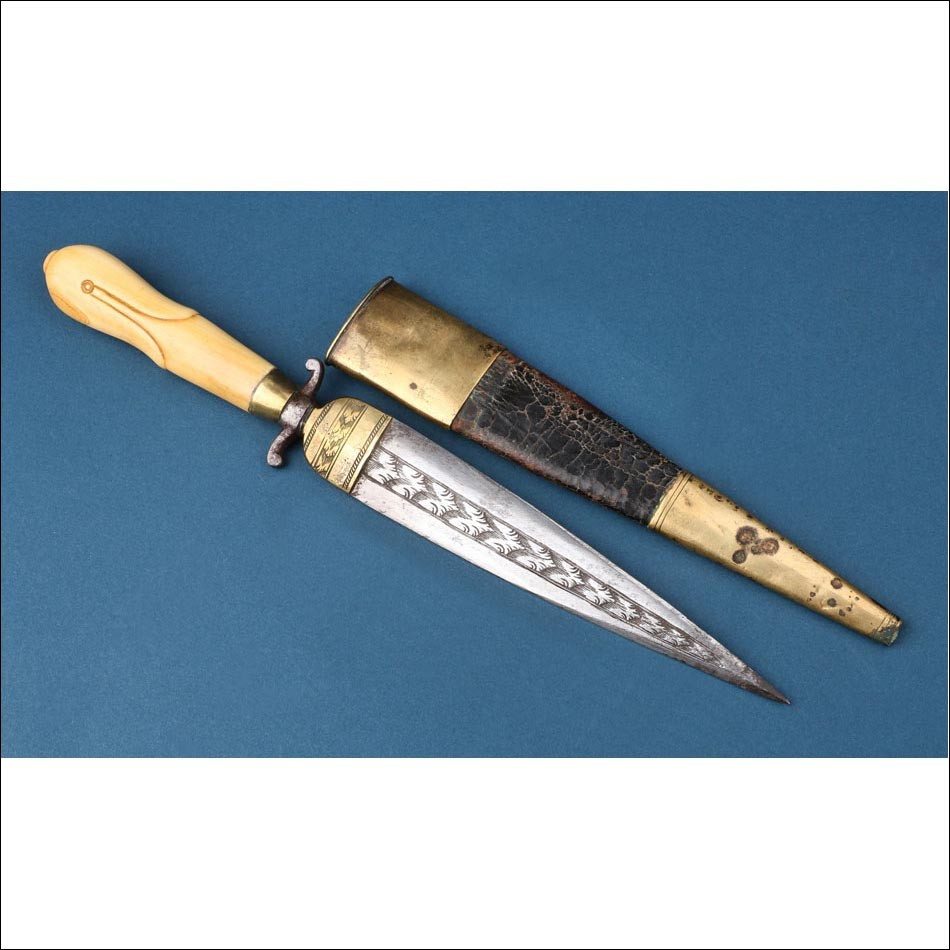
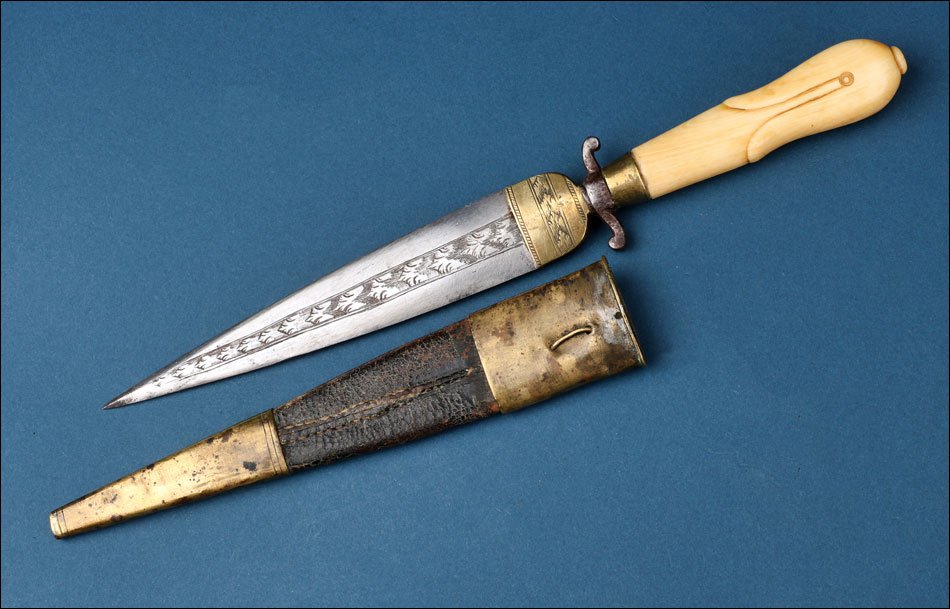
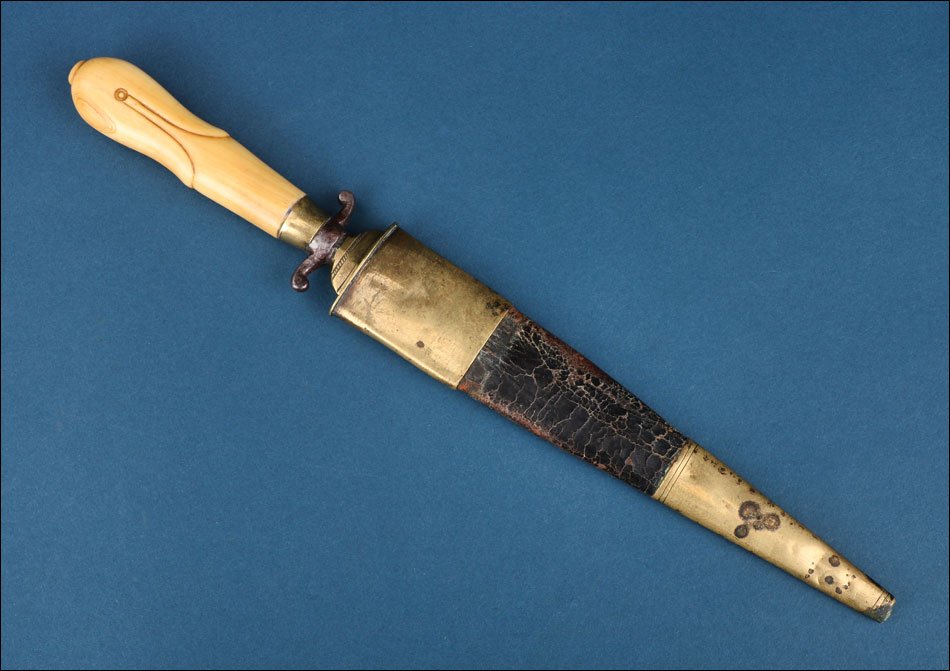

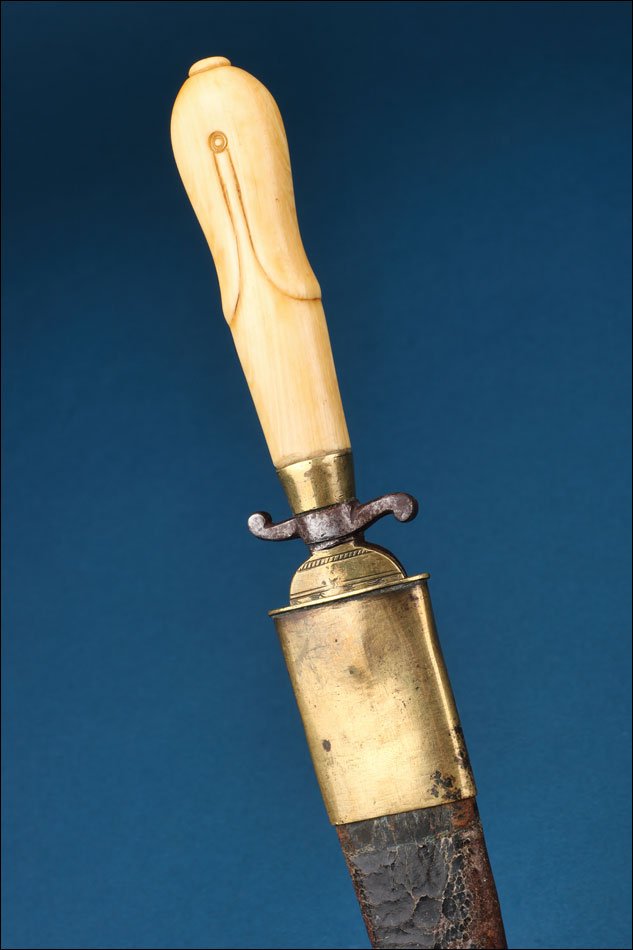
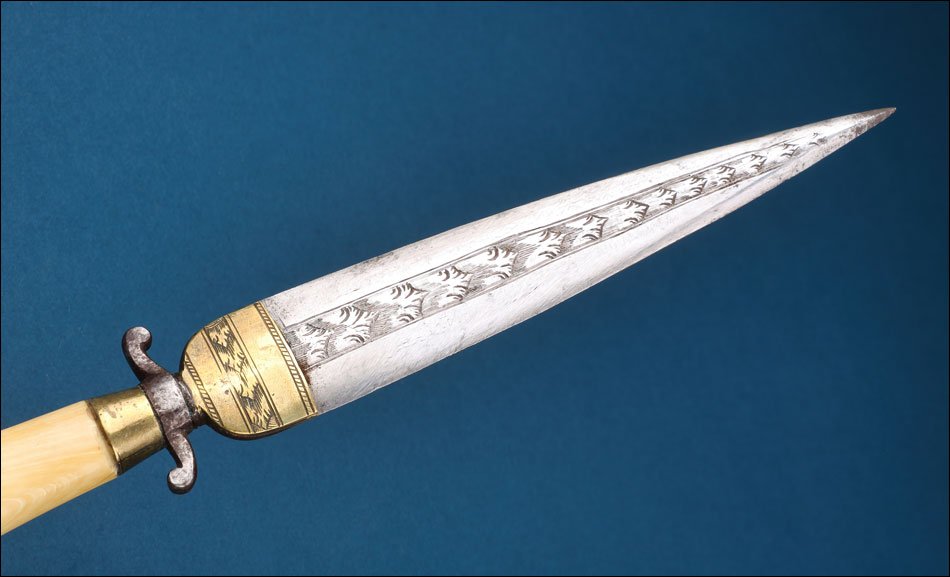
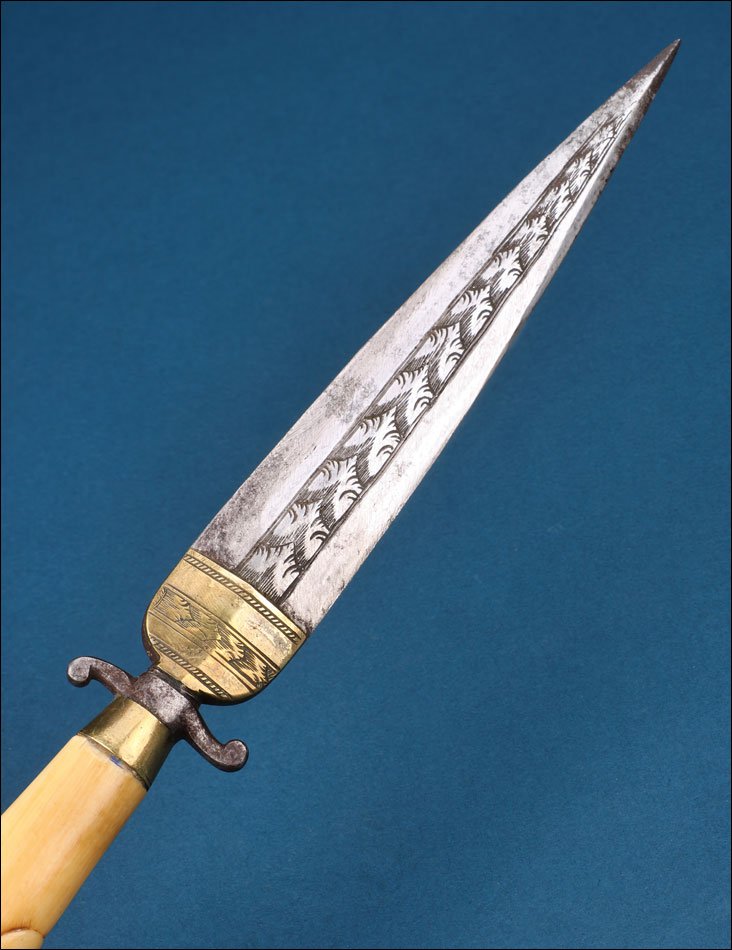


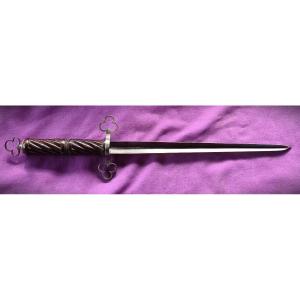
Important and attractive antique Spanish defensive knife datable to the mid-19th century, circa 1850, distinguished by its elegant ivory hilt and its solid blade decorated with vegetal burin engraving. It represents a characteristic example of European civilian edged weapons of the Romantic period, conceived both as a functional means of personal protection and as an object of prestige and distinction.
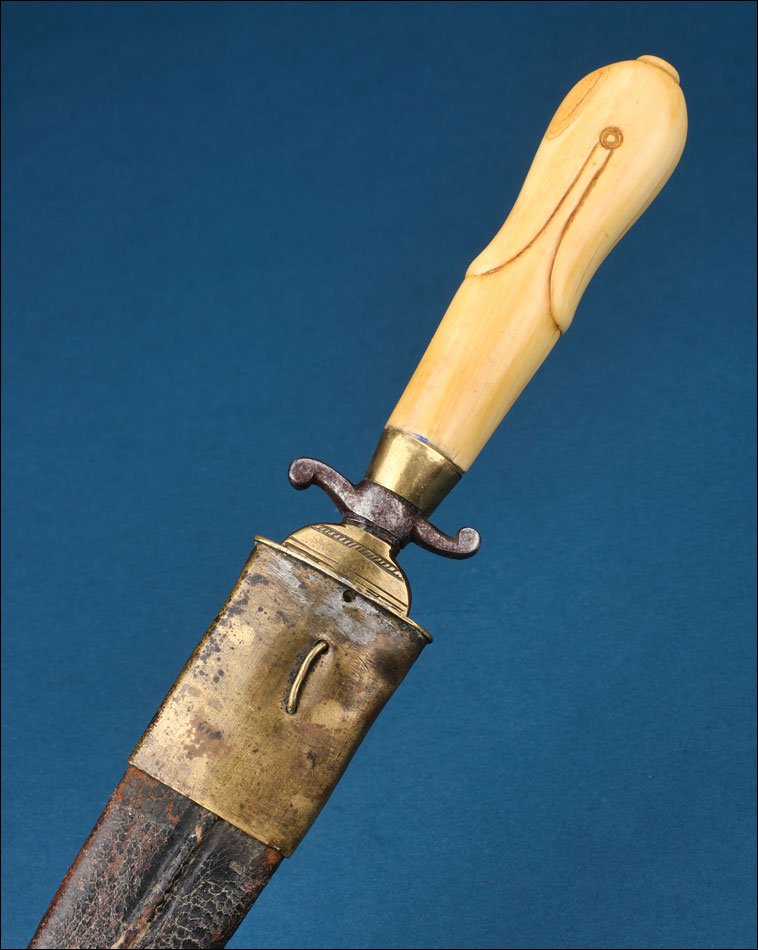
The hilt, carved from natural ivory, displays a refined and elegant silhouette, with fluid and well-balanced lines that demonstrate careful and high-quality craftsmanship. Noble materials of this kind were frequently employed in civilian knives intended for owners of certain social standing, combining functionality with aesthetic refinement.
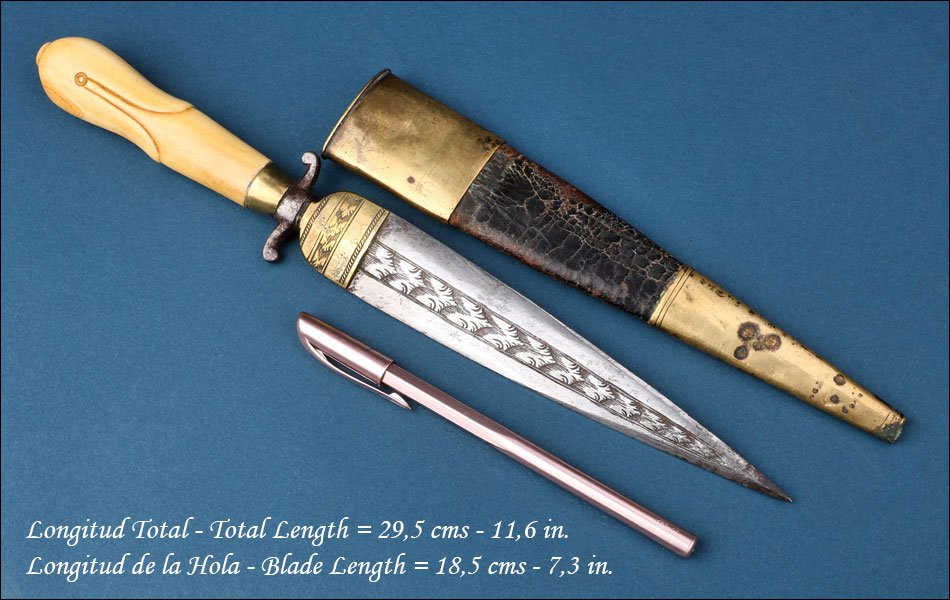
The blade, robust and of thick section, features burin-engraved decoration executed directly into the metal with vegetal ornamental motifs typical of Romantic-period production. This manual engraving technique, more labor-intensive than later industrial methods, gives the piece a strong artisanal character and historical presence.
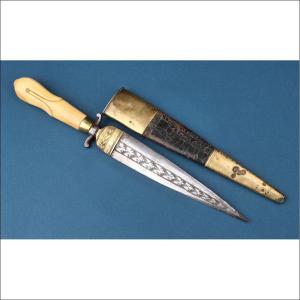
The knife retains its complete period scabbard, with metal mounts and leather covering, forming an authentically attractive and coherent ensemble. The presence of the original scabbard significantly enhances its collectability, as such elements are often lost or damaged over time.
The piece bears no visible workshop or maker’s marks, a relatively common circumstance in 19th-century civilian cutlery, preventing a precise geographical attribution. Nevertheless, its typology and execution place it firmly within the Spanish tradition, possibly linked to historic production centres such as Toledo or Albacete.
Overall condition is very good, with consistent patina and wear commensurate with age, and no significant structural alterations. The quality of materials, formal elegance and survival of the scabbard make this knife a particularly appealing example within the international field of historical edged-weapon collecting.
A piece of remarkable aesthetic beauty, notable typological rarity and strong visual presence.
Measurements: 29.5 cm (11.6 in). Blade: 18.5 cm (7.3 in).
History of Spanish Civilian Knives of the 19th Century
During the 19th century, the use of edged weapons for personal defence formed part of everyday culture across many European regions, particularly in Spain, where the cutlery tradition possessed a long artisanal heritage. Such pieces were used in both urban and rural contexts, fulfilling practical as well as symbolic functions.
The combination of robust blades with hilts made from noble materials such as ivory or horn served a dual purpose: ensuring functional efficiency while projecting a certain social status. Burin-engraved ornamental decoration reflects the persistence of traditional artisanal techniques during a period of transition toward industrial production.
Today, 19th-century civilian knives represent a highly specialised field of collecting, appreciated for their historical value, technical quality and significance within the material culture of the period.
The hilt, carved from natural ivory, displays a refined and elegant silhouette, with fluid and well-balanced lines that demonstrate careful and high-quality craftsmanship. Noble materials of this kind were frequently employed in civilian knives intended for owners of certain social standing, combining functionality with aesthetic refinement.
The blade, robust and of thick section, features burin-engraved decoration executed directly into the metal with vegetal ornamental motifs typical of Romantic-period production. This manual engraving technique, more labor-intensive than later industrial methods, gives the piece a strong artisanal character and historical presence.
The knife retains its complete period scabbard, with metal mounts and leather covering, forming an authentically attractive and coherent ensemble. The presence of the original scabbard significantly enhances its collectability, as such elements are often lost or damaged over time.
The piece bears no visible workshop or maker’s marks, a relatively common circumstance in 19th-century civilian cutlery, preventing a precise geographical attribution. Nevertheless, its typology and execution place it firmly within the Spanish tradition, possibly linked to historic production centres such as Toledo or Albacete.
Overall condition is very good, with consistent patina and wear commensurate with age, and no significant structural alterations. The quality of materials, formal elegance and survival of the scabbard make this knife a particularly appealing example within the international field of historical edged-weapon collecting.
A piece of remarkable aesthetic beauty, notable typological rarity and strong visual presence.
Measurements: 29.5 cm (11.6 in). Blade: 18.5 cm (7.3 in).
History of Spanish Civilian Knives of the 19th Century
During the 19th century, the use of edged weapons for personal defence formed part of everyday culture across many European regions, particularly in Spain, where the cutlery tradition possessed a long artisanal heritage. Such pieces were used in both urban and rural contexts, fulfilling practical as well as symbolic functions.
The combination of robust blades with hilts made from noble materials such as ivory or horn served a dual purpose: ensuring functional efficiency while projecting a certain social status. Burin-engraved ornamental decoration reflects the persistence of traditional artisanal techniques during a period of transition toward industrial production.
Today, 19th-century civilian knives represent a highly specialised field of collecting, appreciated for their historical value, technical quality and significance within the material culture of the period.
Explore similar pieces and discover your ideal find:
Edged Weapons