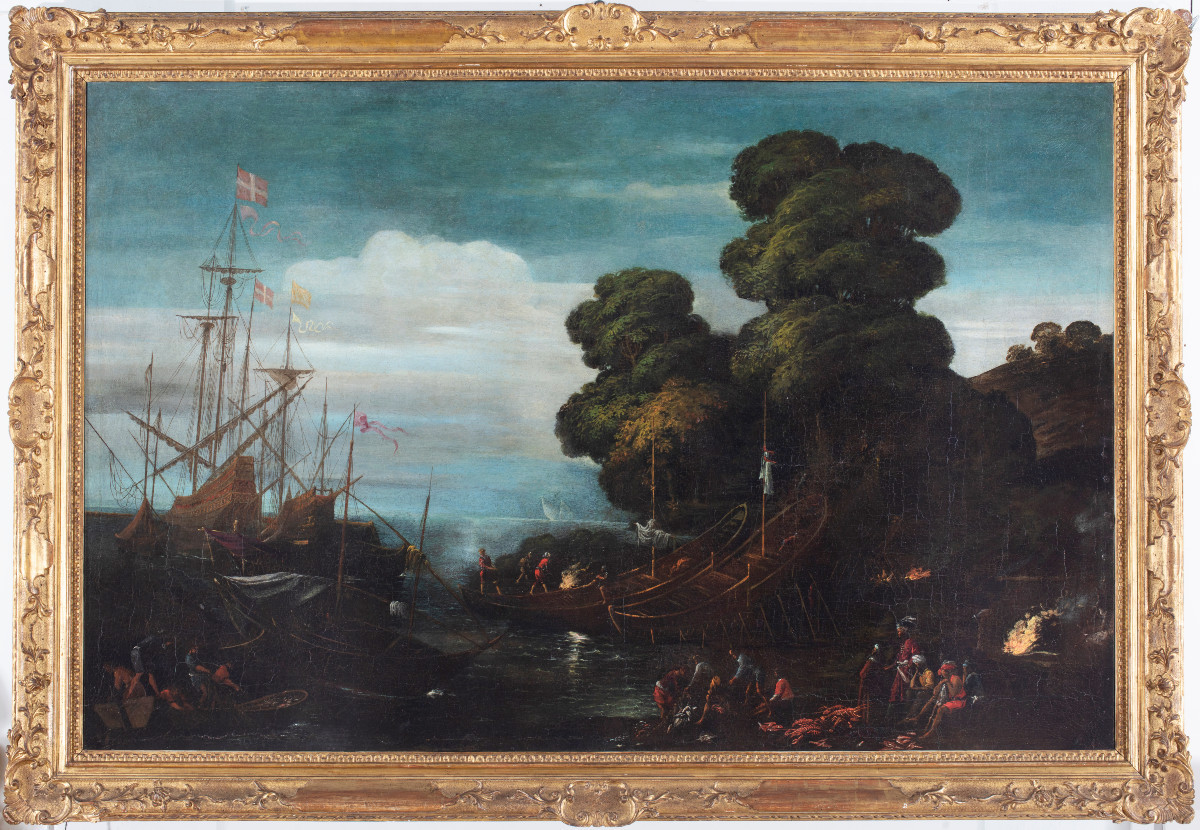


"the Lobster Fishing", Agostino Tassi (1580 - 1644)
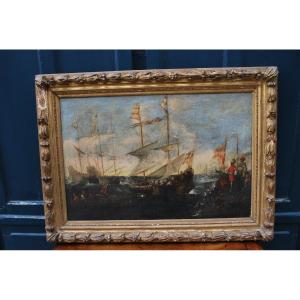
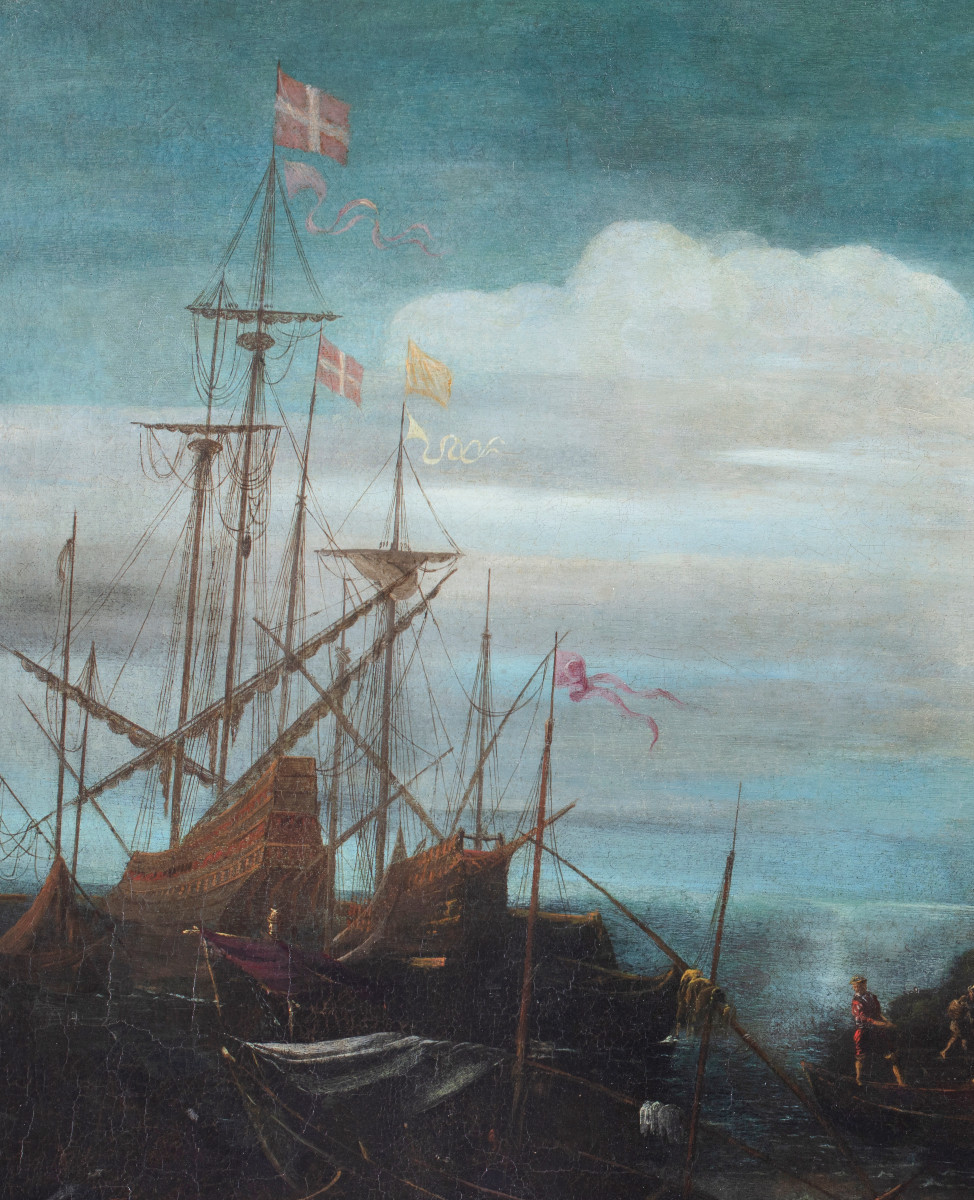
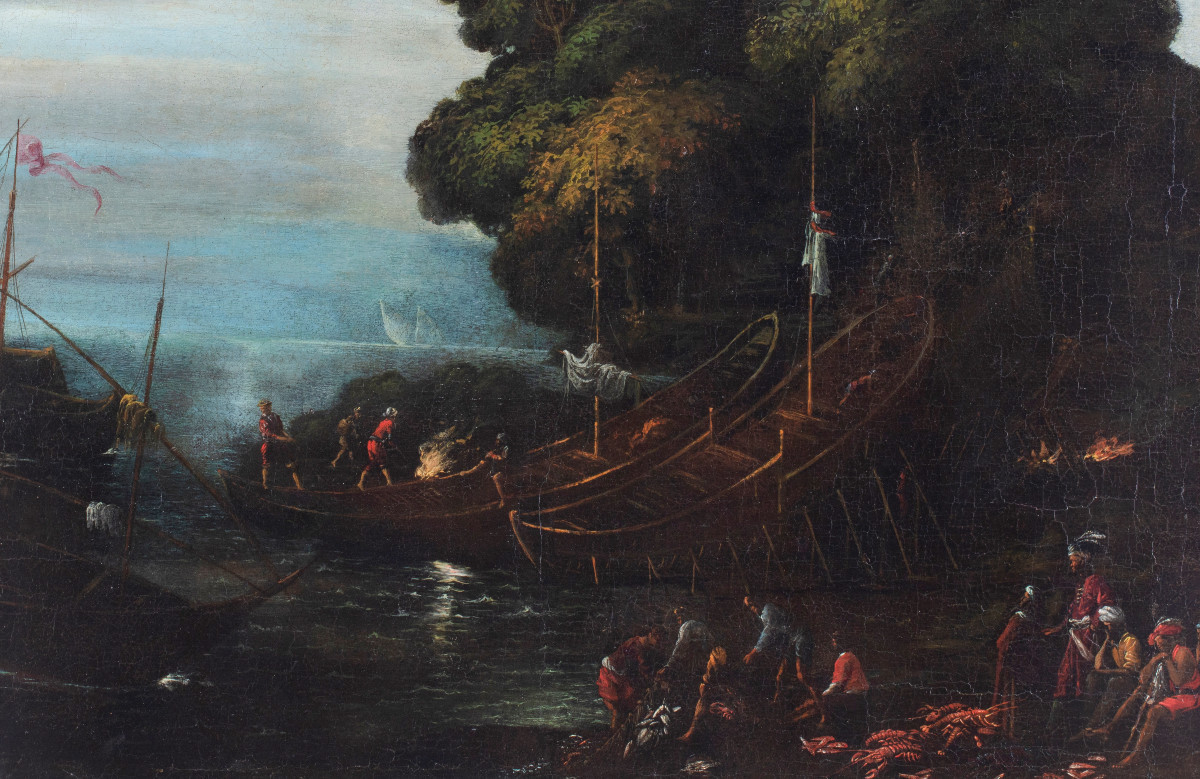
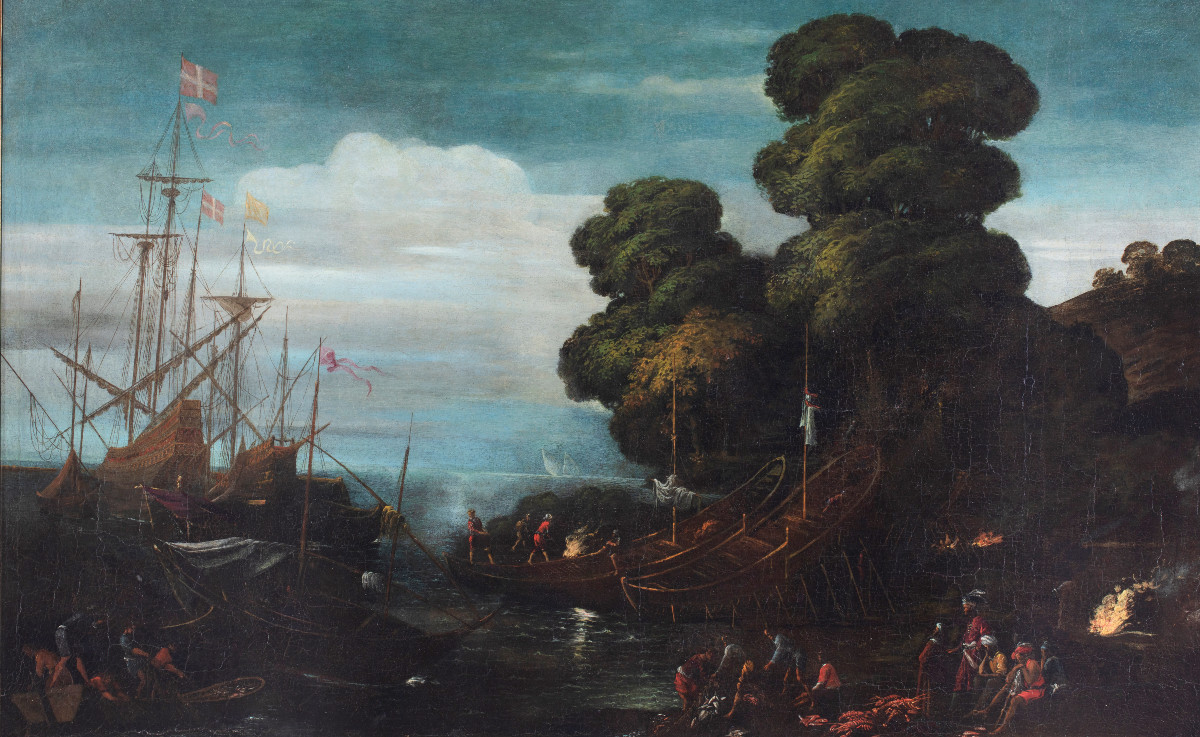
The large canvas depicting this airy seascape portrays a pleasant and lively scene. In a bay sheltered from wind and currents, two large galleys are moored on the left, carefully rendered in their sails, hull planking, and banners fluttering in the wind. Along the wooded shores, the crews of the small fleet take advantage of the stop to anchor other small boats and rest.
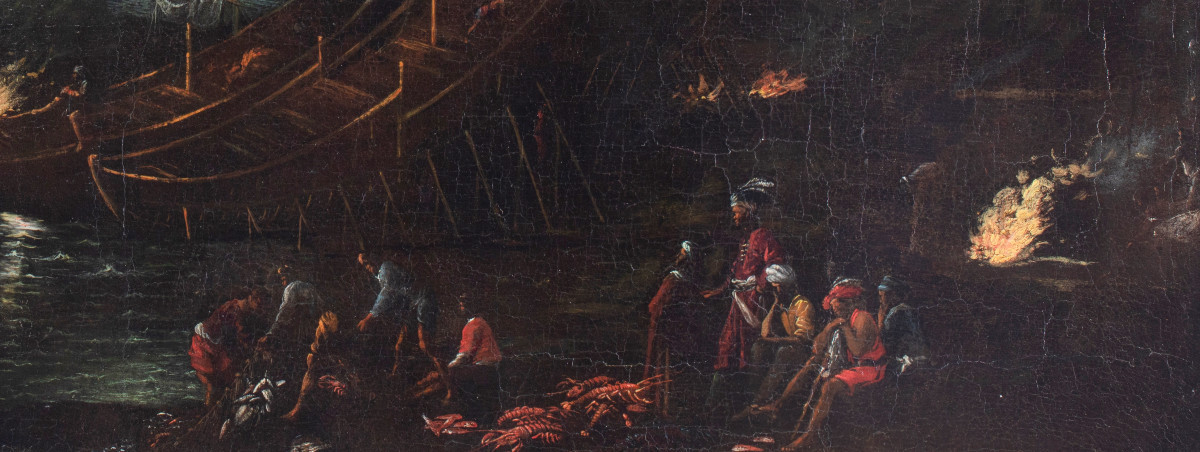
On the right appears the episode that gives the painting its title: a group of fishermen and merchants gathers around the catch, a haul of large lobsters and small fish drawn from the nets. The distinction in the depiction of the figures is clear: on one side, fishermen and sailors in their humble work clothes; on the other, richly dressed merchants. They are dressed in a “Turkish” fashion, with colorful tunics and sumptuous feathered turbans, evoking a Near East dominated by the Ottoman Empire, a constant threat and at the same time a crossroads of cultural exchange with the European continent.
The painting, attentive and meticulous in its details, presents a composition of broad scope in which the use of light creates intriguing chiaroscuro effects, moving from the bright sky to the shadows cast by the foliage of the trees, illuminated by fires burning near the encampment.
Agostino Tassi, like many artists of his time, spent his youth in various cities of the peninsula, first in Rome and then in Florence in the service of Ferdinando de’ Medici, later traveling to Genoa, drawn by important commissions for the decoration of the grand palaces of “La Superba.” It was, however, after his return to Rome that he firmly established himself as an artist, asserting his reputation as a painter of landscapes and becoming a key figure in the genre.
An extroverted and turbulent artist, he is well known for his friendship and collaboration with the painter Orazio Gentileschi, with whom he worked on the decoration of the Casino delle Muse under the patronage of Cardinal Scipione Borghese. Other notable commissions include decorations for the Quirinal Palace, Palazzo Pamphilj, and Palazzo Lancellotti.
The work is accompanied by a comprehensive critical essay by Professor Arabella Cifani.
Period: 17th century
Style: Louis 14th, Regency
Condition: Good condition
Material: Oil painting
Width: 150
Height: 100
Reference (ID): 1736605
Availability: In stock