



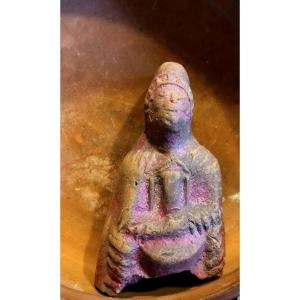


Votive Terracotta Cyprus 300-200 Bc
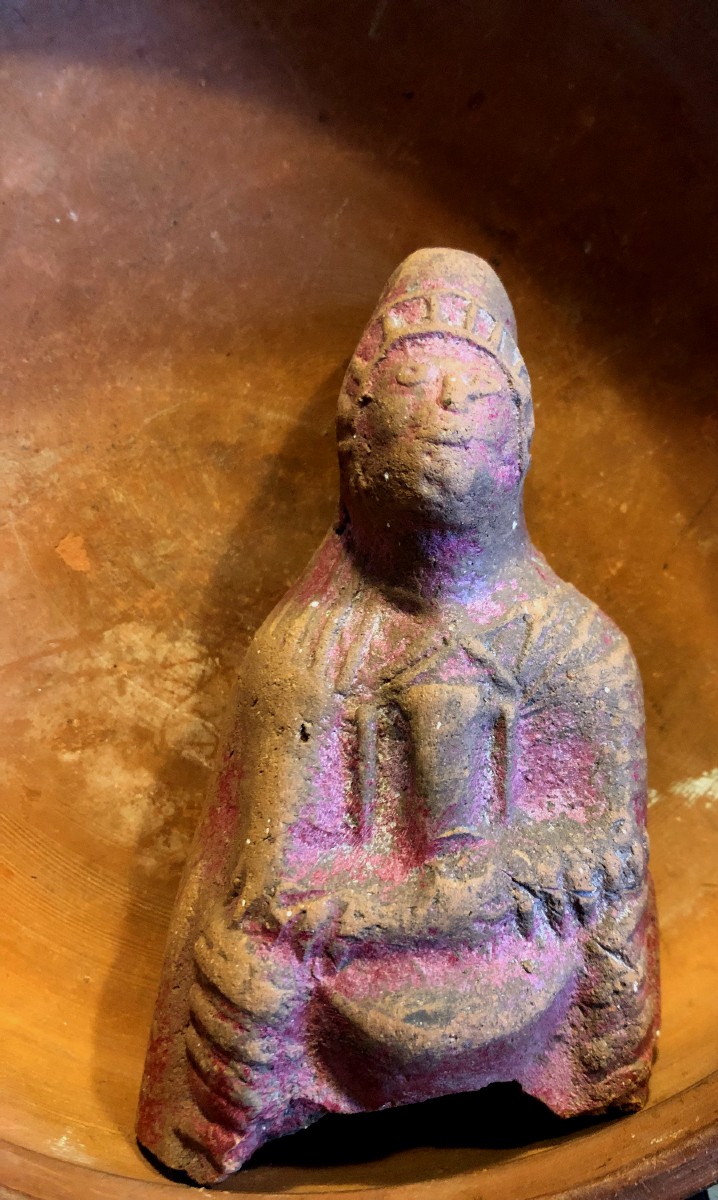
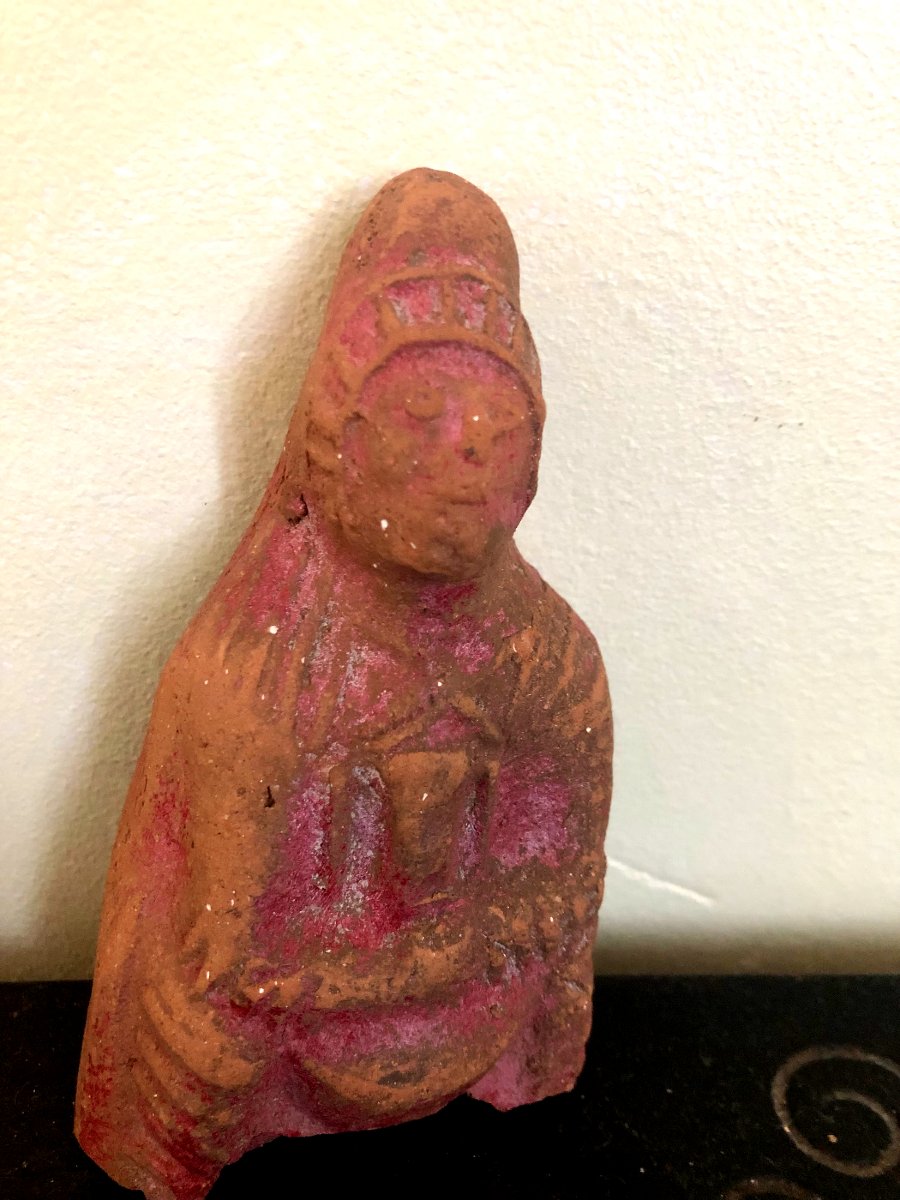
Hellenistic-Roman votive figure 300-200 BC. The figure wears a distinctive, high conical headdress or crown, which often identifies the subject as a high-ranking deity or priestess.
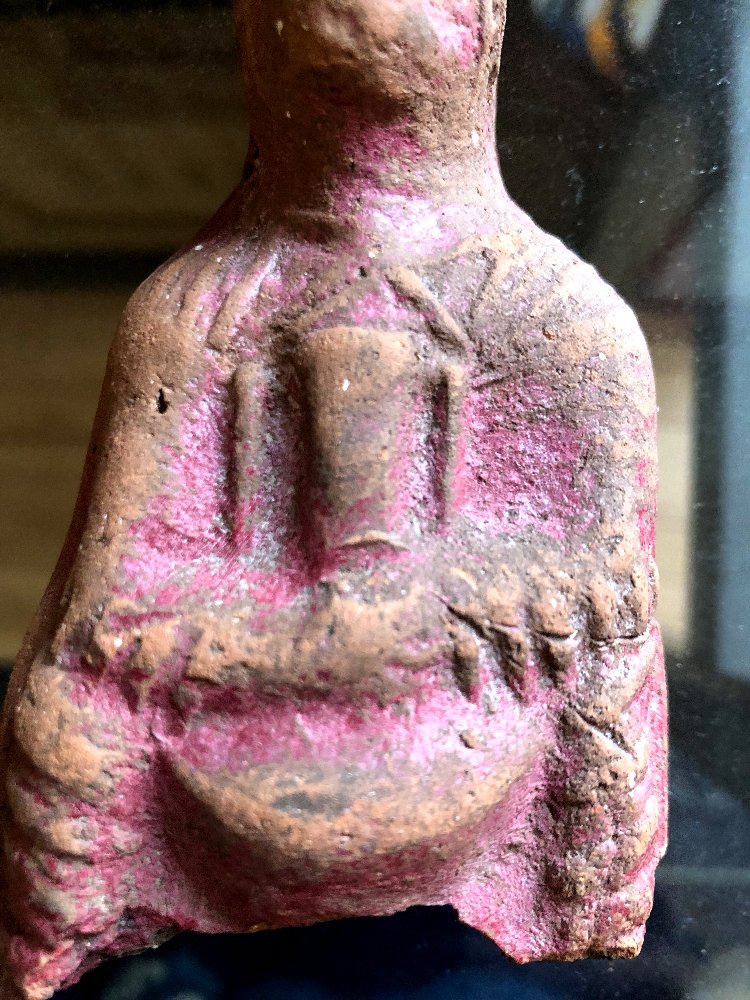
The Phrygian influence is notable with the large hat recalling Oriental or Anatolian styles often associated with deities such as Cybele or Mithras, although it is also a common stylistic choice for Tanagra-style terracotta figurines. She is carrying a large amphora in her arms across her chest.
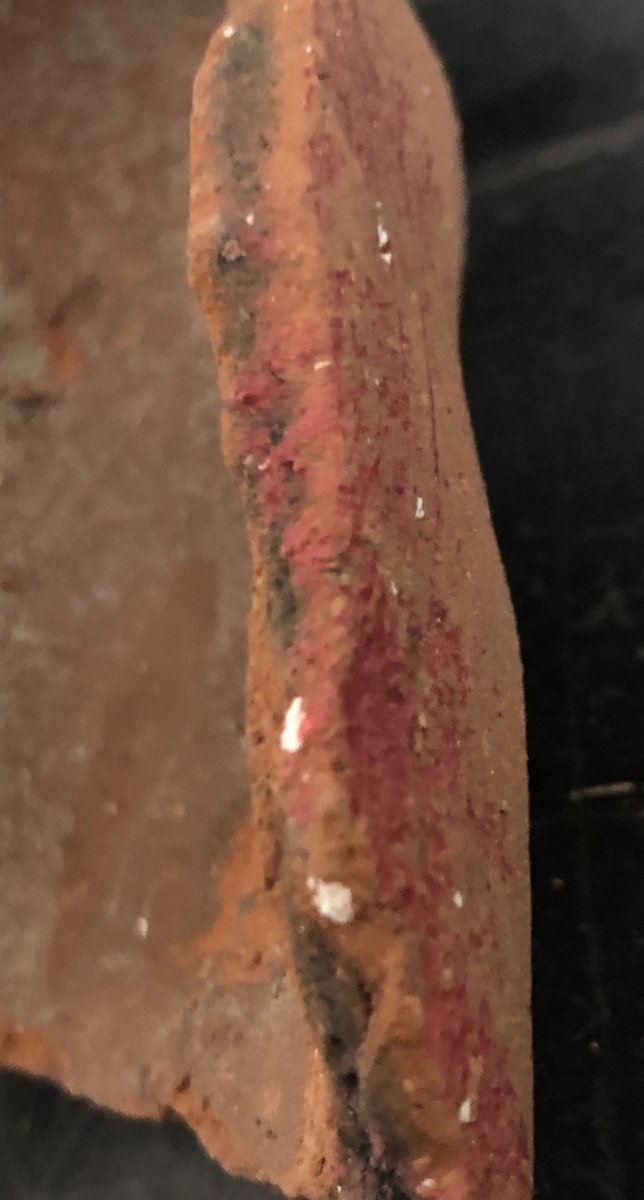
The hollow back is a classic indicator of a moulded figurine. Ancient potters pressed wet clay into a forward-facing mould. Ancient Greek and Roman terracottas were originally painted in bright colours. Although most lose their colour over 2,000 years, traces of pink madder (a dye made from the madder plant) or ochre often remain. The white "crusty" stains are calcium carbonate (caliche) deposits that form when an object is buried in the ground for centuries
.
The Phrygian influence is notable with the large hat recalling Oriental or Anatolian styles often associated with deities such as Cybele or Mithras, although it is also a common stylistic choice for Tanagra-style terracotta figurines. She is carrying a large amphora in her arms across her chest.
The hollow back is a classic indicator of a moulded figurine. Ancient potters pressed wet clay into a forward-facing mould. Ancient Greek and Roman terracottas were originally painted in bright colours. Although most lose their colour over 2,000 years, traces of pink madder (a dye made from the madder plant) or ochre often remain. The white "crusty" stains are calcium carbonate (caliche) deposits that form when an object is buried in the ground for centuries
.
750 €
Period: Before 16th century
Style: Rome and Antic Greece
Condition: Good condition
Material: Terracotta
Width: 6 cm
Height: 12 cm
Reference (ID): 1734785
Availability: In stock
Print