

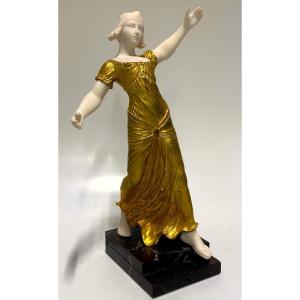


Art Deco Chryselephantine Sculpture "dancer" , Dated 1930, Gilt-bronze And Marble
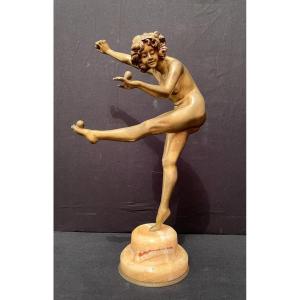
This sculpture is fully in line with European production between the wars, around 1920-1930, a period emblematic of the Art Deco style. It adopts the aesthetic codes developed notably in Paris and Vienna, where the technique known as chryselephantine was experiencing a particular boom. Although unsigned, the work displays formal and technical characteristics comparable to the productions of workshops active in the circle of Demetre Chiparus or Ferdinand Preiss.
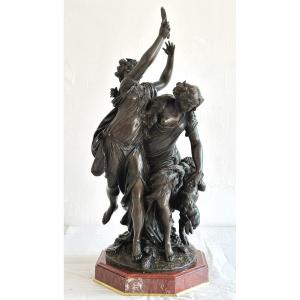
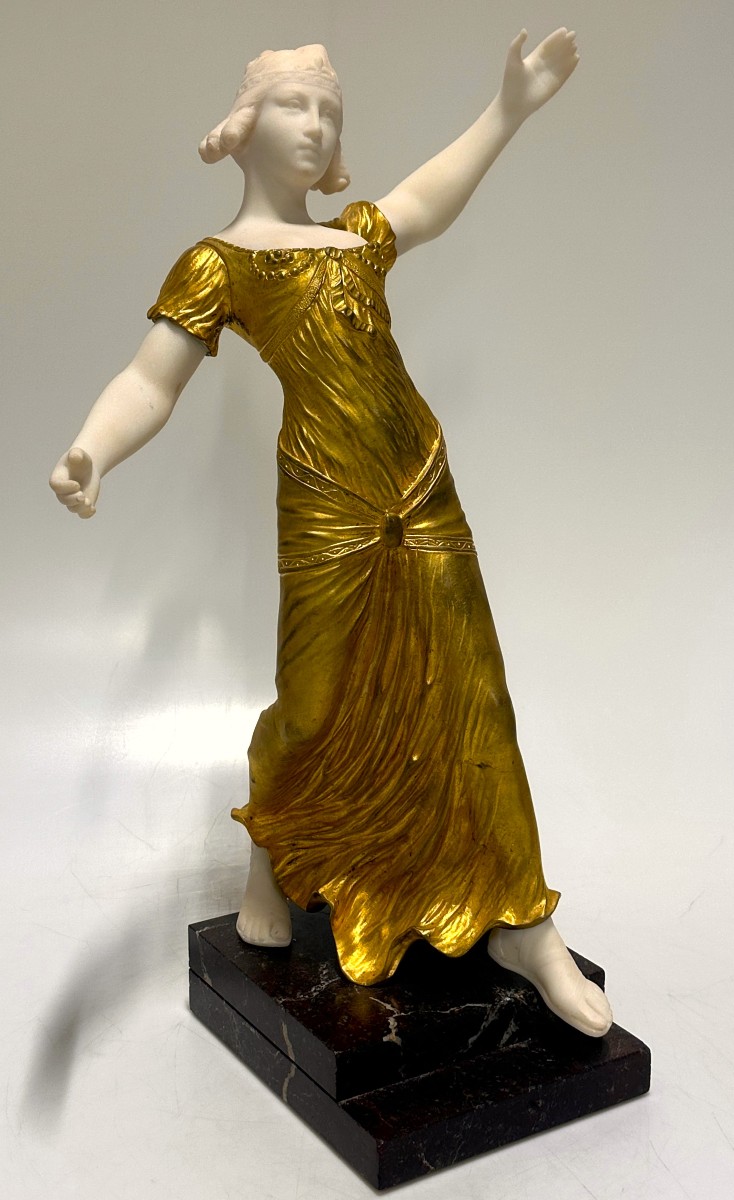
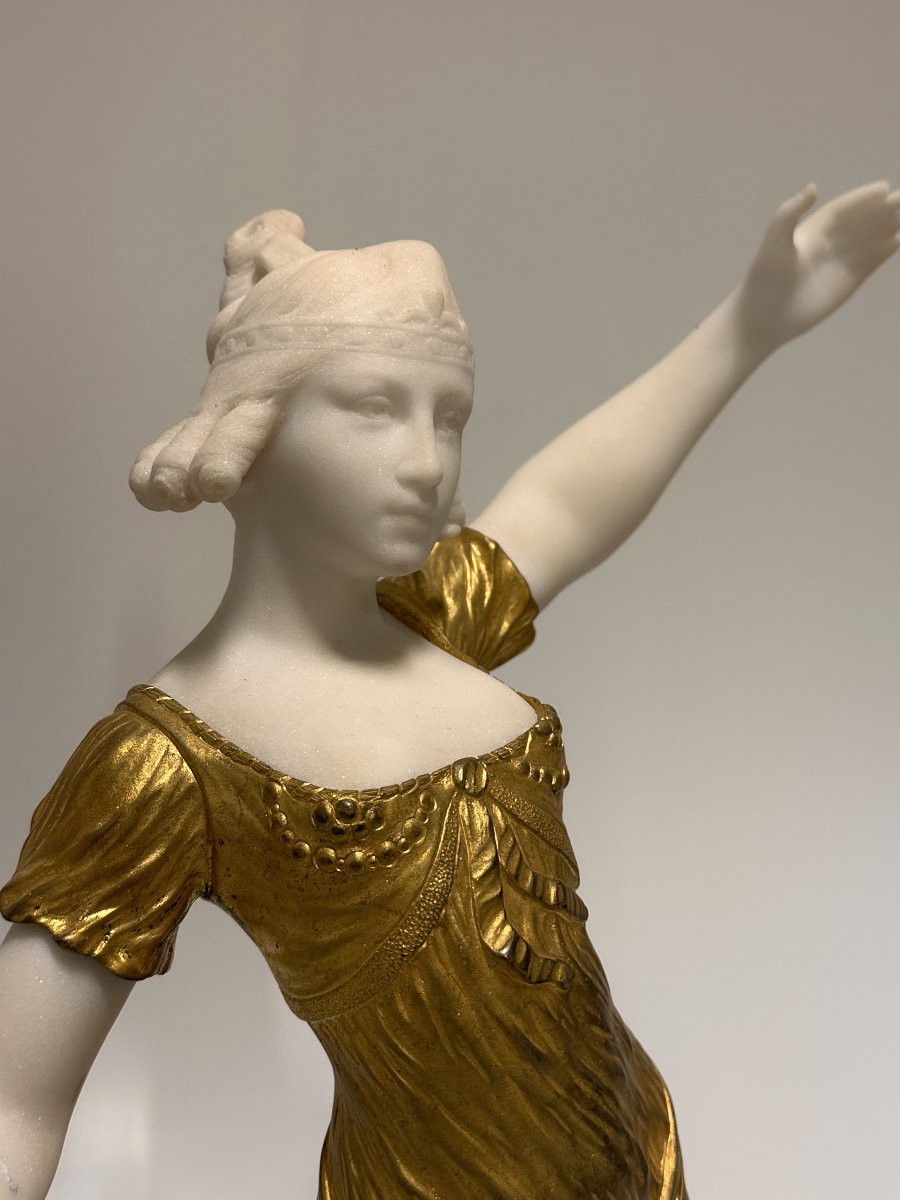
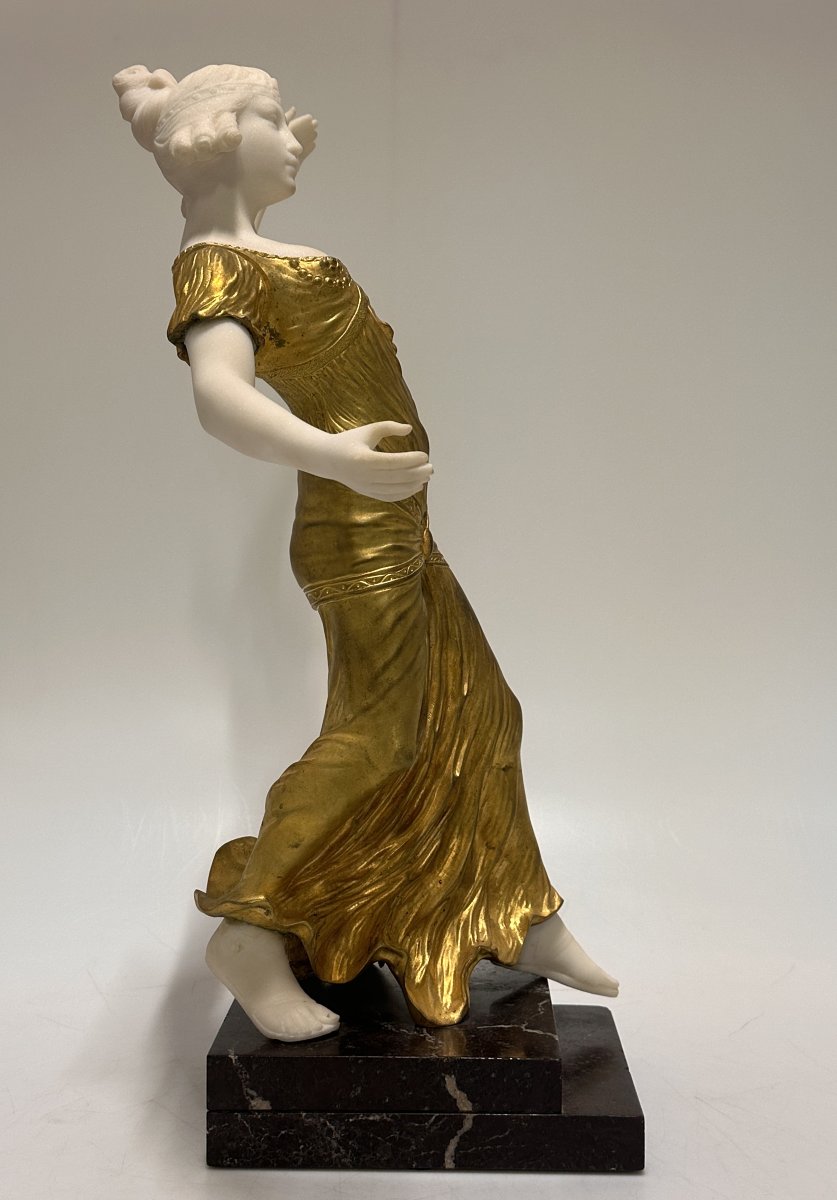
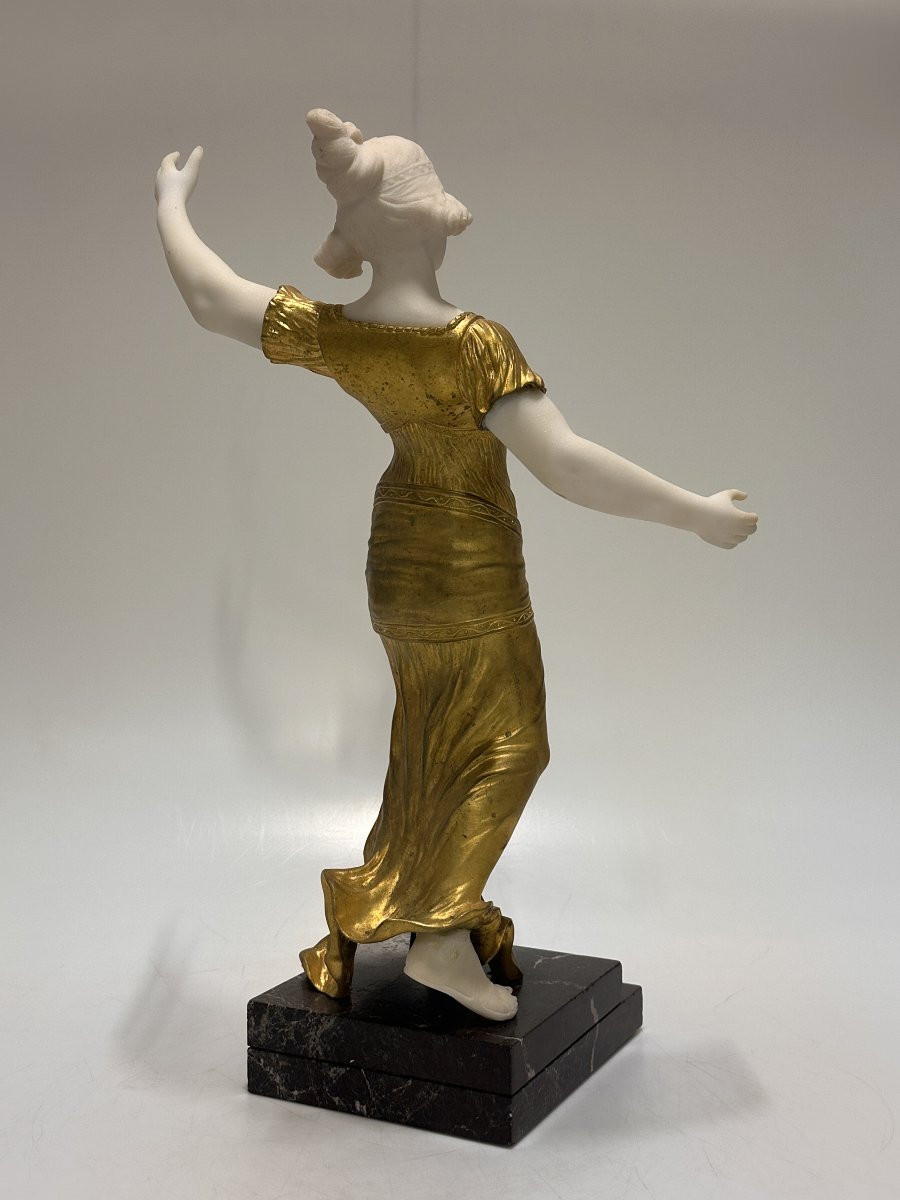
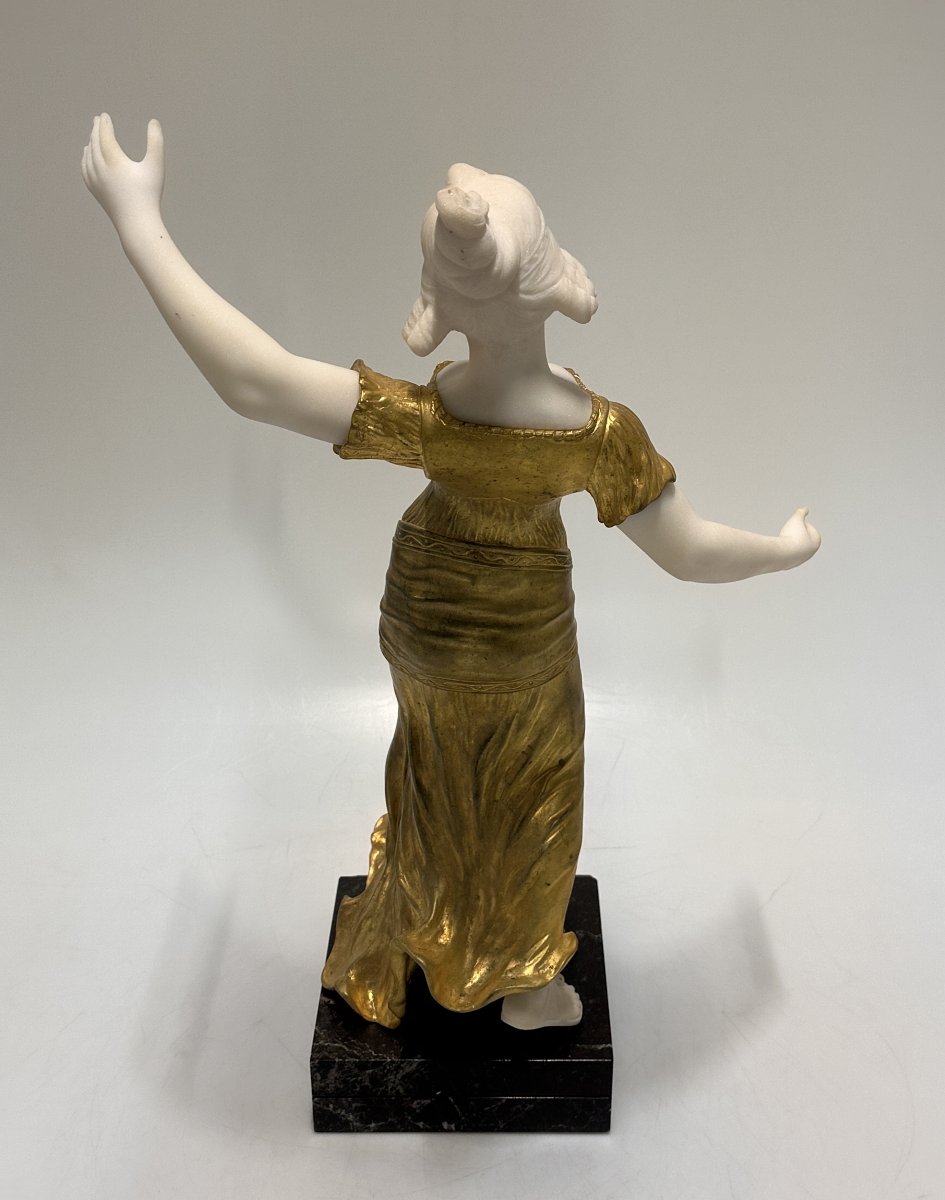
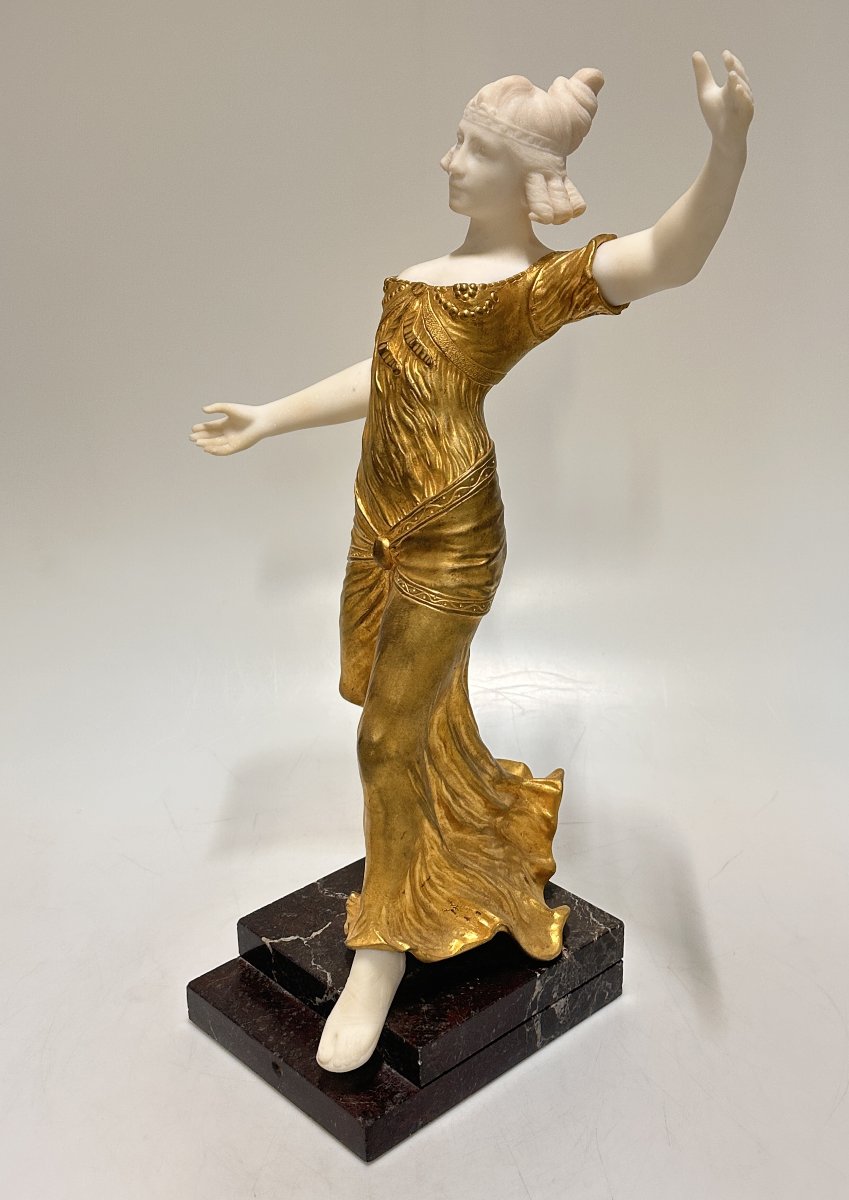
Subject and compositionThe figure represents a stylized dancer, captured in a movement of elevation and openness. The outstretched arms, slightly tilted torso and advanced step give the whole a fluid dynamic, typical of the Art Deco vocabulary inspired by the Ballets modernes and choreographic scenes of the period.
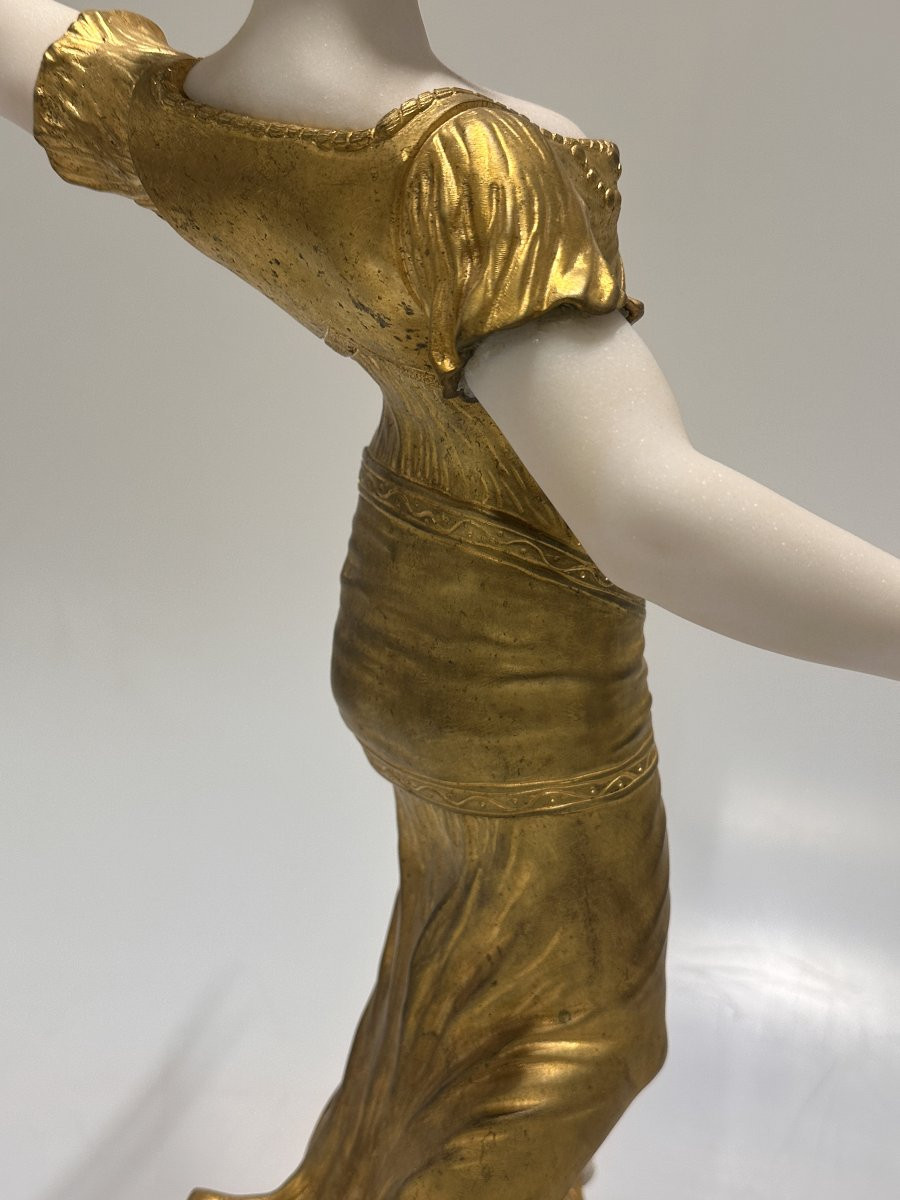
The treatment of the drape, structured but animated by supple, nervous folds, accentuates the impression of movement. The elongated silhouette, with slender proportions, reflects a search for elegance and formal synthesis typical of this period.
Materials and technique: chryselephantineThe work is produced using the so-called chryselephantine technique, consisting of the combination of contrasting materials:
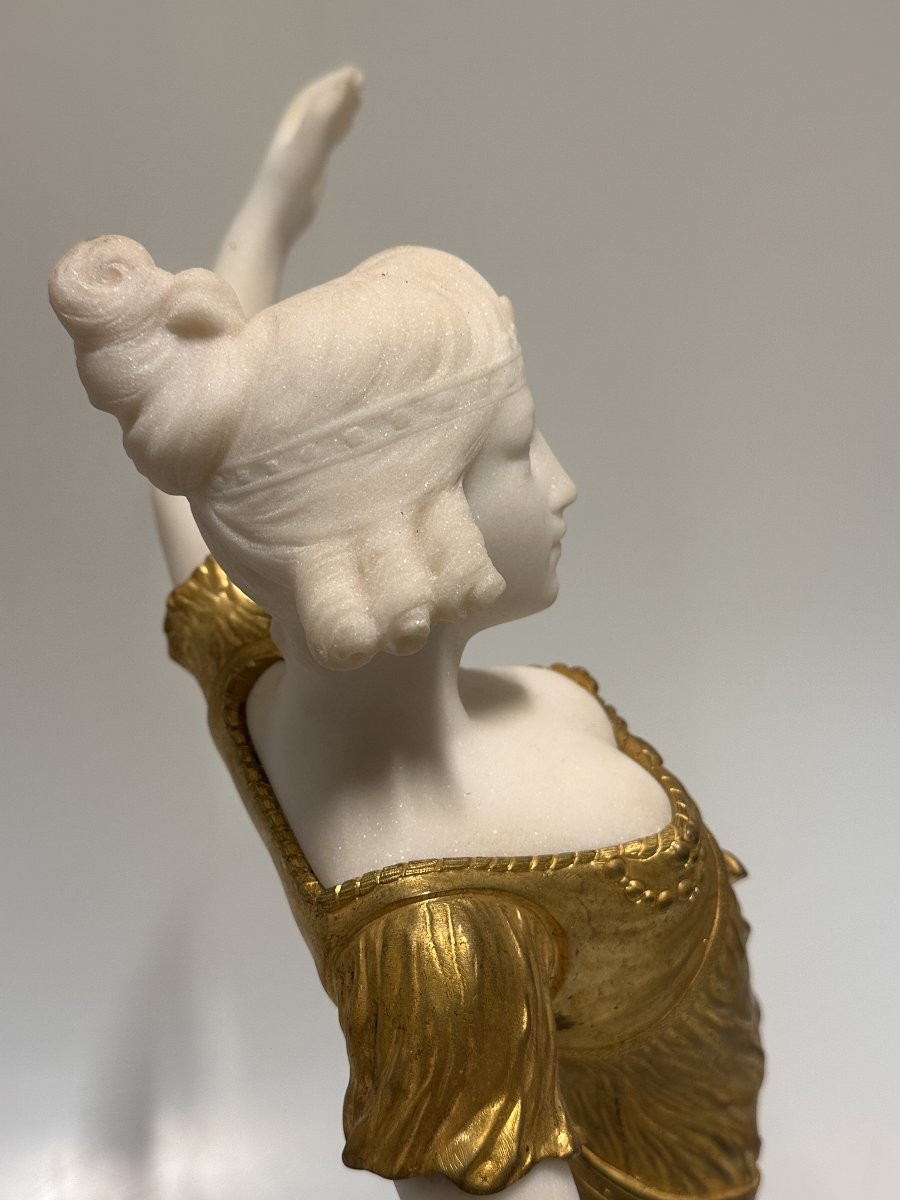
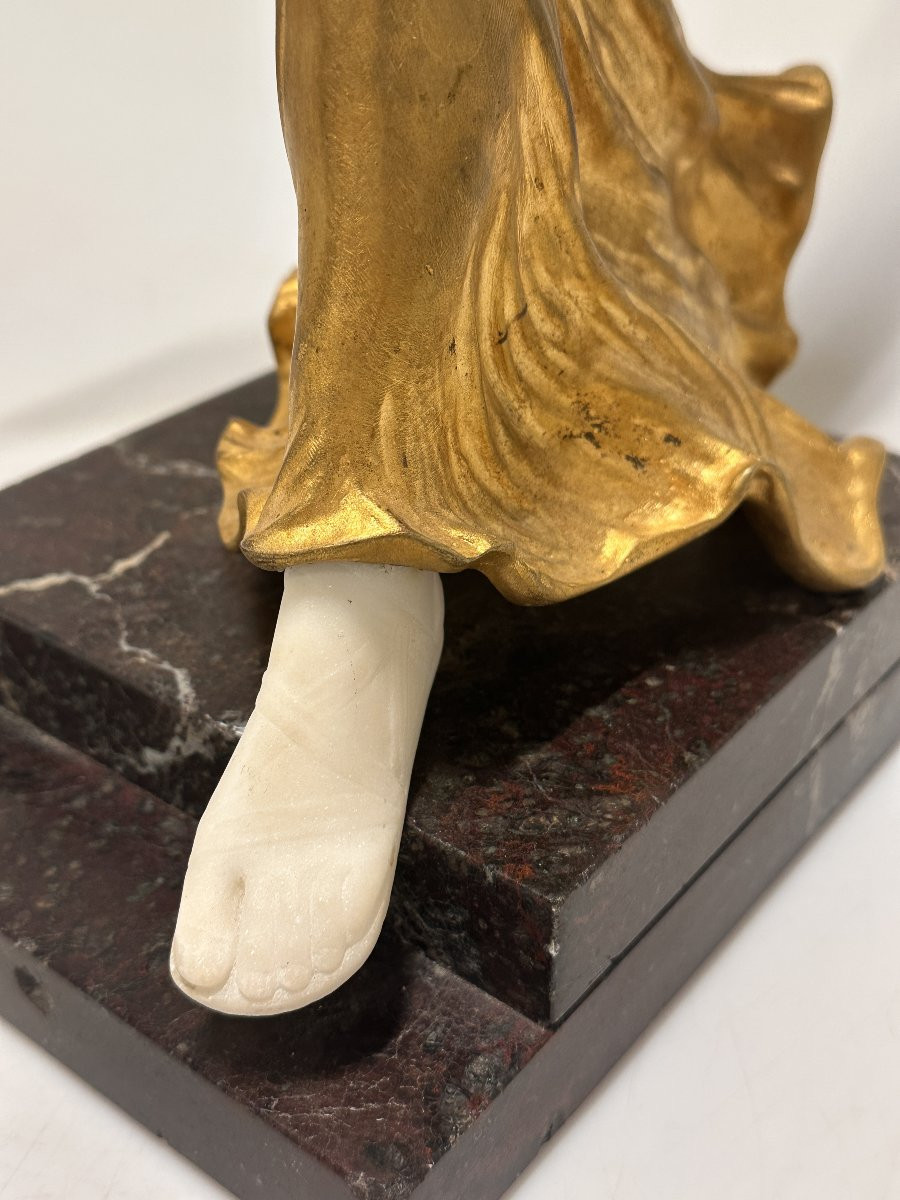
- white Carrara marble for the embodied parts (face, arms, feet),
- finely chiseled and gilded bronze for the garment.
This technique, inherited from Antiquity but reinterpreted in the early 20th century, allows a refined interplay between matte and shine, reinforcing the legibility of volumes and the preciousness of the object. The soft, idealized modelling of the face contrasts with the decorative richness of the garment treated in gilded bronze.
Base and lapidary materialsThe sculpture rests on a double-stepped marble base in a deep red tone veined with white and black, identifiable as Rouge Griotte or related marble (probably from French or Belgian quarries). This choice of material, common in quality productions, emphasizes the chromatic contrast with the white marble and gilding.
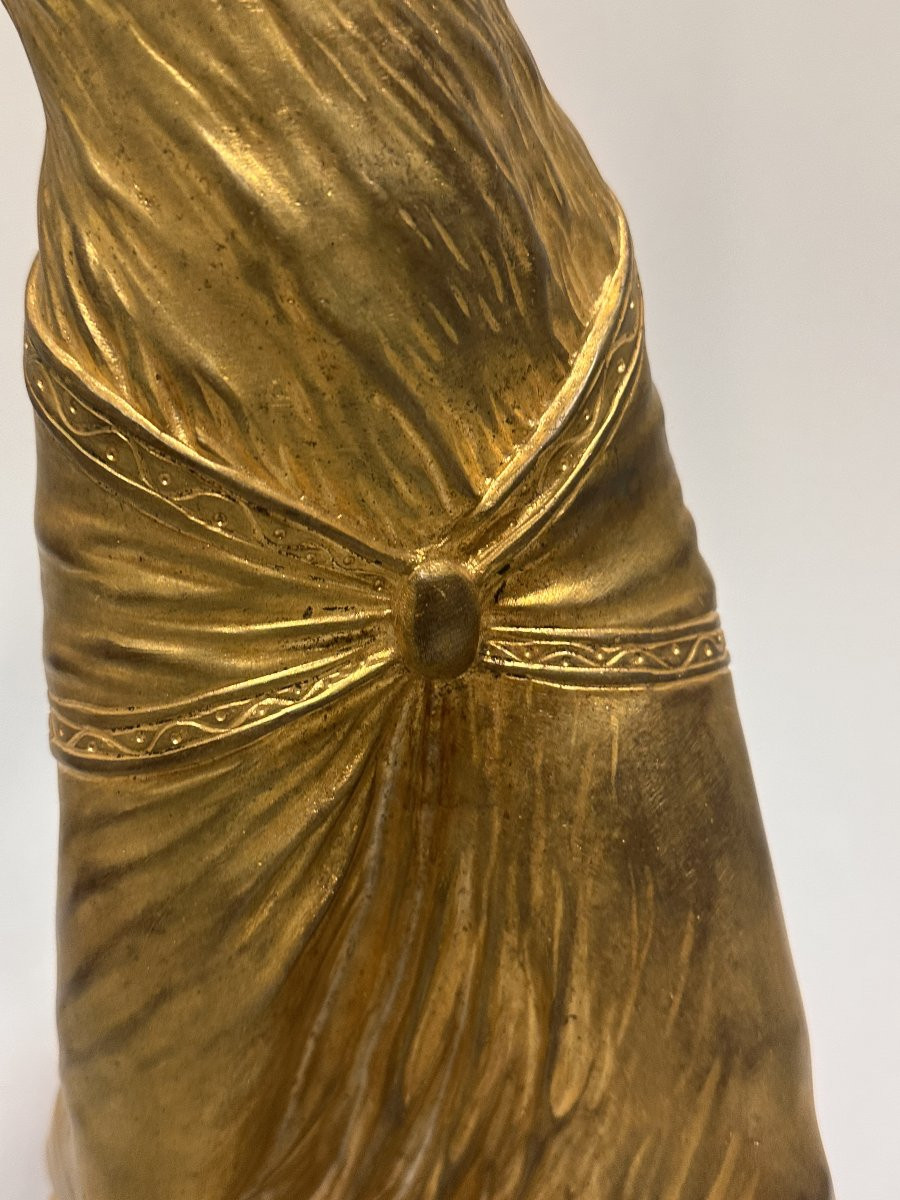
Quality of execution and detailThe chasing of the bronze reveals precise workmanship, particularly in the decorative friezes, belts and ornamental elements. The gilding, now slightly patinated, retains a beautiful depth and contributes to the overall decorative effect.
The transitions between the different materials are mastered, testifying to careful assembly. The finely sculpted face features a calm, interiorized expression, typical of idealized Art Deco feminine figures.
The face is a very delicate and delicate sculpture, with a very delicate and delicate texture.Stylistic positioning and rarity
This model follows in the tradition of dancing figures produced in the 1920s-1930s, which are highly sought-after today. The combination of a dynamic composition, noble materials (Carrara marble and gilded bronze) and a quality red marble base gives this sculpture a distinctive character.
Comparable examples seen on the specialist market and platforms dedicated to the decorative arts rarely display such consistency in materials and quality of execution, which reinforces the interest of this piece.
Dimensions:height - 52 cm
width - 26 cm
depth - 23 cm
base - 16 x 20 cm
Period: 20th century
Style: Art Deco
Condition: Excellent condition
Material: Bronze
Width: 26 cm
Height: 52 cm
Depth: 23 cm
Reference (ID): 1733652
Availability: In stock