THIS OBJECT WAS SOLD
Hares In The Forest By August Schleich (german, 1814-1865)
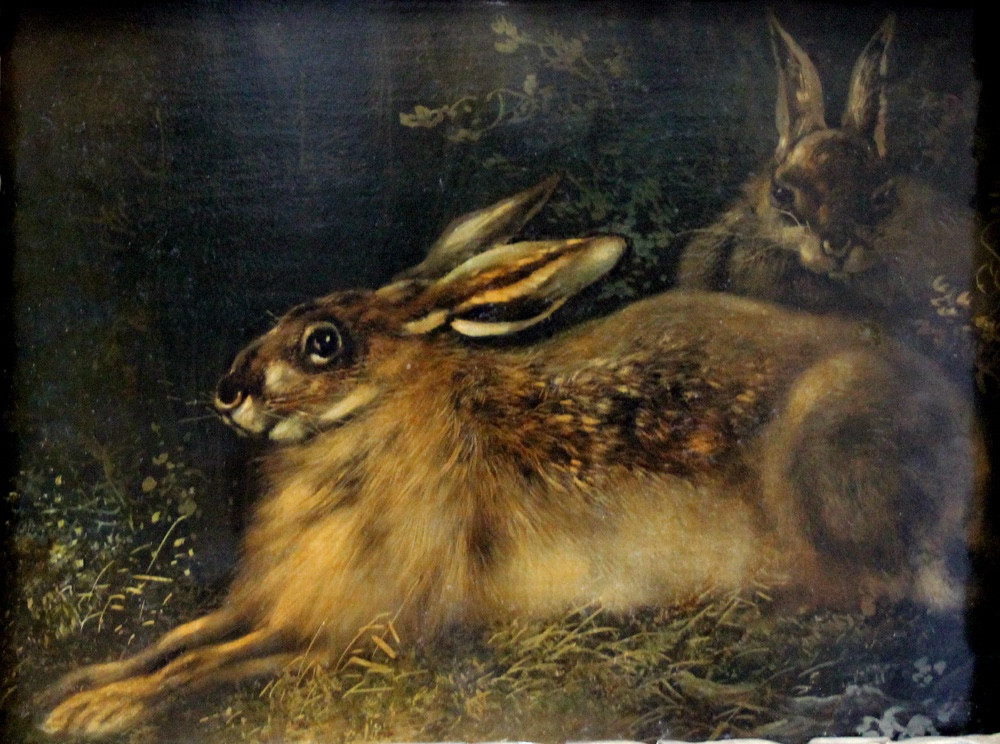
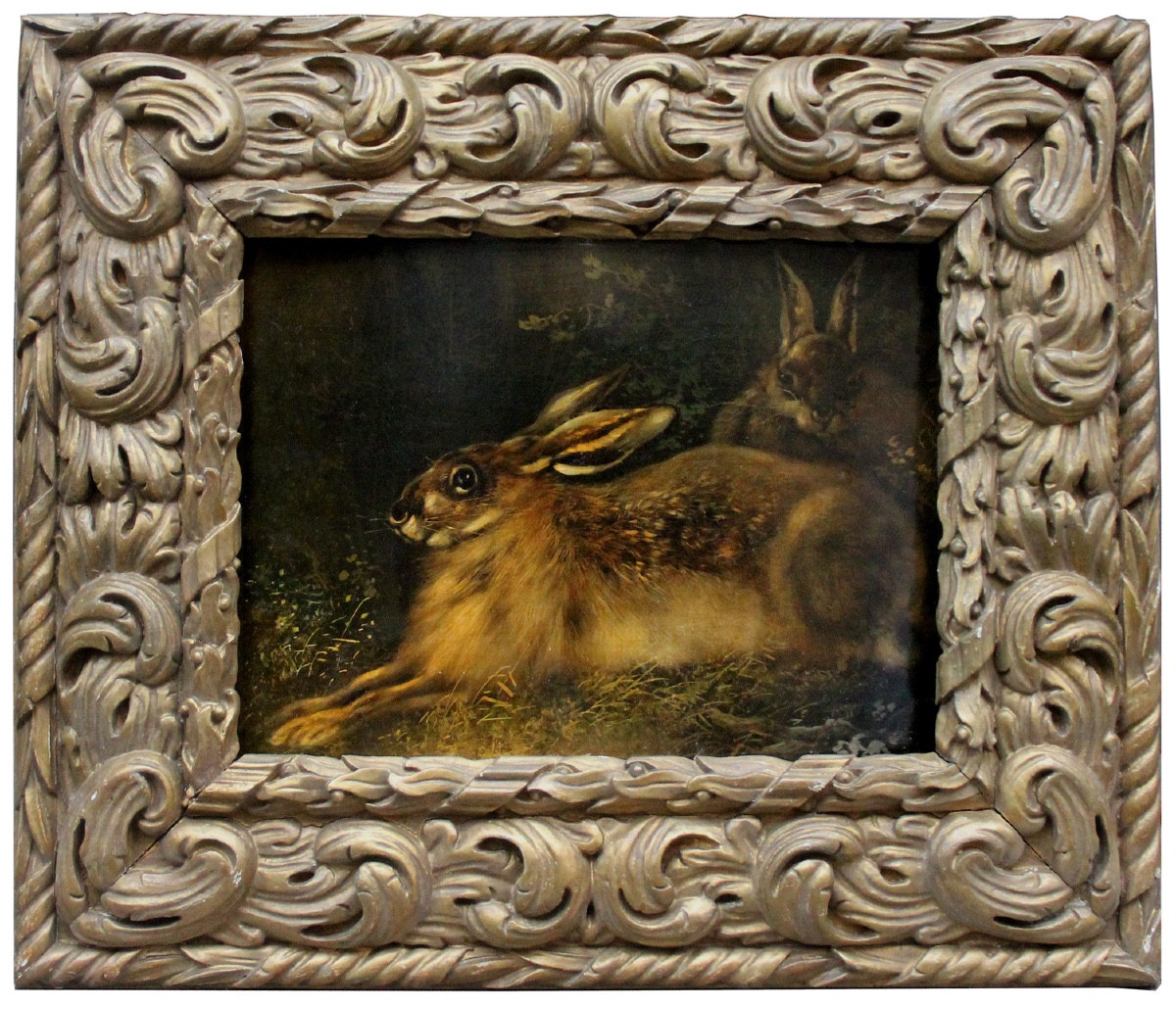
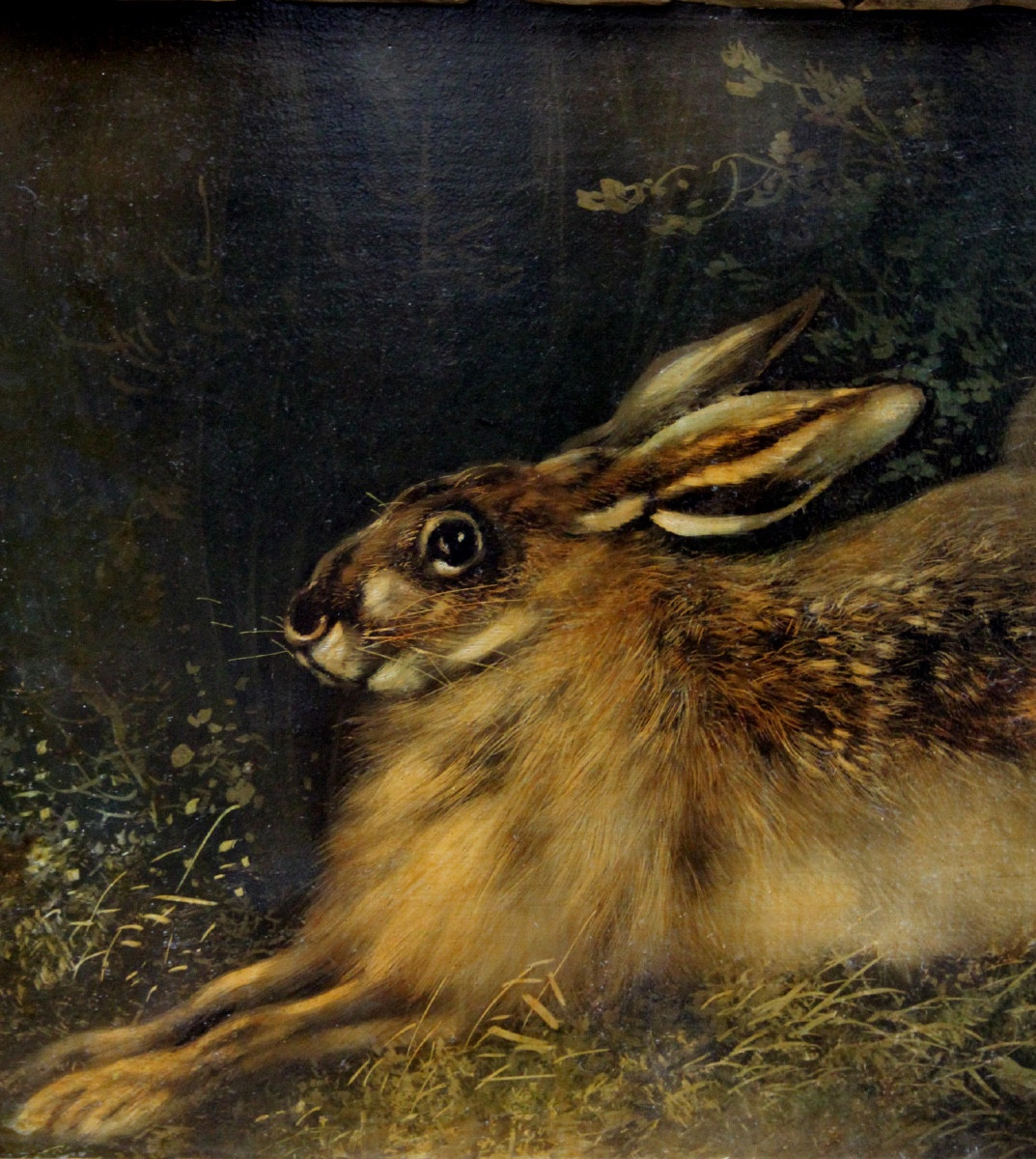
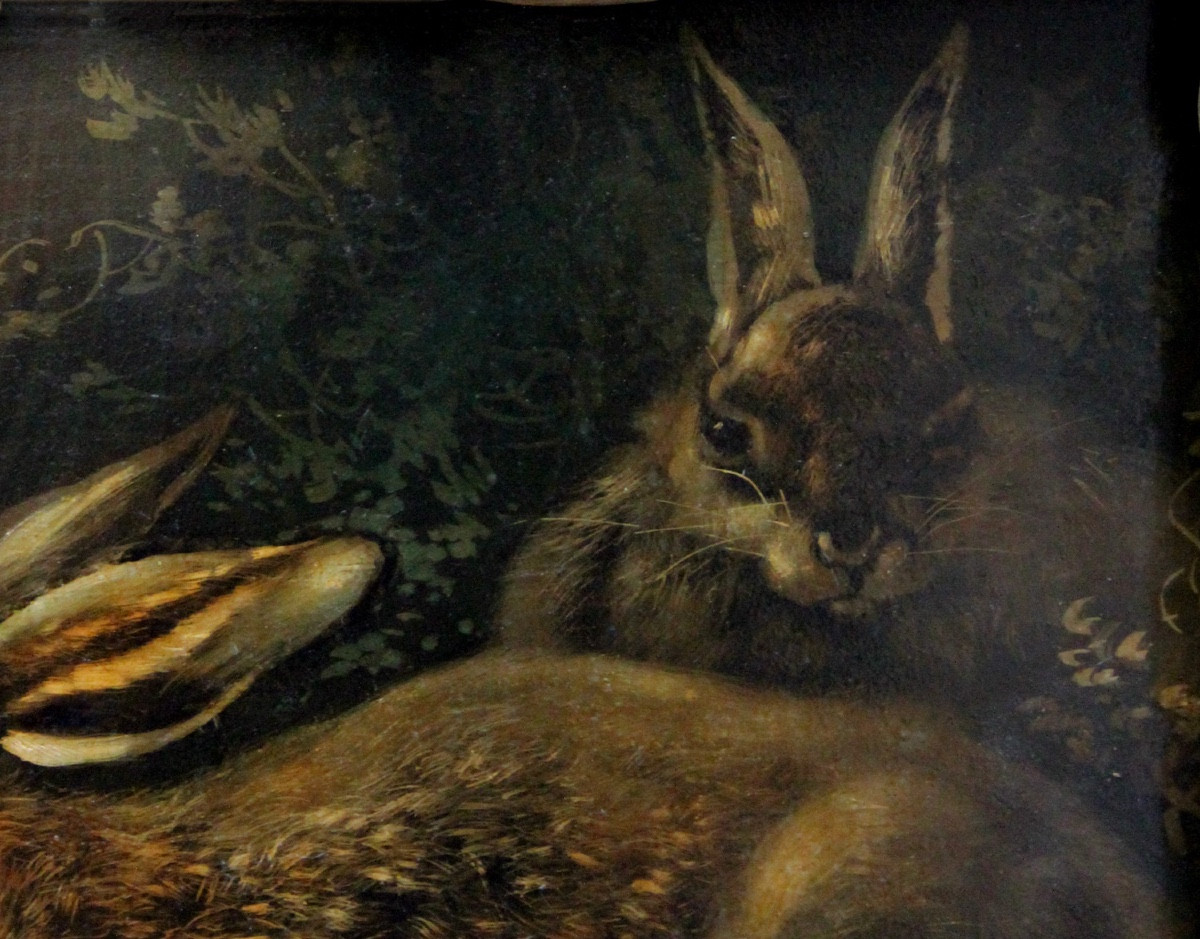
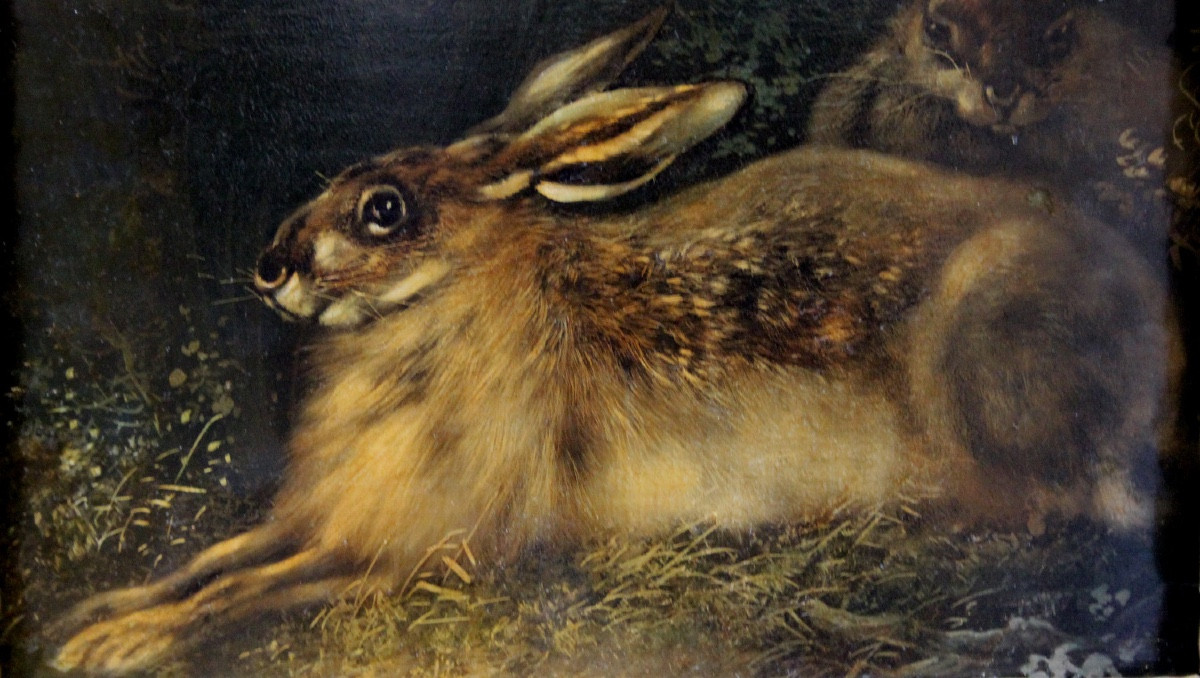

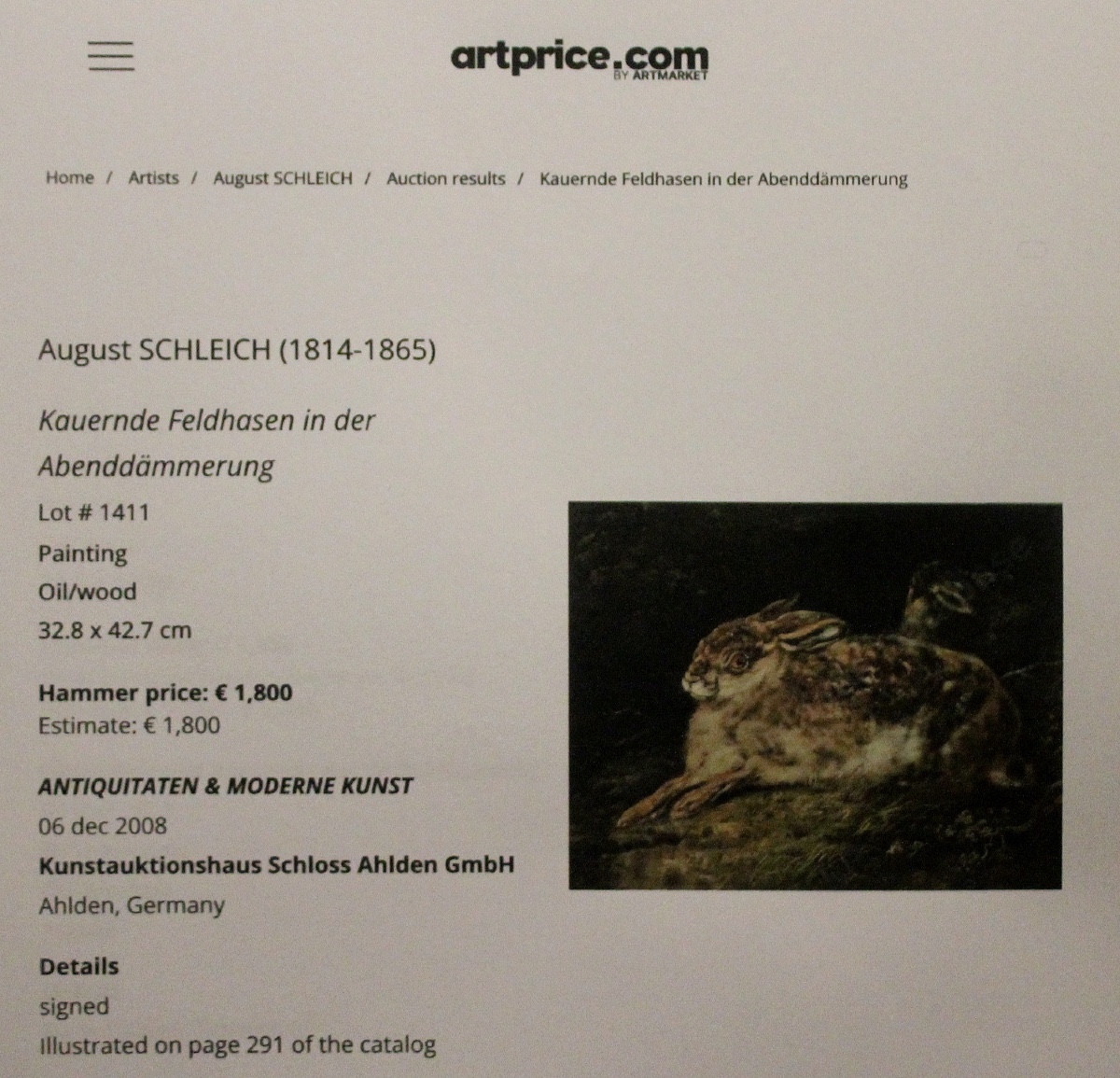
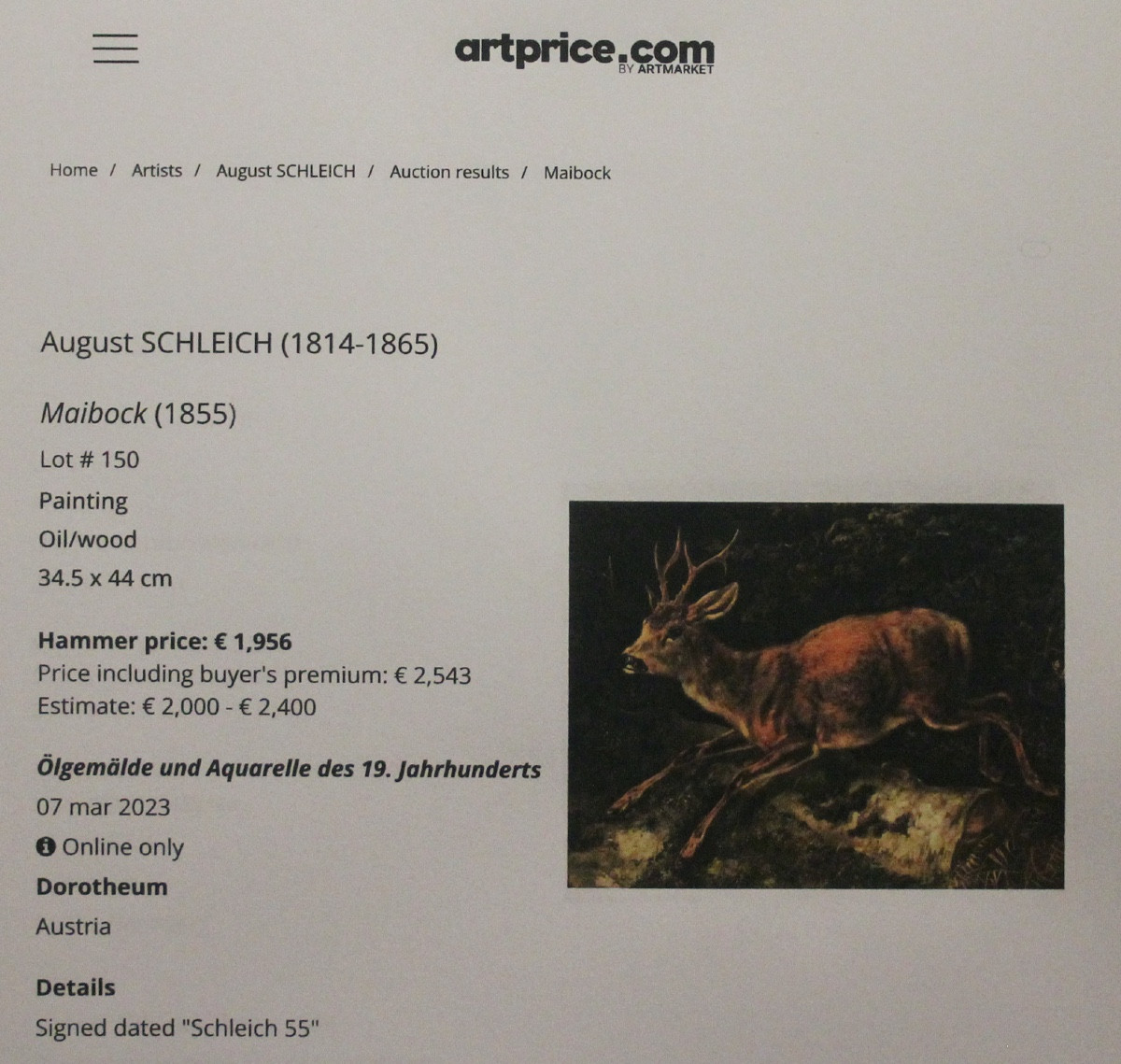
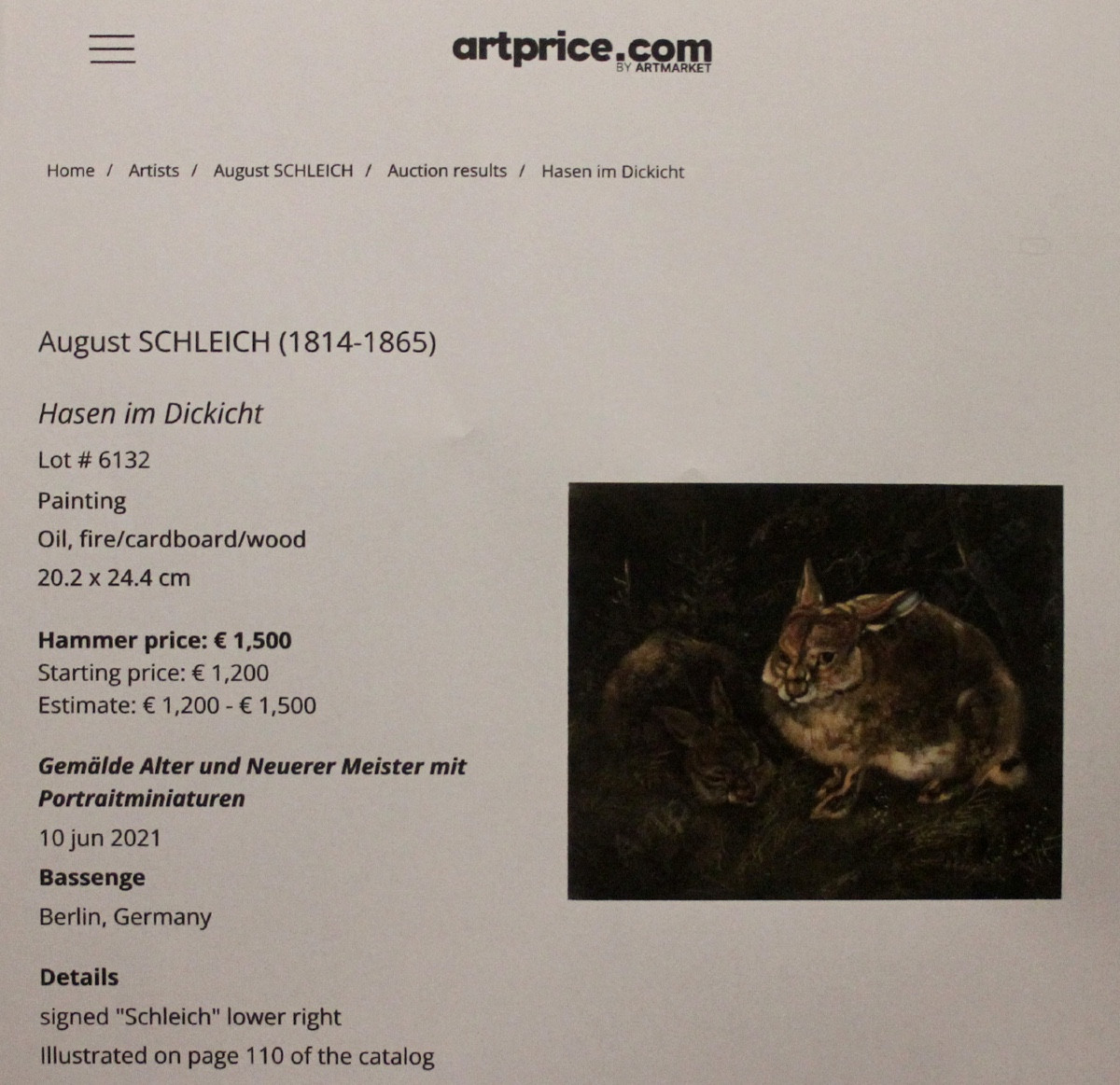
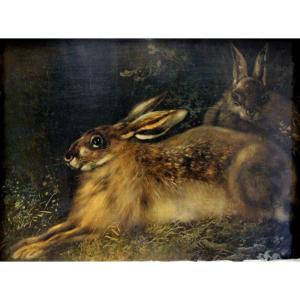


This animal painting depicting hares in a forest dates from the first half of the 19th century. Although unsigned, it is fully identical to the animal paintings of the German animal artist, engraver, and lithographer August Schleich (1814 Munich - 1865 Munich), nicknamed "Schleichgustl" by his friends.
For comparison, see our additional images.
He was the son of the engraver and surveyor Johann Karl Schleich (1759-1842) and the brother of the engravers Karl Schleich (1788-1840) and Adrian Schleich (1812-1894). August Schleich studied at the Royal Academy of Fine Arts in Munich, where he devoted himself almost exclusively to animal painting. In addition to oil painting, August Schleich invented the technique of "smoke painting." On a layer of soot produced by a candle flame on a plate or sheet of paper, highlights were revealed by scraping, a technique similar to mezzotint. The resulting image was then varnished. This process was also imitated by the Munich animal painter Eugen von Kramer. August Schleich also produced etchings and lithographs. Schleich also experimented with galvanography, invented by Franz von Kobell in 1842.
Bibliography: Thieme/Becker lexicons; Georg Caspar Nagler; online Wikipedia.
Inscriptions: unsigned; on the back of the panel: erroneous attribution by the previous owner.
Technique: oil on wood panel, antique gilt frame.
Dimensions: without frame: 25 cm x 19 cm; with frame: 38.5 cm x 32.5 cm.
Condition: in good condition, the wood panel is slightly warped.
For comparison, see our additional images.
He was the son of the engraver and surveyor Johann Karl Schleich (1759-1842) and the brother of the engravers Karl Schleich (1788-1840) and Adrian Schleich (1812-1894). August Schleich studied at the Royal Academy of Fine Arts in Munich, where he devoted himself almost exclusively to animal painting. In addition to oil painting, August Schleich invented the technique of "smoke painting." On a layer of soot produced by a candle flame on a plate or sheet of paper, highlights were revealed by scraping, a technique similar to mezzotint. The resulting image was then varnished. This process was also imitated by the Munich animal painter Eugen von Kramer. August Schleich also produced etchings and lithographs. Schleich also experimented with galvanography, invented by Franz von Kobell in 1842.
Bibliography: Thieme/Becker lexicons; Georg Caspar Nagler; online Wikipedia.
Inscriptions: unsigned; on the back of the panel: erroneous attribution by the previous owner.
Technique: oil on wood panel, antique gilt frame.
Dimensions: without frame: 25 cm x 19 cm; with frame: 38.5 cm x 32.5 cm.
Condition: in good condition, the wood panel is slightly warped.
Explore similar pieces and discover your ideal find:
Genre Scenes, Nudes