THIS OBJECT WAS SOLD
Stefan Zweig, Autographed Letter-card Signed During His Exile In London - 1934

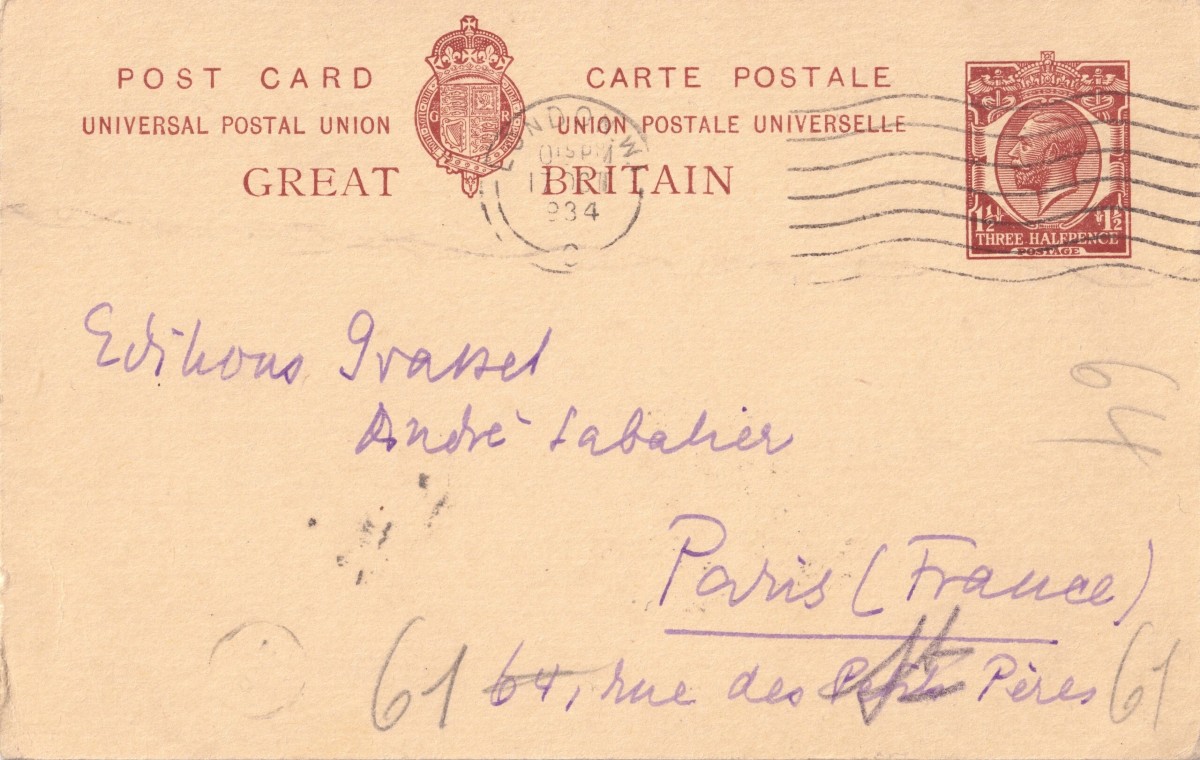


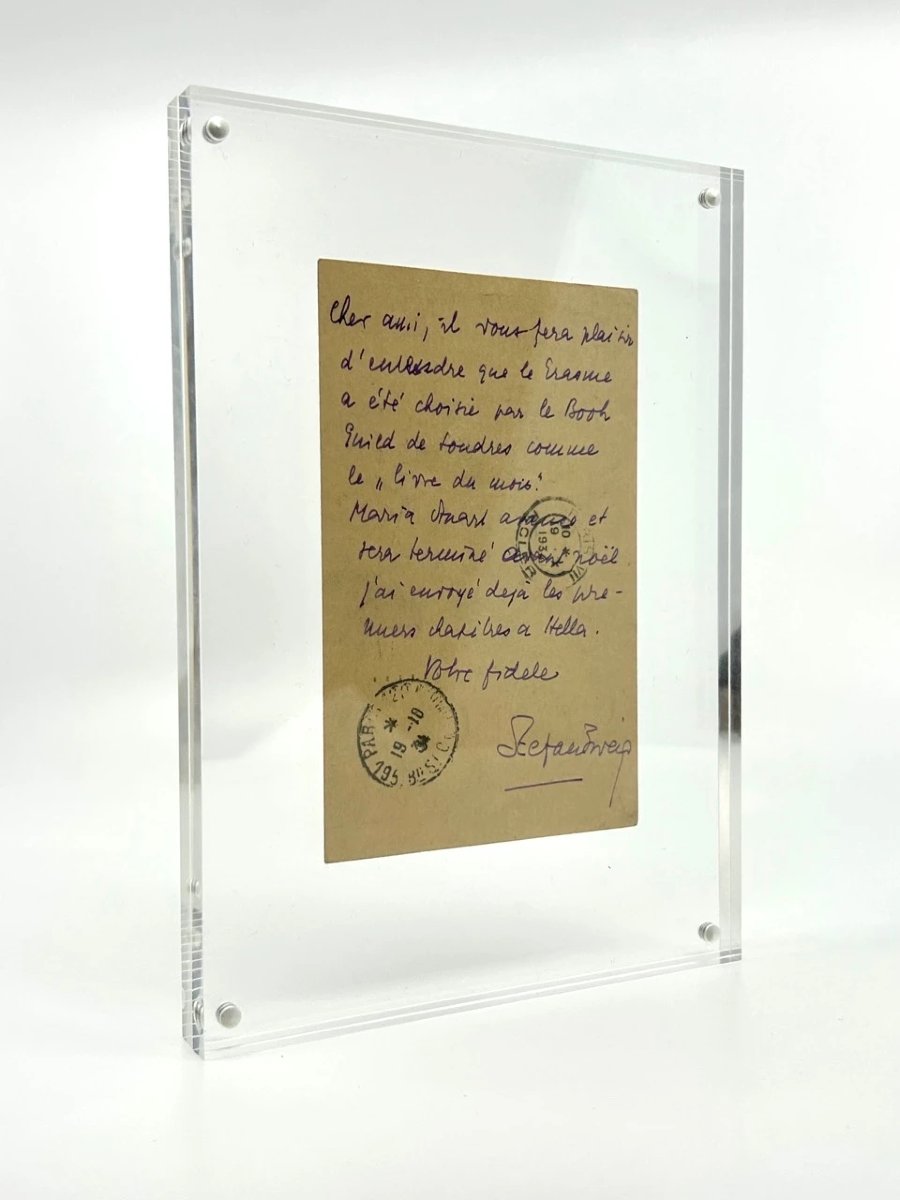
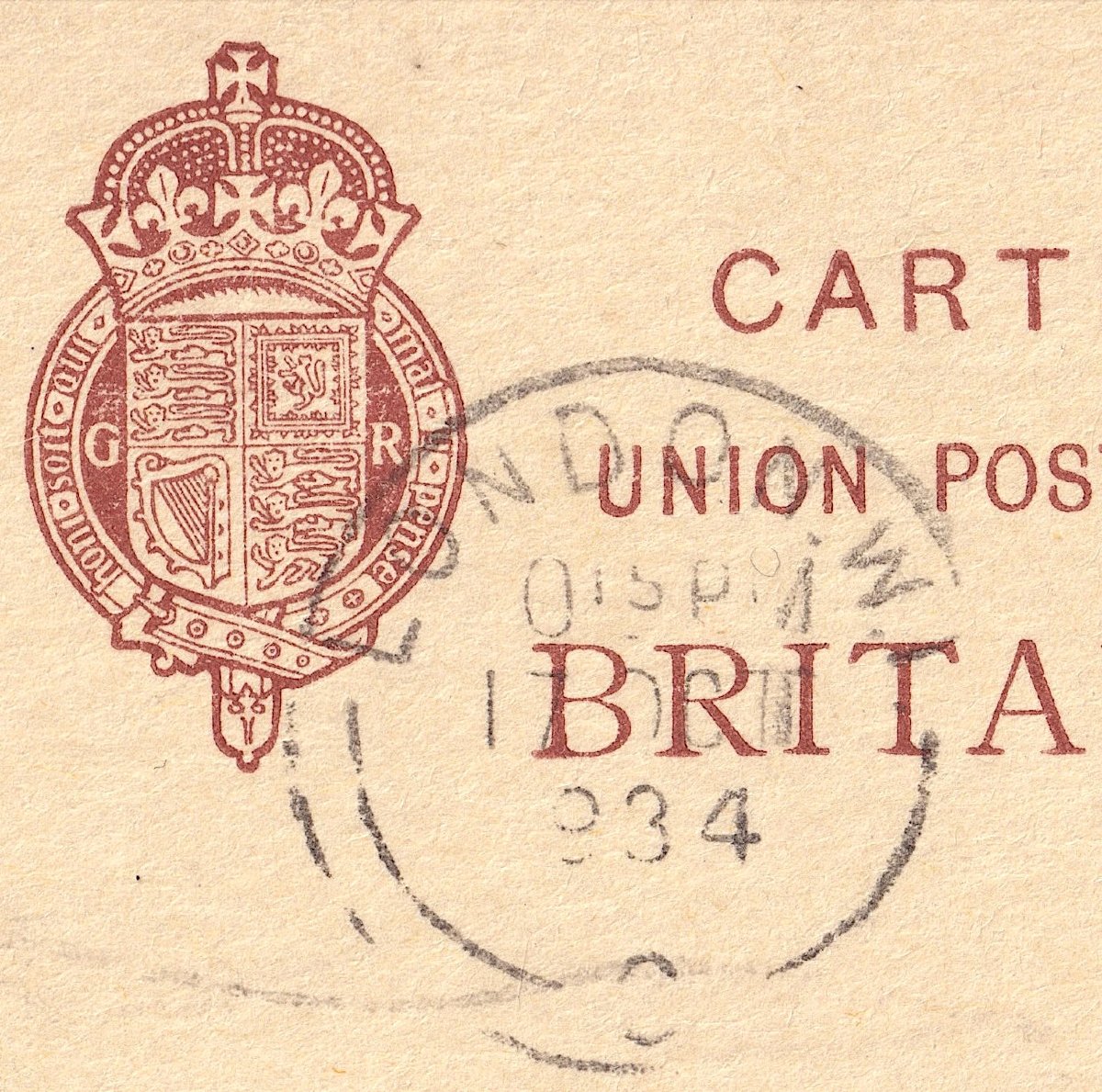


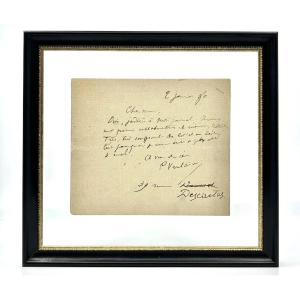
Autograph letter-card signed by Stefan Zweig (1881-1942) to André Sabatier of Éditions Grasset. London, October 17, 1934. 1 p. in-16. Autograph address.
Size: 14 x 9 cm. With frame (included): 21 x 15 cm.
Charming postcard-letter in French, written in purple ink, addressed to his publisher at Éditions Grassets. Zweig discusses the success and progress of two important biographies: Erasmus (which explores what Zweig sees as the unequal struggle between Erasmus's serene and pacifist humanism and Luther's revolutionary fanaticism) and Mary Stuart, a biography blending narrative fiction and historical truth. In it, Zweig seeks to unravel the mystery of this political figure, prey to prejudice, swept away by her emotions and impulses, and who reminds him of another, Marie Antoinette, guillotined in 1793. Defeated, Mary Stuart will enter into history. As she placed her head on the block, he writes, "none of her words, none of her gestures expressed fear.
The daughter of the Stuarts, the Tudors, the Guises, had prepared herself with dignity for death." It's hard not to think of Zweig's own end, as all the values that had constituted his world crumbled.
"Dear friend, You will be pleased to hear that Erasmus has been chosen by the Book Guild of London as the 'book of the month.' Mary Stuart is progressing and will be finished before Christmas. I have already sent the first chapters to Hella*. Yours faithfully, Stefan Zweig."
*The talented translator Alzir Hella, who worked extensively with Zweig and translated numerous German-language works and novels, including All Quiet on the Western Front. Fleeing Nazism, Zweig took refuge in London in February 1934, a few months before our card.
He then undertook the biography of Mary Stuart. The figure interested him, as did Marie Antoinette, insofar as their two fates illustrate the ruthless side of politics, which Zweig abhorred. He also begins an affair with Lotte (Charlotte Elisabeth Altmann), his secretary, while Friderike refuses to join him in London, deeming her husband's fears unfounded. She and many friends, blind to the ever-darkening clouds gathering over Europe, accuse him of acting as a prophet of doom. Zweig persists in his fears and intuitions and refuses to choose sides, like Erasmus before him, favoring neutrality and individual conscience over aligning himself with any political movement.
Size: 14 x 9 cm. With frame (included): 21 x 15 cm.
Charming postcard-letter in French, written in purple ink, addressed to his publisher at Éditions Grassets. Zweig discusses the success and progress of two important biographies: Erasmus (which explores what Zweig sees as the unequal struggle between Erasmus's serene and pacifist humanism and Luther's revolutionary fanaticism) and Mary Stuart, a biography blending narrative fiction and historical truth. In it, Zweig seeks to unravel the mystery of this political figure, prey to prejudice, swept away by her emotions and impulses, and who reminds him of another, Marie Antoinette, guillotined in 1793. Defeated, Mary Stuart will enter into history. As she placed her head on the block, he writes, "none of her words, none of her gestures expressed fear.
The daughter of the Stuarts, the Tudors, the Guises, had prepared herself with dignity for death." It's hard not to think of Zweig's own end, as all the values that had constituted his world crumbled.
"Dear friend, You will be pleased to hear that Erasmus has been chosen by the Book Guild of London as the 'book of the month.' Mary Stuart is progressing and will be finished before Christmas. I have already sent the first chapters to Hella*. Yours faithfully, Stefan Zweig."
*The talented translator Alzir Hella, who worked extensively with Zweig and translated numerous German-language works and novels, including All Quiet on the Western Front. Fleeing Nazism, Zweig took refuge in London in February 1934, a few months before our card.
He then undertook the biography of Mary Stuart. The figure interested him, as did Marie Antoinette, insofar as their two fates illustrate the ruthless side of politics, which Zweig abhorred. He also begins an affair with Lotte (Charlotte Elisabeth Altmann), his secretary, while Friderike refuses to join him in London, deeming her husband's fears unfounded. She and many friends, blind to the ever-darkening clouds gathering over Europe, accuse him of acting as a prophet of doom. Zweig persists in his fears and intuitions and refuses to choose sides, like Erasmus before him, favoring neutrality and individual conscience over aligning himself with any political movement.
Explore similar pieces and discover your ideal find:
Old Books


![[religion] - De Imitatione Dominae Nostrae Bv Mariae. Levrault, 1783, Period Binding.](https://www.proantic.com/galerie/librairie-alphabets/img/small/1637989-main-68f900e7a5095.jpg)
![[musset (alfred De)] - Gamiani. By A Group Of Bibliophiles, Circa 1948, Illustrations By Nam.](https://www.proantic.com/galerie/librairie-alphabets/img/small/1582072-main-686f52ff21f67.jpg)