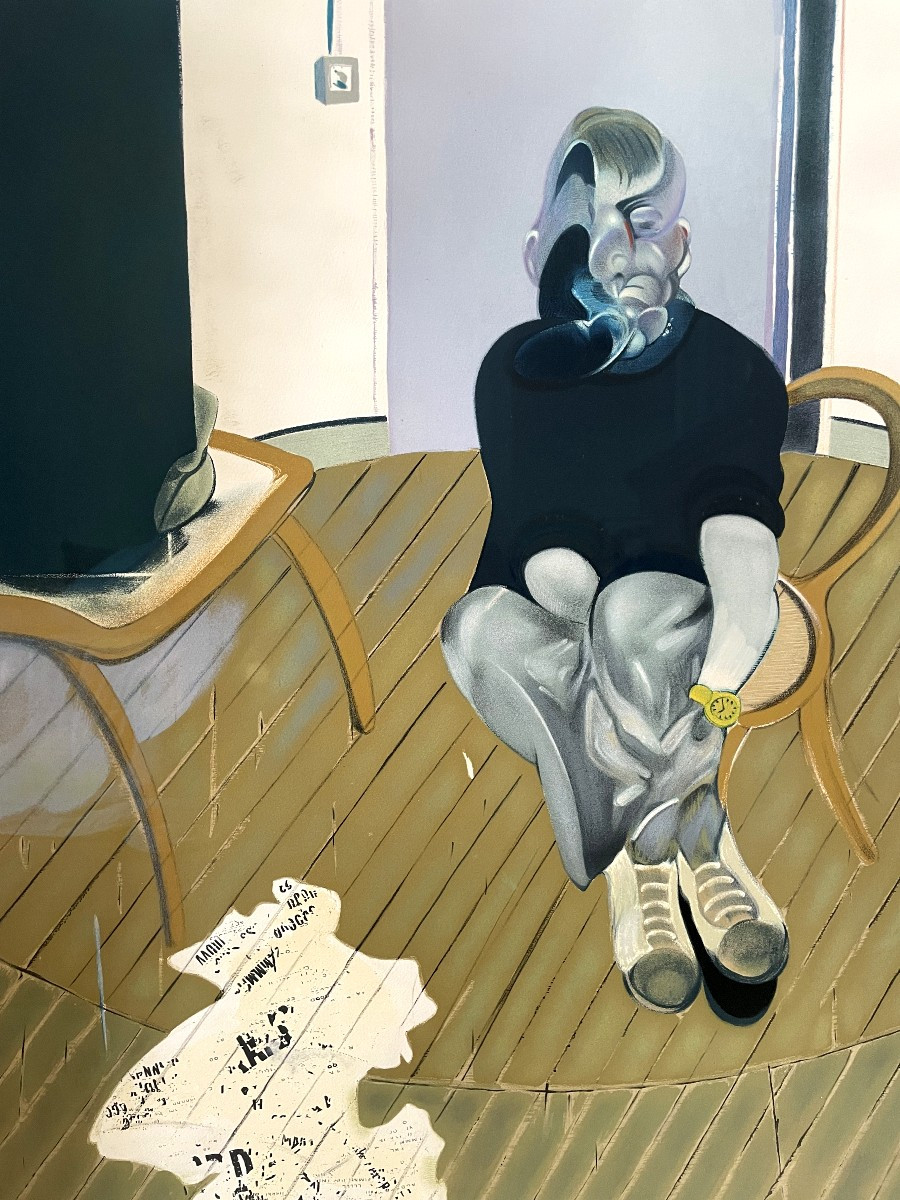
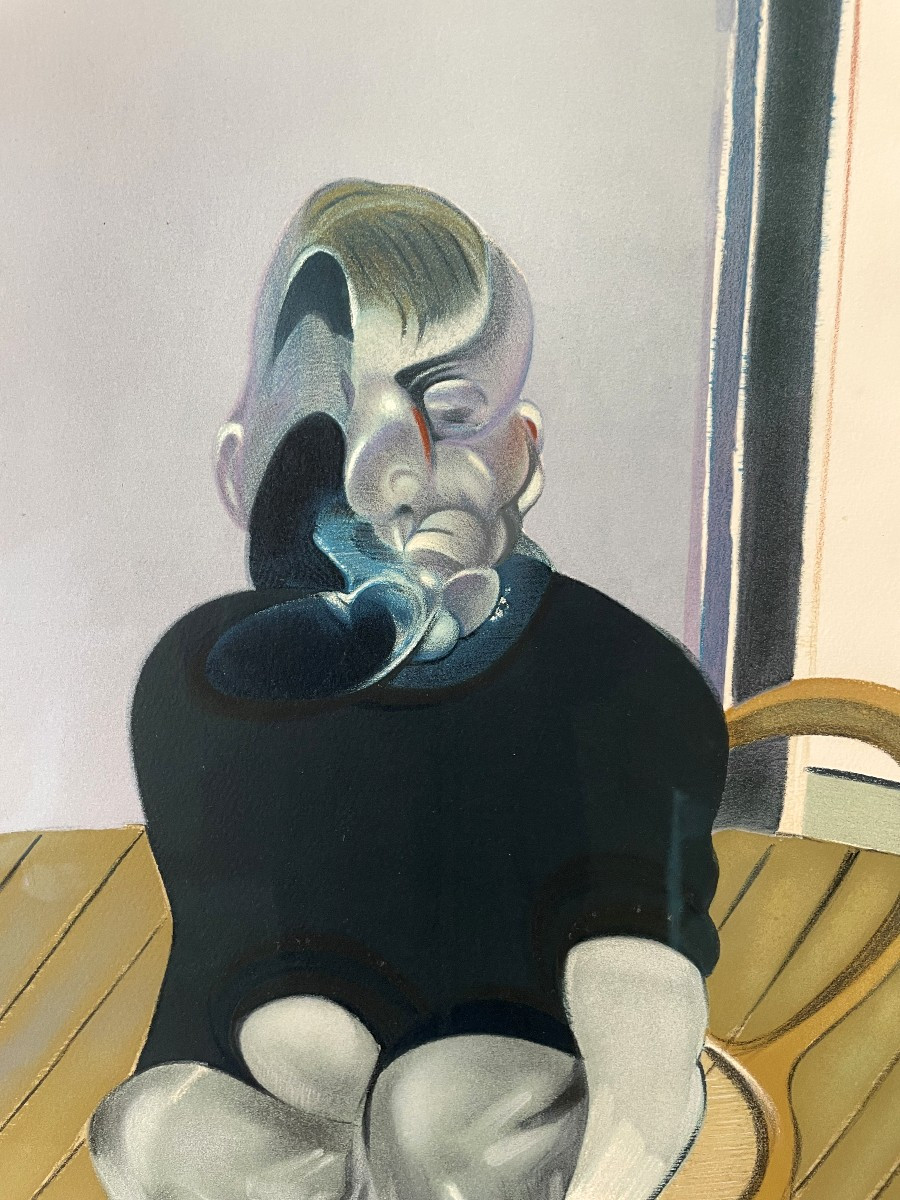
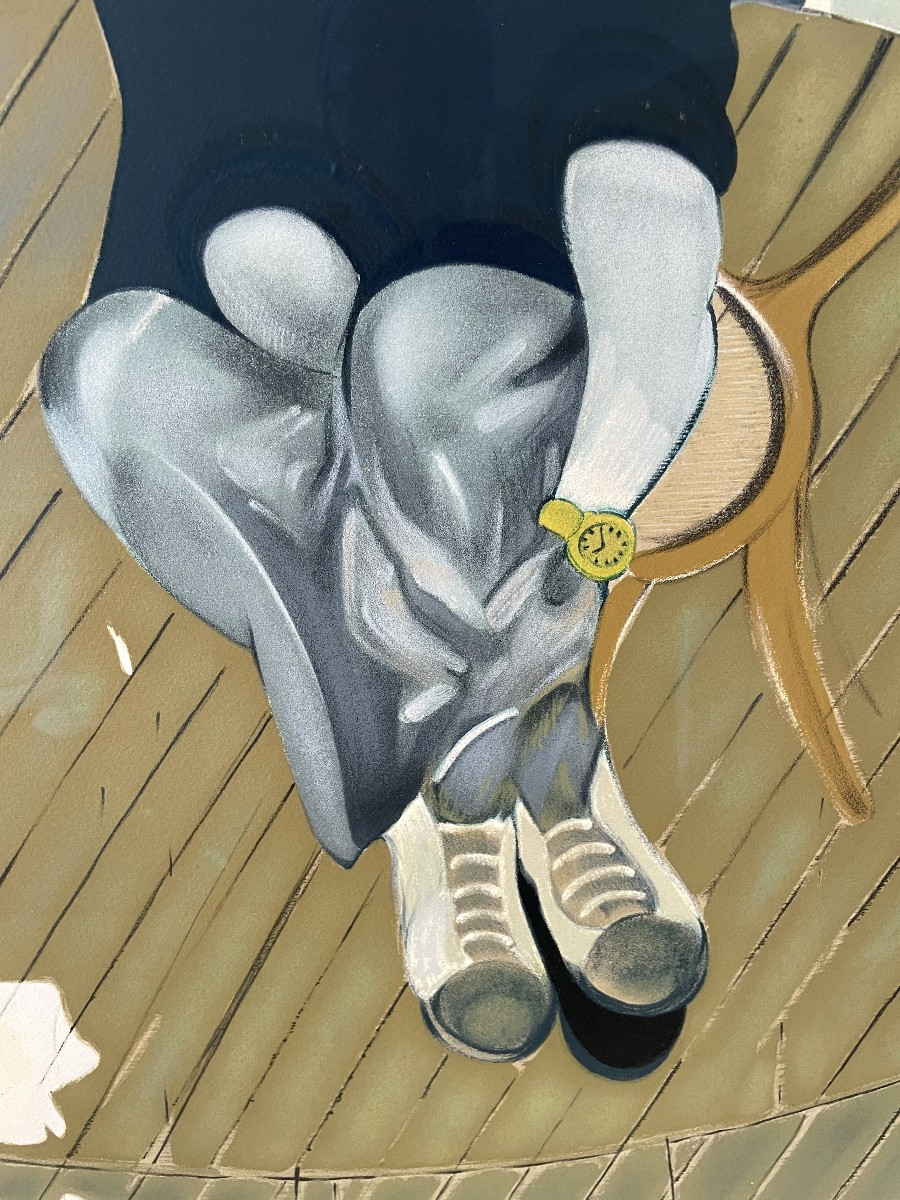
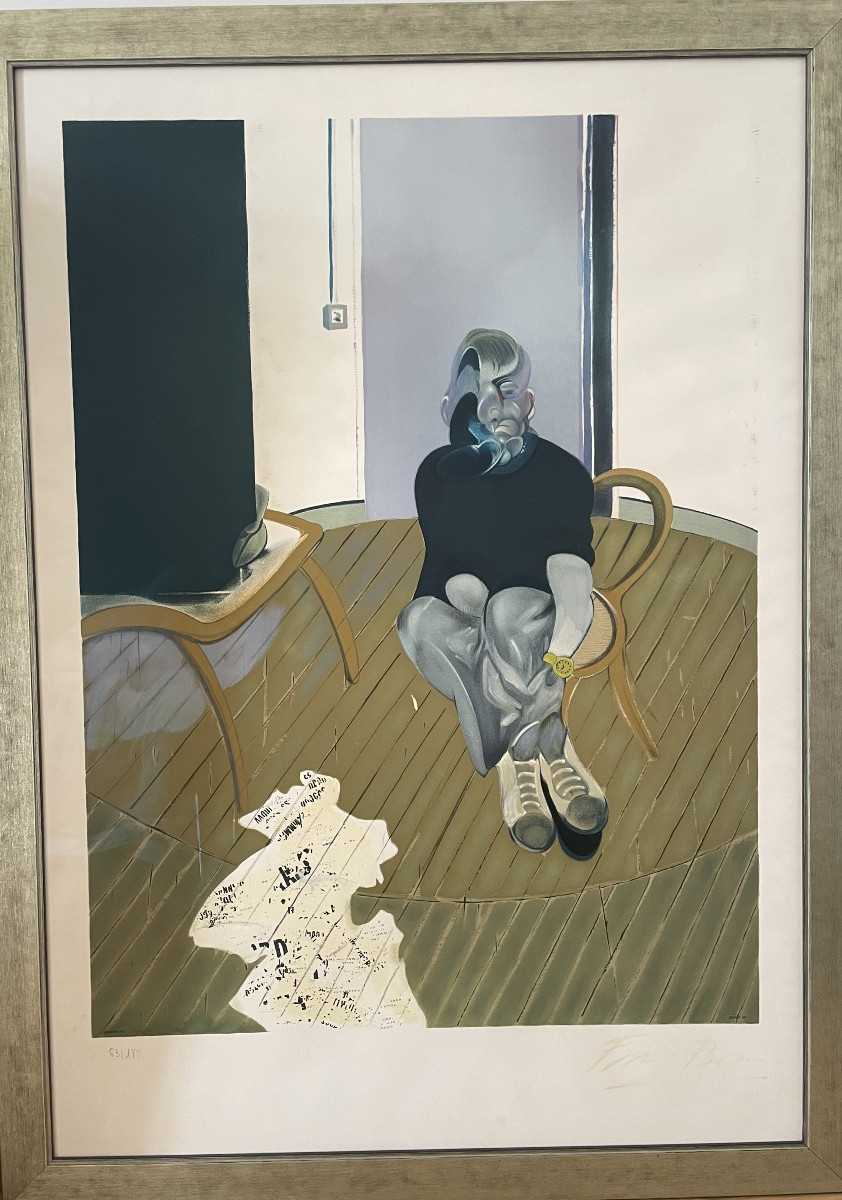
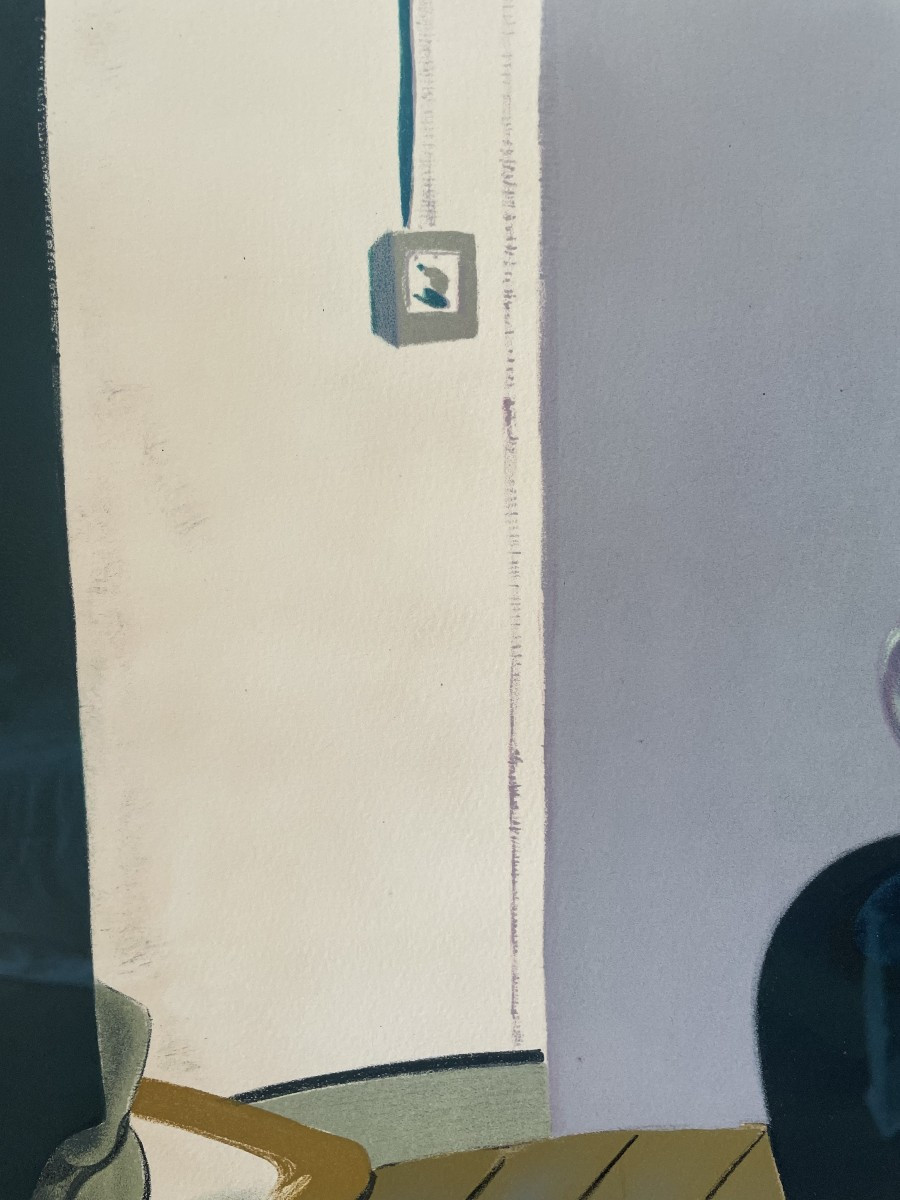
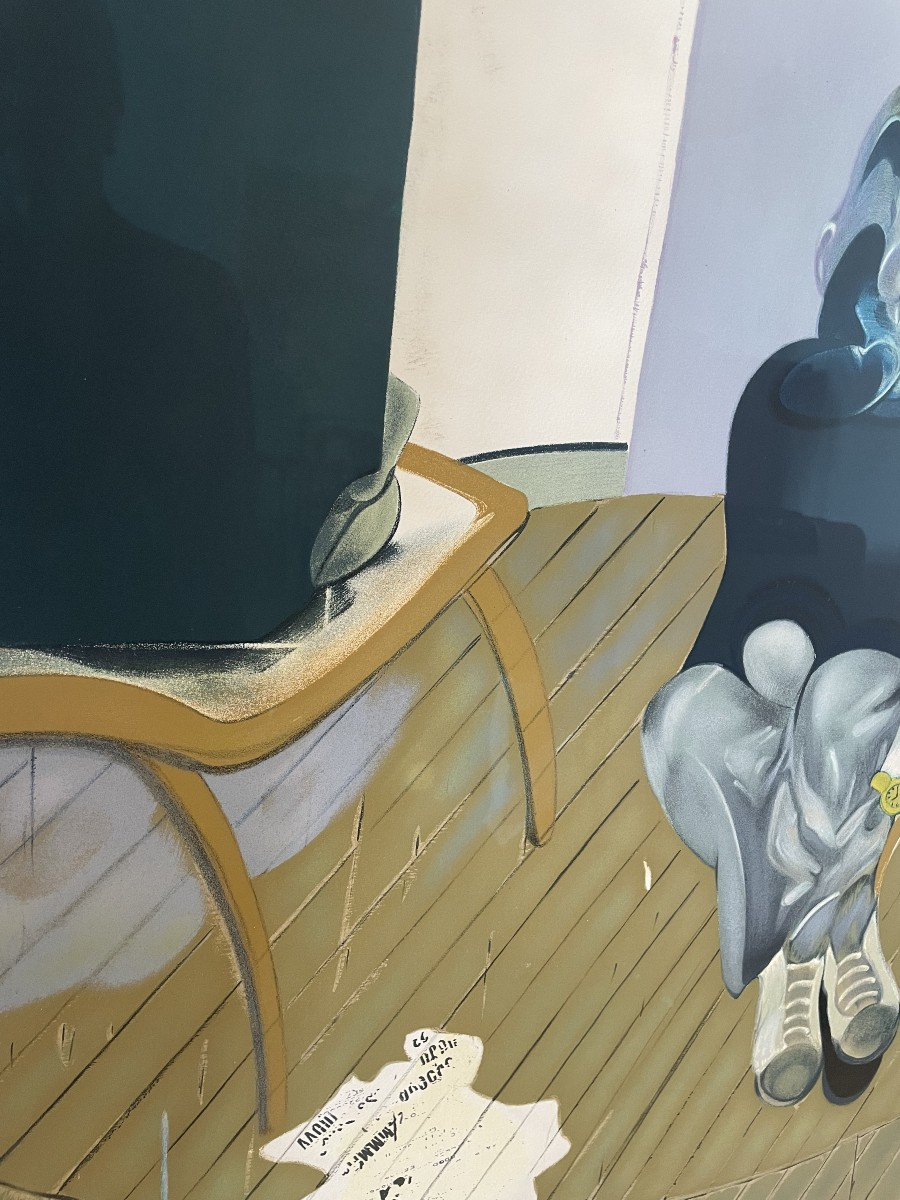
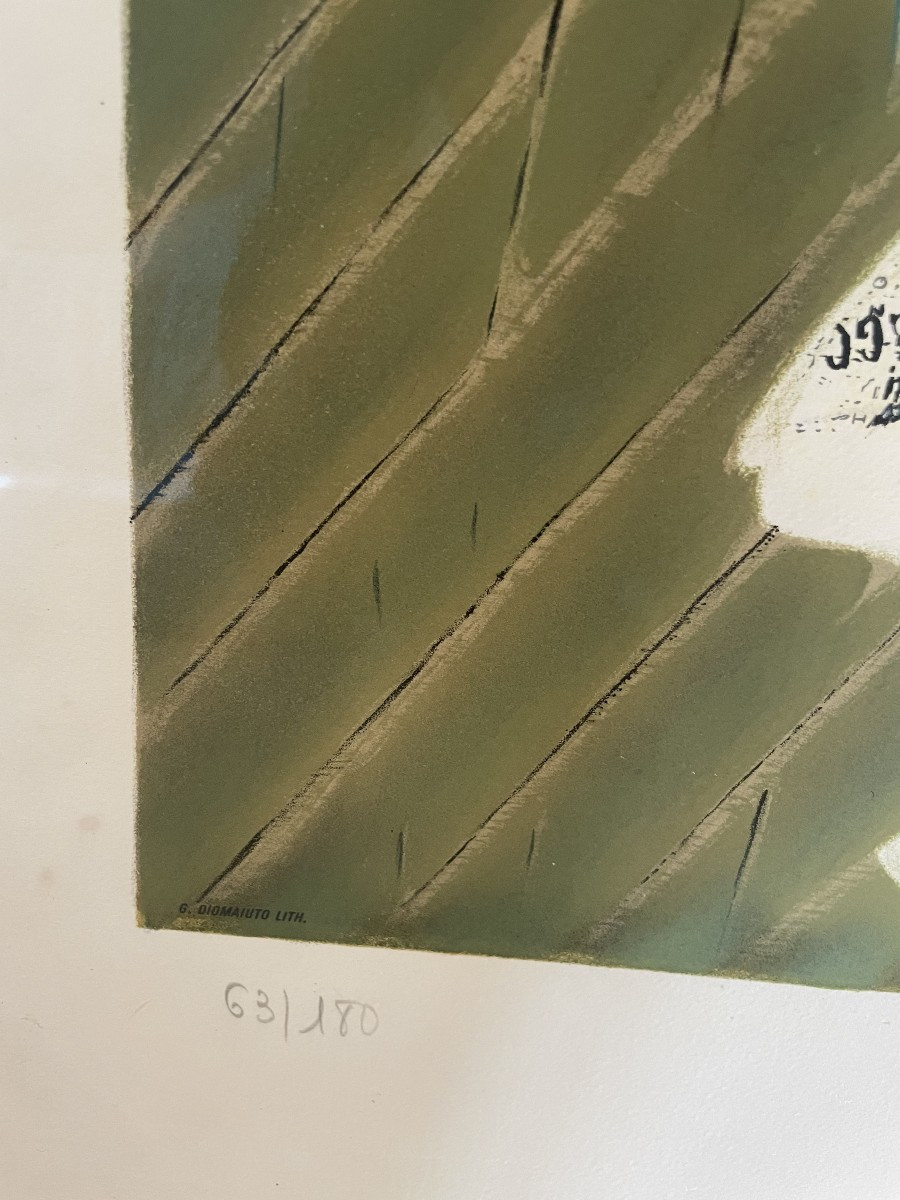


Francis Bacon (1909–1992), Self-portrait No. 2, 1977
Artist: Francis Bacon
Francis Bacon was born in Dublin on 28 October 1909 to British parents of English origin and died on 28 April 1992 in Madrid. He is one of the most famous English artists of the 20th century. In his early years, Bacon spent several months travelling between Berlin and Paris, where he led a bohemian lifestyle, working in various jobs, including as a painter and decorator of flats. He produced drawings and watercolours. On his return to London in 1928, he exhibited in his studio in Queensbury Mews. He then established himself as a decorator and painted his first canvases under the strong influence of Surrealism and Picasso, whose works he had admired during his stay in Paris at the Paul Rosenberg Gallery. In 1964, his first major triptych, Three Studies for a Crucifixion, was acquired by the Solomon R. Guggenheim Museum in New York.
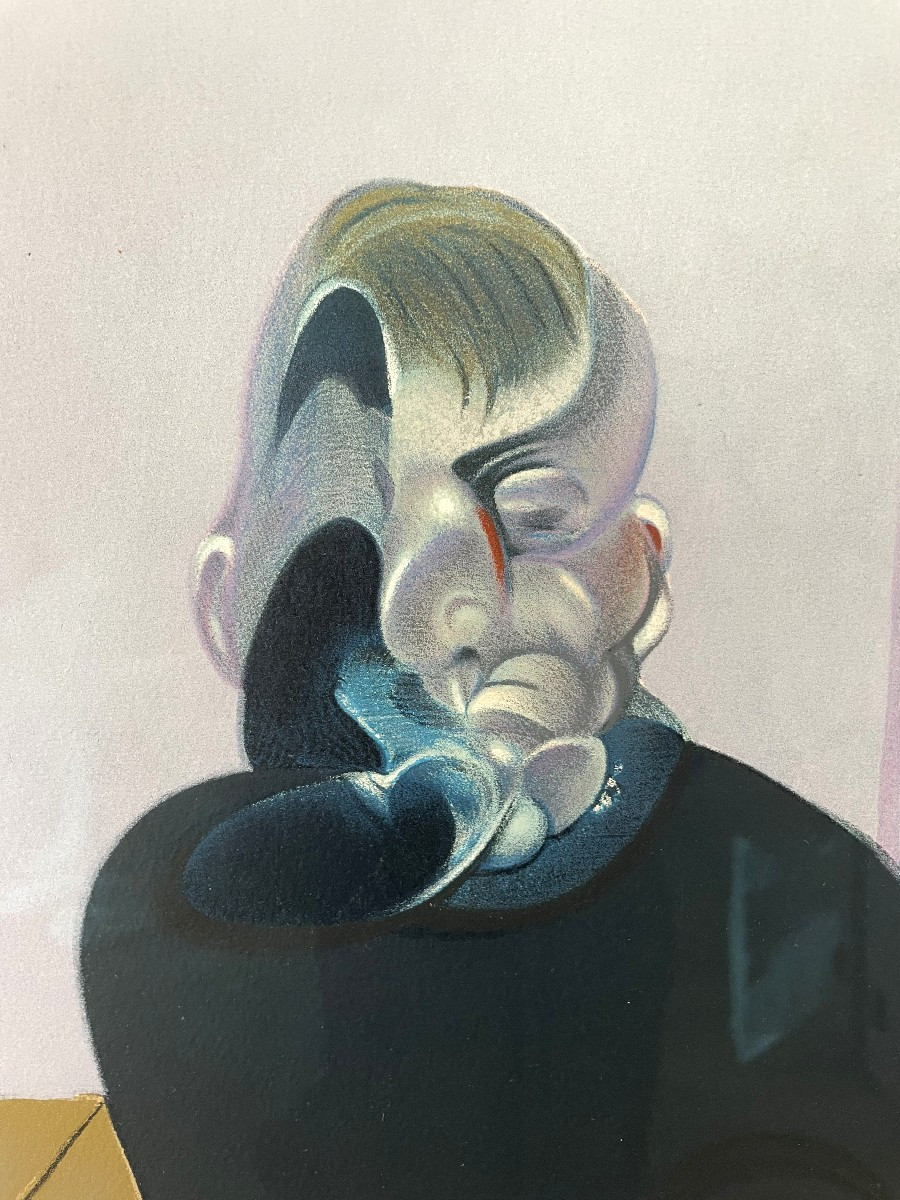
The triptych became a recurring form in his work. Far removed from the abstraction that dominated the 1950s, he was the painter of tortured, screaming bodies and of painful introspection. Famous for his daring, emotionally charged and often unsettling works, each reveals his profound exploration of human suffering, mortality and identity through disturbing and emotionally charged depictions of the human form. His unique style, often inspired by existential themes, explores subjects such as violence, power and the fluidity of identity, thereby cementing his position as a pioneering force in modern art. Bacon’s work unfolds in large triptychs depicting his life, his friends, and his admiration for Diego Velázquez, Vincent van Gogh or Pablo Picasso, or in tortured portraits, as if contorted within the texture of the canvas. Bacon’s unique ability to manipulate form and flesh on his canvases prompts a profound introspection on mortality and suffering. This beautiful work, Lithograph No. 2, is a reflection of his art.
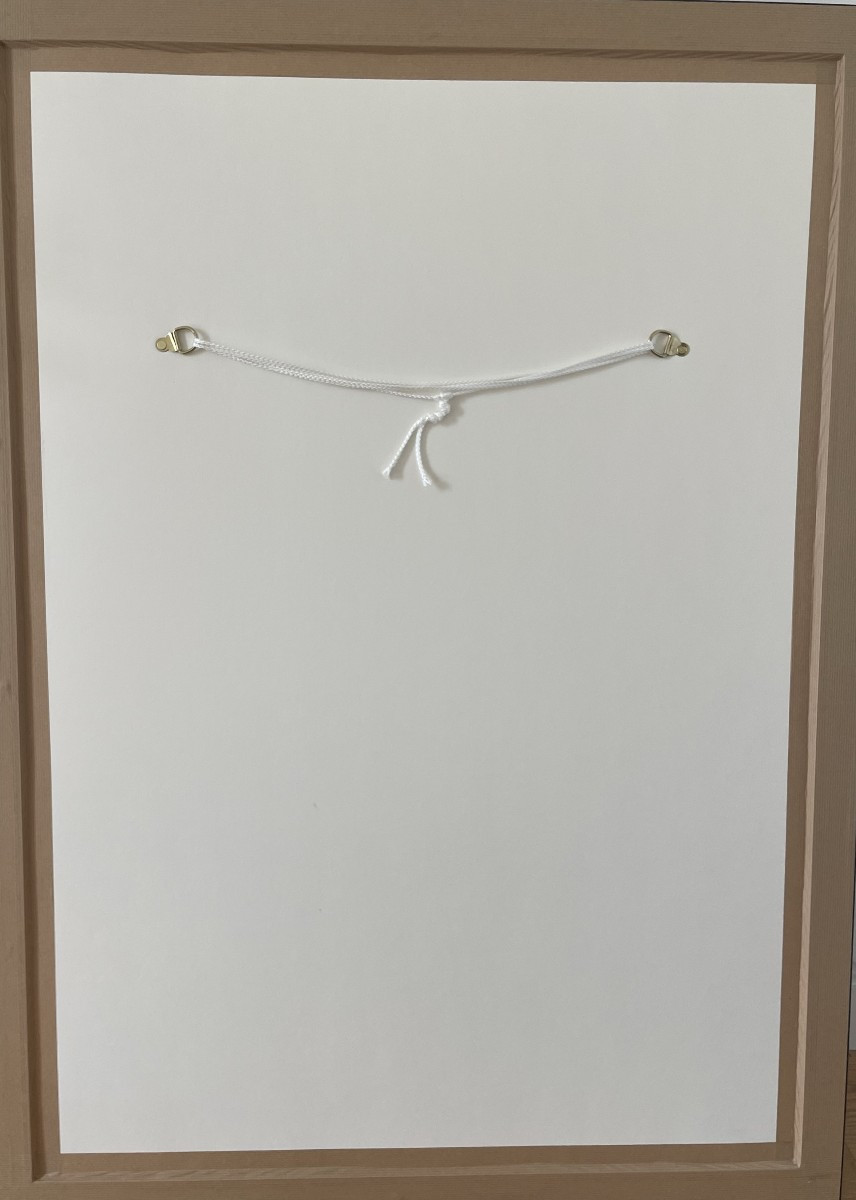
Dimensions: Height 102 x Width 72.5 (cm) including the frame.
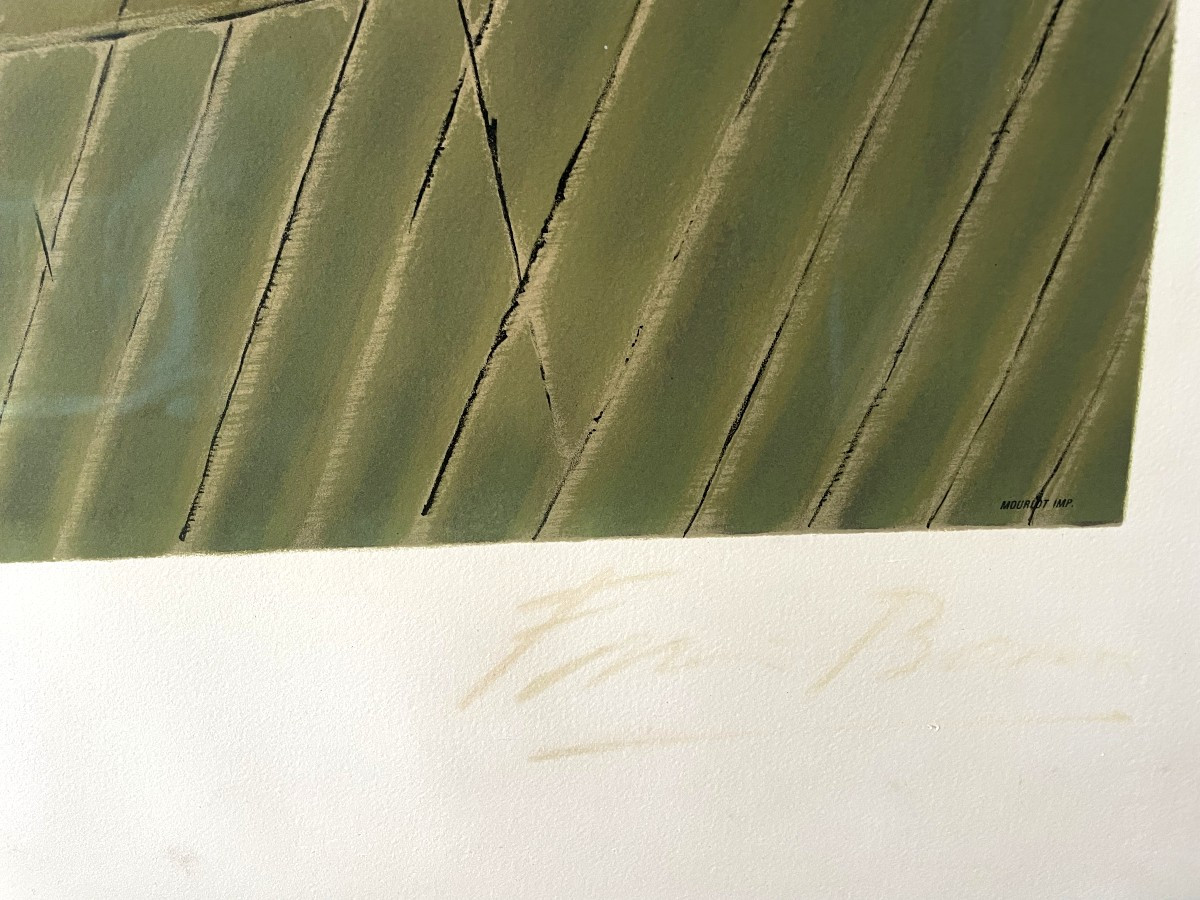
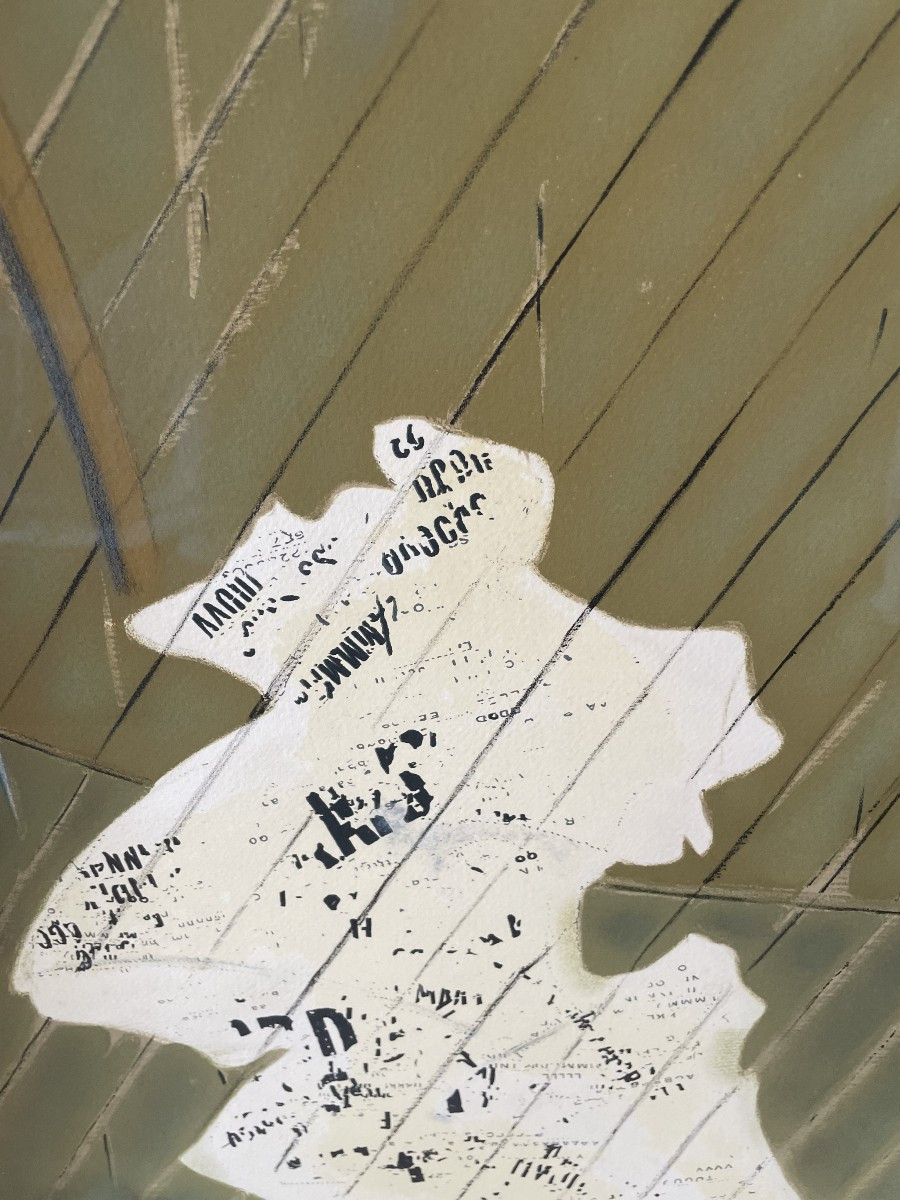
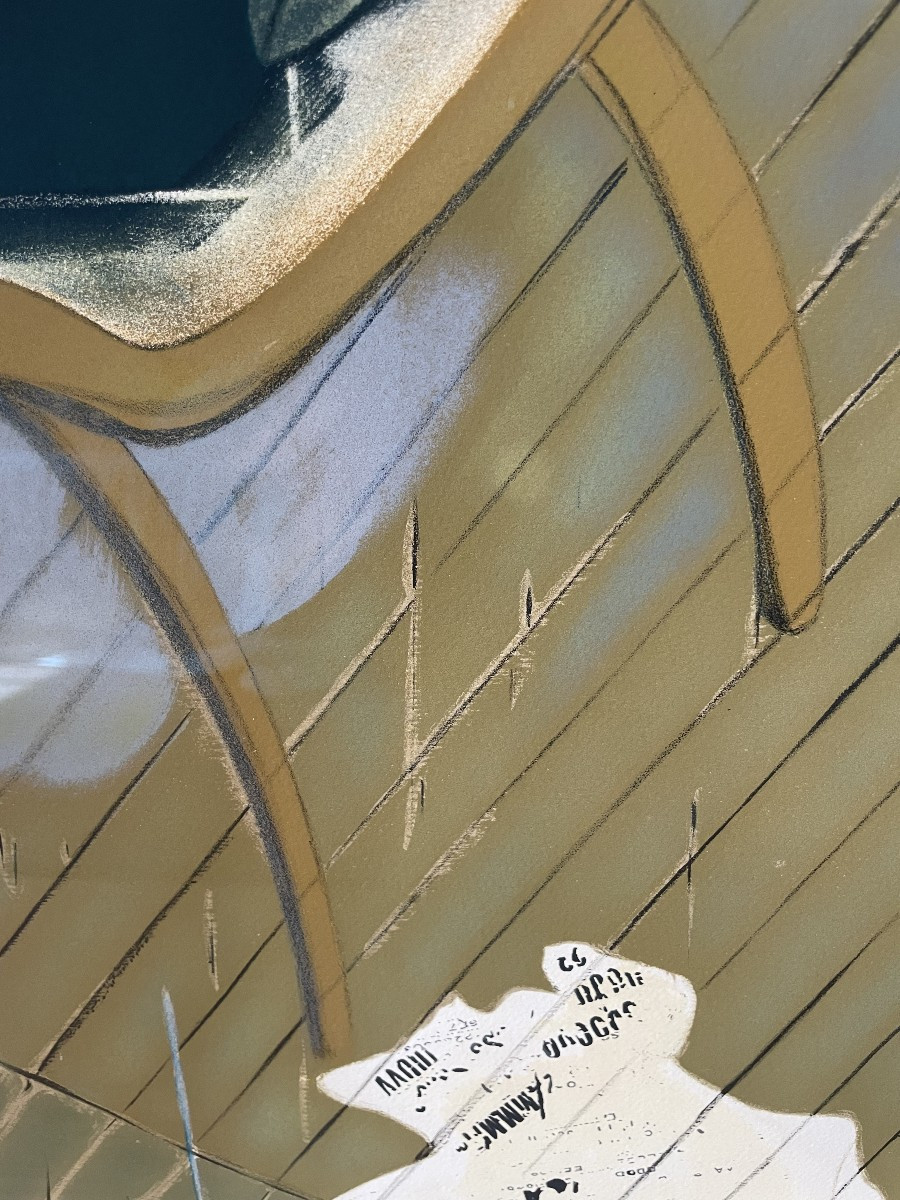
The artwork is framed and fitted with anti-reflective ‘museum-grade’ glass. It is in good condition. The signature in purple felt-tip pen has been partially erased but is still visible; this is quite common with the type of felt-tip pen Bacon used. A certificate of authenticity confirming the details of this listing will be drawn up and provided to the buyer. We take particular care with our packaging, using the best possible protective materials. The item will be sent with insurance included. Due to the rarity and fragility of the artwork, it will be delivered by a courier (quote available on request).
The triptych became a recurring form in his work. Far removed from the abstraction that dominated the 1950s, he was the painter of tortured, screaming bodies and of painful introspection. Famous for his daring, emotionally charged and often unsettling works, each reveals his profound exploration of human suffering, mortality and identity through disturbing and emotionally charged depictions of the human form. His unique style, often inspired by existential themes, explores subjects such as violence, power and the fluidity of identity, thereby cementing his position as a pioneering force in modern art. Bacon’s work unfolds in large triptychs depicting his life, his friends, and his admiration for Diego Velázquez, Vincent van Gogh or Pablo Picasso, or in tortured portraits, as if contorted within the texture of the canvas. Bacon’s unique ability to manipulate form and flesh on his canvases prompts a profound introspection on mortality and suffering. This beautiful work, Lithograph No. 2, is a reflection of his art.
Dimensions: Height 102 x Width 72.5 (cm) including the frame.
The artwork is framed and fitted with anti-reflective ‘museum-grade’ glass. It is in good condition. The signature in purple felt-tip pen has been partially erased but is still visible; this is quite common with the type of felt-tip pen Bacon used. A certificate of authenticity confirming the details of this listing will be drawn up and provided to the buyer. We take particular care with our packaging, using the best possible protective materials. The item will be sent with insurance included. Due to the rarity and fragility of the artwork, it will be delivered by a courier (quote available on request).
13 800 €
Period: 20th century
Style: Other Style
Condition: Good condition
Material: Paper
Width: 72,5
Height: 102
Reference (ID): 1730047
Availability: In stock
Print