THIS OBJECT WAS SOLD
Griotte Marble And Bronze Inkwell – Allegory Of Knowledge – 19th Century.


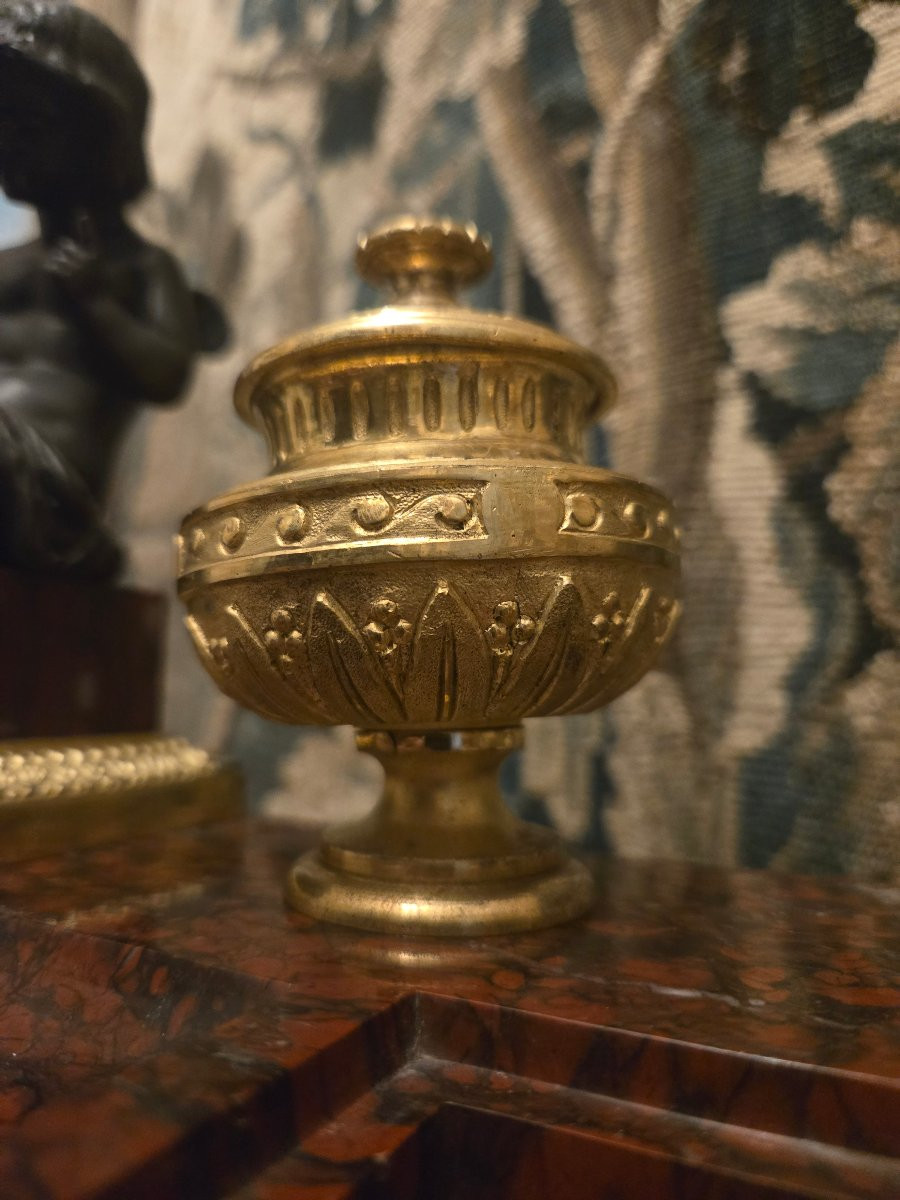
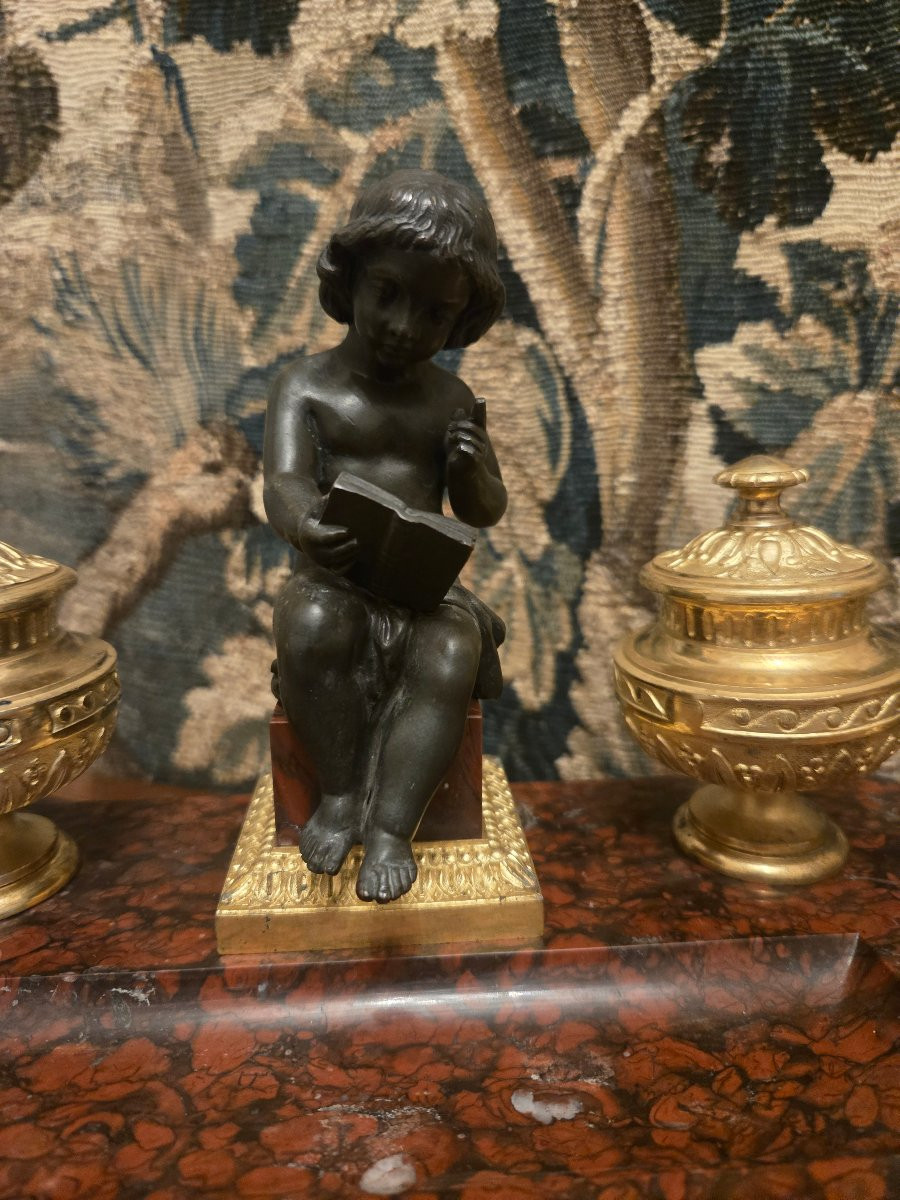

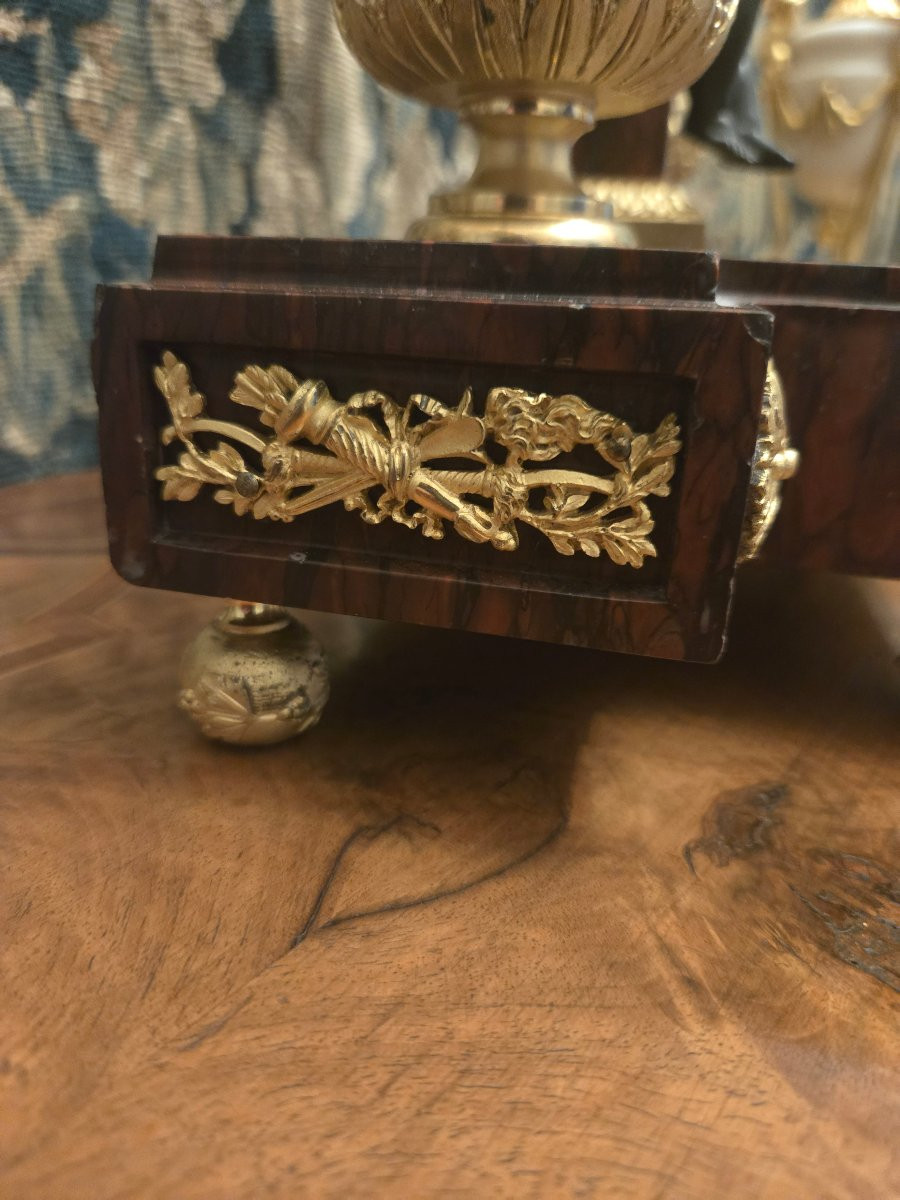


An elegant desk inkwell in griotte marble, adorned with gilt bronze mounts and a central patinated bronze figure of a seated putto, engrossed in his reading. The piece rests on an architecturally designed base of griotte marble with deep, warm red hues, characterized by its natural inclusions reminiscent of "partridge eyes," typical of this prized stone. This marble, quarried primarily in the Languedoc region, has been used since antiquity and enjoyed considerable popularity in the 17th and 18th centuries, becoming a preferred material for royal decor, particularly under Louis XIV and Louis XV. Prized for its rich color and decorative appeal, griotte red was widely used in the ornamentation of palaces, townhouses, and grand residences, as well as in the decorative arts, notably for clocks, inkwells, and desk accessories. Its use continued successfully throughout the 19th century, where it remained a noble and sought-after material. The façade is enlivened by delicate gilt-bronze decorations of scrolling foliage and neoclassical motifs, characteristic of the Louis XVI style's ornamental vocabulary, widely revived during the 19th century. On either side, two finely chased gilt-bronze covered urns feature a frieze and foliate design. They have retained their original glass interiors, a highly sought-after feature, attesting to the care taken in their manufacture and the overall excellent state of preservation. In the center, the patinated bronze figure, with its nuanced brown patina, depicts a seated putto reading a book, in a concentrated and thoughtful pose. The particularly expressive gesture of the raised finger evokes thought, understanding, and learning, lending the scene an allegorical dimension. This figure can be interpreted as an allegory of knowledge, a theme very much in vogue at the end of the 18th century and throughout the 19th century, in a context where education and intellectual values occupied an increasingly prominent place in the decorative arts. The treatment of the face, the gentleness of the expression, and the wavy, shoulder-length hair depart from the strict neoclassical canon, embracing a more historicist sensibility reminiscent of the Troubadour style of the early 19th century, marked by a renewed interest in the Middle Ages and the Renaissance. This stylistic duality—between the neoclassical rigor of the ornamentation and a freer, more poetic interpretation of the subject—places this inkwell within a 19th-century production, likely between the Restoration, the Louis-Philippe period, and the beginning of the Second Empire. The piece displays a high level of craftsmanship: finely chased bronzes, warm gilding, and carefully worked marble. The assembly is old and consistent, with its original fastening systems (threaded rods and nuts). The hinges are functional. It is in very good condition, with no restoration to the marble. A decorative and functional object, emblematic of 19th-century desk sets, combining aesthetics, symbolism, and practicality. Dimensions: Width: 30.5 cm, Depth: 14.5 cm, Height: 22 cm
Explore similar pieces and discover your ideal find:
Inkwells, Desks Accessories