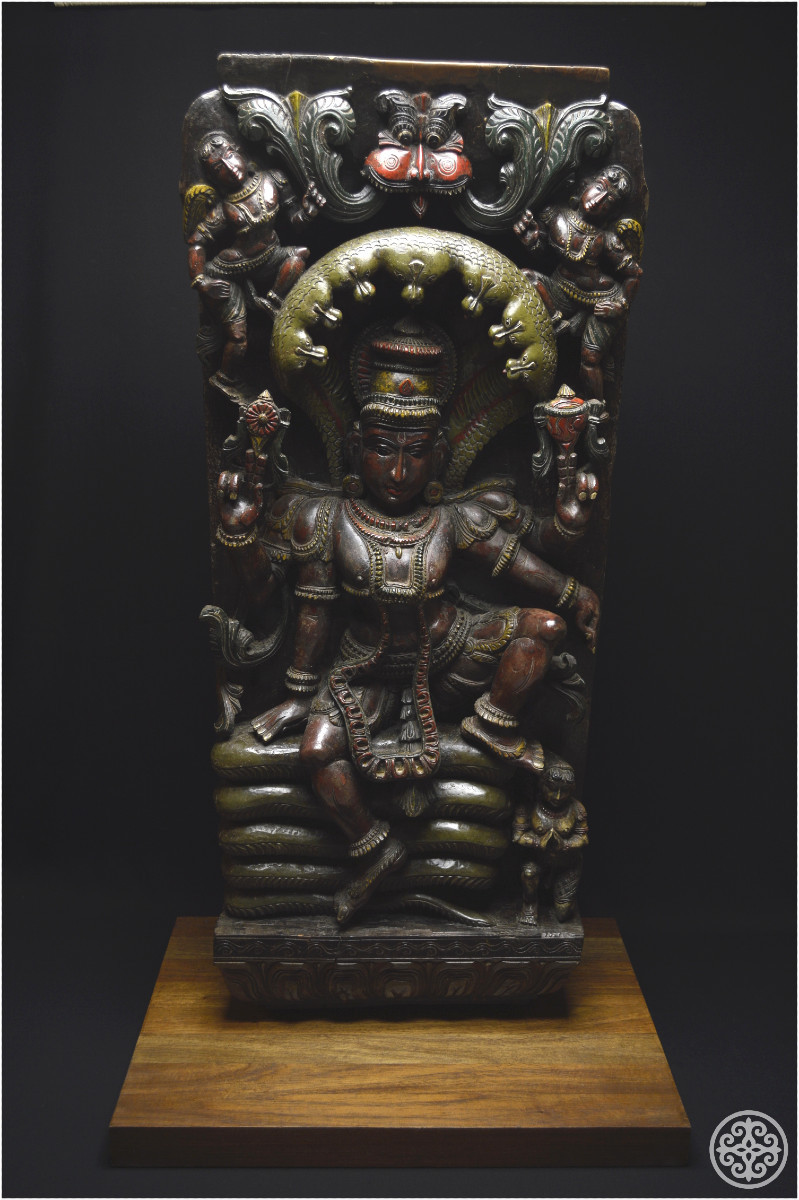


India, Late 19th - Early 20th Century, Large Polychrome Wooden Panel Depicting Vishnu
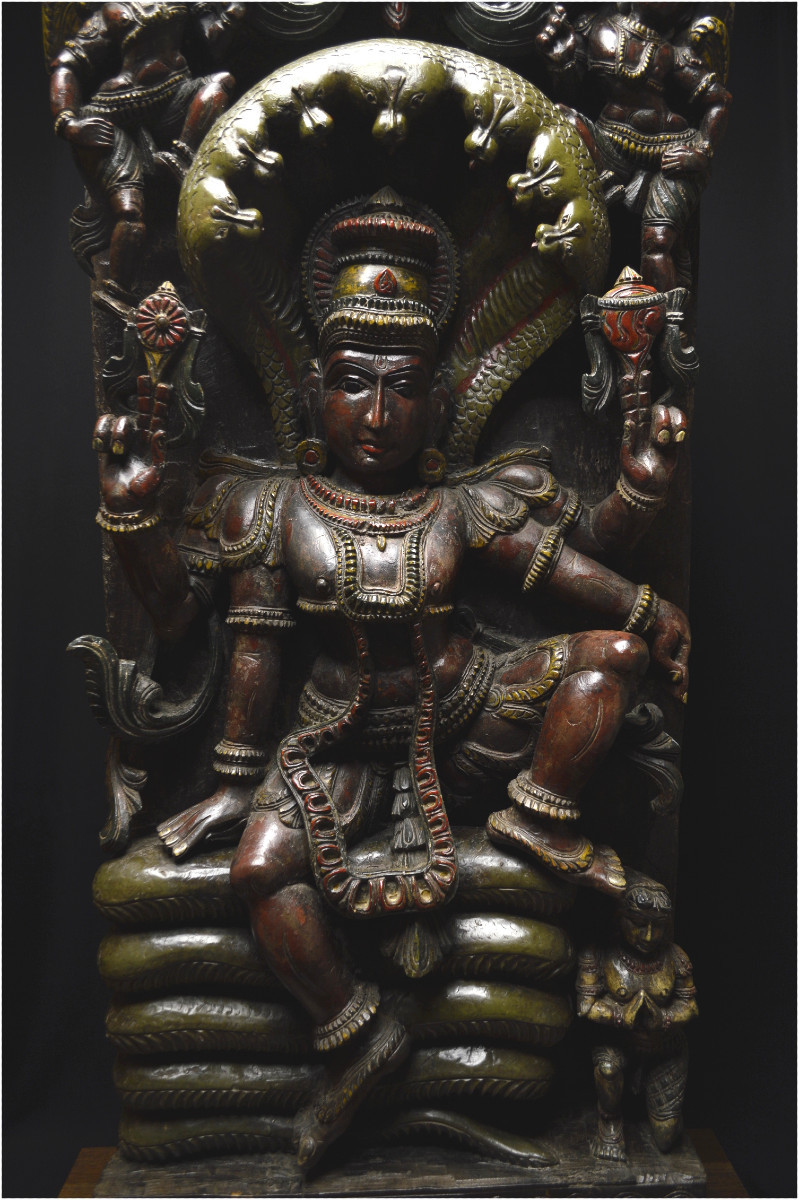
Important polychrome wooden processional chariot panel depicting Maha Vishnu
South India, State of Tamil Nadu
Late 19th – Early 20th century
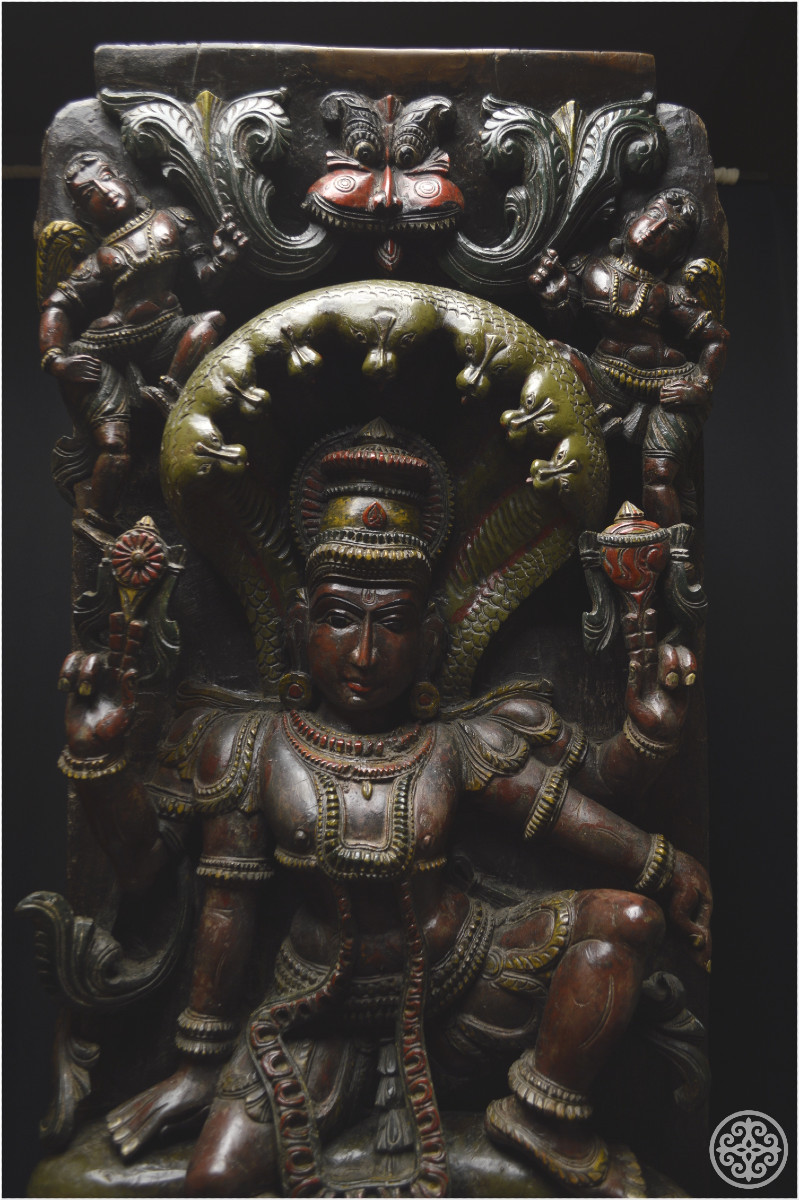
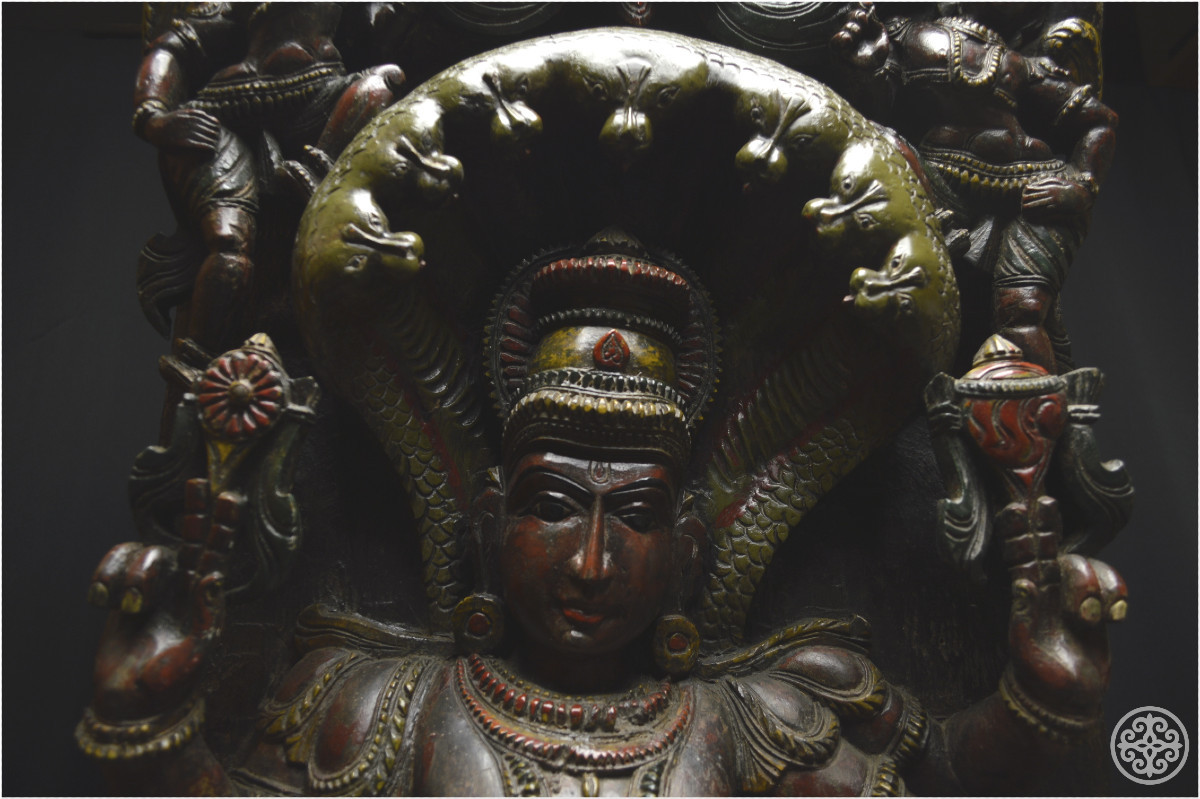
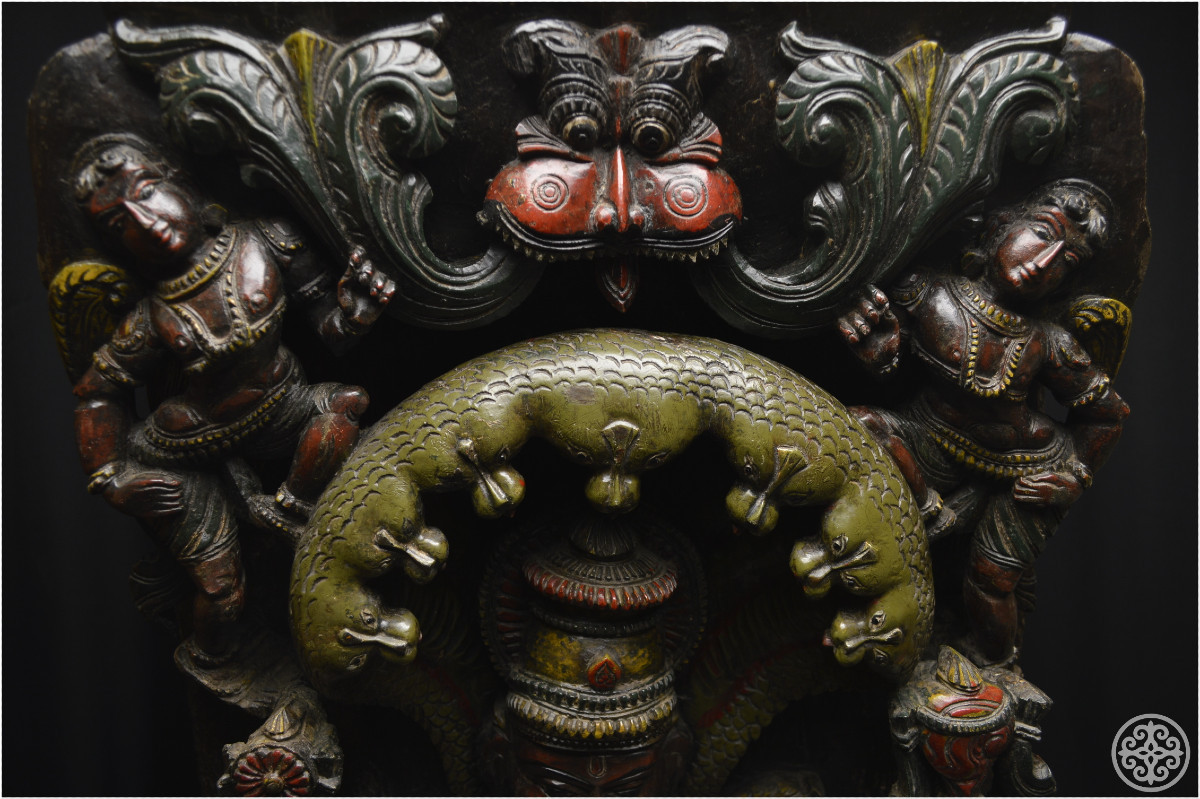
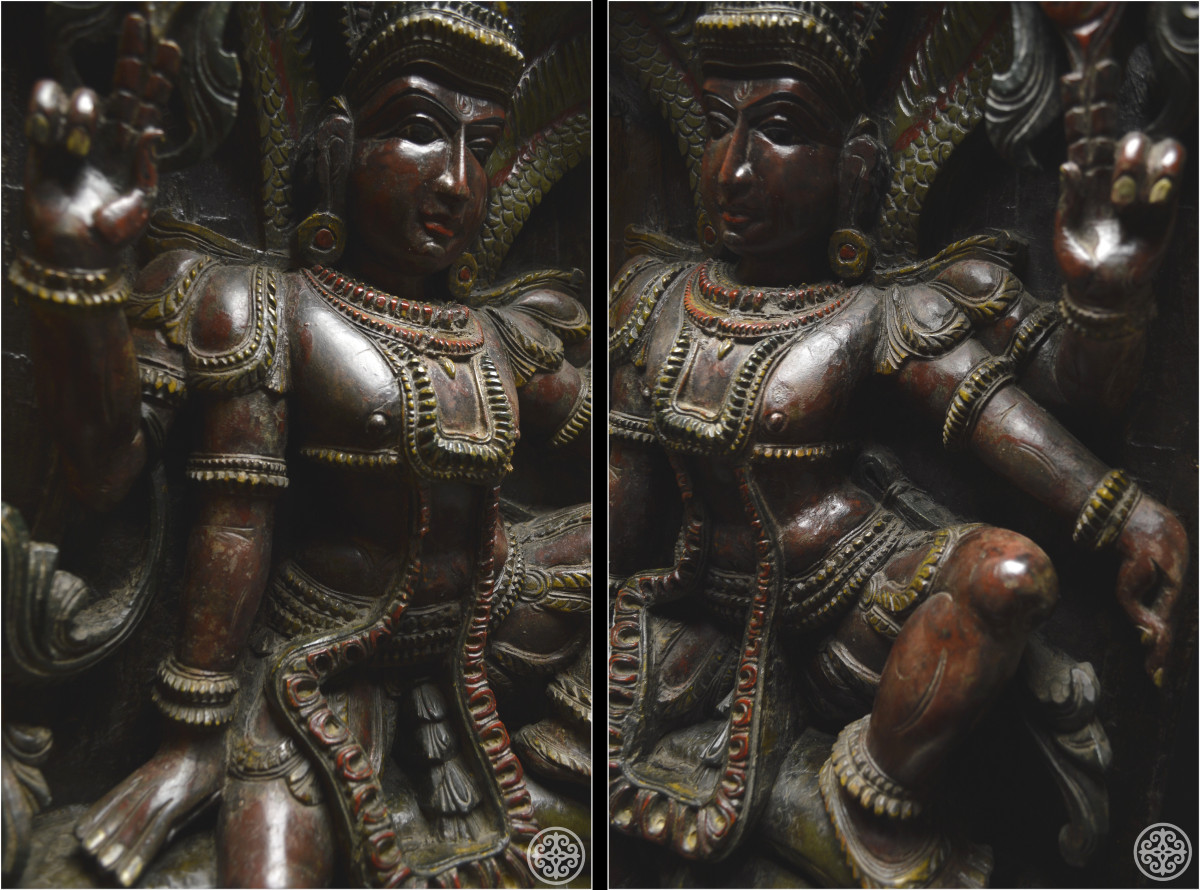
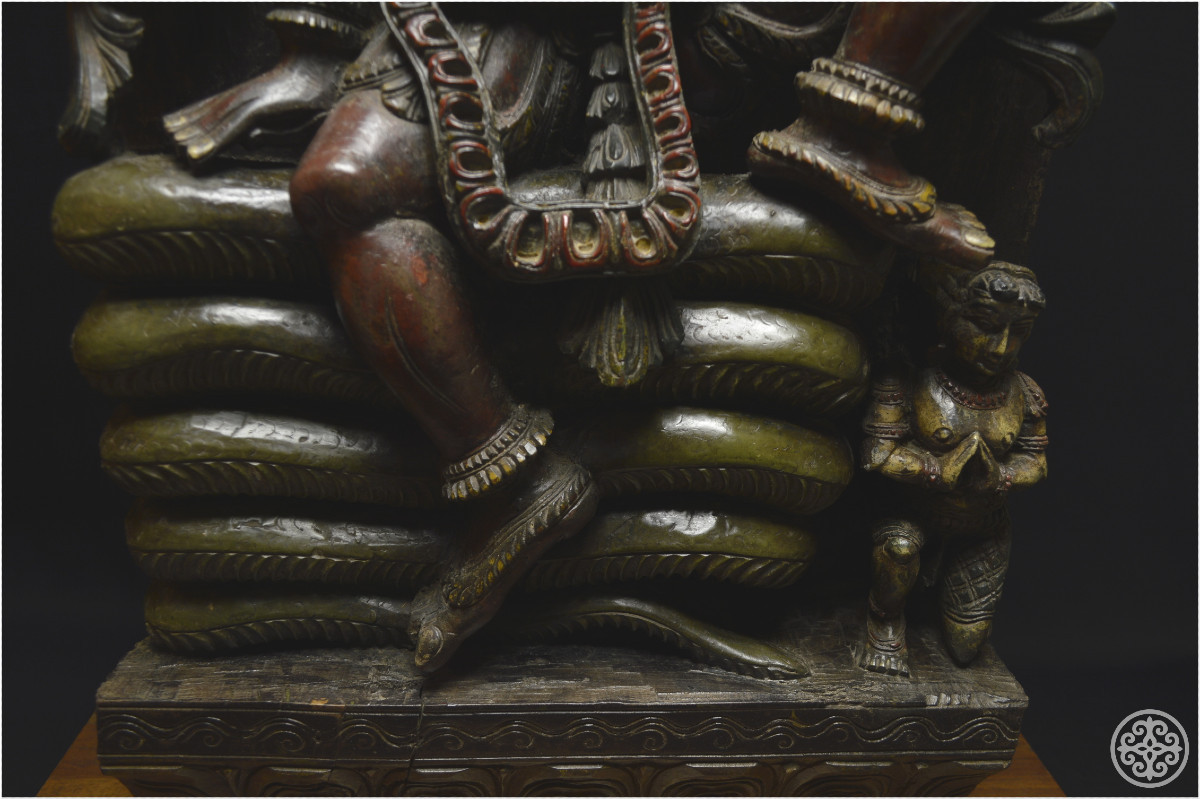
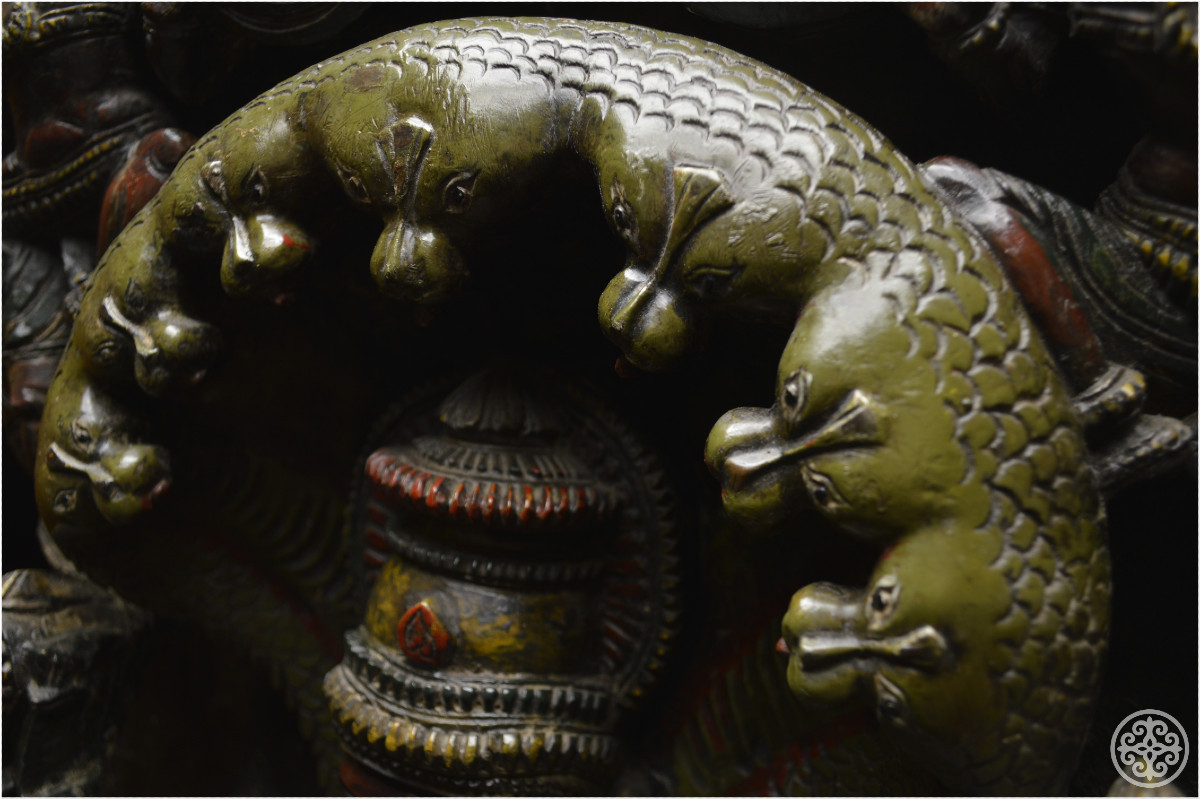
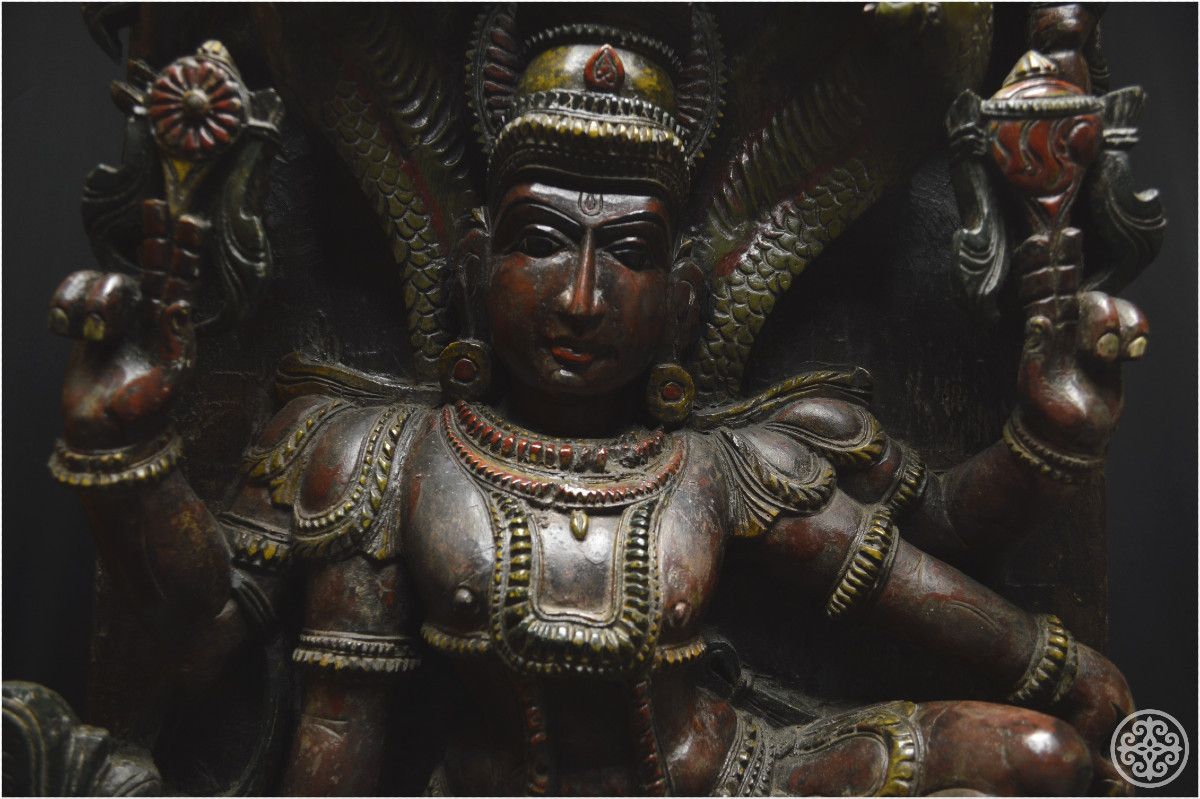
The deity Vishnu is depicted seated in a posture of royal ease (maharajalilasana). He is enthroned upon the coils of the cosmic naga Ananta, who shelters him with his seven-headed hoods forming a protective canopy. Vishnu is endowed with four arms and holds his classical attributes, the discus (chakra) and the conch (panchajanya).
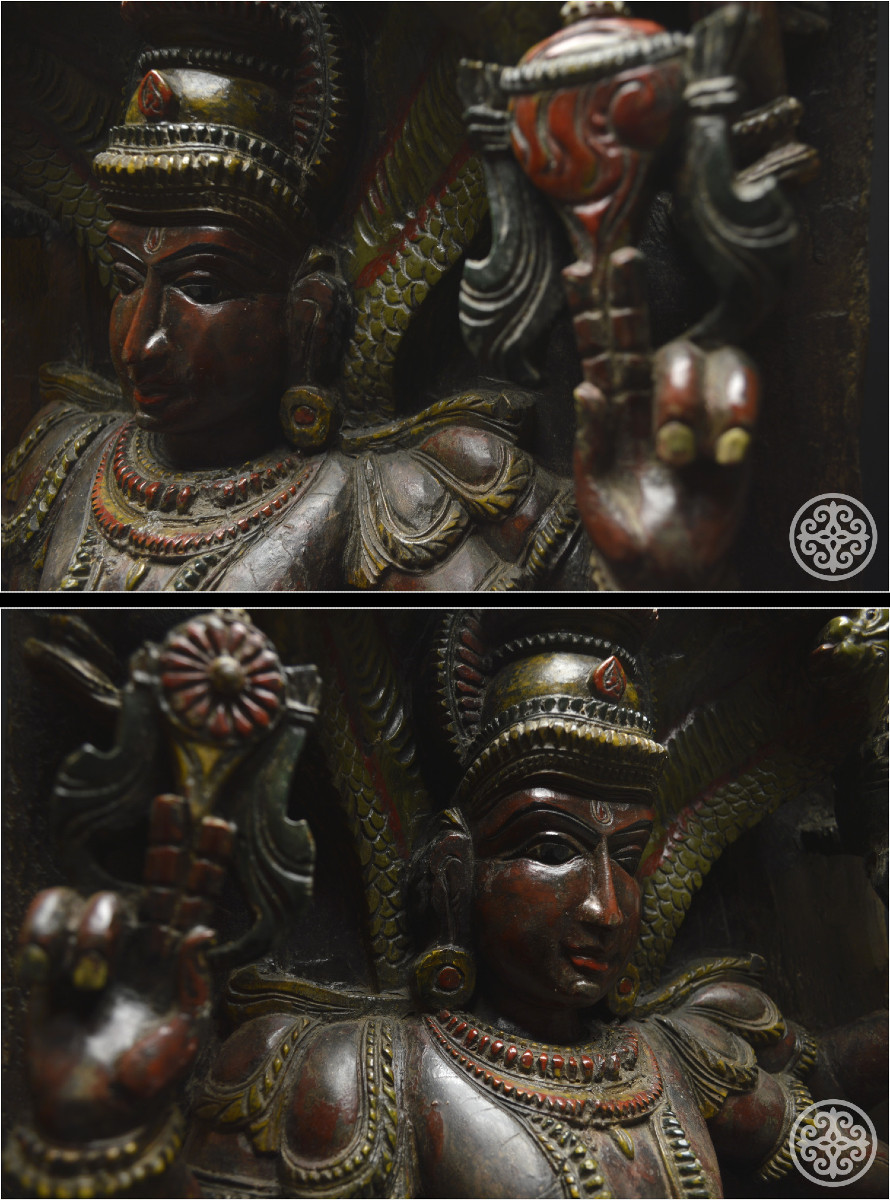
Represented here as a universal sovereign, he is dressed in a simple dhoti secured by an elaborate belt and adorned with numerous ornaments on his arms and ankles, as well as multiple richly decorated necklaces. His face is characterized by pronounced arched eyebrows meeting at the base of an aquiline nose, above a red-highlighted mouth, itself set above a small, slightly protruding chin.
The ears are adorned with circular pendants, the forehead bears the tilaka mark, and the head is crowned with a tall, richly ornamented mukuta, backed by a radiant halo (prabhamandala), symbols of his divine omnipotence.
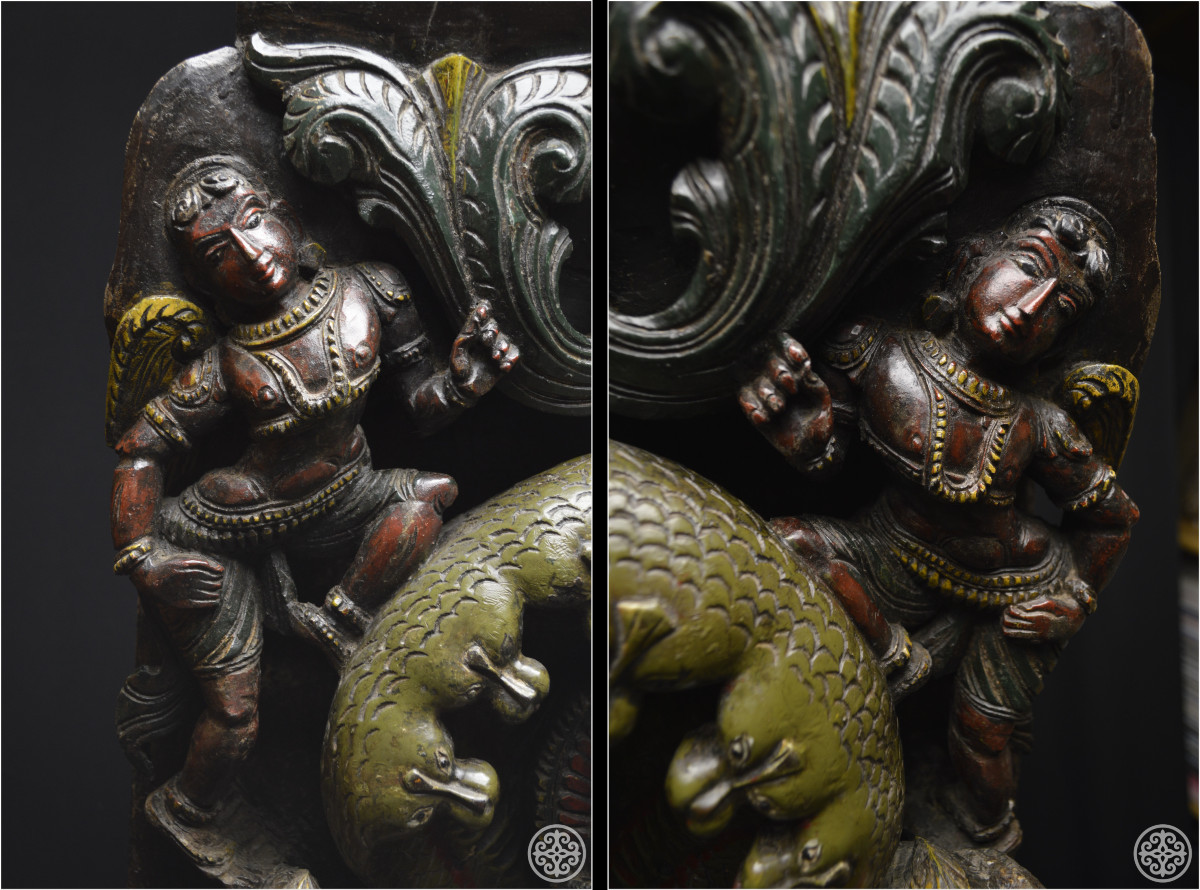
The upper register is embellished with a fearsome kirtimukha head, intended to repel malevolent forces: a gaping mouth from which stylized foliage emerges, bulging eyes, visible teeth, and a protruding tongue. At either end stand two vidyadharis, winged celestial nymphs, resting upon the hoods of the naga. The base of the composition features a kneeling female devotee in an attitude of worship, her hands joined in anjalimudra. The whole rests on a frieze of wave motifs surmounting stylized lotus petals.
This piece depicts an emblematic scene of Hindu mythology. It represents Vishnu as the immutable cosmic principle, resting in eternity while the universe is created, sustained, and dissolved under his authority. The serpent Ananta embodies infinite time and cosmic continuity, serving as the god’s support. It is distinct from, yet unfolds within, the primordial ocean, which constitutes the original framework of creation. Vishnu thus appears as the divine presence that maintains the balance of the cosmos, transcending time while remaining immutable at the heart of the cycles of creation and destruction.
This carved panel of Vishnu reclining on Ananta belongs to the tradition of processional chariot decorations from Tamil Nadu, known as ther. These monumental wooden chariots are used during major religious festivals to carry the image of the deity outside the temple, allowing devotees to come into direct contact with it through darshan (visoin of the divine). The carved panels that adorn them, such as this one, depict immediately recognizable and meaningful mythological scenes, serving as supports for devotion while transmitting sacred narratives. They play a full role in making the divine present in public space, transforming the chariot into a veritable mobile temple and making the procession a central moment in religious and communal life.
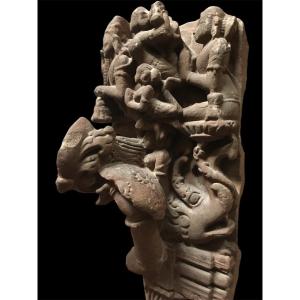
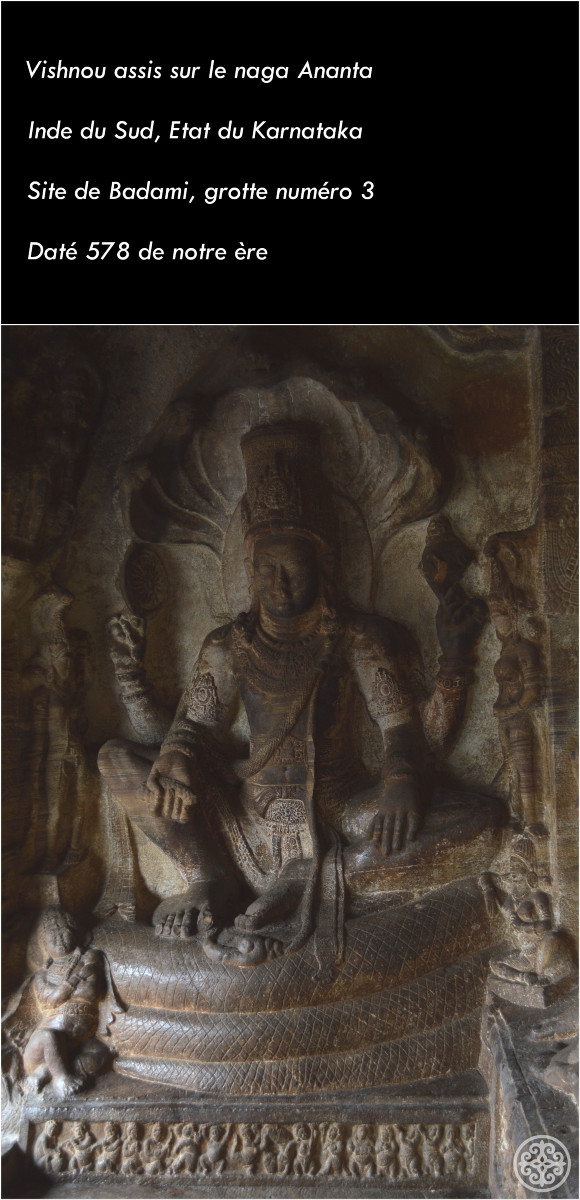
The last image depicts Vishnu seated on the naga Ananta in Cave 3, located in the city of Badami, in the state of Karnataka, South India.
It is dated to 578 CE.
Polychrome wood
103 × 43.5 cm (excluding base)
Surface wear, otherwise in very good overall condition
From a French private collection
Contact us: culturesetcivilisations@orange.fr
Period: 19th century
Style: Asian art
Condition: Excellent condition
Material: Painted wood
Width: 43.5 cm hors socle
Height: 103 cm hors socle
Reference (ID): 1727097
Availability: In stock