THIS OBJECT WAS SOLD
Pierre Lebasque (1912-1994) The Owl C.1935. Important Sculpture. Lenoble, Jouve, Mayodon

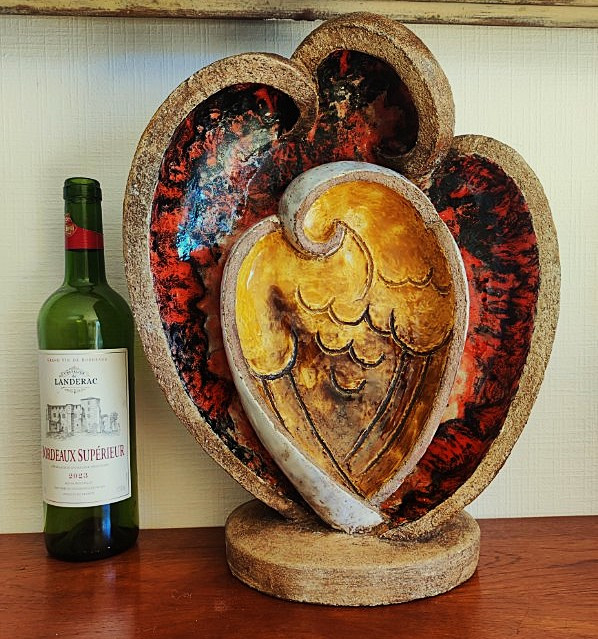
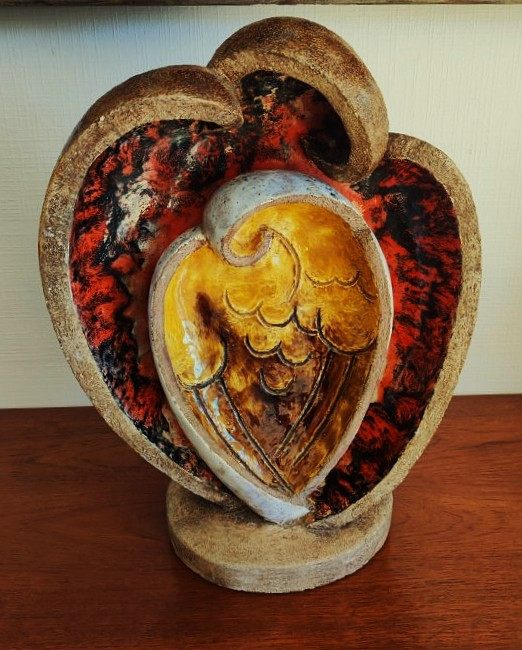
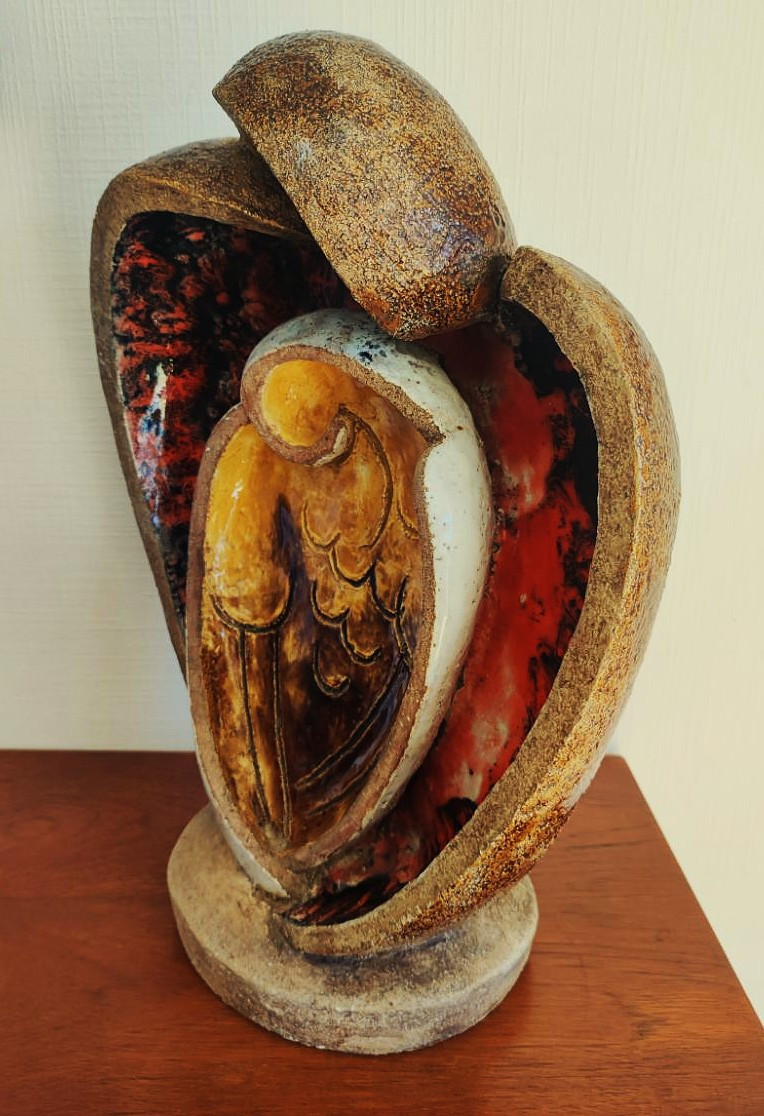
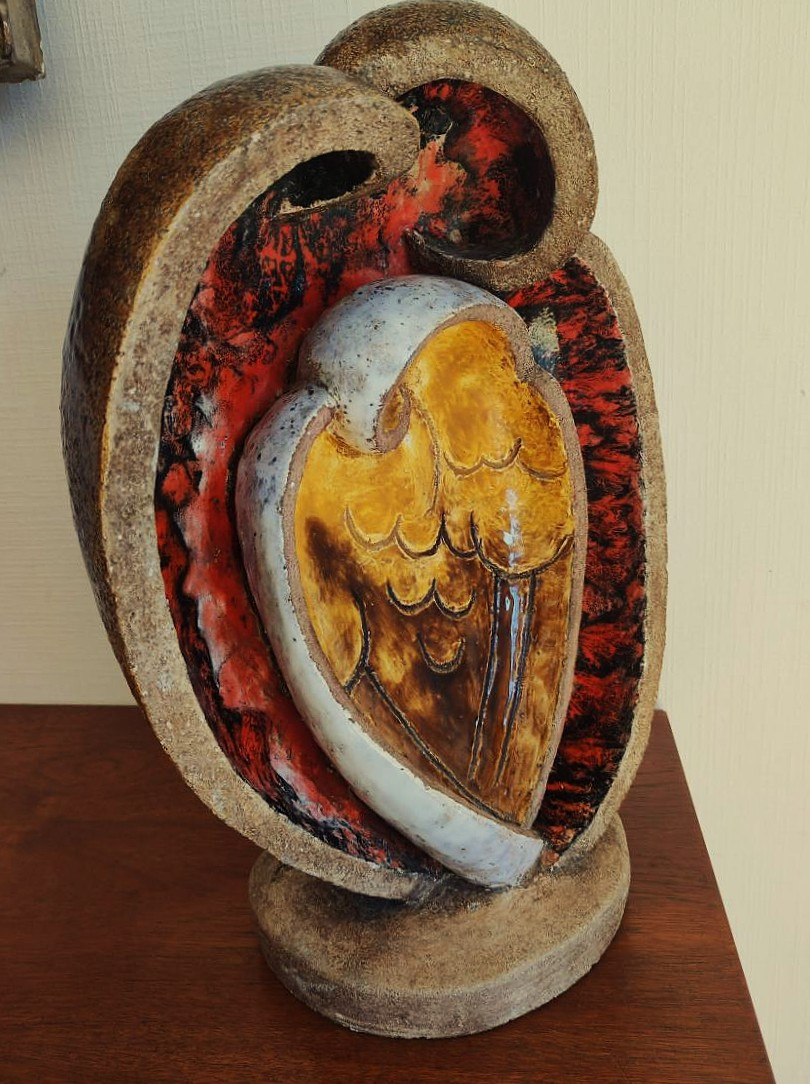
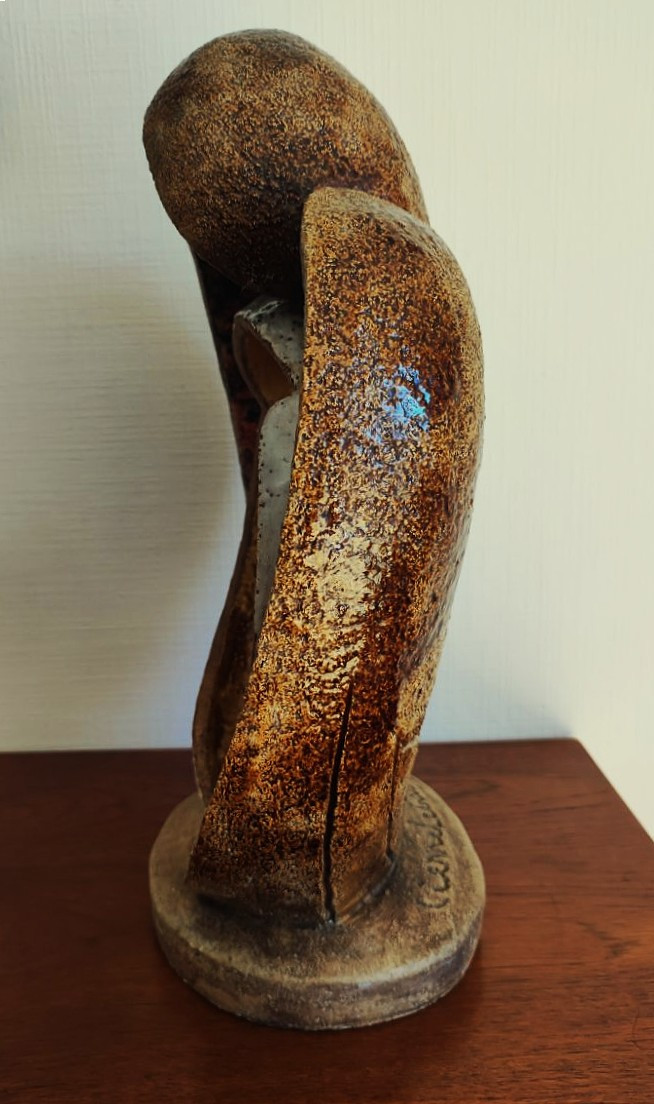
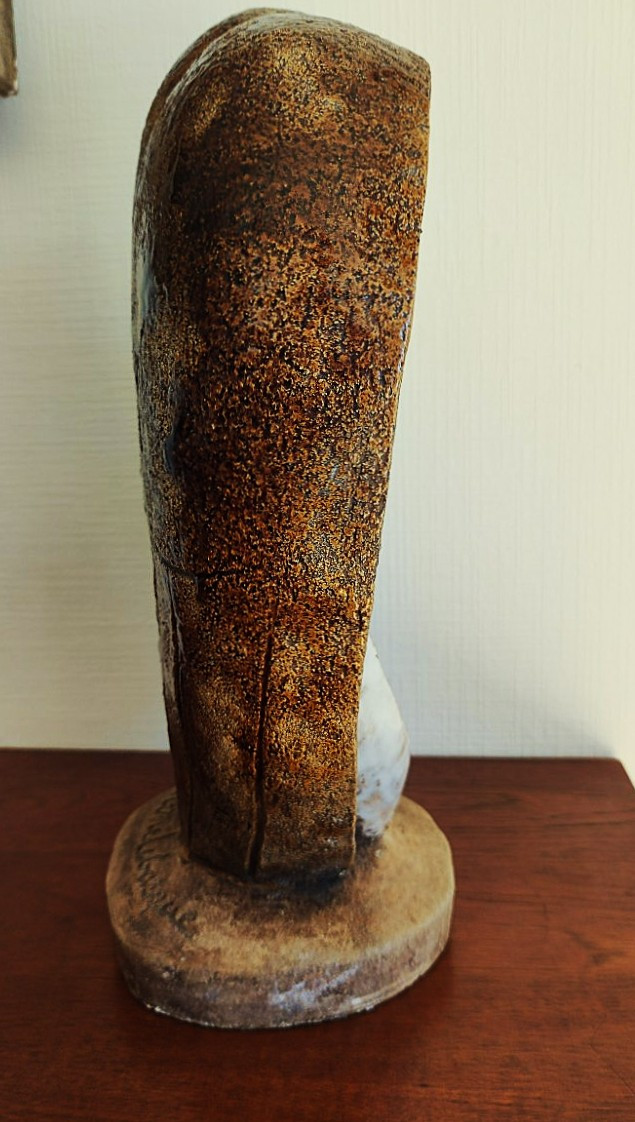
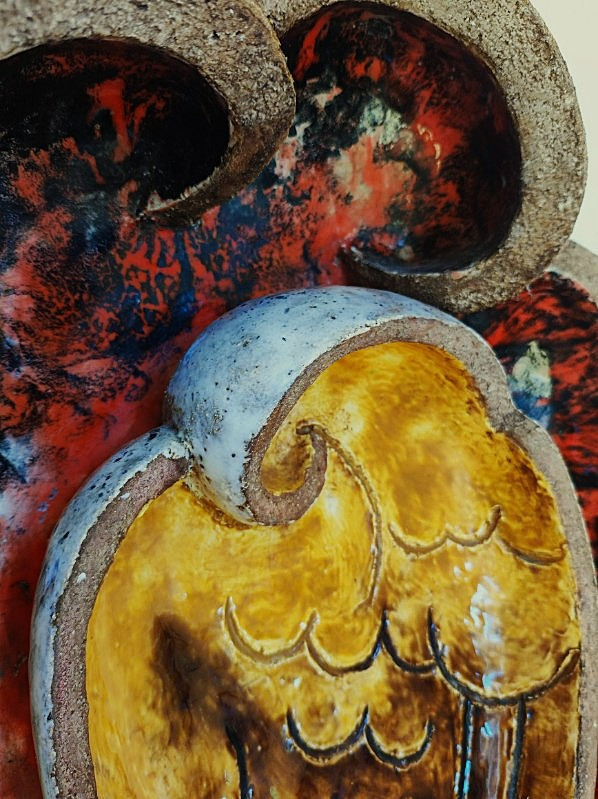
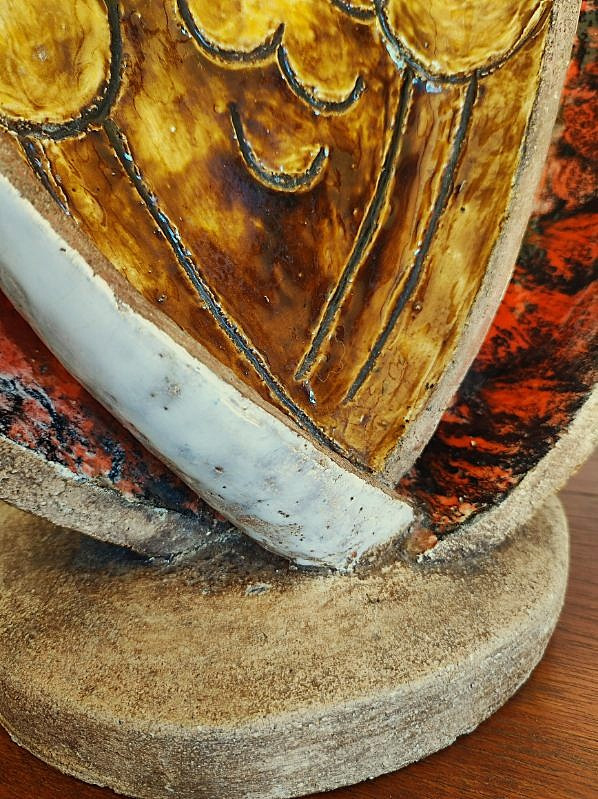
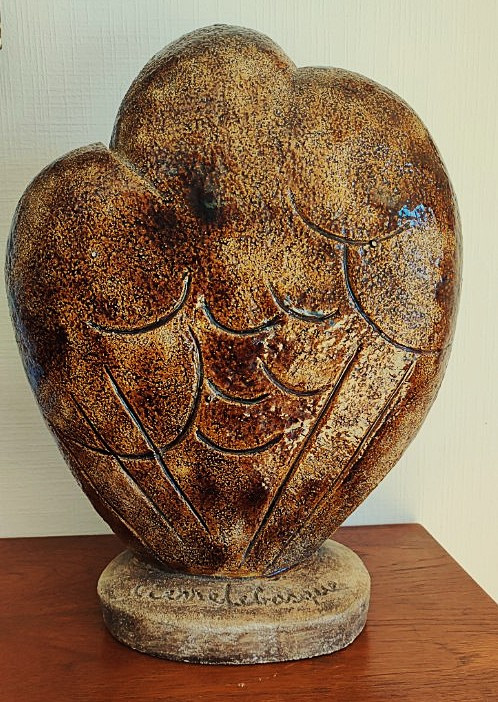

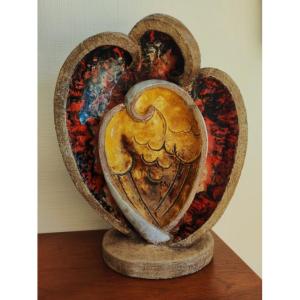


5 000 A very important and extremely rare ceramic sculpture by Pierre Lebasque depicting a stylized owl, circa 1935/1940, signed in relief on the back. Height: 40cm, width: 32cm. The piece is in perfect original condition. This magnificent and rare sculpture by Pierre Lebasque represents an owl, made of raw chamotte stoneware. He partially glazed the sculpture with yellow/orange, red, and white enamels, while the rest of the piece is in shades of brown/caramel. Pierre Lebasque, the renowned ceramist/sculptor of the 1930s/1970s, needs no introduction. He was one of the most important figures in the revival of ceramic art, along with Lenoble, Mayodon, Serré, Jouve, Lanel, and Soudbinine. His most creative period was between 1930 and 1950, during which he produced sculptures and architectural pieces, including tables, vases, and more. Pierre Lebasque was a French sculptor and ceramicist, born in Montfort-sur-Risle in 1912 and died in Rouen in 1994. A pioneer of modern ceramics, he became famous at the age of 18-20 with his innovative animal-themed earthenware, characterized by vigorous, vibrant, and expressive modeling, and covered with dazzling, textured polychrome glazes. In salons, exhibitions, and galleries, he associated with renowned artists such as Jean Mayodon, Séraphin Soudbinine, Émile Decœur, and Émile Lenoble. He also produced ceramic panels, busts, figure compositions, religious subjects in glazed slag, and utilitarian ceramics (post-war). His glazed ceramic production, particularly from the pre-war period, is sought after by collectors and museums. The Musée d'Art Moderne de Paris owns several of his sculptures. Pierre Lebasque's glazed ceramics: The style of his glazed pottery is somewhat reminiscent of Bernard Palissy's rustic earthenware, but with greater vitality and bright, vibrant glaze colors. Pierre Lebasque became known for his creations inspired by animal themes, initially featuring aquatic fauna (fish, rays, octopuses, scorpionfish, etc.), then birds (parrots, eagle owls, swans, etc.), fowl (roosters, ducks, turkeys, etc.), and slimy, pustular amphibians (frogs, tree frogs, toads, newts, salamanders, etc.). The animals, modeled by hand and not molded, are shaped from sketches made in zoos and aquariums (Monte Carlo Aquarium, Vincennes Zoo near Paris, Jardin des Plantes). The form is intended to be animated and dynamic, as if captured in the natural movement or momentum of the animal gliding, undulating, living. The solid volumes are then covered with highly colored and textured glazes in relief. By using several layers of glaze, sometimes requiring six successive firings, Pierre Lebasque achieves a rich effect where the colors intertwine and blend together. Deliberate textural effects (swelling, turgor, drips) perfectly simulate the skin of his animals. For the body of the piece, he uses chamotte clay (clay with added grog or clay that has already been fired and ground). Directly from manufacturers, he obtained his glazes made from copper, selenium, manganese, and lead oxides and prepared his experimental mixtures. During the second half of the 20th century, he experimented with other techniques such as mixed clay or nerikomi (colored motifs within the body of the piece rather than with glaze), glazed lava, etc. He was born in Montfort-sur-Risle in 1912. In 1924, his family moved to Le Cannet, on the French Riviera. He was 12 years old at the time. There, he learned drawing and painting from his father, the renowned painter Henri Lebasque. Nearby, at the Monaco Aquarium, he discovered the rich aquatic fauna, which served as models for his graphic studies. In the late 1920s, Pierre Labasque began creating art pottery using clay from Vallauris. His brother-in-law, the ceramicist Jacques Lenoble (1902-1967), helped him with his apprenticeship and, like him, used the kilns at L'Hospied in Golfe-Juan. He exhibited for the first time at the Salon d'Automne in 1930. Success was immediate thanks to his modern and innovative ceramics of polychrome glazed animals. Temporarily settling in Paris, he rented a small workshop to create his pieces. In the 1930s, in addition to the Salons, he exhibited at the Malesherbes, Pétridès, Rouard, and other galleries. He became a member of the Salon des Artistes Décorateurs, a member of the board of directors of the Société Nationale des Beaux-Arts, and a member of the Société des Animaliers. In 1935, the Sèvres porcelain factory invited him to come for a few months to produce unique ceramic sculptures. He married Claude-Andrée Hugon in 1936. In 1937, for the International Exposition of Arts and Techniques, the State and the city of Paris commissioned him to create monumental fountains to adorn the Architecture pavilion and the pavilion
Explore similar pieces and discover your ideal find:
other ceramics