THIS OBJECT WAS SOLD
Bloodstone (heliotrope) Intaglio: Marriage Scene. Roman, 2nd–3rd Century A.d.

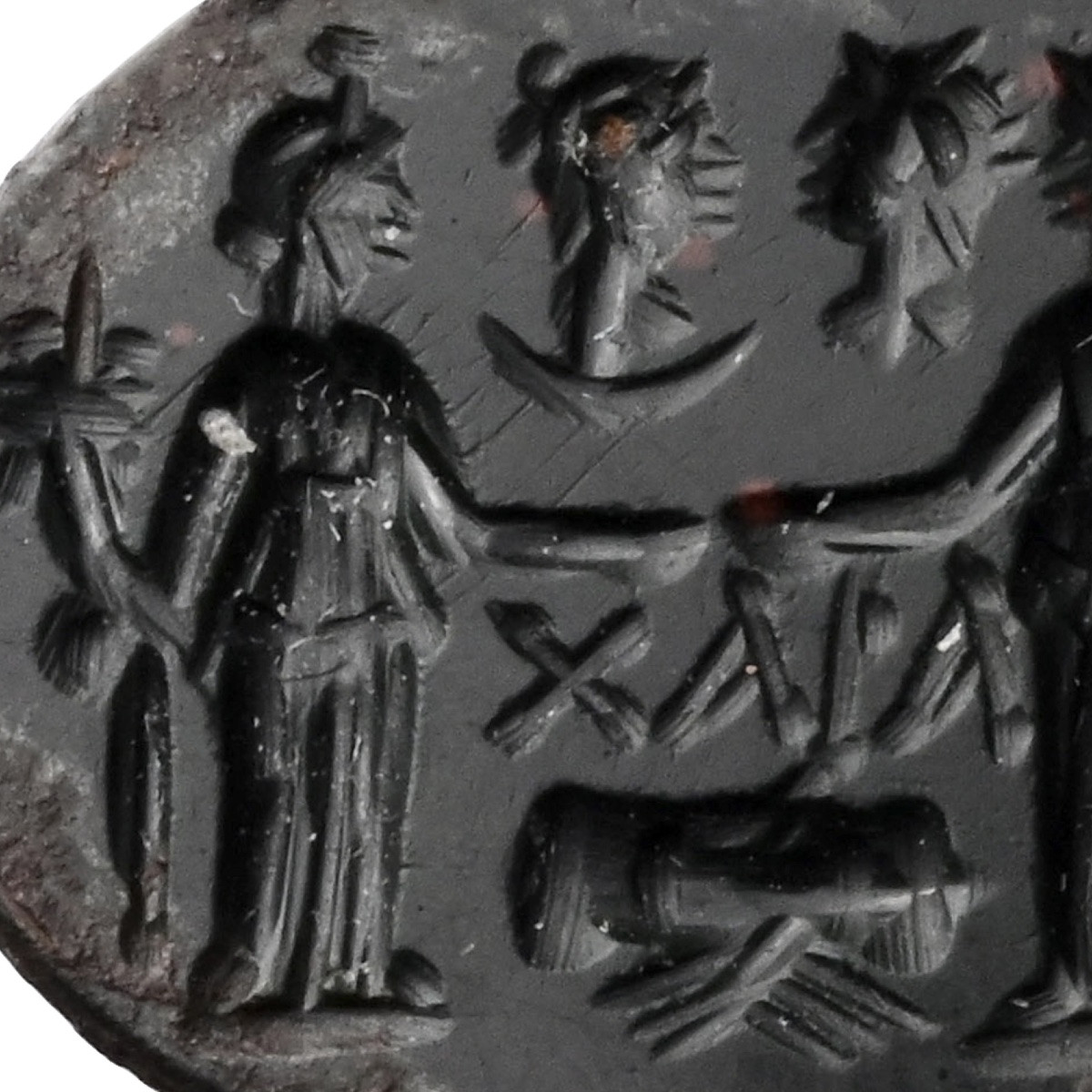

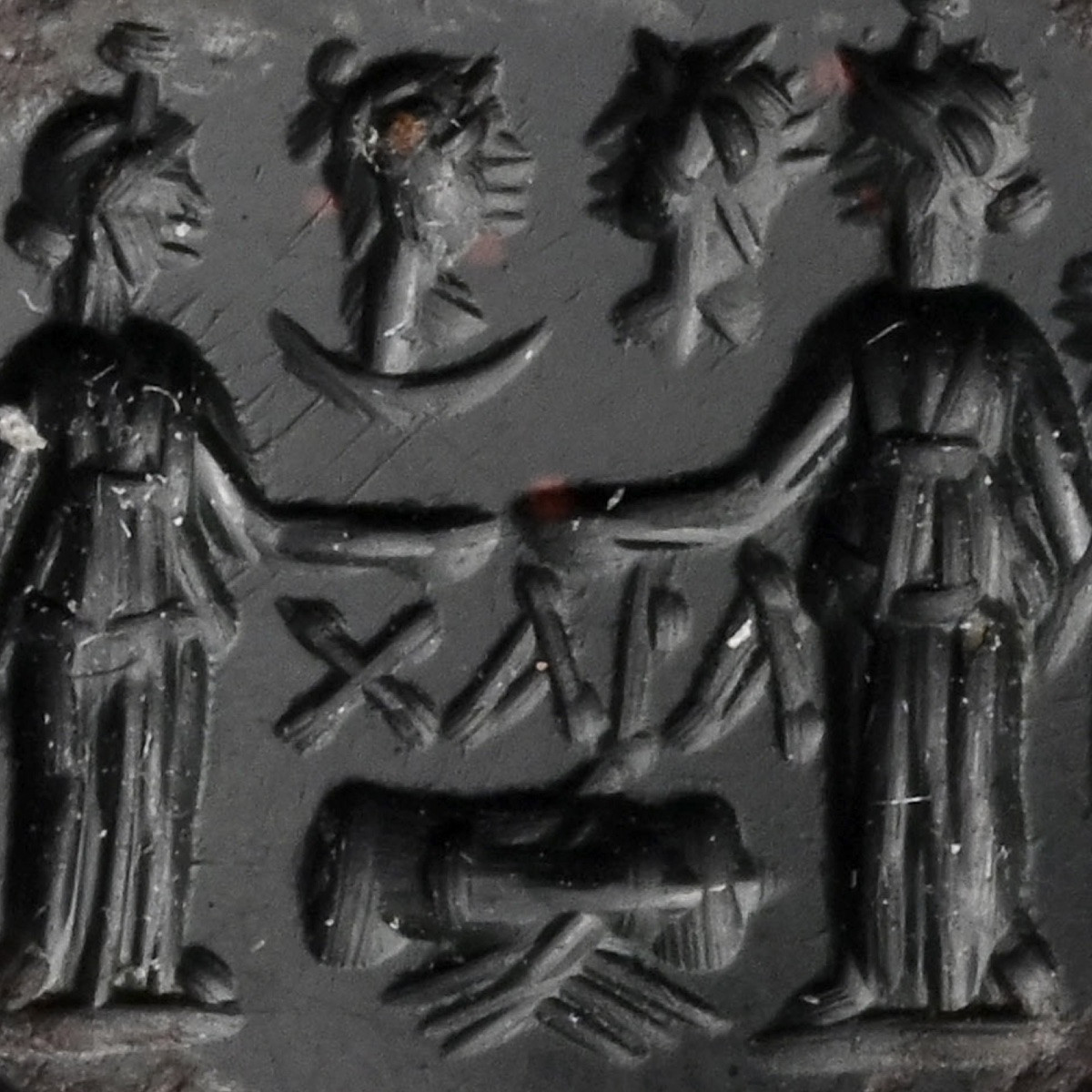






Roman bloodstone (heliotrope) intaglio: marriage scene.
Roman, 2nd–3rd century A.D.
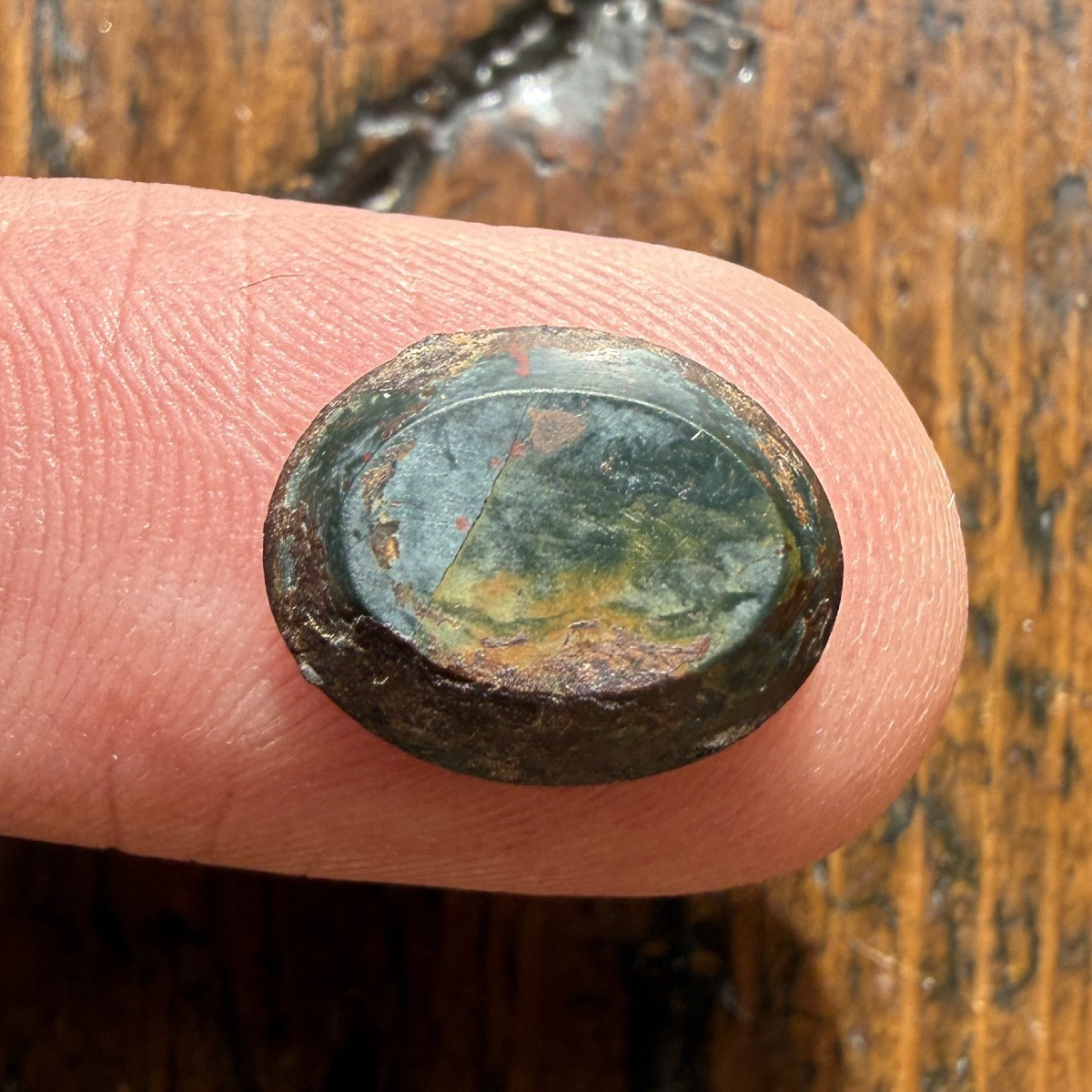
Measurements: 1.3 × 1.0 × 0.3 cm; 0.6 grams.
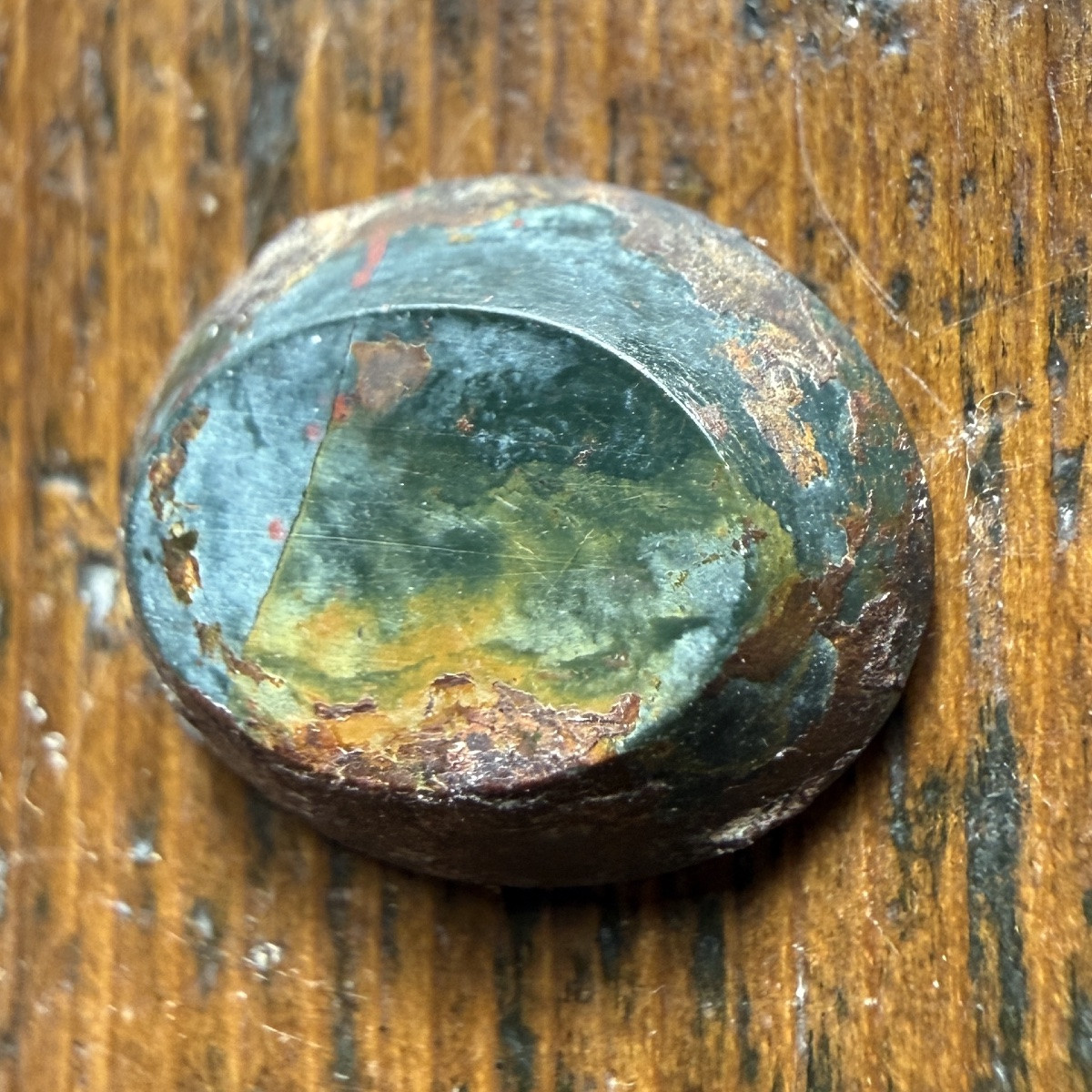
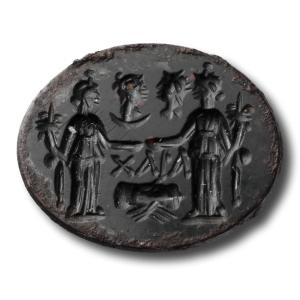
Ellipsoid in form, the bloodstone (heliotrope) displays a dark green matrix with iron-red inclusions and is cut as an intaglio. The compact composition records a betrothal scene: two confronting busts in profile represent the husband and wife, while two draped female figures — identified as Demeter — face inwards with outstretched arms. Directly beneath are the letters read here as “XΛIΛ” and the motif of two clasped hands (mani in fede), the conventional representation of dextrarum iunctio that denotes betrothal and marital union.
Minor surface wear consistent with antiquity. Traces of original animal glue survive on the reverse and within the rim from its ancient setting; edge wear and slight abrasion are present.
The iconography and the presence of mani in fede identify the object as a betrothal or wedding gem intended for personal use, often set into a ring. Its material and compact composition make it particularly suitable for an engagement or wedding ring; a modern setting can be commissioned on request.
Provenance: From the Fadel family collection, 1970s.
Roman, 2nd–3rd century A.D.
Measurements: 1.3 × 1.0 × 0.3 cm; 0.6 grams.
Ellipsoid in form, the bloodstone (heliotrope) displays a dark green matrix with iron-red inclusions and is cut as an intaglio. The compact composition records a betrothal scene: two confronting busts in profile represent the husband and wife, while two draped female figures — identified as Demeter — face inwards with outstretched arms. Directly beneath are the letters read here as “XΛIΛ” and the motif of two clasped hands (mani in fede), the conventional representation of dextrarum iunctio that denotes betrothal and marital union.
Minor surface wear consistent with antiquity. Traces of original animal glue survive on the reverse and within the rim from its ancient setting; edge wear and slight abrasion are present.
The iconography and the presence of mani in fede identify the object as a betrothal or wedding gem intended for personal use, often set into a ring. Its material and compact composition make it particularly suitable for an engagement or wedding ring; a modern setting can be commissioned on request.
Provenance: From the Fadel family collection, 1970s.
Explore similar pieces and discover your ideal find:
Curiosities