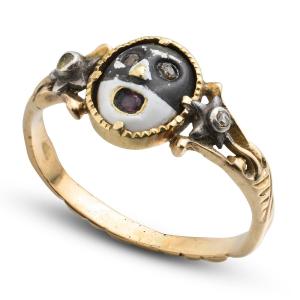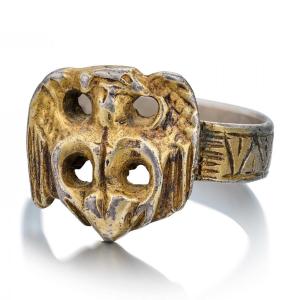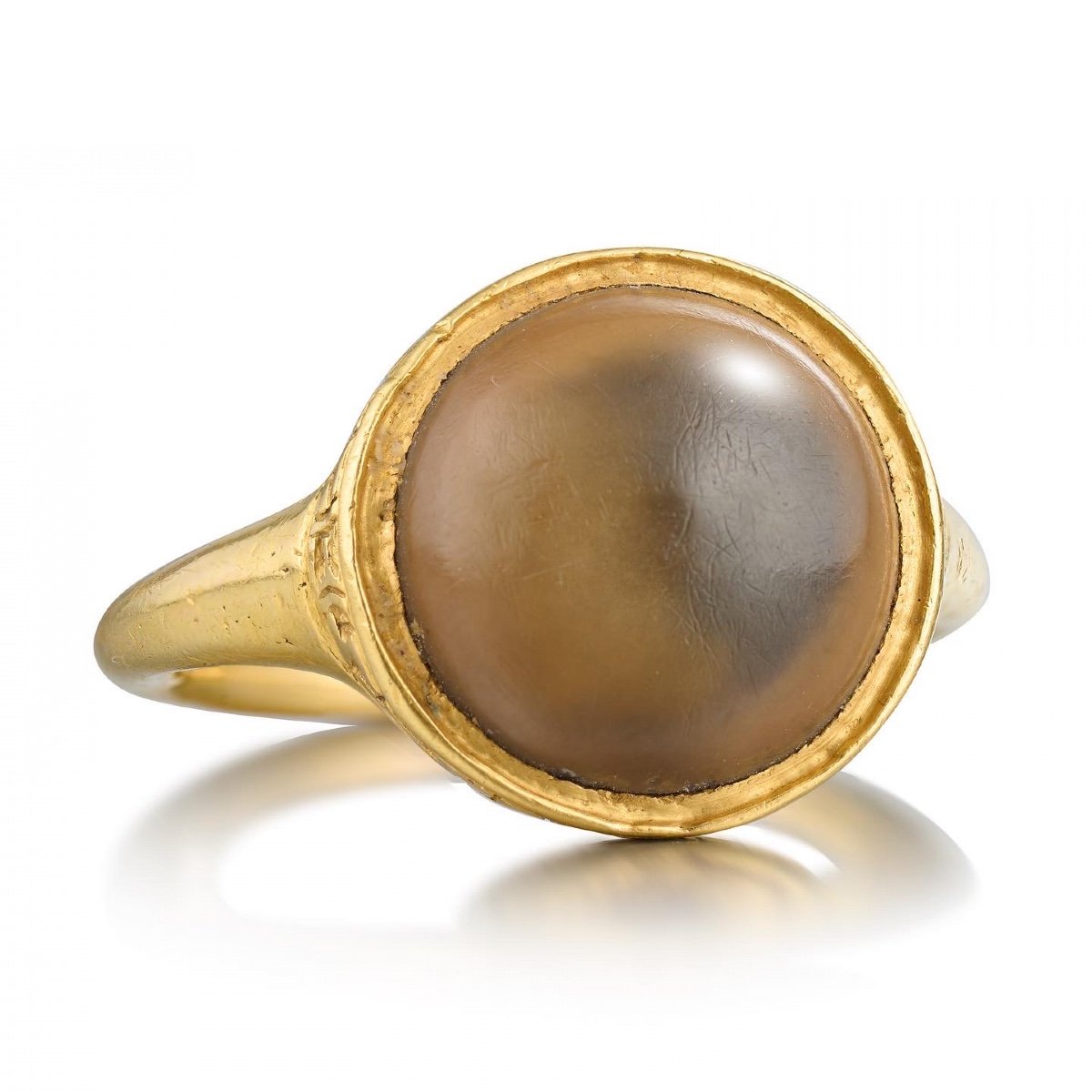
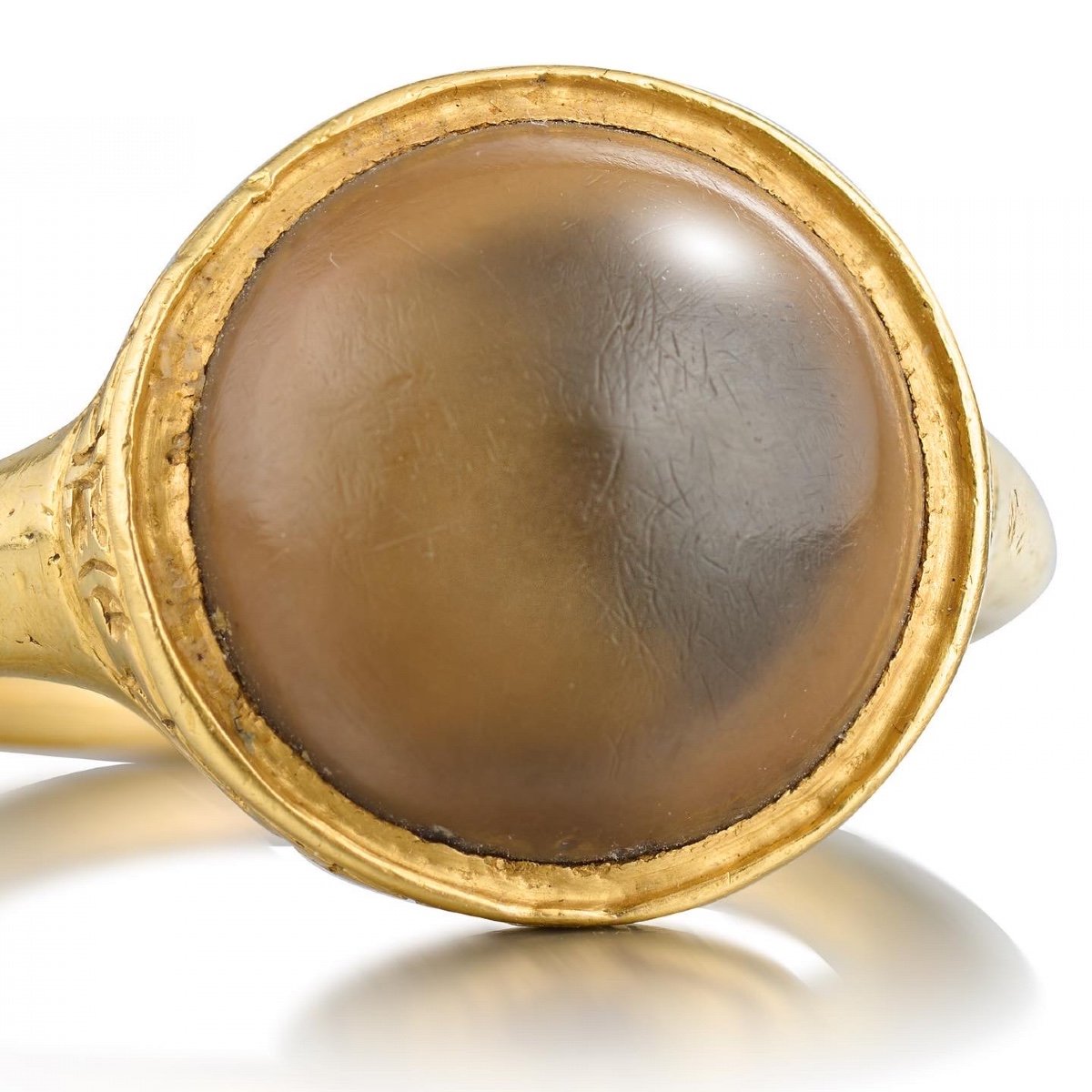
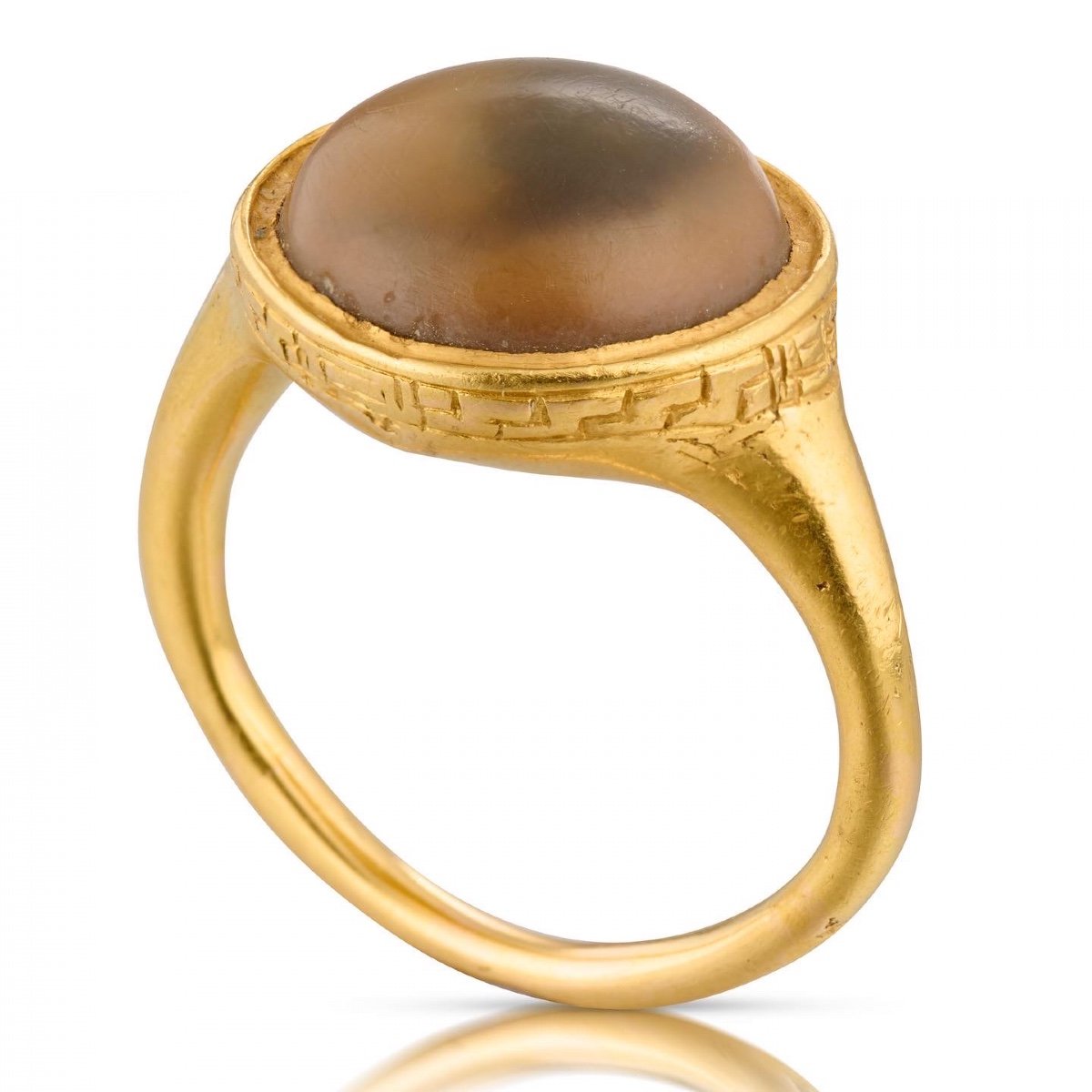
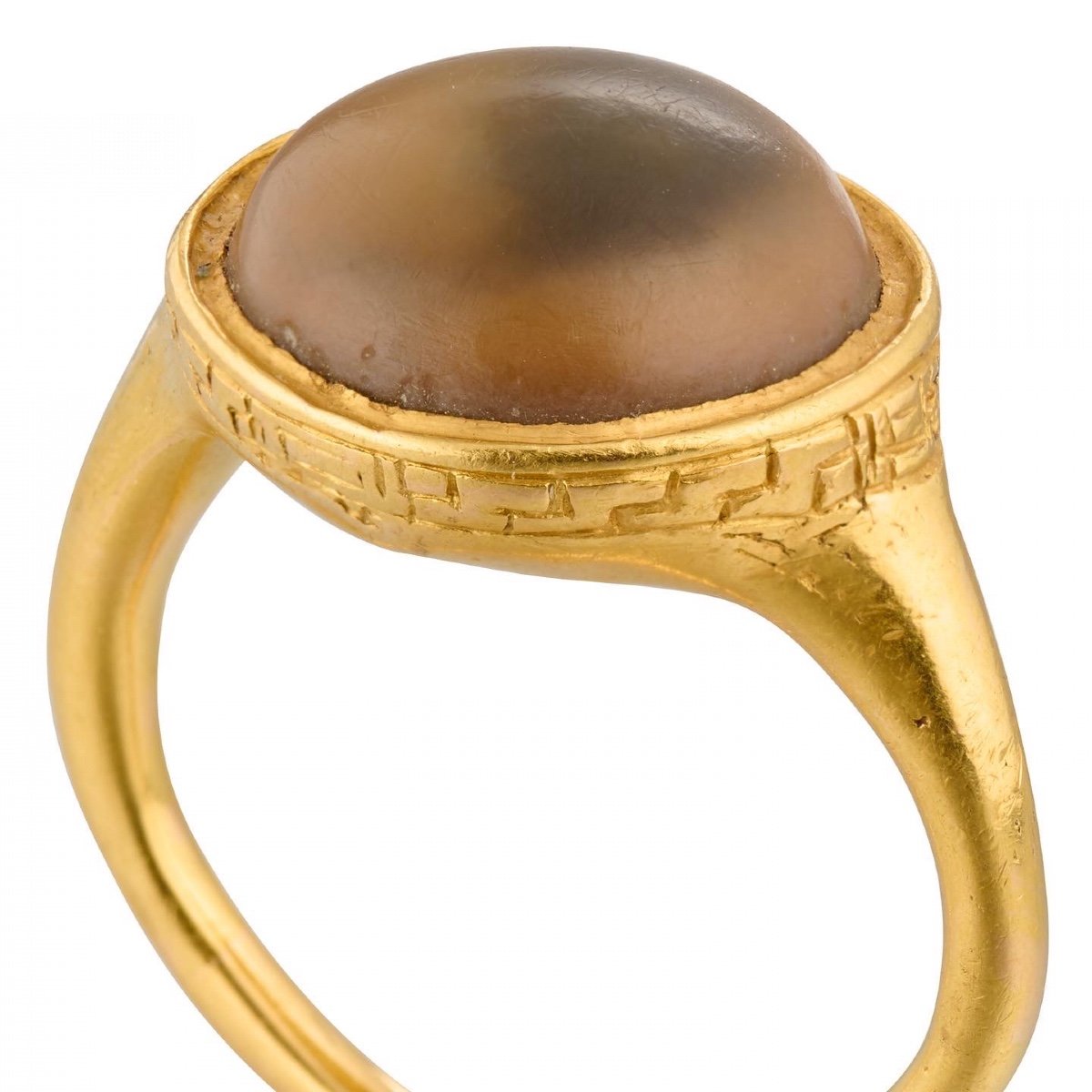
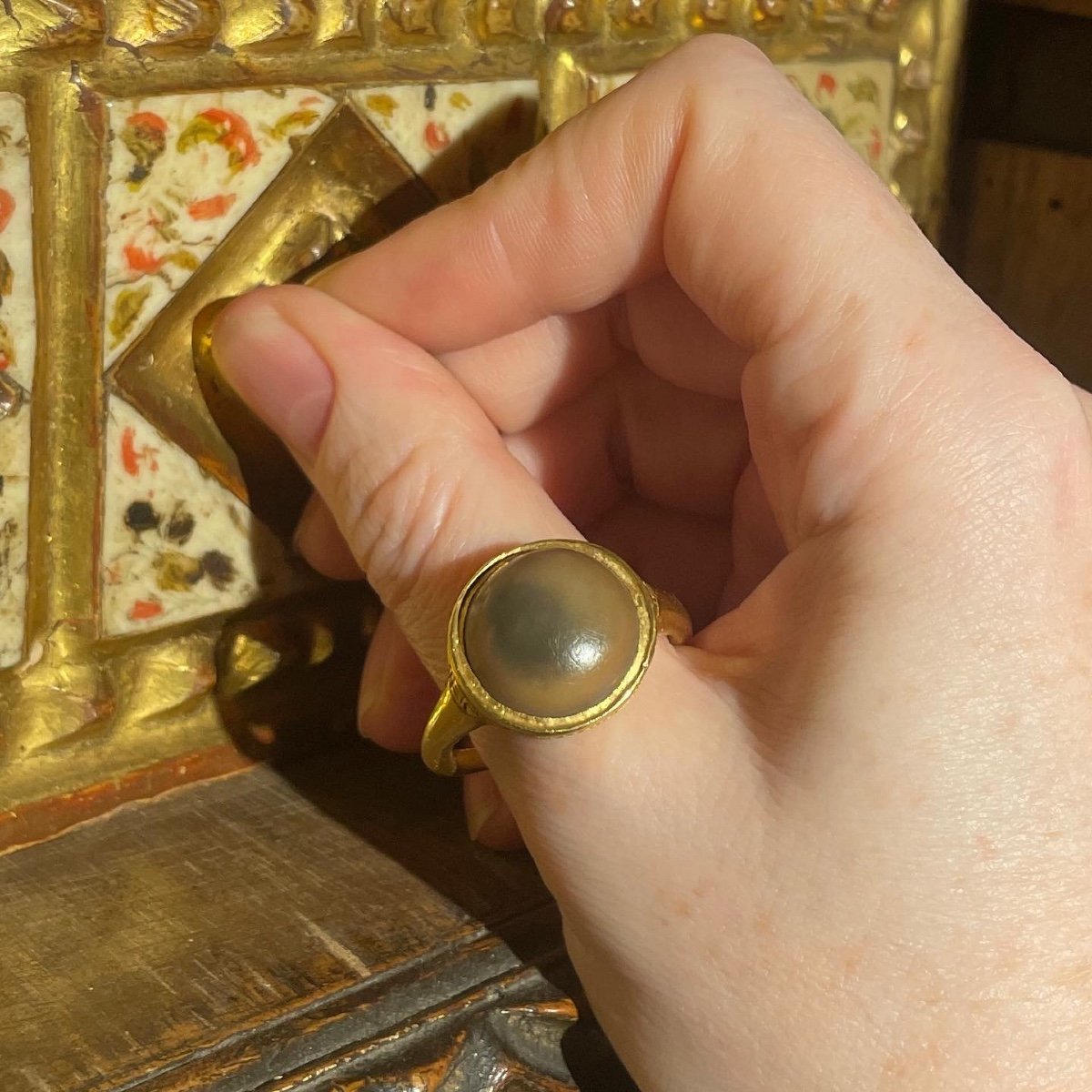
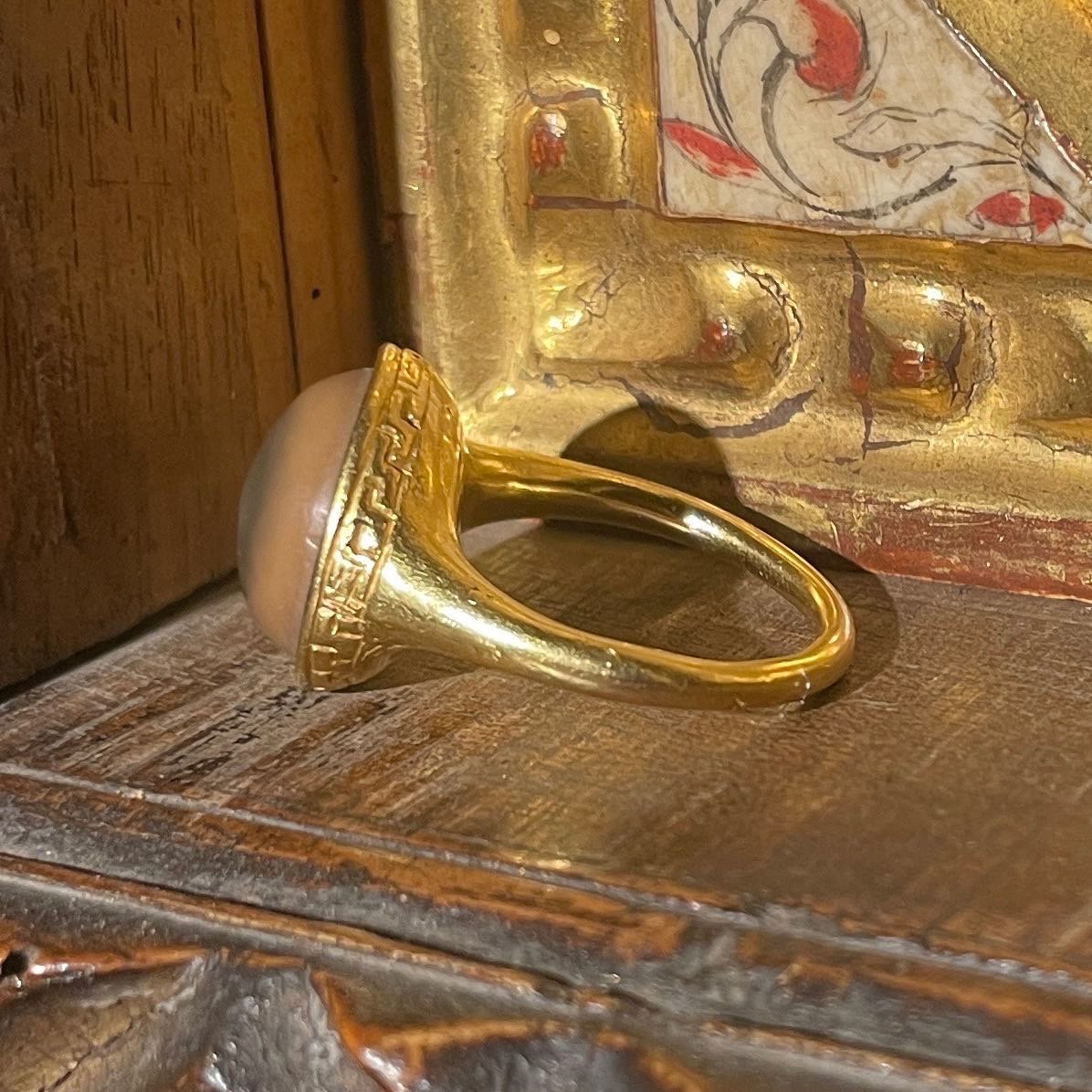
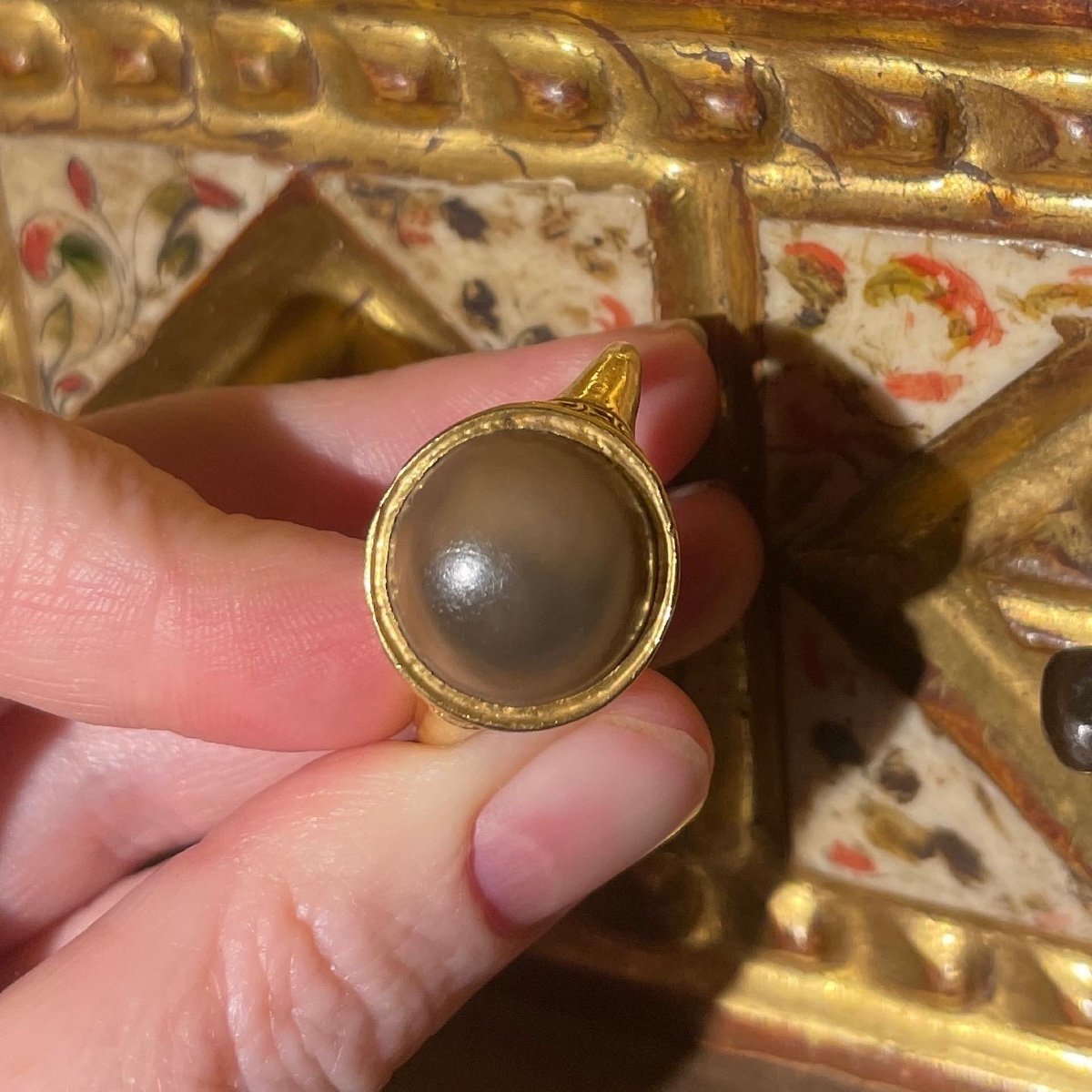


Important Gold Ring Set With A Toadstone. Western Europe, Late 16th Century.
An important gold ring set with a toadstone.
Western Europe, late 16th century.
Ring size W UK / 11 US.
The toadstone measures 1.5 x 1.5cm.
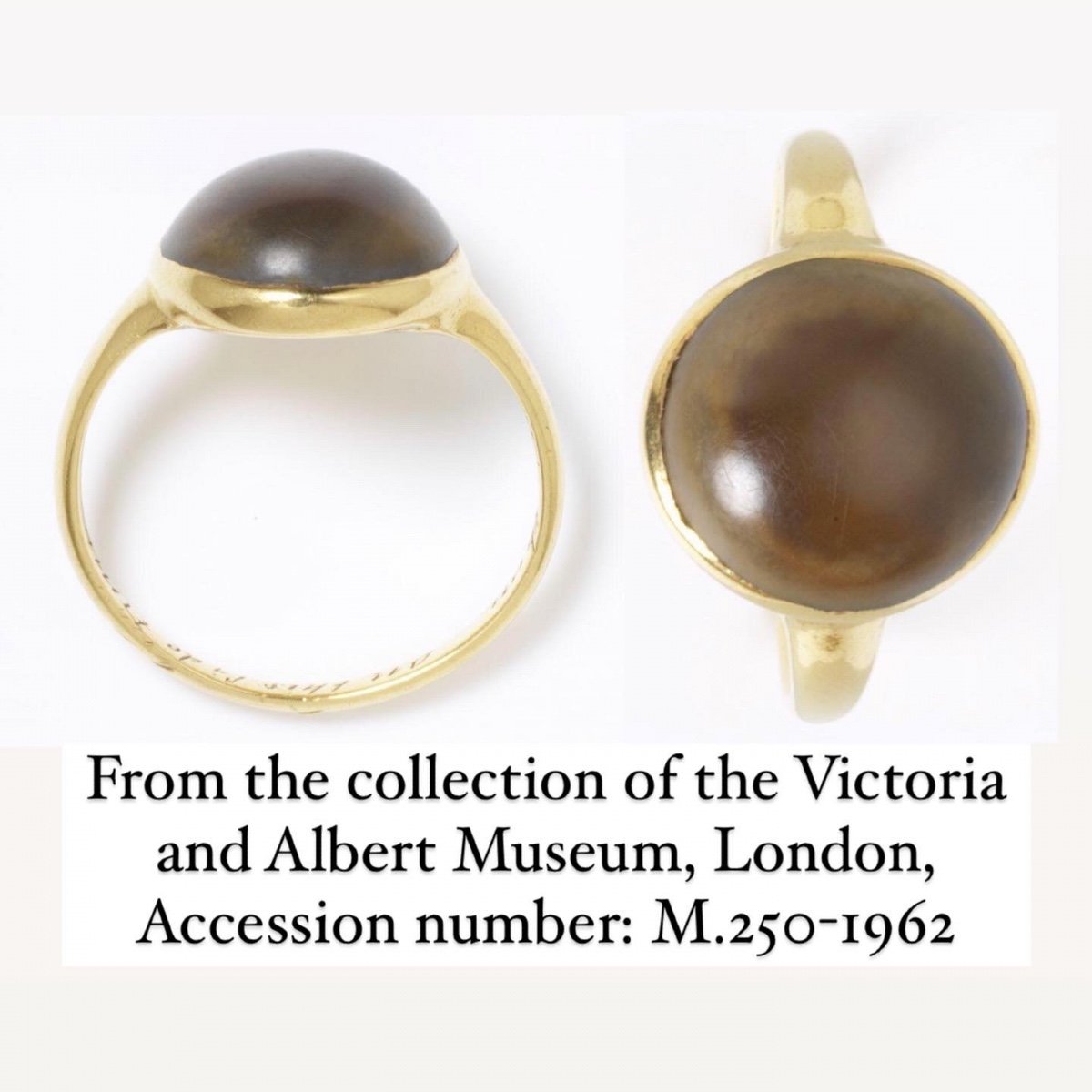
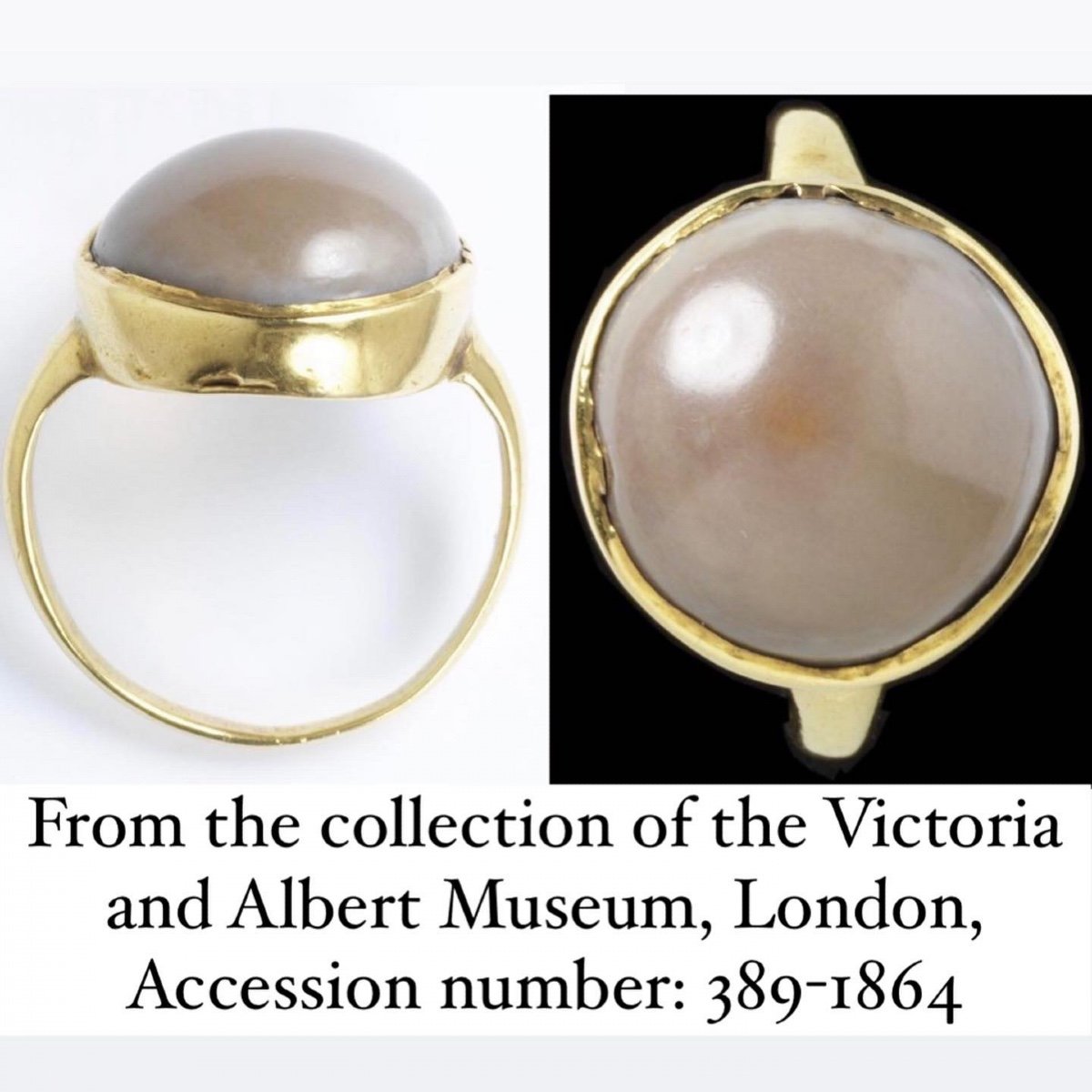
Two similar examples can be found in the collection of the Victoria and Albert Museum, accession numbers: M.250-1962 & 389-1864.
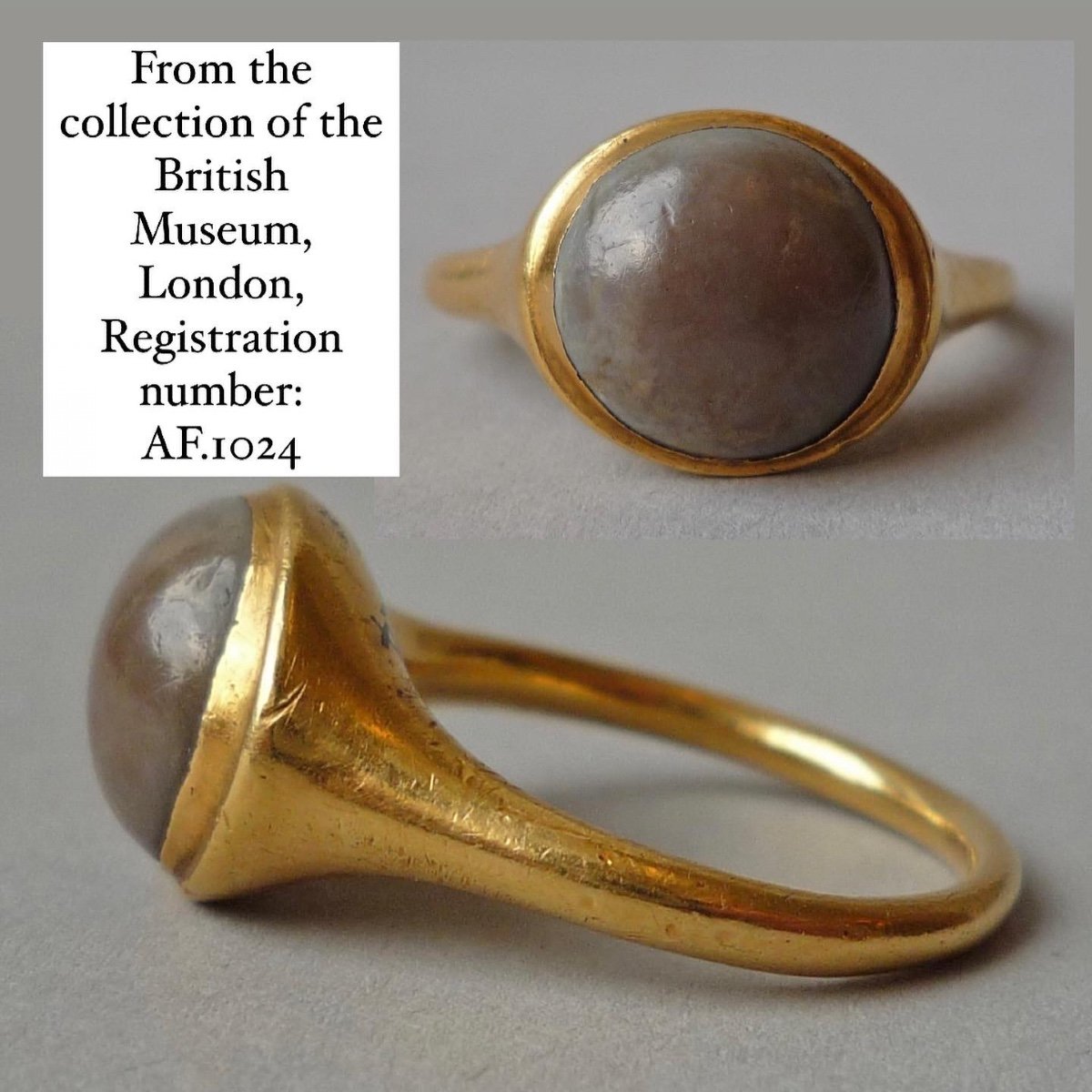
The British Museum has a similar example, registration number: AF.1024.
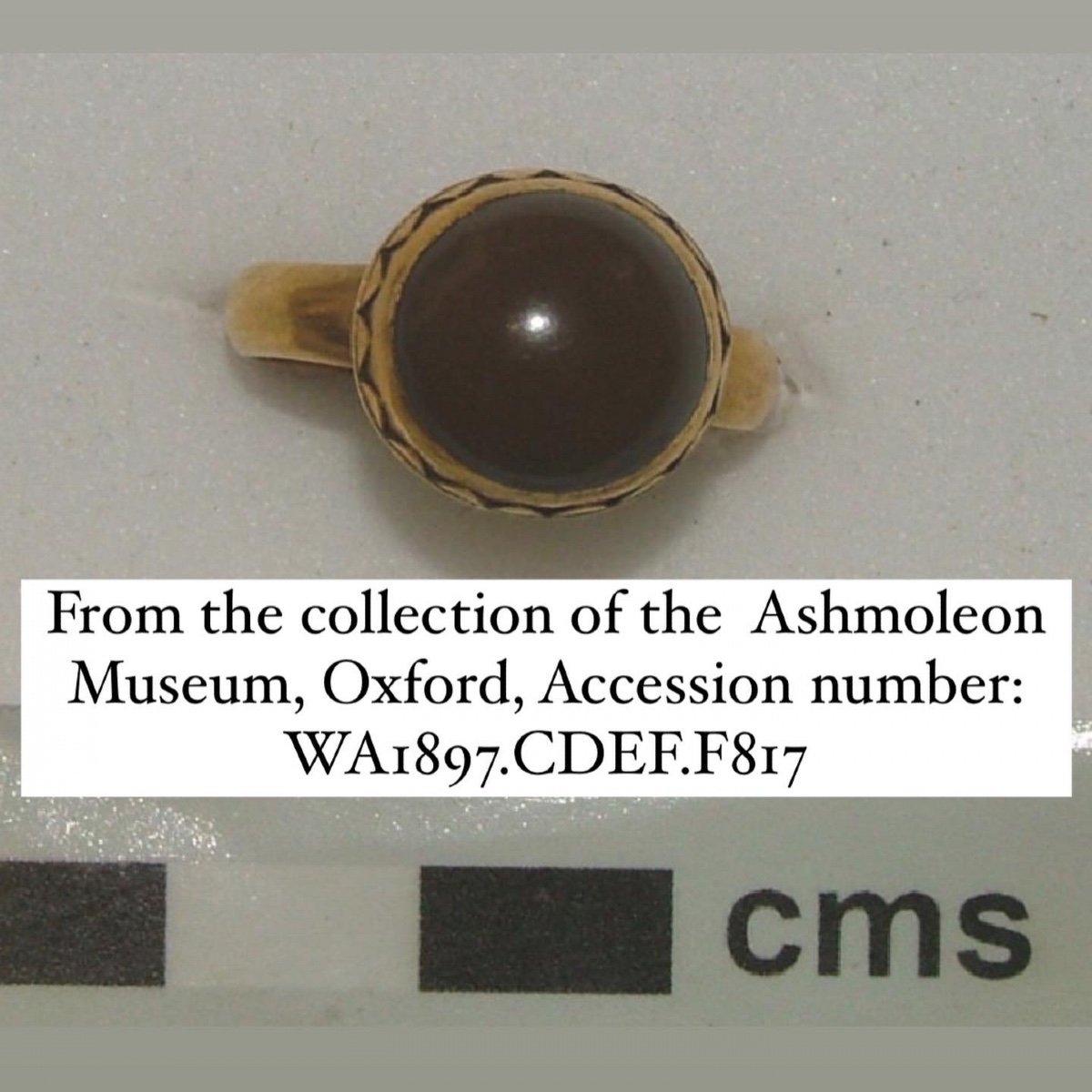
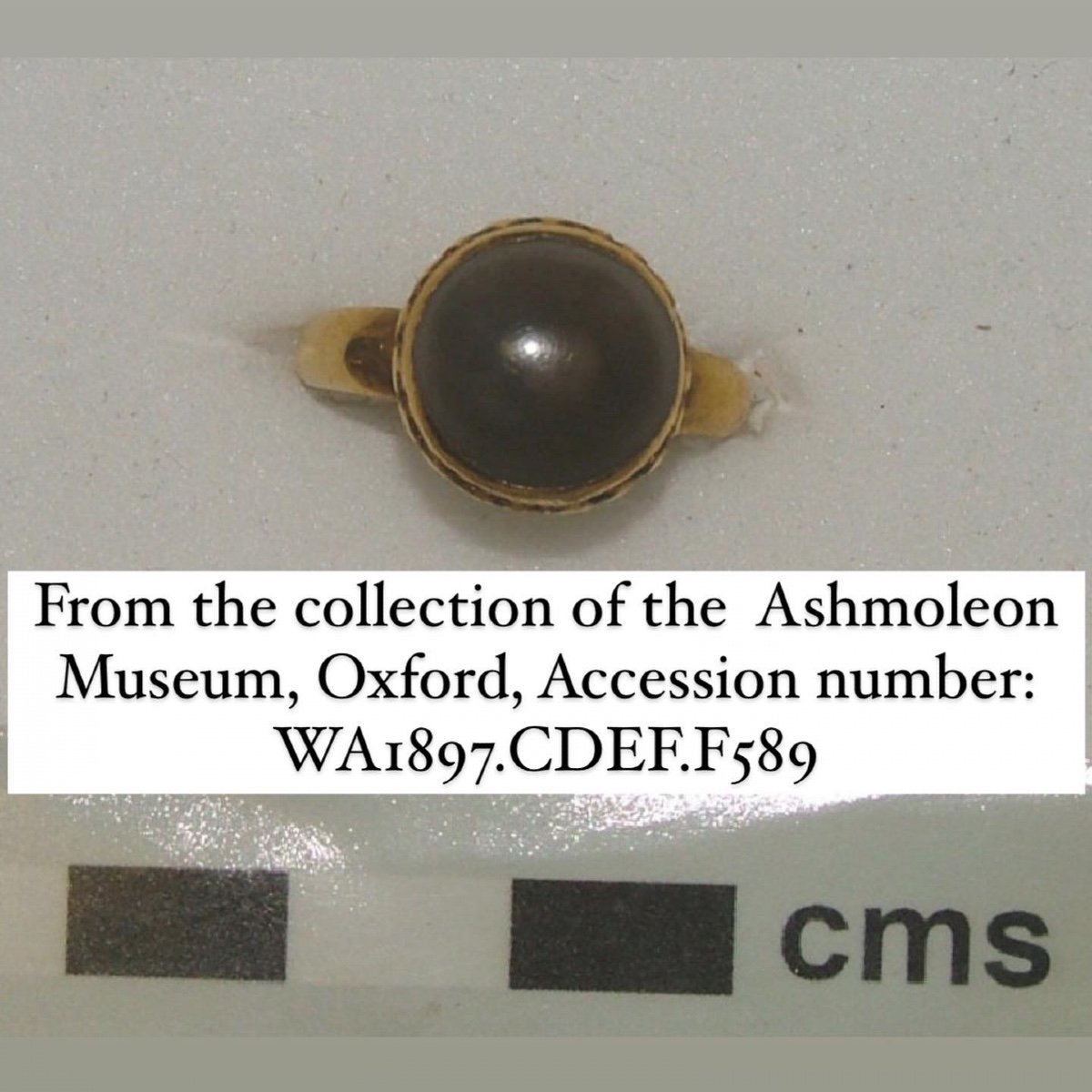
The Ashmoleon Museum has two examples, accession numbers: WA1897.CDEF.F817 & WA1897.CDEF.F589.
William Shakespeare’s, As You Like It, circa. 1599;
Sweet are the uses of adversity, Which, like the toad, ugly and venomous, Wears yet a precious jewel in his head.
Toadstones are mythical stones that were thought to be found inside the head of a toad. They were believed to sweat, change colour or even heat up in the presence of poison. It was thought that a toadstone placed on bites from snakes, insects, spiders and shrews would extract poison from the wound. They were thought to bring good luck and ward off evil whether in the present life or in the afterlife.
The Book of Secrets from the 13th century recommends swallowing the stone to 'cleanse the bowels of filth and excrements'. The stone could then be retrieved and used again.
They were often set as amulets and talismans, a practice that continued in Europe until the 18th century.
Toadstones are actually the button-like fossilised teeth of Lepidotes, an extinct genus of fish common in the Jurassic and Cretaceous Periods, 200 to 100 million years ago.
20 000 €
Period: 16th century
Style: Renaissance, Louis 13th
Condition: Good condition
Material: Gold
Reference (ID): 1061930
Availability: In stock
Print