


Comical Face Cameo Ring In Brescia Marble, 17th–18th Century; 19th Century Mount
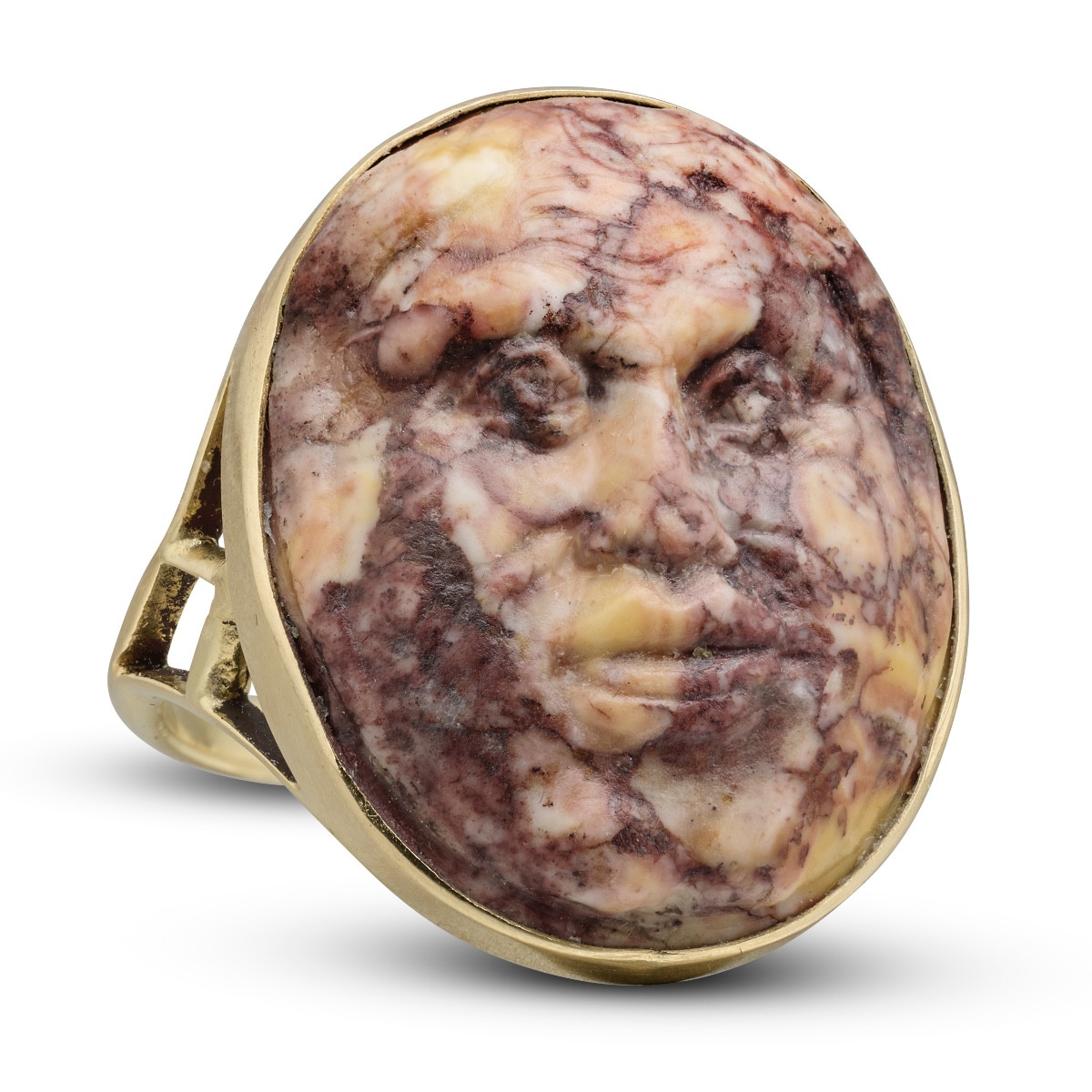
Comical Face Cameo Ring in Brescia Marble.
Europe (cameo), 17th–18th century; Europe (mount), 19th century.
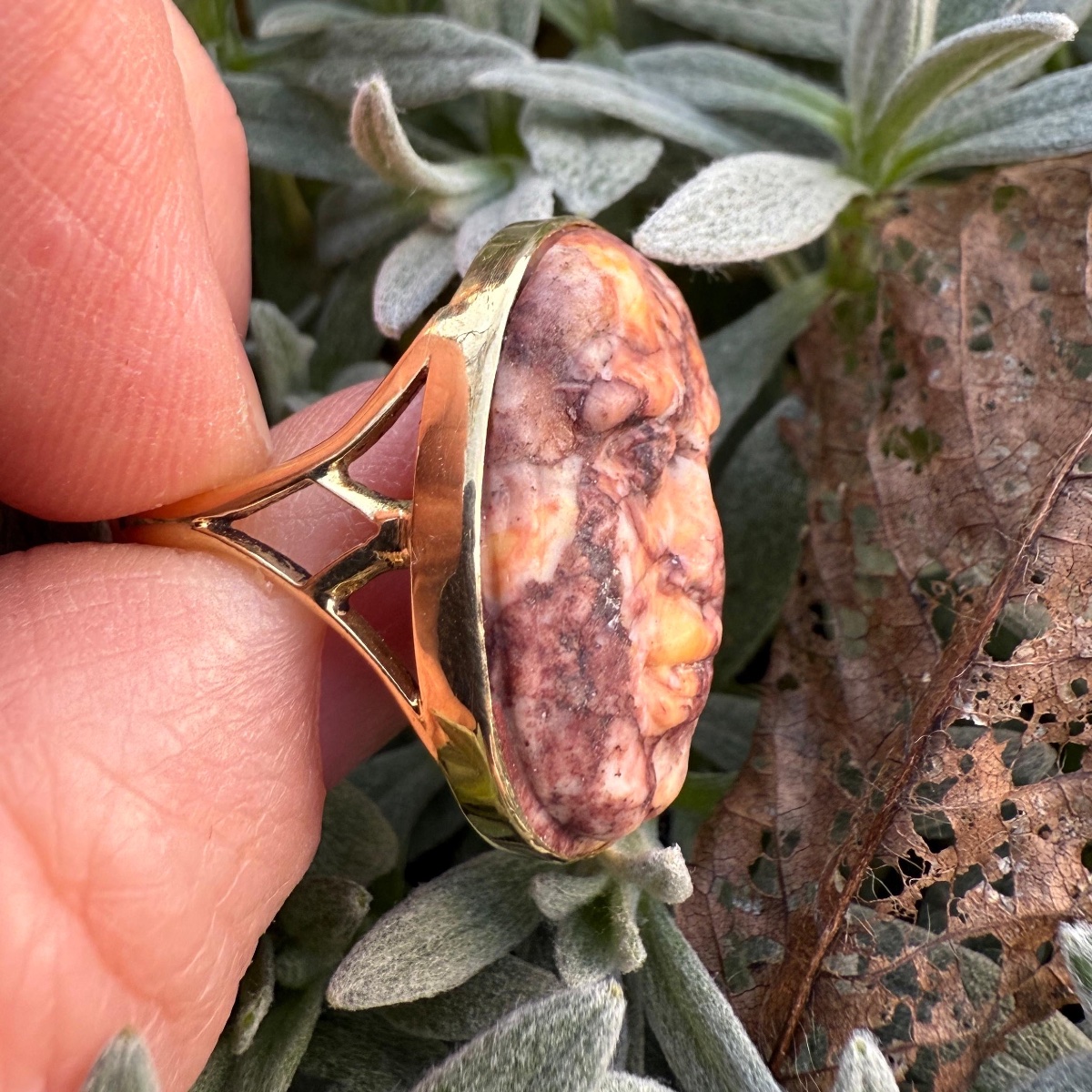
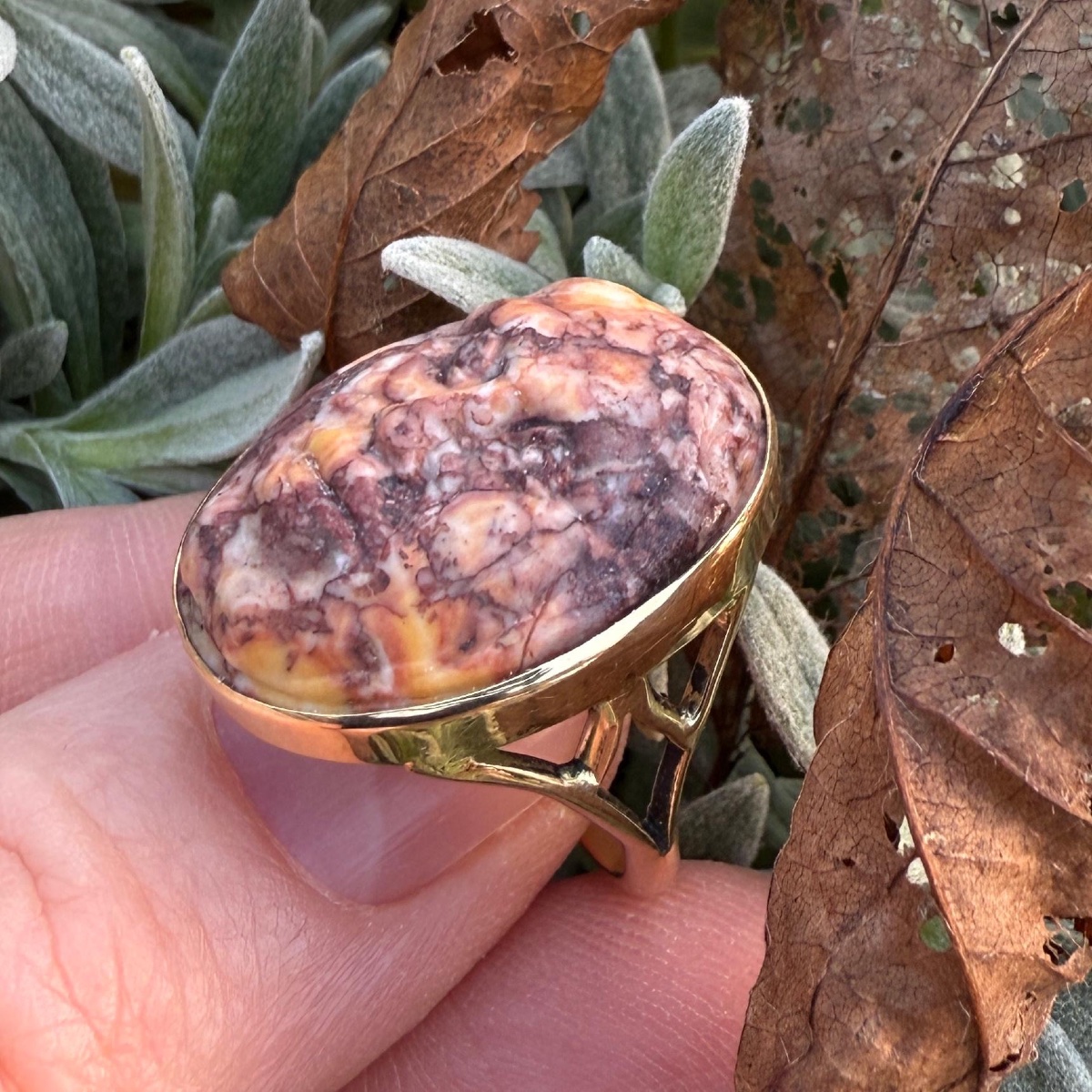
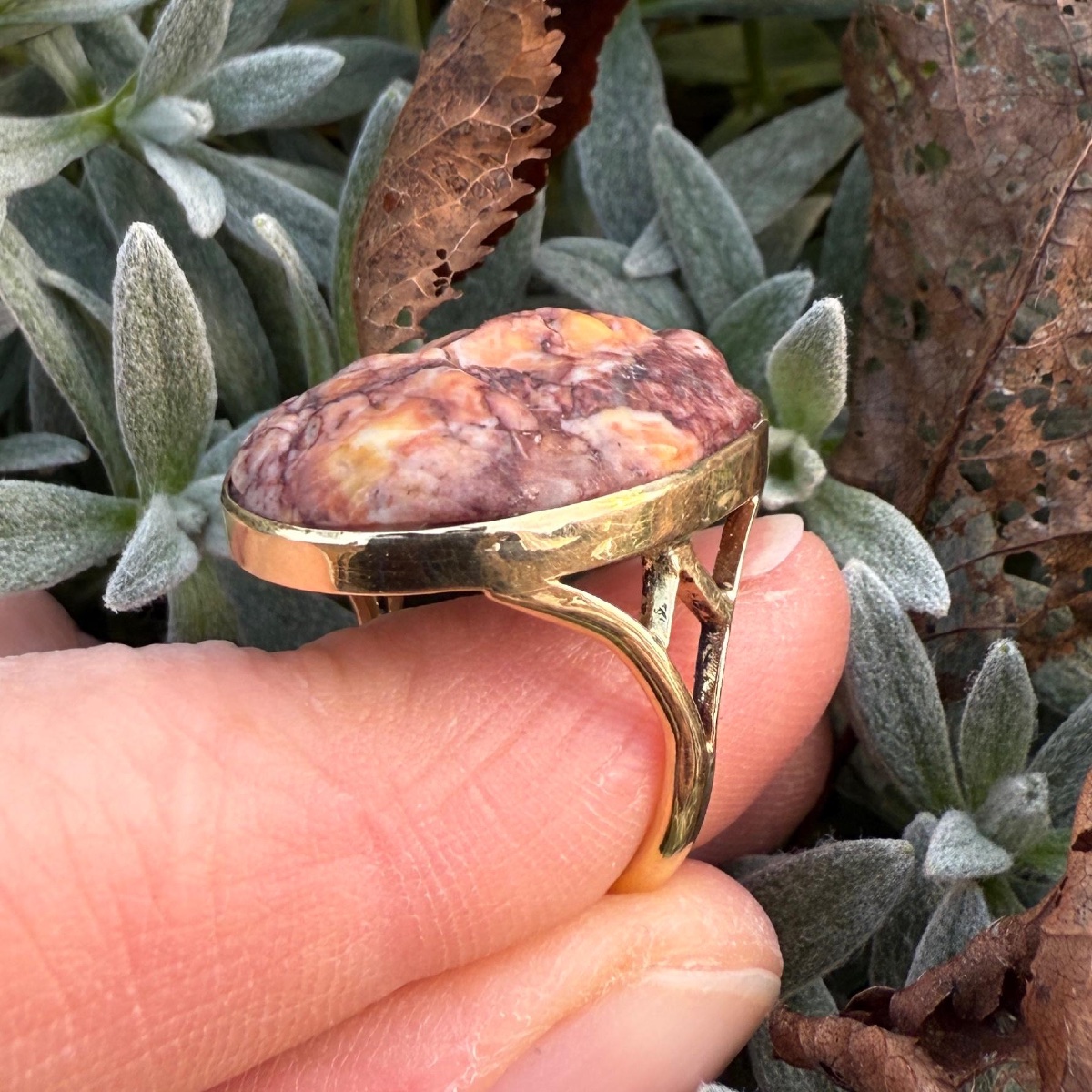
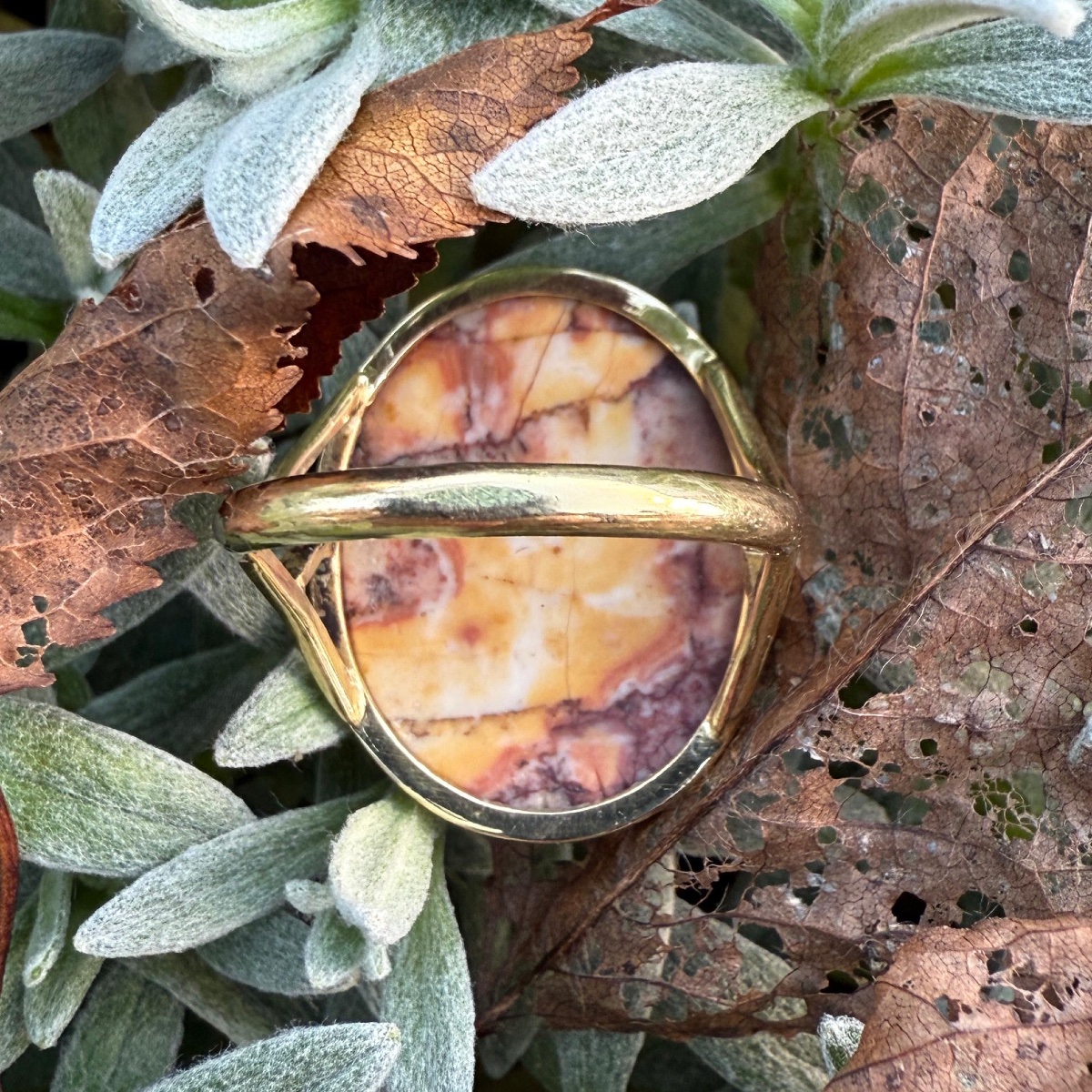
Materials and technique: Brescia marble, carved in cameo relief and polished; gold ring mount, plain collet setting with openwork shoulders, open-backed.
Ring size: P (UK) / 7.5 (US) / 56 (EU)
Measurements: Cameo: 2.4 × 2.0 cm
Weight: 7.8 grams
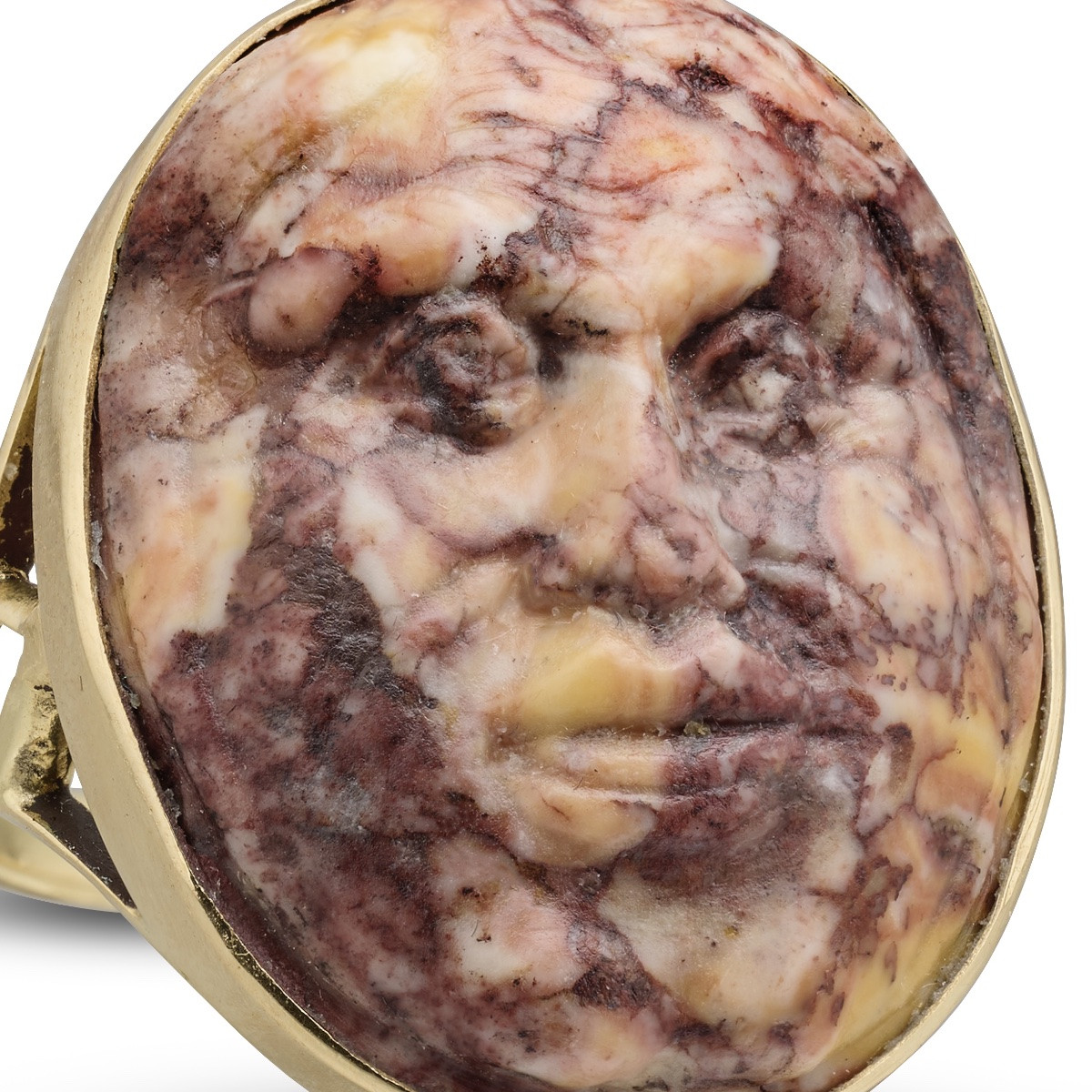
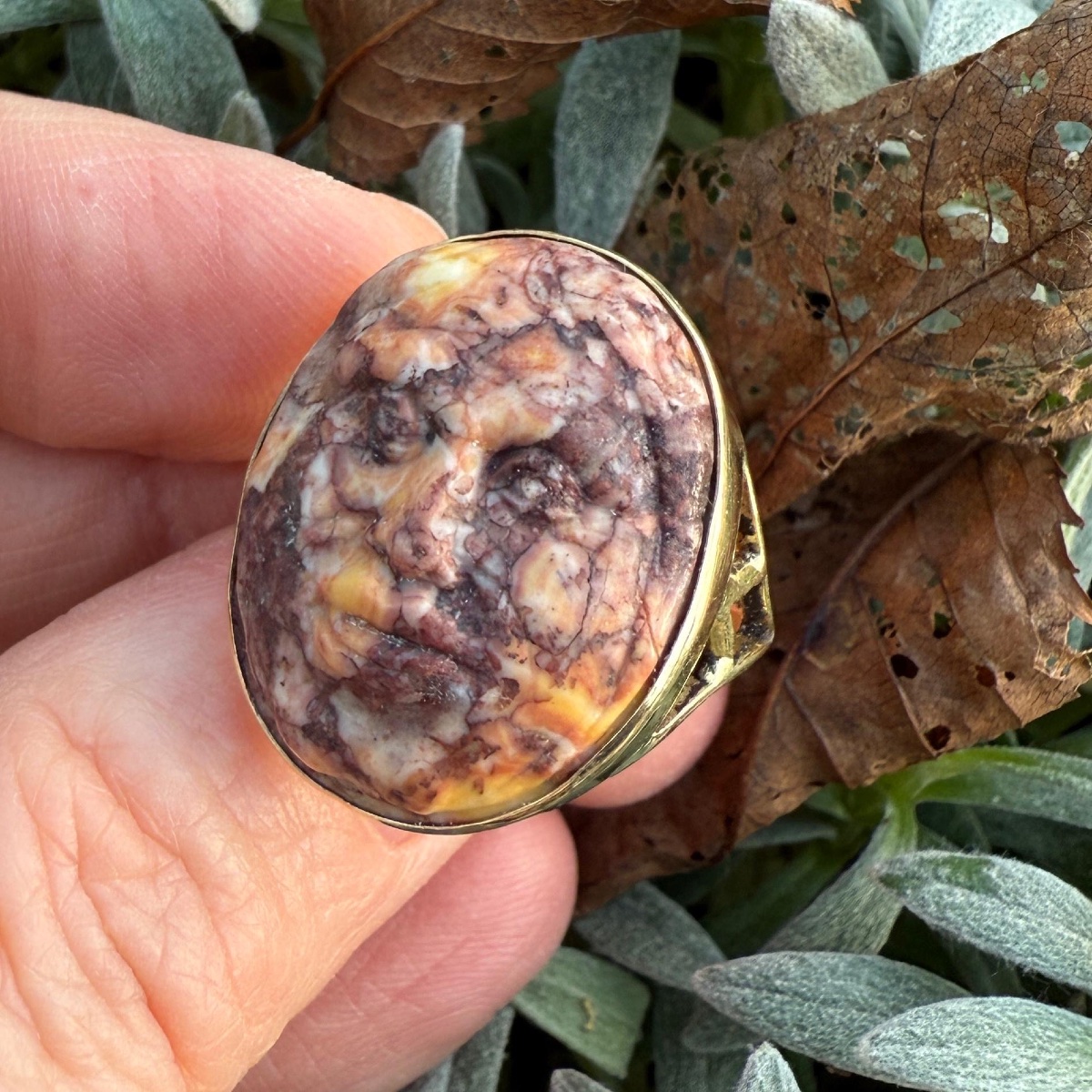
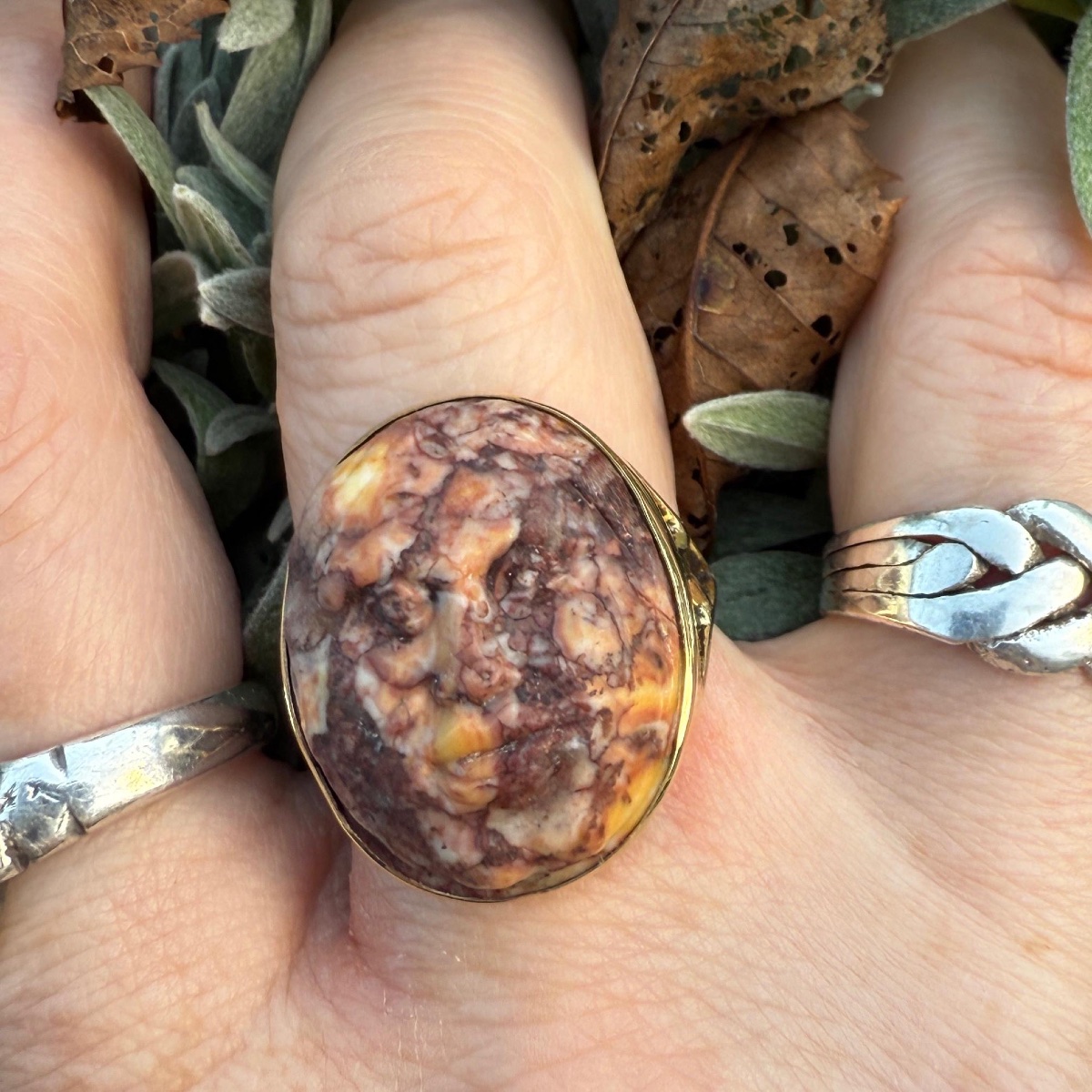
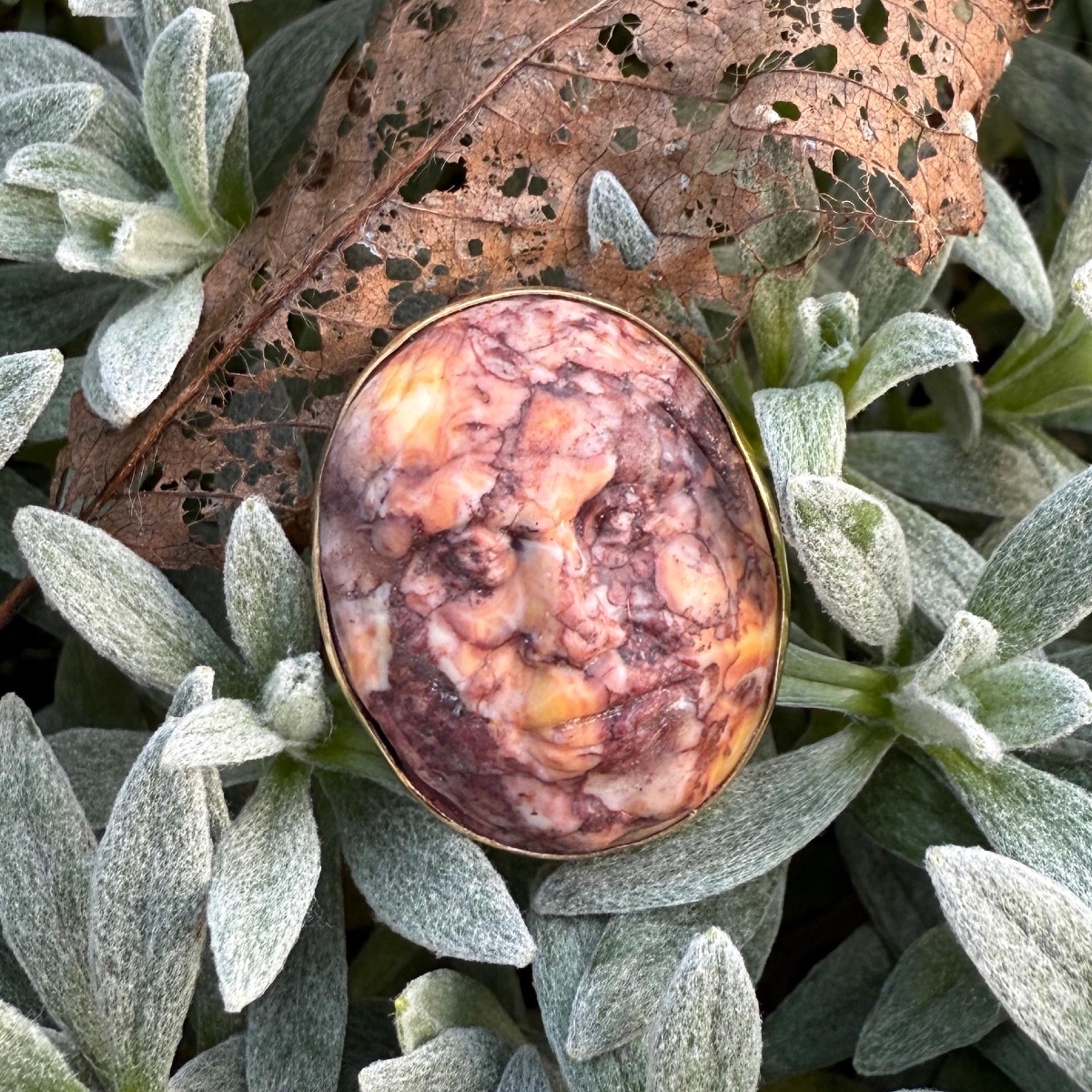
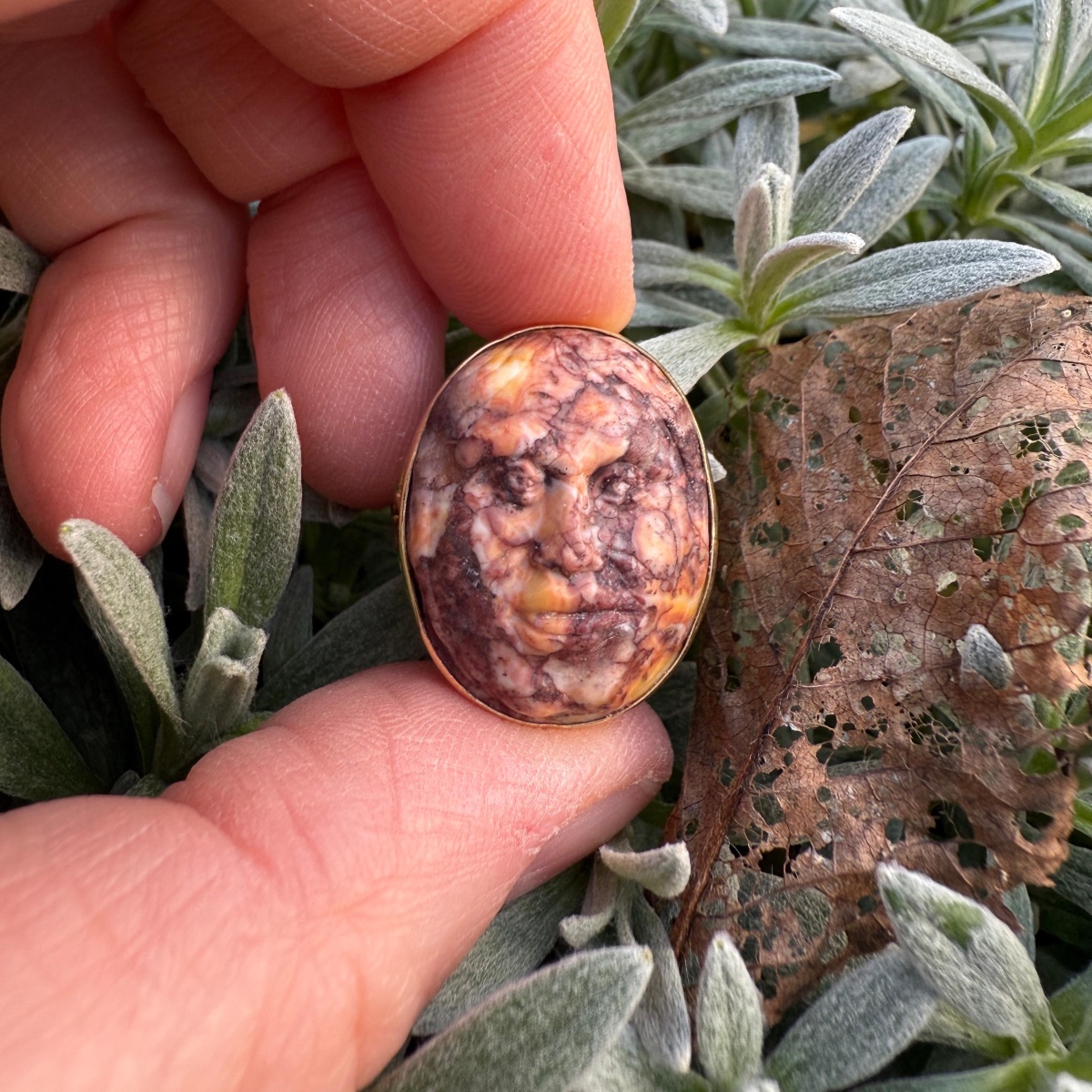
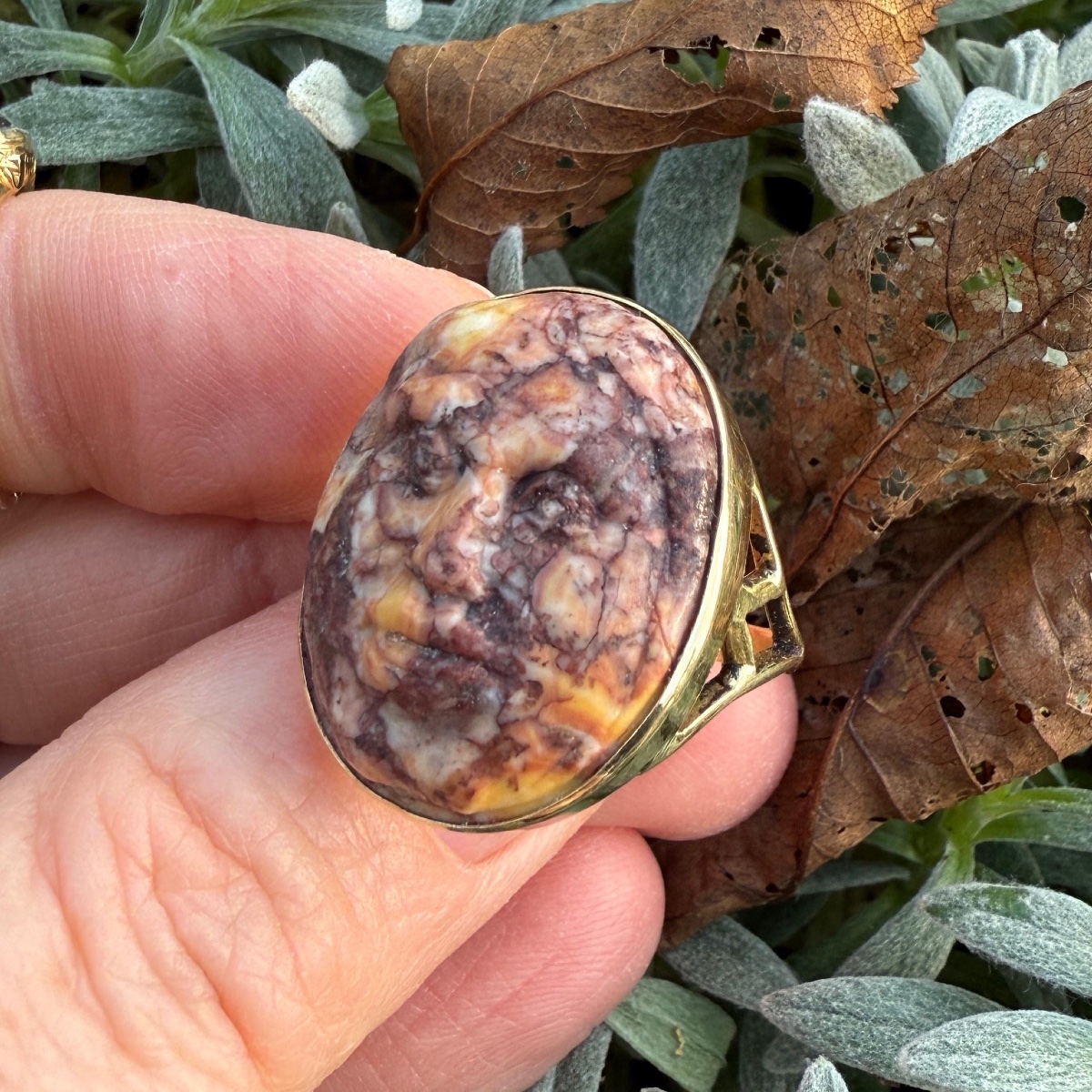
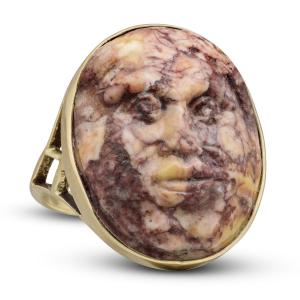
The ring is set with an oval cameo carved from Brescia marble, its variegated palette of cream, honey and plum-purple veining providing an animated ground for the carving. The face is modelled in low relief with an exaggerated, humorous physiognomy: wide open eyes, parted lips, and a protruding tongue, the features emerging from the lively mottling of the stone. The cameo is secured within a gold collet, the mount constructed with pierced shoulders that rise to the bezel before tapering into a plain shank; the setting is open-backed.
This kind of grotesque or “comic mask” imagery sits comfortably within early modern taste for the witty, the curious, and the theatrically expressive—subjects that bridged the worlds of ornament, collecting, and intimate personal adornment. In this respect, the present cameo has striking affinities with the Aztec turquoise mask (circa 1500–1521 CE) now in the Tesoro dei Granduchi, Palazzo Pitti: a vividly expressive face embellished with diamond eyes and given renewed status through a European-produced frame and support in gilded silver and enamels added in the 17th century. While differing in material and origin, that celebrated composite object encapsulates the early modern fascination with animated “faces” as portable wonders—works valued as much for their immediacy and humour as for the ingenuity of later European recontextualisation. The present ring may be understood within the same cultural horizon, transforming an earlier carved visage into an intimate jewel in keeping with historicising 19th-century taste.
Europe (cameo), 17th–18th century; Europe (mount), 19th century.
Materials and technique: Brescia marble, carved in cameo relief and polished; gold ring mount, plain collet setting with openwork shoulders, open-backed.
Ring size: P (UK) / 7.5 (US) / 56 (EU)
Measurements: Cameo: 2.4 × 2.0 cm
Weight: 7.8 grams
The ring is set with an oval cameo carved from Brescia marble, its variegated palette of cream, honey and plum-purple veining providing an animated ground for the carving. The face is modelled in low relief with an exaggerated, humorous physiognomy: wide open eyes, parted lips, and a protruding tongue, the features emerging from the lively mottling of the stone. The cameo is secured within a gold collet, the mount constructed with pierced shoulders that rise to the bezel before tapering into a plain shank; the setting is open-backed.
This kind of grotesque or “comic mask” imagery sits comfortably within early modern taste for the witty, the curious, and the theatrically expressive—subjects that bridged the worlds of ornament, collecting, and intimate personal adornment. In this respect, the present cameo has striking affinities with the Aztec turquoise mask (circa 1500–1521 CE) now in the Tesoro dei Granduchi, Palazzo Pitti: a vividly expressive face embellished with diamond eyes and given renewed status through a European-produced frame and support in gilded silver and enamels added in the 17th century. While differing in material and origin, that celebrated composite object encapsulates the early modern fascination with animated “faces” as portable wonders—works valued as much for their immediacy and humour as for the ingenuity of later European recontextualisation. The present ring may be understood within the same cultural horizon, transforming an earlier carved visage into an intimate jewel in keeping with historicising 19th-century taste.
3 300 €
Period: 19th century
Style: Renaissance, Louis 13th
Condition: Good condition
Material: Gold
Reference (ID): 1702109
Availability: In stock
Print