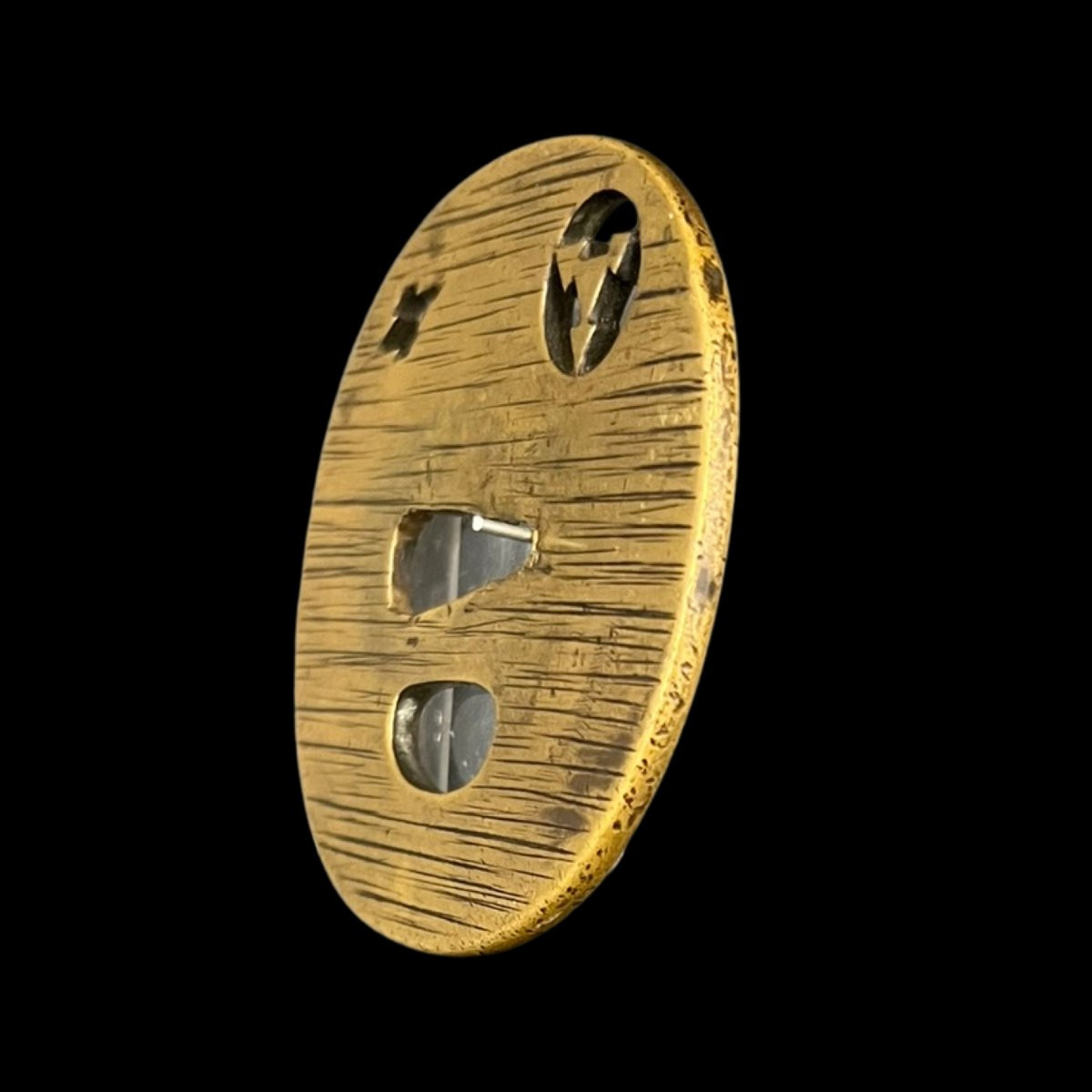


Japanese Tsuba In Shakudō With Stylized Rain Decoration And Openwork Motifs – Edo Period (1603–1868)
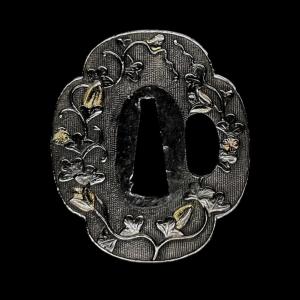
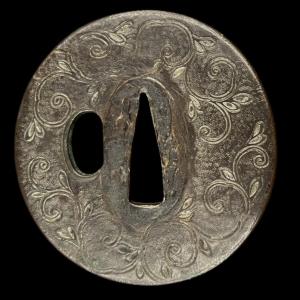
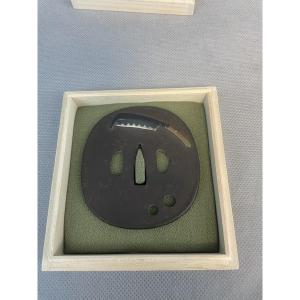
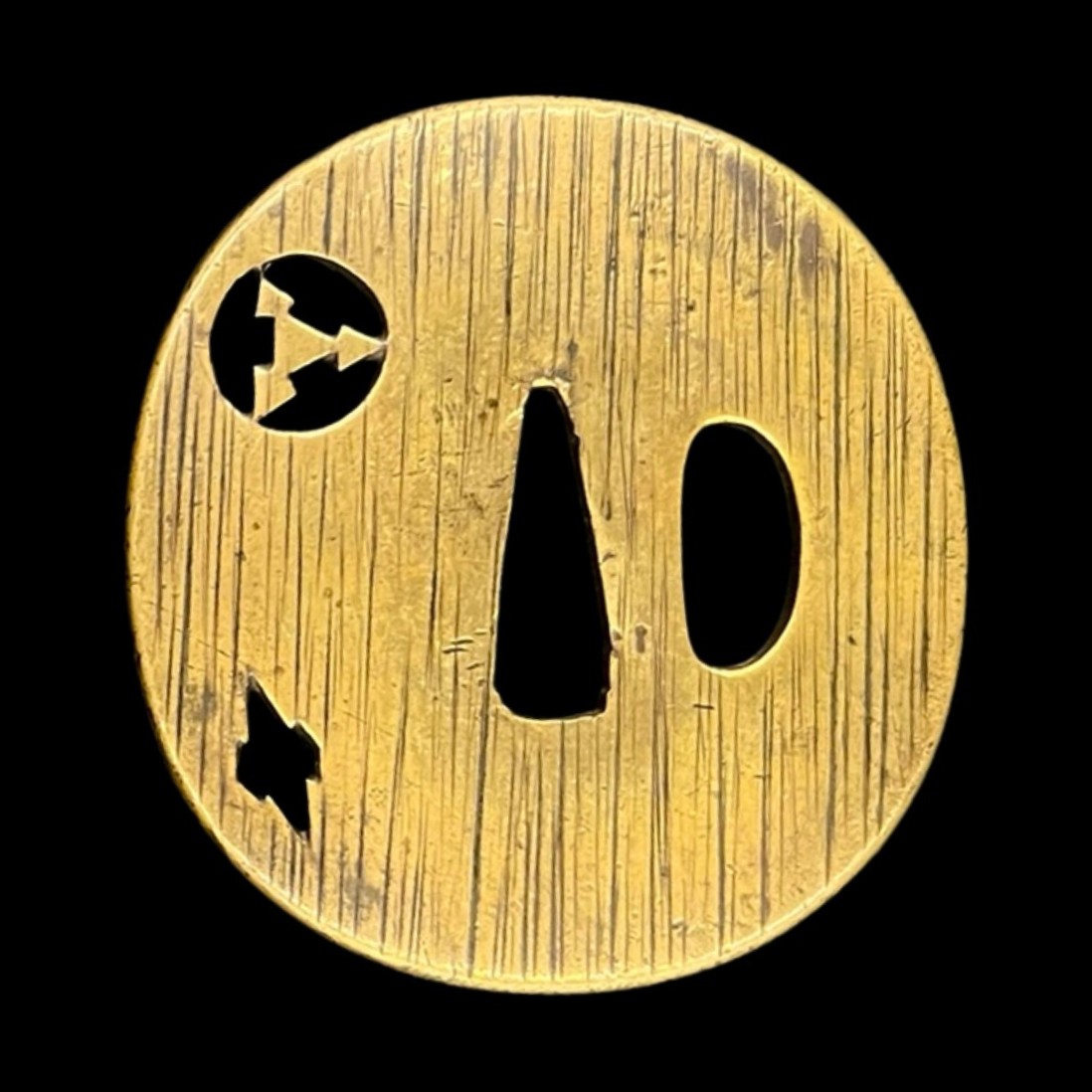
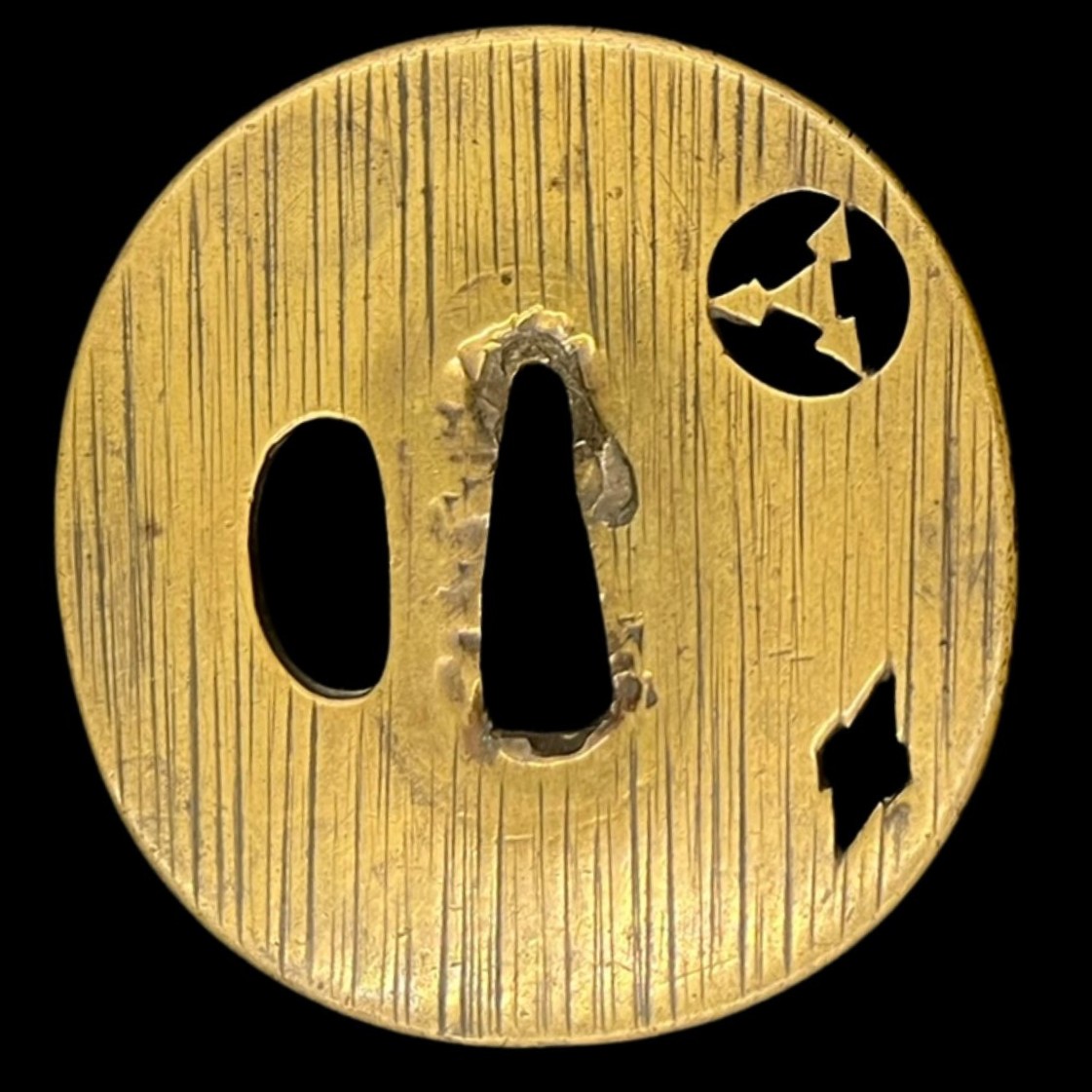
Circular tsuba made of copper alloy with a dark patina (probably shakudō or patinated copper), featuring a simple and refined decoration.
The surface is worked with fine, regular vertical striations evoking a rain motif (ame-bori), a treatment typical of minimalist-inspired guards from the Edo period.
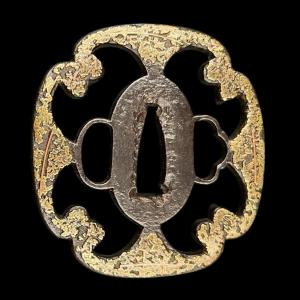
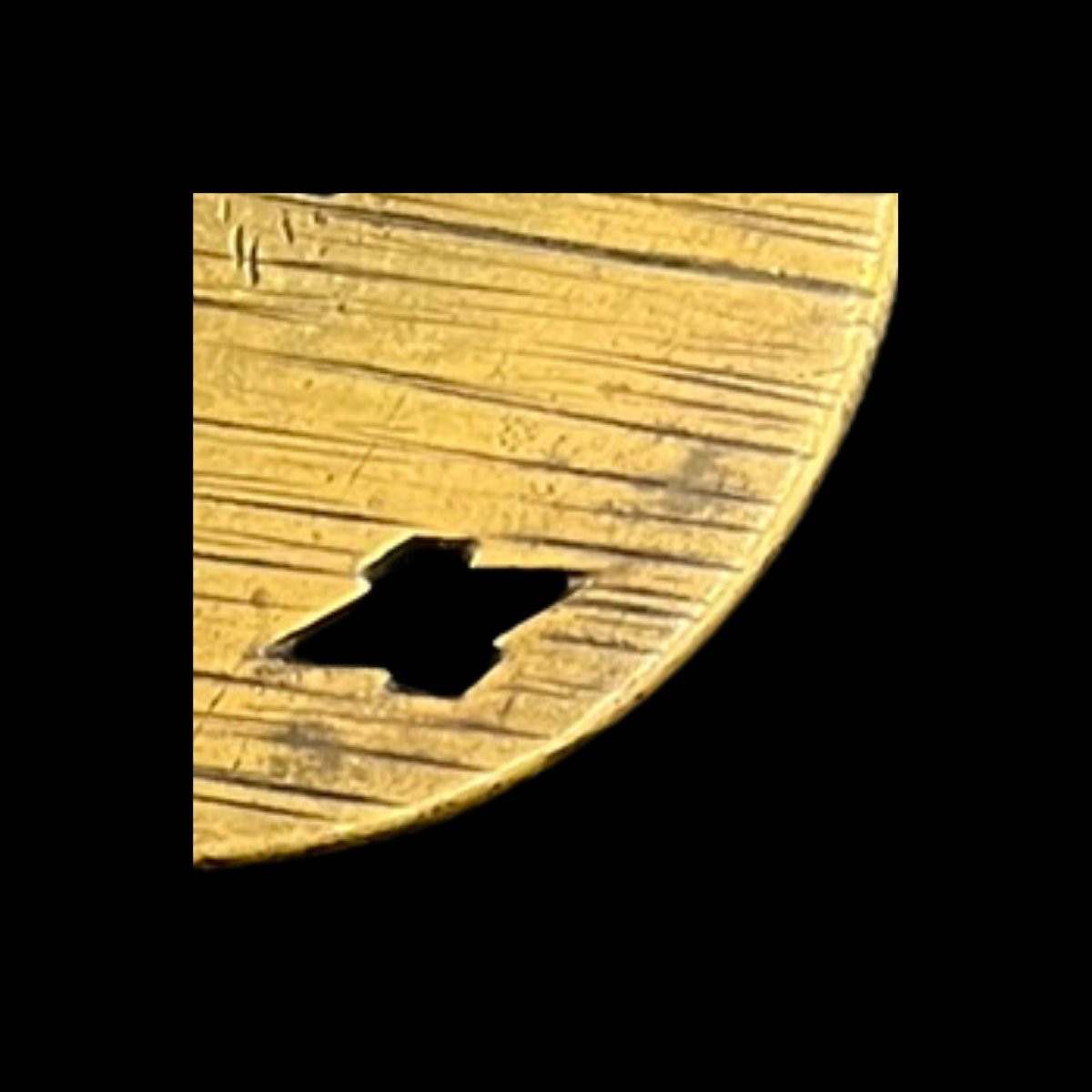
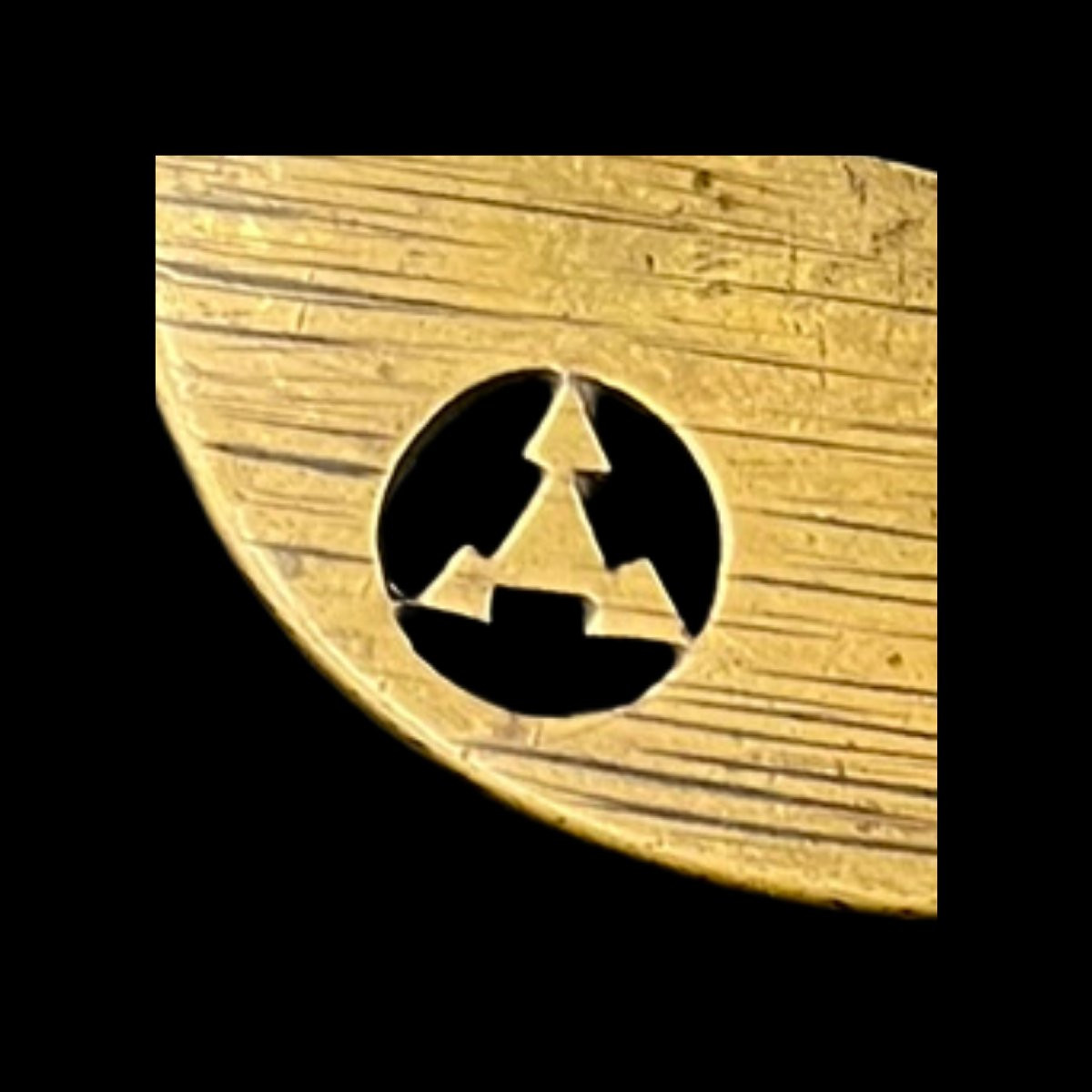
Two asymmetrical openwork panels (sukashi) with stylized forms are present, likely inspired by plant motifs or simplified heraldry.
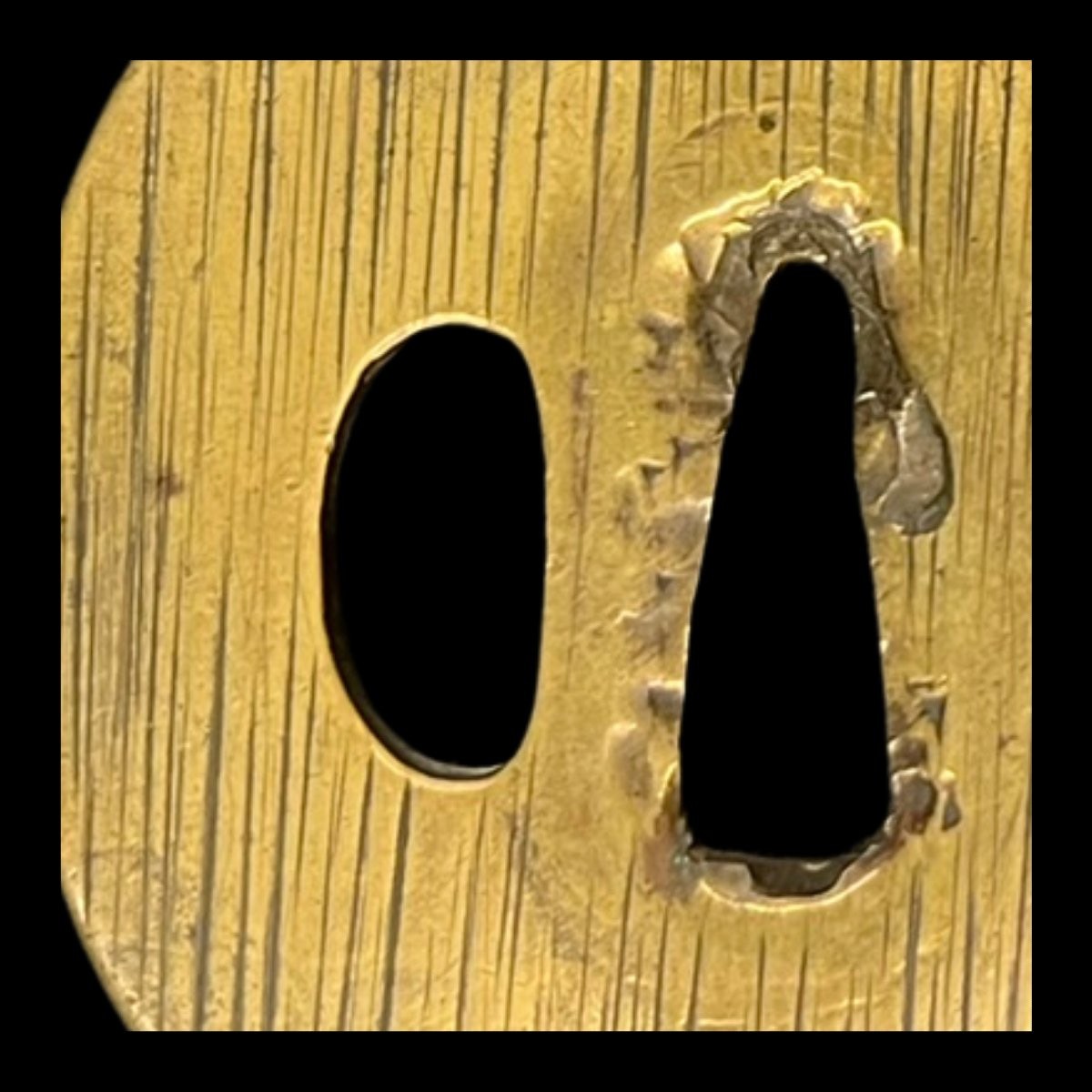
The central nakago-ana shows traces of old fitting (sekigane missing or worn down), indicating an earlier mounting on the blade. The seppa-dai is slightly marked by use.
The overall effect is a wabi-sabi aesthetic characteristic of Edo-period production: simplicity, texture, and interplay of surfaces rather than elaborate figurative decoration.
This work is attributable to schools of the Higo/Nishiga tradition.
The surface is worked with fine, regular vertical striations evoking a rain motif (ame-bori), a treatment typical of minimalist-inspired guards from the Edo period.
Two asymmetrical openwork panels (sukashi) with stylized forms are present, likely inspired by plant motifs or simplified heraldry.
The central nakago-ana shows traces of old fitting (sekigane missing or worn down), indicating an earlier mounting on the blade. The seppa-dai is slightly marked by use.
The overall effect is a wabi-sabi aesthetic characteristic of Edo-period production: simplicity, texture, and interplay of surfaces rather than elaborate figurative decoration.
This work is attributable to schools of the Higo/Nishiga tradition.
350 €
Period: 18th century
Style: Asian art
Condition: Good condition
Length: 7,3 cm
Width: 6,9 cm
Reference (ID): 1722249
Availability: In stock
Print