THIS OBJECT WAS SOLD
Checkered Damask Crinoline Day Dress - Early Second Empire Period, Circa 1855
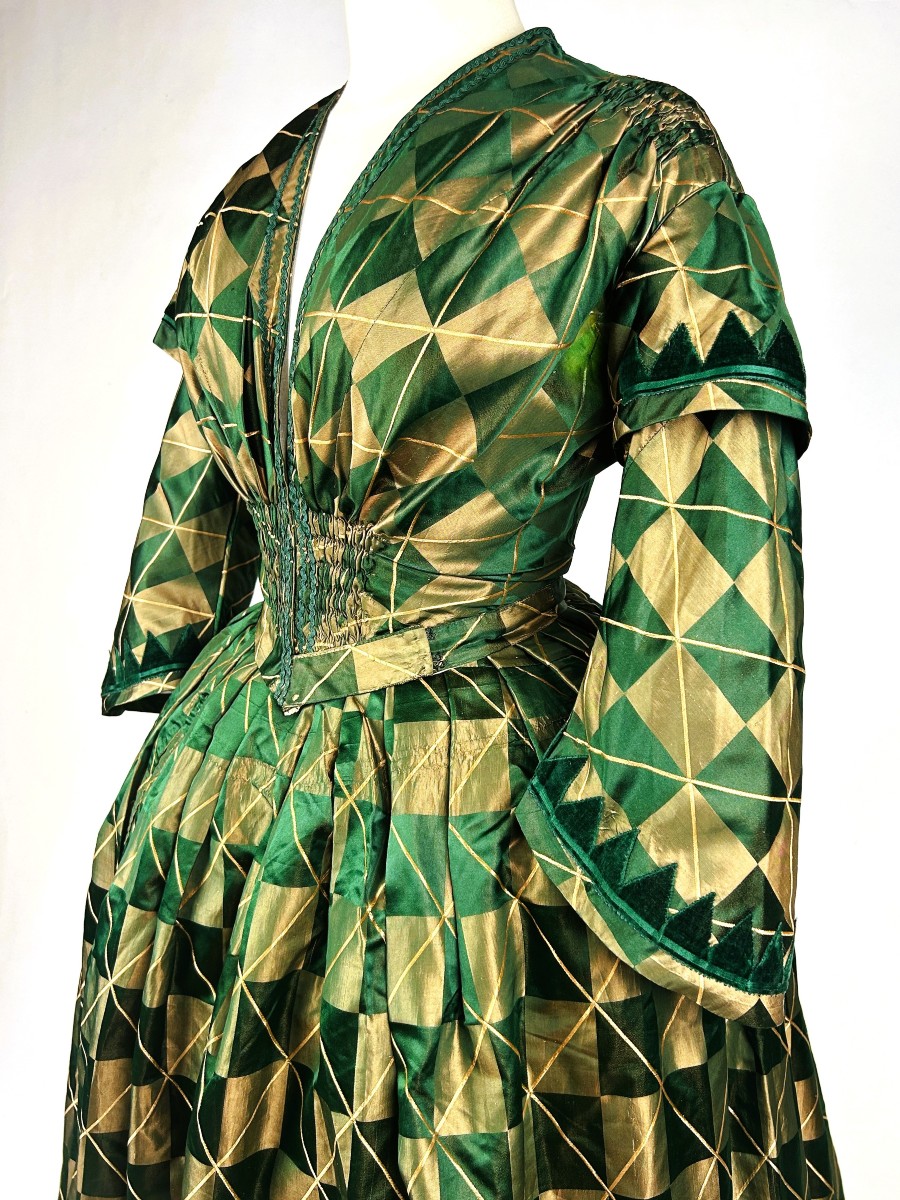
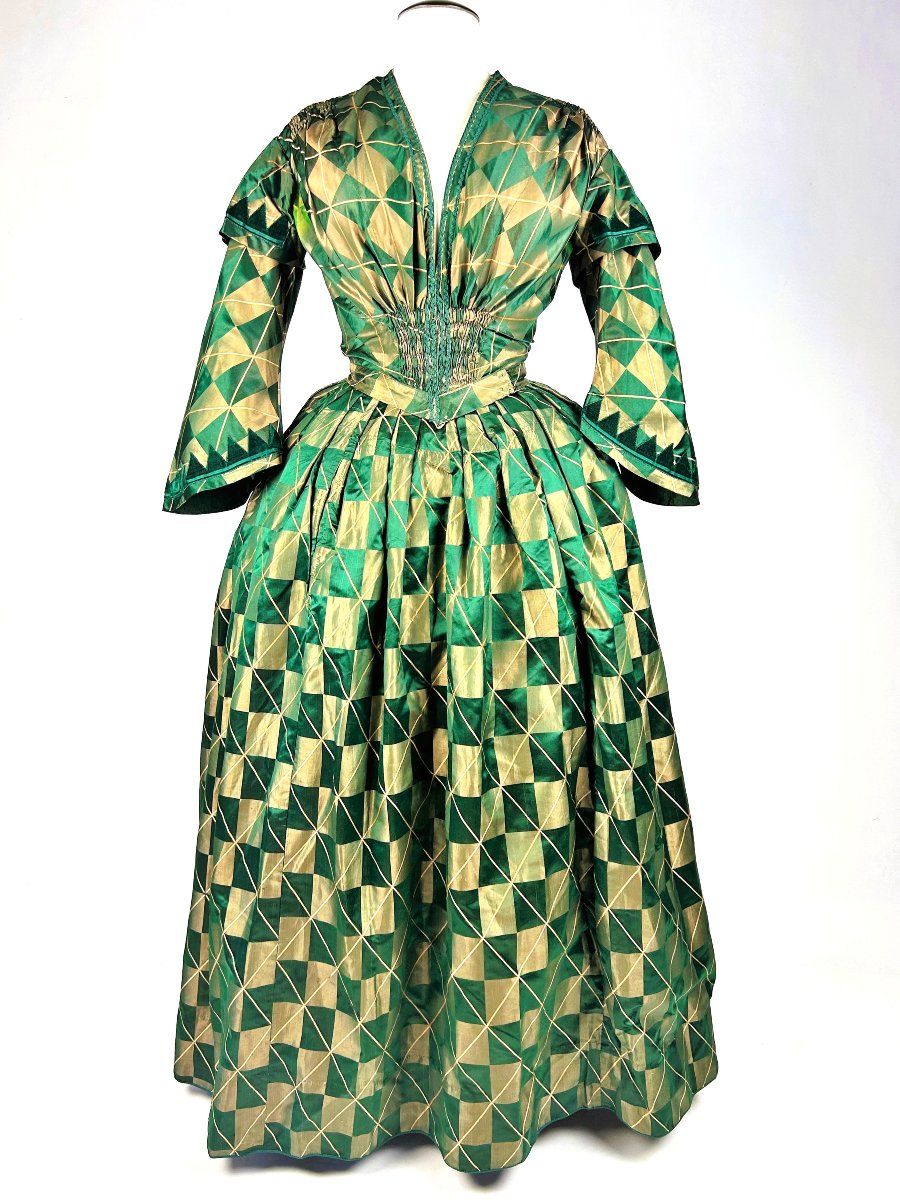
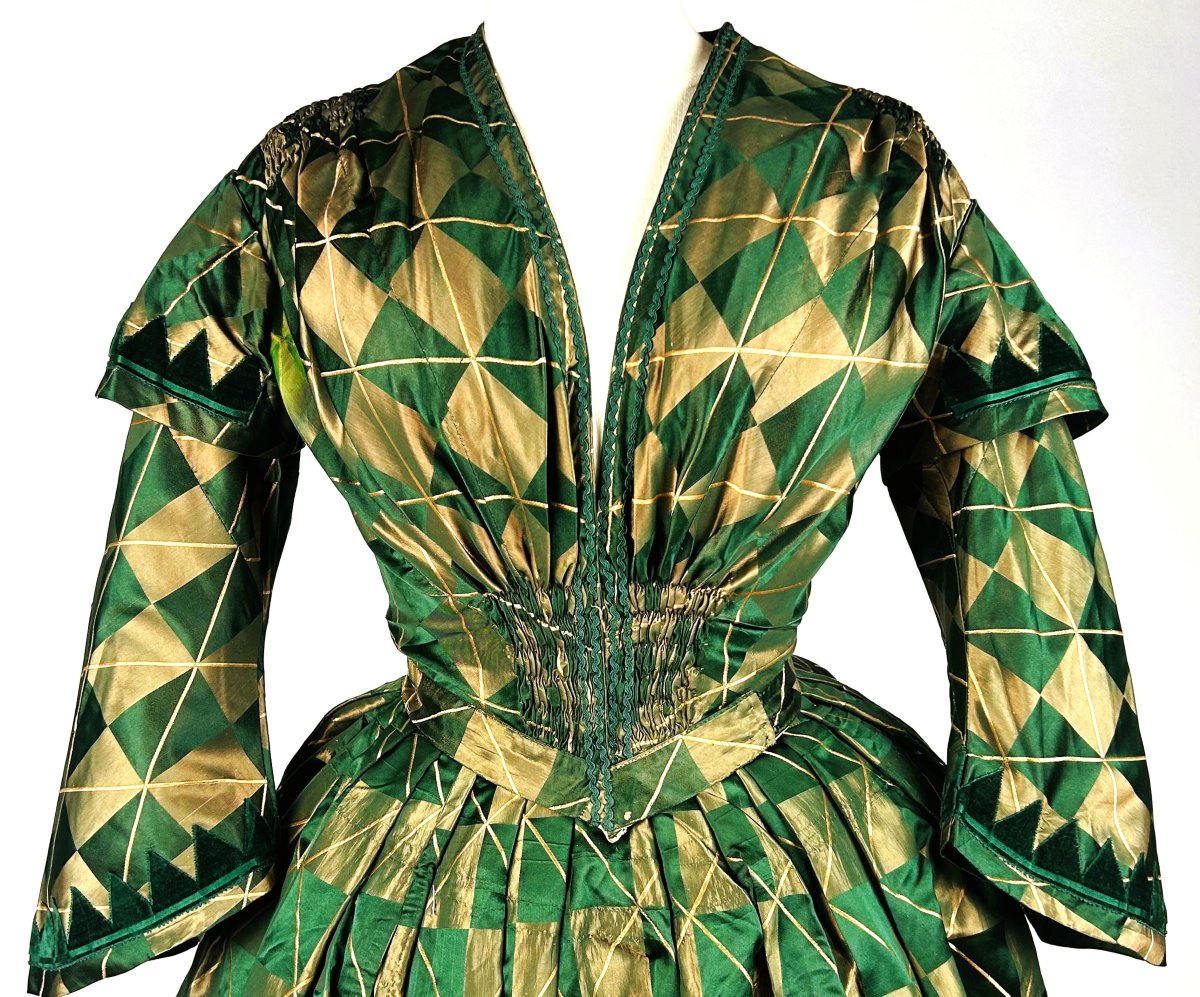

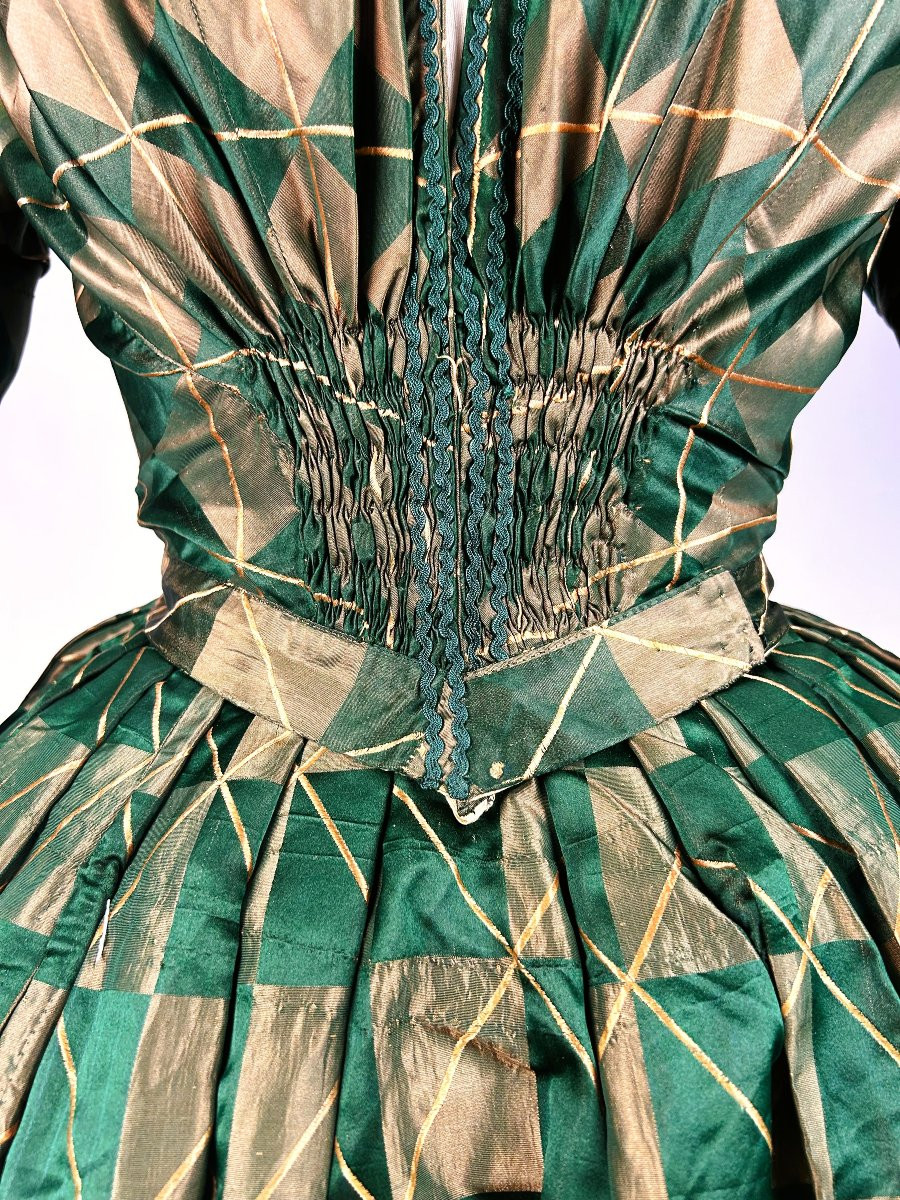


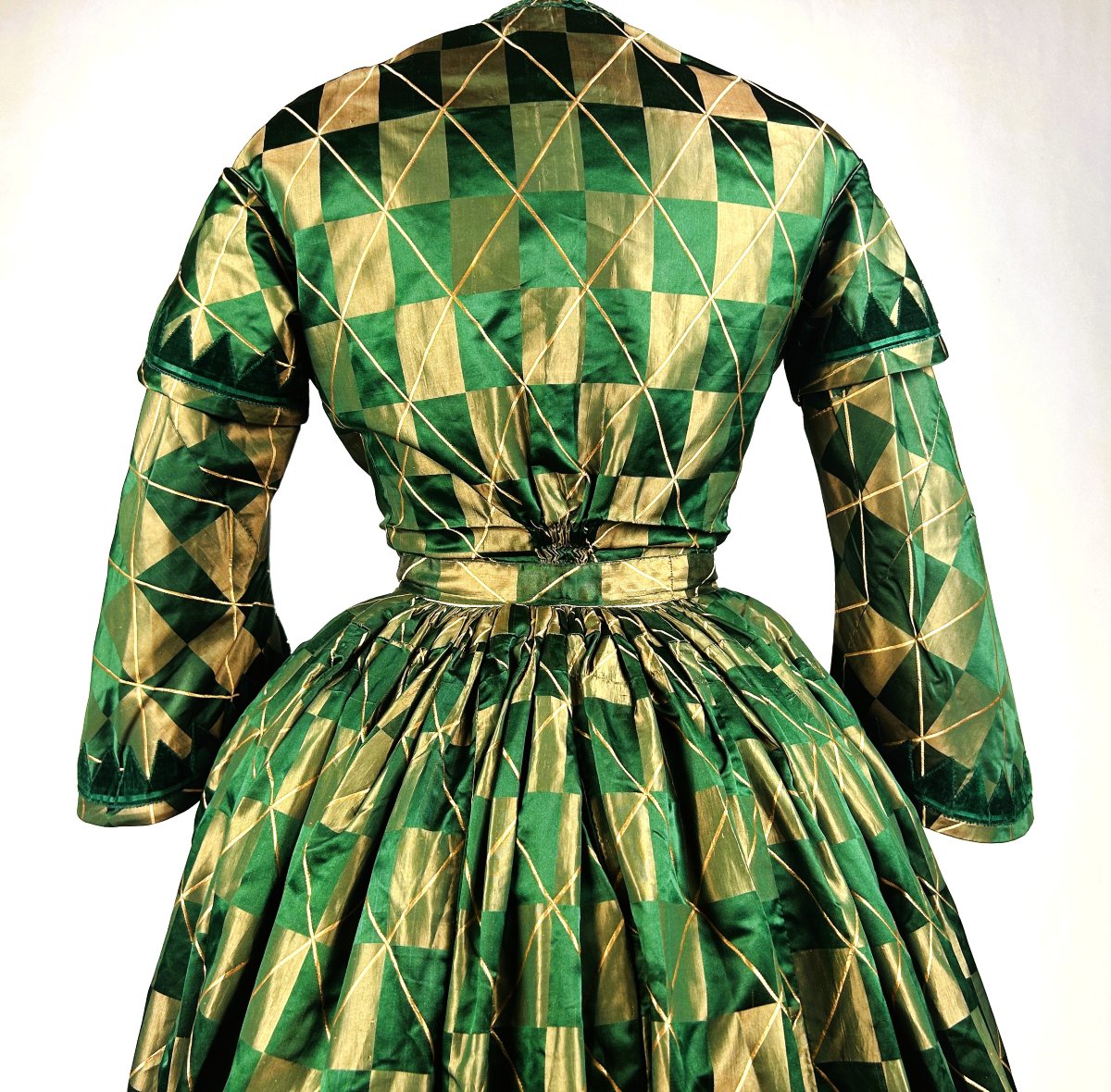
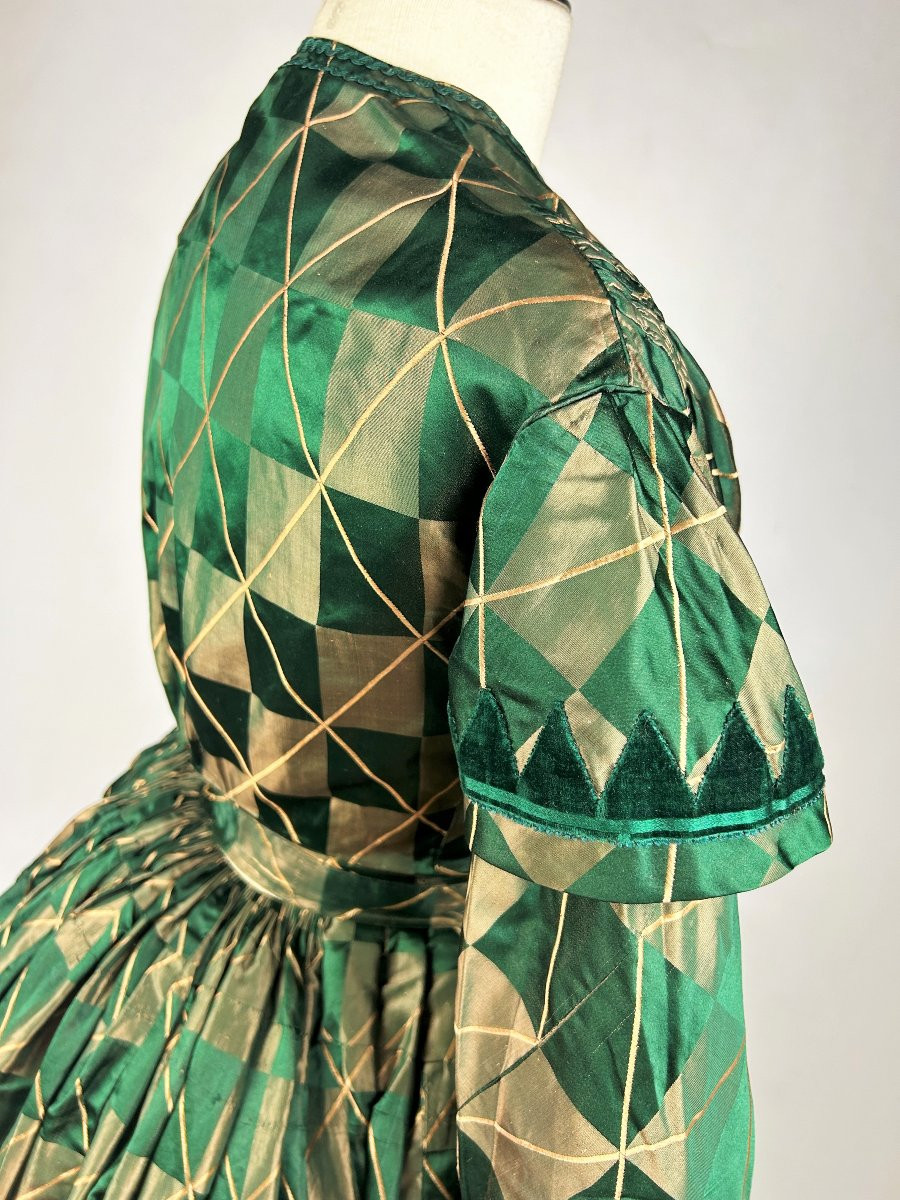

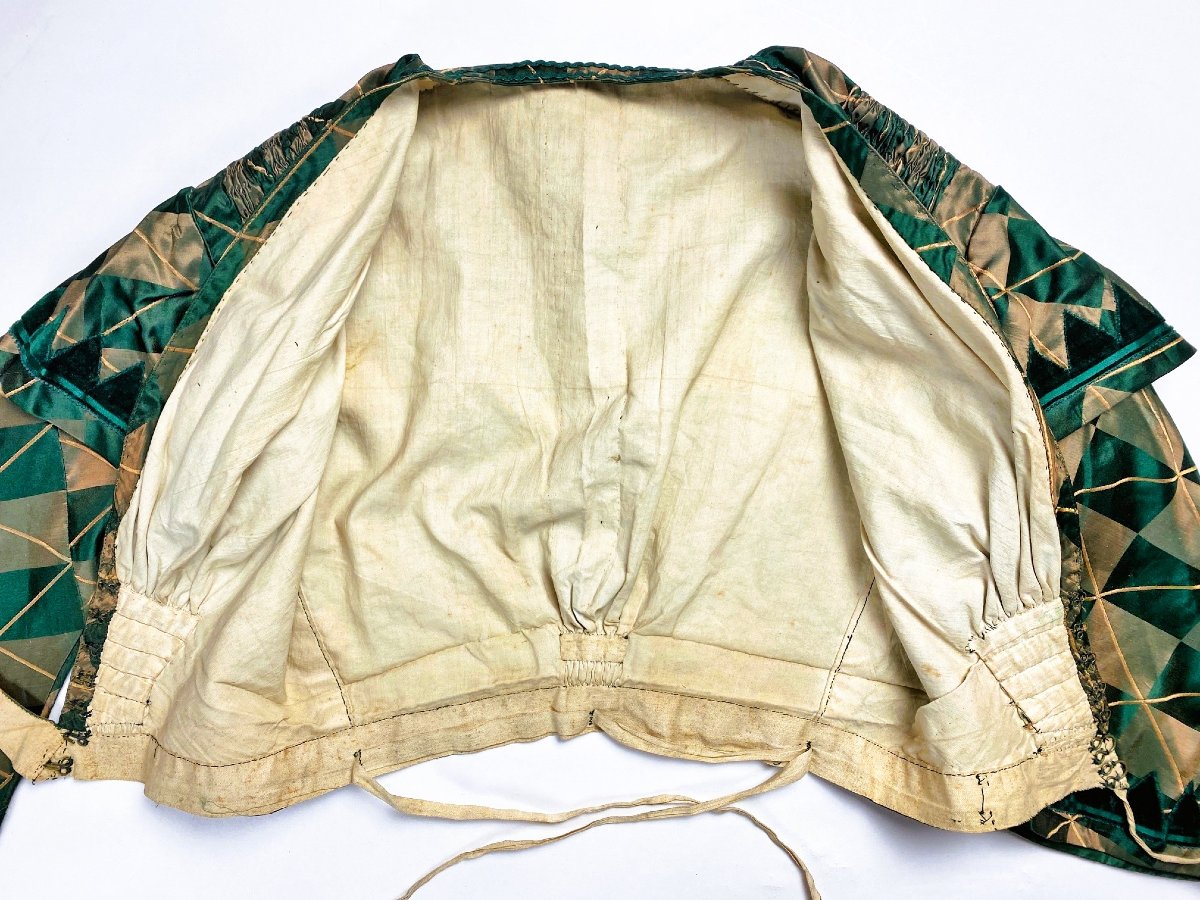
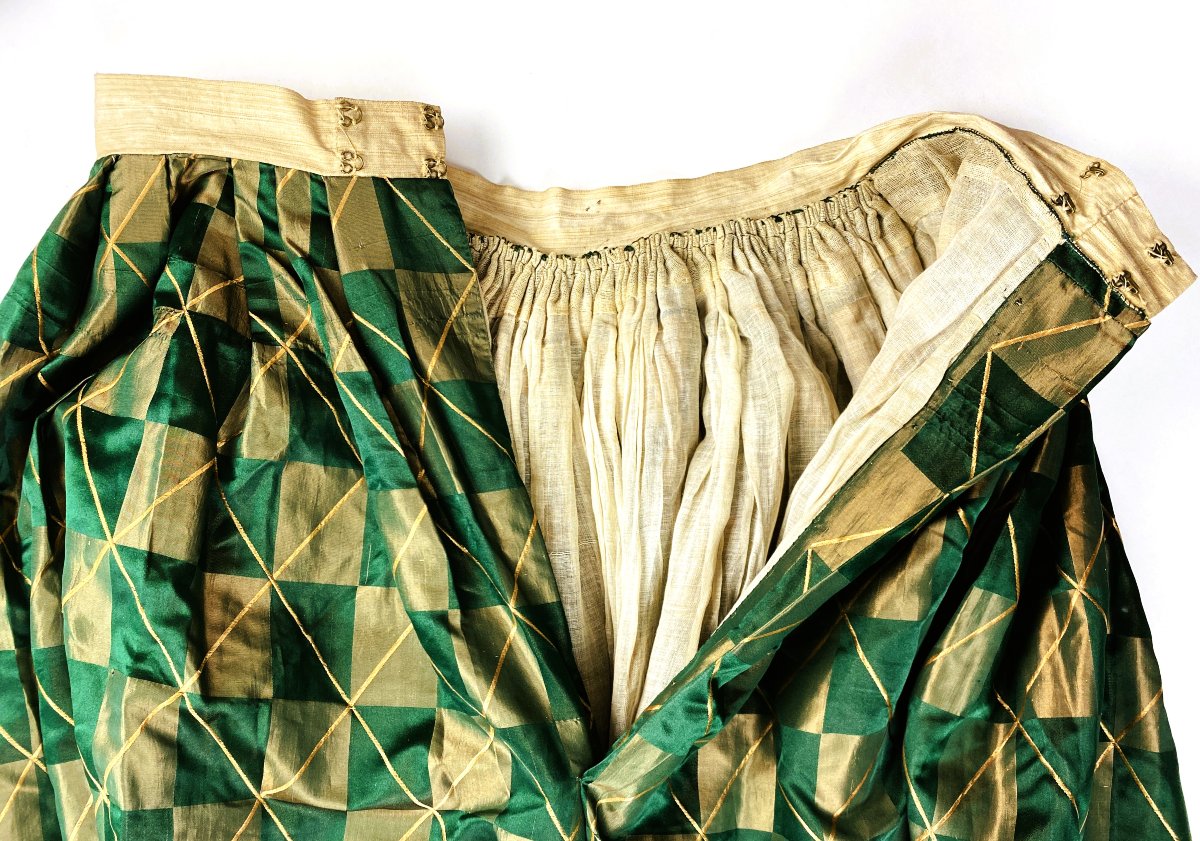


Circa 1855, France or England. A two-piece day dress with a small crinoline, bodice and skirt in green and bronze silk damask, layered with checkerboard patterns. The bodice fastens at the front with long pagoda sleeves, trimmed with Greek key friezes in emerald velvet appliqué and picot braid on the bust. Attractive smocked pleats are worked under the bust and at the shoulders. The full skirt is lined with cream tarlatan and emerald silk taffeta, echoing the sleeve lining. The skirt is mounted on a cream cotton waistband with box pleats at the front and straight pleats at the back. The ensemble is unaltered and in its original condition. The damask is particularly interesting here, alternating green satin checks with iridescent taffeta checks, all highlighted by brocaded yellow checkerboard patterns arranged diagonally. There are tiny brown stains on the cotton lining of the bodice and very slight discoloration of the silk under the armpits; these are the only flaws to note. No holes or stains. Excellent condition in terms of color and preservation. Museum quality piece. Dimensions: Equivalent to French size 36-38. Length 143 cm, shoulders 46 cm, chest 95 cm, waist 69 cm, sleeves 46 cm, hips 138 cm. In the 19th century, the craze for Harlequin from the Commedia dell'Arte, followed by Madras and Victorian Scottish plaid, imposed the fashion for plaid in Europe as a reaction against the floral motifs of Indian prints. Imported from the city of Madras in India by the English in the 18th century, it was originally made of banana fiber and silk. Worn by Creole women in the French Lesser Antilles during the 19th century, particularly in brightly colored cotton and silk checkered scarves, Madras became a symbol of freedom after the abolition of slavery in 1848. By extension, it refers to a checkered woven cotton fabric produced in England and France during the 19th century, and also symbolizes technological advancements in the textile industry during the Industrial Revolution. Scottish tartans and plaids of woven wool, worn by Queen Victoria and Prince Albert in 1852 at Balmoral (which they even called the Balmoral tartan), further cemented this craze for plaid fashion in Europe. In this dress from the early Second Empire period, the juxtaposition of checks and checks, contrasting with the matte and shiny effects of the silk damask, perfectly embodies this spirit of innovation.
Explore similar pieces and discover your ideal find:
Antique Clothing