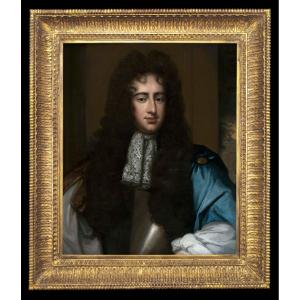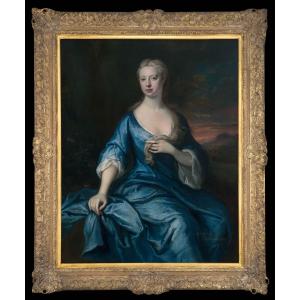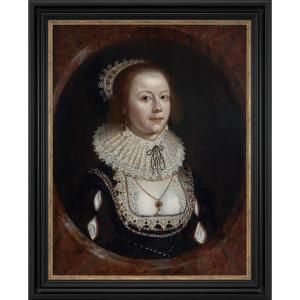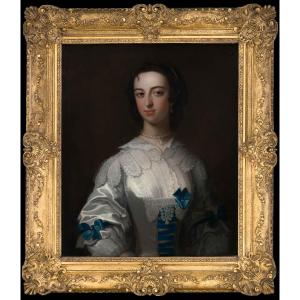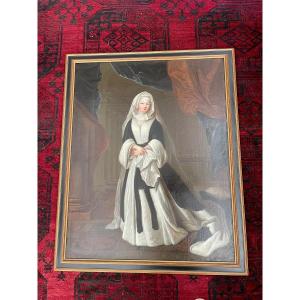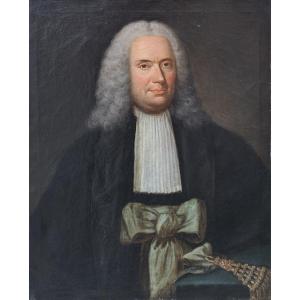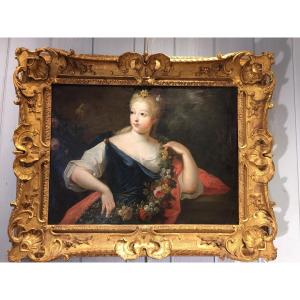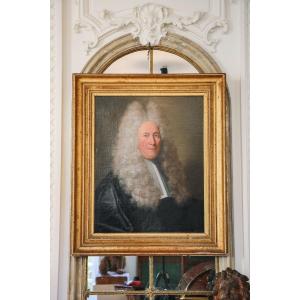

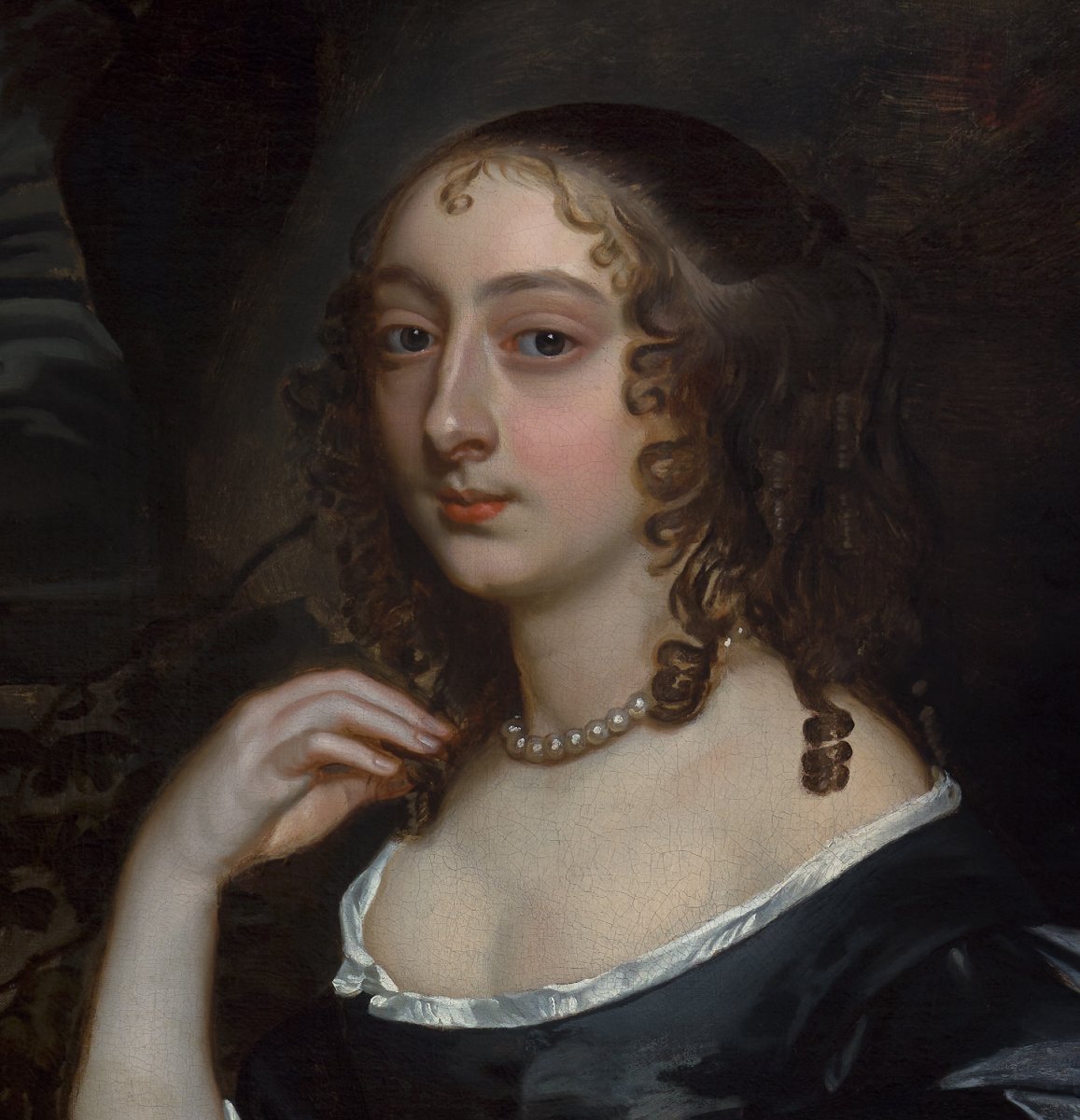
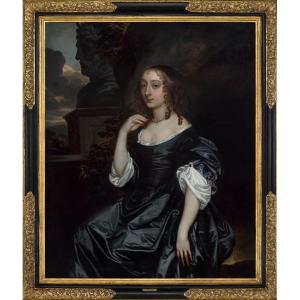


Portrait Of A Lady, Elisabeth Percy C.1660–1665; Peter Lely, Restoration Period, Oil On Canvas
Artist: Atelier De Sir Peter Lely (1618–1680)
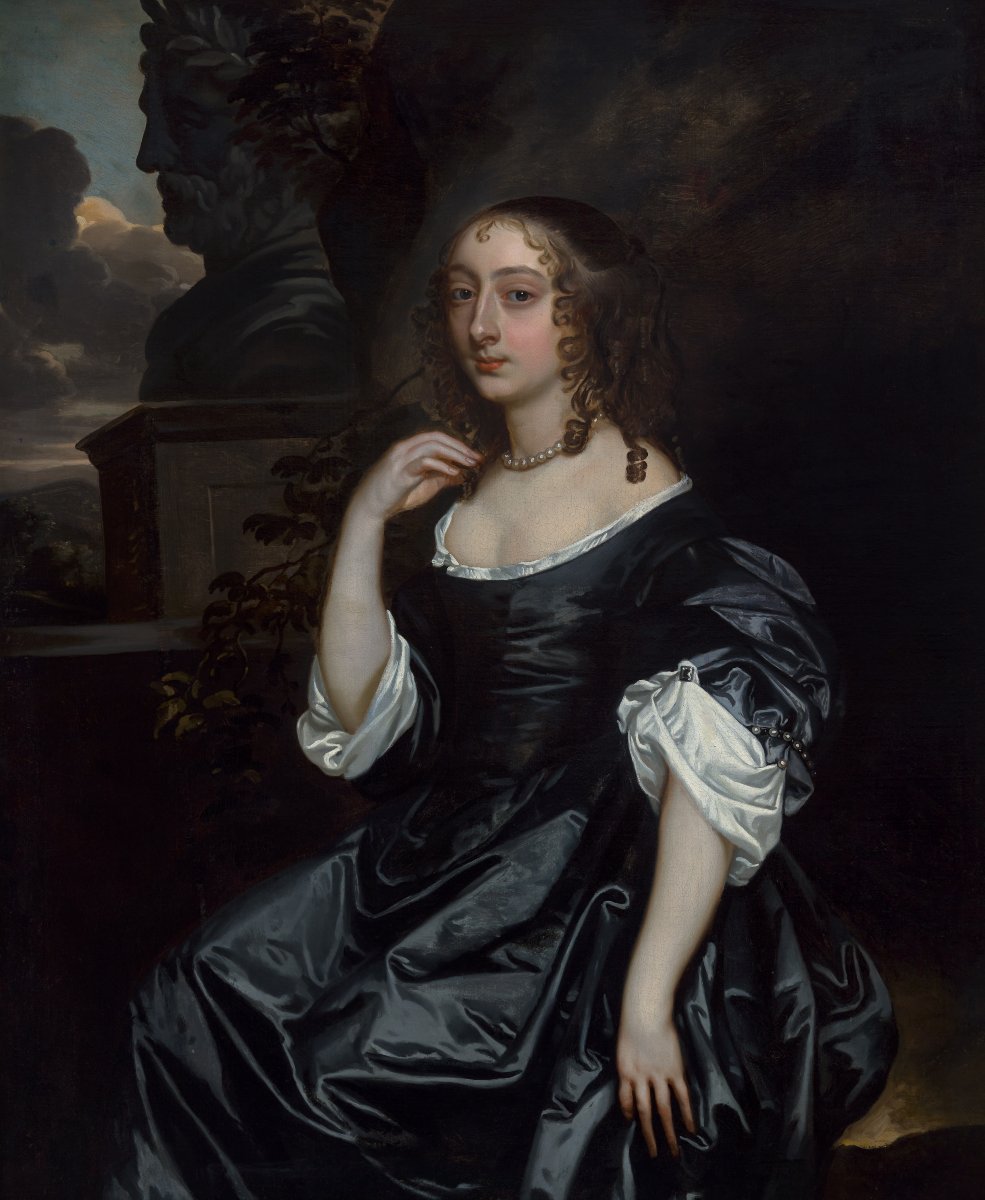
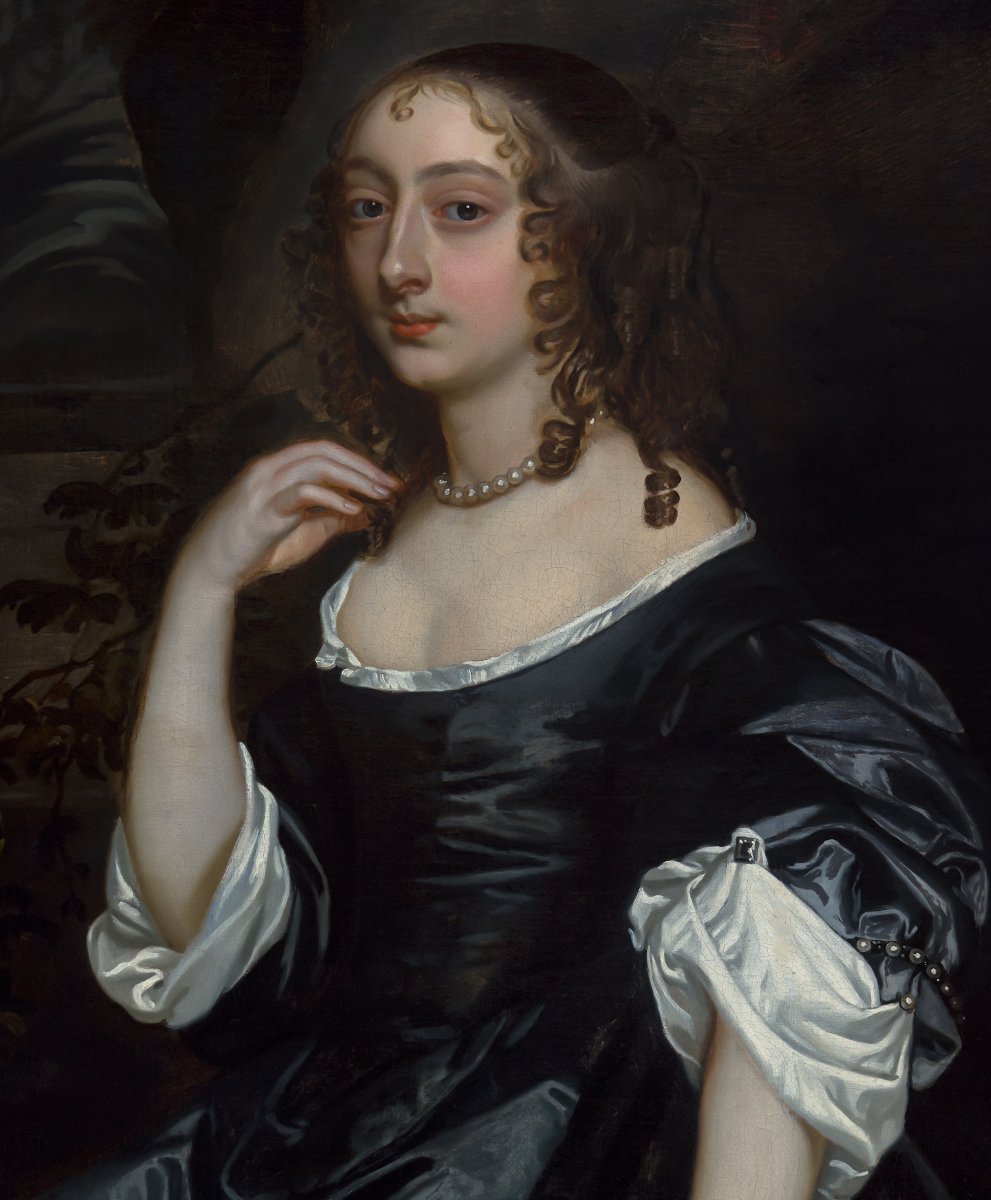
This portrait is a particularly refined and evocative example of Restoration portraiture, executed within the studio of the great court painter Sir Peter Lely. Preserved in excellent condition and retaining a luminous surface and subtle modelling of the flesh tones, the painting presents a young aristocratic woman seated beside a classical bust, her figure enveloped in shimmering satin drapery. The composition is elegant, harmonious and immediately recognisable as belonging to the sophisticated visual language that dominated English portraiture in the early years following the Restoration of the monarchy in 1660. The work combines beauty, historical resonance and decorative presence: the sitter’s serene gaze, graceful posture and richly painted fabrics exemplify the qualities that made Lely’s portraits the preferred expression of status among England’s political and social elite.
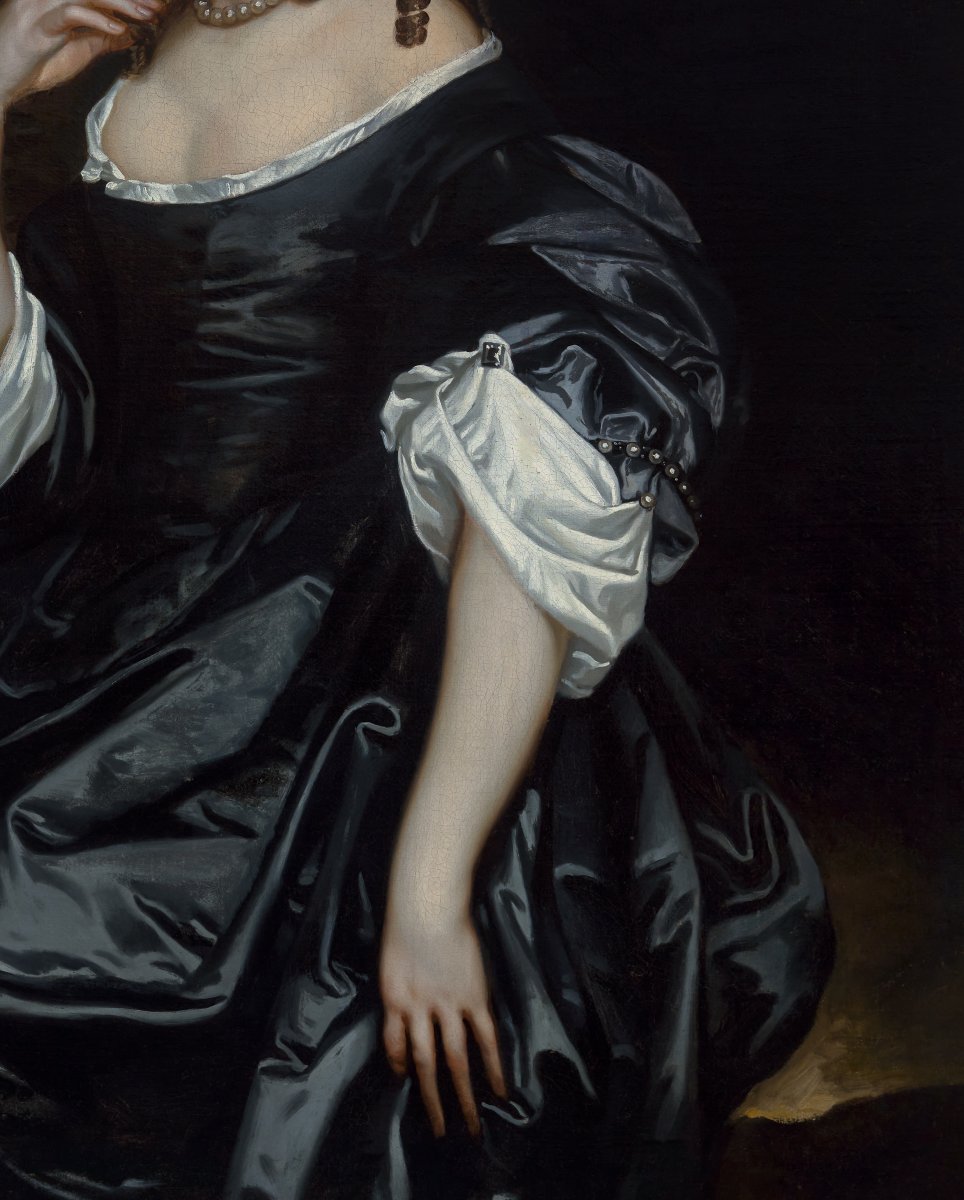
The sitter is dressed in a sumptuous satin gown of silvery grey with white chemise sleeves gathered beneath the bodice. The garment can be dated with confidence to approximately 1660–1665, a moment when Restoration fashion favoured loose, sensuous fabrics draped across the shoulders rather than the rigid bodices of earlier decades. The gown falls in heavy folds that catch the light in triangular highlights, a painterly device characteristic of Lely’s studio and often executed by his specialist drapery painter John Baptist Gaspars. Beneath the satin outer garment appears a soft white shift with voluminous sleeves gathered at the elbow, secured by jewelled clasps at the shoulders. Around her neck the sitter wears a simple strand of pearls. Such jewellery carried layered meaning in seventeenth-century portraiture: pearls symbolised purity, refinement and aristocratic restraint, while their reflective surfaces allowed the painter to demonstrate virtuoso handling of light. Her hair is arranged in the fashionable spiral ringlets of the early Restoration period, falling in corkscrew curls along the temples and shoulders while the crown is smoothed back. This distinctive hairstyle became widely popular among women of the court during the early 1660s and is seen in many portraits by Lely and his circle.
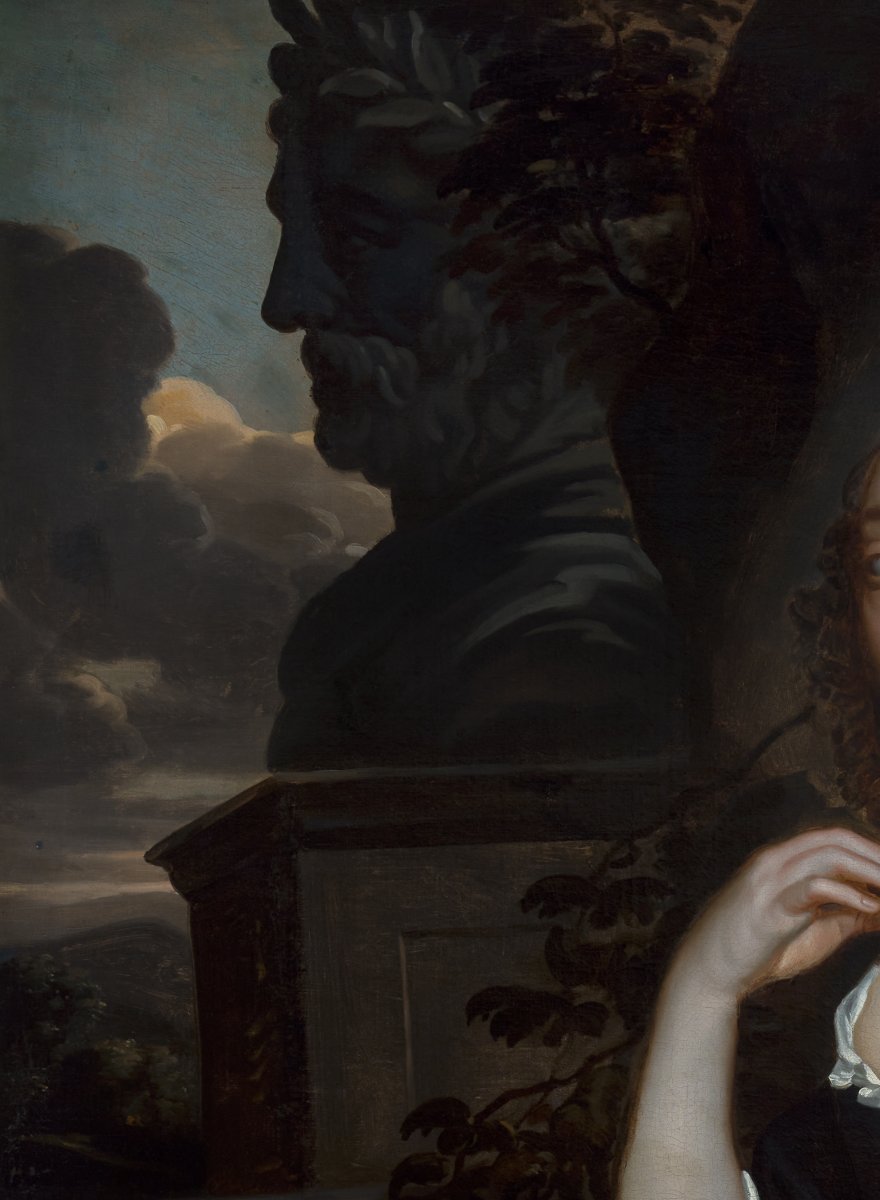
The portrait was likely commissioned to commemorate marriage, lineage or social advancement at a time when England was emerging from the upheavals of the Civil War and Interregnum. The return of Charles II in 1660 ushered in a renewed culture of display, fashion and artistic patronage. Lely, who had already established himself as a leading portrait painter during the Commonwealth, became the dominant artistic figure of the Restoration court. His portraits shaped the public image of aristocratic society, combining classical elegance with a new sense of refinement and ease. The presence of the sculpted bust in the background reflects this intellectual and cultural climate: classical sculpture in portraits symbolised learning, virtue and cultivated taste, aligning the sitter with the ideals of antiquity that were widely admired among the educated elite of the period.
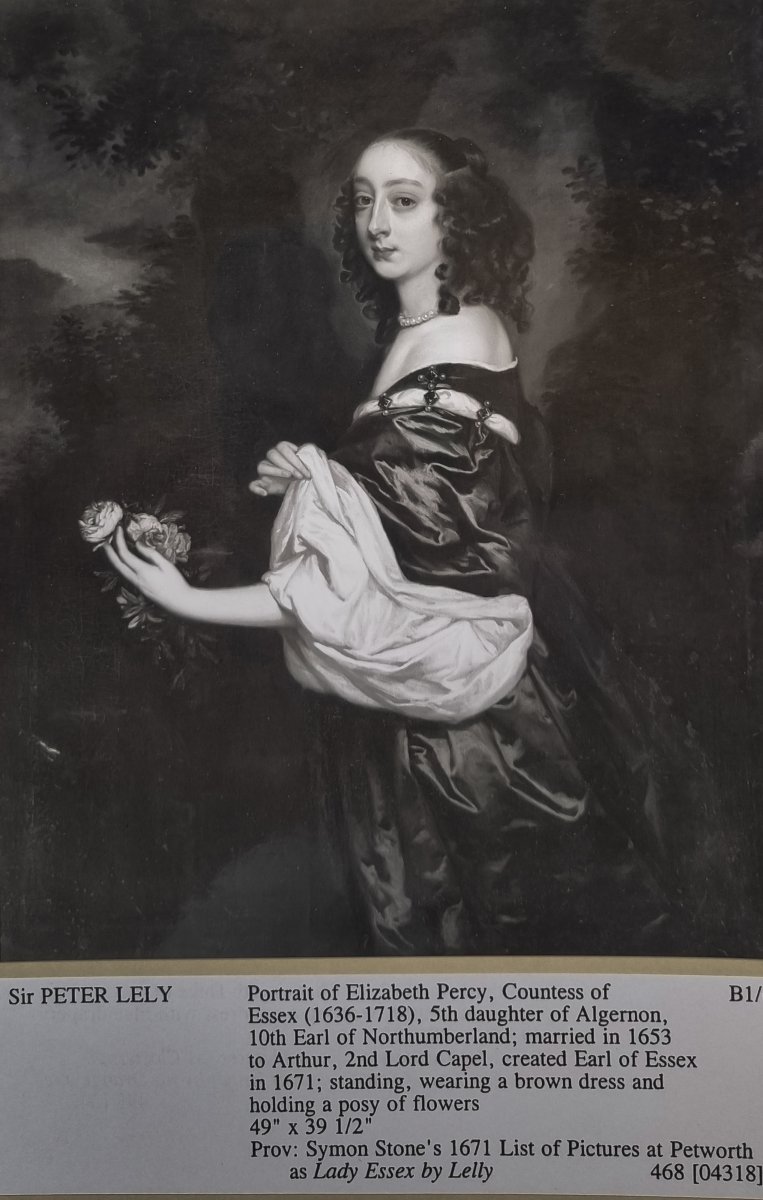
The composition, our portrait closely follows Lely’s celebrated Portrait of Catherine Stone (née Carleton) of 1660, now in the Government Art Collection, suggesting that the painting may represent a woman from a related circle of gentry and noble families active in the political and social life of Restoration England. Although the identity of the sitter has not yet been conclusively established, and some studio portraits share an idealised face to some extent, our sitter bears a striking resemblance to portraits of Elizabeth Percy, Countess of Essex, one of the most prominent aristocratic women of the Restoration court. The long oval face, widely spaced almond-shaped eyes, straight nose and delicate mouth closely echo known portraits of the Countess.
Elizabeth Percy was the fifth daughter of Algernon Percy, 10th Earl of Northumberland, a powerful nobleman whose family had long been among the leading dynasties of England. In 1653 she married Arthur Capel, 1st Earl of Essex, the son of a prominent Royalist statesman executed during the Civil War. Following the Restoration, Capel rose rapidly in public life, eventually serving as Lord Lieutenant of Ireland and playing an important role in the political world of Charles II’s reign. The couple lived principally at Cassiobury House in Hertfordshire, one of the grandest country estates in England, while maintaining close connections with the court in London. Their marriage produced several children, including Algernon Capel, 2nd Earl of Essex, who continued the family’s political legacy.
Stylistically the work aligns convincingly with the production of Lely’s studio during the early 1660s. The delicate modelling of the face, the subtle transitions of flesh tone, and the confident rendering of satin drapery are hallmarks of the workshop that produced many of the finest portraits of Restoration England. Lely operated a highly organised studio in London capable of producing numerous portraits simultaneously. The master typically painted the head and key passages of the composition while assistants executed elements such as drapery and background. The present painting displays precisely this combination of qualities: a sensitively modelled head paired with brilliantly handled drapery.
The painting is housed in a handsome carved and gilded frame. Its scrolling foliage and softly burnished gilding complement the elegance of the portrait and provide an appropriate architectural setting for the composition.
Today the painting offers collectors a rare opportunity to acquire an elegant and historically resonant example of Restoration portraiture. Its refined execution, appealing condition and compelling connection to the artistic world of Sir Peter Lely combine to create a work of considerable decorative and scholarly interest. The portrait captures the grace and poise that defined aristocratic femininity in the early years of Charles II’s reign and stands as a vivid reminder of the cultural revival that followed the Restoration.
Sir Peter Lely (1618–1680) was the leading portrait painter in England during the later seventeenth century. Born in Soest in Westphalia and trained in the Dutch artistic tradition, he moved to London in the early 1640s and quickly established a reputation as a gifted portraitist. After the death of Anthony van Dyck, Lely became the most sought-after painter among the English aristocracy. Following the Restoration of Charles II he was appointed Principal Painter to the King and produced portraits of many of the most important figures of the age, including members of the royal family and the celebrated “Windsor Beauties.” Lely’s elegant style, characterised by luminous flesh tones, rich fabrics and graceful poses, defined the visual identity of Restoration society and exerted a lasting influence on British portraiture.
Provenance: London, Sotheby’s, 8 November 1995, lot 35 (as Sir Peter Lely)
Measurements:Height 140.5cm, Width 118.5cm framed (Height 55.25”, Width46.75” framed)
The sitter is dressed in a sumptuous satin gown of silvery grey with white chemise sleeves gathered beneath the bodice. The garment can be dated with confidence to approximately 1660–1665, a moment when Restoration fashion favoured loose, sensuous fabrics draped across the shoulders rather than the rigid bodices of earlier decades. The gown falls in heavy folds that catch the light in triangular highlights, a painterly device characteristic of Lely’s studio and often executed by his specialist drapery painter John Baptist Gaspars. Beneath the satin outer garment appears a soft white shift with voluminous sleeves gathered at the elbow, secured by jewelled clasps at the shoulders. Around her neck the sitter wears a simple strand of pearls. Such jewellery carried layered meaning in seventeenth-century portraiture: pearls symbolised purity, refinement and aristocratic restraint, while their reflective surfaces allowed the painter to demonstrate virtuoso handling of light. Her hair is arranged in the fashionable spiral ringlets of the early Restoration period, falling in corkscrew curls along the temples and shoulders while the crown is smoothed back. This distinctive hairstyle became widely popular among women of the court during the early 1660s and is seen in many portraits by Lely and his circle.
The portrait was likely commissioned to commemorate marriage, lineage or social advancement at a time when England was emerging from the upheavals of the Civil War and Interregnum. The return of Charles II in 1660 ushered in a renewed culture of display, fashion and artistic patronage. Lely, who had already established himself as a leading portrait painter during the Commonwealth, became the dominant artistic figure of the Restoration court. His portraits shaped the public image of aristocratic society, combining classical elegance with a new sense of refinement and ease. The presence of the sculpted bust in the background reflects this intellectual and cultural climate: classical sculpture in portraits symbolised learning, virtue and cultivated taste, aligning the sitter with the ideals of antiquity that were widely admired among the educated elite of the period.
The composition, our portrait closely follows Lely’s celebrated Portrait of Catherine Stone (née Carleton) of 1660, now in the Government Art Collection, suggesting that the painting may represent a woman from a related circle of gentry and noble families active in the political and social life of Restoration England. Although the identity of the sitter has not yet been conclusively established, and some studio portraits share an idealised face to some extent, our sitter bears a striking resemblance to portraits of Elizabeth Percy, Countess of Essex, one of the most prominent aristocratic women of the Restoration court. The long oval face, widely spaced almond-shaped eyes, straight nose and delicate mouth closely echo known portraits of the Countess.
Elizabeth Percy was the fifth daughter of Algernon Percy, 10th Earl of Northumberland, a powerful nobleman whose family had long been among the leading dynasties of England. In 1653 she married Arthur Capel, 1st Earl of Essex, the son of a prominent Royalist statesman executed during the Civil War. Following the Restoration, Capel rose rapidly in public life, eventually serving as Lord Lieutenant of Ireland and playing an important role in the political world of Charles II’s reign. The couple lived principally at Cassiobury House in Hertfordshire, one of the grandest country estates in England, while maintaining close connections with the court in London. Their marriage produced several children, including Algernon Capel, 2nd Earl of Essex, who continued the family’s political legacy.
Stylistically the work aligns convincingly with the production of Lely’s studio during the early 1660s. The delicate modelling of the face, the subtle transitions of flesh tone, and the confident rendering of satin drapery are hallmarks of the workshop that produced many of the finest portraits of Restoration England. Lely operated a highly organised studio in London capable of producing numerous portraits simultaneously. The master typically painted the head and key passages of the composition while assistants executed elements such as drapery and background. The present painting displays precisely this combination of qualities: a sensitively modelled head paired with brilliantly handled drapery.
The painting is housed in a handsome carved and gilded frame. Its scrolling foliage and softly burnished gilding complement the elegance of the portrait and provide an appropriate architectural setting for the composition.
Today the painting offers collectors a rare opportunity to acquire an elegant and historically resonant example of Restoration portraiture. Its refined execution, appealing condition and compelling connection to the artistic world of Sir Peter Lely combine to create a work of considerable decorative and scholarly interest. The portrait captures the grace and poise that defined aristocratic femininity in the early years of Charles II’s reign and stands as a vivid reminder of the cultural revival that followed the Restoration.
Sir Peter Lely (1618–1680) was the leading portrait painter in England during the later seventeenth century. Born in Soest in Westphalia and trained in the Dutch artistic tradition, he moved to London in the early 1640s and quickly established a reputation as a gifted portraitist. After the death of Anthony van Dyck, Lely became the most sought-after painter among the English aristocracy. Following the Restoration of Charles II he was appointed Principal Painter to the King and produced portraits of many of the most important figures of the age, including members of the royal family and the celebrated “Windsor Beauties.” Lely’s elegant style, characterised by luminous flesh tones, rich fabrics and graceful poses, defined the visual identity of Restoration society and exerted a lasting influence on British portraiture.
Provenance: London, Sotheby’s, 8 November 1995, lot 35 (as Sir Peter Lely)
Measurements:Height 140.5cm, Width 118.5cm framed (Height 55.25”, Width46.75” framed)
19 850 €
Period: 17th century
Style: Louis 14th, Regency
Condition: Excellent condition
Material: Oil painting
Width: 118.5
Height: 140.5
Depth: 8
Reference (ID): 1719275
Availability: In stock
Print