THIS OBJECT WAS SOLD
Portrait Of Sir Edward East, 1st Baronet Of Radnage, Black Doublet & Lace Collar C.1605-1615
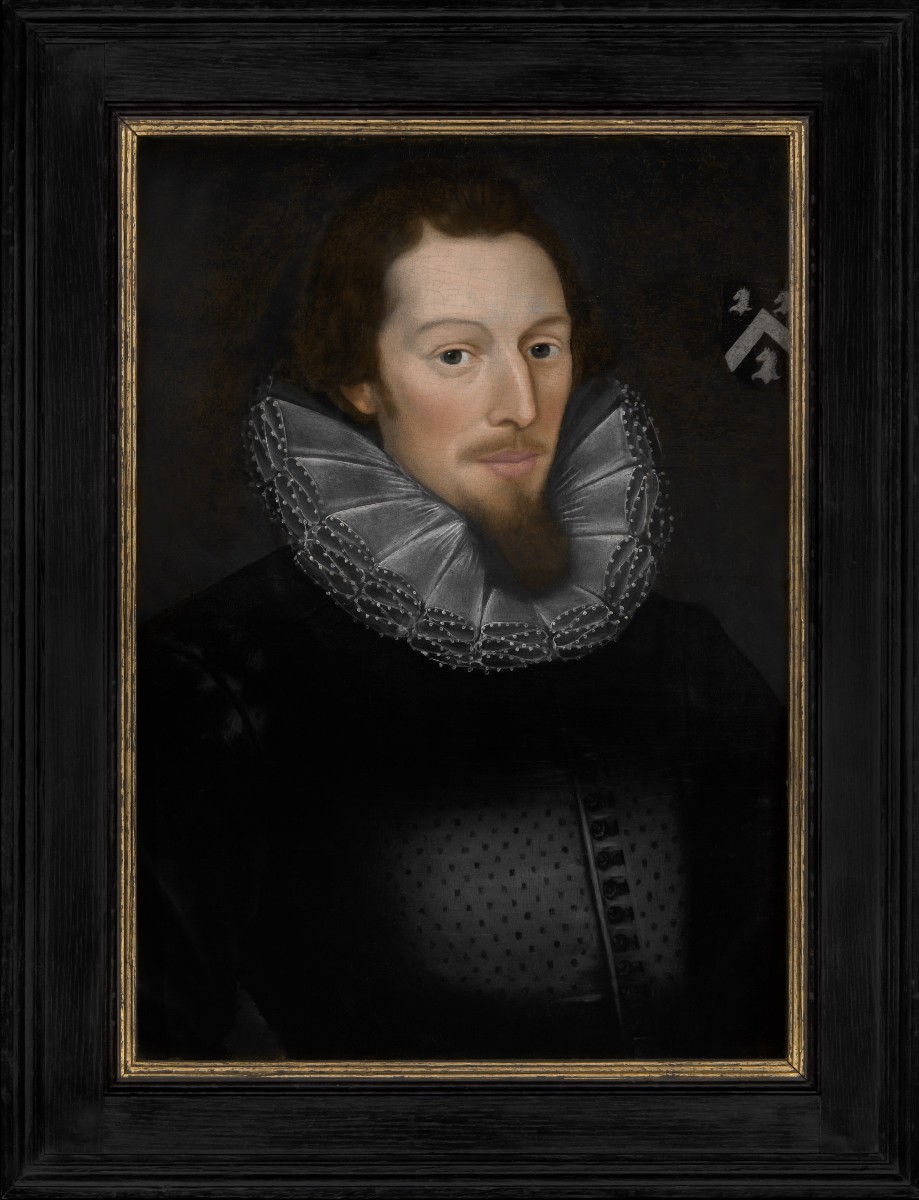
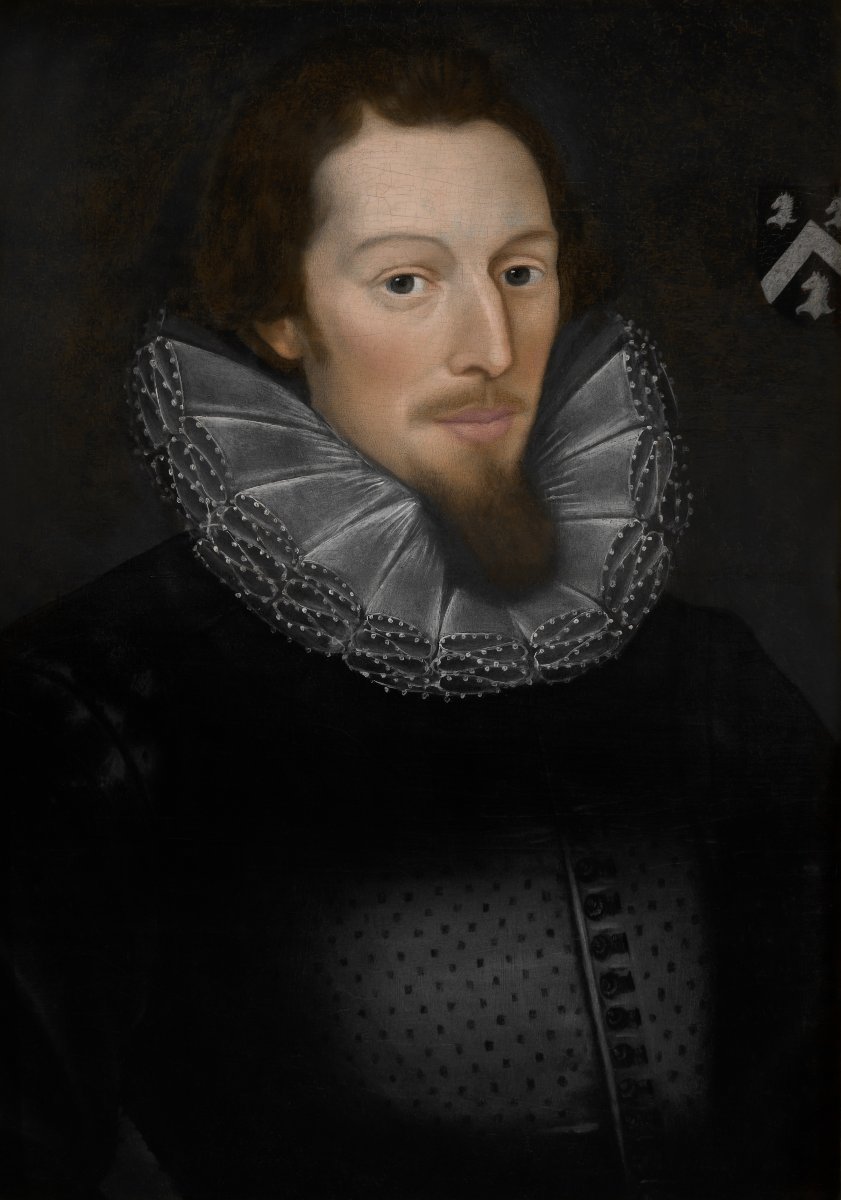
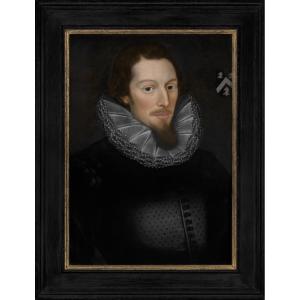


This striking early seventeenth-century portrait captures a confident young gentleman at the moment when England’s professional classes were consolidating wealth, authority, and cultural identity through portraiture. Painted in oil on panel with impressive clarity and restraint, the work exemplifies the sober elegance of Jacobean portraiture: a direct and psychologically engaging likeness, meticulously rendered costume, and the prominent display of heraldry that anchors the sitter firmly within a specific English lineage. Portraits of this date and quality are increasingly scarce, particularly those retaining identifiable arms that allow the subject to be connected to a historically significant figure. In this case, the heraldic shield beside the sitter corresponds with the arms of the East family of Radnage in Buckinghamshire, providing compelling evidence that the sitter is Sir Edward East (1584–1657), shown here as a distinguished jurist, before his later judicial fame and title as Lord Chief Justice of the Court of Common Pleas.
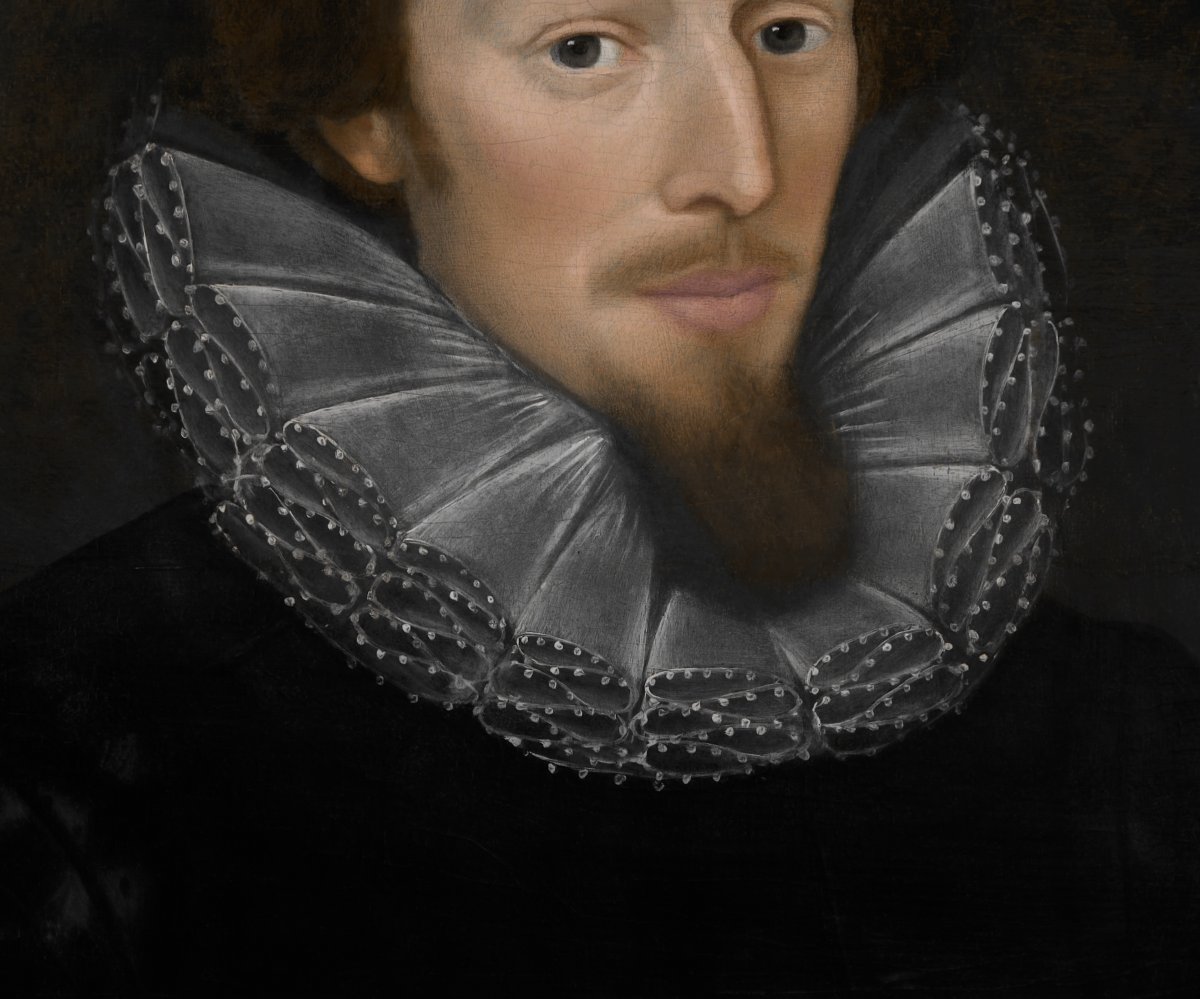
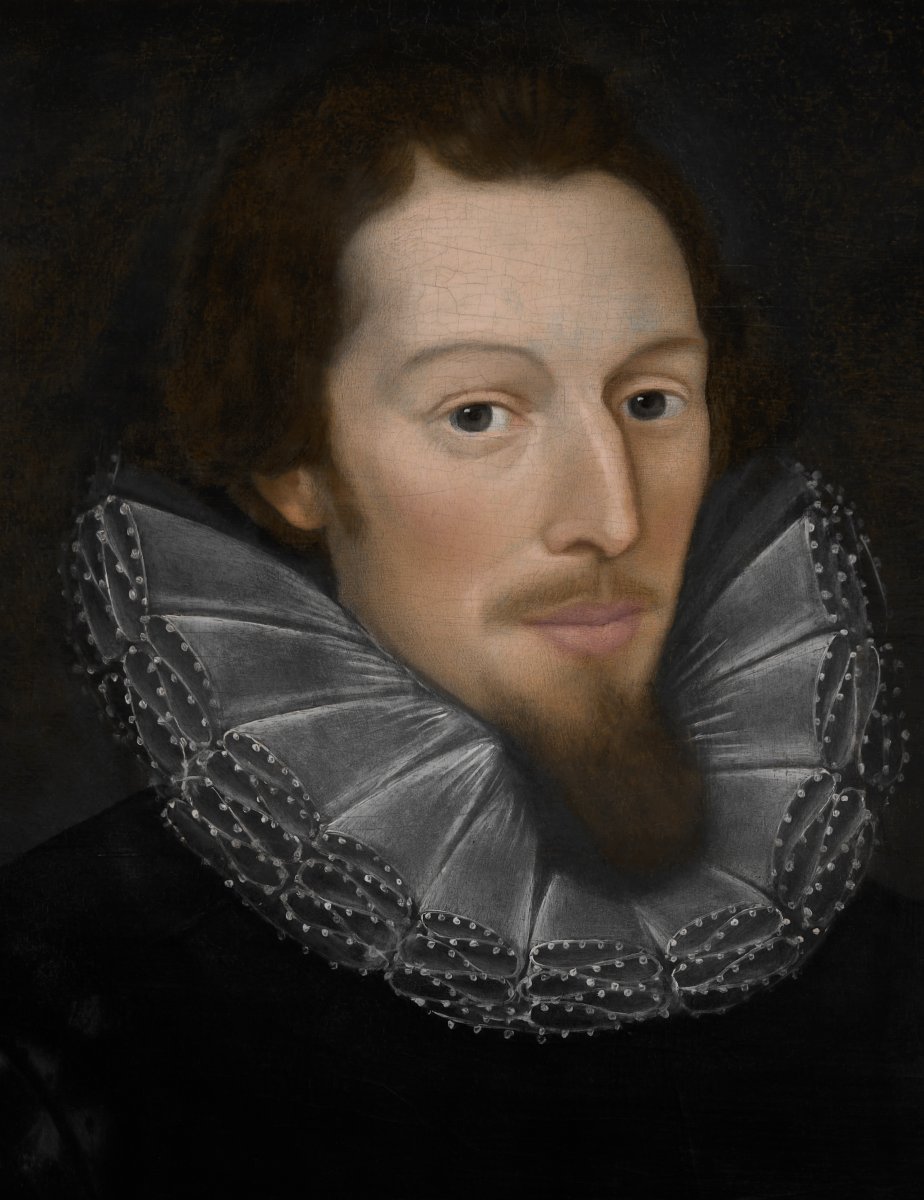
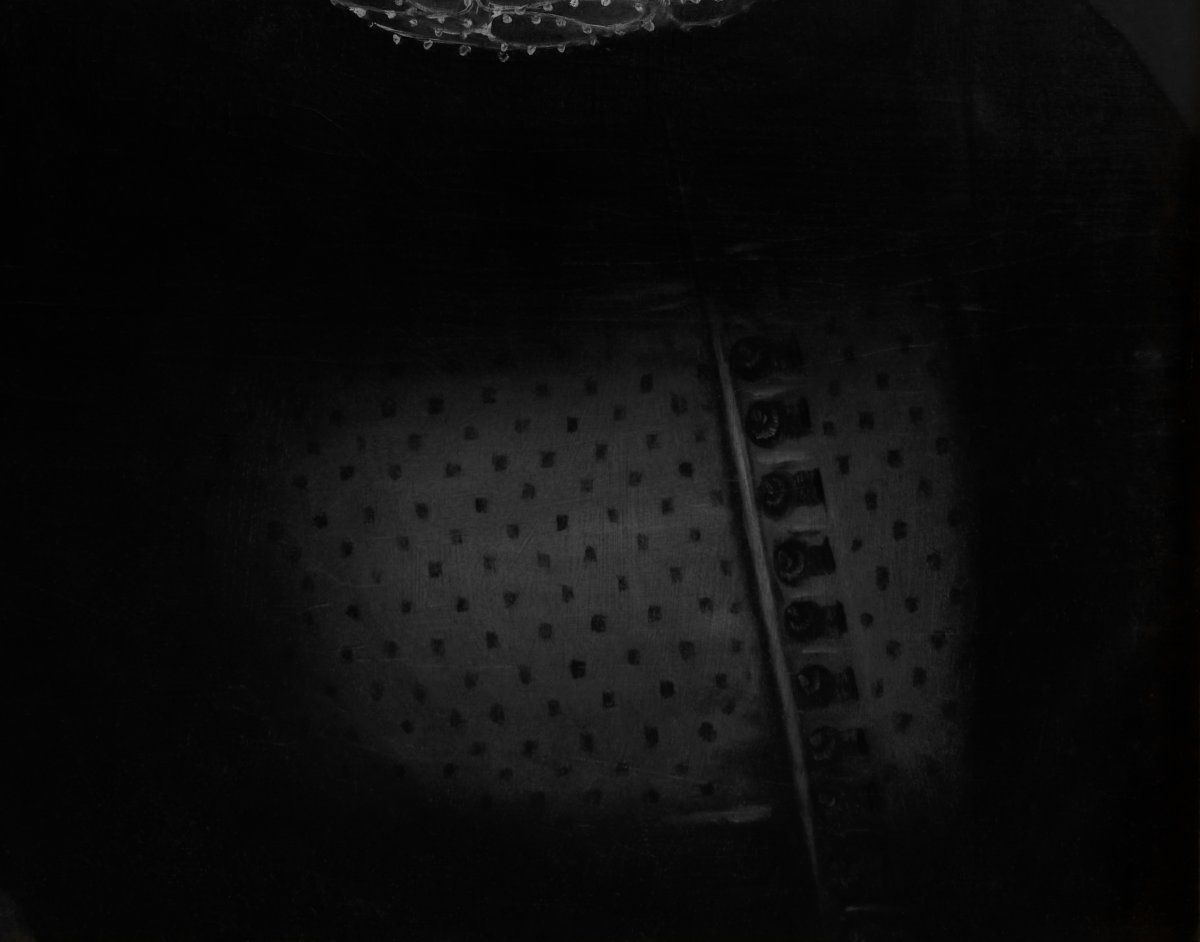
The sitter is shown bust-length against a dark background, his body turned slightly while his face addresses the viewer directly with composed assurance. His attire offers one of the most reliable indicators for dating the portrait. He wears a large cartwheel ruff of fine lace, its circular structure supported by a concealed frame known as a supportasse. Such ruffs reached their fullest scale during the final years of the reign of Elizabeth I and remained fashionable during the early years of the reign of James I before gradually giving way to the softer falling collar after the second decade of the seventeenth century. Beneath the ruff he wears a black doublet fastened with closely spaced buttons, a garment cut with the understated refinement typical of elite English dress of the period. Black clothing was associated with dignity, wealth, and seriousness of purpose, not least because the dyes required to achieve such deep colour were costly and technically demanding. The sitter’s narrow moustache and pointed beard—often described as a “spade beard”—further reinforce a date around circa 1605–1615, placing the portrait securely within the early Jacobean era.
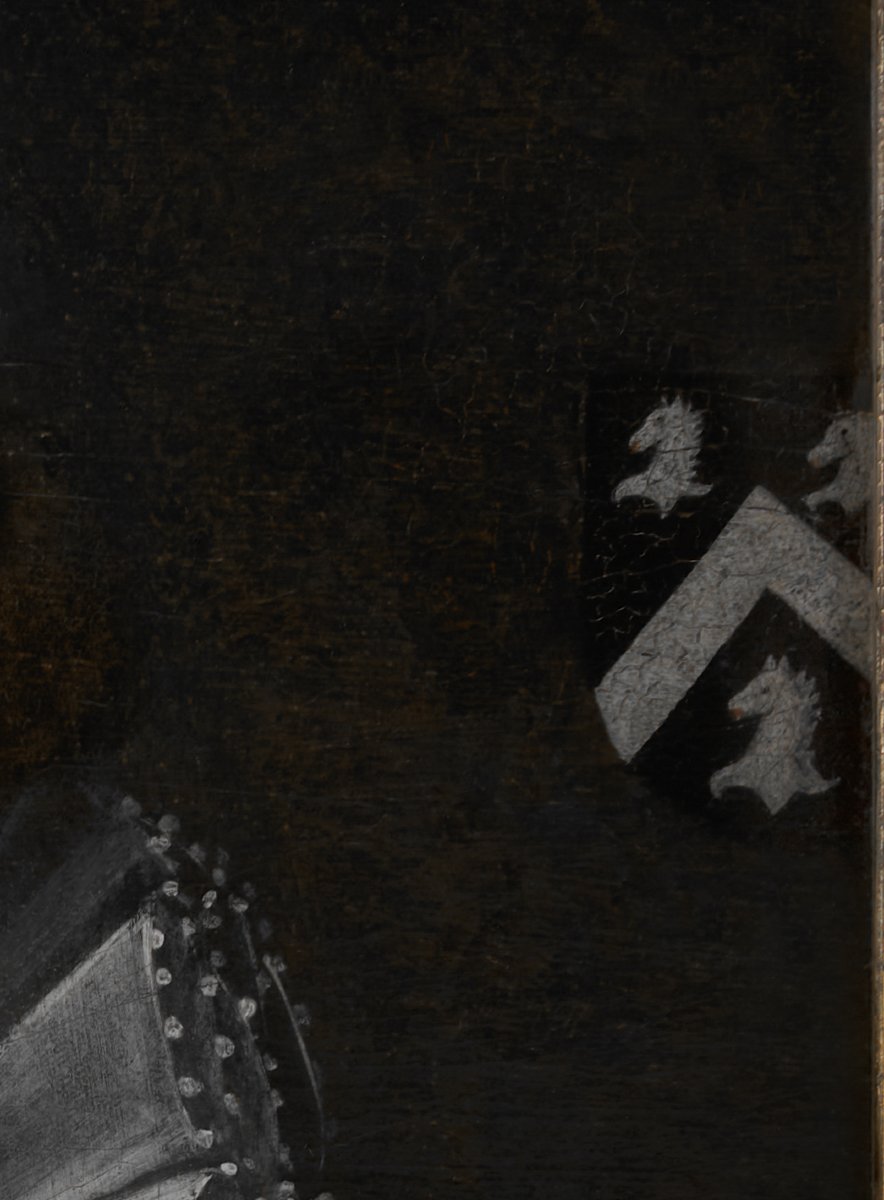
The heraldic shield displayed beside the figure shows a chevron between three horse heads erased, arms recorded for the East family of Radnage. Heraldry of this type was not included casually in portraiture of the period; it signalled the identity and social standing of the sitter and confirmed his right to bear the arms. The presence of these arms strongly supports the identification of the sitter as Sir Edward East, a member of a prosperous Buckinghamshire family whose career would place him among the leading legal figures of seventeenth-century England.
Edward East was born in 1584 and rose through the ranks of the English legal profession at a time when talented lawyers could attain extraordinary influence within the machinery of government. He was educated in the law at the Inns of Court in London, institutions that served not only as centres of legal training but also as vibrant cultural and intellectual communities. The Inns attracted ambitious young men from across England who sought advancement through education and patronage, and East quickly distinguished himself within this environment. His legal expertise and professional reputation brought steady advancement, eventually culminating in his appointment as Lord Chief Justice of the Court of Common Pleas, one of the highest judicial offices in the kingdom. In recognition of his achievements he was created 1st Baronet of Radnage in 1642, formally elevating the family within the English gentry.
One revealing aspect of East’s reputation was the extraordinary respect he commanded as a legal scholar. Although he spent most of his life as a practising barrister and judge rather than as an academic writer, he compiled detailed notes of cases heard in the Court of King’s Bench. After his death these notes were published as Reports of Cases in the Court of King’s Bench, one of the most respected legal authorities of the eighteenth century. The work was so carefully compiled that generations of lawyers relied on it long after East’s lifetime, and the cases it recorded continued to be cited in English courts for more than a century. For a man whose portrait likely dates to his early professional years, this later intellectual legacy adds an interesting layer: the sitter was not merely a rising lawyer but a jurist whose work helped shape the development of English common law.
East’s marriage further strengthened his position within the networks that governed early Stuart England. He married Anne Skinner, daughter of Sir Vincent Skinner, an influential figure in the administration of royal finances during the reign of King James I. Sir Vincent Skinner belonged to the expanding bureaucratic elite that managed the Crown’s revenues and estates, and the alliance between the East and Skinner families illustrates the interlocking relationships between law, government administration, and landed society. Such marriages were common among families whose status derived not from ancient aristocratic lineage but from education, office, and service to the Crown.
Edward and Anne established their family seat at Radnage in Buckinghamshire, a rural estate situated in the Chiltern Hills. Like many gentry houses of the period, Radnage would have served as both the centre of family life and a visible statement of the family’s social standing. The couple had several children, including Sir Thomas East, who inherited the baronetcy and continued the family’s place among the Buckinghamshire gentry. Portraits played an important role within such households, forming a visual record of lineage and achievement. It is therefore highly plausible that this portrait once hung within the East family residence, either at Radnage itself or in a London house associated with East’s legal career.
The portrait likely dates from the period when East was establishing himself professionally, perhaps around the time of his marriage or early advancement within the legal world. Portraits of this type were frequently commissioned at moments of transition—marriage, inheritance, or the formation of a new household—and were intended to project dignity, learning, and social legitimacy. The sitter’s poised expression and restrained presentation convey precisely the qualities expected of a rising lawyer within the early Stuart establishment. He died in 1657 and was succeeded by his son Sir Thomas East, 2nd Baronet.
The painting was produced during a dynamic moment in English history. The accession of James I in 1603 marked the beginning of the Stuart dynasty and ushered in a period of cultural and political change. England was becoming increasingly integrated into European intellectual and artistic currents, and portraiture flourished as a means of expressing identity and ambition. London workshops produced portraits for a wide range of patrons, from the royal court to prosperous members of the legal and mercantile professions.
Stylistically the painting belongs to the tradition of early Jacobean English portraiture practiced in London during the first decades of the seventeenth century. Artists working in England at this time were strongly influenced by Netherlandish techniques, particularly in their treatment of flesh tones and the meticulous depiction of lace and costume. The restrained composition, dark background, and precise modelling of the face reflect the aesthetic favoured by English patrons before the transformative arrival of Anthony van Dyck in the 1630s. While the exact painter cannot be securely identified, the work clearly belongs to the circle of professional portraitists active in London workshops around 1600–1615.
Seen today, the portrait offers a vivid encounter with one of the figures who helped shape the legal and political landscape of early Stuart England. Through its heraldry, costume, and compelling depiction of character, the painting transforms what might otherwise be an anonymous likeness into a tangible link with the life and ambitions of Sir Edward East, a man whose rise from provincial gentry to the highest ranks of the English judiciary exemplifies the opportunities and aspirations of his age.
Measurements: Height 72cm, Width 55.5cm framed (Height 28.5”, Width 21.75” framed)
The sitter is shown bust-length against a dark background, his body turned slightly while his face addresses the viewer directly with composed assurance. His attire offers one of the most reliable indicators for dating the portrait. He wears a large cartwheel ruff of fine lace, its circular structure supported by a concealed frame known as a supportasse. Such ruffs reached their fullest scale during the final years of the reign of Elizabeth I and remained fashionable during the early years of the reign of James I before gradually giving way to the softer falling collar after the second decade of the seventeenth century. Beneath the ruff he wears a black doublet fastened with closely spaced buttons, a garment cut with the understated refinement typical of elite English dress of the period. Black clothing was associated with dignity, wealth, and seriousness of purpose, not least because the dyes required to achieve such deep colour were costly and technically demanding. The sitter’s narrow moustache and pointed beard—often described as a “spade beard”—further reinforce a date around circa 1605–1615, placing the portrait securely within the early Jacobean era.
The heraldic shield displayed beside the figure shows a chevron between three horse heads erased, arms recorded for the East family of Radnage. Heraldry of this type was not included casually in portraiture of the period; it signalled the identity and social standing of the sitter and confirmed his right to bear the arms. The presence of these arms strongly supports the identification of the sitter as Sir Edward East, a member of a prosperous Buckinghamshire family whose career would place him among the leading legal figures of seventeenth-century England.
Edward East was born in 1584 and rose through the ranks of the English legal profession at a time when talented lawyers could attain extraordinary influence within the machinery of government. He was educated in the law at the Inns of Court in London, institutions that served not only as centres of legal training but also as vibrant cultural and intellectual communities. The Inns attracted ambitious young men from across England who sought advancement through education and patronage, and East quickly distinguished himself within this environment. His legal expertise and professional reputation brought steady advancement, eventually culminating in his appointment as Lord Chief Justice of the Court of Common Pleas, one of the highest judicial offices in the kingdom. In recognition of his achievements he was created 1st Baronet of Radnage in 1642, formally elevating the family within the English gentry.
One revealing aspect of East’s reputation was the extraordinary respect he commanded as a legal scholar. Although he spent most of his life as a practising barrister and judge rather than as an academic writer, he compiled detailed notes of cases heard in the Court of King’s Bench. After his death these notes were published as Reports of Cases in the Court of King’s Bench, one of the most respected legal authorities of the eighteenth century. The work was so carefully compiled that generations of lawyers relied on it long after East’s lifetime, and the cases it recorded continued to be cited in English courts for more than a century. For a man whose portrait likely dates to his early professional years, this later intellectual legacy adds an interesting layer: the sitter was not merely a rising lawyer but a jurist whose work helped shape the development of English common law.
East’s marriage further strengthened his position within the networks that governed early Stuart England. He married Anne Skinner, daughter of Sir Vincent Skinner, an influential figure in the administration of royal finances during the reign of King James I. Sir Vincent Skinner belonged to the expanding bureaucratic elite that managed the Crown’s revenues and estates, and the alliance between the East and Skinner families illustrates the interlocking relationships between law, government administration, and landed society. Such marriages were common among families whose status derived not from ancient aristocratic lineage but from education, office, and service to the Crown.
Edward and Anne established their family seat at Radnage in Buckinghamshire, a rural estate situated in the Chiltern Hills. Like many gentry houses of the period, Radnage would have served as both the centre of family life and a visible statement of the family’s social standing. The couple had several children, including Sir Thomas East, who inherited the baronetcy and continued the family’s place among the Buckinghamshire gentry. Portraits played an important role within such households, forming a visual record of lineage and achievement. It is therefore highly plausible that this portrait once hung within the East family residence, either at Radnage itself or in a London house associated with East’s legal career.
The portrait likely dates from the period when East was establishing himself professionally, perhaps around the time of his marriage or early advancement within the legal world. Portraits of this type were frequently commissioned at moments of transition—marriage, inheritance, or the formation of a new household—and were intended to project dignity, learning, and social legitimacy. The sitter’s poised expression and restrained presentation convey precisely the qualities expected of a rising lawyer within the early Stuart establishment. He died in 1657 and was succeeded by his son Sir Thomas East, 2nd Baronet.
The painting was produced during a dynamic moment in English history. The accession of James I in 1603 marked the beginning of the Stuart dynasty and ushered in a period of cultural and political change. England was becoming increasingly integrated into European intellectual and artistic currents, and portraiture flourished as a means of expressing identity and ambition. London workshops produced portraits for a wide range of patrons, from the royal court to prosperous members of the legal and mercantile professions.
Stylistically the painting belongs to the tradition of early Jacobean English portraiture practiced in London during the first decades of the seventeenth century. Artists working in England at this time were strongly influenced by Netherlandish techniques, particularly in their treatment of flesh tones and the meticulous depiction of lace and costume. The restrained composition, dark background, and precise modelling of the face reflect the aesthetic favoured by English patrons before the transformative arrival of Anthony van Dyck in the 1630s. While the exact painter cannot be securely identified, the work clearly belongs to the circle of professional portraitists active in London workshops around 1600–1615.
Seen today, the portrait offers a vivid encounter with one of the figures who helped shape the legal and political landscape of early Stuart England. Through its heraldry, costume, and compelling depiction of character, the painting transforms what might otherwise be an anonymous likeness into a tangible link with the life and ambitions of Sir Edward East, a man whose rise from provincial gentry to the highest ranks of the English judiciary exemplifies the opportunities and aspirations of his age.
Measurements: Height 72cm, Width 55.5cm framed (Height 28.5”, Width 21.75” framed)
Explore similar pieces and discover your ideal find:
Portraits