



Portrait Of Elegant Lady In White Satin Dress, Signed & Dated 1669; Attributed To Nicolaes Maes
Artist: Attribué à Nicolaes Maes (1634–1693)
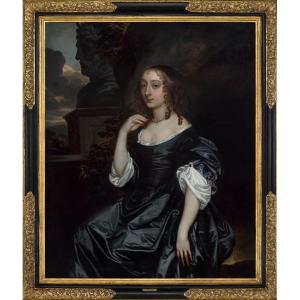
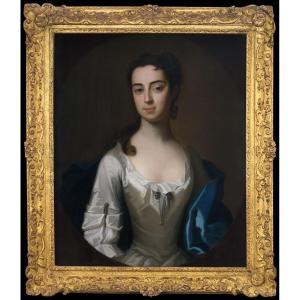
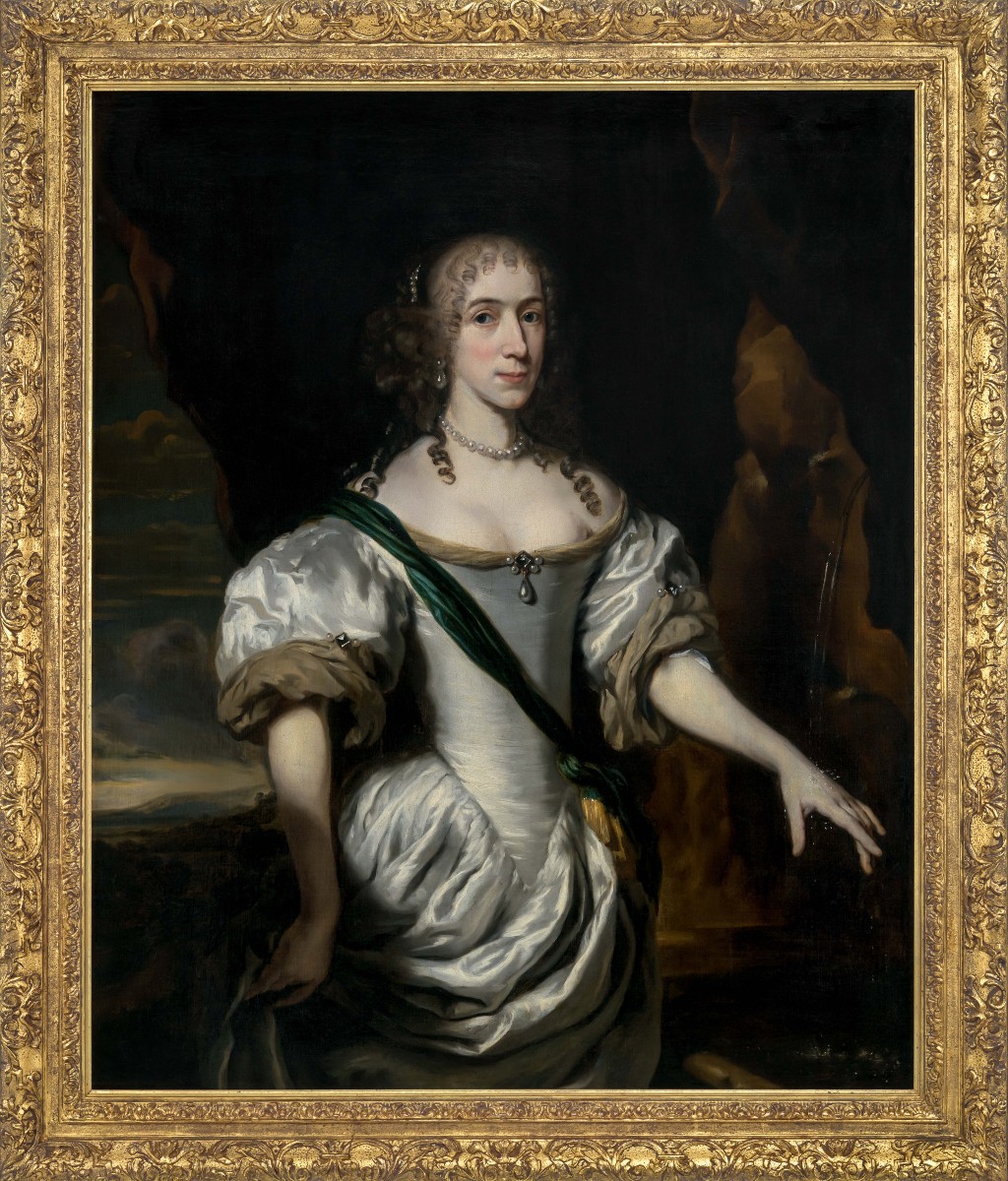
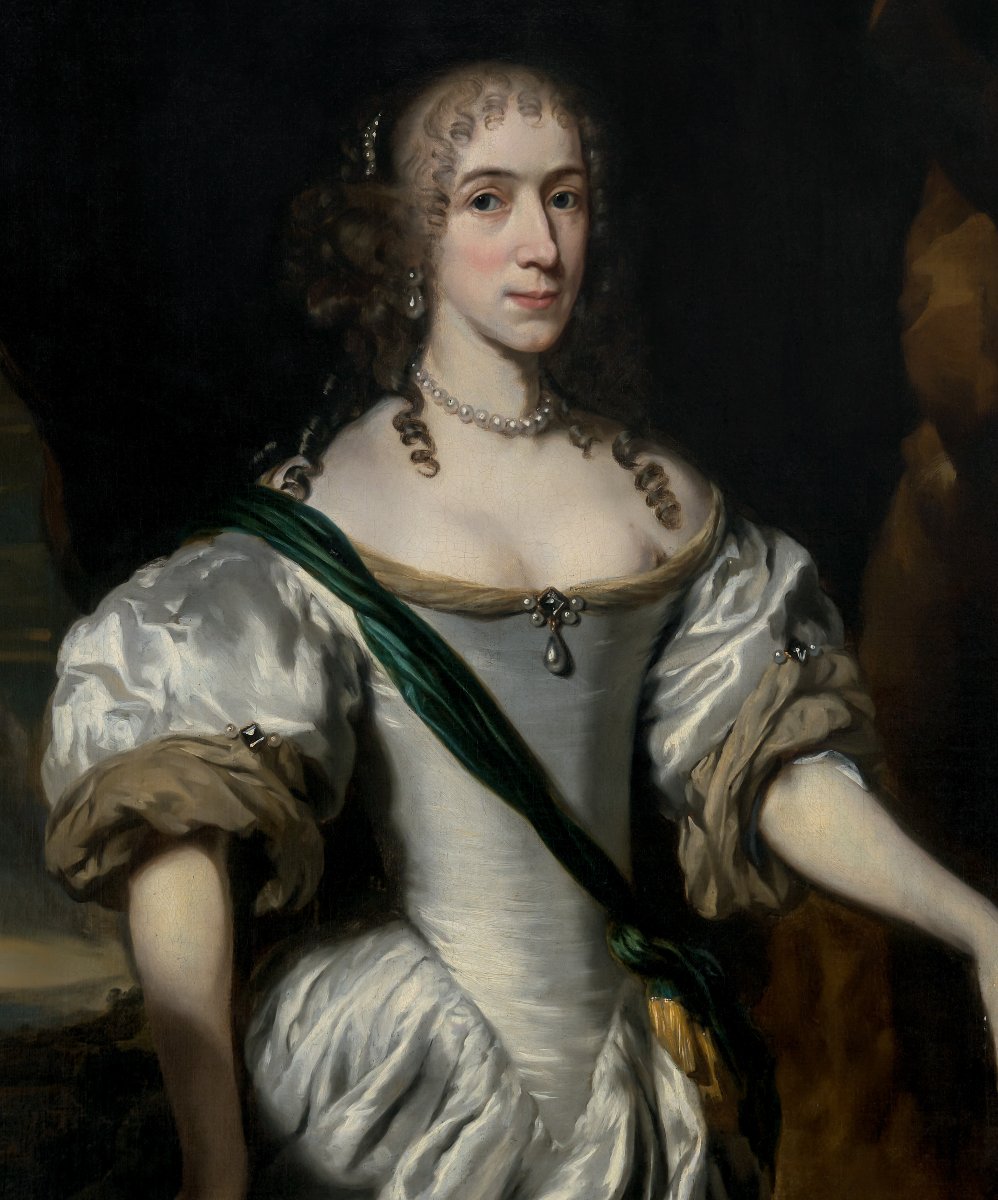
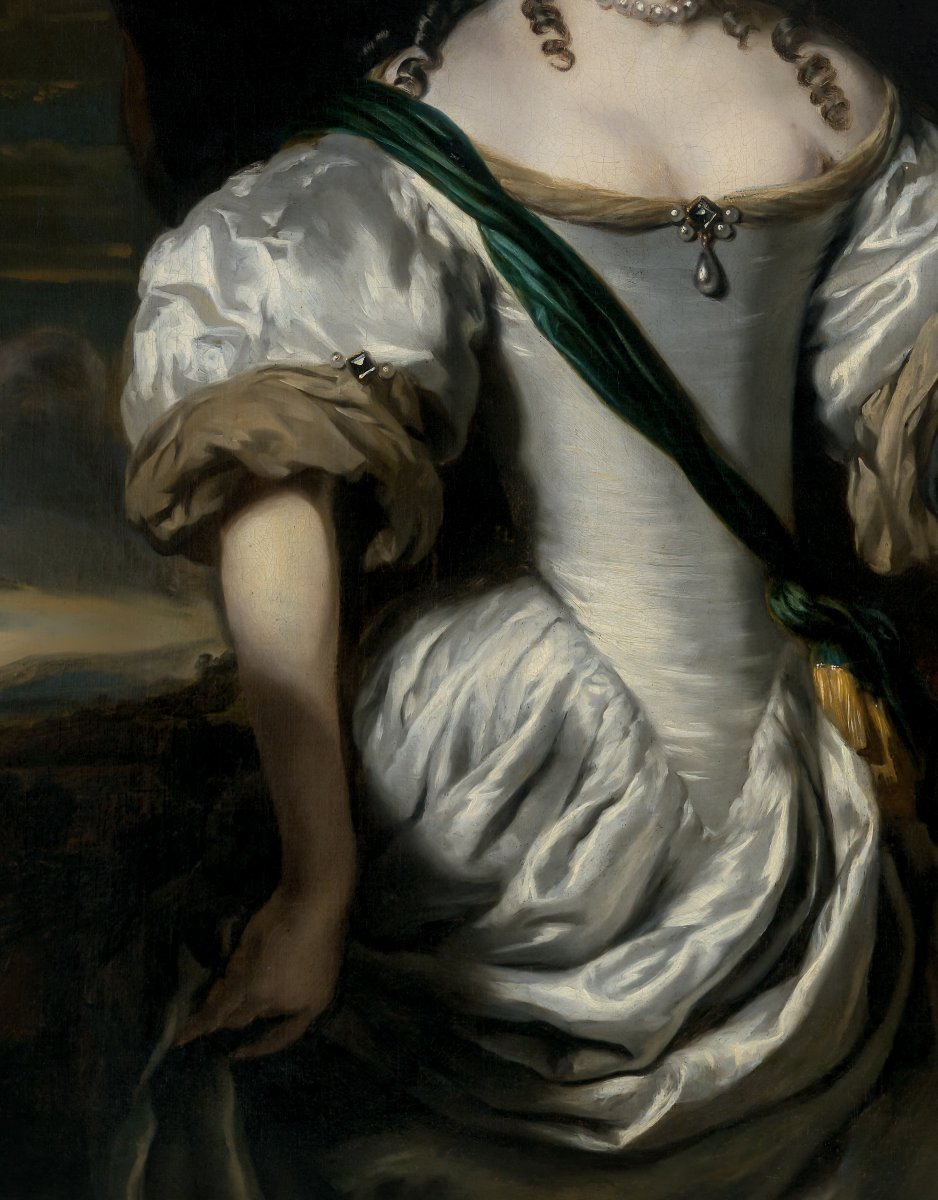
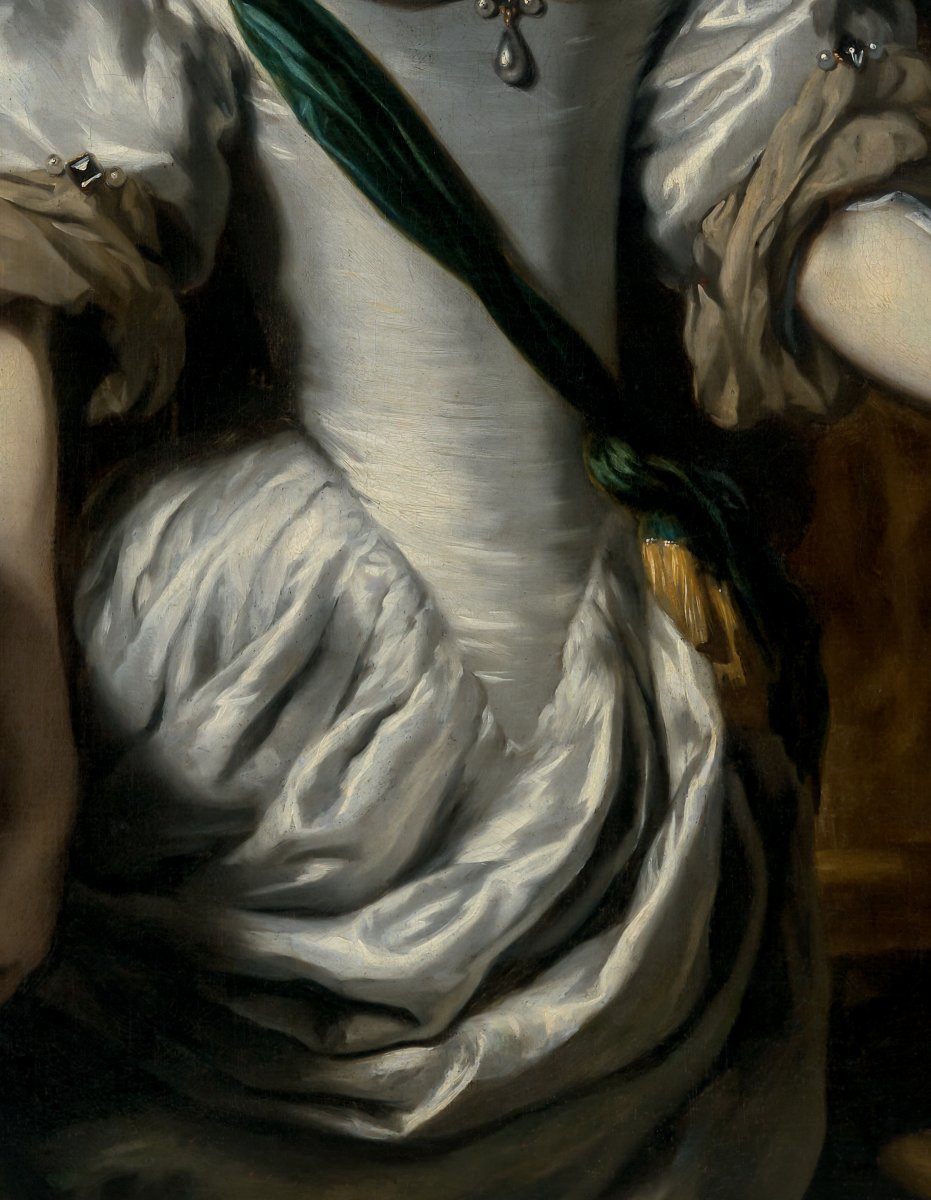
Radiant in condition and impressive in scale, this refined three-quarter-length portrait of a lady, signed and dated 1669, is attributed to Nicolaes Maes (1634–1693). The painting retains exceptional clarity and freshness: the silvery satin is articulated with crisp, controlled highlights; the flesh tones are smoothly modelled and luminous; and the landscape setting remains atmospheric and intact. The composition reads with cohesion and authority, free from distracting over-restoration, allowing the elegance of the sitter’s presence to dominate.
The lady is depicted in the height of late 1660s fashion. She wears a lustrous pale satin gown cut with a broad oval neckline edged in fine linen chemise, the sleeves gathered and softly structured above the elbow. A rich green sash is knotted at the waist and falls in controlled folds that animate the lower half of the composition. Pearls at the neck and ears provide restrained brilliance, signifiers of cultivated rank rather than ostentation. Her hair, arranged in smooth sections and defined ringlets, accords precisely with elite fashion of circa 1665–1670. The controlled balance between elegance and composure reflects the international court style shared between England and the Dutch Republic in the later Restoration decade.
The sitter is likely in her early to mid-thirties. Her expression is composed, self-possessed, and direct. The physiognomy suggests established social standing — perhaps a woman already secure within her family or dynastic position. Portraits of this scale were typically commissioned not only for marriage, but also to affirm lineage, consolidate inheritance, or mark continued status within landed or mercantile elite circles. The garden setting, with its classical fountain motif, reinforces associations of cultivated estate life and continuity.
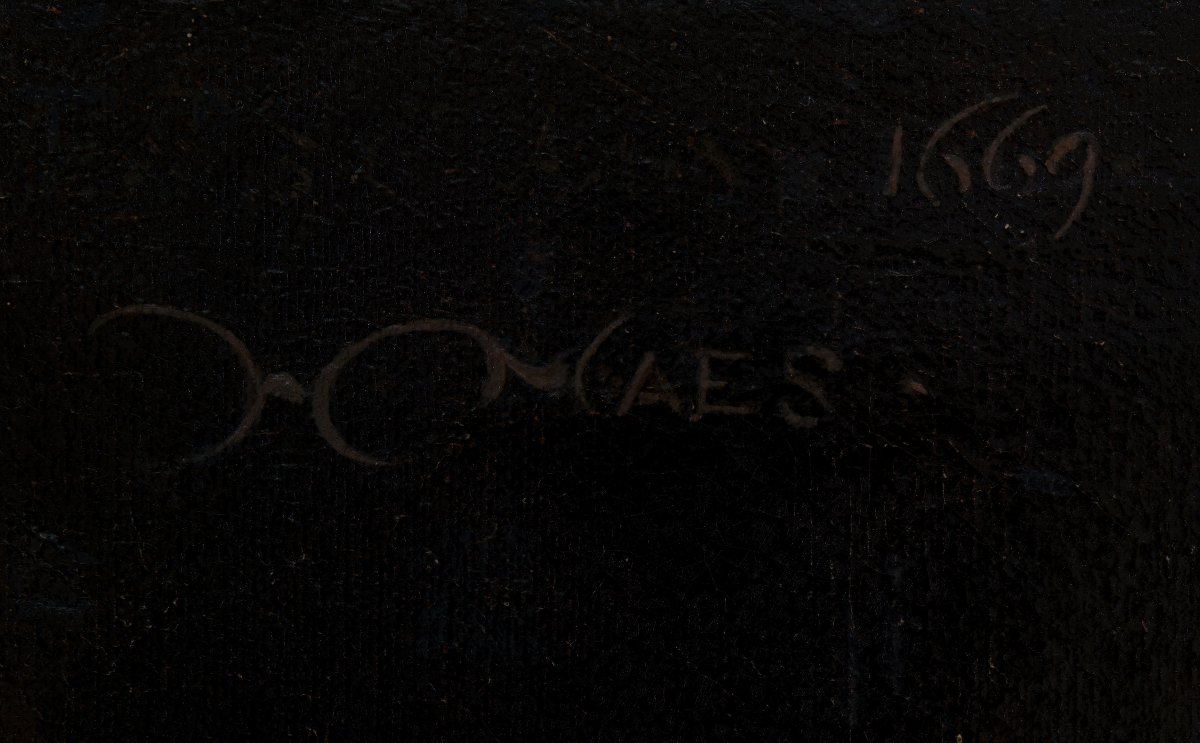
The painting was previously catalogued as “Follower of Sir Peter Lely” and identified as Sarah Churchill, Duchess of Marlborough, with faint upper inscriptions reflecting that tradition. However, conservation treatment revealed beneath later surface accretions a painted signature reading “MAES” and the date 1669 at upper right. The earlier Marlborough identification cannot be sustained. The dukedom of Marlborough was not created until 1702, and the costume and stylistic language here are firmly rooted in the late 1660s rather than the early eighteenth century.
The present attribution to Nicolaes Maes rests on both the signature and the stylistic character of the work. By the later 1660s Maes had established himself as a leading portraitist of the Dutch Republic, developing a polished and courtly manner distinct from his earlier Rembrandtesque genre scenes. The handling of satin — broad, confident strokes defining volume, sharpened by precise highlights — corresponds closely with Maes’s mature portraits. The smooth modelling of the face, the subtle elongation of the hands, and the compositional framing with drapery and landscape align with his established vocabulary of the period. The coherence between signature, date, and stylistic execution supports the present attribution.
In 1669 England was less than a decade into the reign of Charles II, and the cultural climate was defined by renewed appetite for Continental refinement. Anglo-Dutch artistic exchange was vigorous; portraiture served as a vehicle of identity, status, and international sophistication. This painting sits precisely within that milieu, reflecting the shared aesthetic language that linked Amsterdam, The Hague, and London.
The portrait is housed in an ornate gilded frame of suitable scale, whose scrolling ornament and warm gilding complement the cool tonality of the composition and reinforce its aristocratic presence.
Large-scale female portraits of this date, particularly those retaining a visible signature and date, are uncommon in today’s market. This work stands apart through its condition, scale, and confident painterly execution. It offers a compelling and visually commanding example of late seventeenth-century court portraiture, attributed to one of the most accomplished painters of the period, and represents a rare opportunity to acquire a substantial and distinguished work of the Restoration era.
Nicolaes Maes (1634–1693) was one of the most distinguished Dutch painters of the seventeenth century. Born in Dordrecht, he trained in Amsterdam under Rembrandt van Rijn in the early 1650s, absorbing his master’s rich tonal modelling and psychological sensitivity. Maes first achieved success with intimate genre scenes, but by the early 1660s he had turned increasingly to portraiture, developing a polished and elegant court style that proved highly fashionable among the Dutch elite. His later portraits, characterised by refined satin handling, composed gestures, and luminous flesh tones, reflect the growing international taste shared between the Dutch Republic and Restoration England. By the 1660s and 1670s Maes was one of the most sought-after portraitists in Amsterdam, securing commissions from prominent regent families and affluent patrons. His work today is represented in major museum collections including the Rijksmuseum, the National Gallery, London, and the Metropolitan Museum of Art.
Measurements: Height 133.5cm, Width 113cm framed (Height 52.5”, Width 44.5” framed)
The lady is depicted in the height of late 1660s fashion. She wears a lustrous pale satin gown cut with a broad oval neckline edged in fine linen chemise, the sleeves gathered and softly structured above the elbow. A rich green sash is knotted at the waist and falls in controlled folds that animate the lower half of the composition. Pearls at the neck and ears provide restrained brilliance, signifiers of cultivated rank rather than ostentation. Her hair, arranged in smooth sections and defined ringlets, accords precisely with elite fashion of circa 1665–1670. The controlled balance between elegance and composure reflects the international court style shared between England and the Dutch Republic in the later Restoration decade.
The sitter is likely in her early to mid-thirties. Her expression is composed, self-possessed, and direct. The physiognomy suggests established social standing — perhaps a woman already secure within her family or dynastic position. Portraits of this scale were typically commissioned not only for marriage, but also to affirm lineage, consolidate inheritance, or mark continued status within landed or mercantile elite circles. The garden setting, with its classical fountain motif, reinforces associations of cultivated estate life and continuity.
The painting was previously catalogued as “Follower of Sir Peter Lely” and identified as Sarah Churchill, Duchess of Marlborough, with faint upper inscriptions reflecting that tradition. However, conservation treatment revealed beneath later surface accretions a painted signature reading “MAES” and the date 1669 at upper right. The earlier Marlborough identification cannot be sustained. The dukedom of Marlborough was not created until 1702, and the costume and stylistic language here are firmly rooted in the late 1660s rather than the early eighteenth century.
The present attribution to Nicolaes Maes rests on both the signature and the stylistic character of the work. By the later 1660s Maes had established himself as a leading portraitist of the Dutch Republic, developing a polished and courtly manner distinct from his earlier Rembrandtesque genre scenes. The handling of satin — broad, confident strokes defining volume, sharpened by precise highlights — corresponds closely with Maes’s mature portraits. The smooth modelling of the face, the subtle elongation of the hands, and the compositional framing with drapery and landscape align with his established vocabulary of the period. The coherence between signature, date, and stylistic execution supports the present attribution.
In 1669 England was less than a decade into the reign of Charles II, and the cultural climate was defined by renewed appetite for Continental refinement. Anglo-Dutch artistic exchange was vigorous; portraiture served as a vehicle of identity, status, and international sophistication. This painting sits precisely within that milieu, reflecting the shared aesthetic language that linked Amsterdam, The Hague, and London.
The portrait is housed in an ornate gilded frame of suitable scale, whose scrolling ornament and warm gilding complement the cool tonality of the composition and reinforce its aristocratic presence.
Large-scale female portraits of this date, particularly those retaining a visible signature and date, are uncommon in today’s market. This work stands apart through its condition, scale, and confident painterly execution. It offers a compelling and visually commanding example of late seventeenth-century court portraiture, attributed to one of the most accomplished painters of the period, and represents a rare opportunity to acquire a substantial and distinguished work of the Restoration era.
Nicolaes Maes (1634–1693) was one of the most distinguished Dutch painters of the seventeenth century. Born in Dordrecht, he trained in Amsterdam under Rembrandt van Rijn in the early 1650s, absorbing his master’s rich tonal modelling and psychological sensitivity. Maes first achieved success with intimate genre scenes, but by the early 1660s he had turned increasingly to portraiture, developing a polished and elegant court style that proved highly fashionable among the Dutch elite. His later portraits, characterised by refined satin handling, composed gestures, and luminous flesh tones, reflect the growing international taste shared between the Dutch Republic and Restoration England. By the 1660s and 1670s Maes was one of the most sought-after portraitists in Amsterdam, securing commissions from prominent regent families and affluent patrons. His work today is represented in major museum collections including the Rijksmuseum, the National Gallery, London, and the Metropolitan Museum of Art.
Measurements: Height 133.5cm, Width 113cm framed (Height 52.5”, Width 44.5” framed)
17 250 €
Period: 17th century
Style: Louis 14th, Regency
Condition: Excellent condition
Material: Oil painting
Width: 113
Height: 133.5
Depth: 8
Reference (ID): 1717382
Availability: In stock
Print