


Bronze Female Leopard Edo Culture Kingdom Of Benin Nigeria 20th Century
Bronze female leopard, Kingdom of Benin (20th century) - Edo culture - Region: Kingdom of Benin, Nigeria - Material: Bronze - Lost-wax casting - Dimensions: Length 30cm, width 10cm, height 25cm - Weight: 3.370kg - Period: Mid-20th century (1920–1960) - Place of production: Benin City, Edo State, Nigeria. International delivery available.
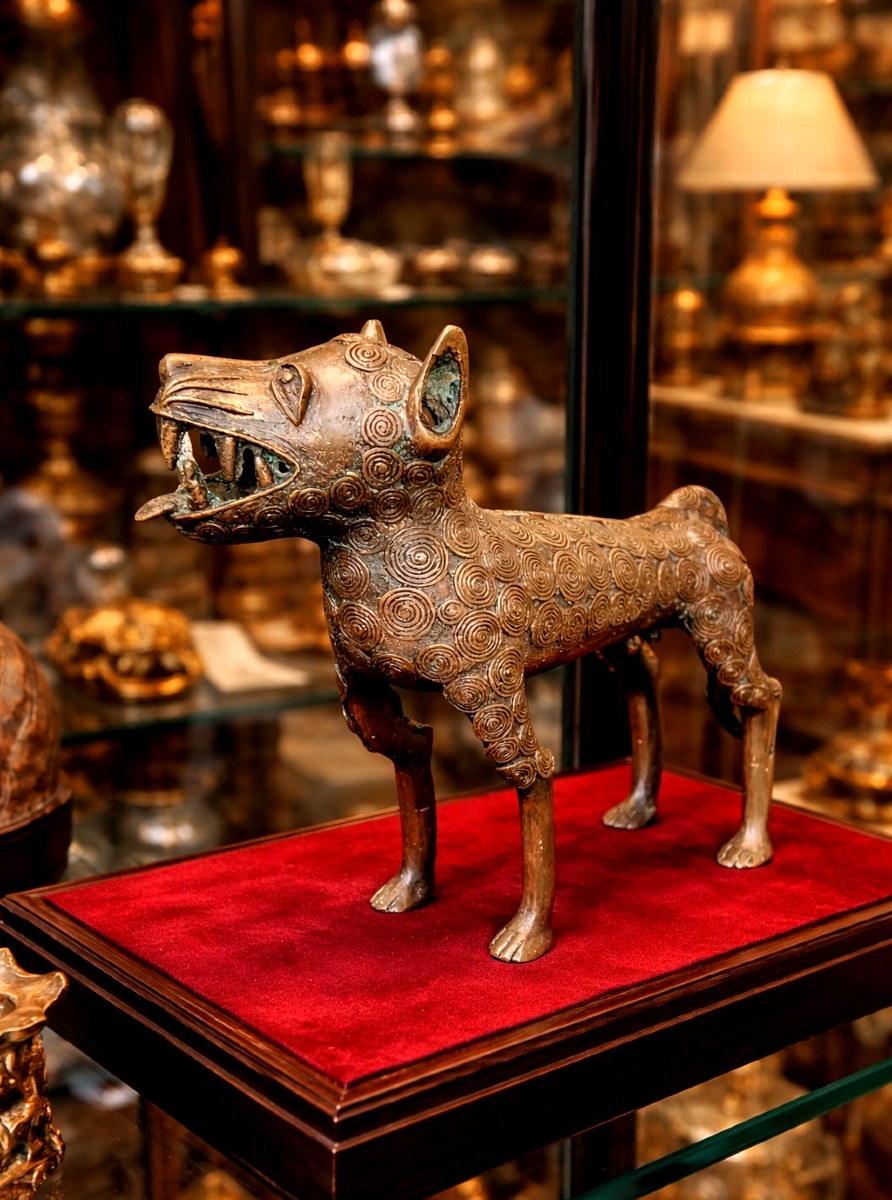
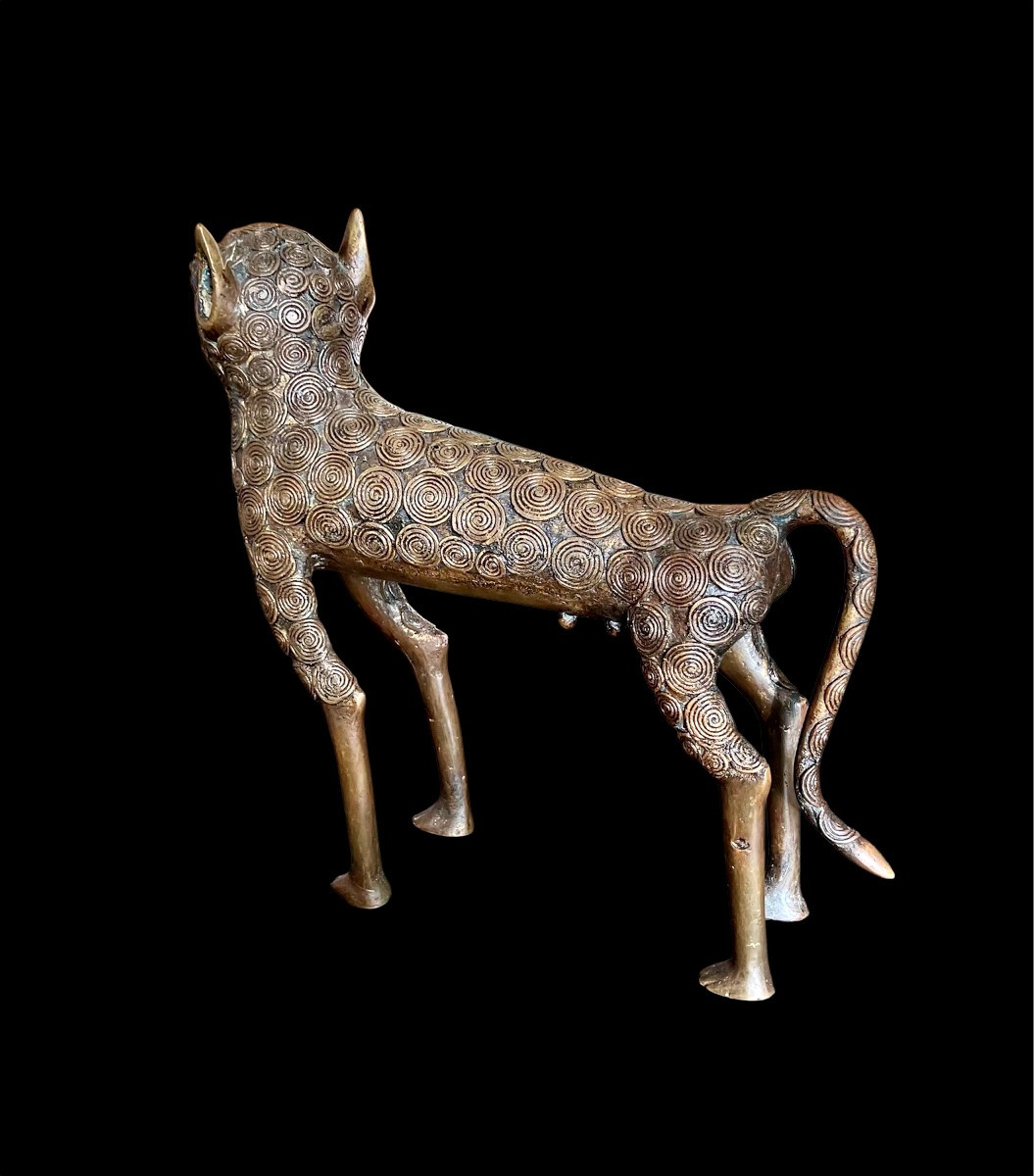
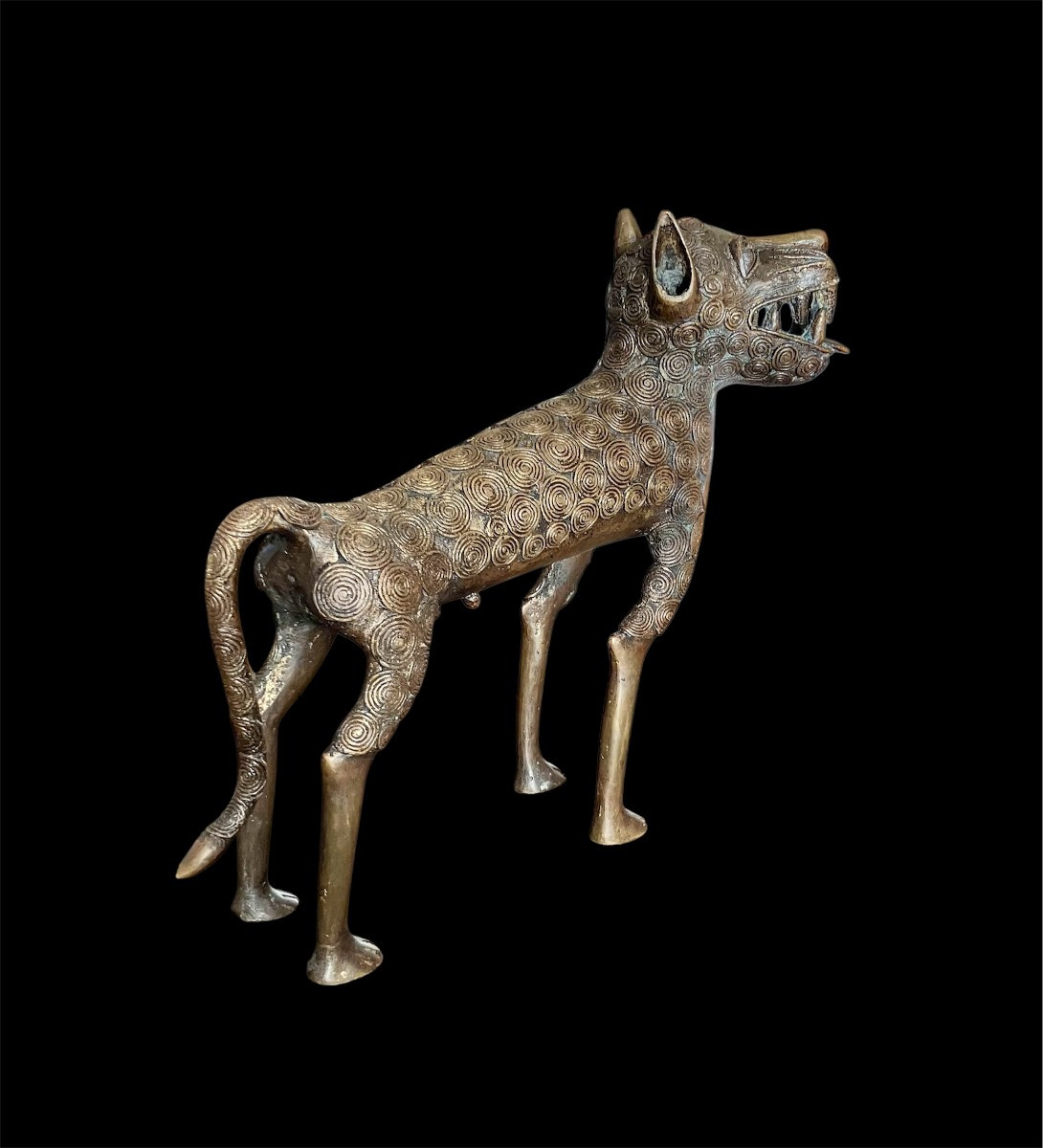
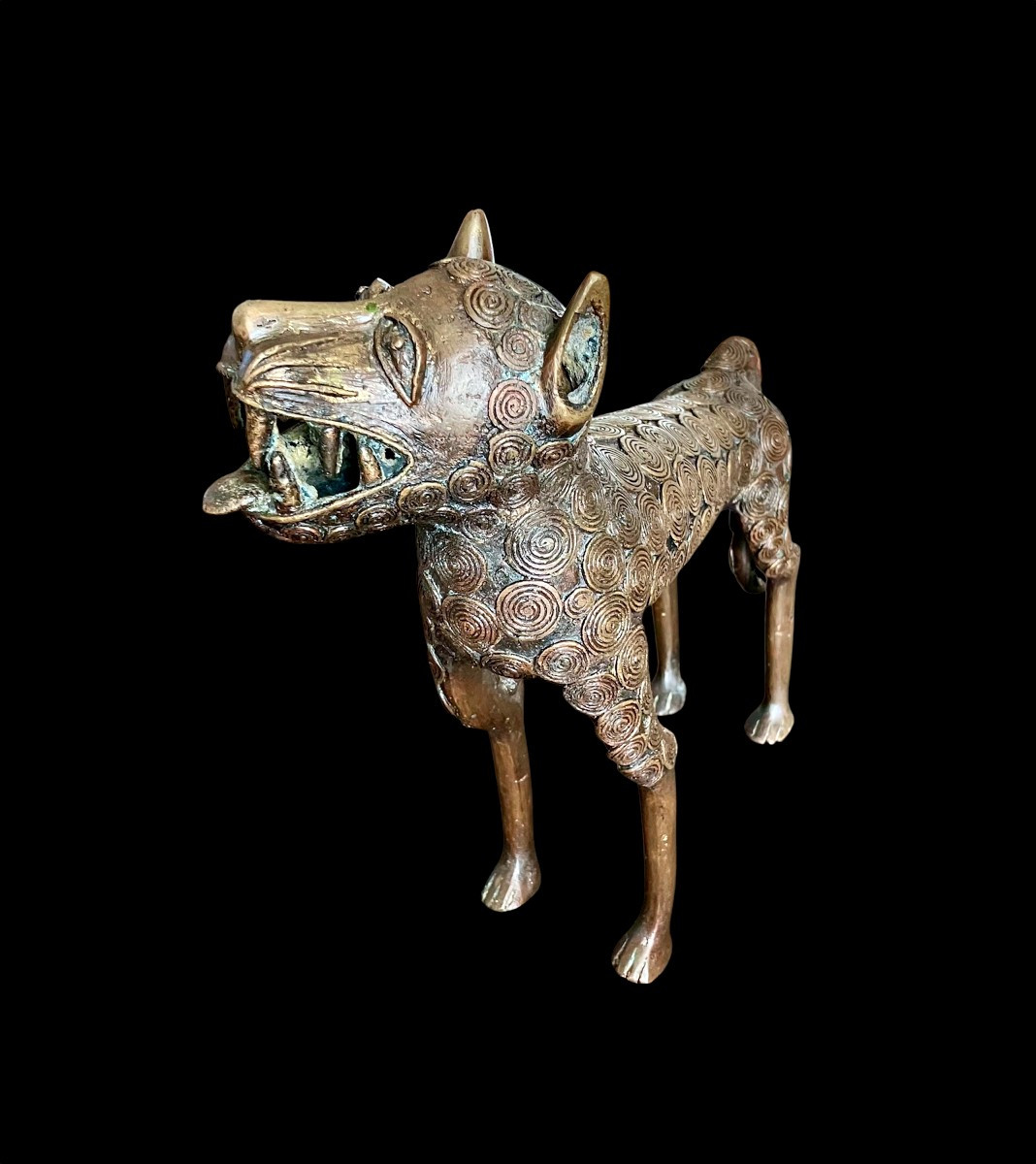
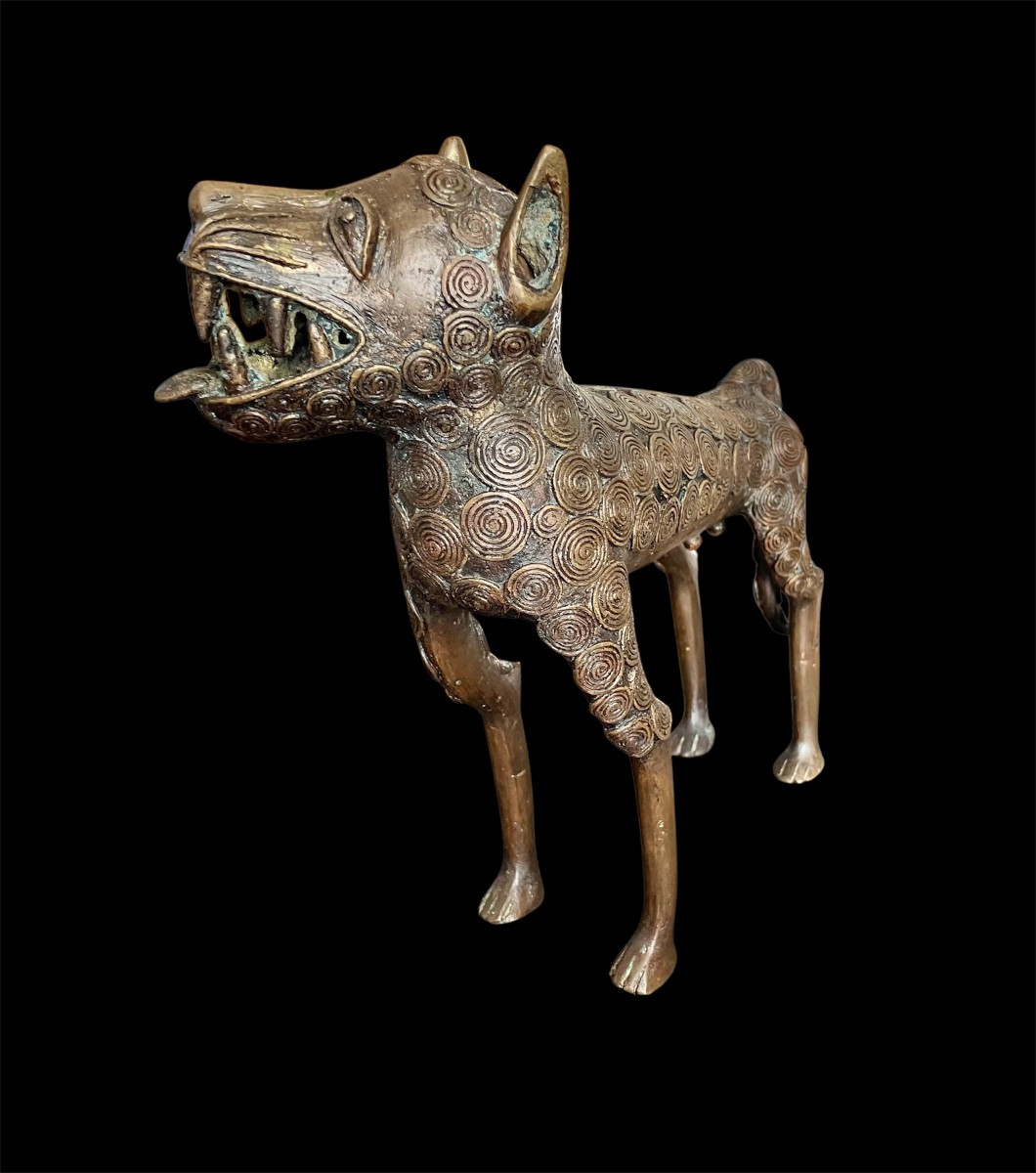
This sculpture depicts a standing female leopard in a hieratic and static pose typical of Edo royal models. The head is expressive, with an open mouth, visible teeth, and erect ears, conveying vigilance and power. The body is covered with a stylized spiral motif, characteristic of Edo art, representing the fur and ocelli (eye-like markings).
The female anatomy is explicitly represented by four breasts and the genitals beneath the tail, a symbol of fertility, motherhood, and dynastic continuity, reinforcing the sculpture's role in royal symbolism. The base and surfaces show traces of the lost-wax casting process, as well as a golden-brown patina with green oxidation in the recesses, attesting to its handcrafted production and age.
The leopard (ekpen) is the emblematic animal of the Oba (king) in Edo culture, representing power, vigilance, and authority. The depiction of a female leopard introduces an element of fertility and prosperity for the kingdom, likely associated with the protection of the royal lineage and dynastic continuity.
This sculpture illustrates the continuity of the Edo tradition into the 20th century, following the dispersal of the palace bronzes during the Benin Expedition of 1897, while preserving the aesthetic and symbolic codes of the earlier royal models.
State of preservation: Stable natural patina, slight traces of wear on the reliefs and legs, base showing irregularities related to the lost-wax casting, no missing elements or major cracks.
This sculpture depicts a standing female leopard in a hieratic and static pose typical of Edo royal models. The head is expressive, with an open mouth, visible teeth, and erect ears, conveying vigilance and power. The body is covered with a stylized spiral motif, characteristic of Edo art, representing the fur and ocelli (eye-like markings).
The female anatomy is explicitly represented by four breasts and the genitals beneath the tail, a symbol of fertility, motherhood, and dynastic continuity, reinforcing the sculpture's role in royal symbolism. The base and surfaces show traces of the lost-wax casting process, as well as a golden-brown patina with green oxidation in the recesses, attesting to its handcrafted production and age.
The leopard (ekpen) is the emblematic animal of the Oba (king) in Edo culture, representing power, vigilance, and authority. The depiction of a female leopard introduces an element of fertility and prosperity for the kingdom, likely associated with the protection of the royal lineage and dynastic continuity.
This sculpture illustrates the continuity of the Edo tradition into the 20th century, following the dispersal of the palace bronzes during the Benin Expedition of 1897, while preserving the aesthetic and symbolic codes of the earlier royal models.
State of preservation: Stable natural patina, slight traces of wear on the reliefs and legs, base showing irregularities related to the lost-wax casting, no missing elements or major cracks.
1 200 €
Period: 20th century
Style: Tribal Art
Condition: Excellent condition
Material: Bronze
Length: 30
Width: 10
Height: 25
Reference (ID): 1719174
Availability: In stock
Print