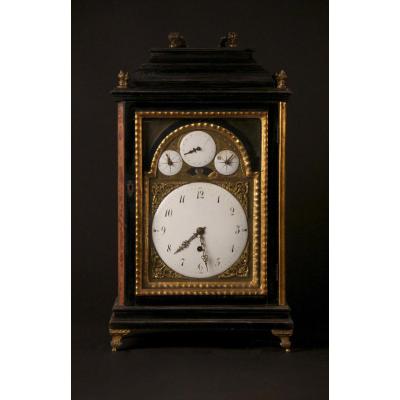


Religious Clock In Red Tortoiseshell And Brass Inlay, From The Louis XIV Period.
Artist: Gaudoin
Movement signed Gaudoin Paris.
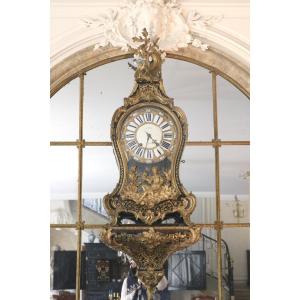
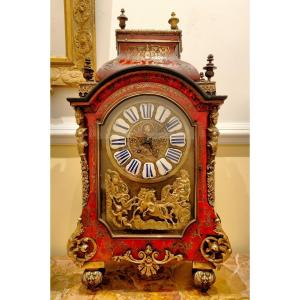
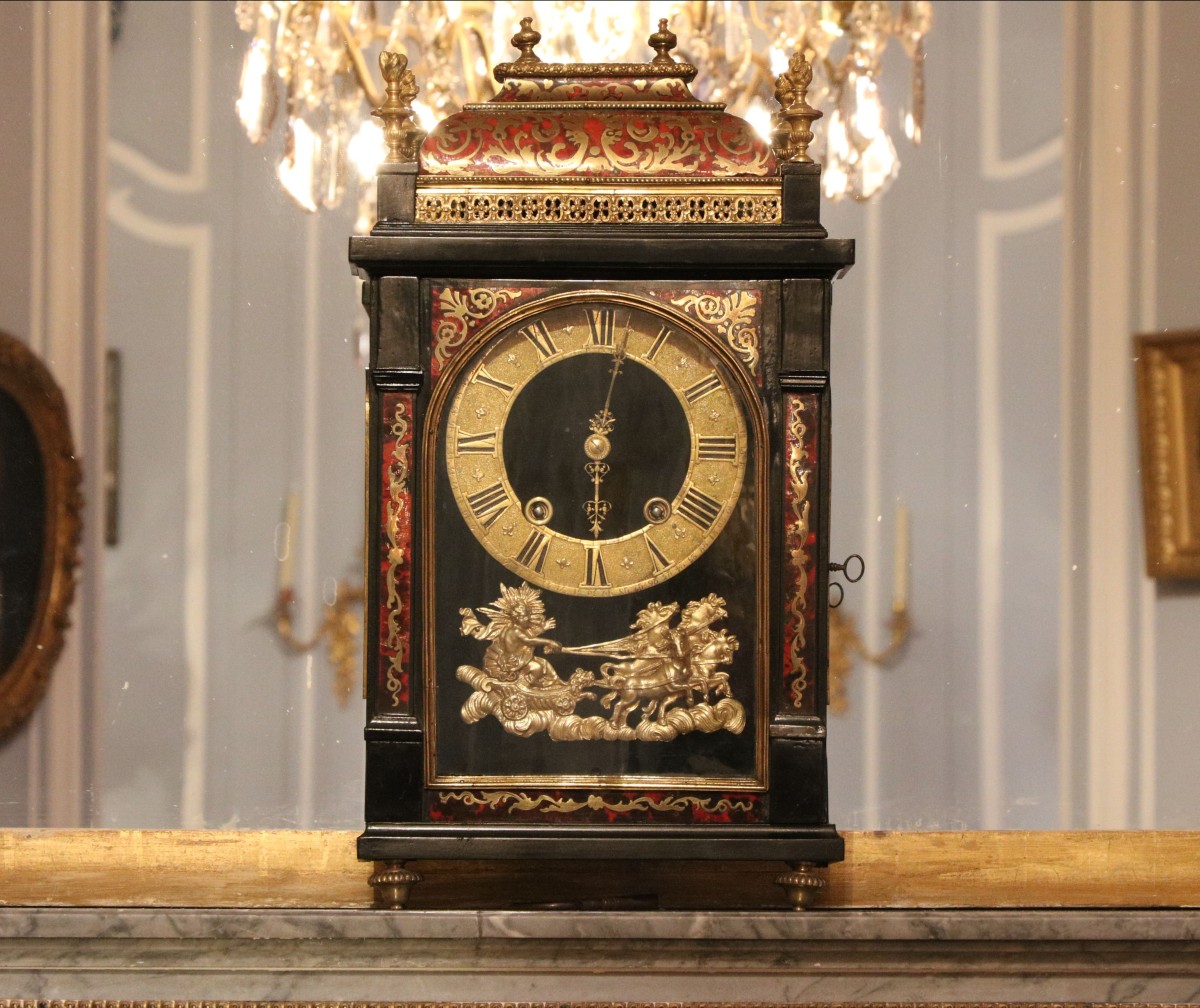
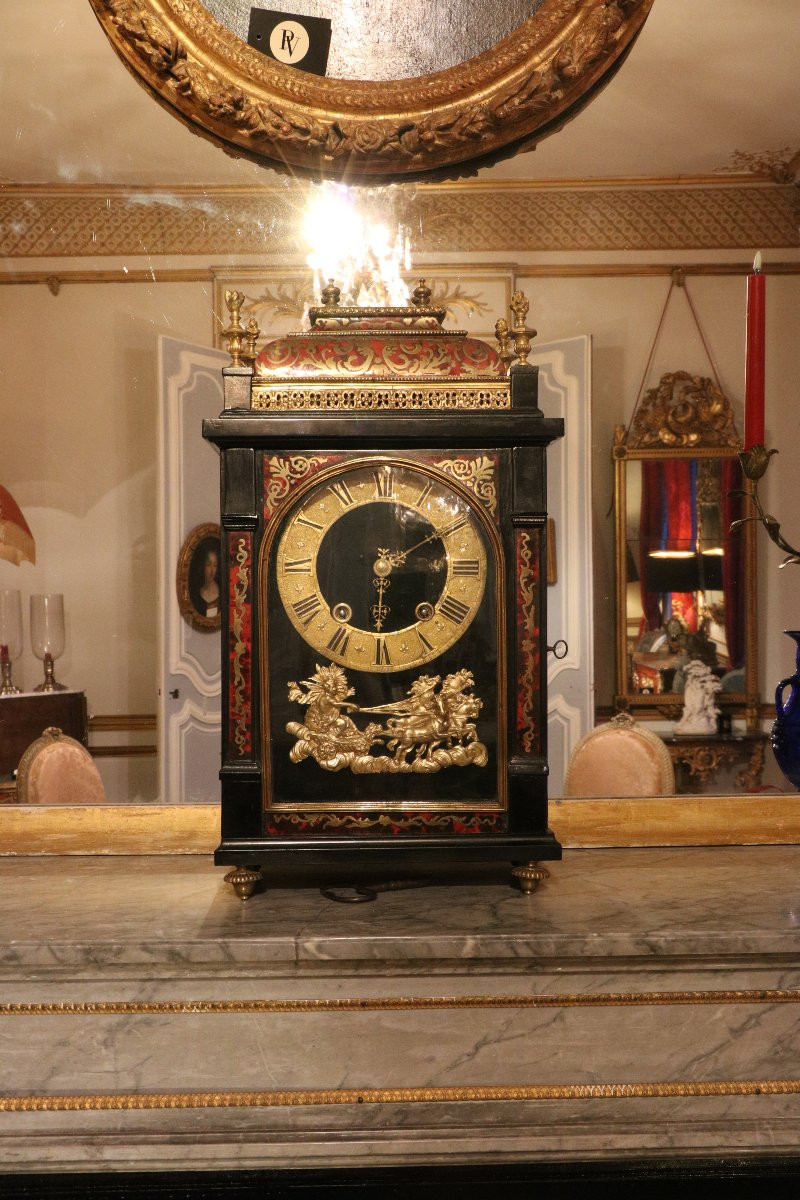
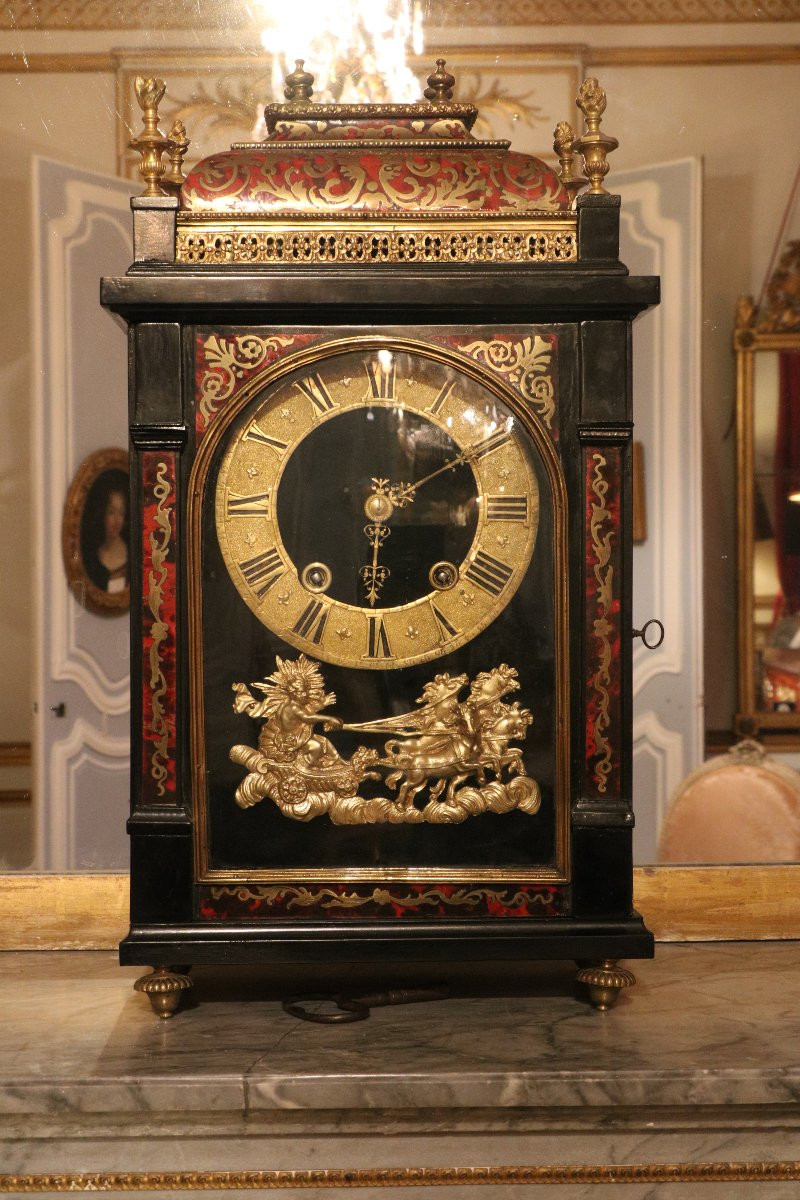
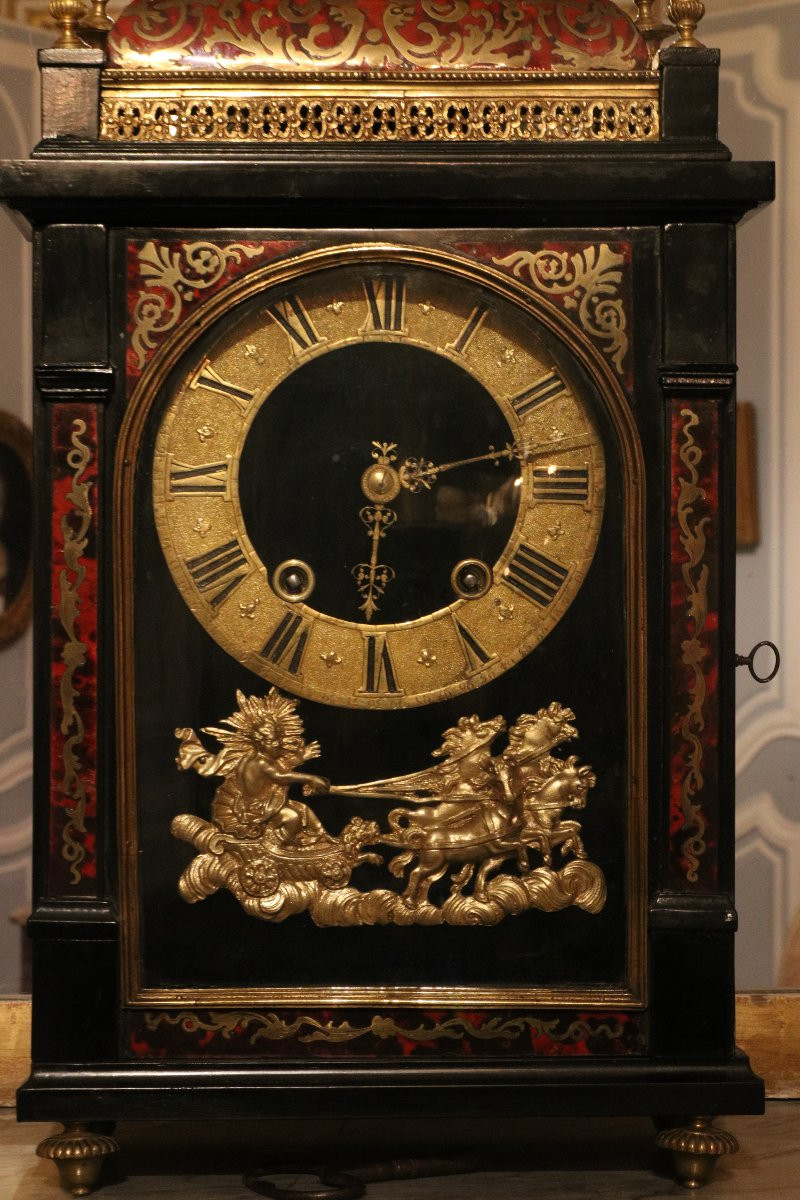
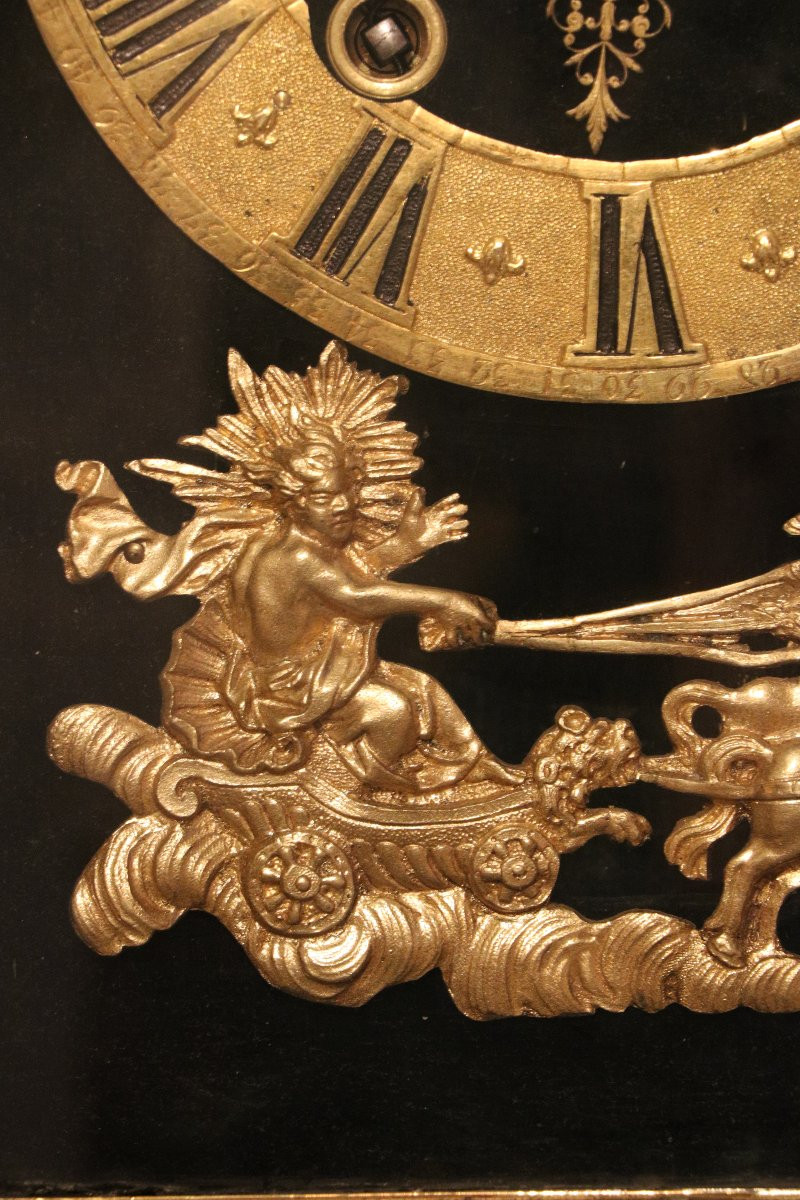
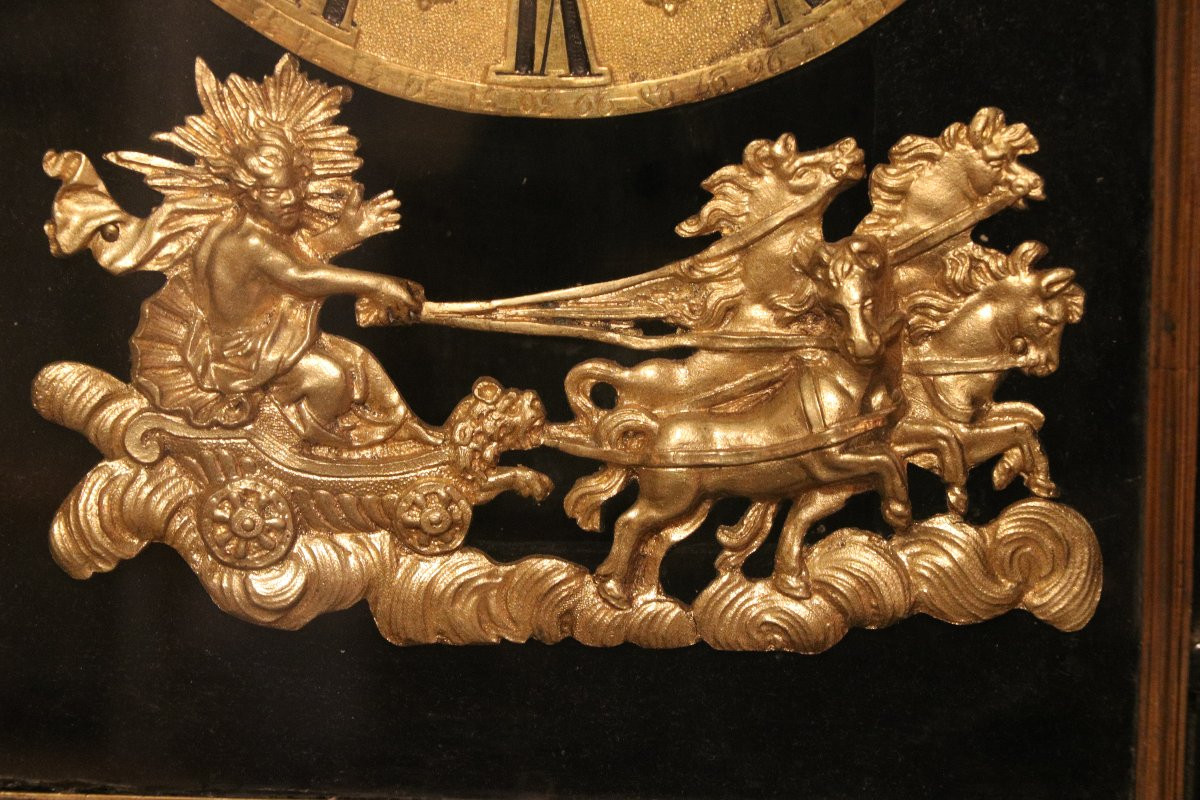
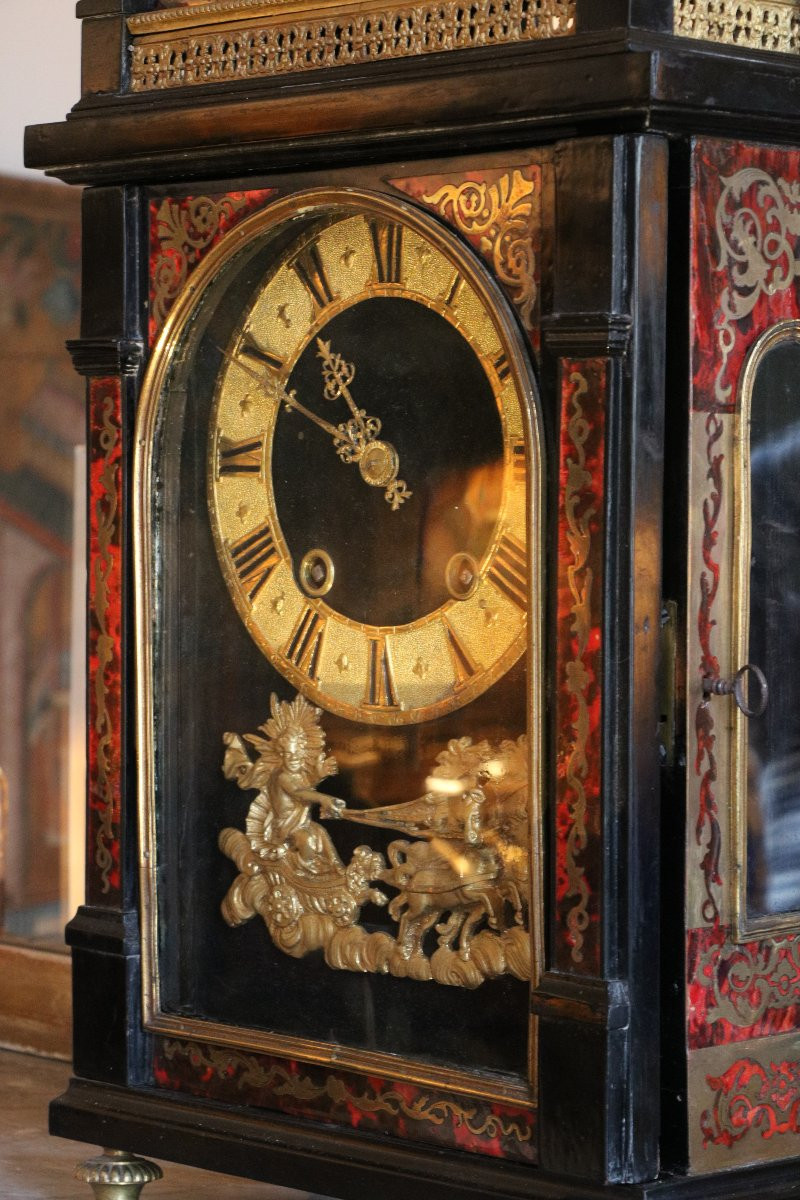
The entire decoration is in two-part marquetry, in the Boulle style; brass on a red tortoiseshell ground. The architectural façade is framed by two pilasters. The sides are openwork, allowing a glimpse of the clock's inner workings behind a glass panel. The dial features a gilt bronze decoration depicting Apollo's chariot.
The clock rests on four gadrooned toupie feet. The cornice, adorned with beaded friezes, rests on an openwork gallery, surmounted by four finials and four closely spaced finials.
So-called "Religious" clocks, created primarily at the beginning of Louis XIV's reign, are characterized by their simplicity, austerity, and style reminiscent of Louis XIII. Their form and ornamentation are inspired by the architecture of the period, often representing the façade of a palace.
The decorative elements of these clocks, such as the pilasters, cornices, and pediments, are similar to those found on buildings like the Palais Mazarin or the Institut de France. The clock cases were primarily made of walnut or sometimes oak, and their decoration ranged from simplicity (a case veneered in ebony or blackened pearwood) to richer ornamentation such as inlays of copper, ivory, or tortoiseshell. The earliest clocks were minimalist, with a simple pediment, while the more elaborate ones incorporated columns and more sumptuous decorations, thus marking the evolution towards the grand style.
Louis XIV period, circa 1700.
Used condition.
H. 57 x W. 31 x D. 14 cm
The entire decoration is in two-part marquetry, in the Boulle style; brass on a red tortoiseshell ground. The architectural façade is framed by two pilasters. The sides are openwork, allowing a glimpse of the clock's inner workings behind a glass panel. The dial features a gilt bronze decoration depicting Apollo's chariot.
The clock rests on four gadrooned toupie feet. The cornice, adorned with beaded friezes, rests on an openwork gallery, surmounted by four finials and four closely spaced finials.
So-called "Religious" clocks, created primarily at the beginning of Louis XIV's reign, are characterized by their simplicity, austerity, and style reminiscent of Louis XIII. Their form and ornamentation are inspired by the architecture of the period, often representing the façade of a palace.
The decorative elements of these clocks, such as the pilasters, cornices, and pediments, are similar to those found on buildings like the Palais Mazarin or the Institut de France. The clock cases were primarily made of walnut or sometimes oak, and their decoration ranged from simplicity (a case veneered in ebony or blackened pearwood) to richer ornamentation such as inlays of copper, ivory, or tortoiseshell. The earliest clocks were minimalist, with a simple pediment, while the more elaborate ones incorporated columns and more sumptuous decorations, thus marking the evolution towards the grand style.
Louis XIV period, circa 1700.
Used condition.
H. 57 x W. 31 x D. 14 cm
5 800 €
Period: 18th century
Style: Louis 14th, Regency
Condition: Condition of use
Material: Bronze
Reference (ID): 1715312
Availability: In stock
Print