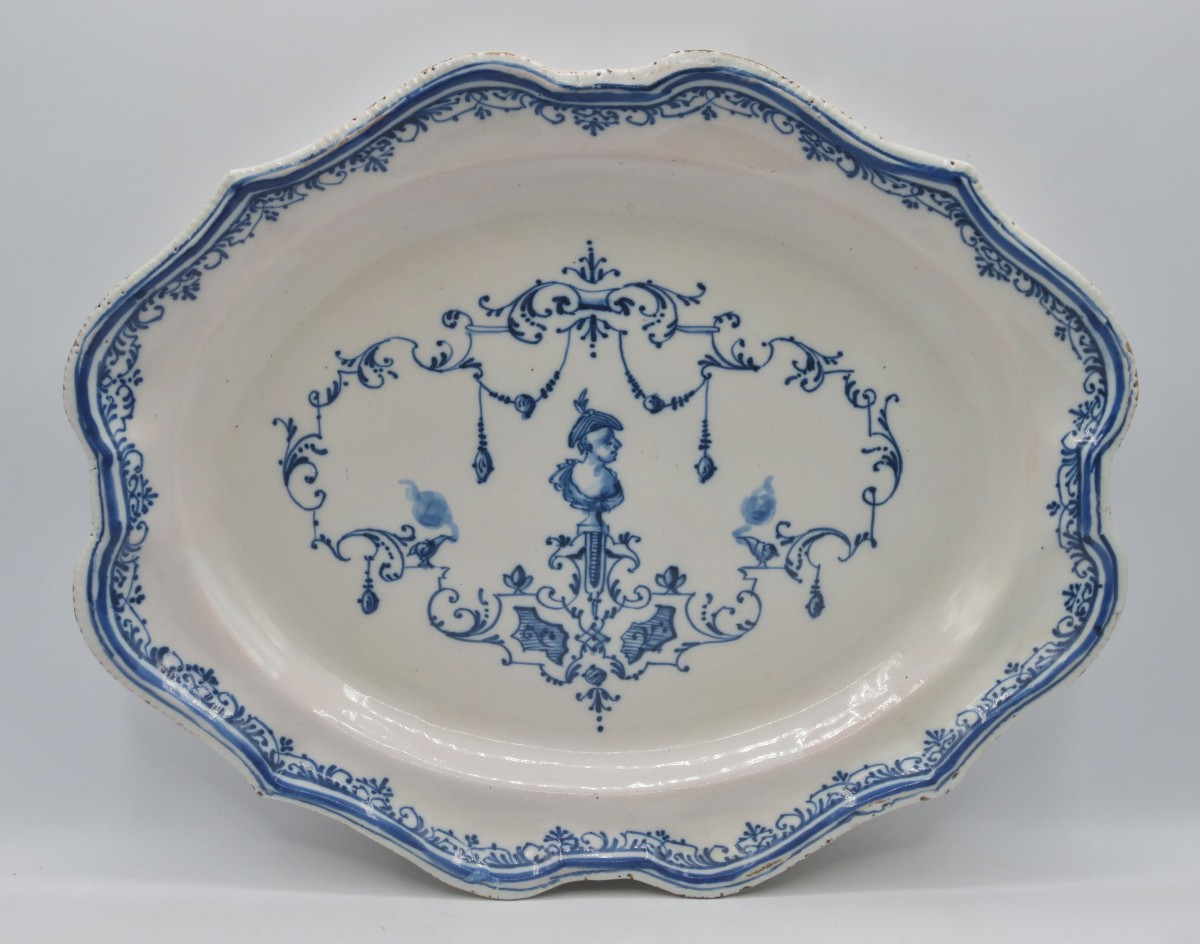
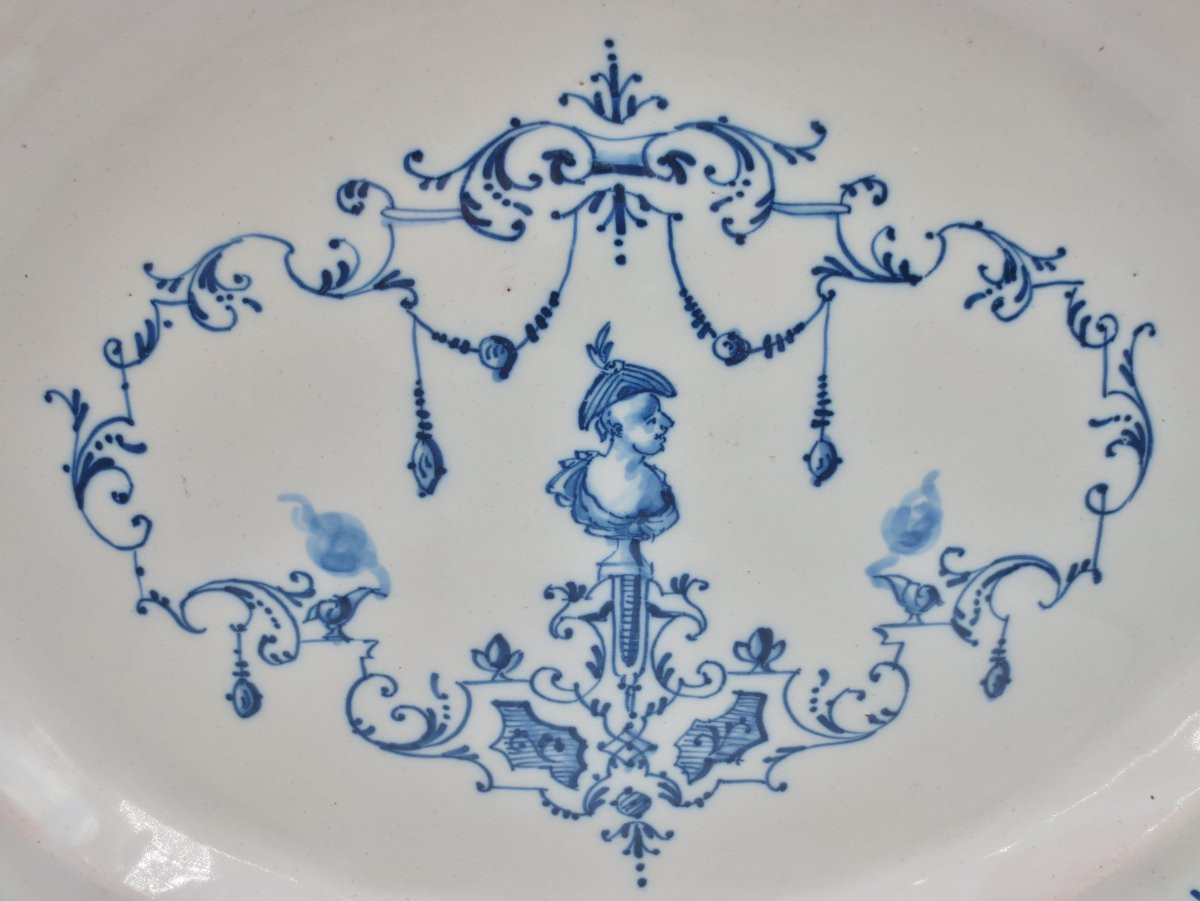
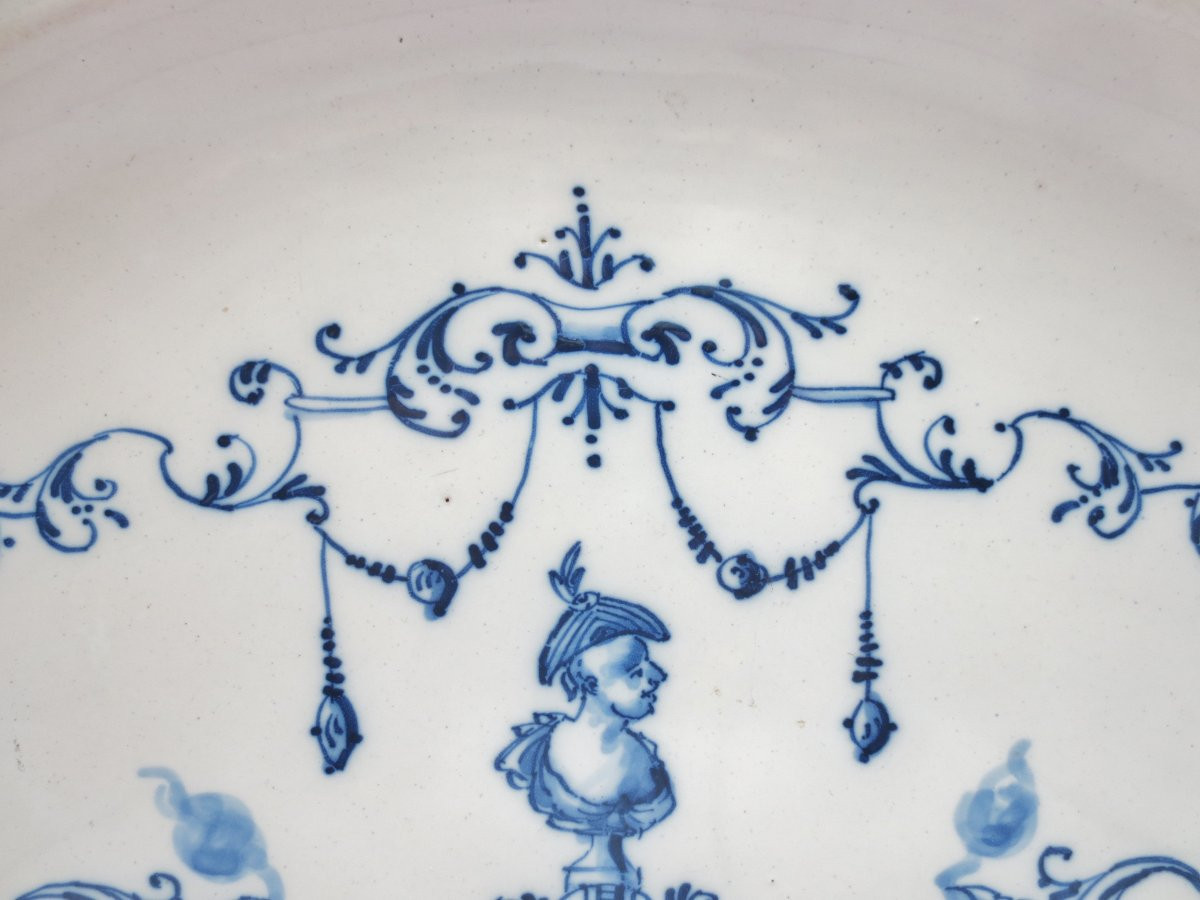
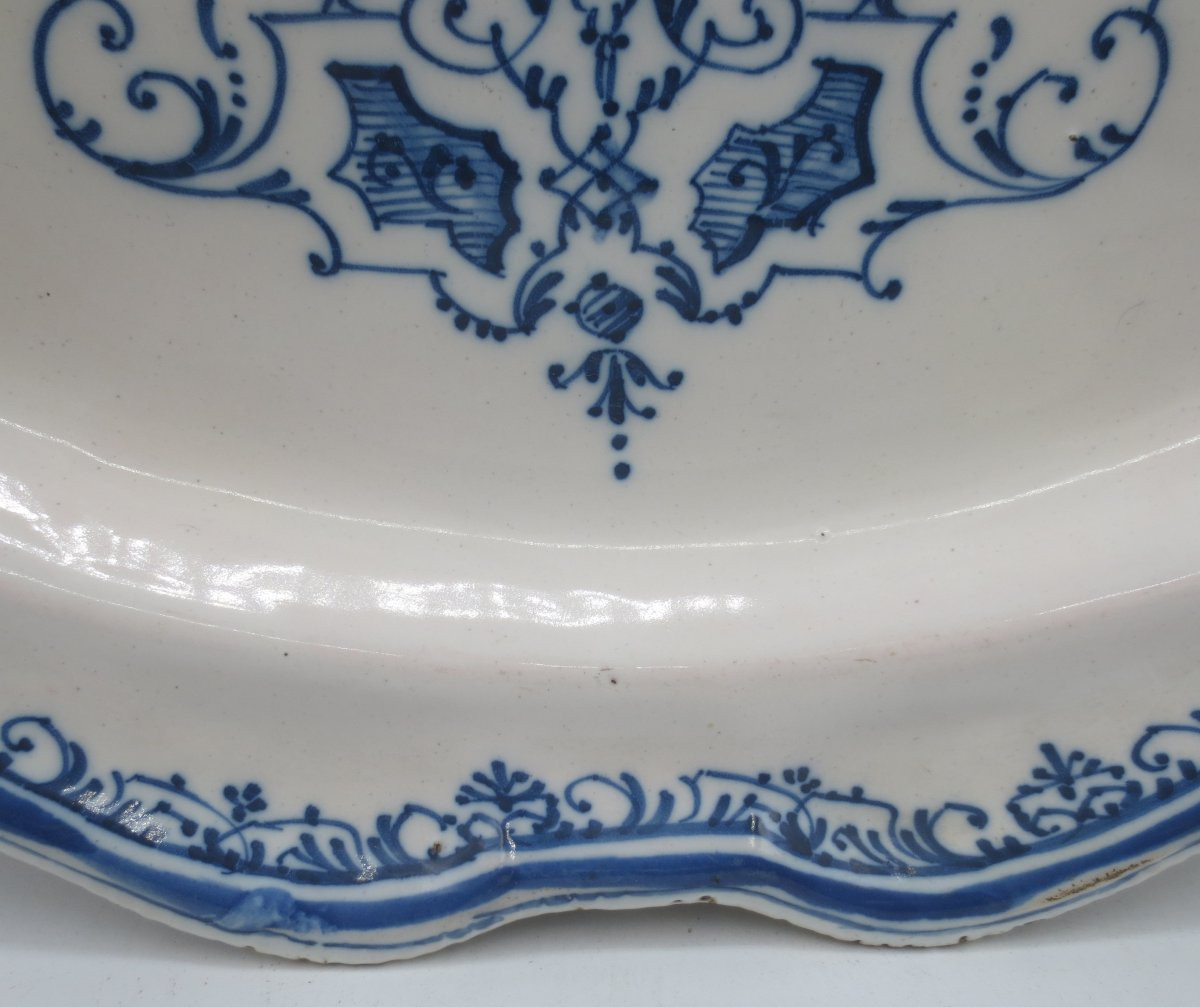
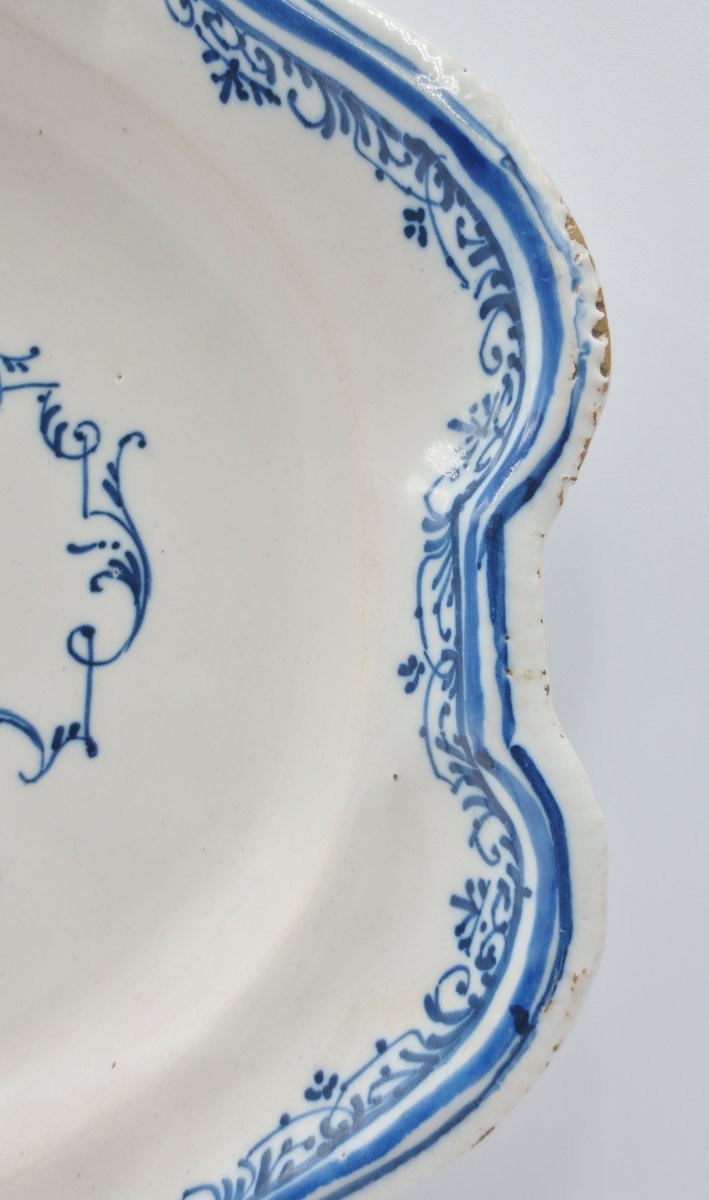
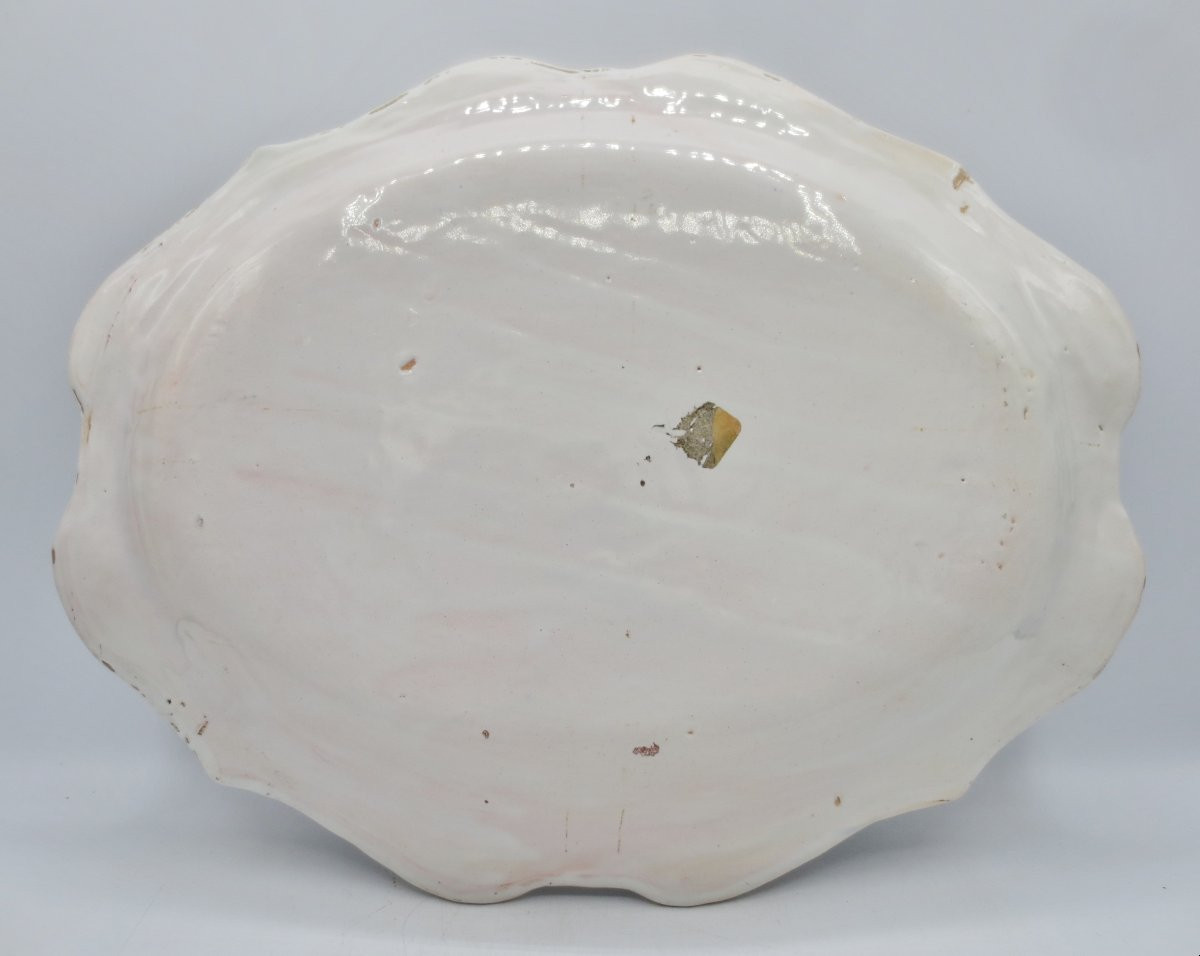
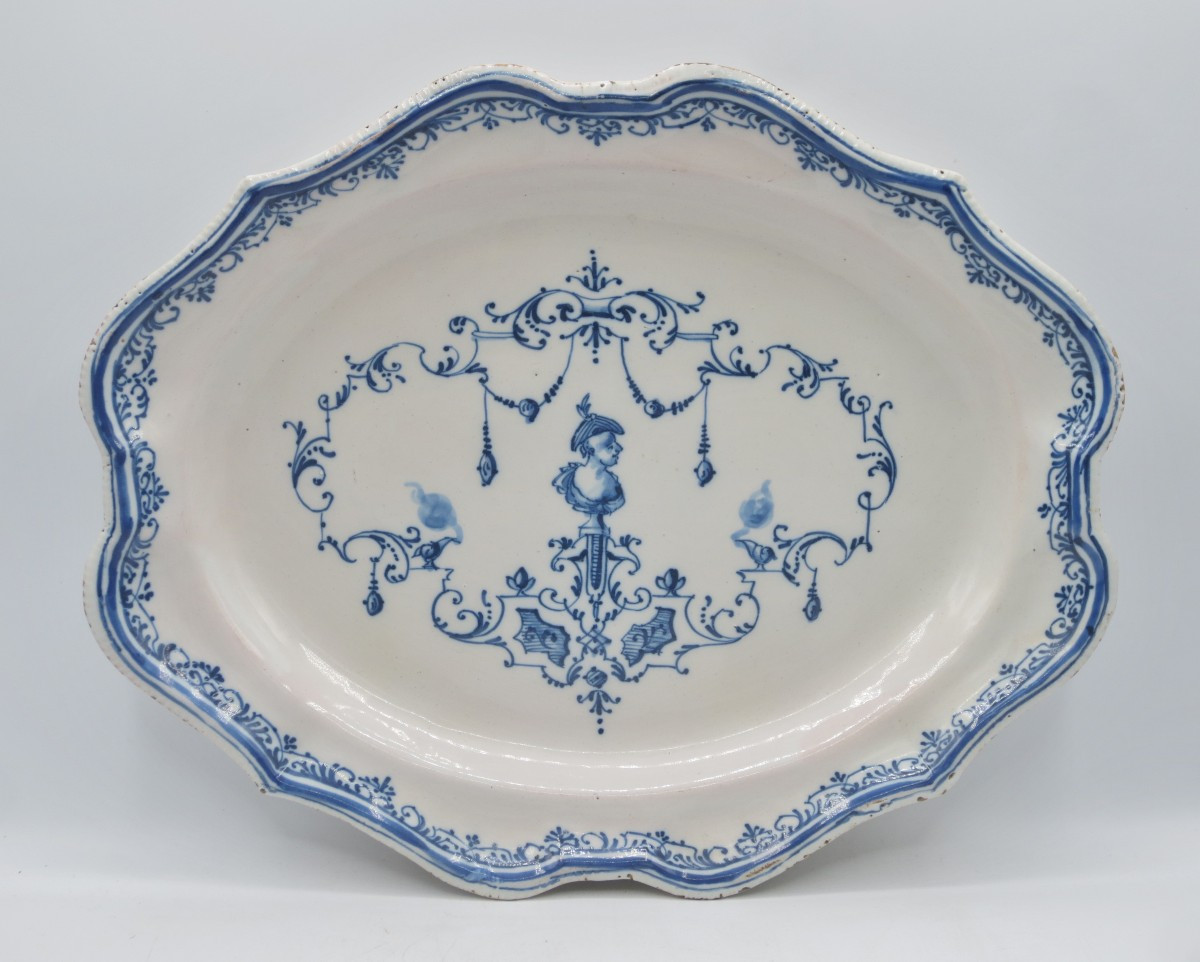


"Earthenware Dish From Moustiers, Early 18th Century. "
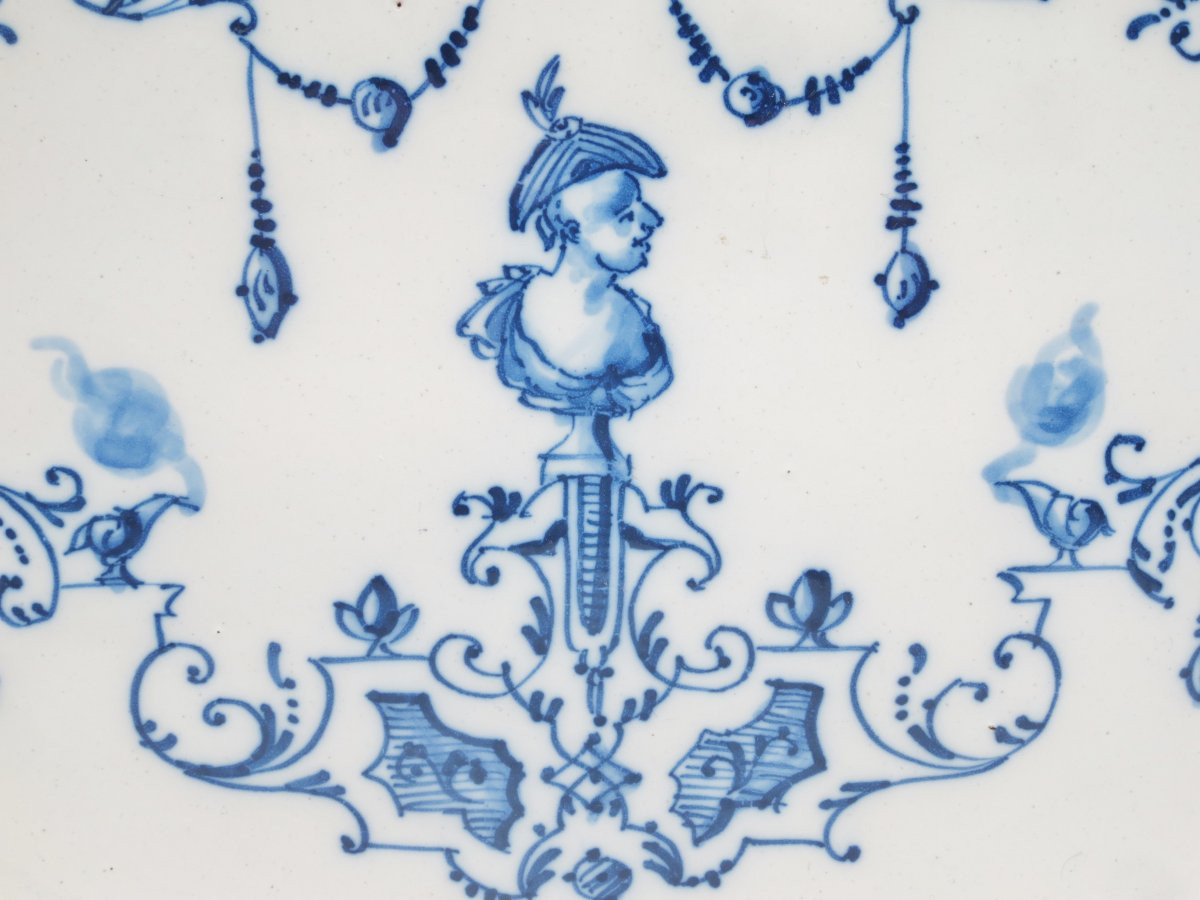
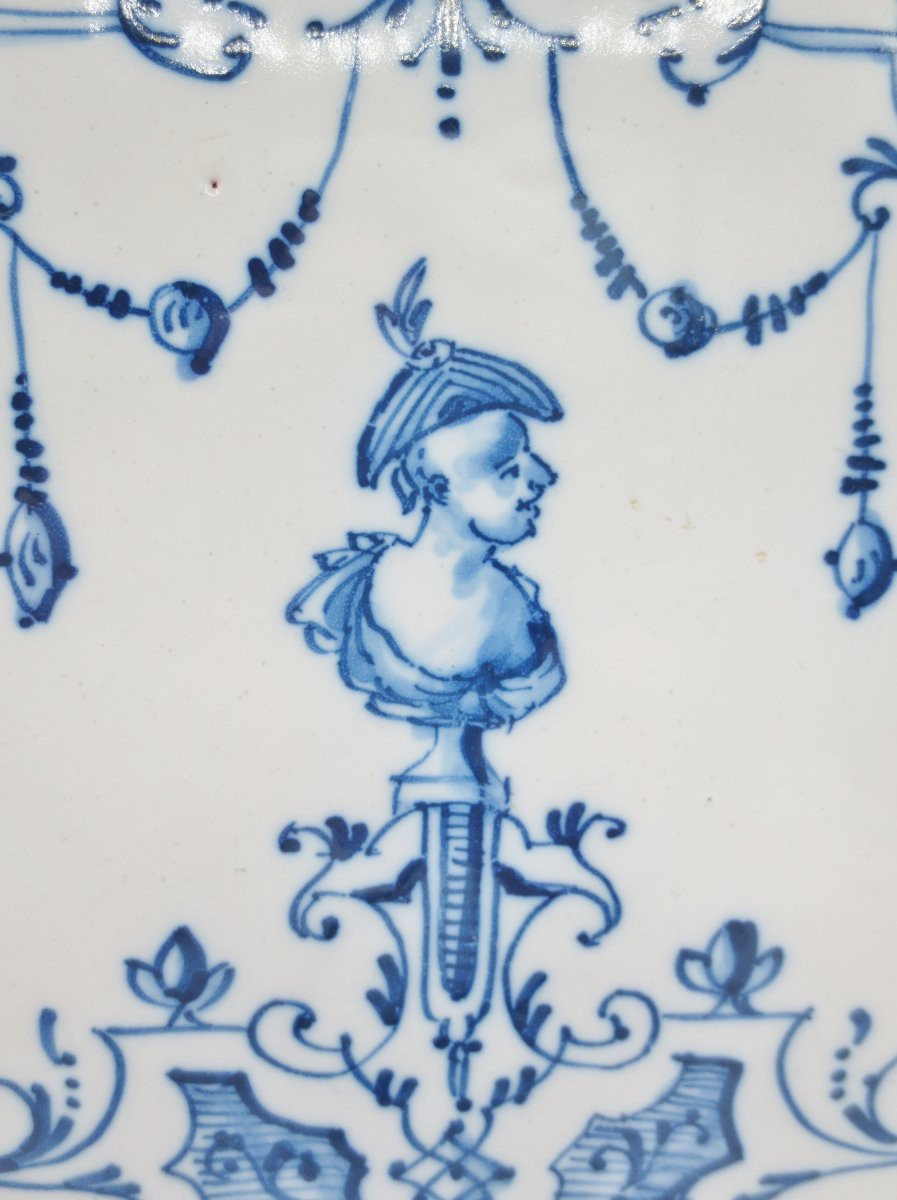
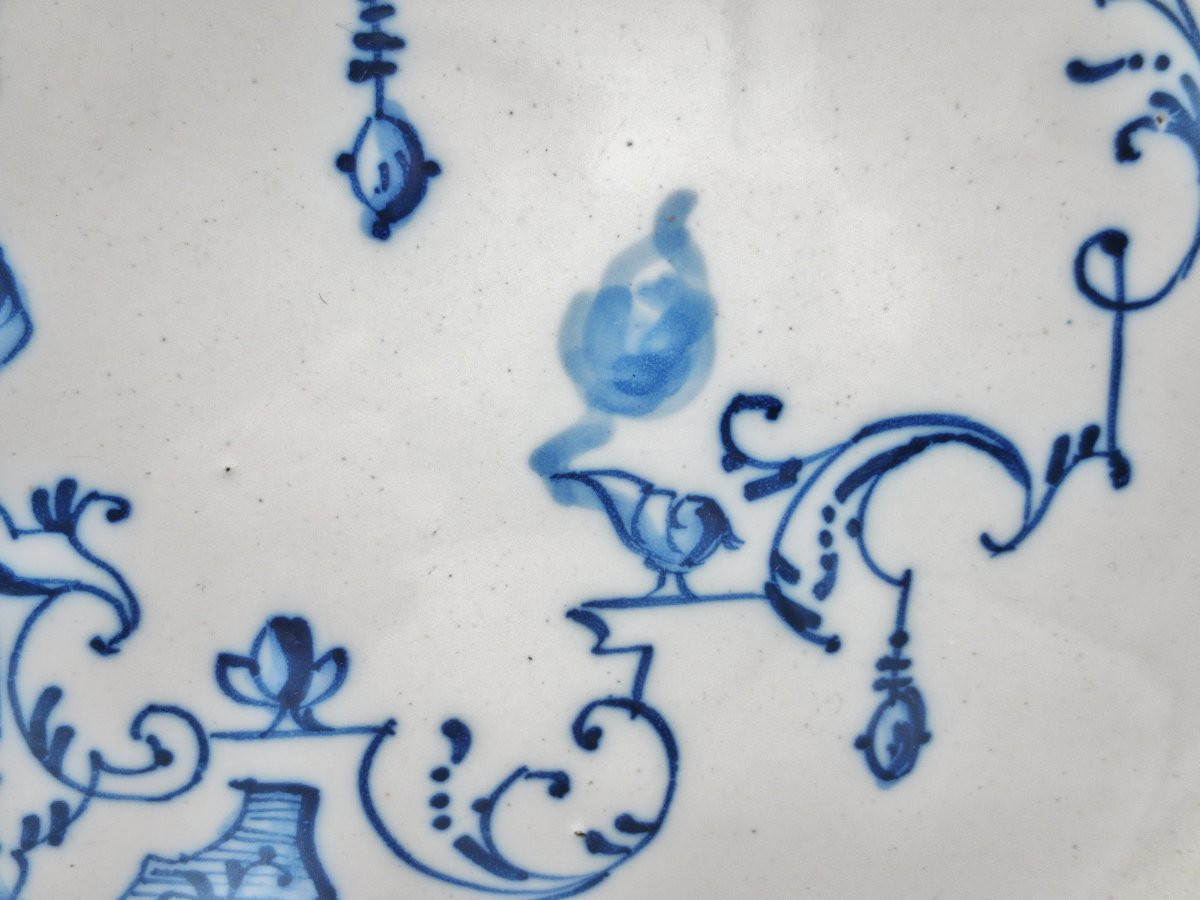
This beautiful dish is characteristic of the "Bérain" style decoration produced in Moustiers during the first quarter of the 18th century. Eric Amourdedieu, in the Moustiers Academy's book, "Moustiers Earthenware from the 17th to the 19th Century," writes about Bérain decoration: "The Bérain style, inspired by the ornamentalist Jean I Bérain, found applications in numerous areas of the decorative arts from the late 17th century and throughout the first half of the 18th century: marquetry (tortoiseshell by André Charles Boulle), tapestry (Gobelins), and of course, ceramics. This majestic decoration is characterized by its symmetry around a central figure surrounded by delicate, interlaced lacework, in the spirit of the Italian Renaissance. Sometimes, it incorporates flat areas with geometric patterns (crosshatching)." The compositions are adorned with busts, caryatids inspired by Antiquity, and precious canopies. They may also include animals (monkeys, birds, etc.) and grotesque or mythological figures that add a touch of fantasy. In the field of ceramics, it enjoyed considerable success in Moustiers, where some major pieces were produced by the Clérissy factory as early as the first quarter of the 18th century. The decoration of the dish we are offering is painted in blue monochrome. Among the scrolls, curves, counter-curves, and other arabesques, in the center is a profile bust framed on either side by an oil lamp emitting smoke. Slightly concave and with a contoured shape, this oblong dish is decorated on the rim with a wrought iron frieze and three parallel lines along the edge. In very good overall condition, it shows a few small chips to the enamel on the rim. Early 18th century, Moustiers. Dimensions 37.5 cm x 30 cm. 









 Le Magazine de PROANTIC
 TRÉSORS Magazine
 Rivista Artiquariato