

White Marble Ex-voto, Italy, Circa 1730–1740
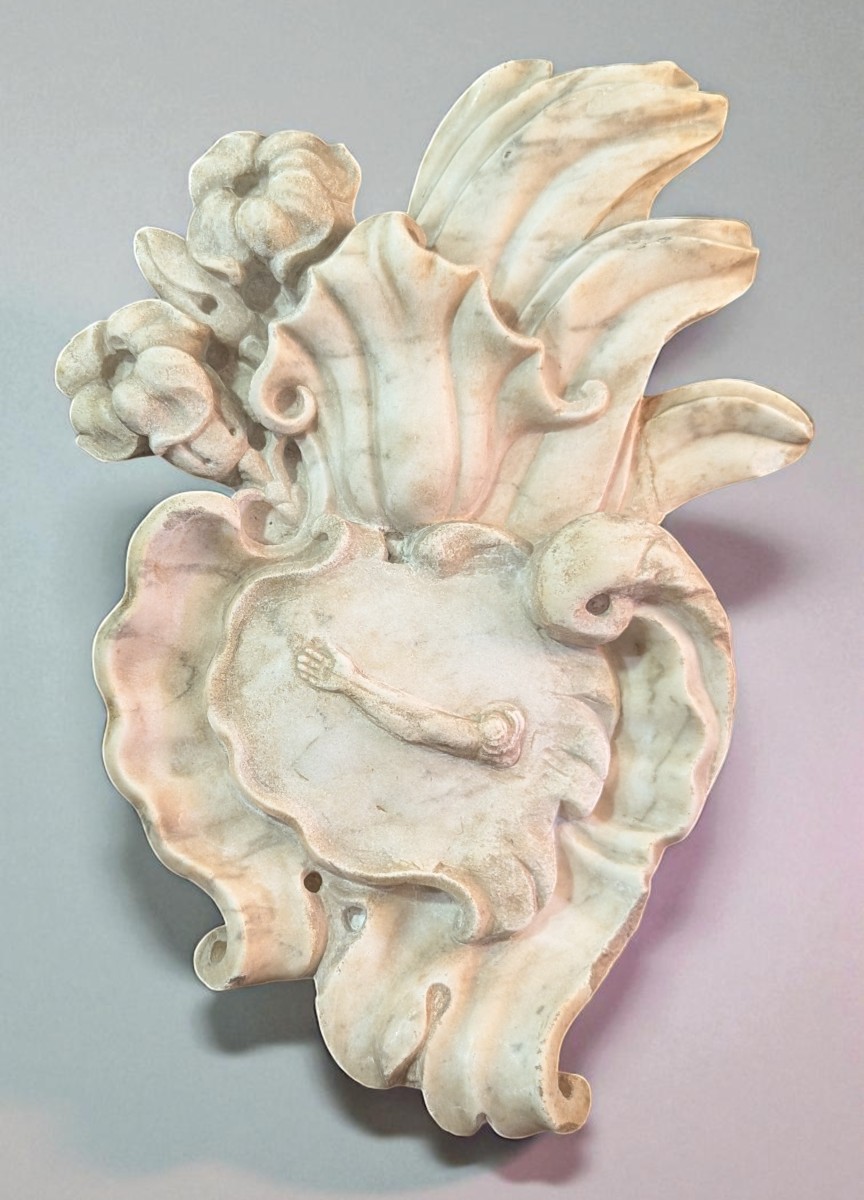
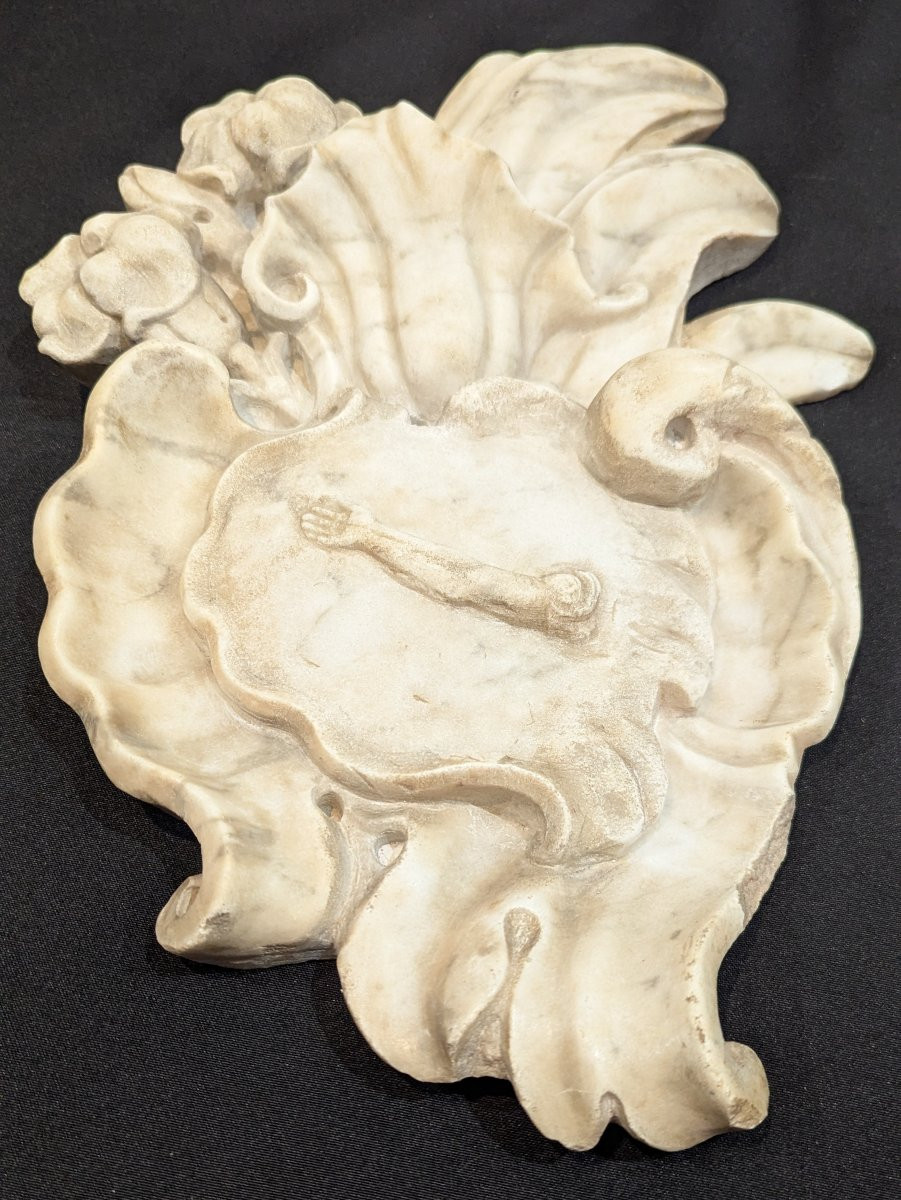
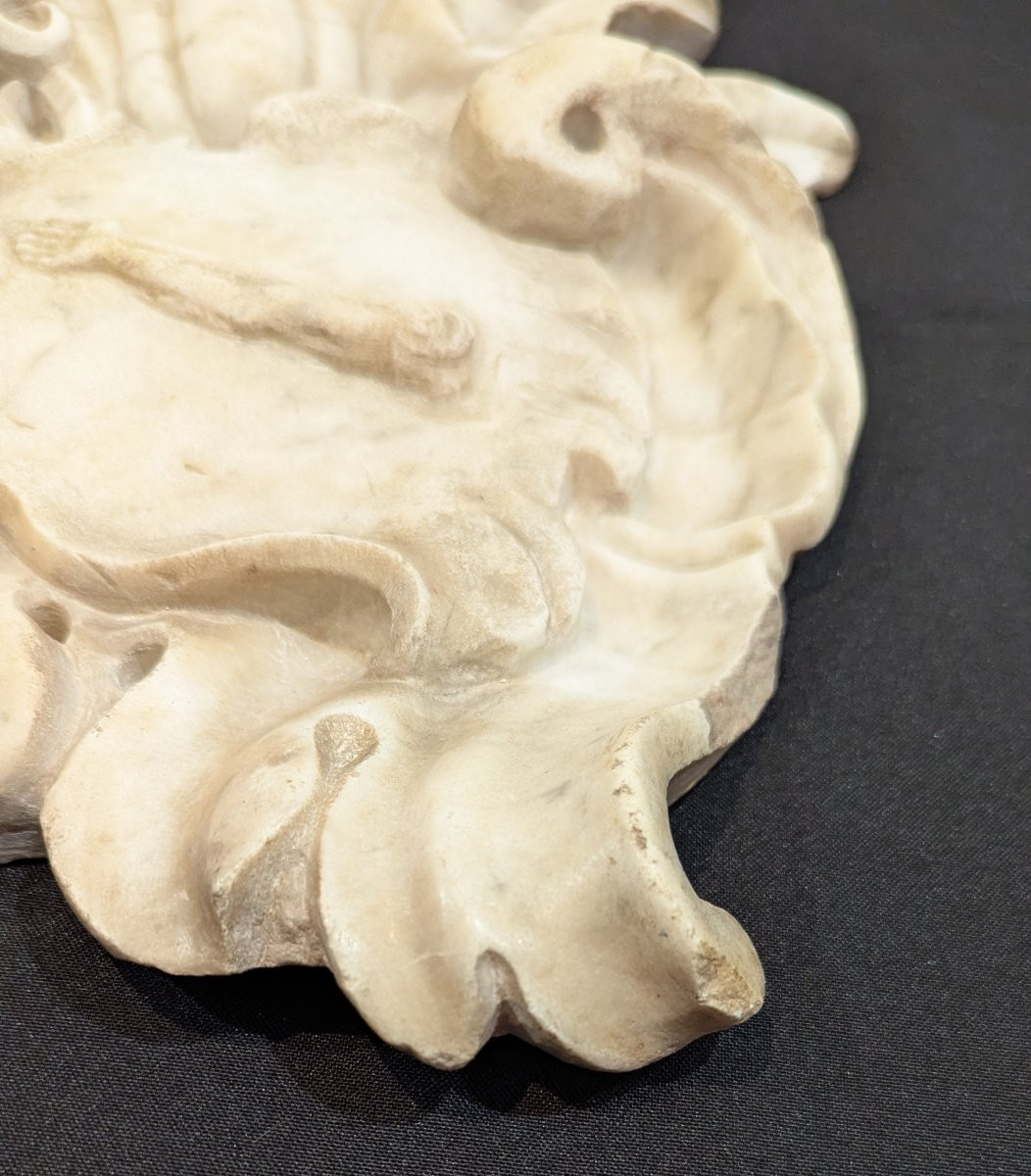
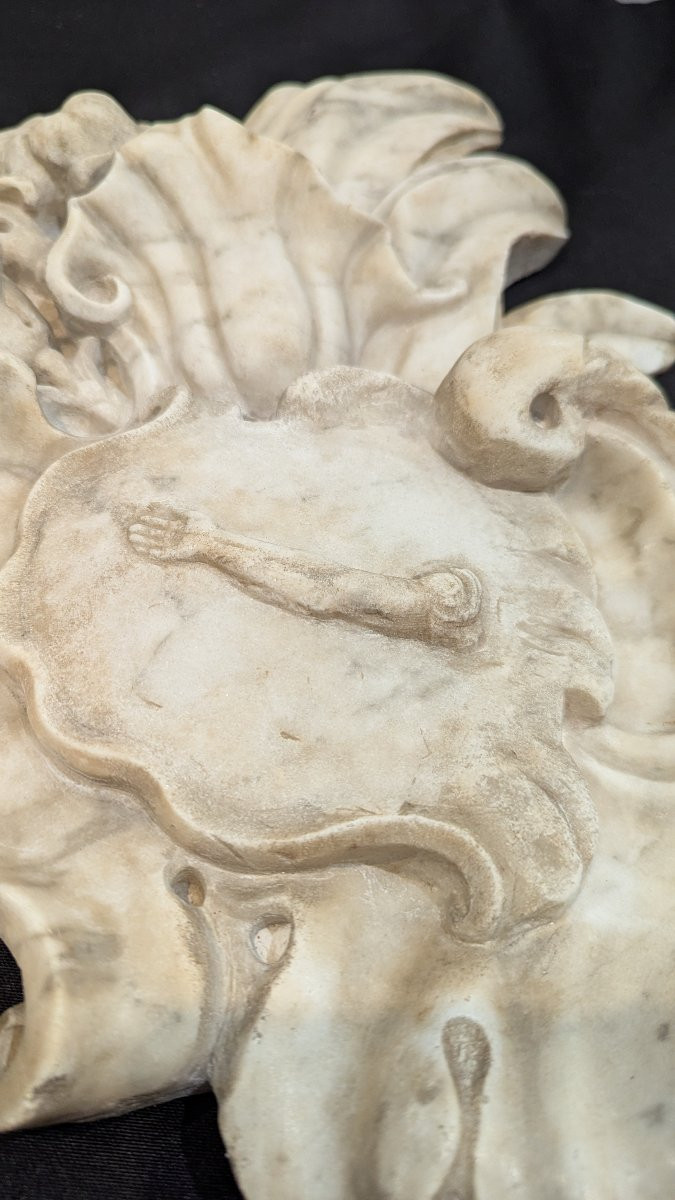
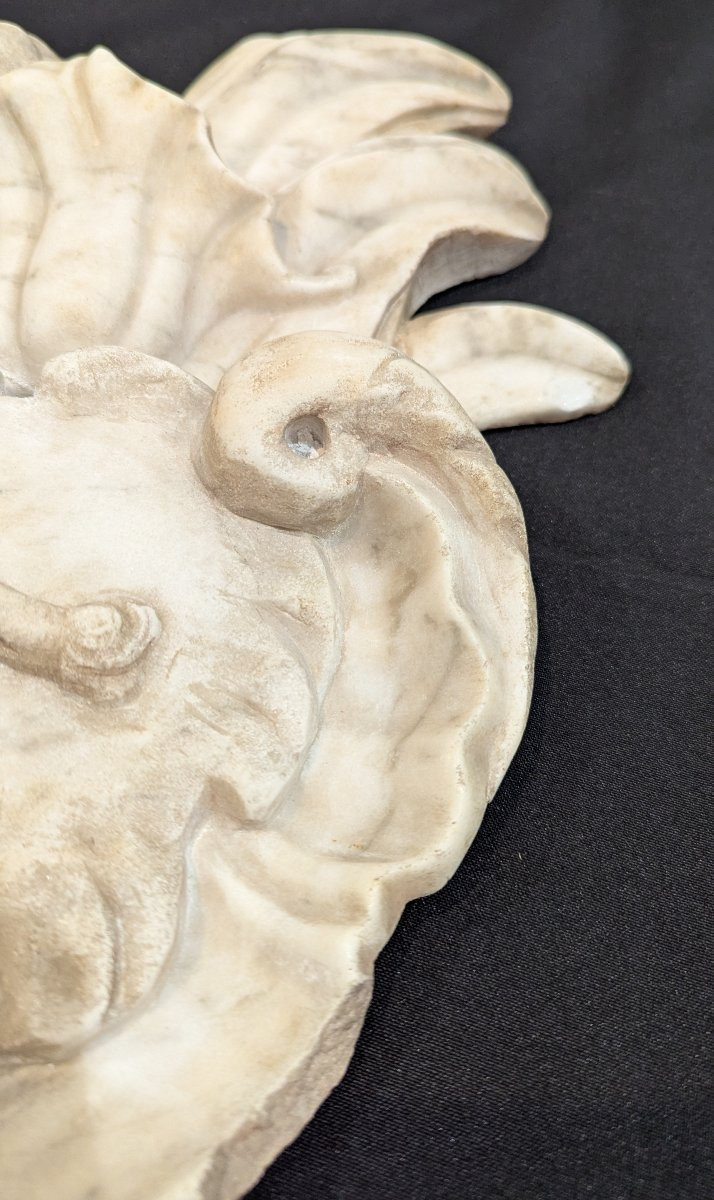
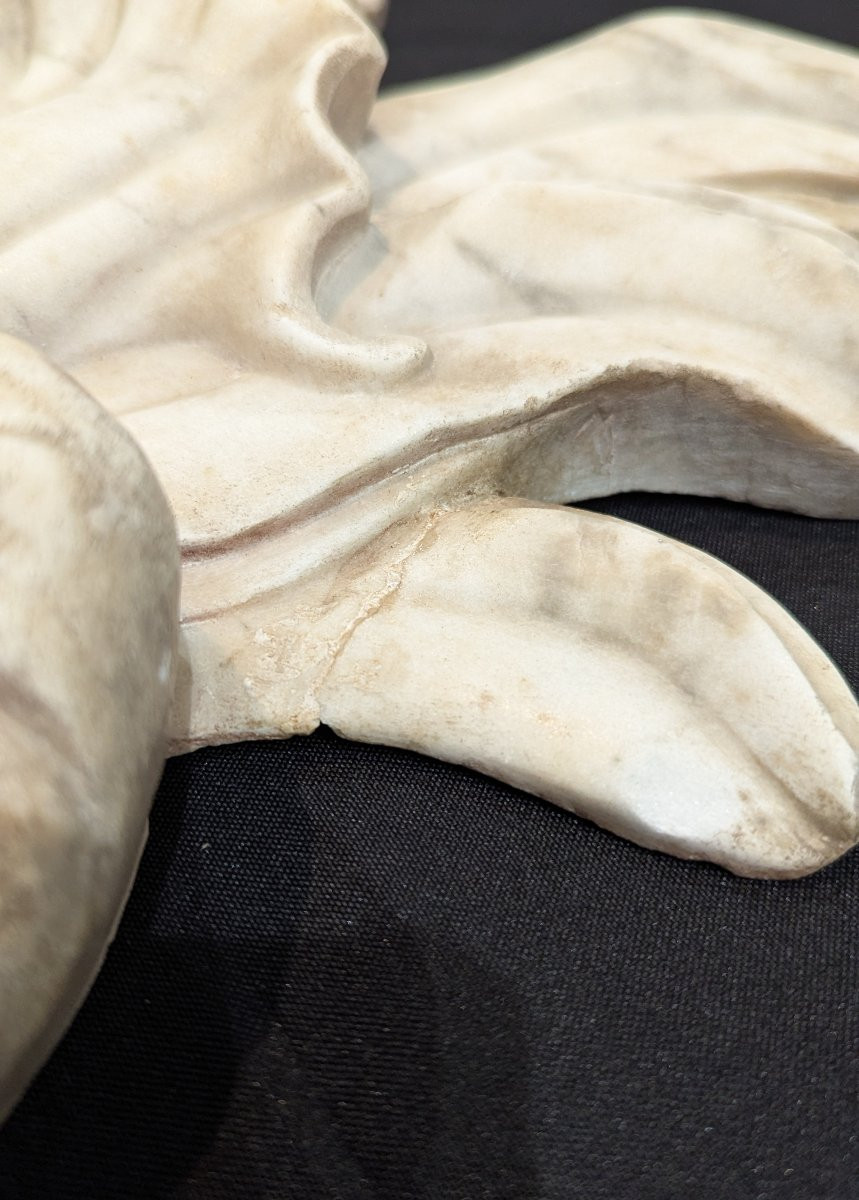
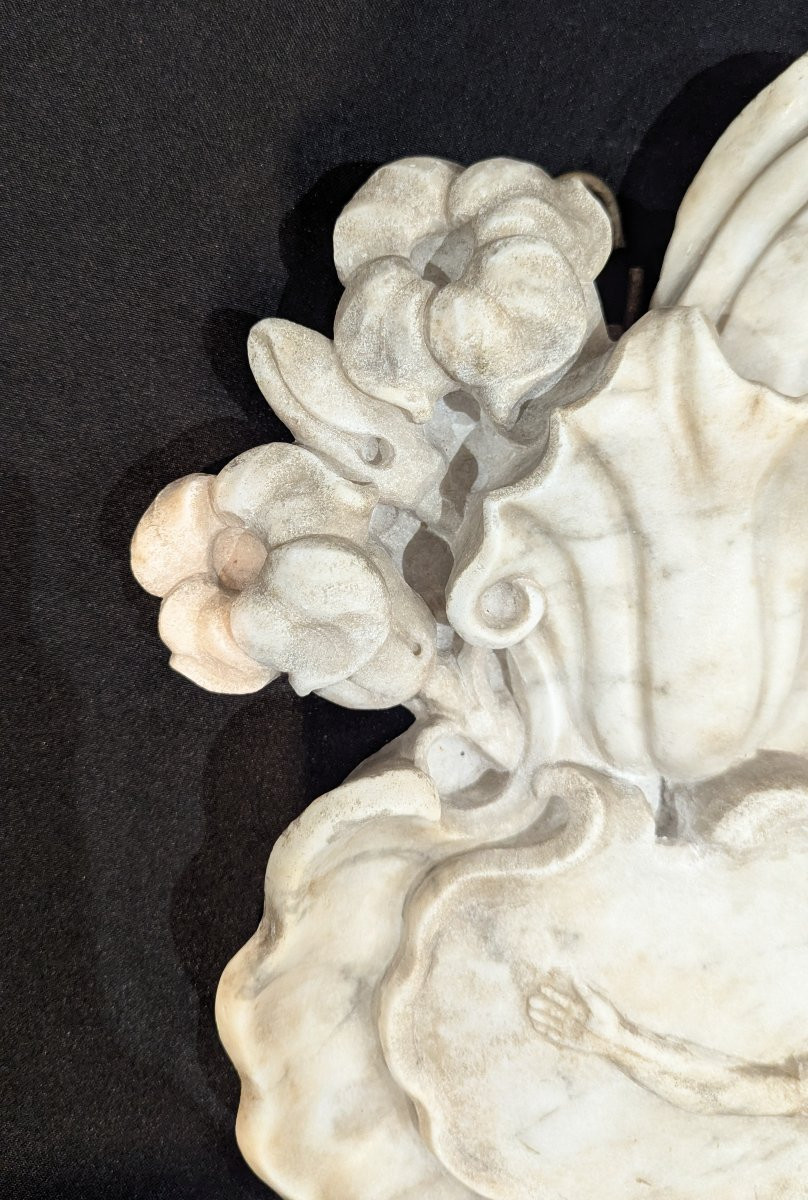
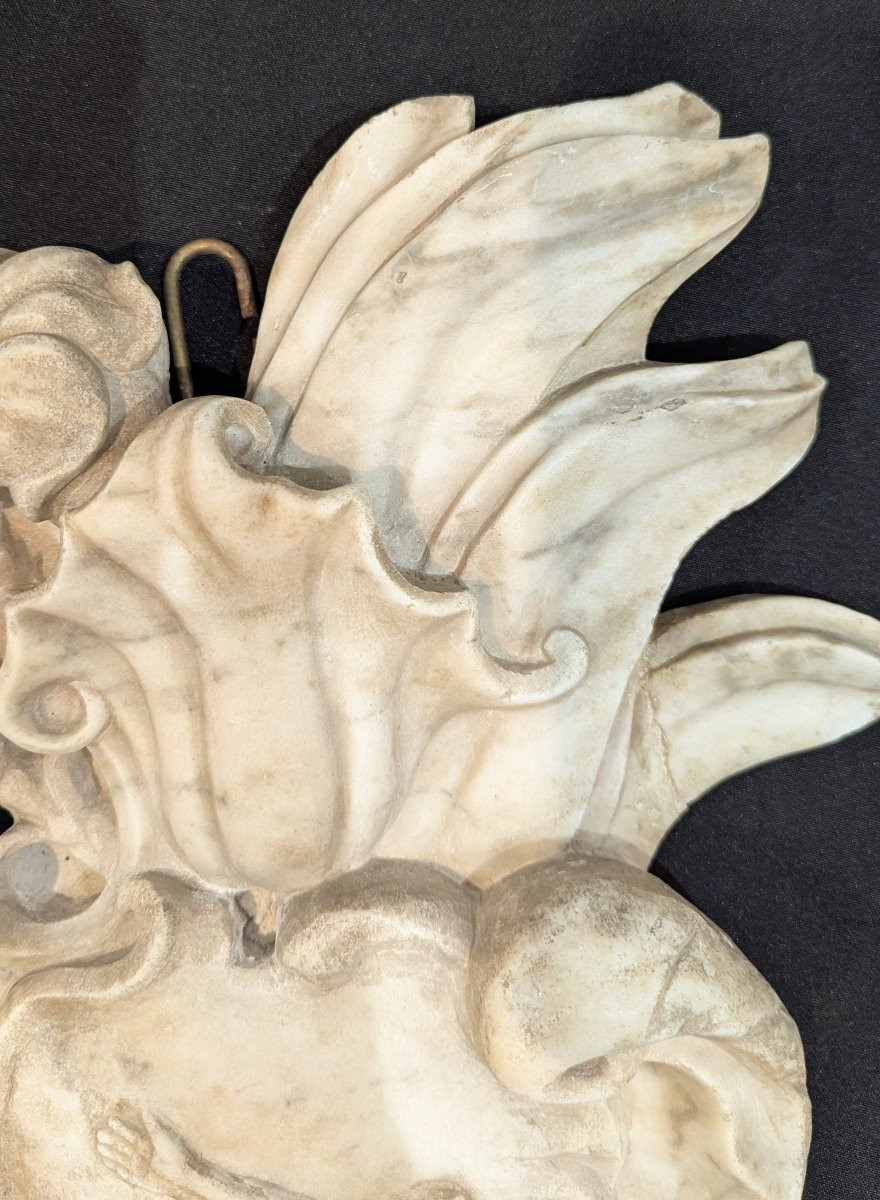
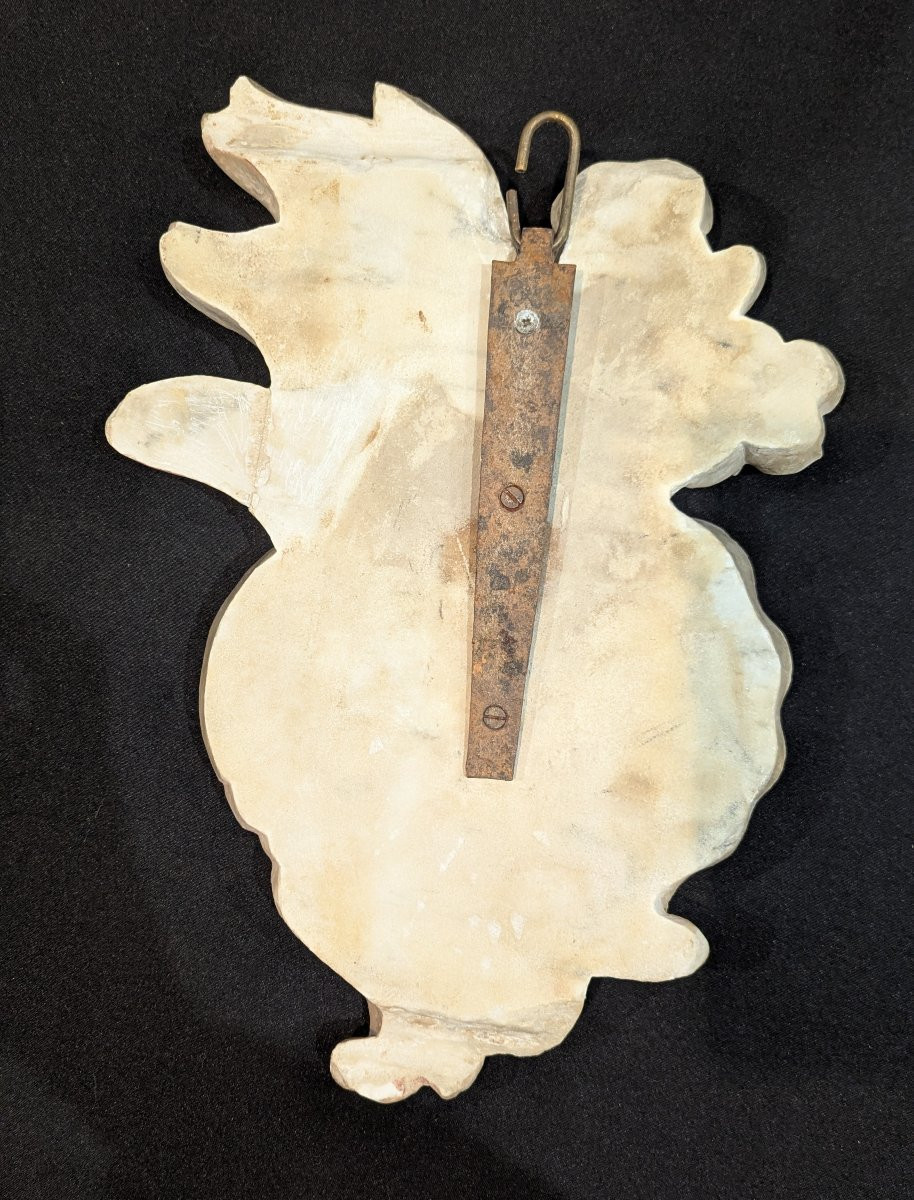
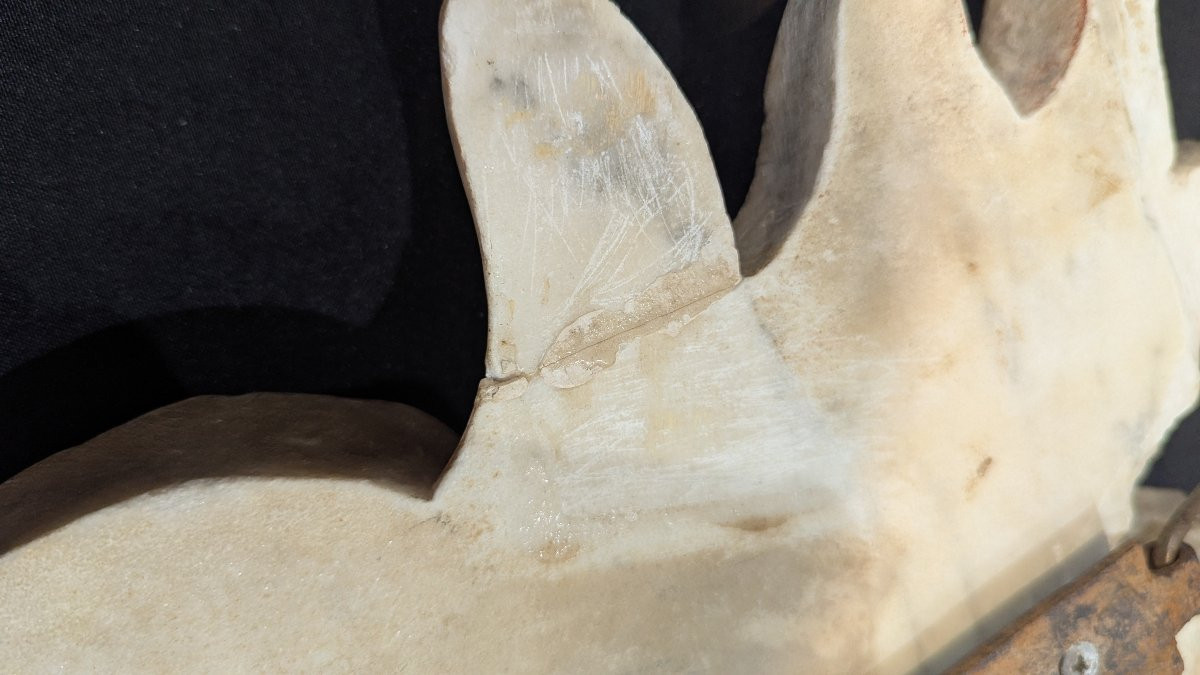
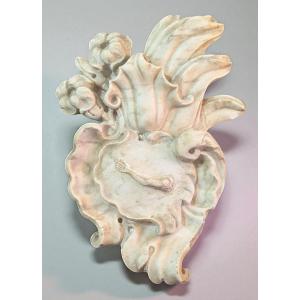
White Marble Votive Offering, Italy, circa 1730–1740. An important ex-voto carved in white marble, probably of Italian origin, dating from the first third of the 18th century. The work features a composition in high relief, structured around a cartouche with undulating contours, enlivened by volutes, veined leaves, and finely sculpted floral elements, characteristic of the late Baroque decorative vocabulary. At the center of the composition appears a human arm sculpted in relief, depicted from the forearm to the hand, slightly flexed. This anatomical motif, rendered with restraint but precision, constitutes the principal symbolic element of the ex-voto. It clearly refers to a votive offering linked to healing, protection, or gratitude following an illness or accident affecting the upper limb. The entire piece is carved from fine-grained white marble, now slightly patinated, with natural traces of use and devotion, consistent with its former display in a place of worship (chapel, sanctuary, or church). The back is left unfinished, as is customary for this type of object intended to be hung or mounted on a wall. An old metal suspension system is still present. This type of ex-voto was traditionally offered by a worshipper in gratitude for divine intervention, often addressed to the Virgin Mary or a healing saint, and publicly displayed among other offerings in a sacred space. Dimensions: – Height: 38 cm – Width: 27 cm – Depth: 4 cm Condition: Good overall condition for an antique devotional object. Minor wear, soiling, and small superficial marks consistent with age and exposure; one scroll has been reattached. A rare object, both a testament to the popular piety of 18th-century Italy and a high-quality decorative sculpture, which may interest collectors of sacred art and lovers of Baroque sculpture.
1 000 €
Period: 18th century
Style: Louis 14th, Regency
Condition: Good condition
Material: Marble
Width: 27
Height: 38
Depth: 4
Reference (ID): 1708848
Availability: In stock
Print