THIS OBJECT WAS SOLD
Sculpture Of A Sitting Dog, Jacobus Halder, De Grieksche A
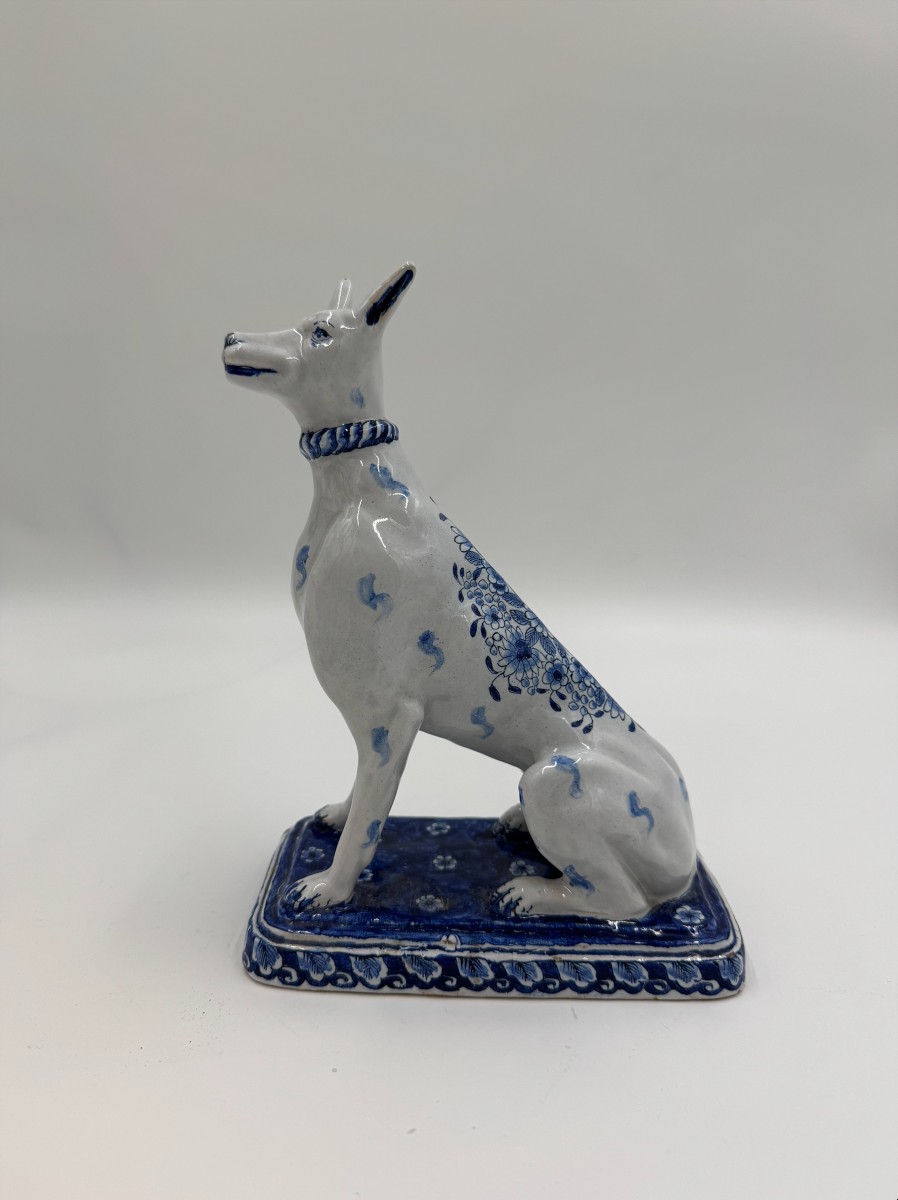
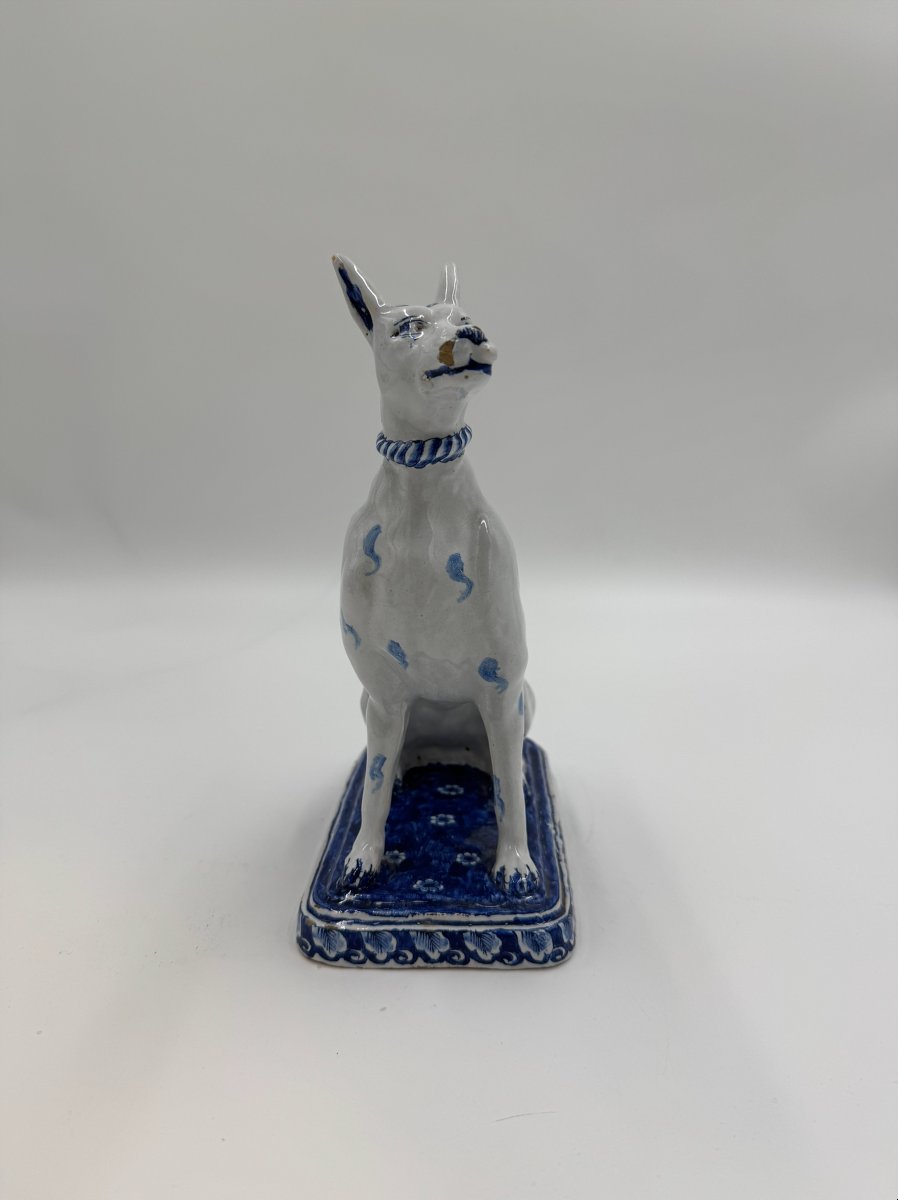
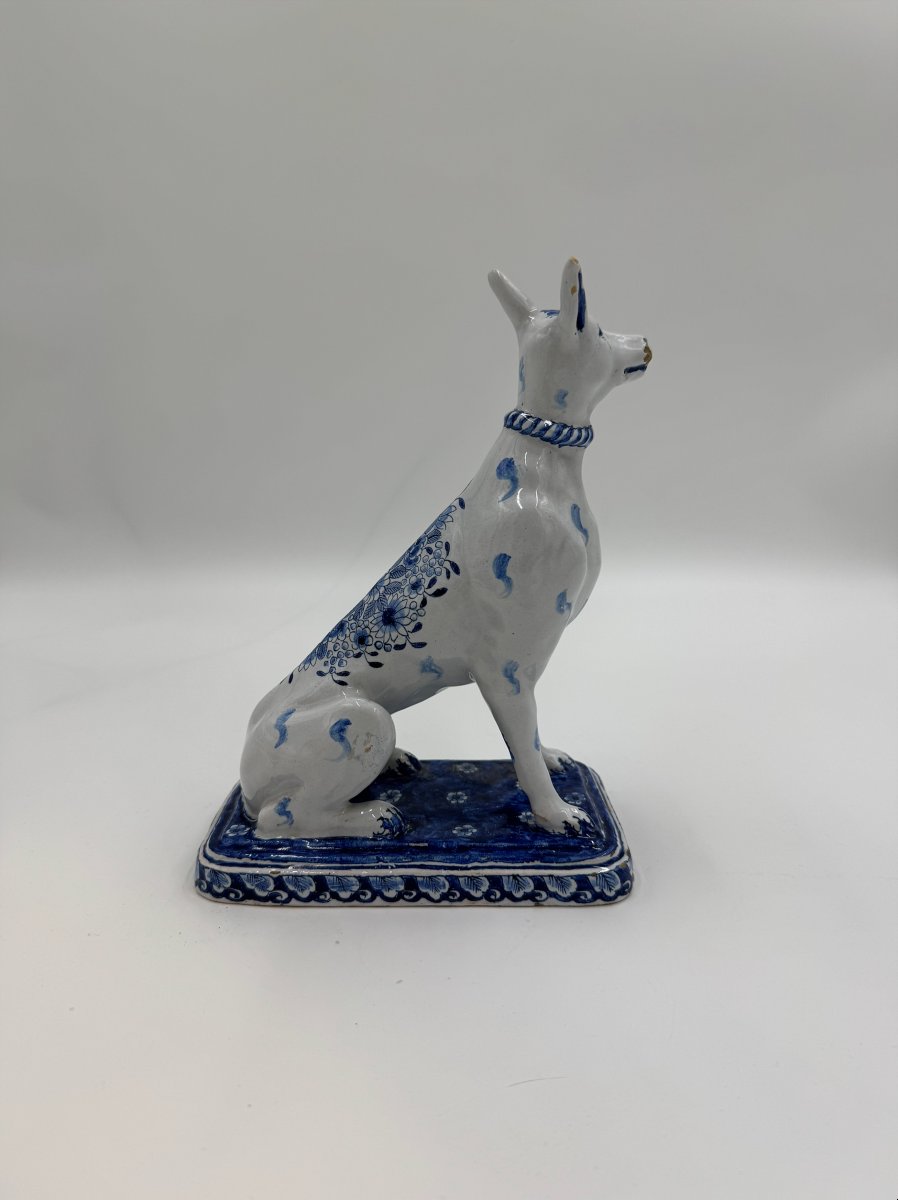
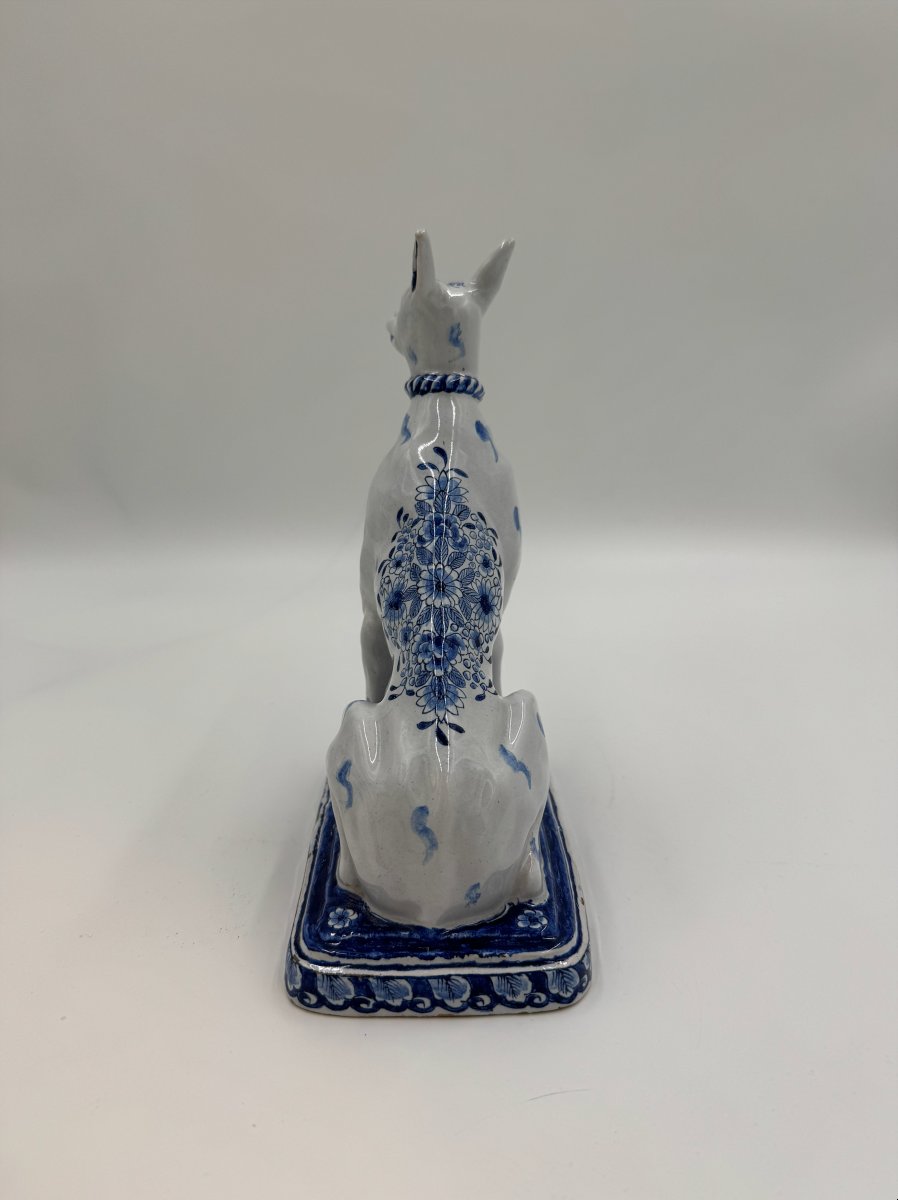
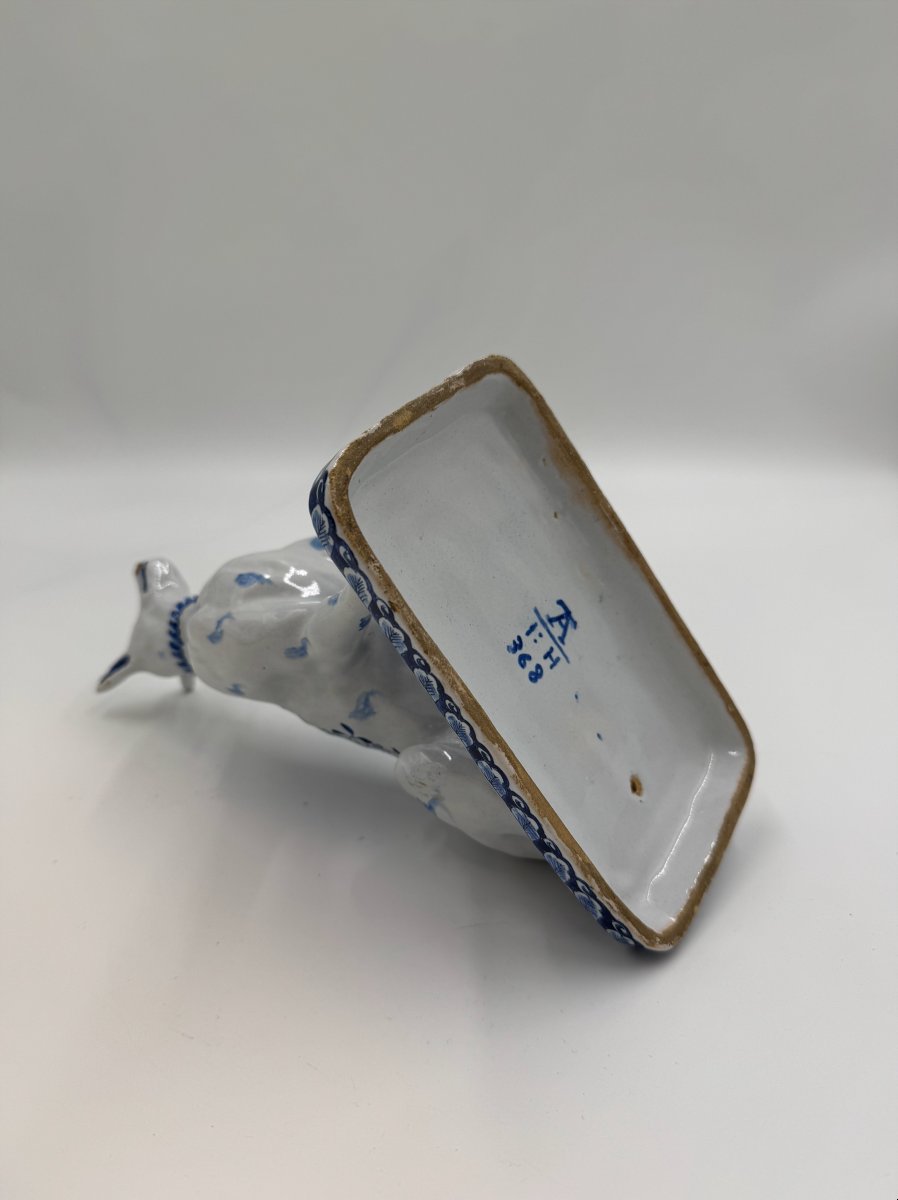
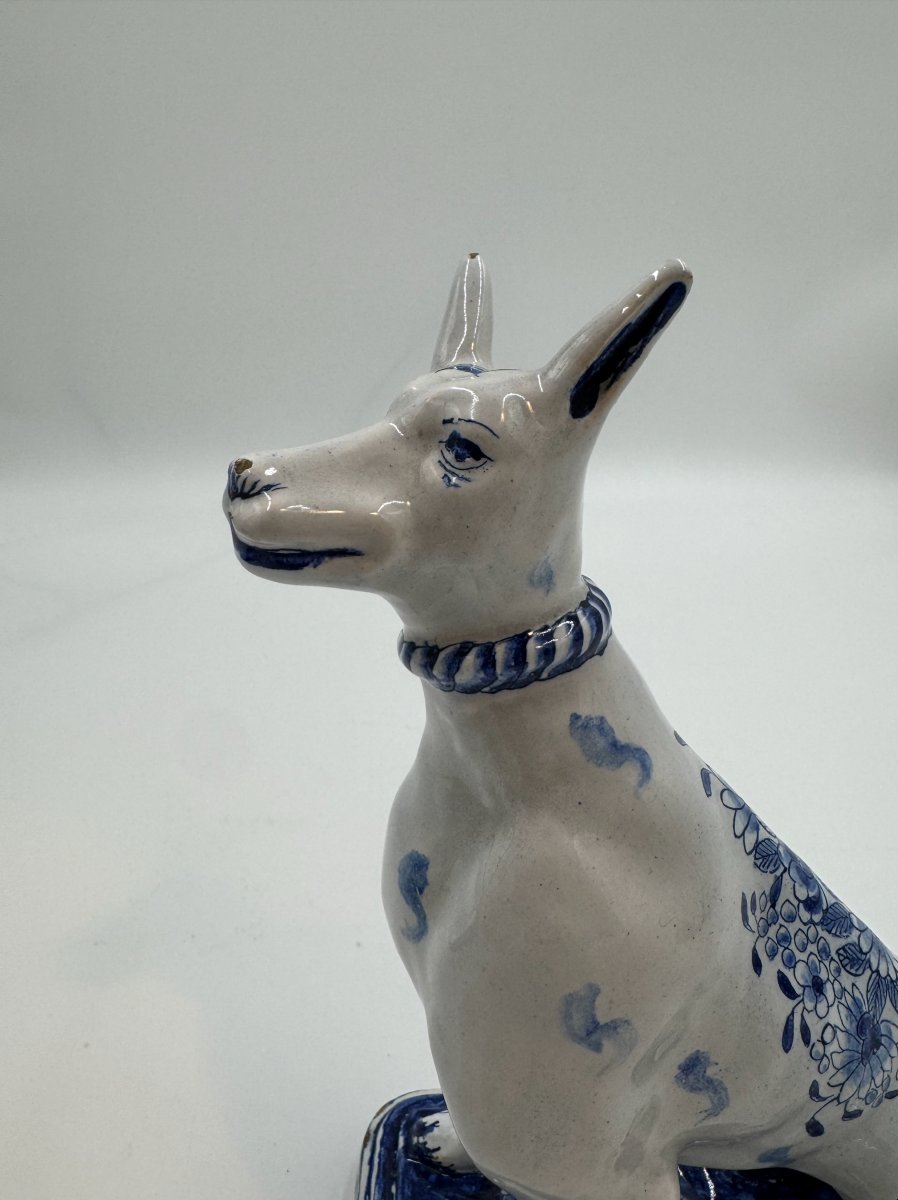
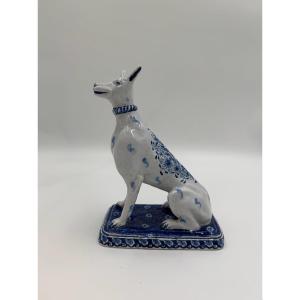


This lovely blue Delftware figurine was made of glazed ceramic and entirely hand-painted in the characteristic cobalt blue. It is decorated with a detailed floral motif on the back and random spots on the body, complemented by an elegant striped collar. These rare sculptures were often used as decorative centerpieces or table decorations. The statue was modeled by Jacobus Halder in the third quarter of the 18th century, but this is likely a later version dating from the 19th century.
About the manufactory:
Delft is actually a generic name for all cinnabar-glazed pottery made in the Northern Netherlands from the second half of the 17th century onward. The city of Delft thus became one of the main ceramic centers in Europe and at its peak boasted as many as 30 potteries in operation. The De Grieksche A manufactory was founded in 1658 and within a few decades became one of the most renowned producers of Delftware. At the end of the 17th century, the factory produced several floral pyramids for Hampton Court, near London, at the request of Mary Stuart. In 1764, the workshop passed into the hands of Jacobus Halder, who, in addition to traditional blue and white pottery, marketed statuettes and figurative tableware. This latter group, which features significant innovations, testifies to a strong commitment to innovative ideas at a time when Delft pottery faced fierce competition from English earthenware and German porcelain. Objects made under Halder's supervision bear a mark with the letters "A," "J," and "H."
In the mid-18th century, many potteries closed, but De Grieksche A survived thanks to the exceptional quality of its production. However, during the French occupation, the Dutch market was flooded with French porcelain, and the factory eventually disappeared.
About the manufactory:
Delft is actually a generic name for all cinnabar-glazed pottery made in the Northern Netherlands from the second half of the 17th century onward. The city of Delft thus became one of the main ceramic centers in Europe and at its peak boasted as many as 30 potteries in operation. The De Grieksche A manufactory was founded in 1658 and within a few decades became one of the most renowned producers of Delftware. At the end of the 17th century, the factory produced several floral pyramids for Hampton Court, near London, at the request of Mary Stuart. In 1764, the workshop passed into the hands of Jacobus Halder, who, in addition to traditional blue and white pottery, marketed statuettes and figurative tableware. This latter group, which features significant innovations, testifies to a strong commitment to innovative ideas at a time when Delft pottery faced fierce competition from English earthenware and German porcelain. Objects made under Halder's supervision bear a mark with the letters "A," "J," and "H."
In the mid-18th century, many potteries closed, but De Grieksche A survived thanks to the exceptional quality of its production. However, during the French occupation, the Dutch market was flooded with French porcelain, and the factory eventually disappeared.
Explore similar pieces and discover your ideal find:
Faience Vases and Decorative Objects