

Léopold Leprince, 1827 - Landscape Of The French Countryside, Farm And Aill, Drawing, Signed
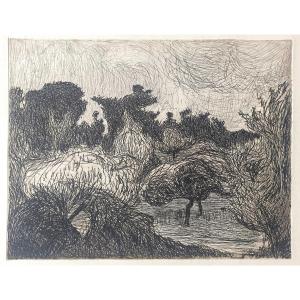
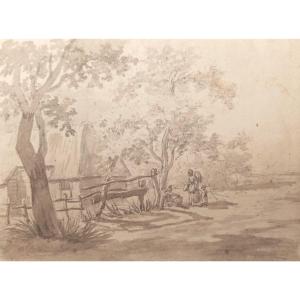
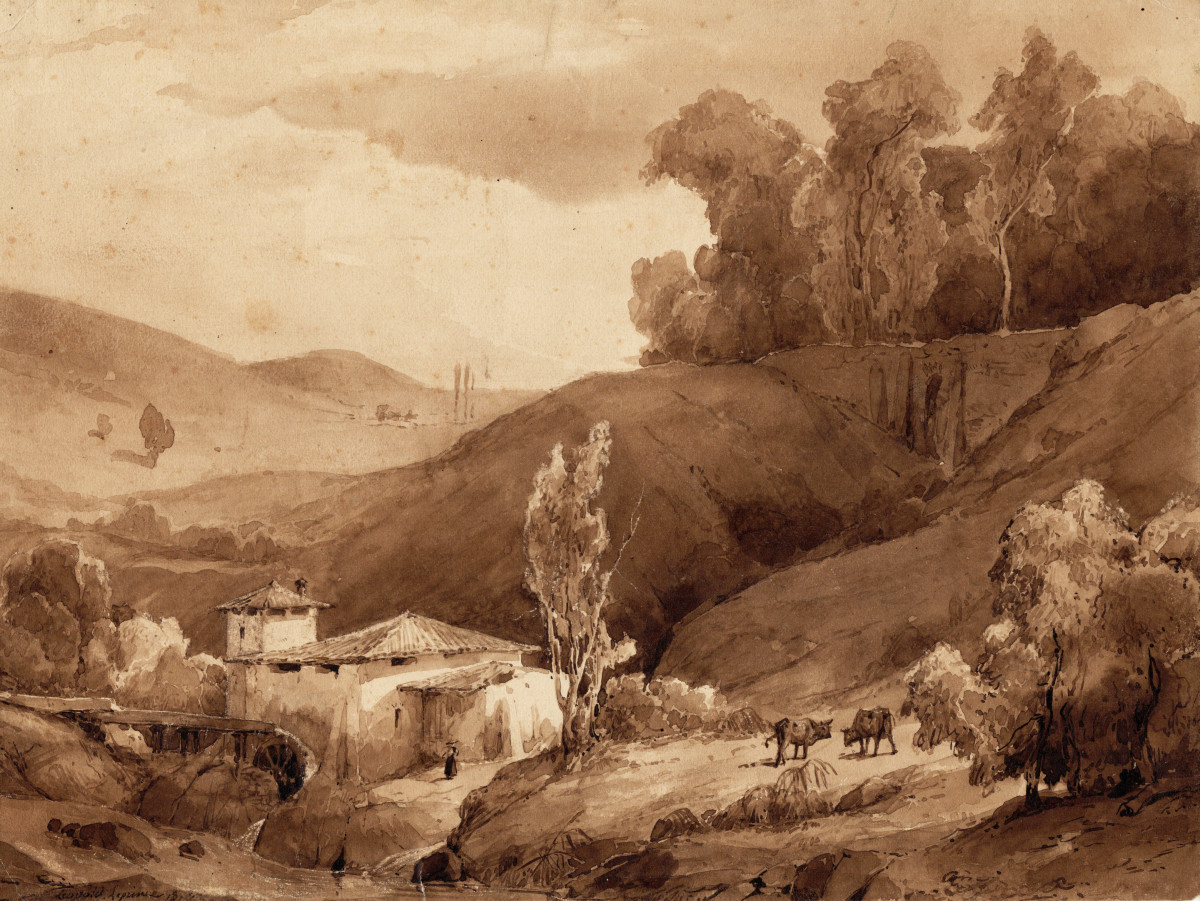
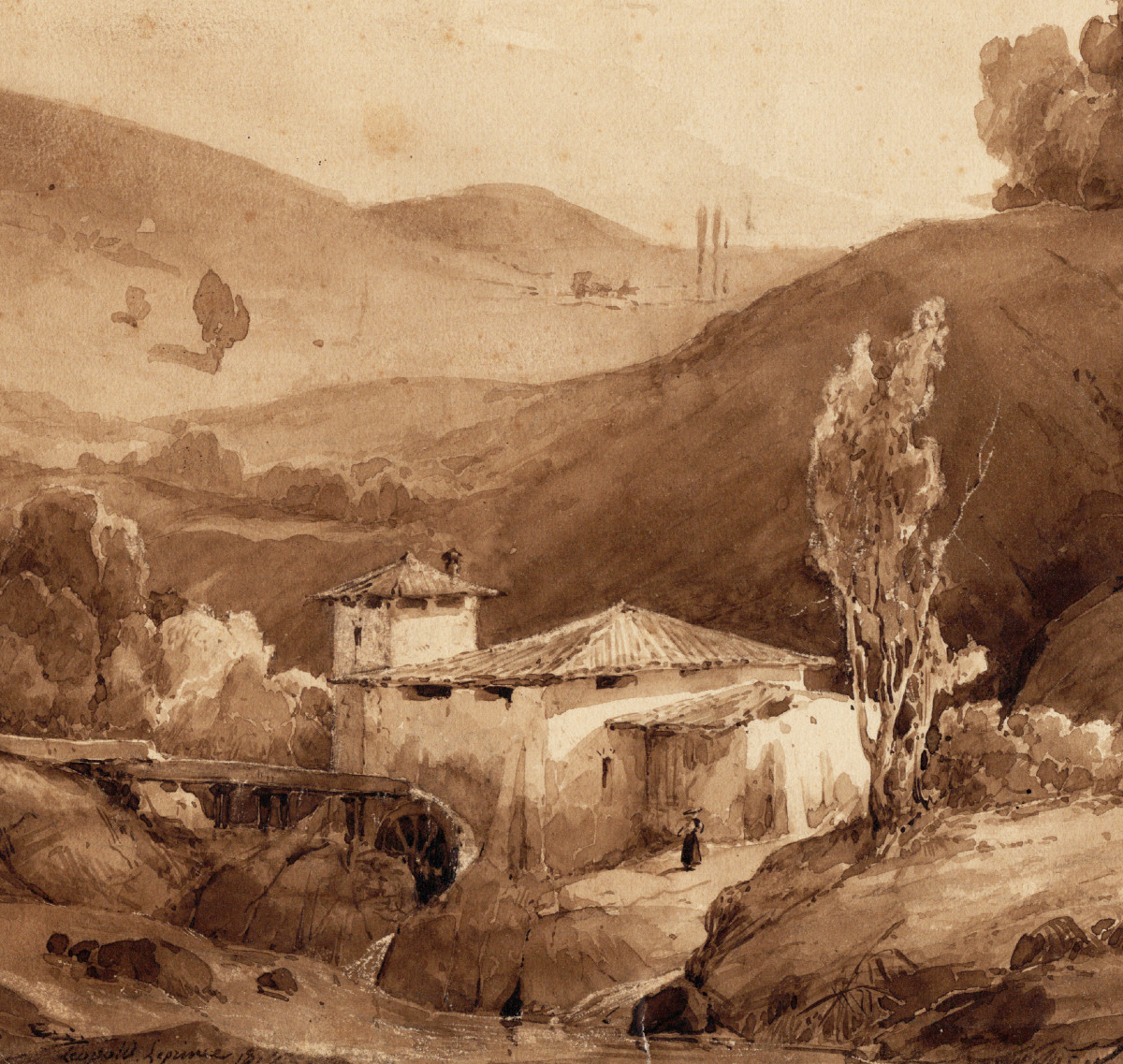
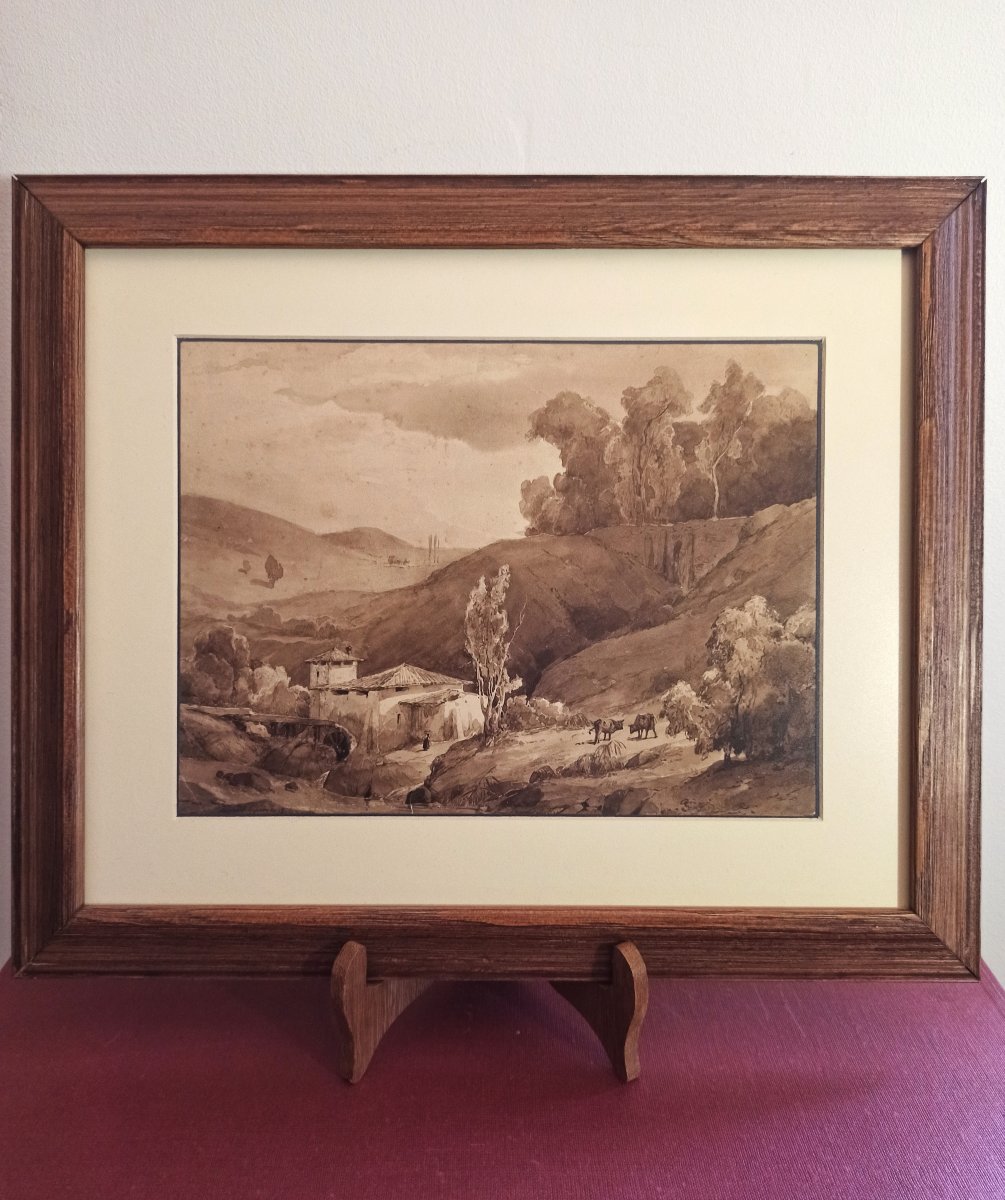
Landscape of the French countryside with farm and watermill, 1827
18.5 x 25 cm
Pen and brown wash on paper
Signed lower left in pen: "léopold leprince 18[27]"
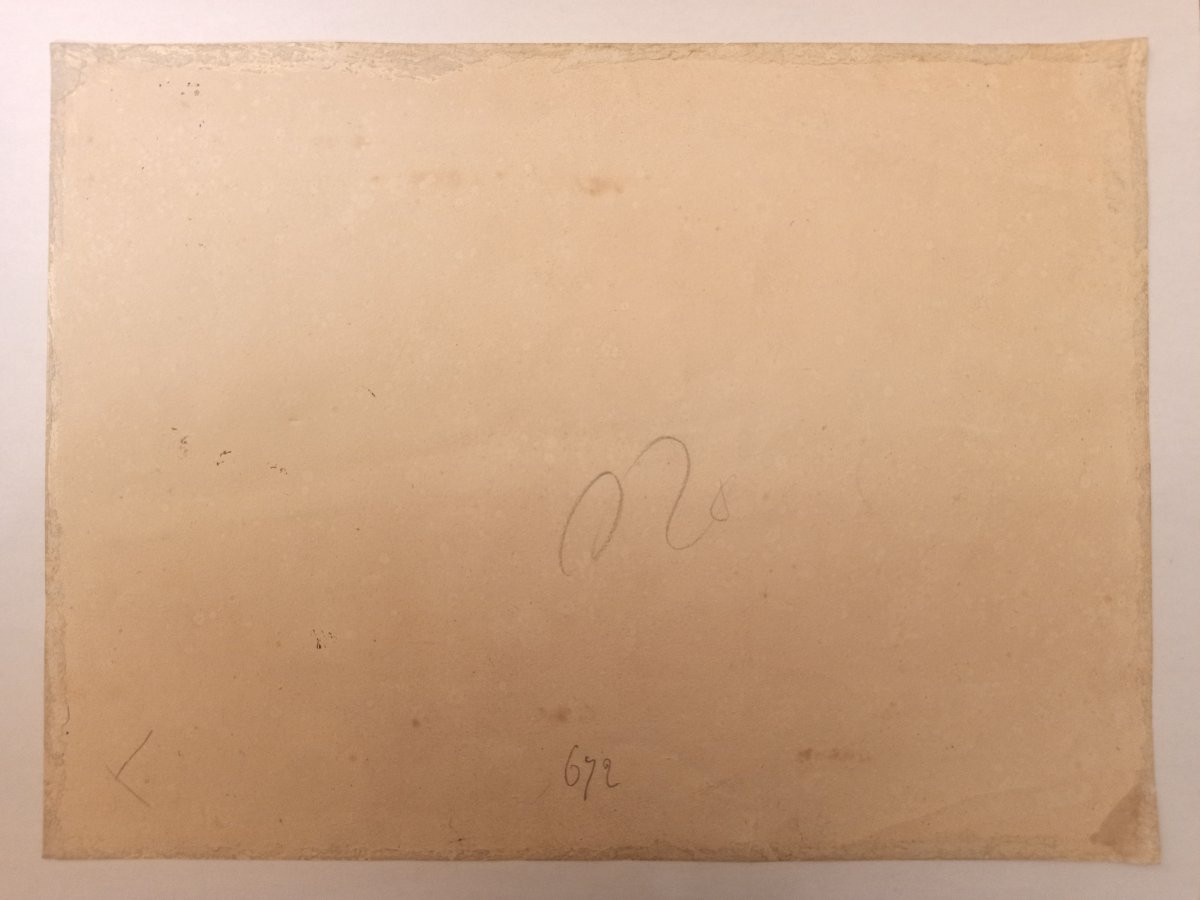
numbered in pencil on the reverse: ‘672’
Good condition overall, wear to the corners, slight tear at the bottom centre, foxing in the white of the sky (see photos)
Framed under anti-reflective glass
Dimensions with frame: 31 x 38 cm
* * *
The silent pleasure of a serene landscape, masterfully rendered by one of the most sensitive French artists of this generation of young painters born at the turn of the century, innovators of the landscape genre, notably through a graphic technique – oils on paper and wash – which at that time had reached a form of perfection. Dated 1827, this brown wash drawing by Léopold Leprince (1800–1847) is of a subtlety reminiscent of Jean-Jacques de Boissieu, François-Marius Granet, Turpin de Crissé and Théodore Caruelle d'Aligny.
* * *
Léopold Leprince came from a family of artists who, all trained by their father Anne-Pierre Leprince, devoted themselves to landscape painting with remarkable talent. From the early 1820s onwards, Léopold worked in the Paris studio of his elder brother Auguste-Xavier Leprince (1799-1826), alongside other pupils such as Eugène Lepoittevin and Nicolas-Alexandre Barbier.
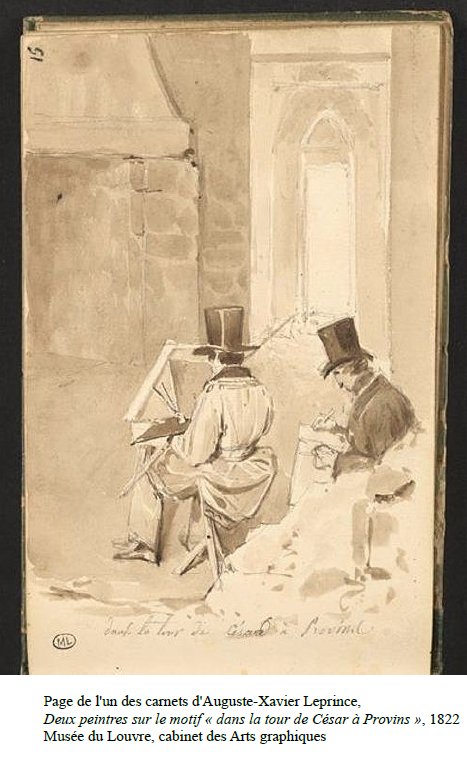
The Leprince brothers were part of a generation of French artists who deliberately focused their attention on the landscapes of France, without necessarily travelling to Italy, unlike others such as Michallon, Granet and Turpin de Crissé, for example. Together, the two brothers travelled throughout France in search of picturesque motifs and discovered Picardy, the surroundings of Montmorency, Écouen, Provins and the forest of Fontainebleau. The department of Drawings at musée du Louvre holds around ten sketchbooks by Auguste-Xavier, which reveal the insatiable curiosity of the young Leprince brothers and the stylistic similarities in their drawings.
In 1826, the year of Auguste-Xavier's untimely death, our artist left Paris and moved to Chartres, where he would pursue his career while regularly submitting his compositions to the Paris Salons between 1822 and 1844. This landscape, probably dated 1827 (the inscription is partially erased), is the work of an artist who had just lost his master but who would continue to perpetuate the talent and renown of a fine dynasty of landscape painters for several more years.
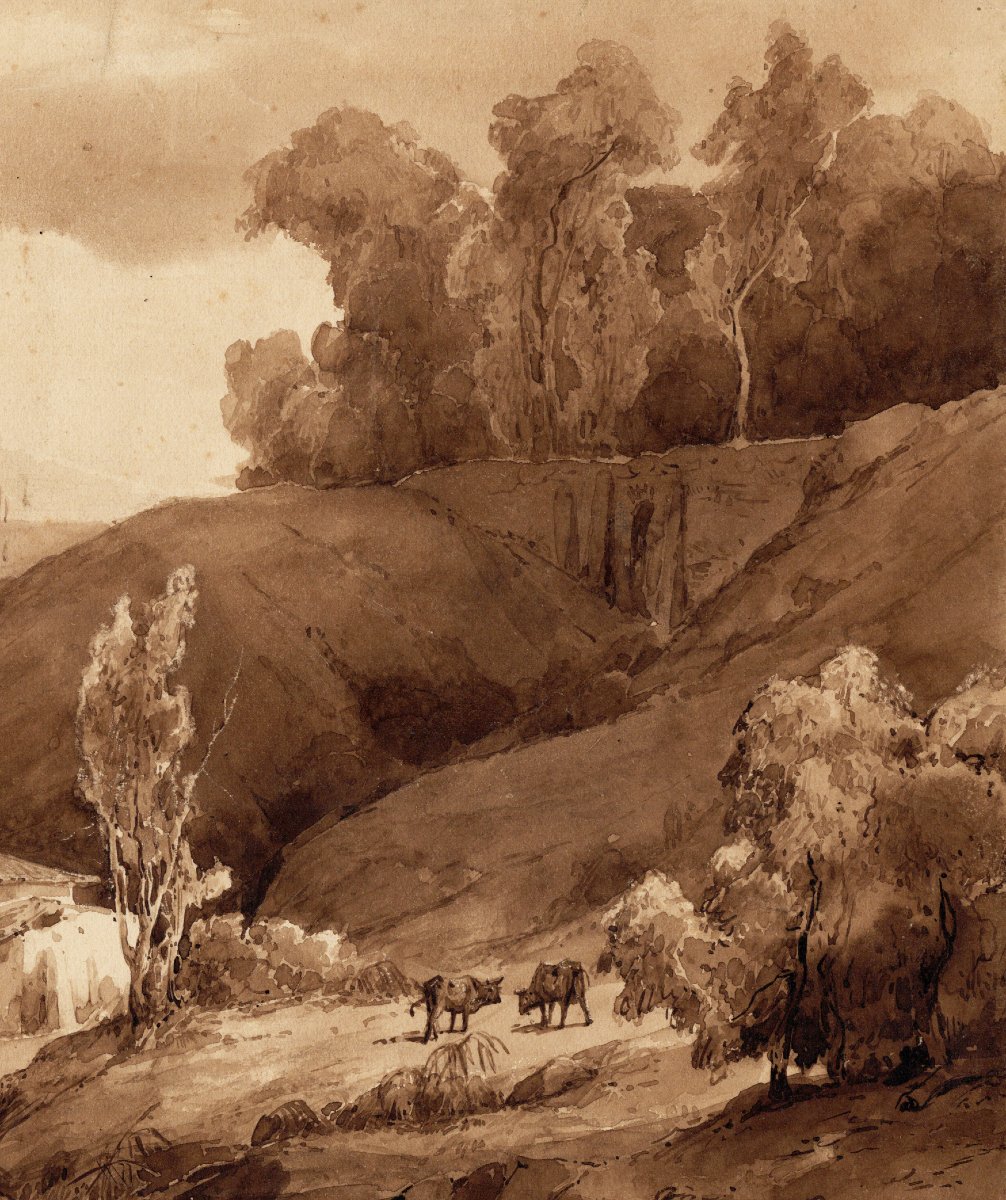
In this landscape of the French countryside, Leprince is in complete mastery of his technique. The high vantage point overlooking the landscape is an innovative compositional choice that allows the architecture of the mill and farm to be freely incorporated, as well as the successive planes of the landscape's horizon and the sky, streaked with clouds and light.
This atmospheric perspective allows Leprince to distinguish the different planes of his composition. Thus, a blurred tree in the background on the left, rendered here with a quick brushstroke, brings a touch of reverie to this otherwise relatively classical landscape. As is often the case with Leprince, the anecdote is barely suggested. His landscapes exude the serene calm of everyday life in the countryside, where nature reigns supreme.
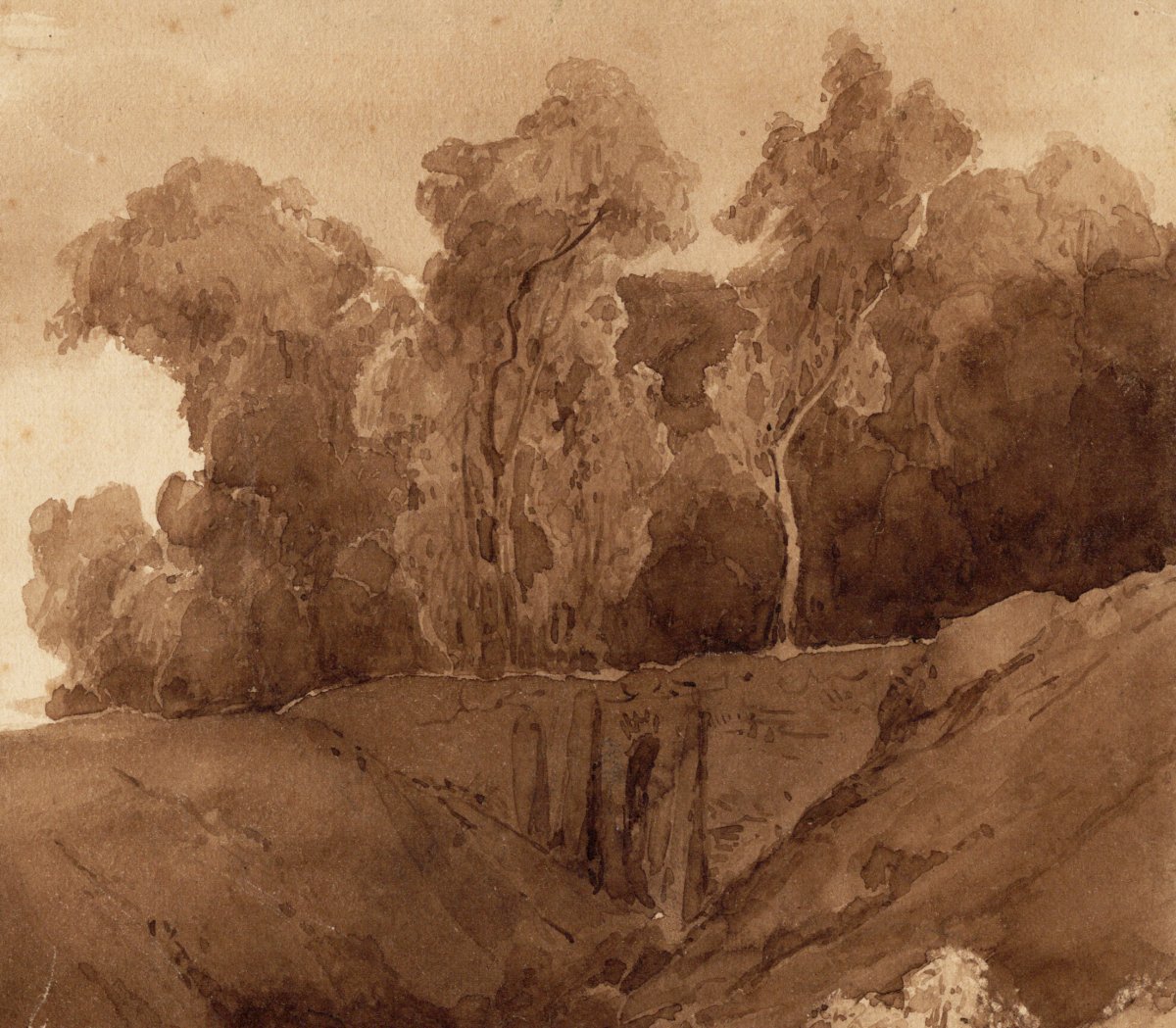
The groups of trees visible on the right-hand side of the composition appear so naturally under Leprince's brush that one could almost forget the skill required to handle the nuances of intensity of the brown ink and the work on the paper's reserve in this way. Similarly, we can admire the way in which the artist has reproduced the movement of the water on the river stones by scratching the surface of his paper with a dry pen (in the lower left of the sheet).
It is difficult to pinpoint the exact location of the landscape depicted here. On the far right, we can see a stone dam, and we can follow the course of the river to the foreground. The roofs could indicate a landscape in the southern part of France, possibly in the south-west, near Angoulême, where there were many paper mills. It would be a charming hypothesis that an artist drew a paper mill. Suggestions are welcome.
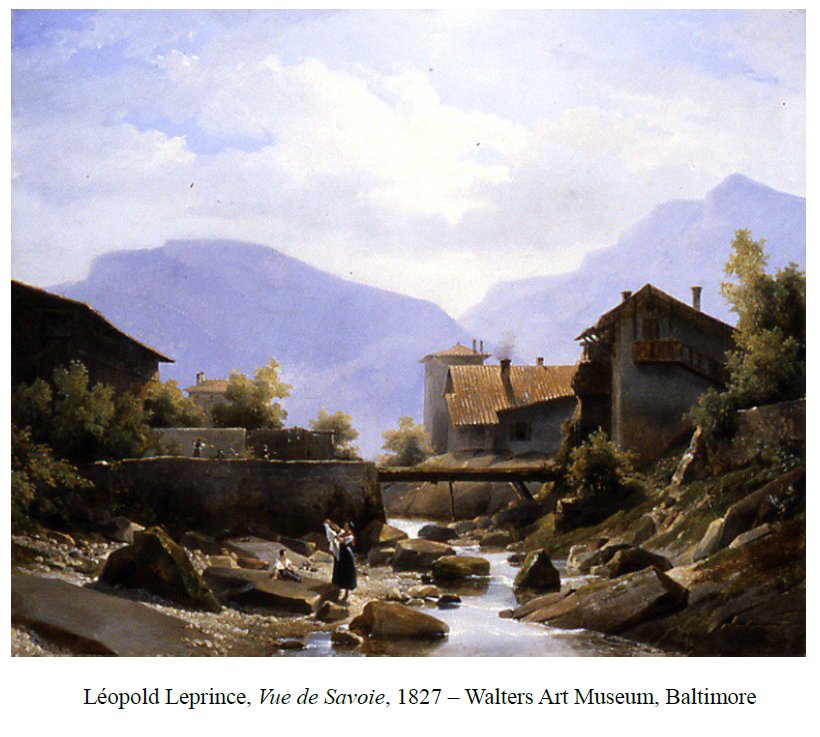
This drawing finds an interesting comparison with an oil on canvas by Léopold Leprince held at the Walters Art Museum in Baltimore. In this View of Savoie, also dated 1827, Leprince repeats certain picturesque elements found in our drawing, such as the feminine silhouette, the river, and the farm architecture. (see photo gallery). However, it does not appear that our landscape was drawn in Savoie: several details attest to this, but mainly the farm architecture and geology.
In a note he devotes to Léopold Leprince, art historian Vincent Pomarède, former curator of 19th-century French paintings at the Musée du Louvre, writes these words, which we borrow gladly: "The
sense of light, the virtuosity of the foliage and the perfect
simplicity of this study by Léopold Leprince give us a perfect
understanding of how this artist, with his classical training and
references, ranks alongside Corot, Édouard Bertin and Caruelle
d'Aligny, in the innovative landscape movement of the 1830s, which,
half a century before Impressionism, favoured realism and the quest
for the 'feeling of nature' over any form of intelellectualism."
In France, the Carnavalet Museum, the Louvre, and the museums of Narbonne, Tours, Besançon, and Dijon hold some of our artist's paintings. Léopold Leprince's works on paper are rare and are held in some of the finest museums. Fondation Custodia in Paris exhibited several of his oil paintings on paper in the recent exhibition True to Nature; Open-air painting in Europe 1780-1870 (2022), with works lent from the Fitzwilliam Museum in Cambridge and the National Gallery in Washington, among others. The Metropolitan Museum in New York also has a beautiful undergrowth painted by our artist in 1822, from the Thaw donation in 2009.
* * *
Fast and careful shipping in France and internationally.
Hand delivery in the Paris region.
Payment by bank transfer, cheque or PayPal
Period: 19th century
Style: Other Style
Condition: Good condition
Material: Paper
Width: 25 cm
Height: 18,5 cm
Reference (ID): 1706910
Availability: In stock