



19th Century, Penitent Magdalene
19th century
Penitent Magdalene
Oil on oval canvas, 67 x 59 cm
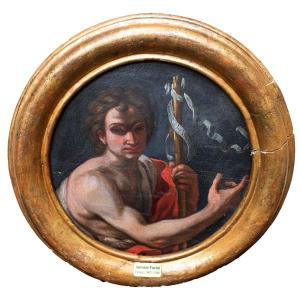
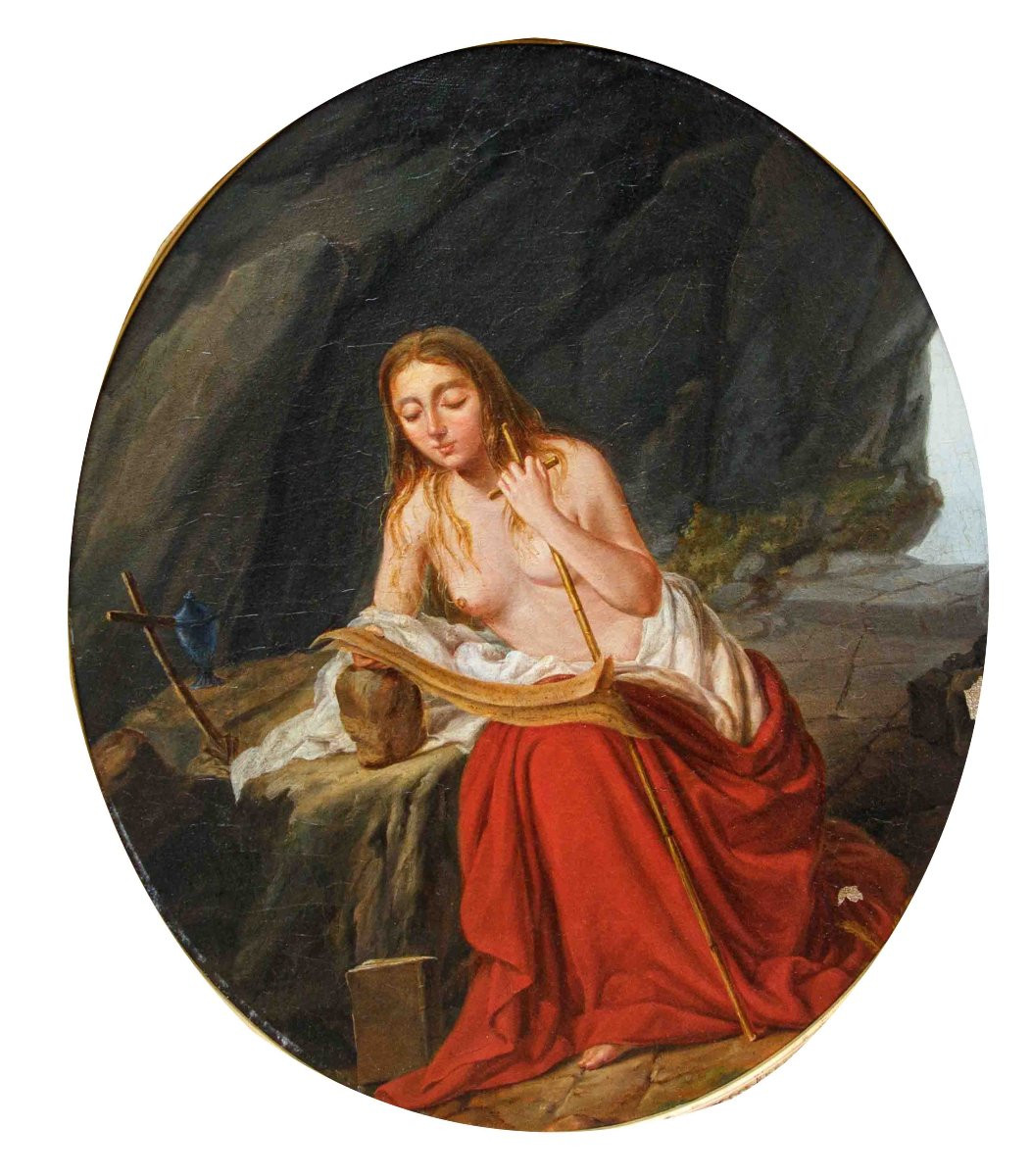
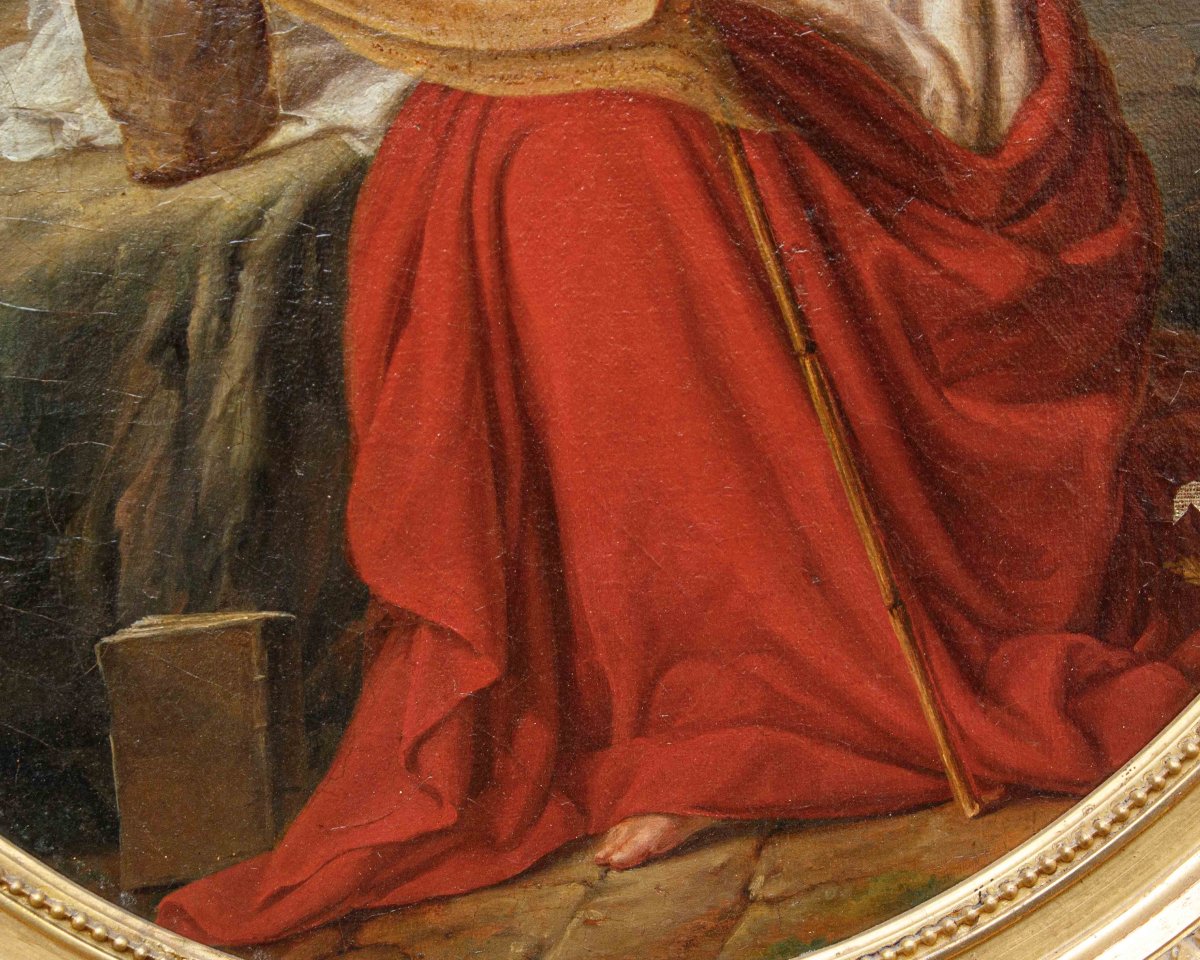
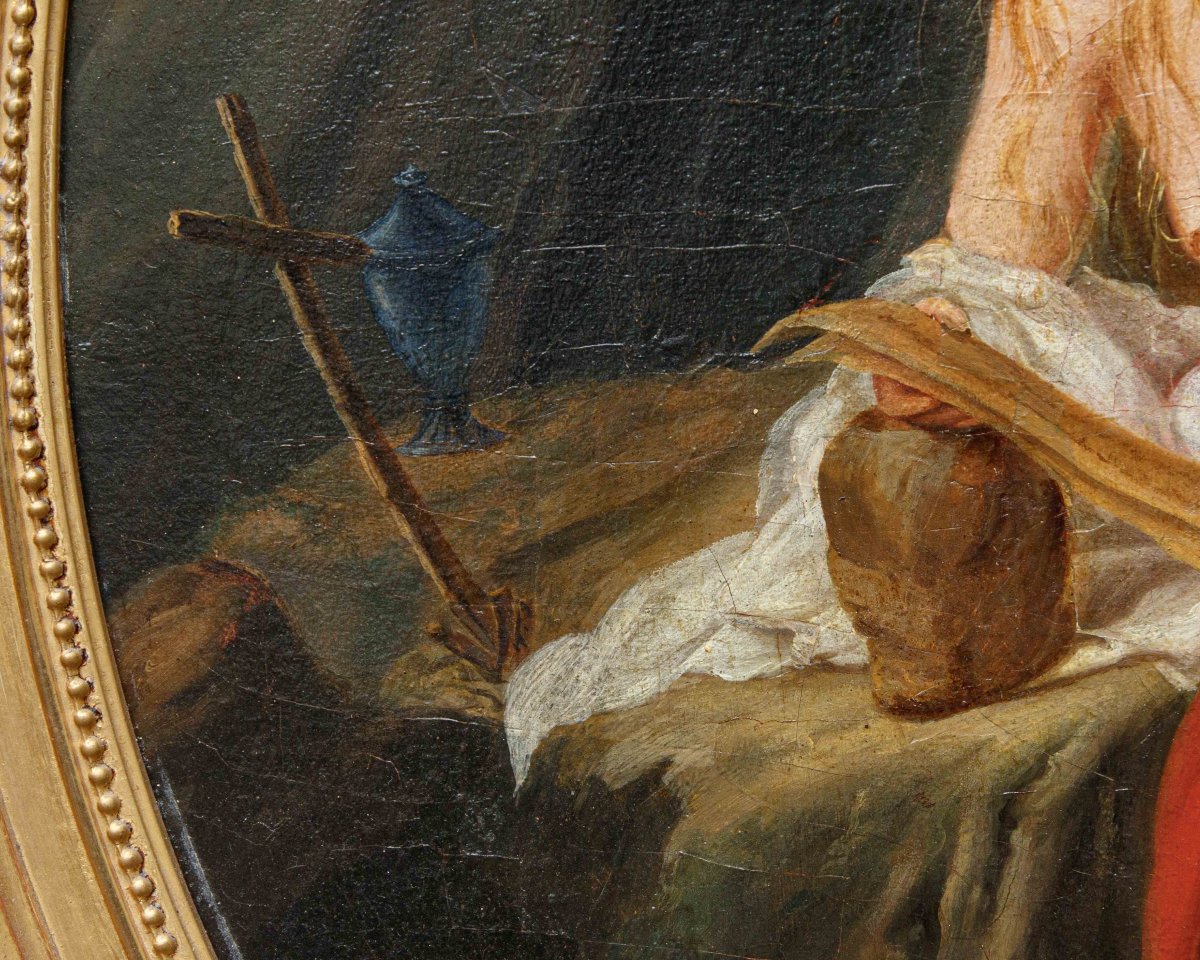
The work under examination, an oil on oval canvas enclosed in a refined gilded gouache frame with floral decorations at the corners, takes up the iconographic theme of the Penitent Magdalene, extremely widespread throughout the history of art, which in the 19th century underwent a transformation into a more intimate and domestic key, while maintaining its traditional symbolic features. The woman is portrayed inside the cave of Sainte-Baume in Provence, the chosen place for the spiritual retreat of the Saint according to the Golden Legend and where her relics were kept, accompanied by her inevitable attributes: the jar of ointments, visible on the rock shelf, symbol of the evangelical episode of the anointing of Jesus' feet; the reed cross held both in her hand and present in the background, symbol of the profound meditation on the Passion; the book, which represents the contemplative life and the study of the Holy Scriptures. From a stylistic point of view, the work reflects the Academic and Neoclassical taste of the first half of the nineteenth century, as evidenced by the particularly smooth application of colour (the so-called peinture léchée), with meticulous attention to the rendering of the fabrics —note the intense red of the coat which creates a strong chromatic contrast with the complexion and brown tones of the rock — and to the softness of the skin. In this context, the state of semi-nudity and the poverty of the robes serve as a visual counterpoint to past vanity, underlining the clear detachment from the luxurious and refined costumes that characterized the iconography of the Saint before her conversion. According to hagiographies, in fact, after retiring to the rugged peaks of Provence, Mary Magdalene chose a life of absolute asceticism within a cape: stripped of all material possessions and without clothing, she drew sustenance exclusively from prayer and angelic melodies. The pointed physiognomy of her face and the melancholic grace suggested by her downward gaze, while her long golden hair gently slides over her exposed breasts, would lead back to the hand of an author belonging to the Central Italian area, who studies and takes up the timeless model of Antonio Allegri known as Correggio. His Reading Magdalene (once in Dresden and now lost) or the one preserved at the National Gallery in London constituted, in fact, an essential starting point for experimenting with this subject, bringing out an almost devout sensuality, filtered through the precision of the drawing,
The nineteenth-century artist of the canvas presented here has recovered the sweetness and setting of the sixteenth-century master, adapting them to a more monumental and static format, suited to the tastes of bourgeois salons of the 19th century: the sacred subject served to ennoble the environment, making sensuality (made explicit by the exposed breasts) acceptable within a religious context.
Penitent Magdalene
Oil on oval canvas, 67 x 59 cm
The work under examination, an oil on oval canvas enclosed in a refined gilded gouache frame with floral decorations at the corners, takes up the iconographic theme of the Penitent Magdalene, extremely widespread throughout the history of art, which in the 19th century underwent a transformation into a more intimate and domestic key, while maintaining its traditional symbolic features. The woman is portrayed inside the cave of Sainte-Baume in Provence, the chosen place for the spiritual retreat of the Saint according to the Golden Legend and where her relics were kept, accompanied by her inevitable attributes: the jar of ointments, visible on the rock shelf, symbol of the evangelical episode of the anointing of Jesus' feet; the reed cross held both in her hand and present in the background, symbol of the profound meditation on the Passion; the book, which represents the contemplative life and the study of the Holy Scriptures. From a stylistic point of view, the work reflects the Academic and Neoclassical taste of the first half of the nineteenth century, as evidenced by the particularly smooth application of colour (the so-called peinture léchée), with meticulous attention to the rendering of the fabrics —note the intense red of the coat which creates a strong chromatic contrast with the complexion and brown tones of the rock — and to the softness of the skin. In this context, the state of semi-nudity and the poverty of the robes serve as a visual counterpoint to past vanity, underlining the clear detachment from the luxurious and refined costumes that characterized the iconography of the Saint before her conversion. According to hagiographies, in fact, after retiring to the rugged peaks of Provence, Mary Magdalene chose a life of absolute asceticism within a cape: stripped of all material possessions and without clothing, she drew sustenance exclusively from prayer and angelic melodies. The pointed physiognomy of her face and the melancholic grace suggested by her downward gaze, while her long golden hair gently slides over her exposed breasts, would lead back to the hand of an author belonging to the Central Italian area, who studies and takes up the timeless model of Antonio Allegri known as Correggio. His Reading Magdalene (once in Dresden and now lost) or the one preserved at the National Gallery in London constituted, in fact, an essential starting point for experimenting with this subject, bringing out an almost devout sensuality, filtered through the precision of the drawing,
The nineteenth-century artist of the canvas presented here has recovered the sweetness and setting of the sixteenth-century master, adapting them to a more monumental and static format, suited to the tastes of bourgeois salons of the 19th century: the sacred subject served to ennoble the environment, making sensuality (made explicit by the exposed breasts) acceptable within a religious context.
2 400 €
Period: 19th century
Style: Other Style
Condition: Good condition
Material: Oil painting
Width: 59
Height: 67
Reference (ID): 1706329
Availability: In stock
Print