



Antonio Travi Known As Sestri, Landscape With Ruins, Farmers And Shepherds
Artist: Antonio Travi Dit Le Sestri (sestri Ponente, 1608-gênes, 1665)
Antonio Travi known as Sestri (Sestri Ponente, 1608 - Genoa, 1665)
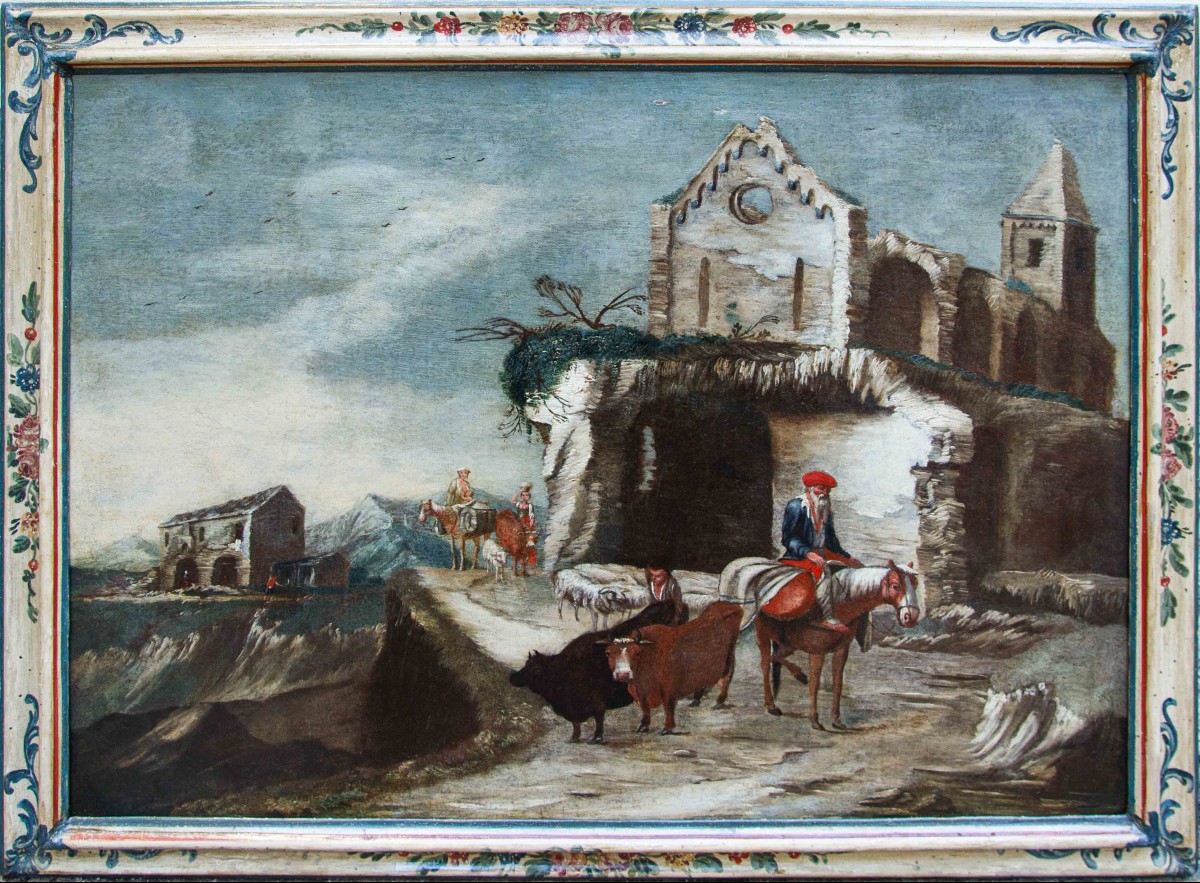
Landscape with ruins, farmers and shepherds
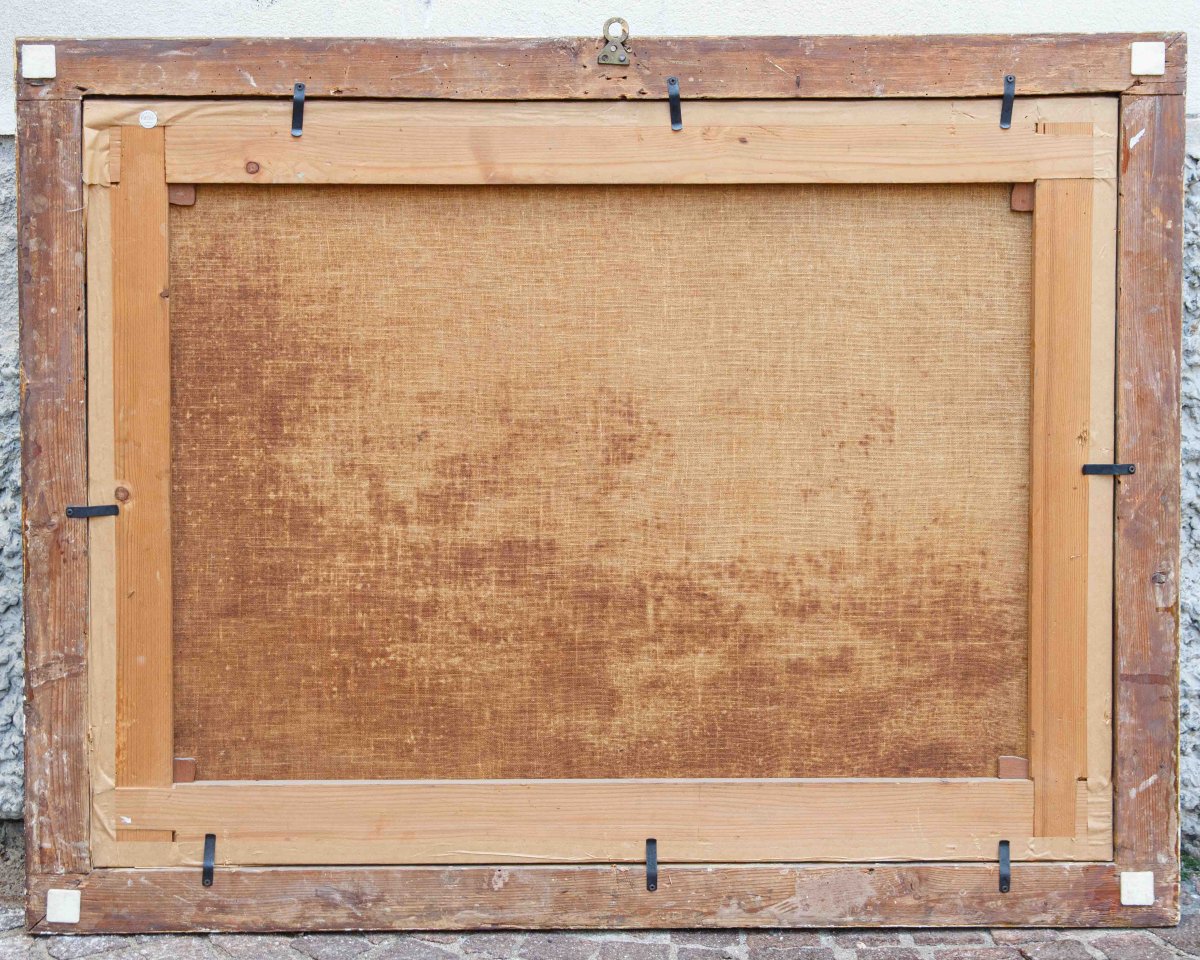
Oil on canvas, 74 x 96 cm
With an ancient Genoese frame from the 17th century, 110 x 86 cm
Antonio Travi was born in Sestri Ponente (then an independent village, now a district of Genoa) in 1608, while he died, according to archive documents, around 1665, at the age of about fifty-seven. Travi came from a family of modest means, soon acquiring the nickname de “The Sestri” for his birthplace, although he was sometimes called “The Deaf of Sestri” because of his deafness.
He began his artistic career in the workshop of Bernardo Strozzi (1581 – 1644), considered one of the most important and prolific exponents of Italian Baroque painting, where, according to sources, he was initially initiated as a color grinder (around 1623), before the master recognized his talent by welcoming him as a disciple. This association was crucial: in 1625, Travi appeared as a witness in an archival document linked to a dispute involving the master himself; furthermore, the relationship between the two remained strong over time, as demonstrated by the presence of "two towns belonging to Mr. Antonio da Sestri" in the inventory of Strozzi's assets in Venice, drawn up in 1644. Although his early works show the influence of the Ligurian master's pictorial language (such as the Adoration of the Shepherds, now preserved in Palazzo Bianco in Genoa), his crucial training in the genre that made him famous, the rustic and country landscape, took place under the Flemish painter Gottfried Wals (1595 – 1638), active in Genoa in those years. From Wals, Travi assimilated the attention to aerial perspective and broad view, typical of Nordic painting, although his compositions show a monumentality and material density alien to the lightness of the Flemish master. His lesson allowed him to overcome the role of a mere reproducer of backdrops for figures and to devote himself entirely to the landscape as an autonomous subject. His canvases, often marked by a deep sense of nostalgia, frequently portrayed architectural ruins set in natural contexts, giving them a picturesque character that, in fact, anticipated that sensitivity typical of the eighteenth century. The human component, although ancillary to the landscape, was essential: Travi populated his scenes with humble figures of shepherds, wayfarers, beggars and commoners, captured in the exercise of their daily activities, through that Caravaggio-inspired naturalism inherited from the Ligurian environment. From an executive point of view he employed a full-bodied and robust pictorial application, capable of giving three-dimensionality and weight to the depicted elements, in stark contrast to the more aerial and nuanced painting of the Flemish landscape painters. The use of light was aimed at highlighting strong contrasts, often with charged skies and a milky atmosphere, which accentuated the sense of solitude and the inescapable strength of nature compared to man.
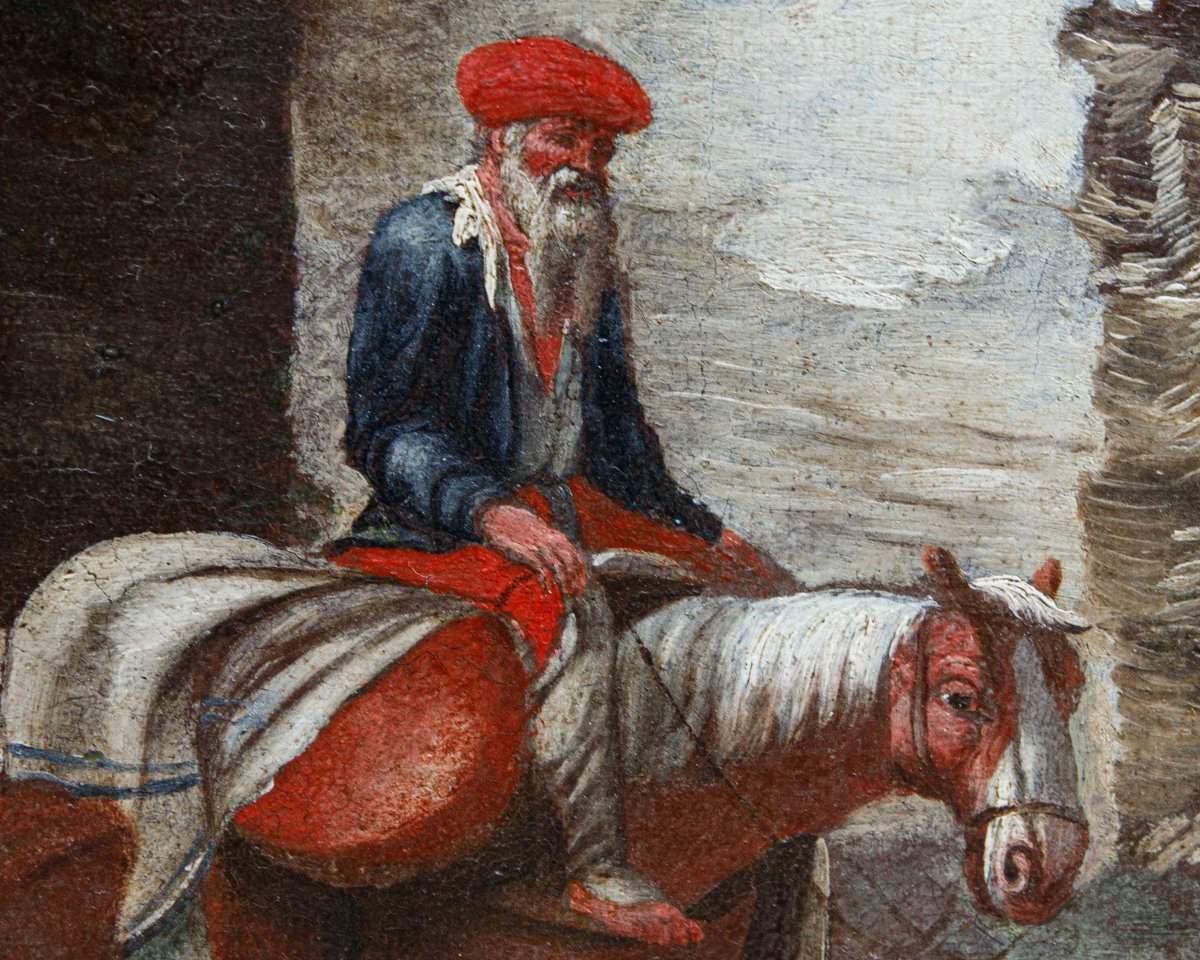
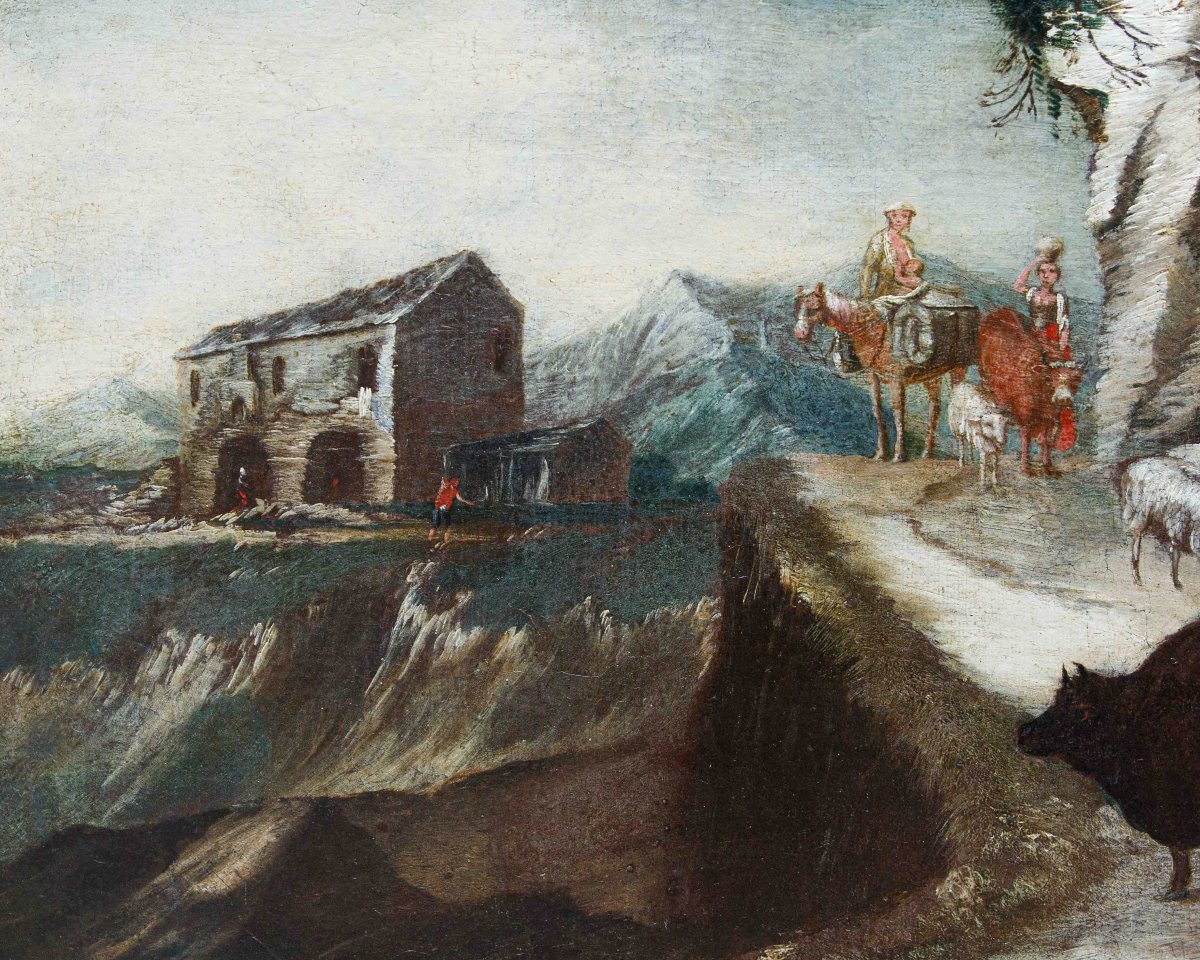
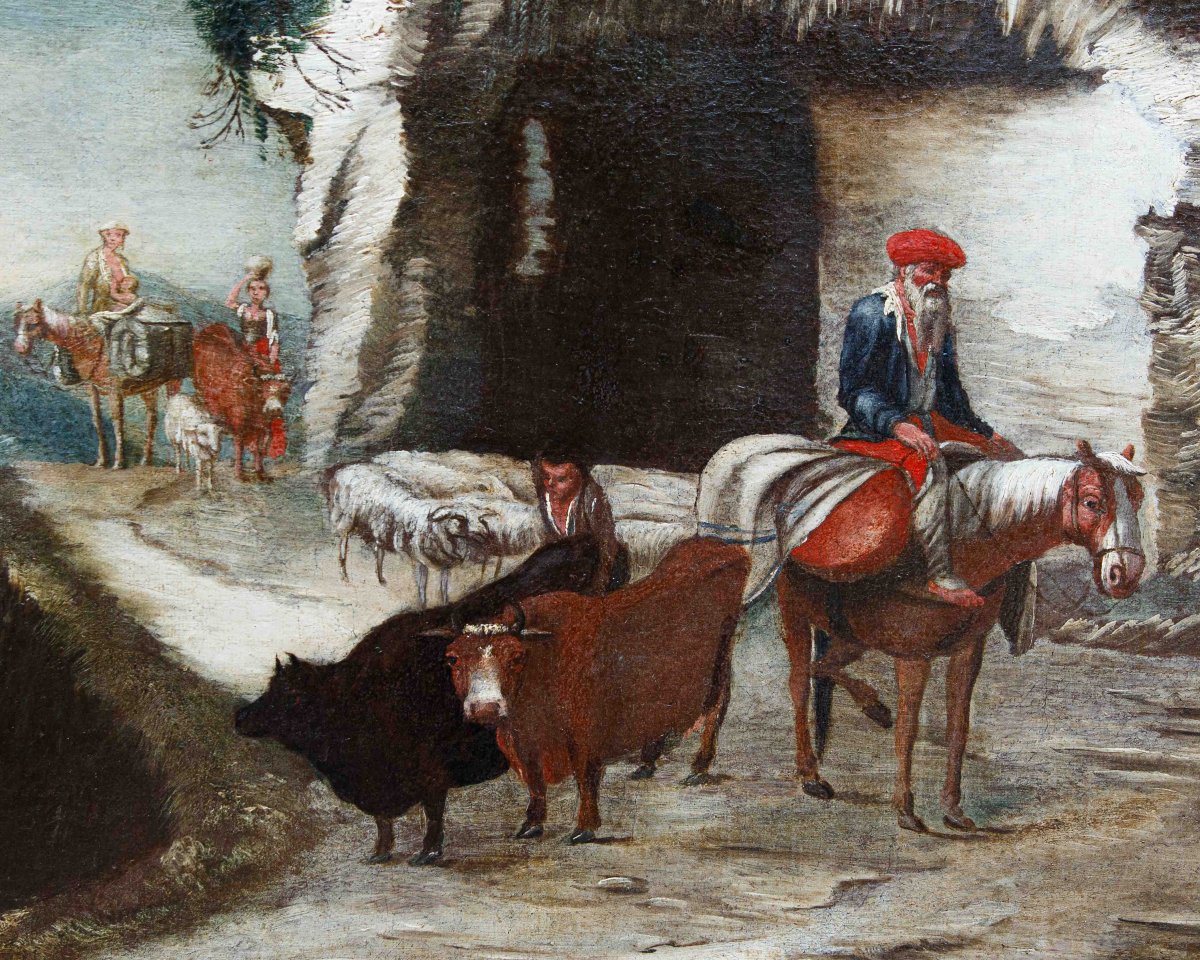
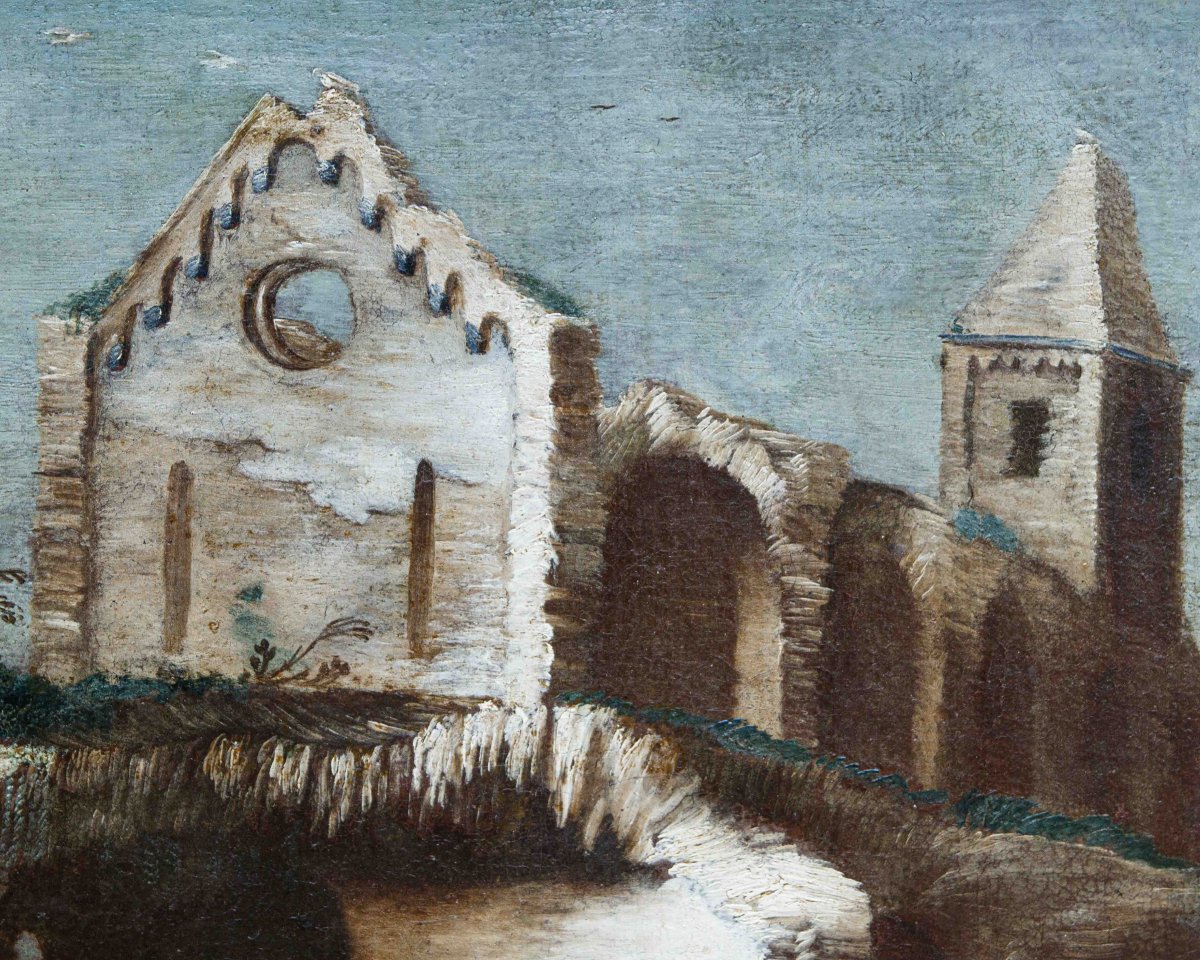
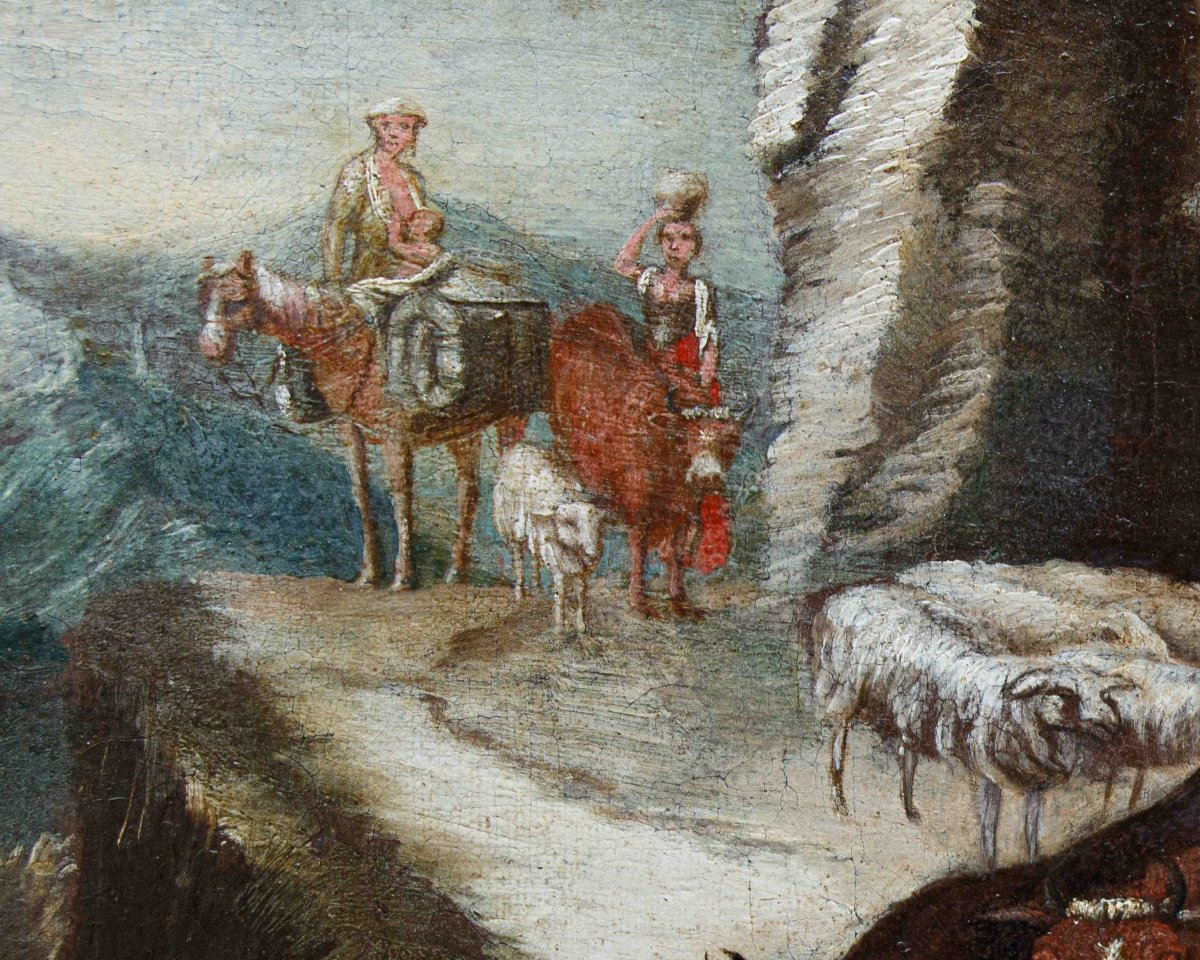
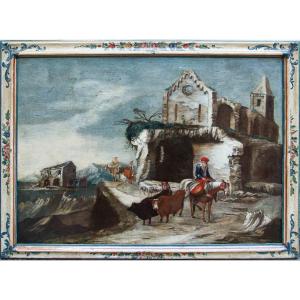
The painting in question, set within a refined 17th-century ancient Genoese frame decorated with delicate floral brush motifs, fits into Travi's more mature landscape production, illustrating one of his favorite subjects, a country view dominated by the ruins of a church or convent. Figures of shepherds on horseback and herds enliven the scene, fitting into the rural context with a rendering that combines Genoese naturalism with the compositional structure learned from Gottfried Wals. The atmosphere is made intense by the dramatic cold light and dense pictorial matter, distinctive elements of his art.
Landscape with ruins, farmers and shepherds
Oil on canvas, 74 x 96 cm
With an ancient Genoese frame from the 17th century, 110 x 86 cm
Antonio Travi was born in Sestri Ponente (then an independent village, now a district of Genoa) in 1608, while he died, according to archive documents, around 1665, at the age of about fifty-seven. Travi came from a family of modest means, soon acquiring the nickname de “The Sestri” for his birthplace, although he was sometimes called “The Deaf of Sestri” because of his deafness.
He began his artistic career in the workshop of Bernardo Strozzi (1581 – 1644), considered one of the most important and prolific exponents of Italian Baroque painting, where, according to sources, he was initially initiated as a color grinder (around 1623), before the master recognized his talent by welcoming him as a disciple. This association was crucial: in 1625, Travi appeared as a witness in an archival document linked to a dispute involving the master himself; furthermore, the relationship between the two remained strong over time, as demonstrated by the presence of "two towns belonging to Mr. Antonio da Sestri" in the inventory of Strozzi's assets in Venice, drawn up in 1644. Although his early works show the influence of the Ligurian master's pictorial language (such as the Adoration of the Shepherds, now preserved in Palazzo Bianco in Genoa), his crucial training in the genre that made him famous, the rustic and country landscape, took place under the Flemish painter Gottfried Wals (1595 – 1638), active in Genoa in those years. From Wals, Travi assimilated the attention to aerial perspective and broad view, typical of Nordic painting, although his compositions show a monumentality and material density alien to the lightness of the Flemish master. His lesson allowed him to overcome the role of a mere reproducer of backdrops for figures and to devote himself entirely to the landscape as an autonomous subject. His canvases, often marked by a deep sense of nostalgia, frequently portrayed architectural ruins set in natural contexts, giving them a picturesque character that, in fact, anticipated that sensitivity typical of the eighteenth century. The human component, although ancillary to the landscape, was essential: Travi populated his scenes with humble figures of shepherds, wayfarers, beggars and commoners, captured in the exercise of their daily activities, through that Caravaggio-inspired naturalism inherited from the Ligurian environment. From an executive point of view he employed a full-bodied and robust pictorial application, capable of giving three-dimensionality and weight to the depicted elements, in stark contrast to the more aerial and nuanced painting of the Flemish landscape painters. The use of light was aimed at highlighting strong contrasts, often with charged skies and a milky atmosphere, which accentuated the sense of solitude and the inescapable strength of nature compared to man.
The painting in question, set within a refined 17th-century ancient Genoese frame decorated with delicate floral brush motifs, fits into Travi's more mature landscape production, illustrating one of his favorite subjects, a country view dominated by the ruins of a church or convent. Figures of shepherds on horseback and herds enliven the scene, fitting into the rural context with a rendering that combines Genoese naturalism with the compositional structure learned from Gottfried Wals. The atmosphere is made intense by the dramatic cold light and dense pictorial matter, distinctive elements of his art.
4 800 €
Period: 17th century
Style: Other Style
Condition: Good condition
Material: Oil painting
Width: 96
Height: 74
Reference (ID): 1671474
Availability: In stock
Print