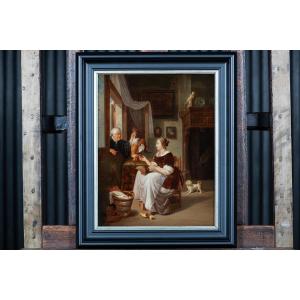


Pieter Cornelisz. van Slingelandt (1640–1691), 18th–19th century follower
The Lacemaker – Oil on panel (38 × 29.5 cm; framed: 48 × 49.5 cm)
This exceptionally refined painting is a later follower’s interpretation of the work of Pieter Cornelisz. van Slingelandt, one of the leading representatives of the Leiden fijnschilders within the Dutch Golden Age. Van Slingelandt was celebrated for his almost microscopic precision, a quality that made his paintings highly sought after already during his lifetime. This 18th- or 19th-century follower piece clearly reflects the enduring admiration for his style, which was studied and emulated by later artists striving to recapture the technical perfection of 17th-century Leiden fine painting. The work was historically recorded at the RKD under an attribution to Ferdinand de Braekeleer (I), an Antwerp artist known in his time for meticulous reinterpretations of old master traditions. Its RKD entry (no. 3836711) confirms the painting’s clear position in art history as a follower work after Slingelandt’s original compositions.
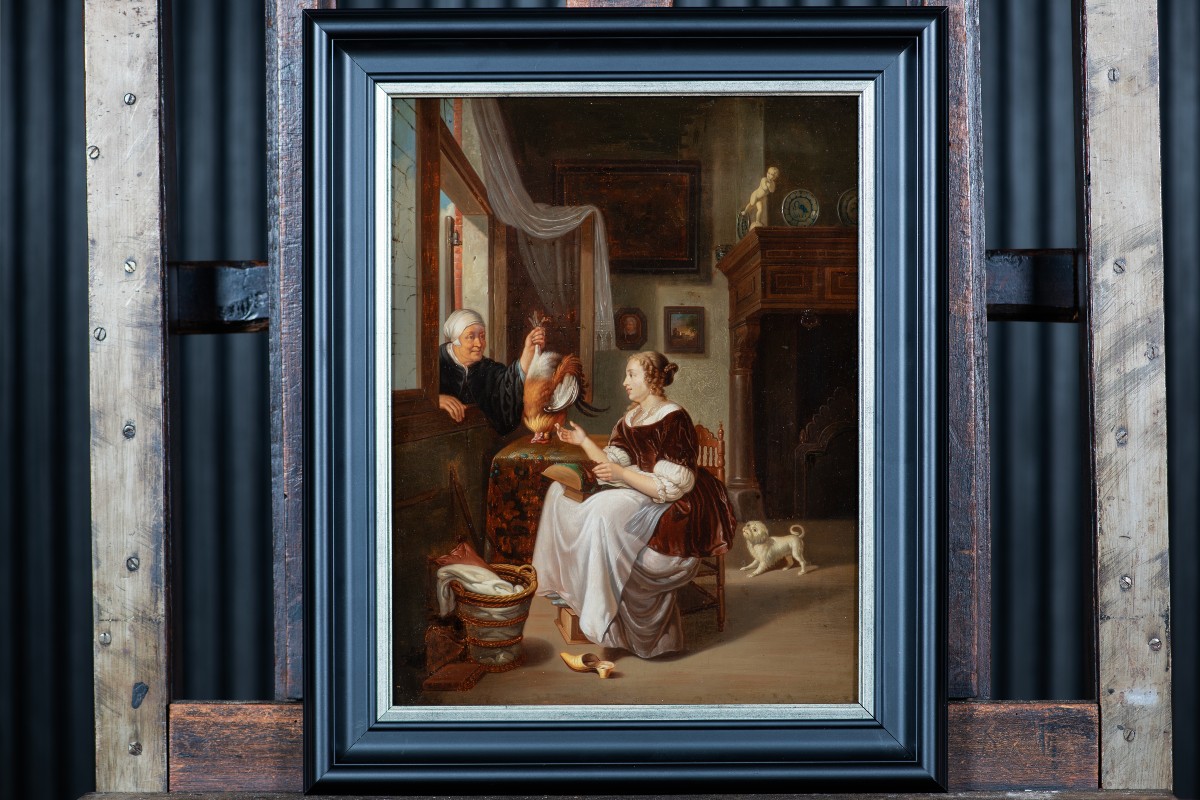
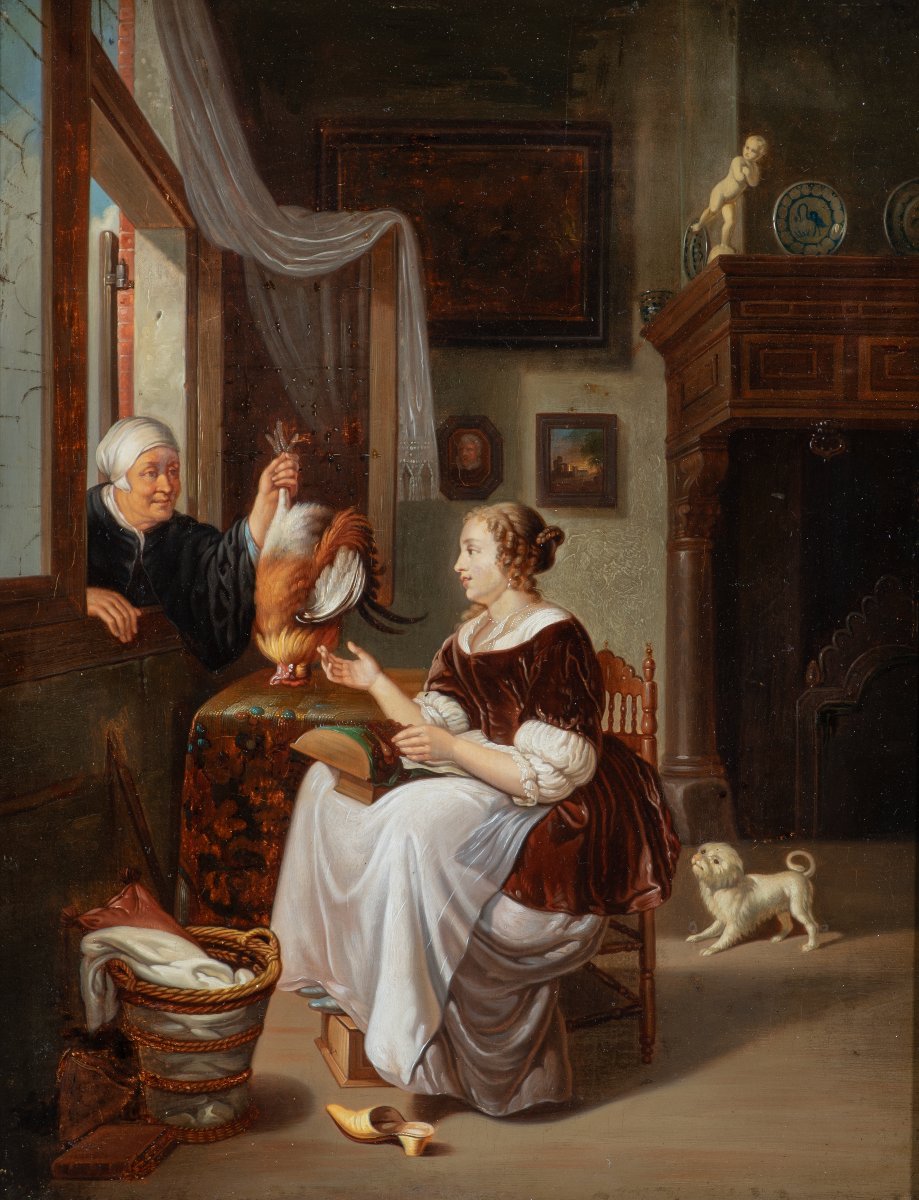
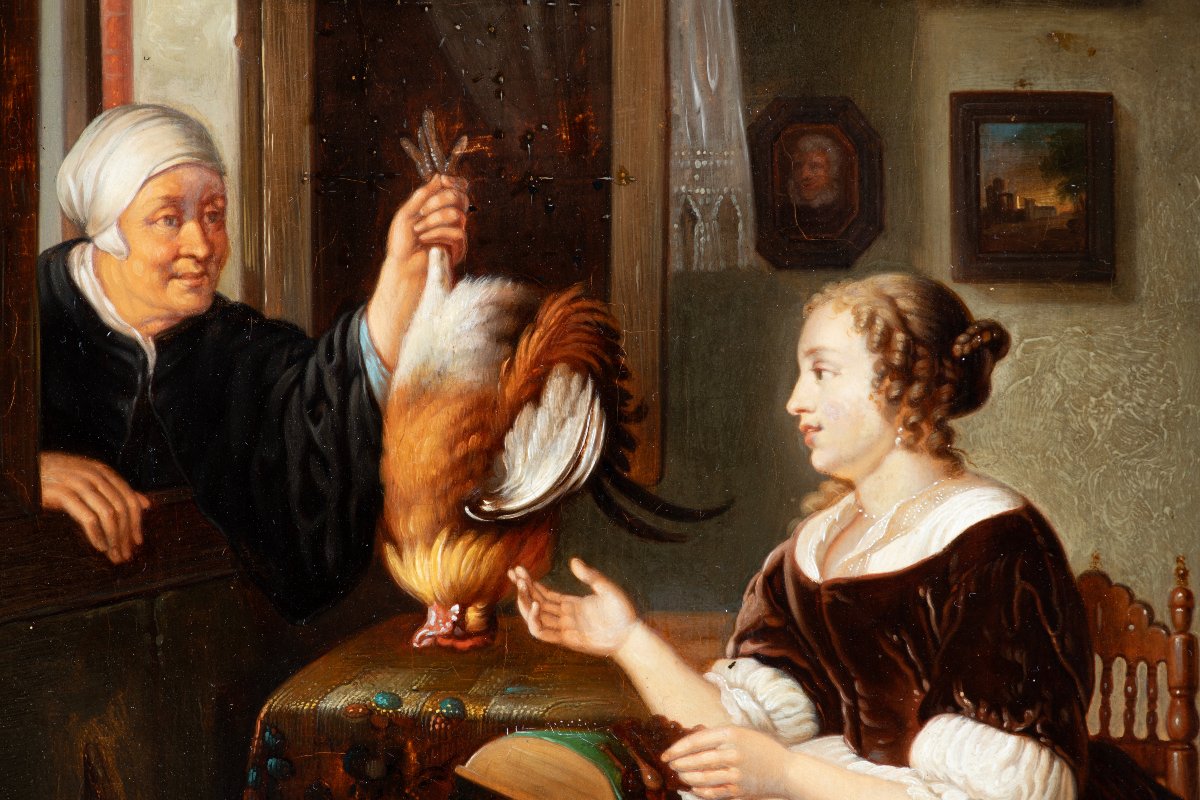
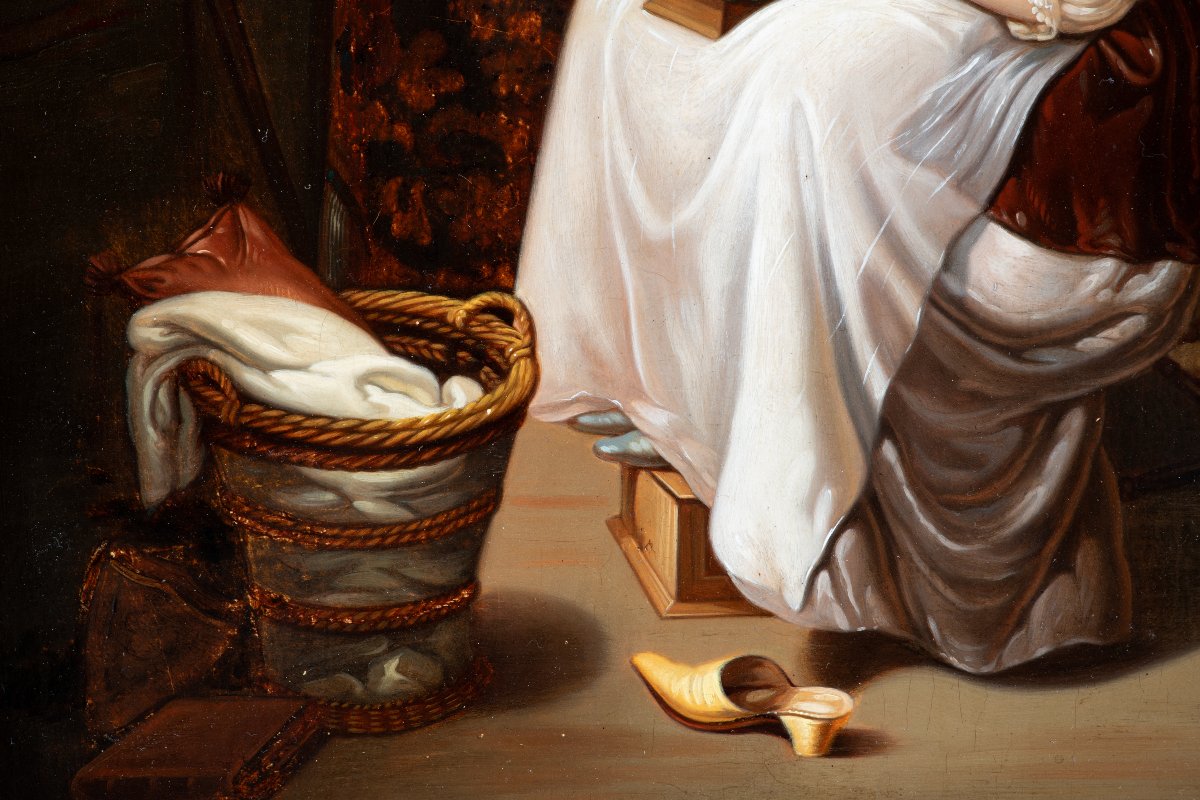
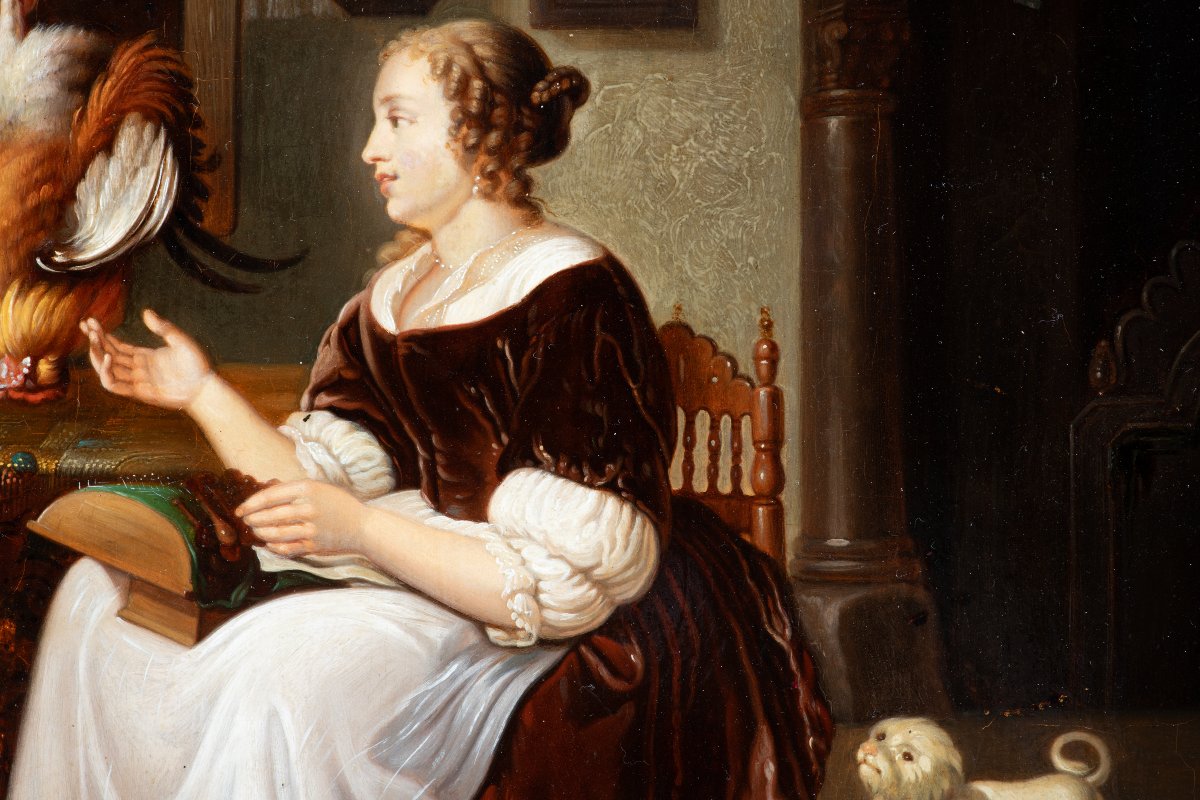
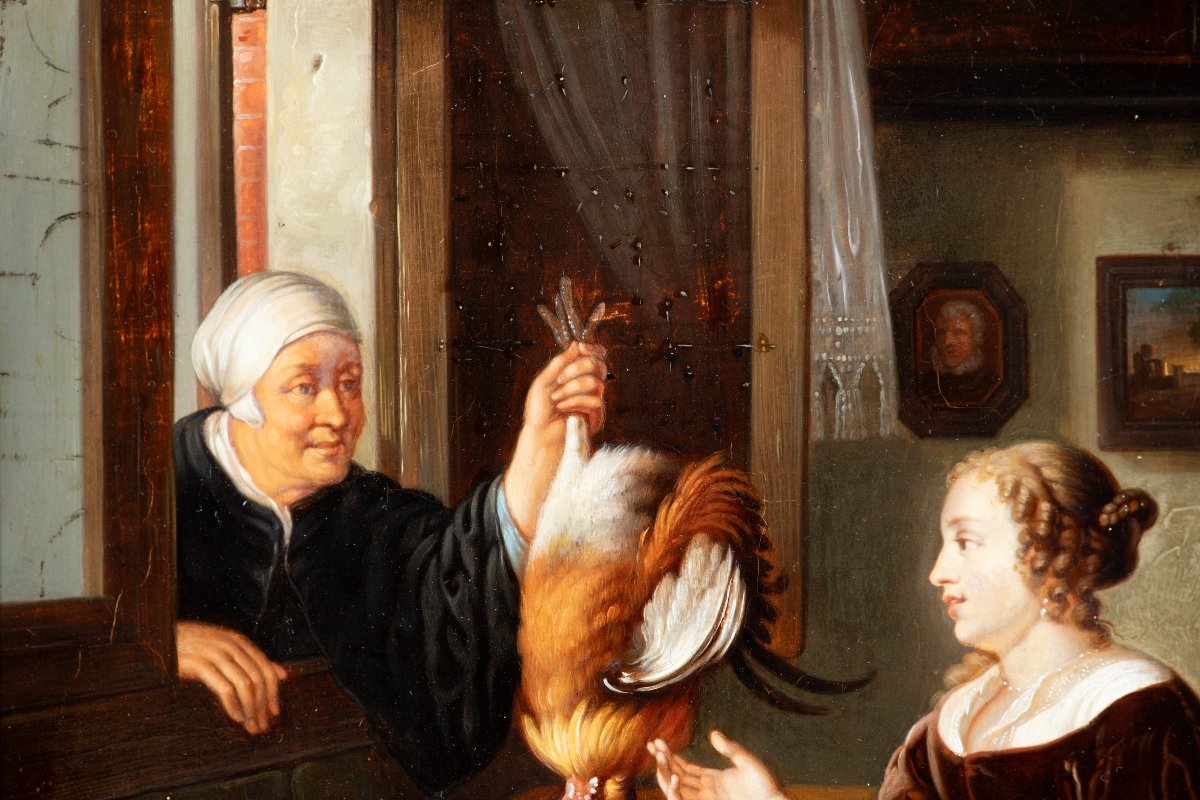
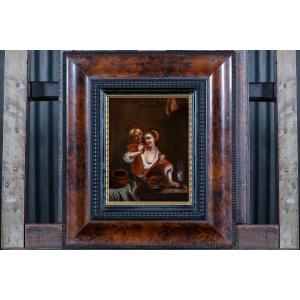
The Lacemaker presents a carefully composed and intimate interior scene, placing a young woman within a warm domestic setting rich in texture, detail, and quiet narrative tension. The central figure—seated on a turned wooden chair, wearing a warm brown velvet bodice and a bright white apron—is engaged in lacemaking, a favored genre subject symbolizing domestic order and feminine skill. Her bobbins rest on the lace pillow before her, while the subtle rendering of light across the linen demonstrates the painter’s technical control.
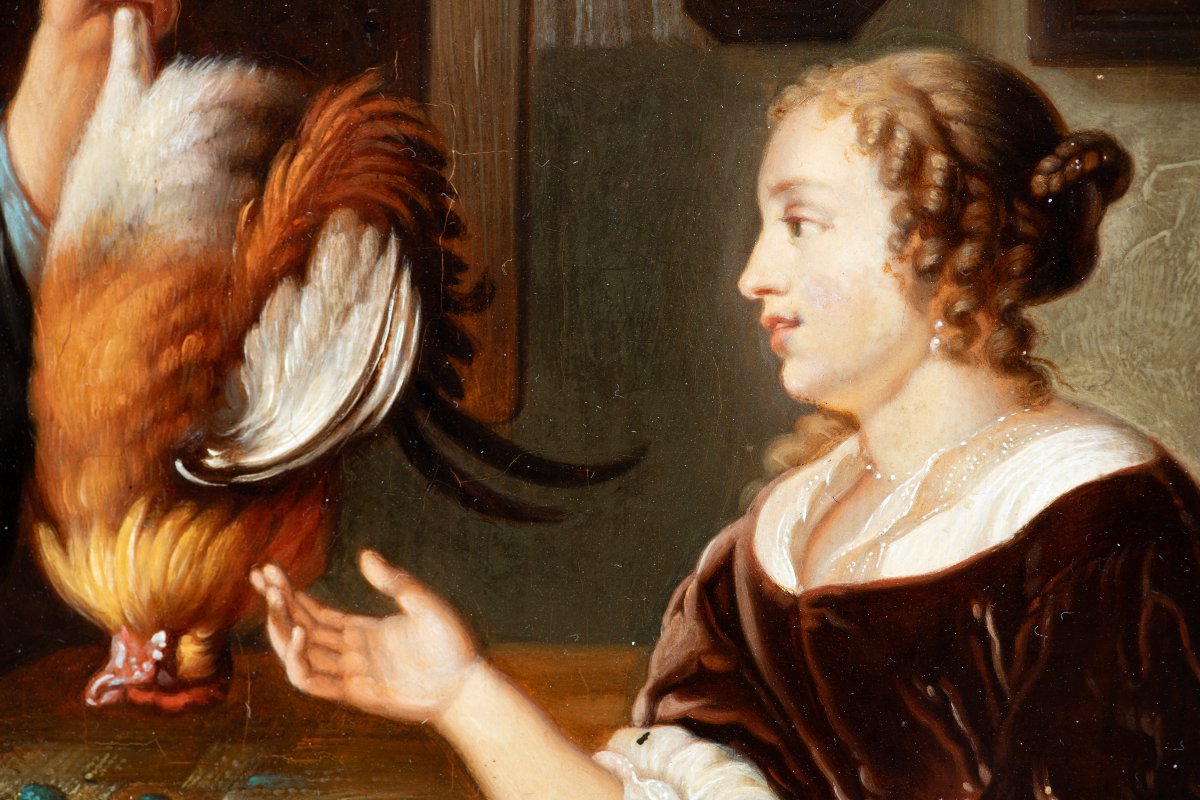
At the open window to the left appears an older woman, identifiable by her simple black dress and white cap. She lifts a rooster by its legs directly in front of the lacemaker. This interaction opens the composition outward and introduces a lively, almost theatrical dimension. The rooster functions not only as a realistic object within a household exchange, but also as a showcase for painterly virtuosity: the sheen of feathers, delicate gradations of red, ochre, and white, and subtle highlights playing across the plumage.
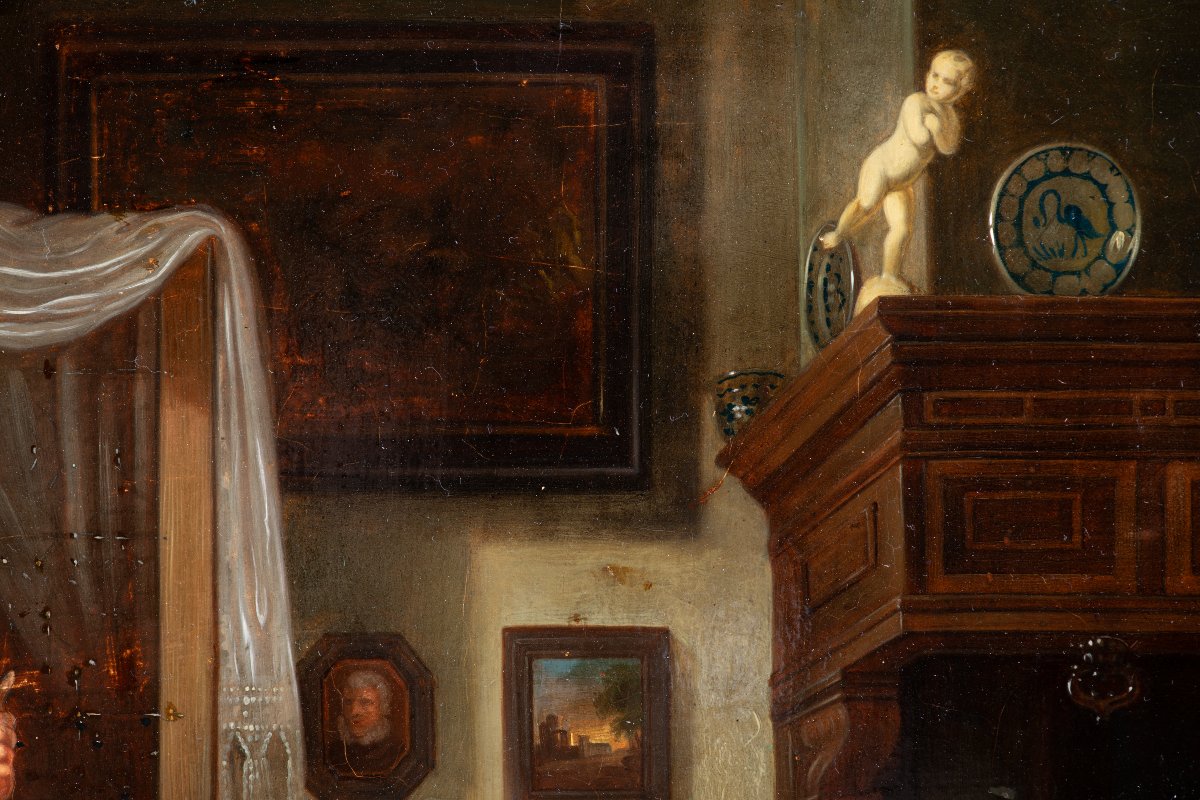
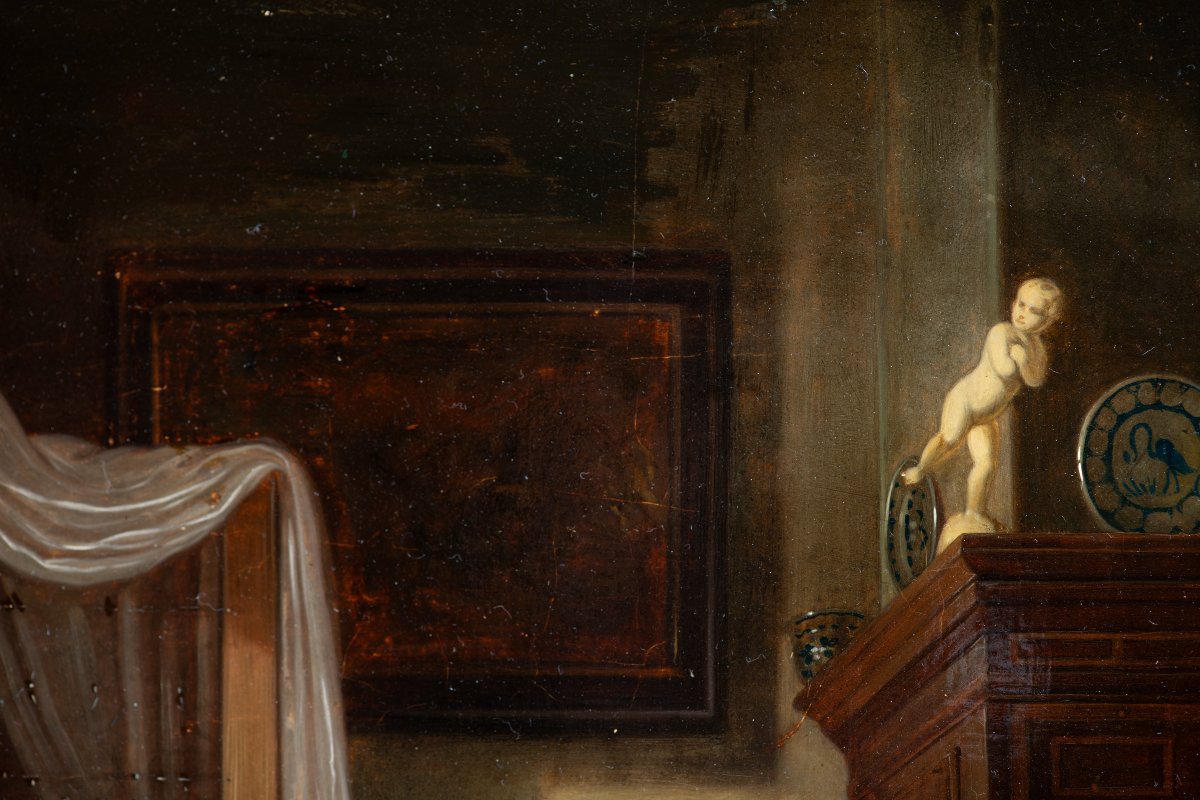
To the right in the background, a small lapdog stands alert, watching the scene—a characteristic fijnschilder motif that adds vitality and intimacy. The elegant fireplace with earthenware and a sculptural putto, wall hangings, and paintings within the painting all reinforce the atmosphere of domestic luxury and refined bourgeois culture associated with the 17th century.
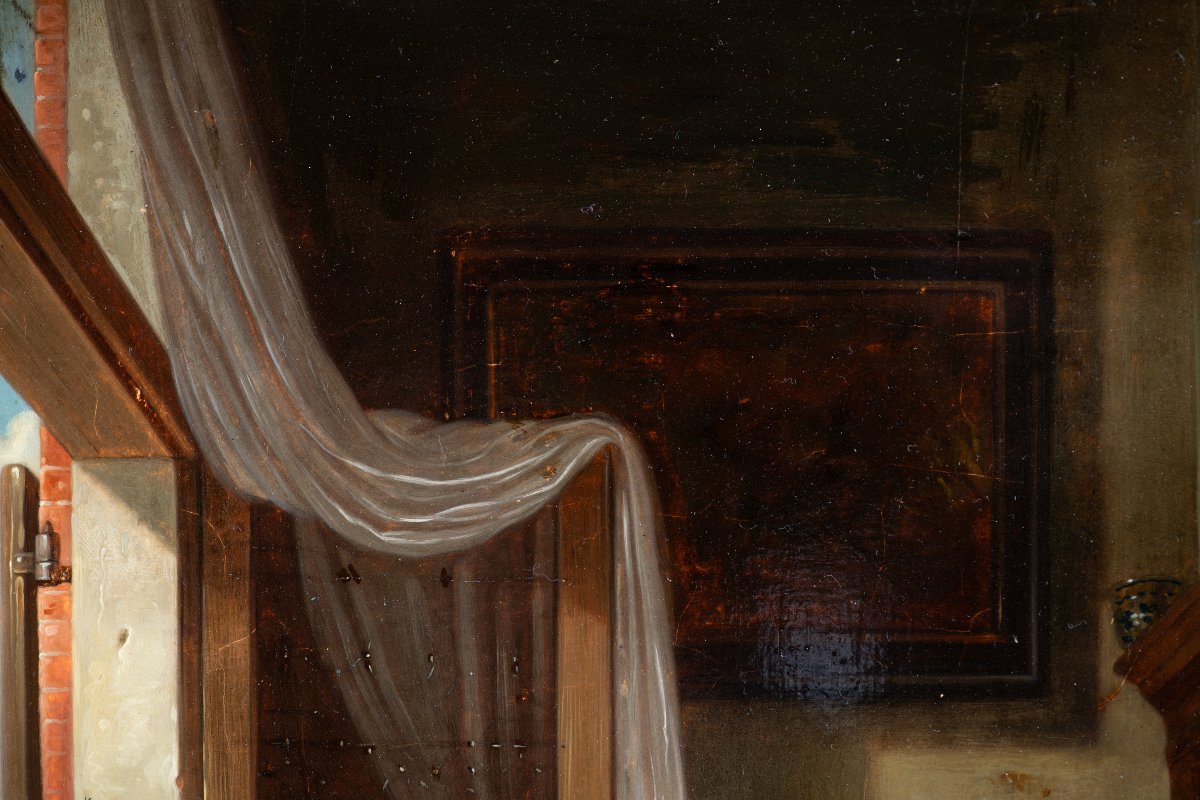
Although this panel is a later follower work, its technique reveals close and knowledgeable study of fijnschilder practice. The paint surface is exceptionally smooth, built up in thin layers in which brushstrokes are barely visible—an explicit reference to Leiden methods, where optical illusion and surface finish were fundamental.
The palette combines warm, deep earth tones with cooler nuances supporting the effects of light and atmosphere. The velvety browns of the dress, the pure whites of sleeves and apron, the coppery and ivory tones in the rooster, and the soft grey-green background together create a harmonious chromatic balance. Light is carefully directed: entering through the window, illuminating the young woman’s face, and then moving across surrounding objects to generate depth and spatial coherence.
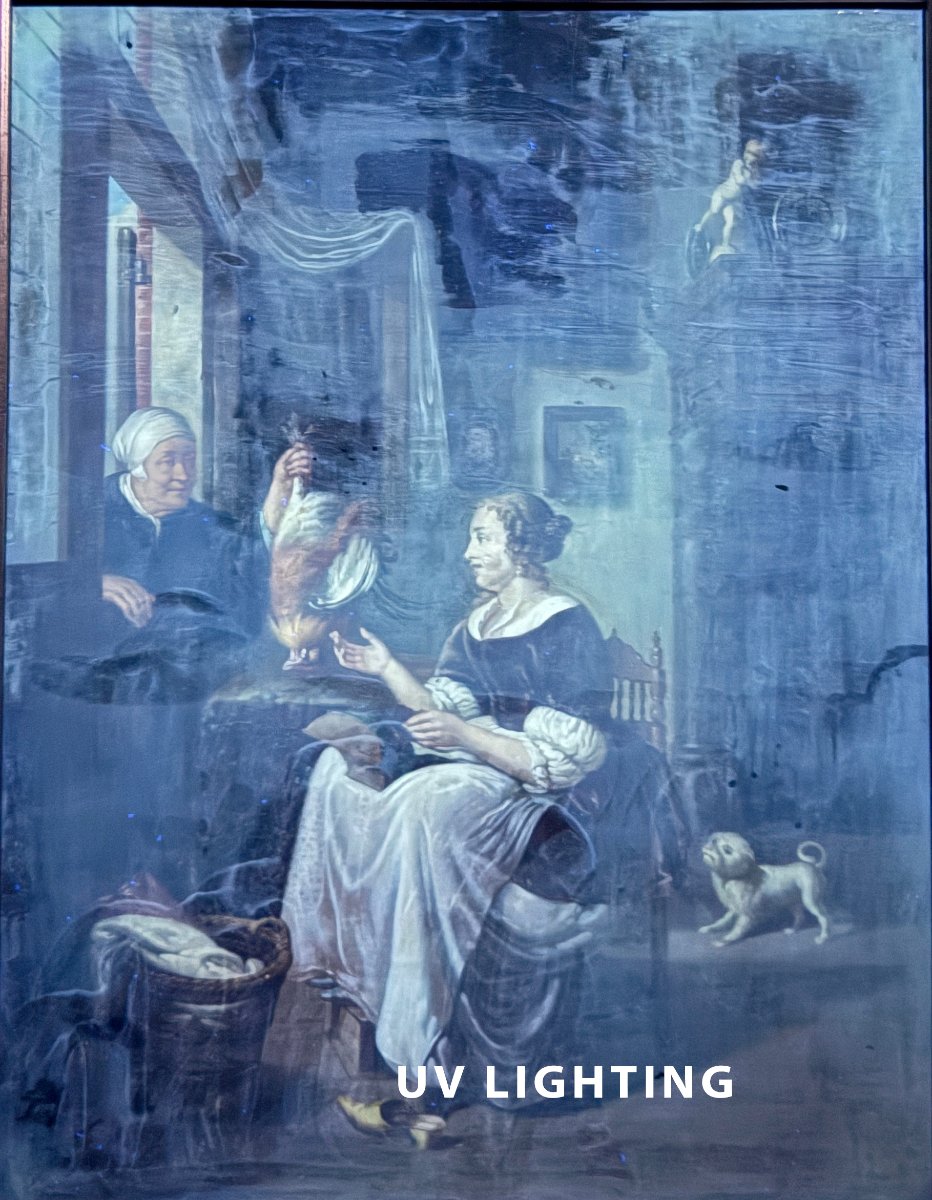
A recently applied matte dammar varnish provides an even, clear surface, while UV examination reveals retouching primarily in the background and select contour areas—restorations consistent with a work of this age and not visually disruptive to its overall presentation.
The composition follows the Leiden fijnschilder ideal: a meticulously constructed interior in which each object carries meaning and each detail reinforces the illusion of immediacy. The diagonal axis formed by the window and the older woman’s outstretched arm leads the eye directly toward the central lacemaker figure. The dog, the slipped slipper, the filled laundry basket, and painted internal vistas (such as the small landscape on the wall) provide the same layered richness that made Van Slingelandt and his teachers renowned.
The subject aligns closely with 17th-century bourgeois moral themes: woman as steward of the household, emphasis on diligence, and delight in textures of domestic life. Within the broader international context of this genre, artists such as Gerrit Dou, Frans van Mieris the Elder, Godfried Schalcken, Willem van Mieris, and, more broadly, Samuel van Hoogstraten and Michael Sweerts may be cited as relevant stylistic counterparts.
Van Slingelandt trained in Leiden, where he had access to the influential fijnschilder network around Dou. His reputation rested on extraordinary precision: historical sources note that he could spend months painting a gold chain only a few centimeters long. Later followers, including the anonymous master of this panel, were drawn to this refined tradition and sought to approach the atmosphere, light handling, and technical perfection of his paintings.
The RKD registration under Ferdinand de Braekeleer (I) is art-historically meaningful. De Braekeleer was a 19th-century artist who revived old master traditions from both Flemish and Dutch painting. The database entry not only confirms the significance of this specific panel within the history of follower works, but also demonstrates the continued appreciation of Slingelandt’s compositions in later centuries.
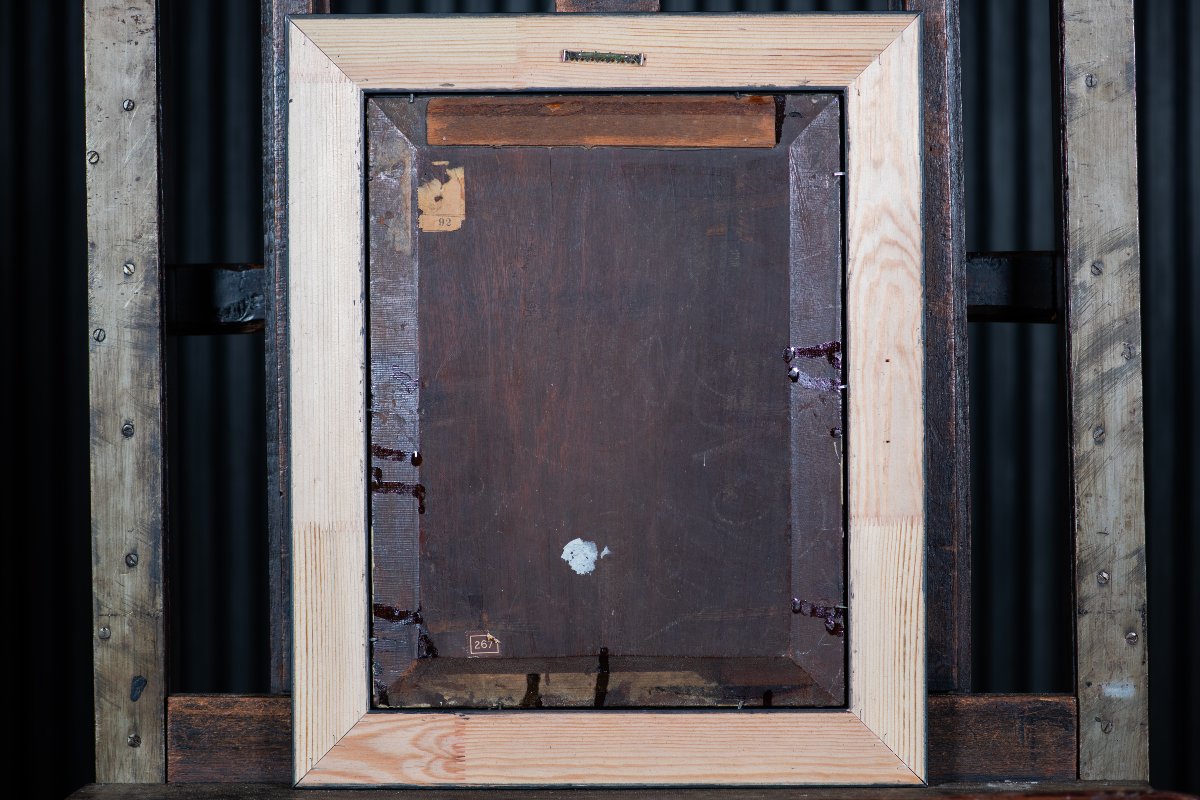
The work is recorded at the RKD under Ferdinand de Braekeleer (I) as a follower work after Slingelandt (RKD no. 3836711). Possible monogram traces at lower left on the bellows are noted in the registration, though without definitive identification. This documentation supports the painting’s authenticity as a historical follower piece and reinforces its provenance within the tradition of fijnschilder emulation.
The Lacemaker is a particularly successful example of the 18th–19th century revival of fijnschilder aesthetics. Its meticulous painting technique, calm yet lively narrative, richness of objects, and harmoniously directed light make it a persuasive reflection of the spirit of Pieter Cornelisz. van Slingelandt’s oeuvre. Within the collecting field of works inspired by 17th-century Dutch painting, it stands as an attractive, refined, and technically accomplished panel that will appeal to both seasoned connoisseurs and new collectors.
The work, The Lacemaker, is housed in a matte black wooden frame with silver-toned finish.
Overall dimensions: 38 × 29.5 cm
Painting dimensions: 49.5 × 48 cm





 Le Magazine de PROANTIC
 TRÉSORS Magazine
 Rivista Artiquariato