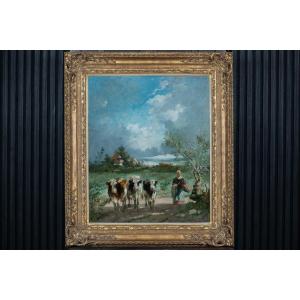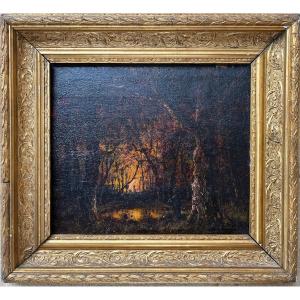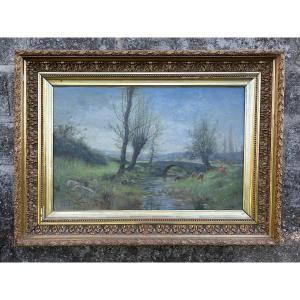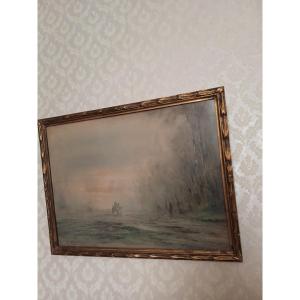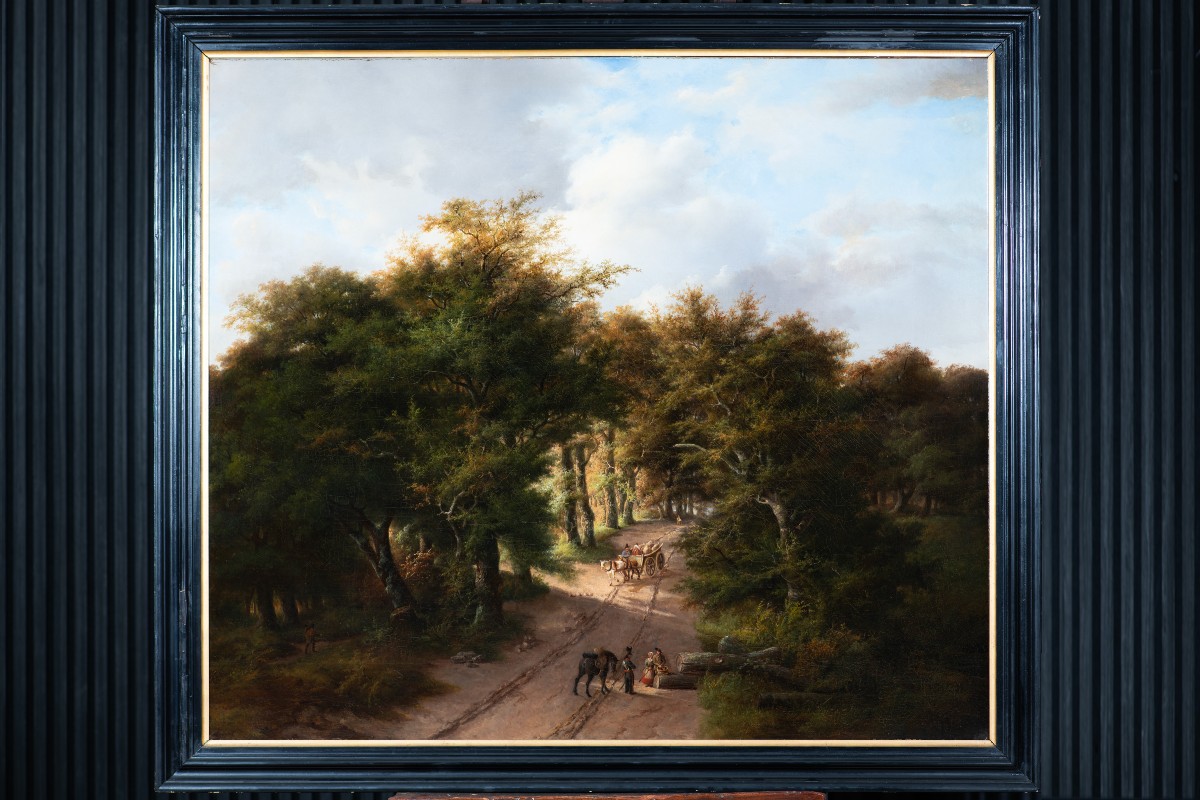



Barend Cornelis Koekkoek (1803–1862) (circle Of) - Woodland Landscape With Figures
Artist: Barend Cornelis Koekkoek (1803–1862), circle of
Title: Woodland Landscape with Figures
Medium: Oil on canvas
Dimensions: 112 × 132 cm (canvas), 124 × 142 cm (framed)
Style: Romanticism
Signature: Unsigned
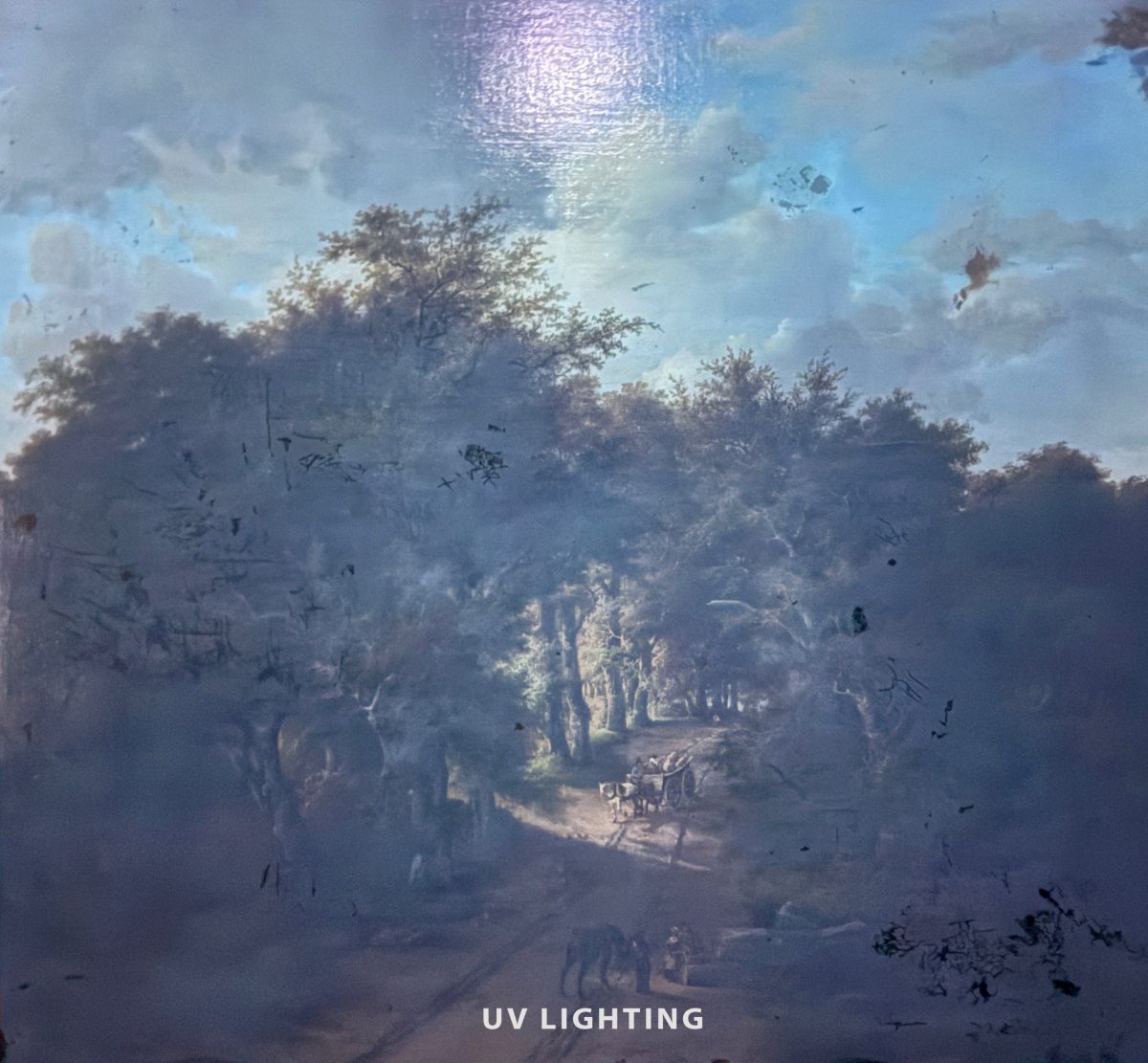
Condition: Relined canvas; retouching visible under UV light
Provenance: From a high-quality Dutch private art collection
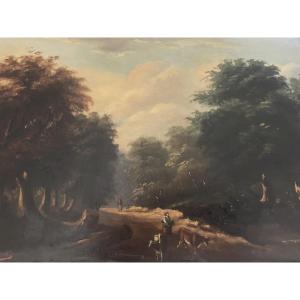
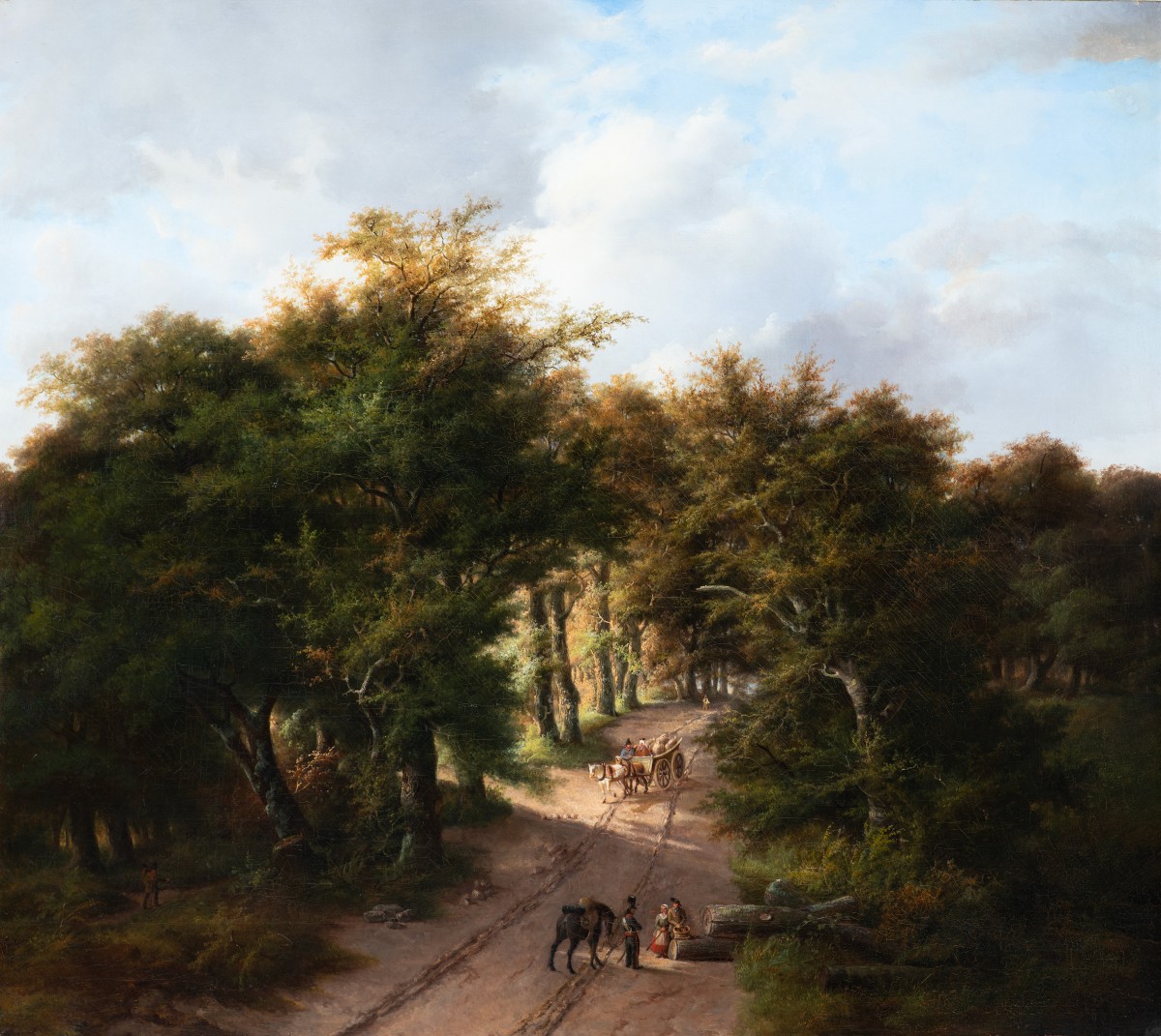
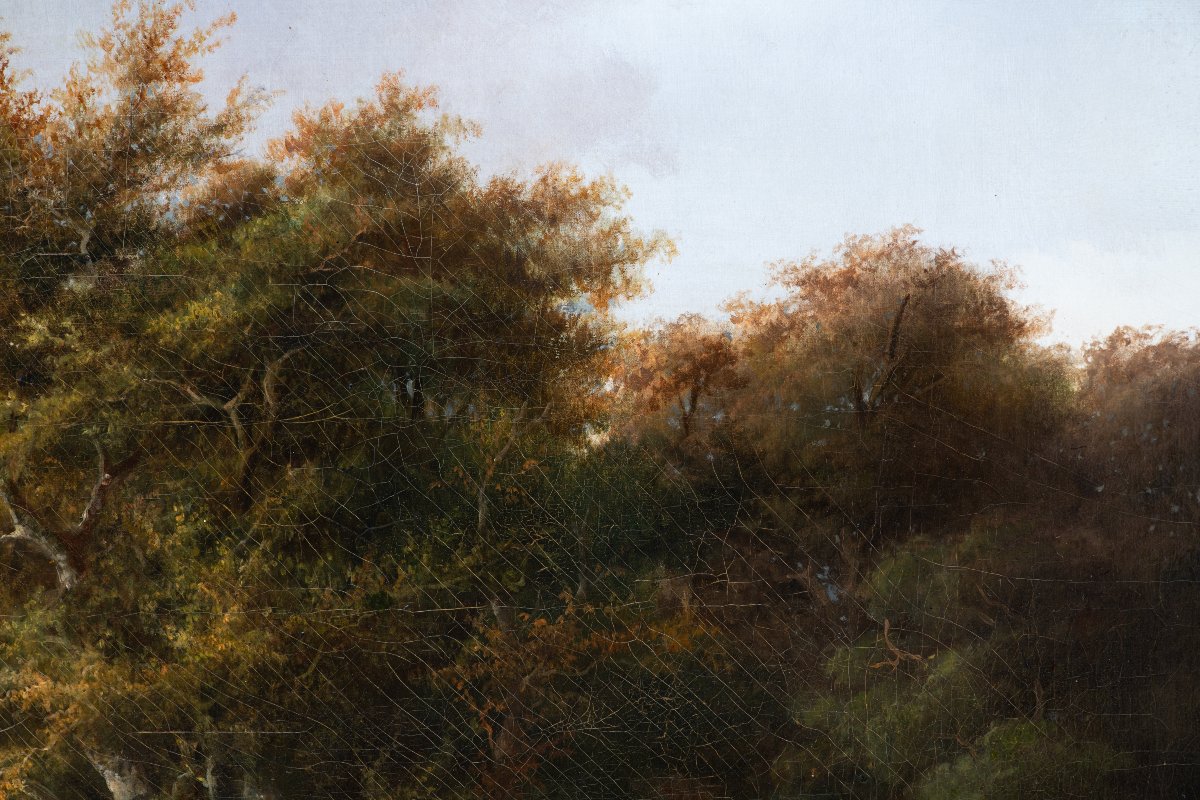
This impressive, large-scale painting can be placed convincingly within the circle of Barend Cornelis Koekkoek. The attribution is supported by clear stylistic evidence: the construction of the tree masses and parts of the sky show strong affinities with the Romantic landscape idiom for which Koekkoek became renowned in the nineteenth century. His name remains closely associated with monumental, poetic views of nature, rendered with exceptional technical refinement.
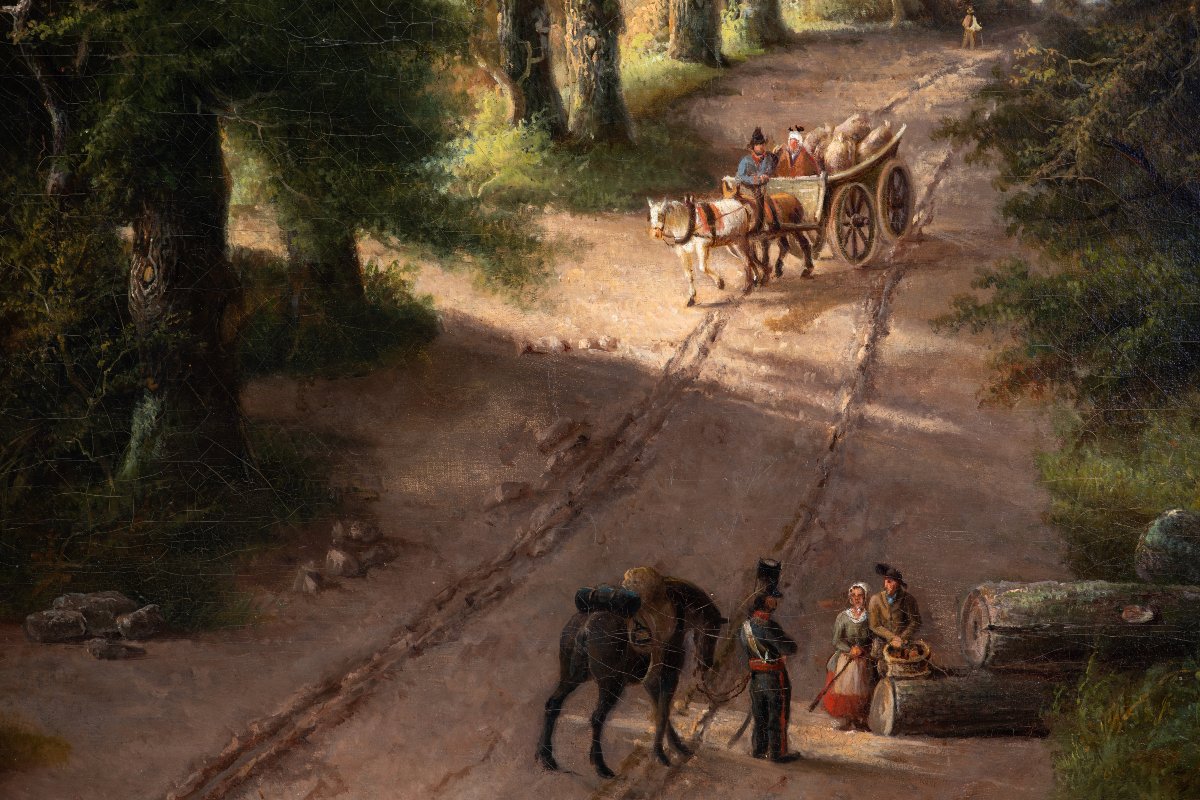
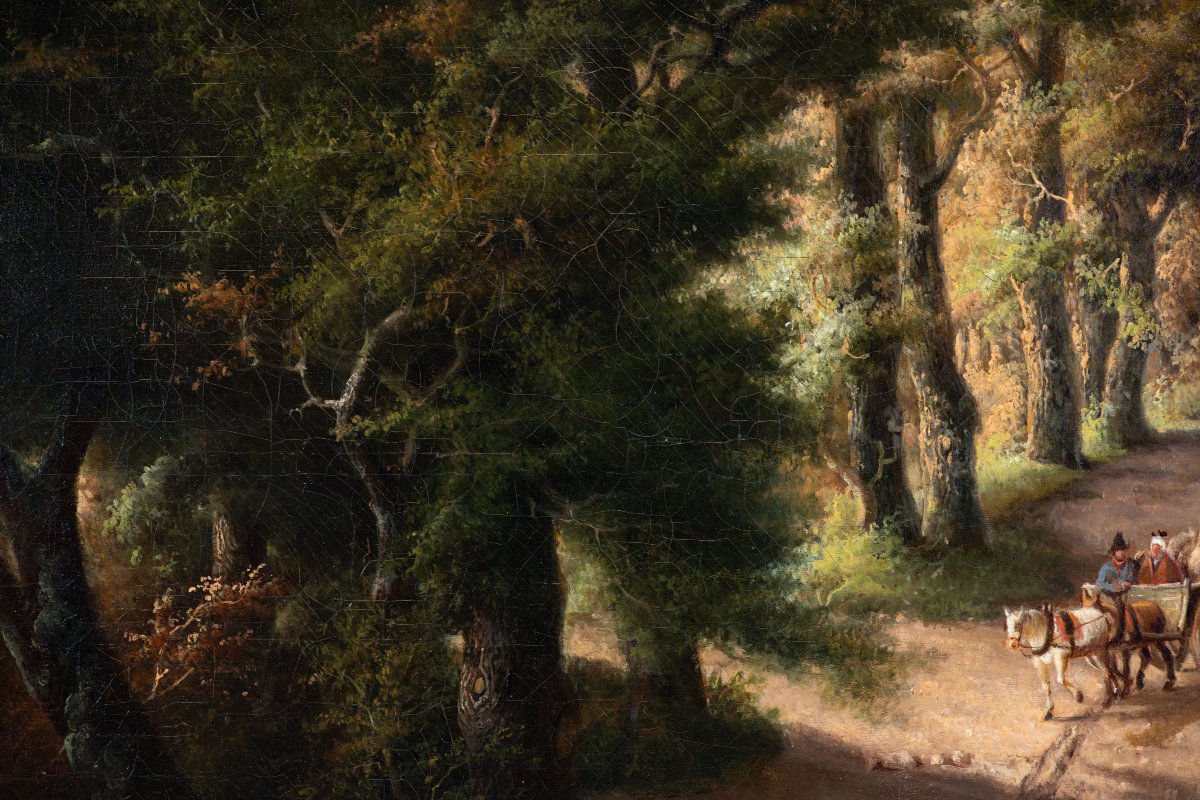
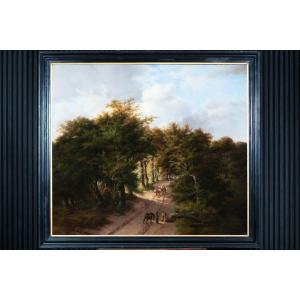
The composition follows a classical Romantic structure: a broad road set on a diagonal axis draws the viewer into the scene toward a luminous opening in the middle and far distance. Dense, dark woodland on both sides functions as a repoussoir-like framing device, creating a theatrical sense of depth. This carefully staged transition—from shadow into light—gives the painting its visual and emotional momentum.
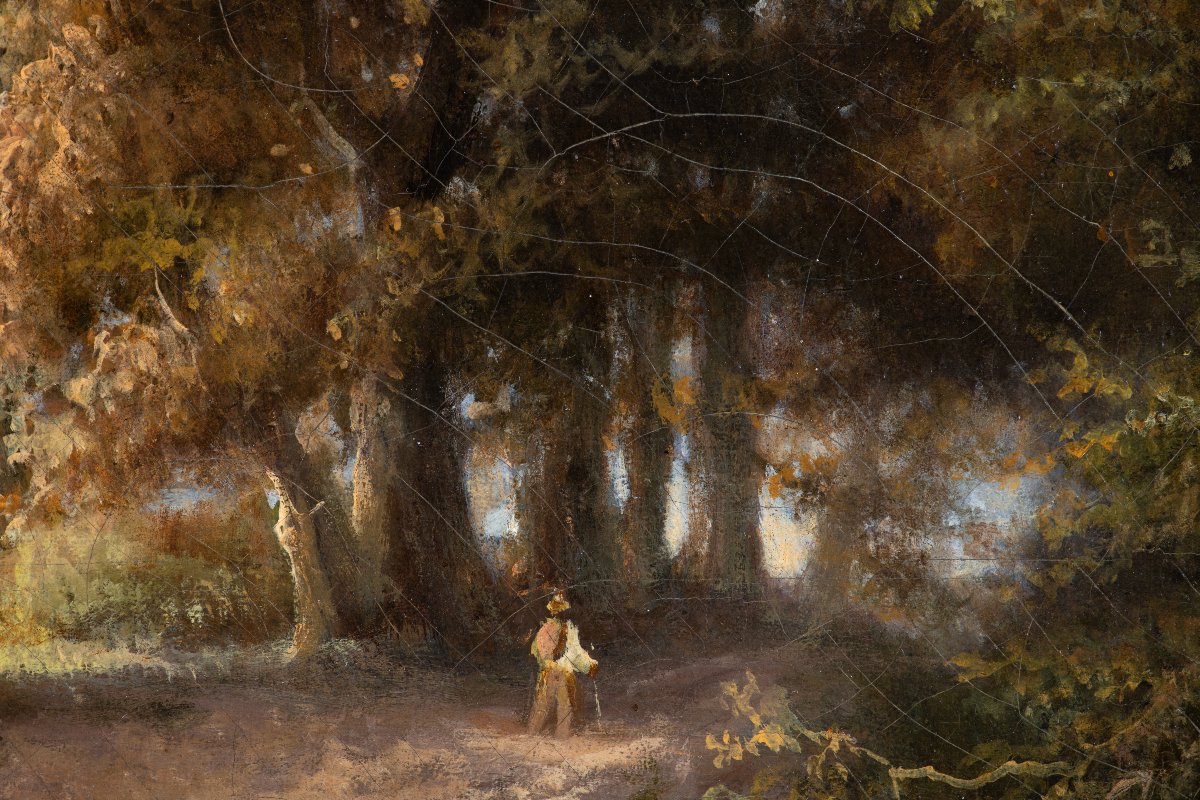
Figures, a wagon, and animals animate the route with restraint. They provide scale and narrative rhythm without competing with the landscape itself, which remains the true protagonist. This balance between human presence and the grandeur of nature is a hallmark of Romantic landscape painting.
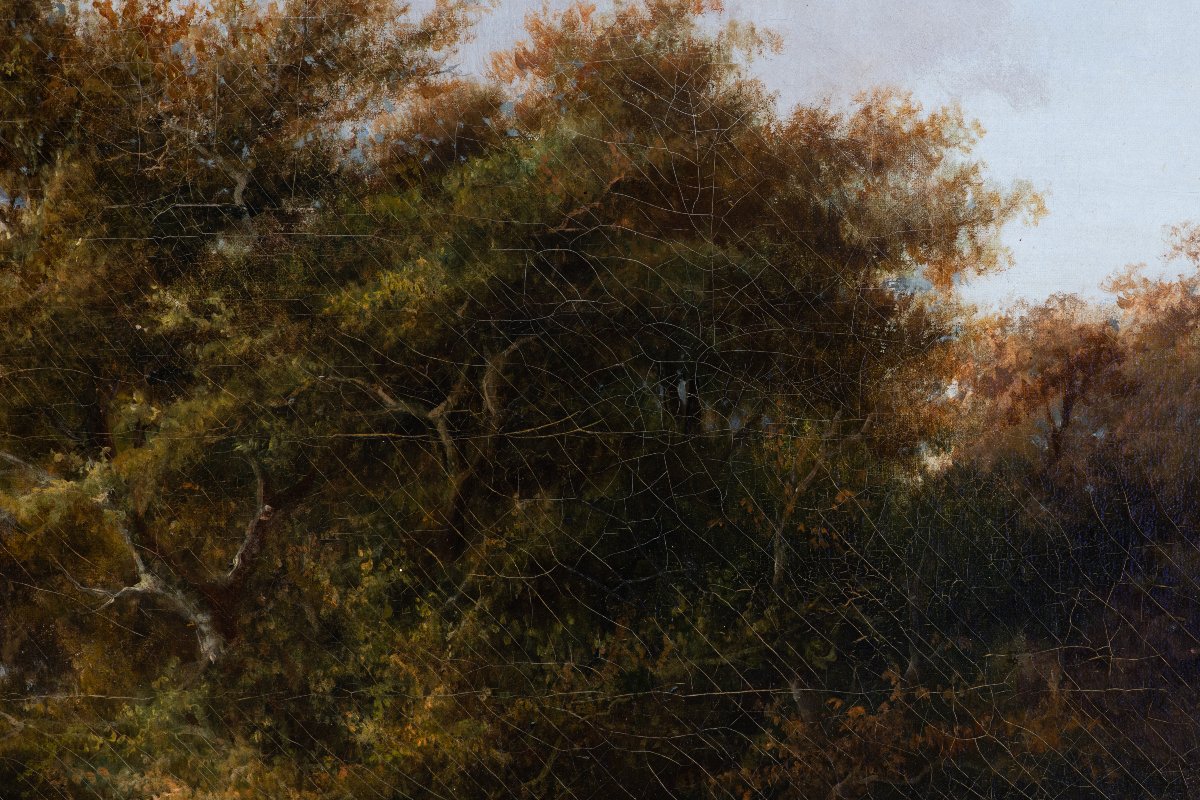
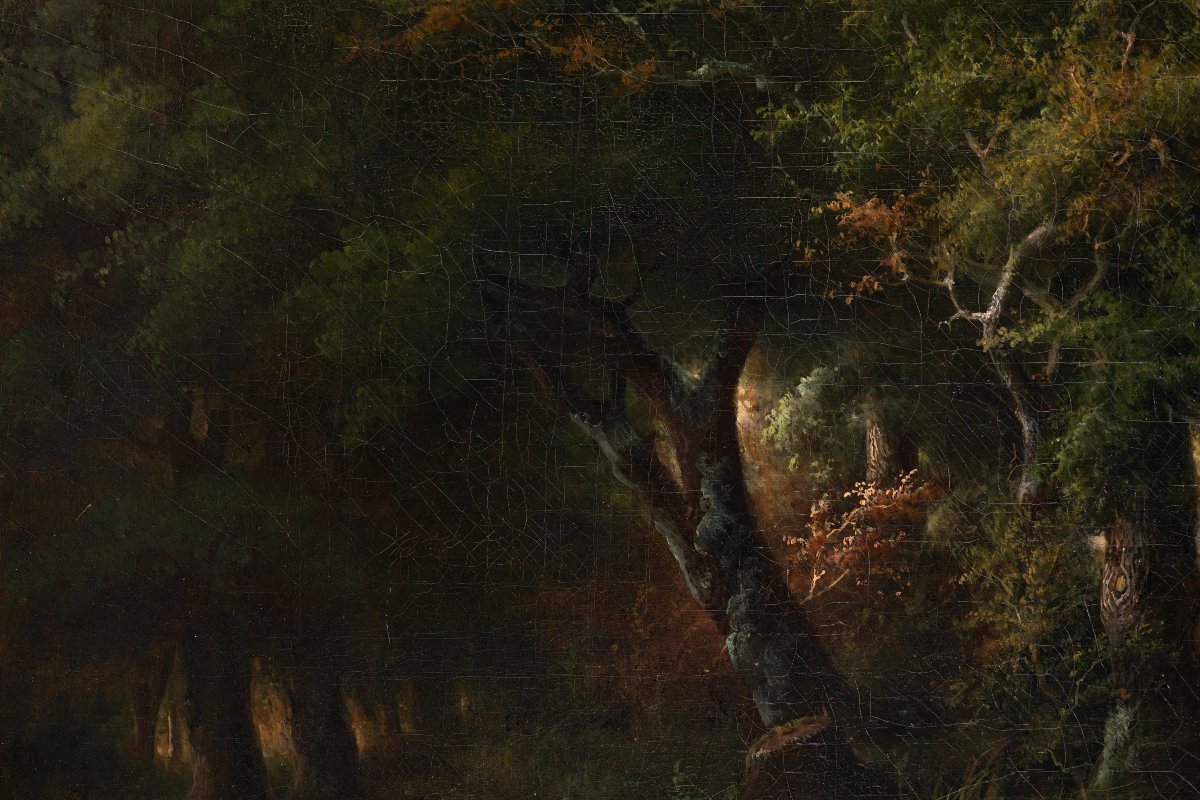
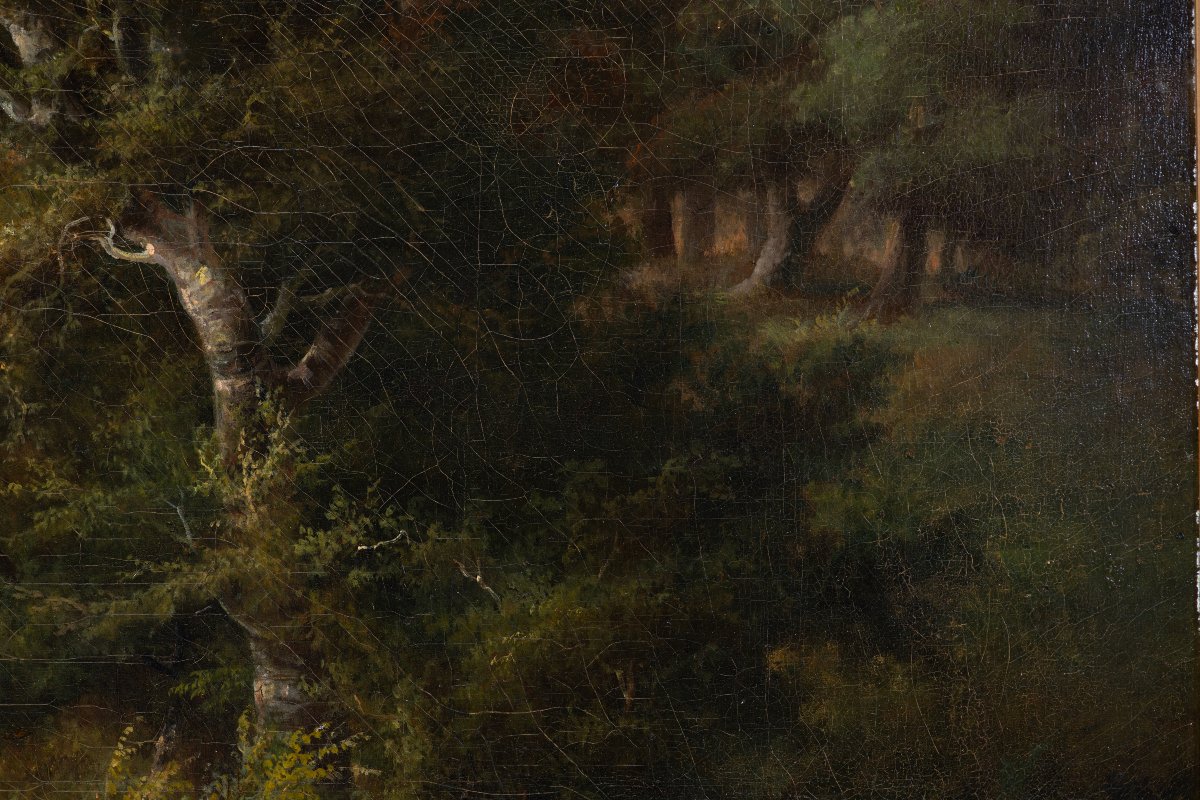
Particularly notable is the treatment of the foliage as weighty, architectonic form. The canopy structures the light, producing subtle tonal contrasts between sunlit passages of road and deeply shaded woodland. The open sky serves as a stabilizing counterweight to the darker lower zones, reinforcing the overall compositional harmony.
The painting demonstrates a layered oil technique, with translucent transitions in the sky and denser handling in foliage and shadow passages. Detail areas reveal controlled accents describing bark texture, undergrowth, and vegetation depth. The pictorial language indicates a hand familiar with the Romantic landscape practice associated with Koekkoek’s artistic sphere.
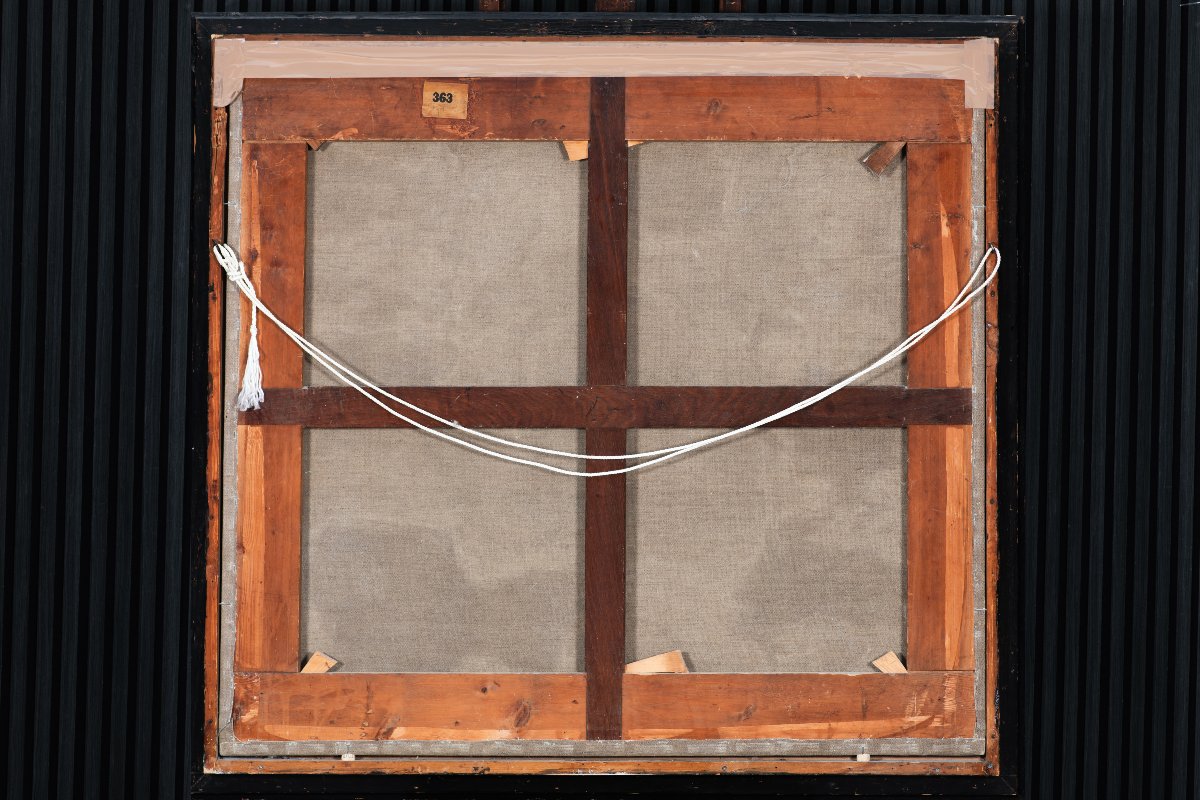
From a conservation standpoint, the canvas has been relined. Retouching is visible under UV light, consistent with historical restoration and long-term preservation treatments commonly encountered in nineteenth-century canvases.
Barend Cornelis Koekkoek (Middelburg, 1803 – Kleve, 1862), trained in an artistic family milieu and further educated in Amsterdam, became one of the most celebrated landscape painters of his era. Already in his lifetime, he was referred to as the “Prince of Landscape Painters.” His art engages with the legacy of seventeenth-century Dutch landscape painting while reinterpreting it through a Romantic sensibility—more atmospheric, emotional, and immersive.
Within that context, this work is best understood as a production from the circle: key passages—especially in the trees and atmosphere—closely align with Koekkoek’s visual vocabulary, while other parts (including aspects of the staffage and sky) may point to workshop participation or collaboration with a pupil, a common nineteenth-century studio practice.
The painting belongs firmly to Romanticism, in which landscape is not merely topographical description but a vehicle for mood, contemplation, and sublimity. Its principal characteristics include:
monumental arboreal architecture;
staged and atmospheric light effects;
depth built through layered spatial planes;
balanced integration of staffage figures;
a poetic, immersive natural setting.
Comparable artists (national): Andreas Schelfhout, Wijnand Nuyen, Charles Leickert
Comparable artists (international): Caspar David Friedrich, John Constable
This Woodland Landscape with Figures is a persuasive and visually compelling example from the circle of Barend Cornelis Koekkoek. Its scale, compositional strength, atmospheric quality, and Dutch private provenance make it a highly attractive acquisition for serious collectors of nineteenth-century landscape painting.
It offers the qualities most sought after in this field: decorative presence, art-historical recognizability, and painterly sophistication—an enduring work with both scholarly and aesthetic appeal.
Period: 19th century
Style: Napoleon 3rd
Condition: Fully restored
Material: Oil painting
Width: 142cm
Height: 124cm
Reference (ID): 1703257
Availability: In stock