



Bronze Seated Buddha
Antique bronze depicting Budai (Laughing Buddha)
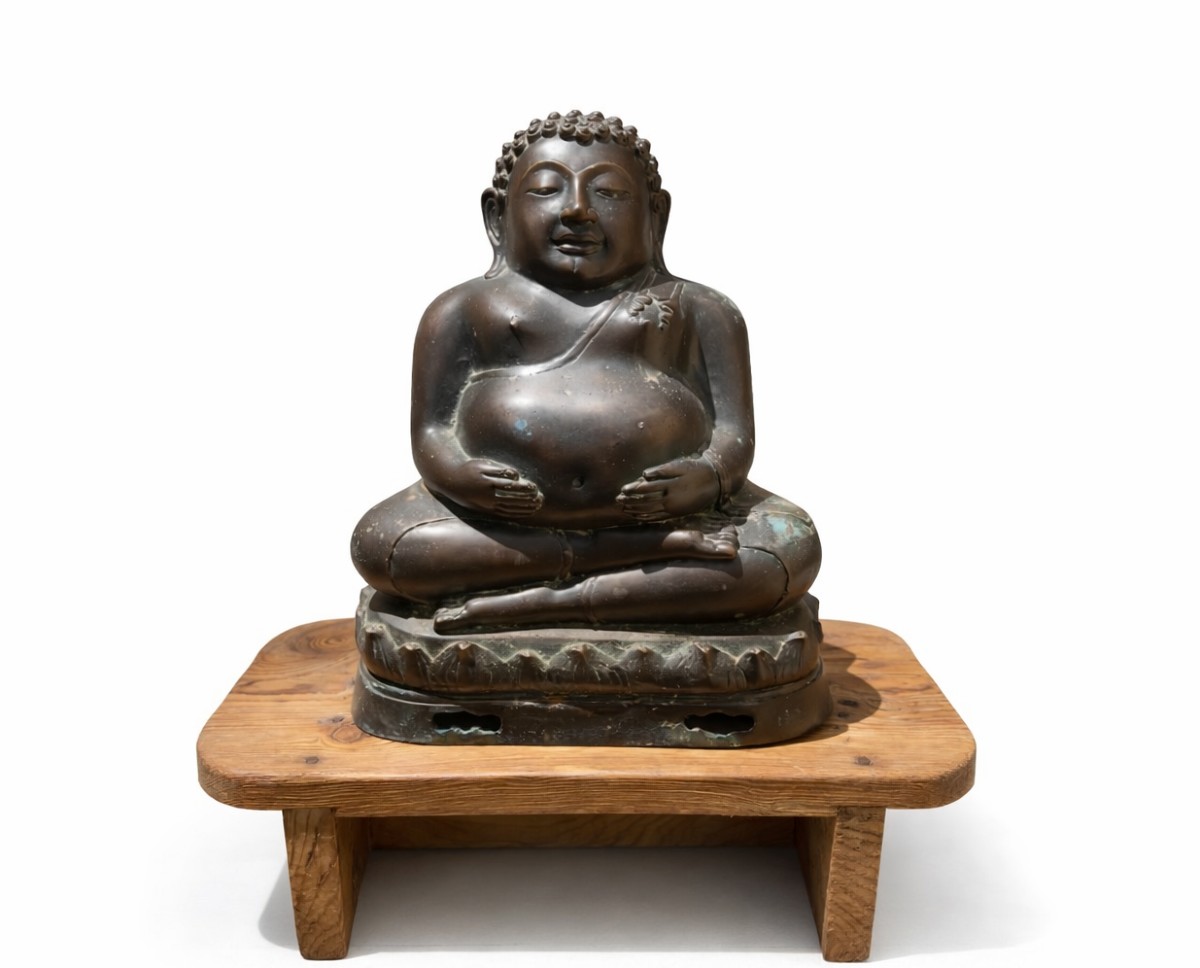
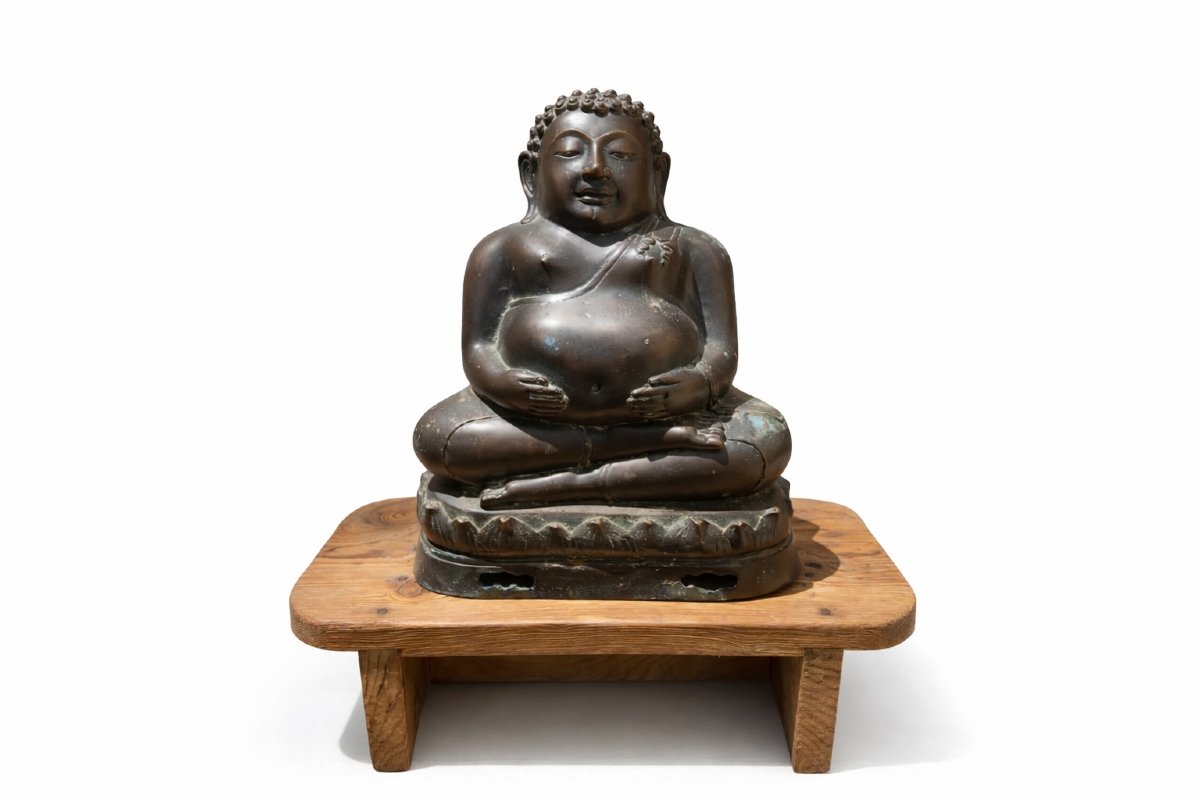
, China – Southern foundry work. Period: 18th century, Qing dynasty (circa 1720–1780). This important bronze depicts Budai, known as the Laughing Buddha, seated in a meditative posture with crossed legs and hands resting on his prominent abdomen, a traditional symbol of prosperity, happiness, and abundance. This iconography, very popular in China during the Qing dynasty, is rendered here with full and balanced volumes, characteristic of high-quality 18th-century productions. The face, with its round and benevolent features, presents a serene expression, the half-closed eyes suggesting introspection. The hair is composed of small, regular, finely modeled curls. The barely sketched monastic robe frees the torso and emphasizes the roundness of the belly, a central element in the representation of Budai. The overall modeling is fluid, with a fine mastery of proportions and a sense of formal stability. The bronze exhibits a deep brown patina, nuanced with areas of verdigris and ancient oxidation, consistent with long natural aging. The casting is dense and well-balanced, with an integrated molded base pierced with old technical openings, attesting to traditional craftsmanship century). Technical specifications: Material: Cast bronze with an antique patina; Origin: China, probably Southern China; Period: 18th century, Qing dynasty; Proposed date: circa 1720–1780; Technique: Mold casting, hand-finished; Condition: Very good overall condition; wear, oxidation, and signs of age consistent with its age, with no visible restoration; Iconography: Budai, Laughing Buddha, symbol of prosperity and happiness; Purpose: Decorative sculpture and devotional object
, China – Southern foundry work. Period: 18th century, Qing dynasty (circa 1720–1780). This important bronze depicts Budai, known as the Laughing Buddha, seated in a meditative posture with crossed legs and hands resting on his prominent abdomen, a traditional symbol of prosperity, happiness, and abundance. This iconography, very popular in China during the Qing dynasty, is rendered here with full and balanced volumes, characteristic of high-quality 18th-century productions. The face, with its round and benevolent features, presents a serene expression, the half-closed eyes suggesting introspection. The hair is composed of small, regular, finely modeled curls. The barely sketched monastic robe frees the torso and emphasizes the roundness of the belly, a central element in the representation of Budai. The overall modeling is fluid, with a fine mastery of proportions and a sense of formal stability. The bronze exhibits a deep brown patina, nuanced with areas of verdigris and ancient oxidation, consistent with long natural aging. The casting is dense and well-balanced, with an integrated molded base pierced with old technical openings, attesting to traditional craftsmanship century). Technical specifications: Material: Cast bronze with an antique patina; Origin: China, probably Southern China; Period: 18th century, Qing dynasty; Proposed date: circa 1720–1780; Technique: Mold casting, hand-finished; Condition: Very good overall condition; wear, oxidation, and signs of age consistent with its age, with no visible restoration; Iconography: Budai, Laughing Buddha, symbol of prosperity and happiness; Purpose: Decorative sculpture and devotional object
880 €
Period: 17th century
Style: Louis 14th, Regency
Condition: Condition of use
Material: Bronze
Reference (ID): 1700077
Availability: In stock
Print