THIS OBJECT WAS SOLD
China - Caparisoned Horse - Northern Wei - Tl
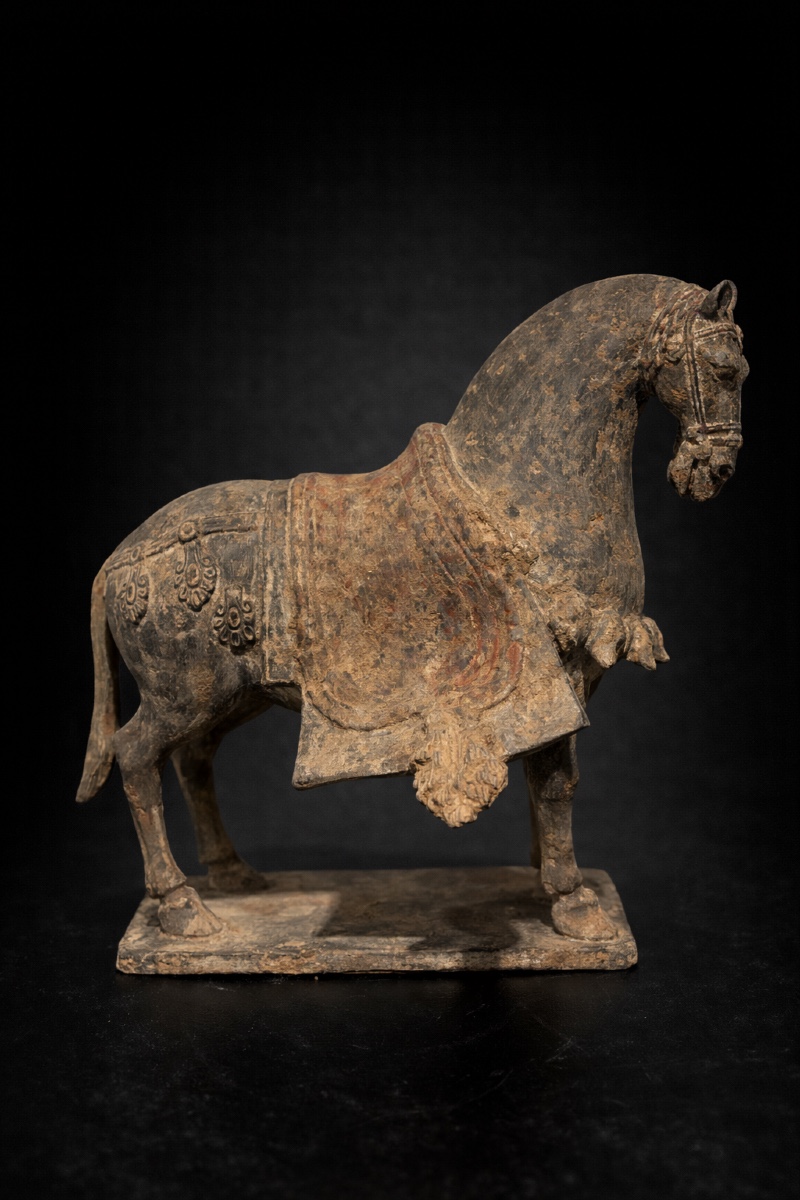
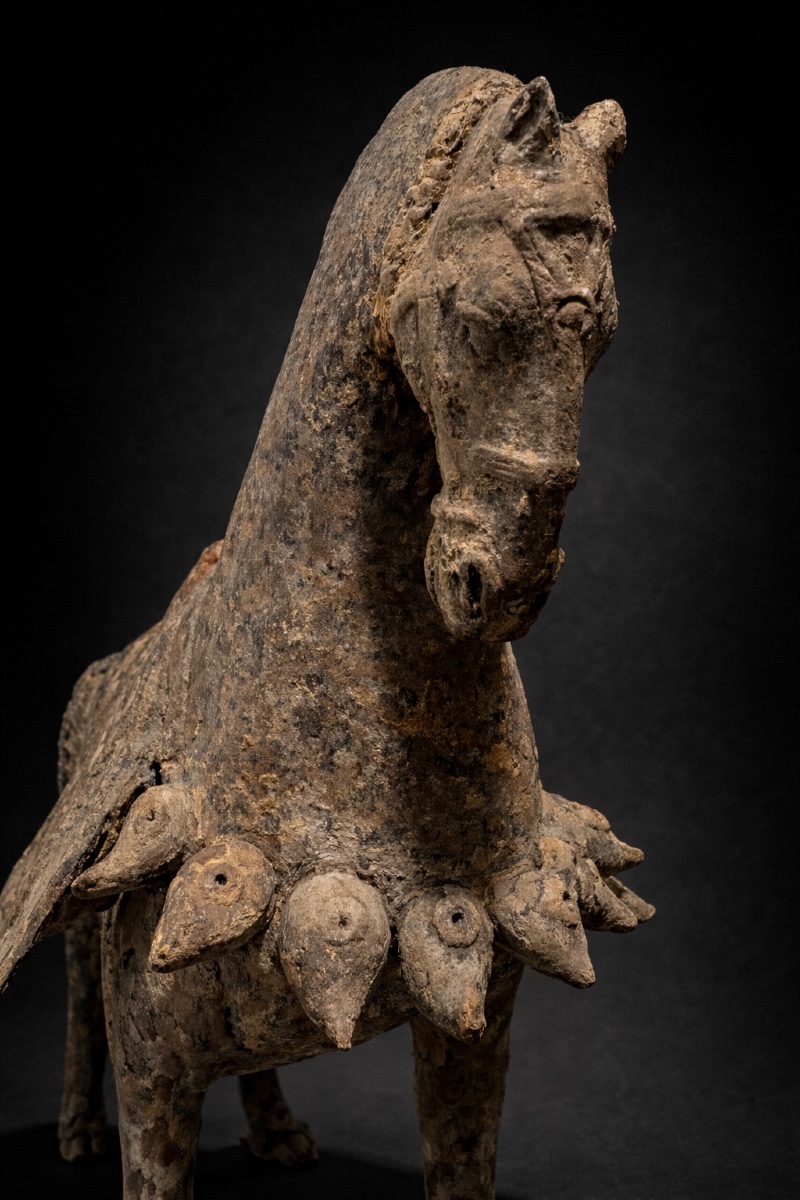
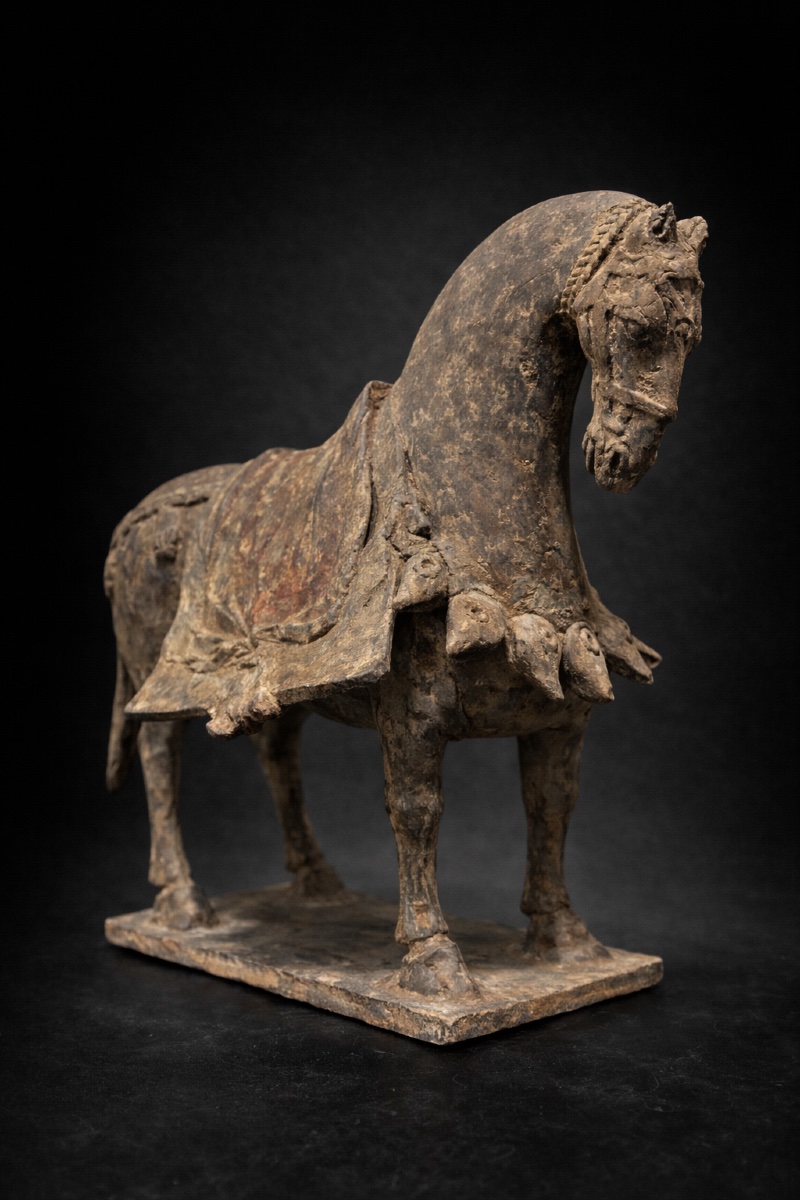
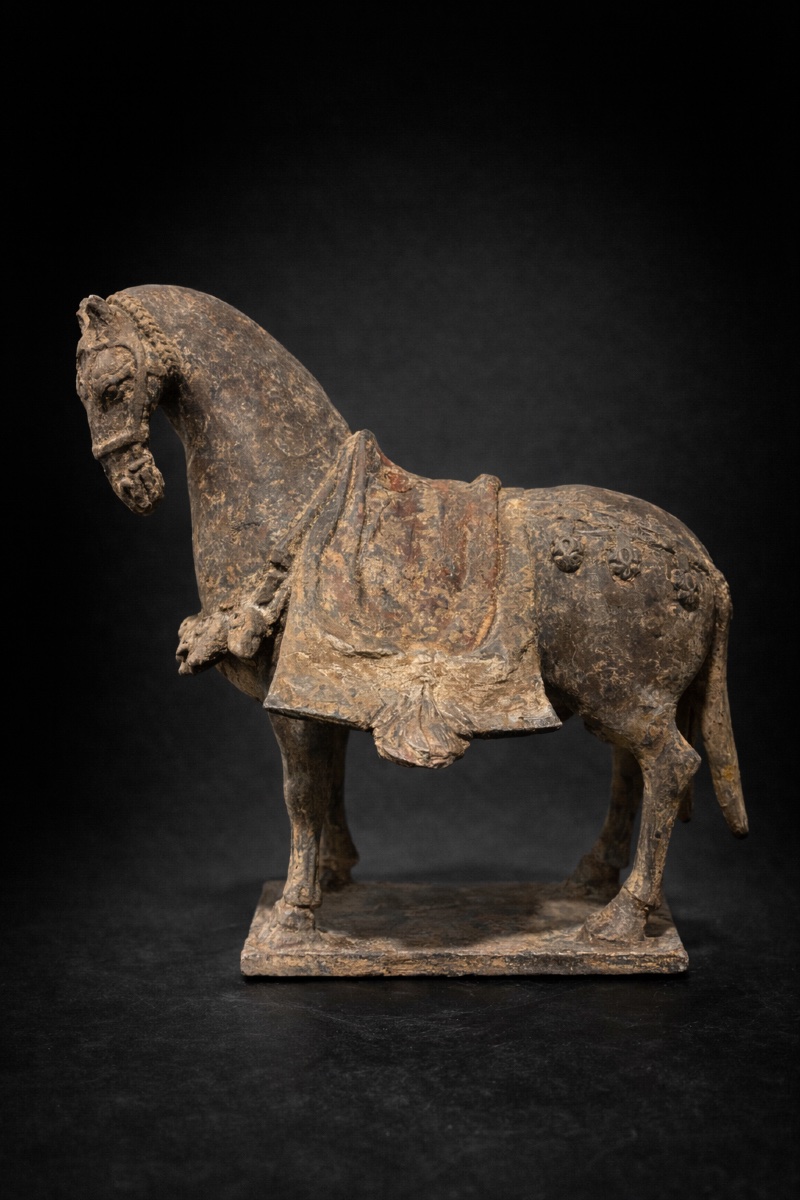
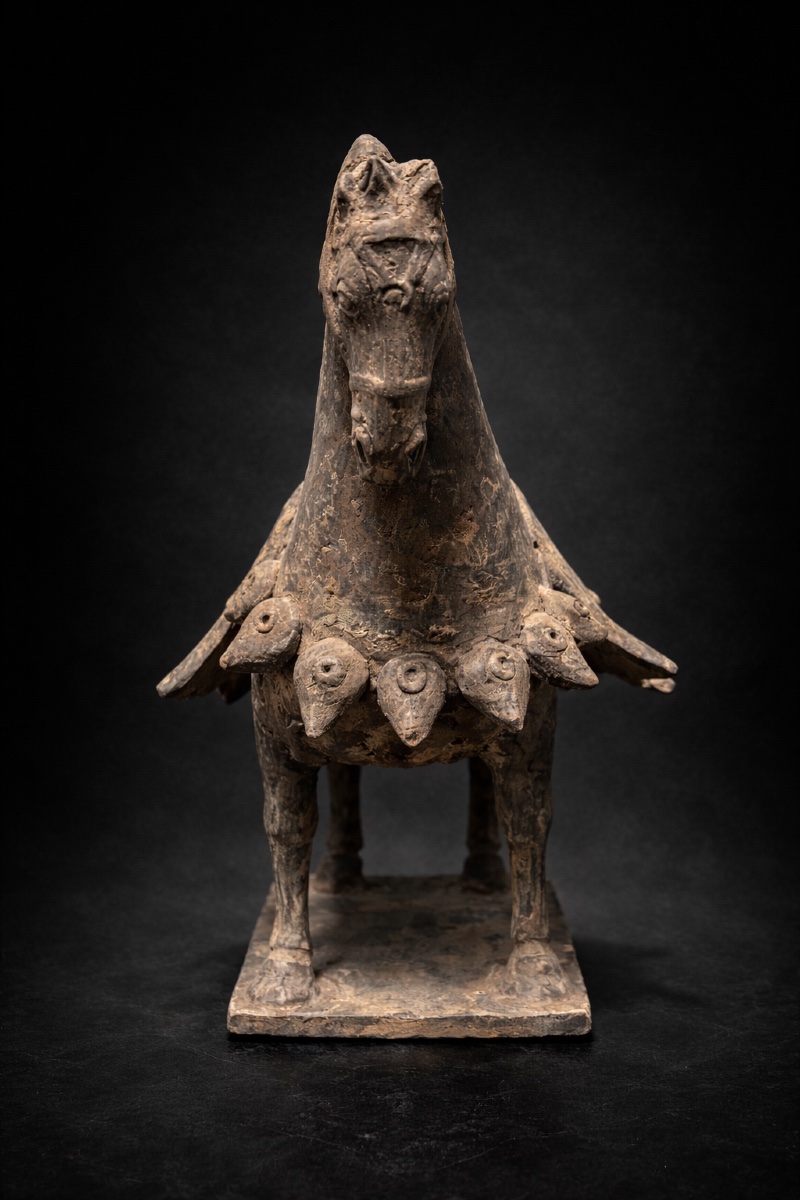
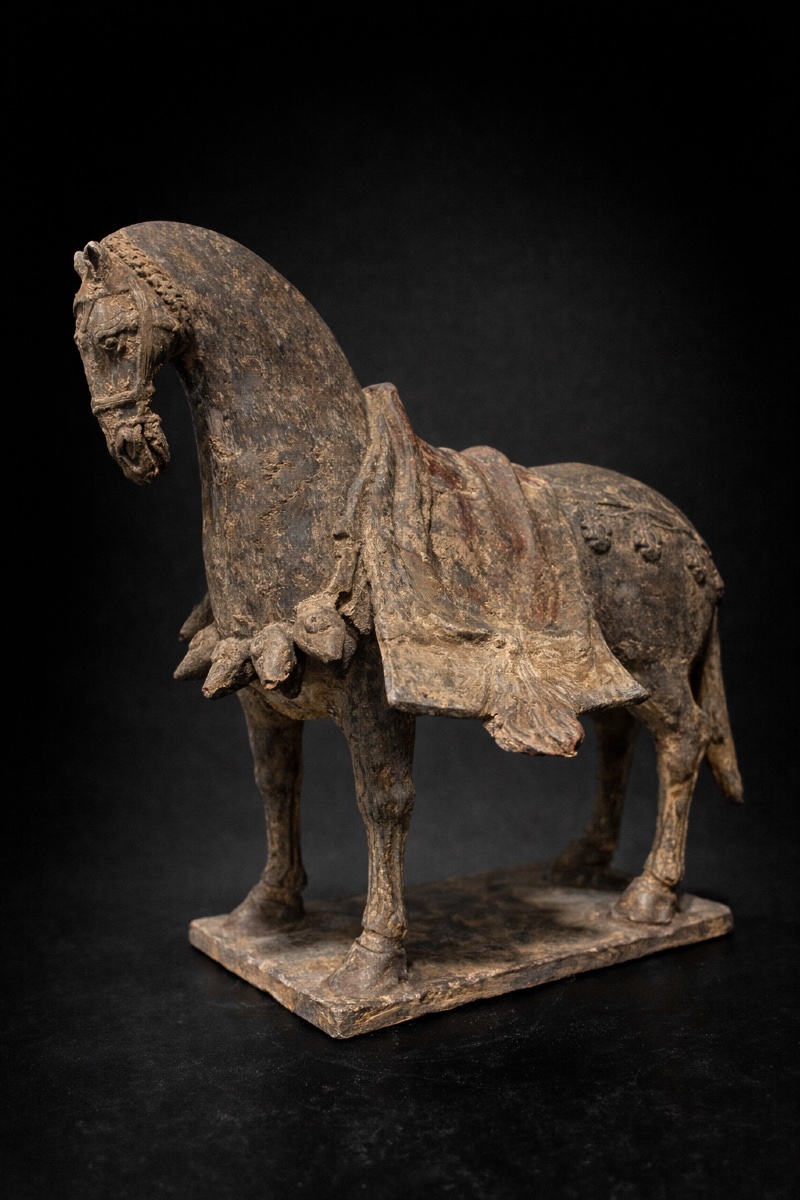
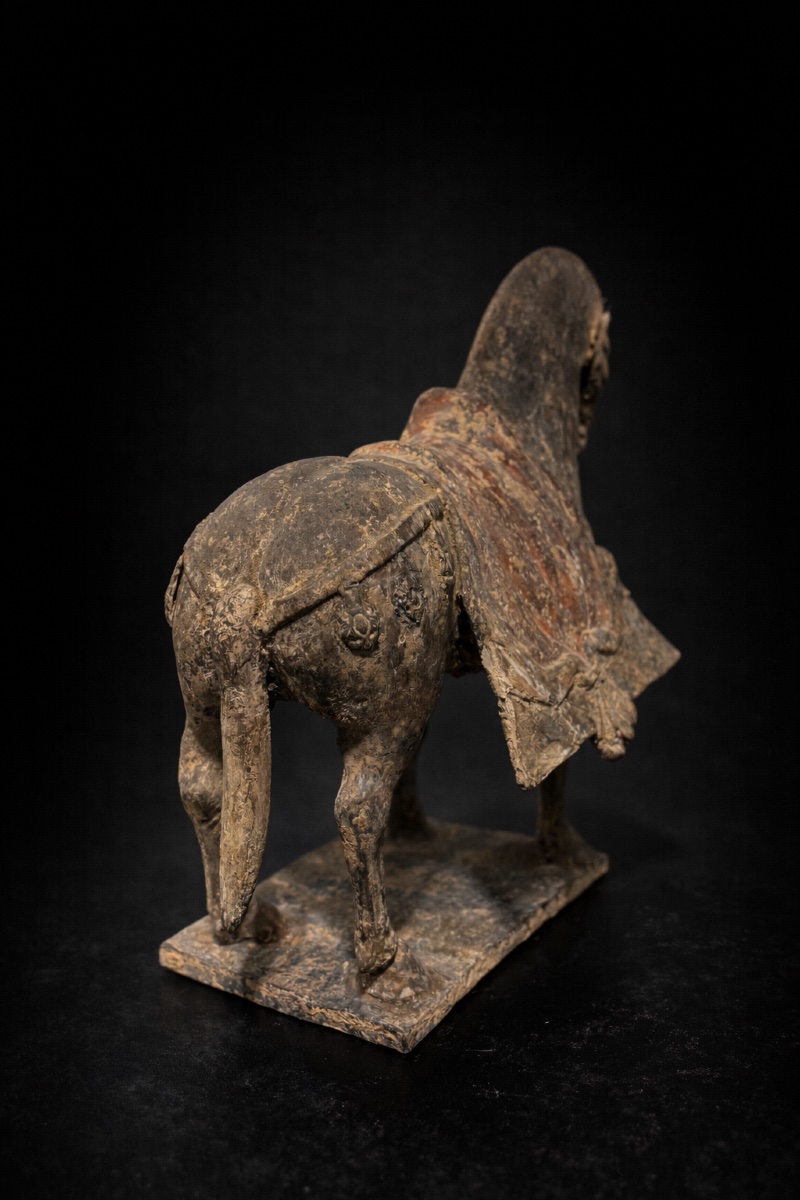
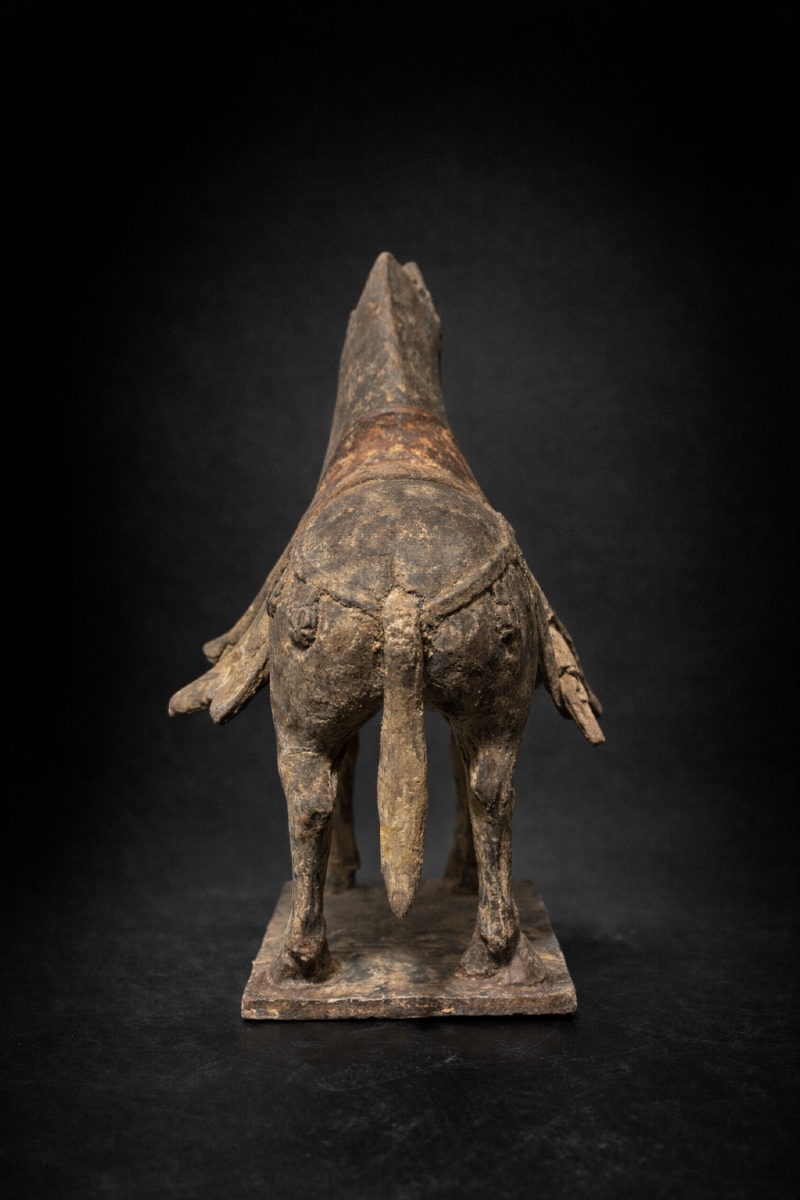
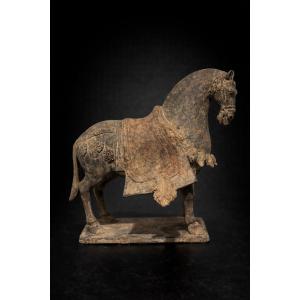


A sculpture depicting a standing funerary horse, modeled in gray terracotta, resting on a solid rectangular base. The animal adopts a calm and stable posture, its four limbs firmly planted, reflecting a still rigorous formal design inherited from ancient traditions, predating the exuberance of later periods. The overall morphology is characteristic of Wei productions: the body is compact and stocky, with a long, arched neck leading to a narrow head with restrained modeling. The long, drooping tail, rendered as a vertical mass, is a key dating marker, frequently observed on funerary horses of the Northern Wei. The animal is richly harnessed, with an array of bridles, straps, and decorative elements in relief. The open-sided saddle blanket, falling generously over the flanks, is sculpted in broad side panels, revealing the contours of the body. This device, clearly visible in the side and rear views, fully corresponds to Wei types and is distinctly different from the more enveloping and differently structured caparisons of Tang horses. Traces of ancient polychromy, particularly in red and ochre-brown tones, remain beneath the dominant gray patina, attesting to an original decoration, now partially lost, but typical of mingqi from this period.
The object is accompanied by a thermoluminescence test, confirming the authenticity of the dating.
Origin: China.
Period: Wei Dynasty (Northern Wei, 386–534).
Dimensions: Height: 24 cm; Length: 24 cm; Width: 15.5 cm.
Condition: Satisfactory and consistent state of preservation. Well-established ancient patina, with wear, abrasions, and small superficial losses consistent with age. Traces of residual polychromy are visible without detracting from the overall appearance. No major restoration or intrusive modern alterations are observed; the work retains its structural integrity and authenticity. Provenance: French private collection.
The object is accompanied by a thermoluminescence test, confirming the authenticity of the dating.
Origin: China.
Period: Wei Dynasty (Northern Wei, 386–534).
Dimensions: Height: 24 cm; Length: 24 cm; Width: 15.5 cm.
Condition: Satisfactory and consistent state of preservation. Well-established ancient patina, with wear, abrasions, and small superficial losses consistent with age. Traces of residual polychromy are visible without detracting from the overall appearance. No major restoration or intrusive modern alterations are observed; the work retains its structural integrity and authenticity. Provenance: French private collection.
Explore similar pieces and discover your ideal find:
archeology