THIS OBJECT WAS SOLD
Gilt Bronze Clock, Paris, Empire Period, By Lepaute, Ca. 1800

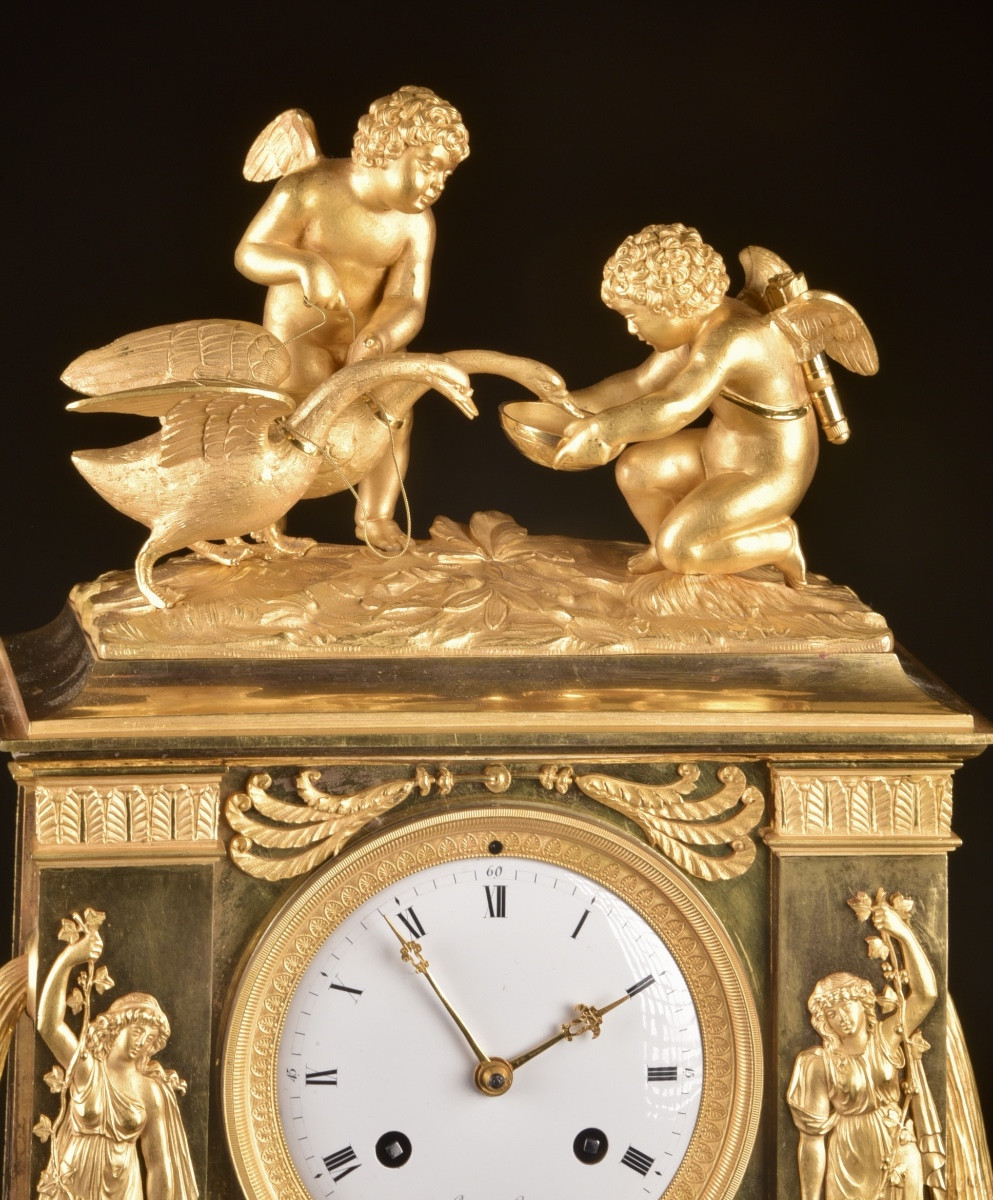
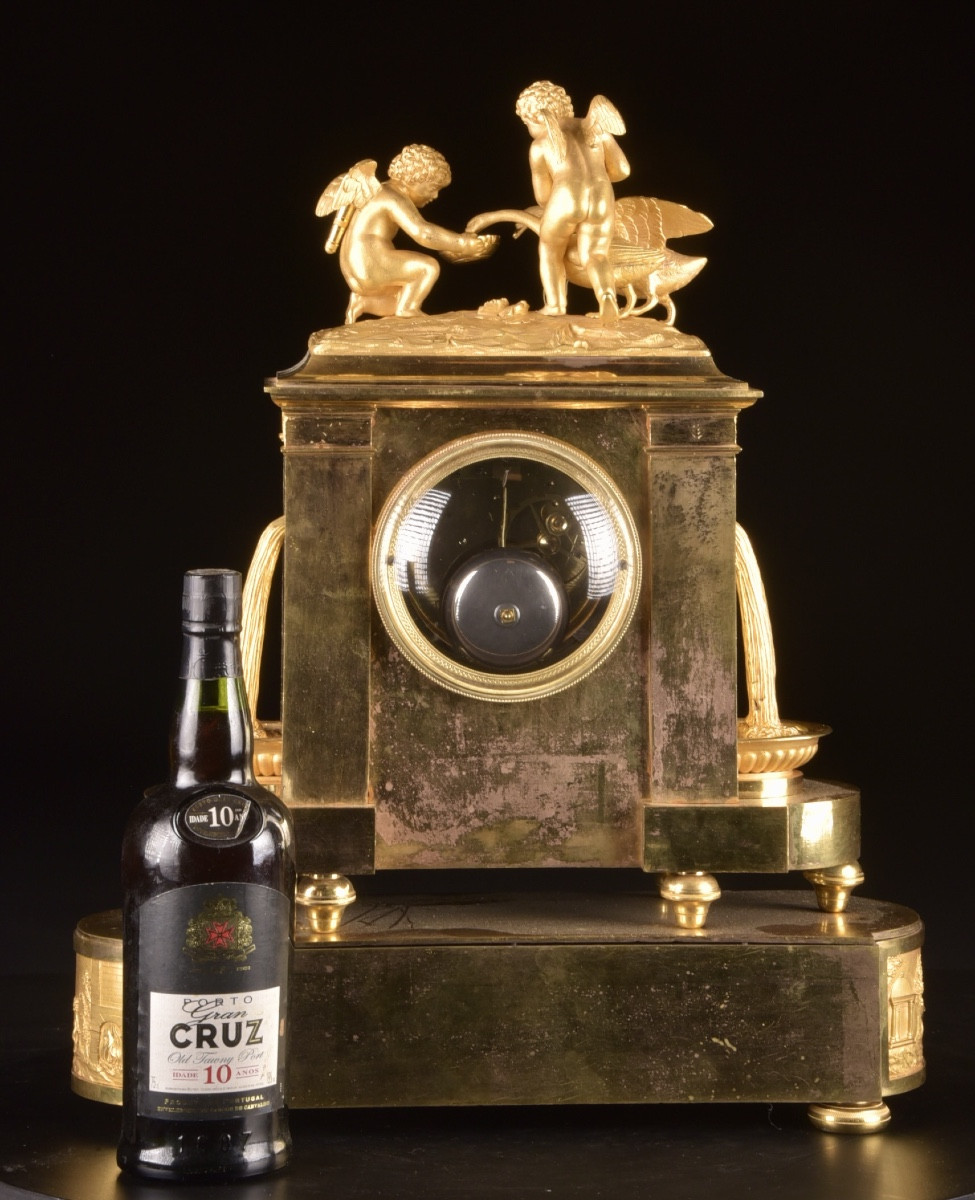

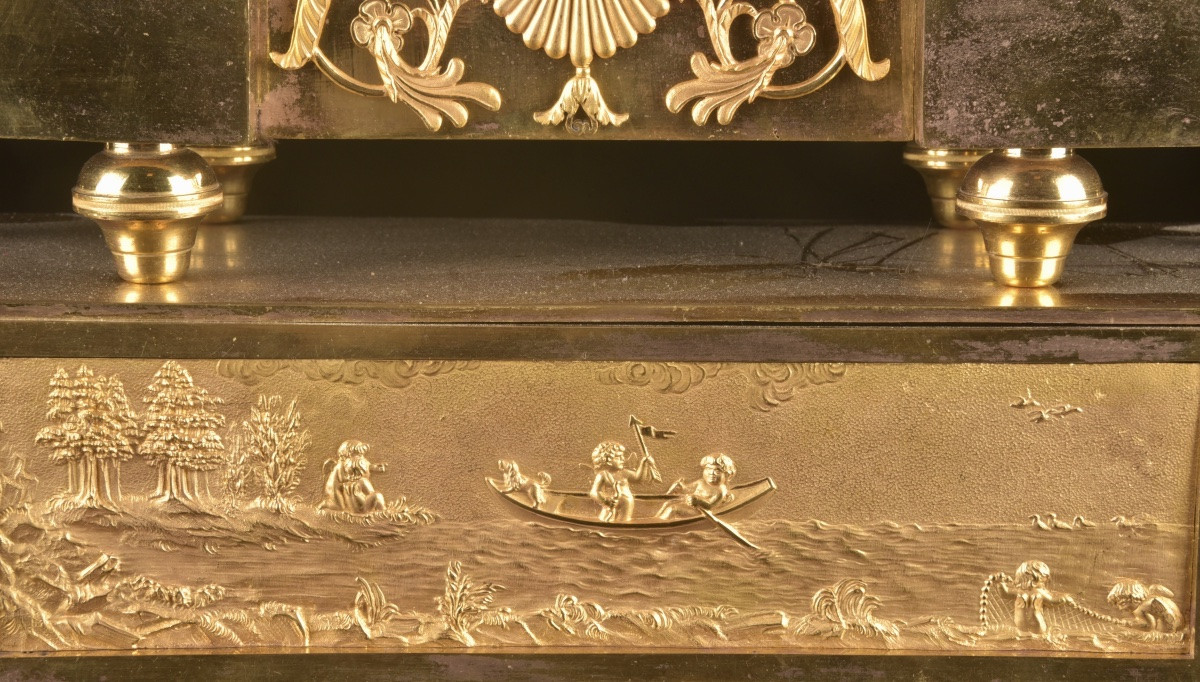


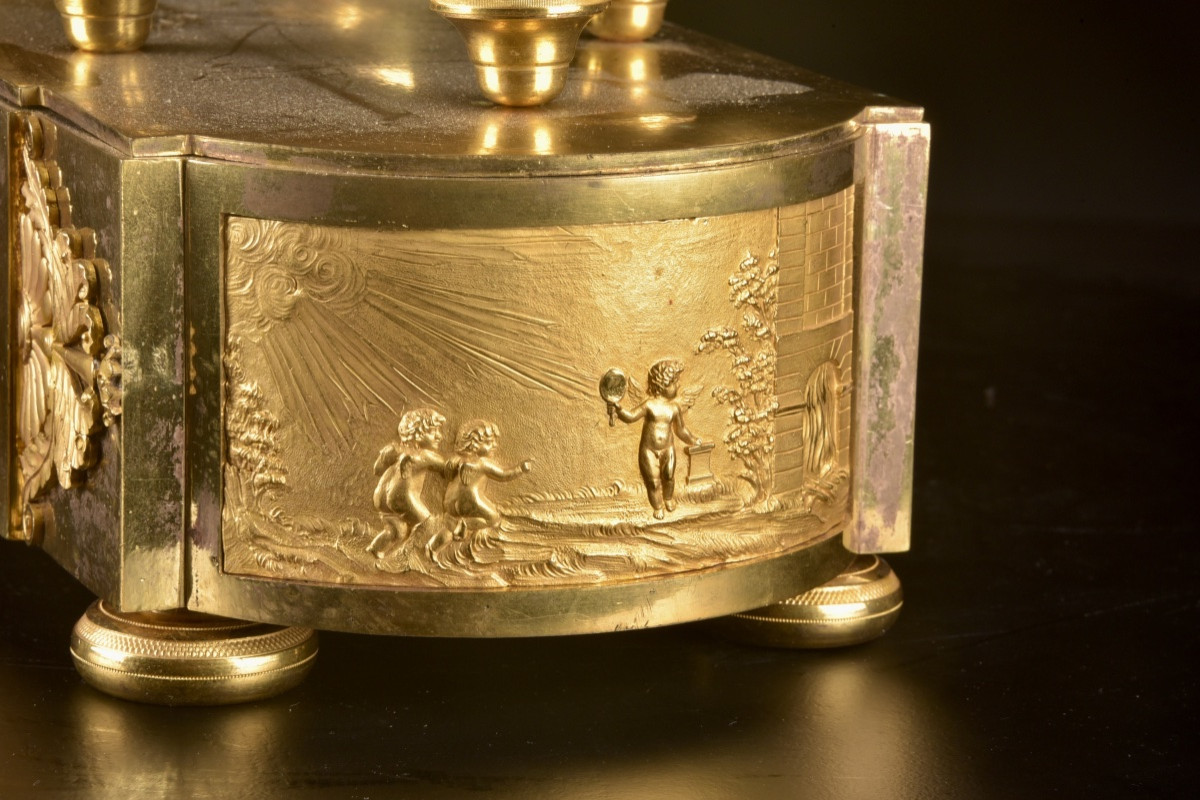
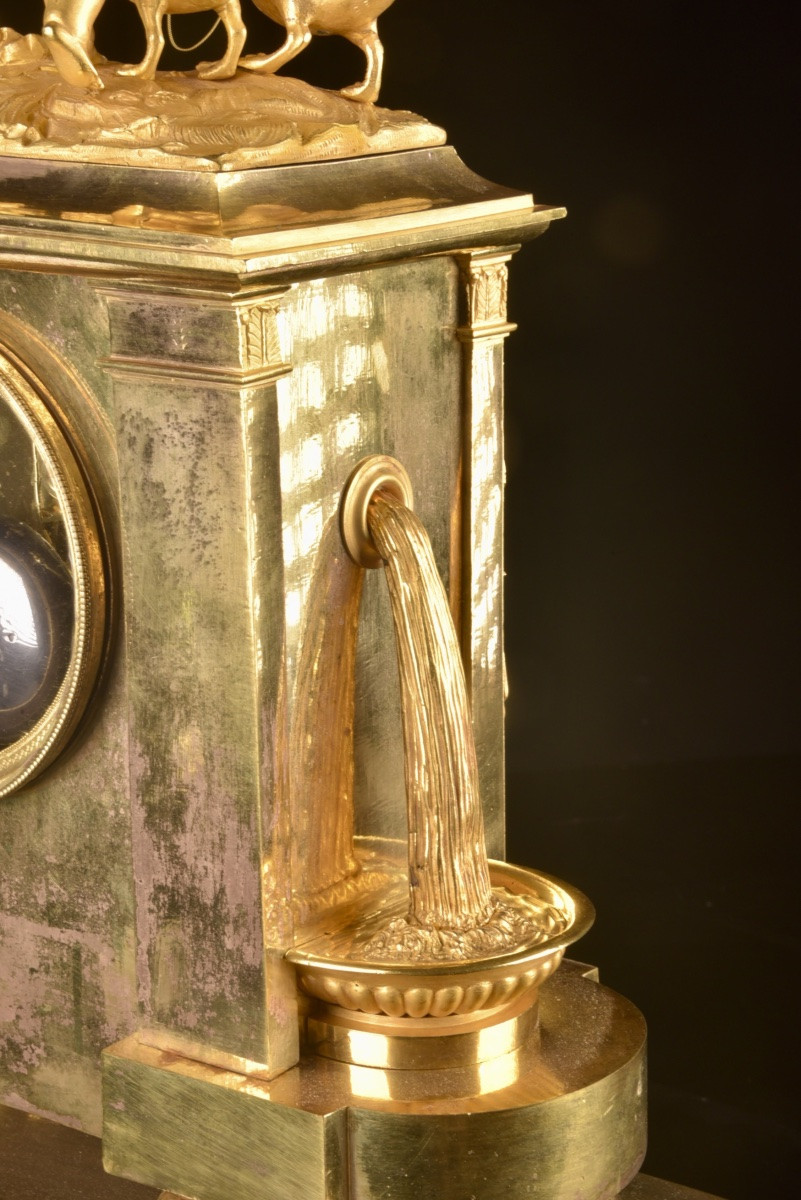


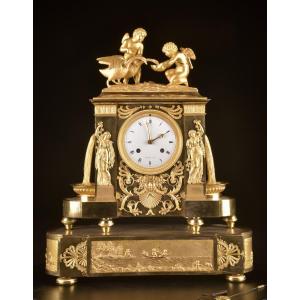


An important French gilt-bronze clock, made in Paris during the Louis XVI – early Empire period (circa 1800–1810). The case, rigorously symmetrical in design, is richly adorned with finely chased bronze mounts of exceptional quality. The crowning element is a sculptural group representing two cupids and a swan, a classical allegory of innocence, nature, and the passage of time. On either side of the dial stand elegant female figures pouring water into cups, inspired by allegories of fountains and the cycle of life. The base is decorated with a large bas-relief panel depicting a delicately rendered landscape scene. The enamel dial, with Roman numerals and a minute track, is signed "Lepaute à Paris". The piece is distinguished by its monumental and representative character, intended for a prestigious interior. Dimensions: Height: 54 cm Width: 45 cm Depth: 15 cm The Clockmaker: This clock is attributed to Jean-Baptiste Lepaute, one of the most renowned Parisian clockmakers of the late 18th century. A member of the famous Lepaute dynasty and appointed Clockmaker to the King, he supplied high-precision clocks and movements to the court, public institutions, and an elite clientele. Works signed "Lepaute à Paris" are now internationally recognized and featured in leading museum and private collections, illustrating the excellence of French Neoclassical and early Empire clockmaking.
Explore similar pieces and discover your ideal find:
Mantel Clocks