THIS OBJECT WAS SOLD
Bamboo, Chūhō, Sumi-e, Kakemono, Japan, 19th Century.
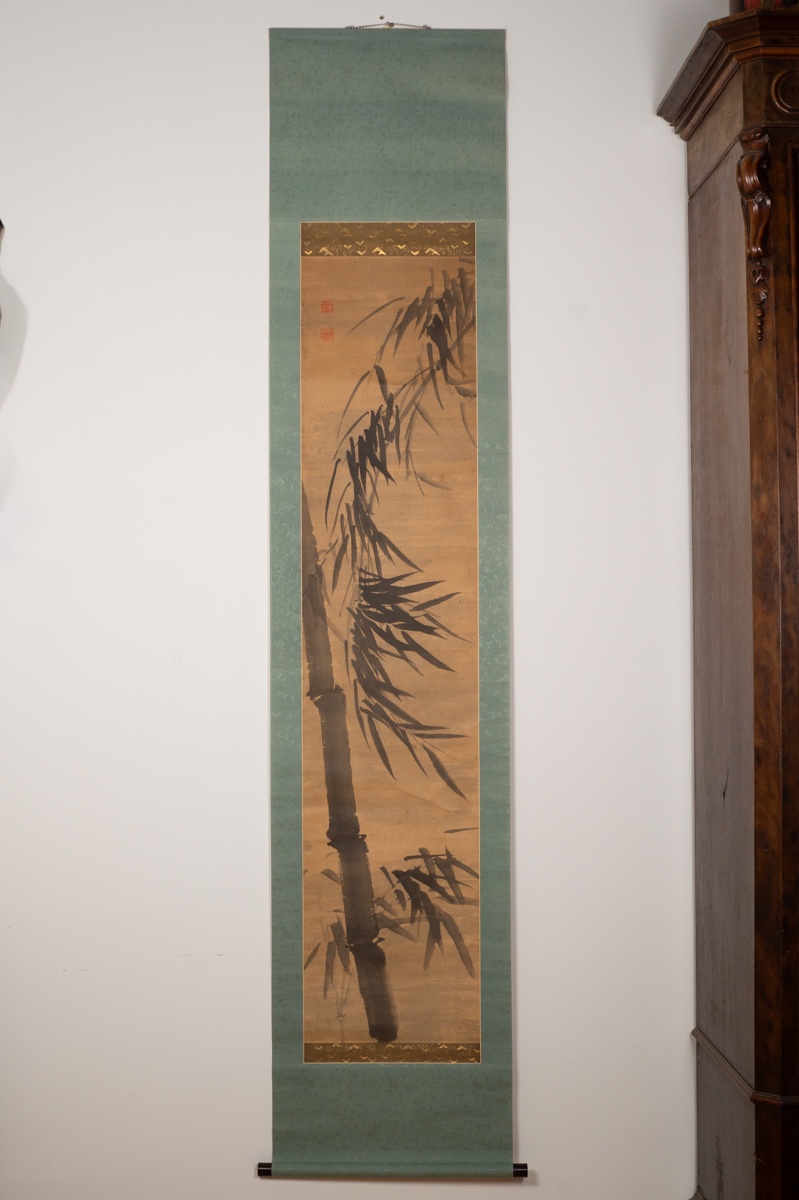

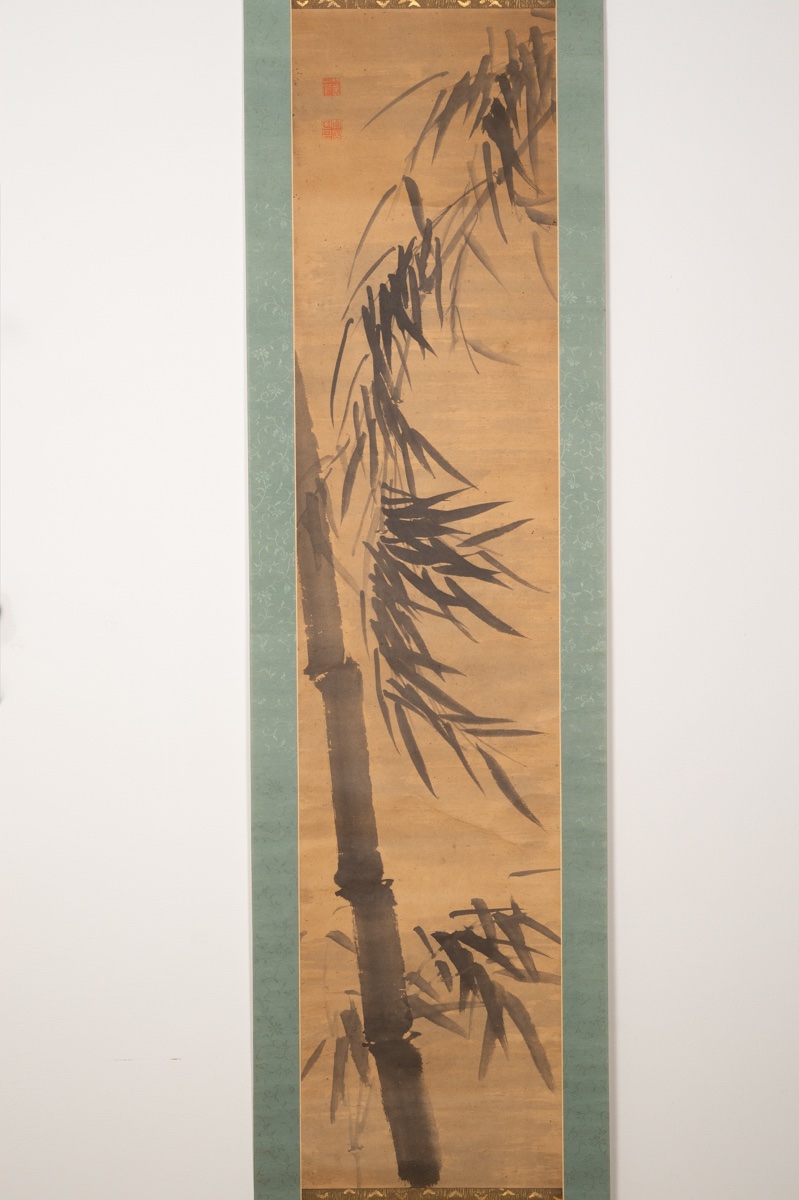


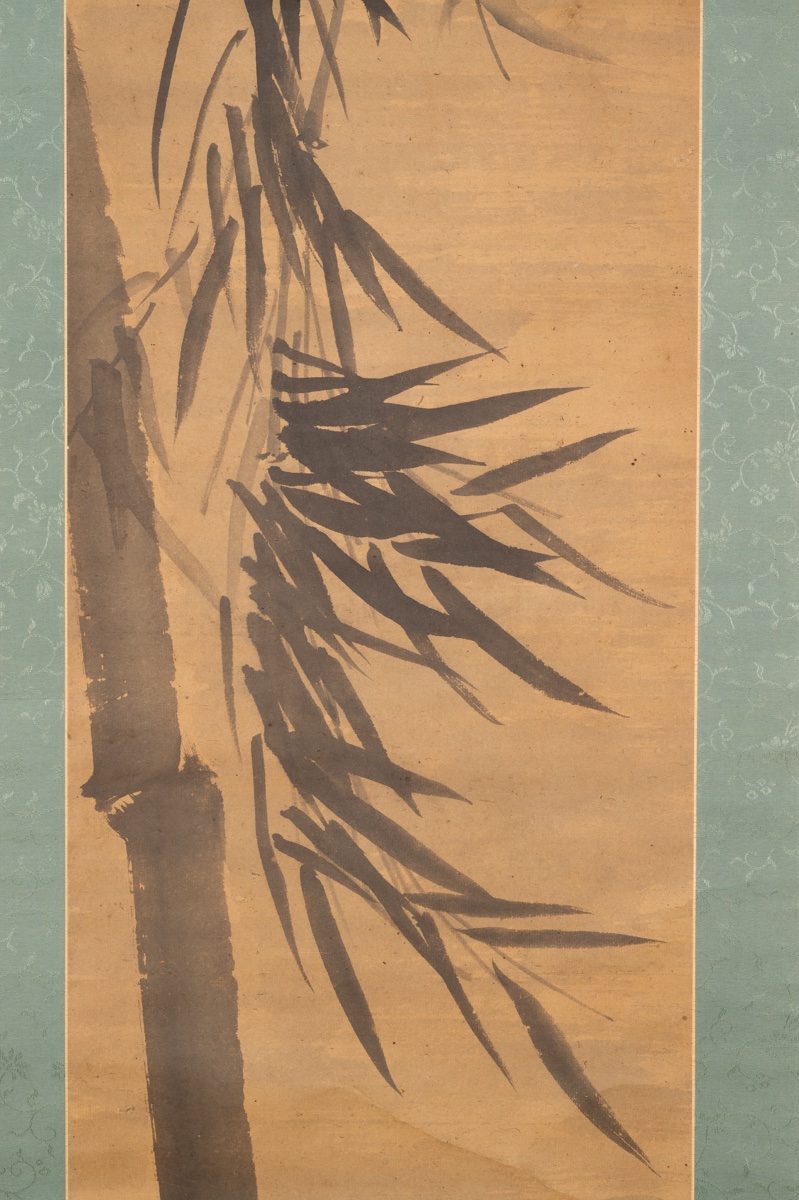


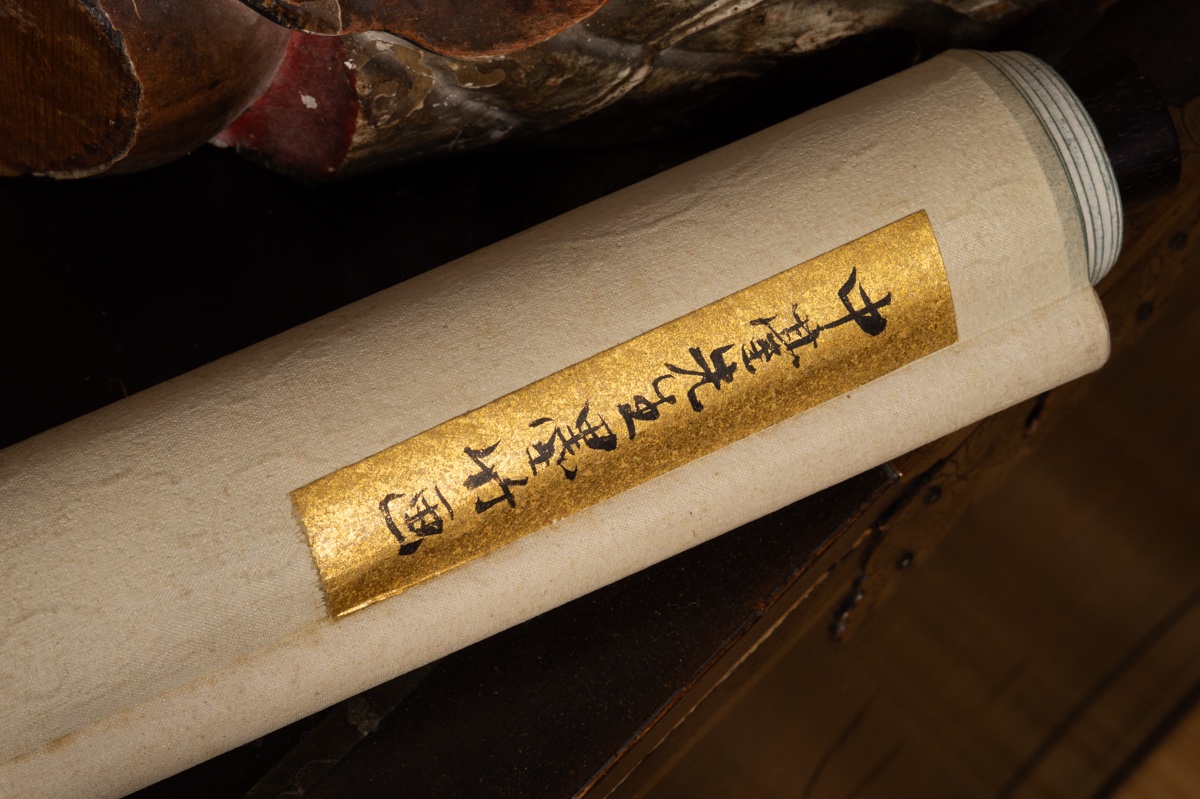
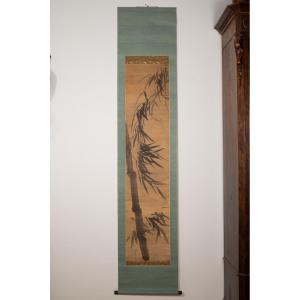


Scroll with hand-painted ink on paper. This technique does not allow for corrections, which is why these paintings are called "painted in one breath." In the Far East, bamboo is a very important symbol of resilience, open-mindedness, flexibility, longevity, as well as prosperity and happiness.
Ink on paper.
Japan, 19th century. Attribution: Chūhō Sōu (1759-1838) or Tanaka Chūhō (1860-1934). Identification of the inscription: Gold label on the outside of the scroll: The inscription reads: 中蓬先生墨竹画 (Chūhō Sensei Bokuchiku-ga). Chūhō (中蓬): This is the artist's name (artistic pseudonym). Bokuchiku-ga (墨竹画): literally means "bamboo ink painting." Red seals: these are rakkan. The upper seal usually contains the artist's name, and the lower seal their family name or an additional pseudonym. They confirm the authorship of "Chūhō."
Dimensions: 202 x 42 cm, image: 139 x 31 cm. Width with handles: 47 cm.
Good condition, some soiling visible.
Kakemono (Japanese: 掛け物 kake-mono - "hanging object"; also: 掛軸 kakejiku - "hanging scroll") - Japanese painting on paper or silk, usually glued to a silk backing, intended to be hung on the wall. The top and bottom edges of the kakemono are attached to wooden bars to facilitate rolling, with the bottom bar (Japanese: ikugi 軸木) also equipped with projecting handles (Japanese: jiku). Kakemono scrolls first appeared in Japan during the Nara period (710-794). In traditional Japanese homes, they are hung in a niche called a tokonoma.
Free shipping within the European Union! I send packages via insured courier (DPD or DHL). All items are very carefully packaged. Payment by international bank transfer. I will provide a certificate of authenticity upon request.
Ink on paper.
Japan, 19th century. Attribution: Chūhō Sōu (1759-1838) or Tanaka Chūhō (1860-1934). Identification of the inscription: Gold label on the outside of the scroll: The inscription reads: 中蓬先生墨竹画 (Chūhō Sensei Bokuchiku-ga). Chūhō (中蓬): This is the artist's name (artistic pseudonym). Bokuchiku-ga (墨竹画): literally means "bamboo ink painting." Red seals: these are rakkan. The upper seal usually contains the artist's name, and the lower seal their family name or an additional pseudonym. They confirm the authorship of "Chūhō."
Dimensions: 202 x 42 cm, image: 139 x 31 cm. Width with handles: 47 cm.
Good condition, some soiling visible.
Kakemono (Japanese: 掛け物 kake-mono - "hanging object"; also: 掛軸 kakejiku - "hanging scroll") - Japanese painting on paper or silk, usually glued to a silk backing, intended to be hung on the wall. The top and bottom edges of the kakemono are attached to wooden bars to facilitate rolling, with the bottom bar (Japanese: ikugi 軸木) also equipped with projecting handles (Japanese: jiku). Kakemono scrolls first appeared in Japan during the Nara period (710-794). In traditional Japanese homes, they are hung in a niche called a tokonoma.
Free shipping within the European Union! I send packages via insured courier (DPD or DHL). All items are very carefully packaged. Payment by international bank transfer. I will provide a certificate of authenticity upon request.
Explore similar pieces and discover your ideal find:
drawings

![[surrealism Greece Greece Eroticism] Mayo - [drawing Original Signed].](https://www.proantic.com/galerie/galerie-babel/img/small/286640-1.jpg)