THIS OBJECT WAS SOLD
Bamboo And Bird, Yoshine, Kakemono, Japan, 19th-20th Century.
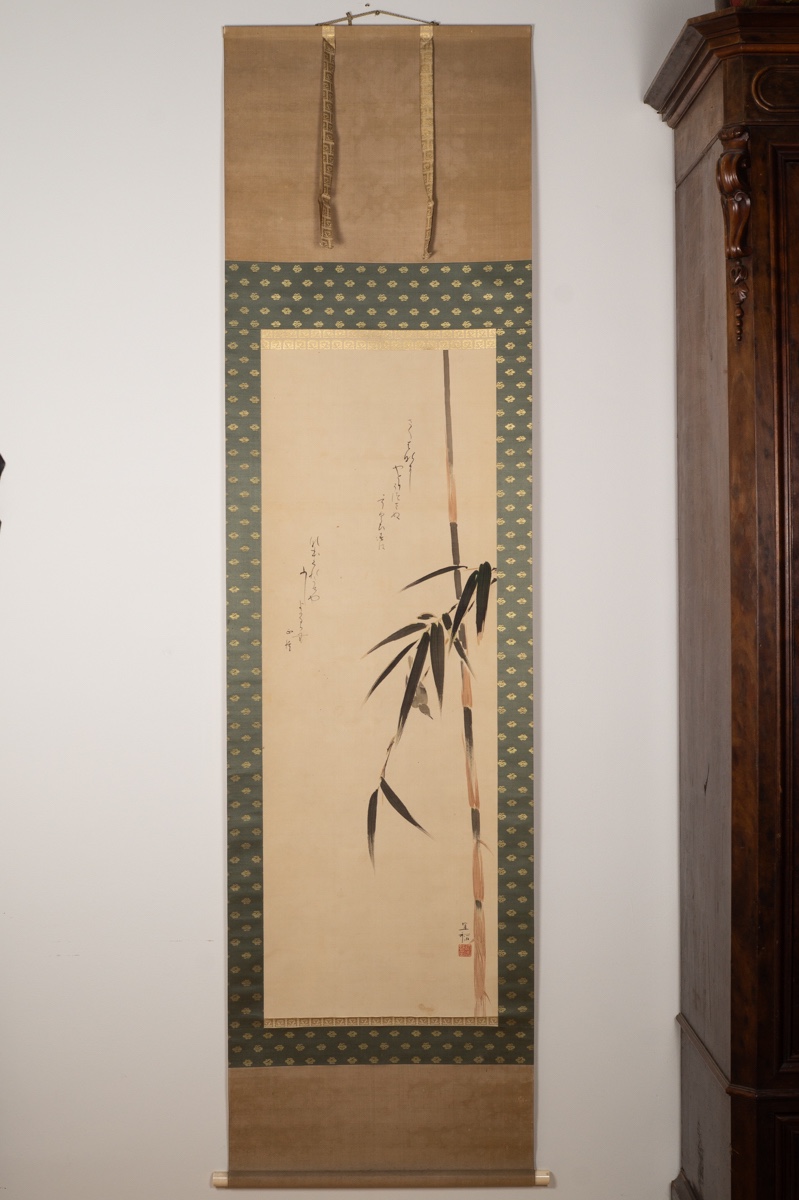
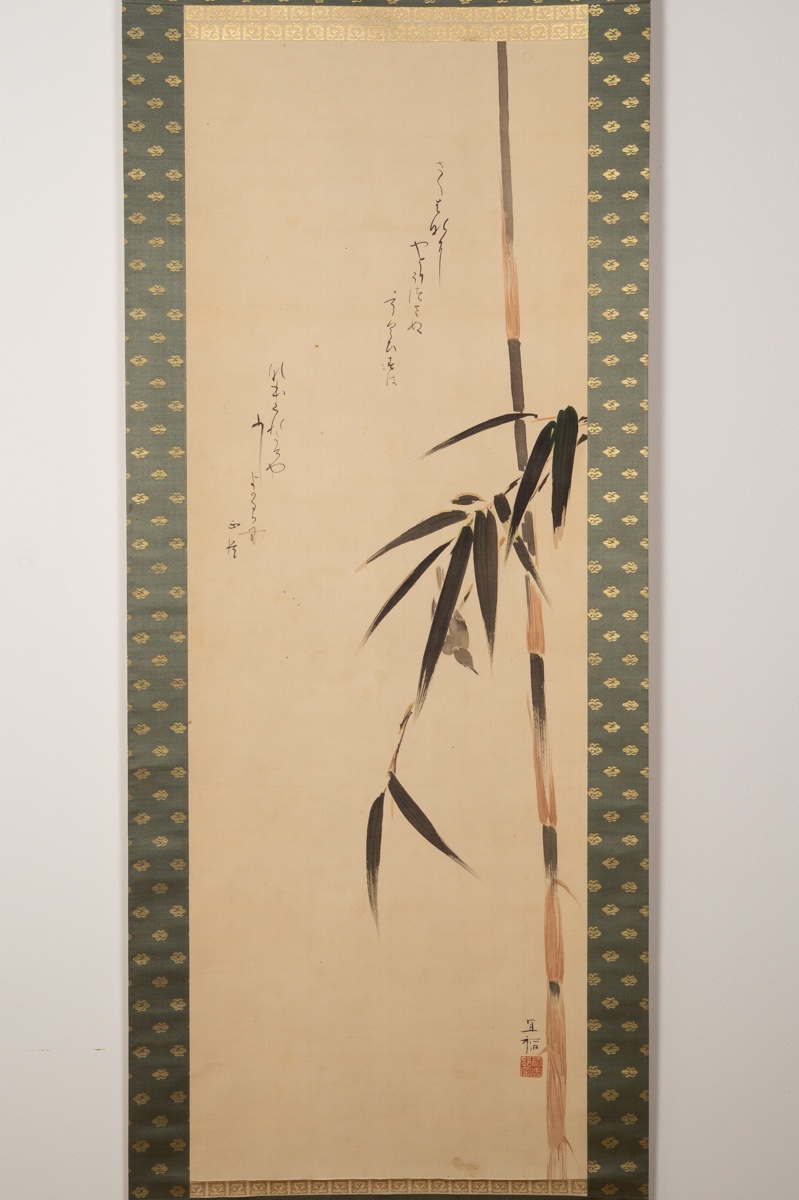
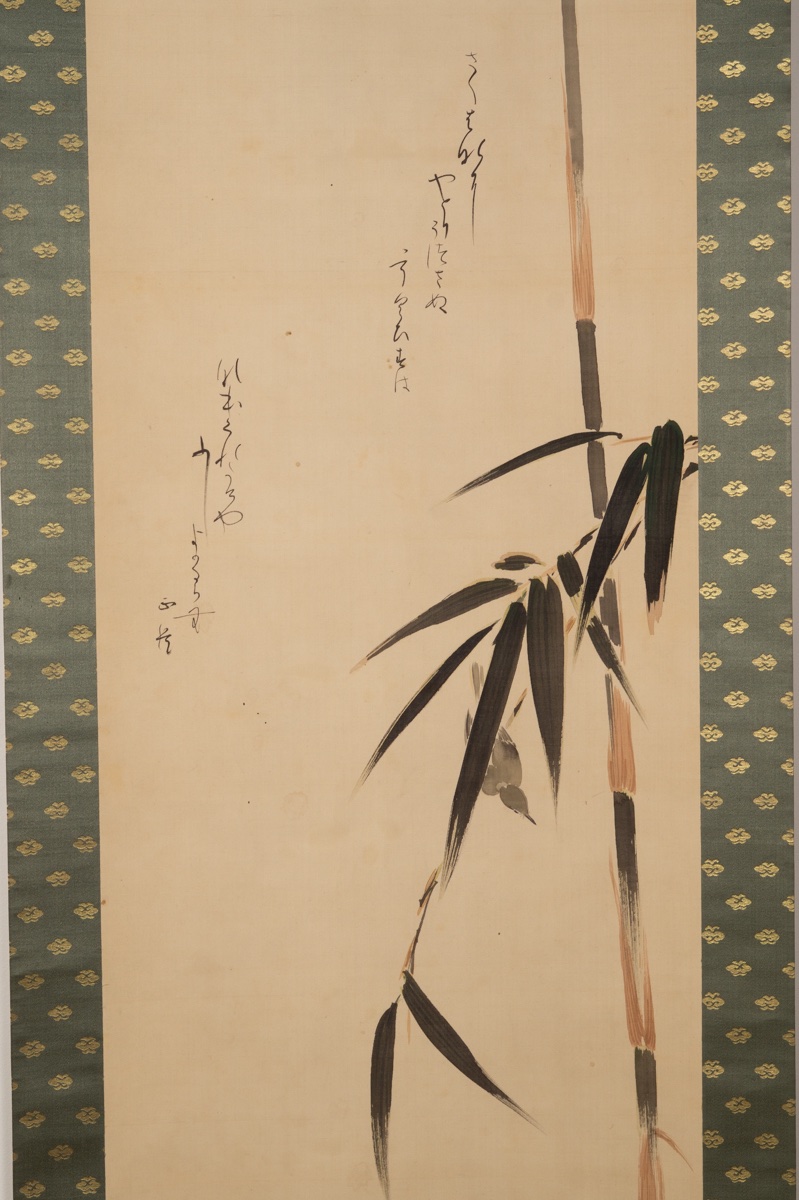
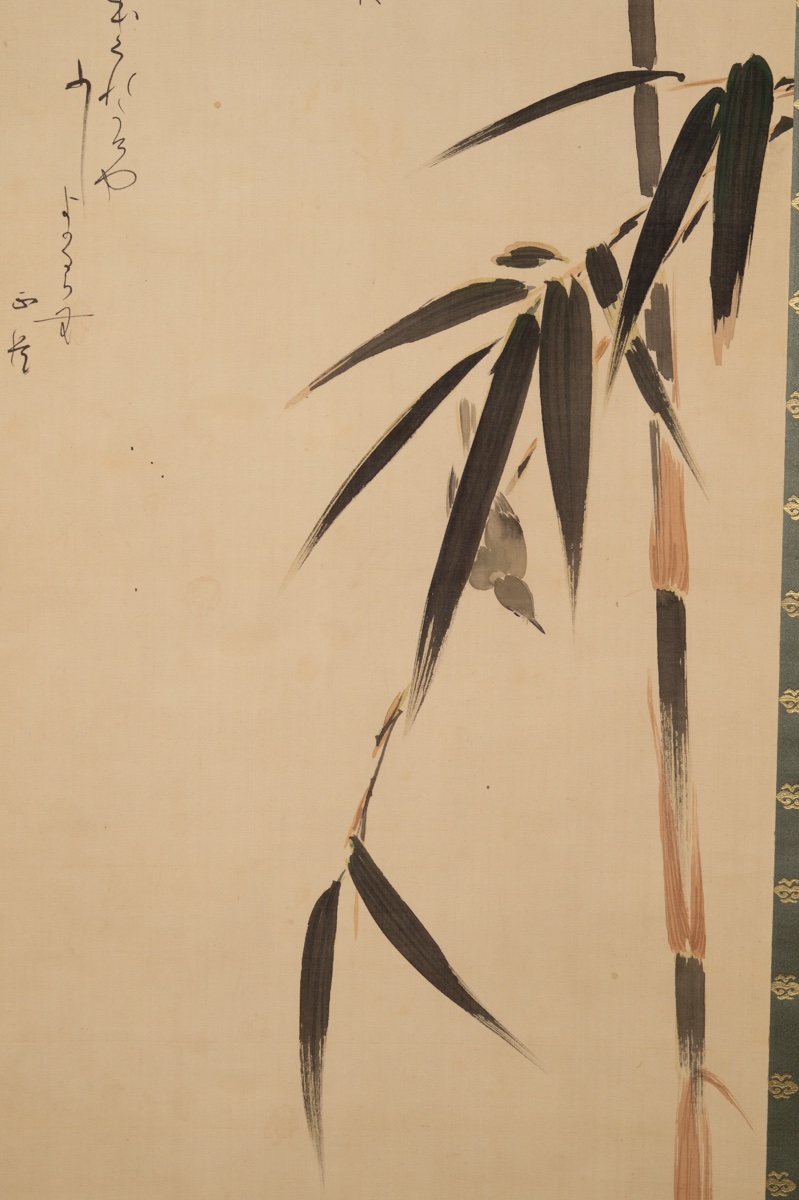
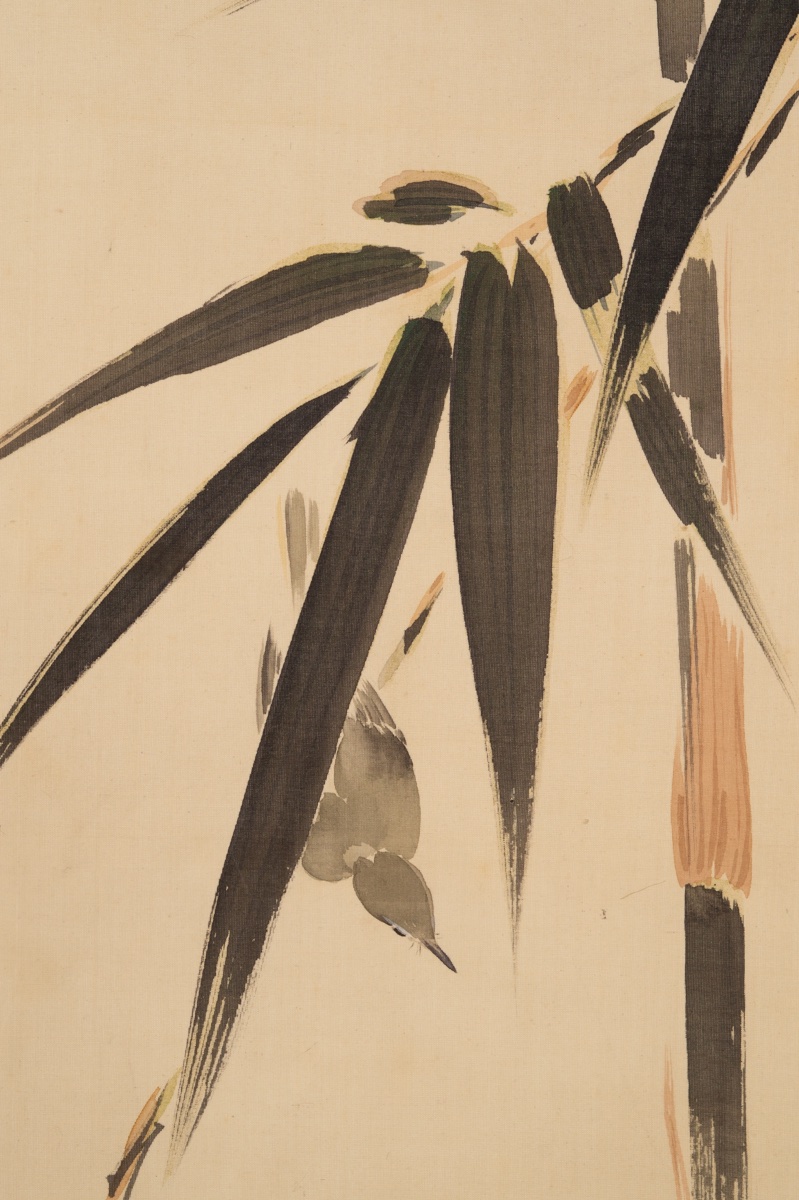
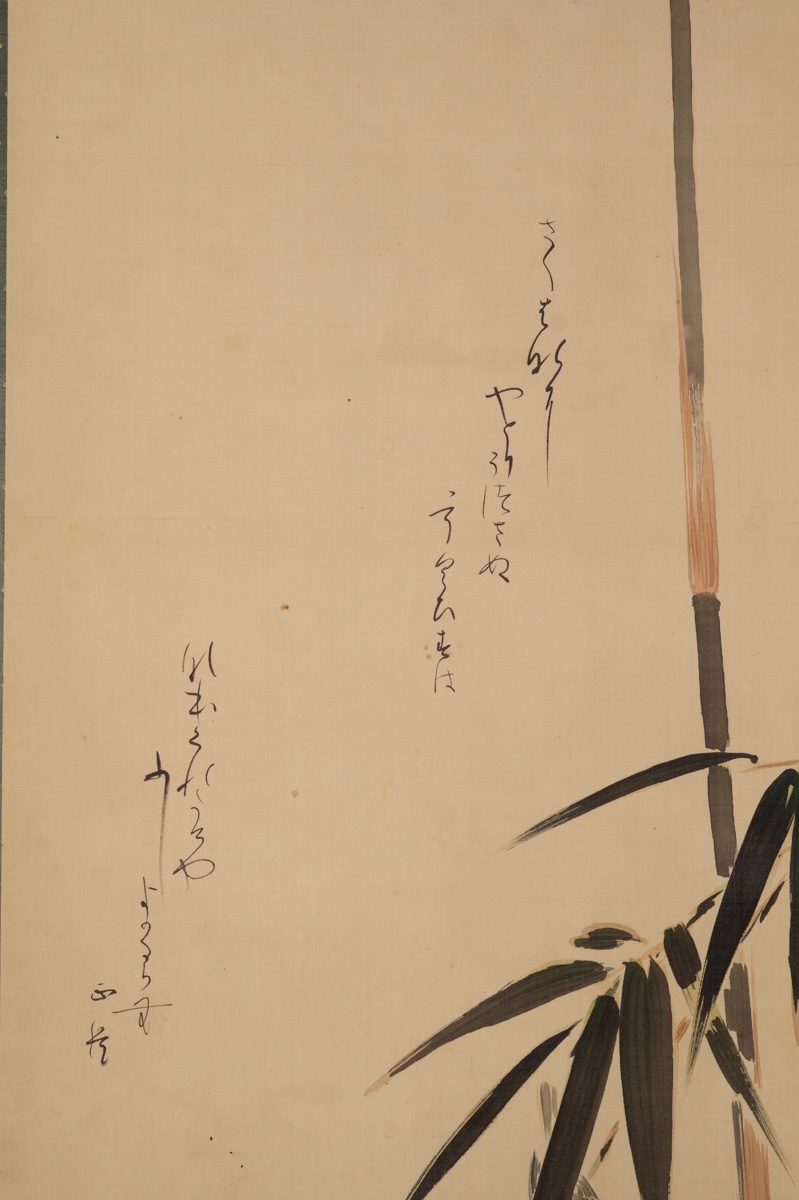
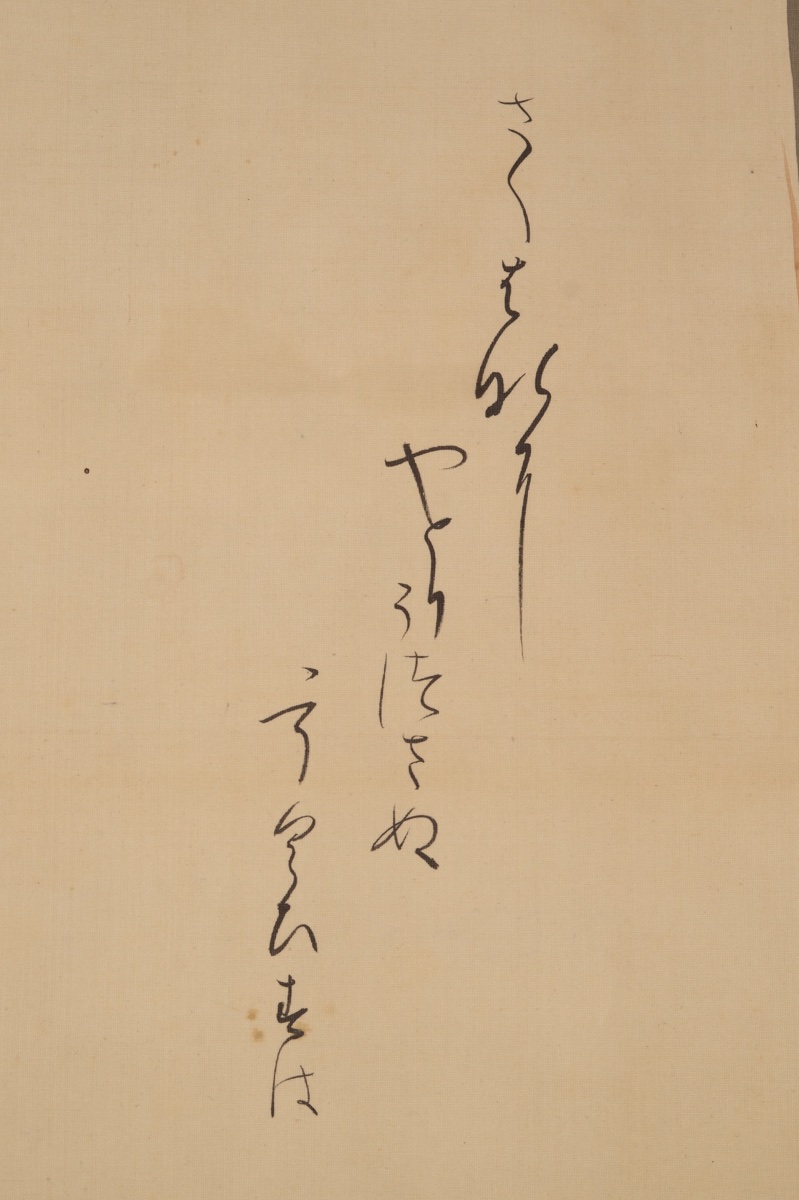
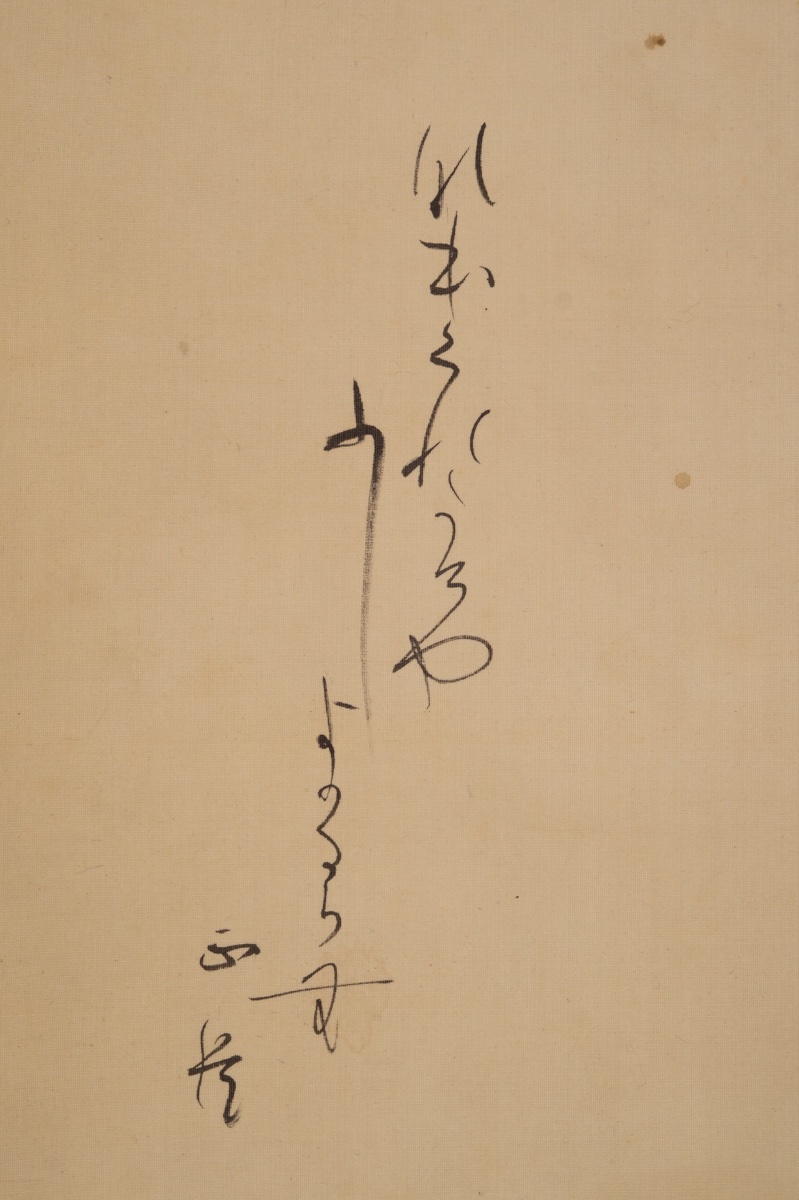
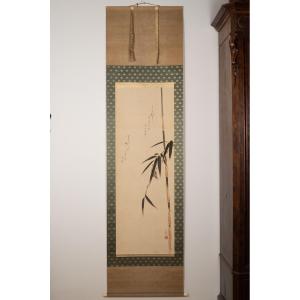


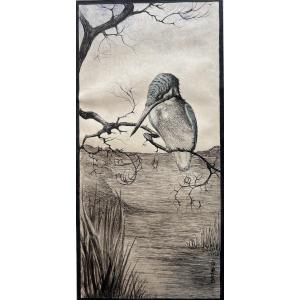
Scroll with hand-painted ink and color on silk. Bamboo symbolizes firmness, strength, and flexibility, as it bends in the wind but never breaks. The small bird adds life to the composition and introduces an element of fleeting existence (mono no aware). Extensive calligraphy in the sosho style is featured at the top of the composition. Top block (right side): さらさらと (sara-sara to) や竹にそよぐ (ya-take ni soyogu) 夕風は (yuukaze wa) Translation: "With a rustling (sara-sara) among the young bamboos, the evening breeze blows." The lower text block (closer to the center) serves as an artistic signature with a poetic touch: "Painted on a summer's day [by] Yoshine."
Ink and color on silk.
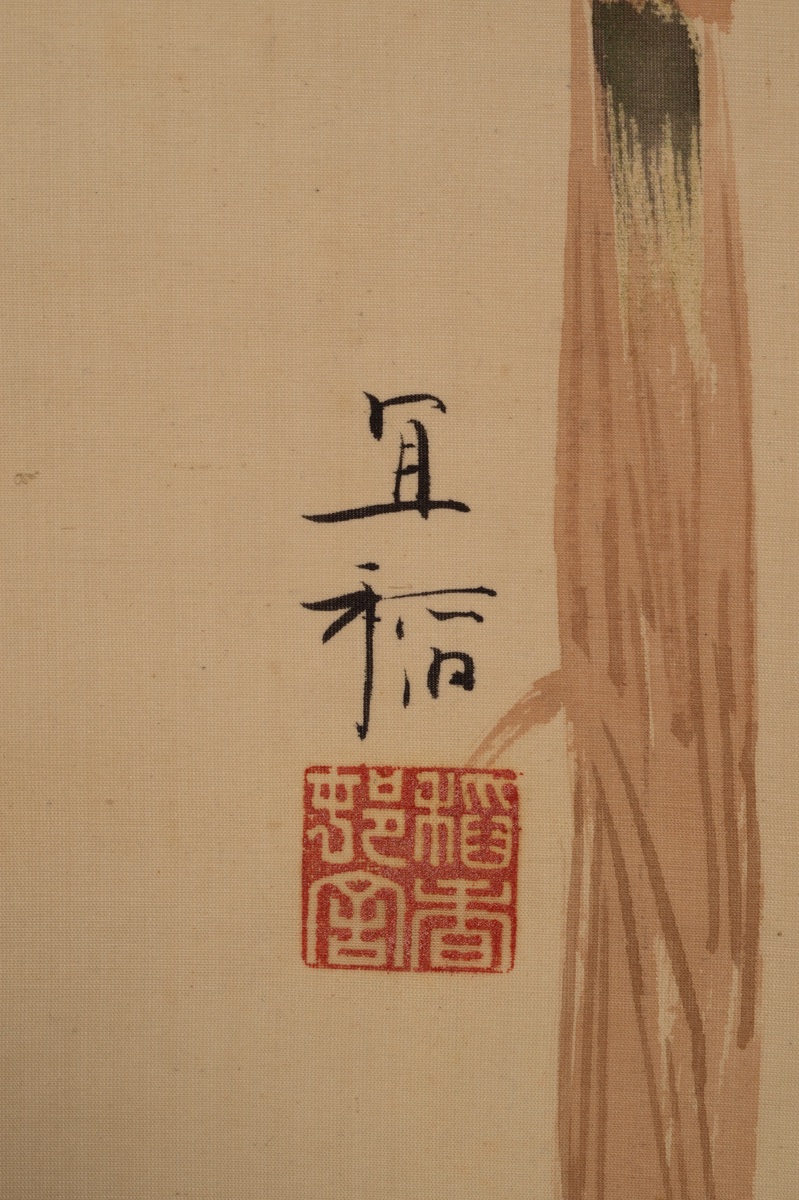
Japan, 19th-20th century. Signed at the bottom: 宜稲之印 (Yoshine no In). Probably Morikawa Yoshine (1851-1918) (守川 宜稲).
Very good condition, slight signs of wear.
Dimensions: 207 x 54.5 cm. Image: 119 x 41.5 cm. Width with handles: 60 cm.
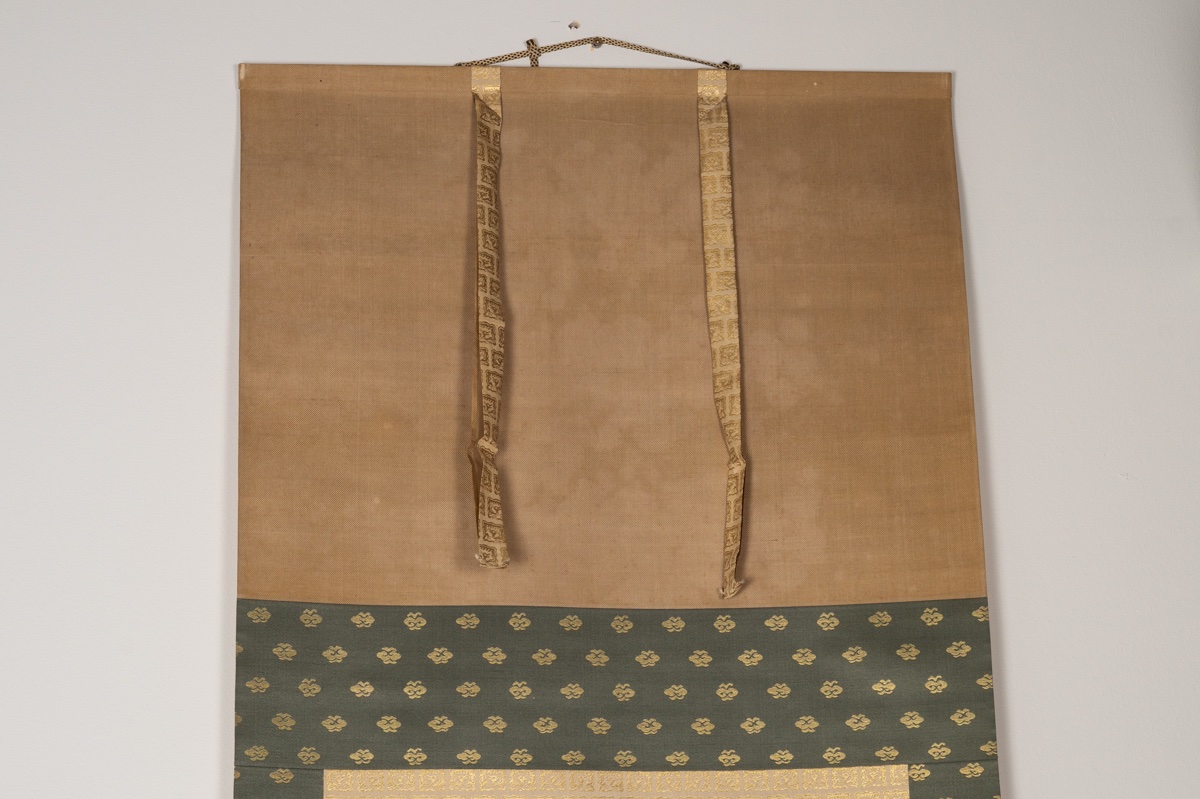
Kakemono (Japanese: 掛け物 kake-mono - "hanging object"; also: 掛軸 kakejiku - "hanging scroll") - Japanese painting on paper or silk, usually glued to a silk backing, intended to be hung on the wall. The top and bottom edges of the kakemono are attached to wooden bars to facilitate rolling, with the bottom bar (Japanese: ikugi 軸木) also equipped with projecting handles (Japanese: jiku). Kakemono scrolls first appeared in Japan during the Nara period (710-794). In traditional Japanese homes, they are hung in a niche called a tokonoma. Free shipping within the European Union! I send packages via insured courier (DPD or DHL). All items are very carefully packaged. Payment by international bank transfer. I will provide a certificate of authenticity upon request.
Ink and color on silk.
Japan, 19th-20th century. Signed at the bottom: 宜稲之印 (Yoshine no In). Probably Morikawa Yoshine (1851-1918) (守川 宜稲).
Very good condition, slight signs of wear.
Dimensions: 207 x 54.5 cm. Image: 119 x 41.5 cm. Width with handles: 60 cm.
Kakemono (Japanese: 掛け物 kake-mono - "hanging object"; also: 掛軸 kakejiku - "hanging scroll") - Japanese painting on paper or silk, usually glued to a silk backing, intended to be hung on the wall. The top and bottom edges of the kakemono are attached to wooden bars to facilitate rolling, with the bottom bar (Japanese: ikugi 軸木) also equipped with projecting handles (Japanese: jiku). Kakemono scrolls first appeared in Japan during the Nara period (710-794). In traditional Japanese homes, they are hung in a niche called a tokonoma. Free shipping within the European Union! I send packages via insured courier (DPD or DHL). All items are very carefully packaged. Payment by international bank transfer. I will provide a certificate of authenticity upon request.
Explore similar pieces and discover your ideal find:
drawings