THIS OBJECT WAS SOLD
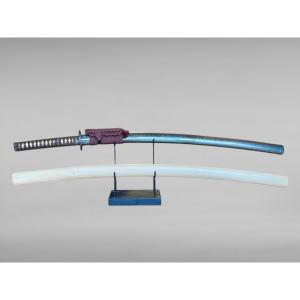
Japanese Katana Sword Attributed To Sadakuni, Nbthk Hozon Certificate - Keisho Era (1596-1615).
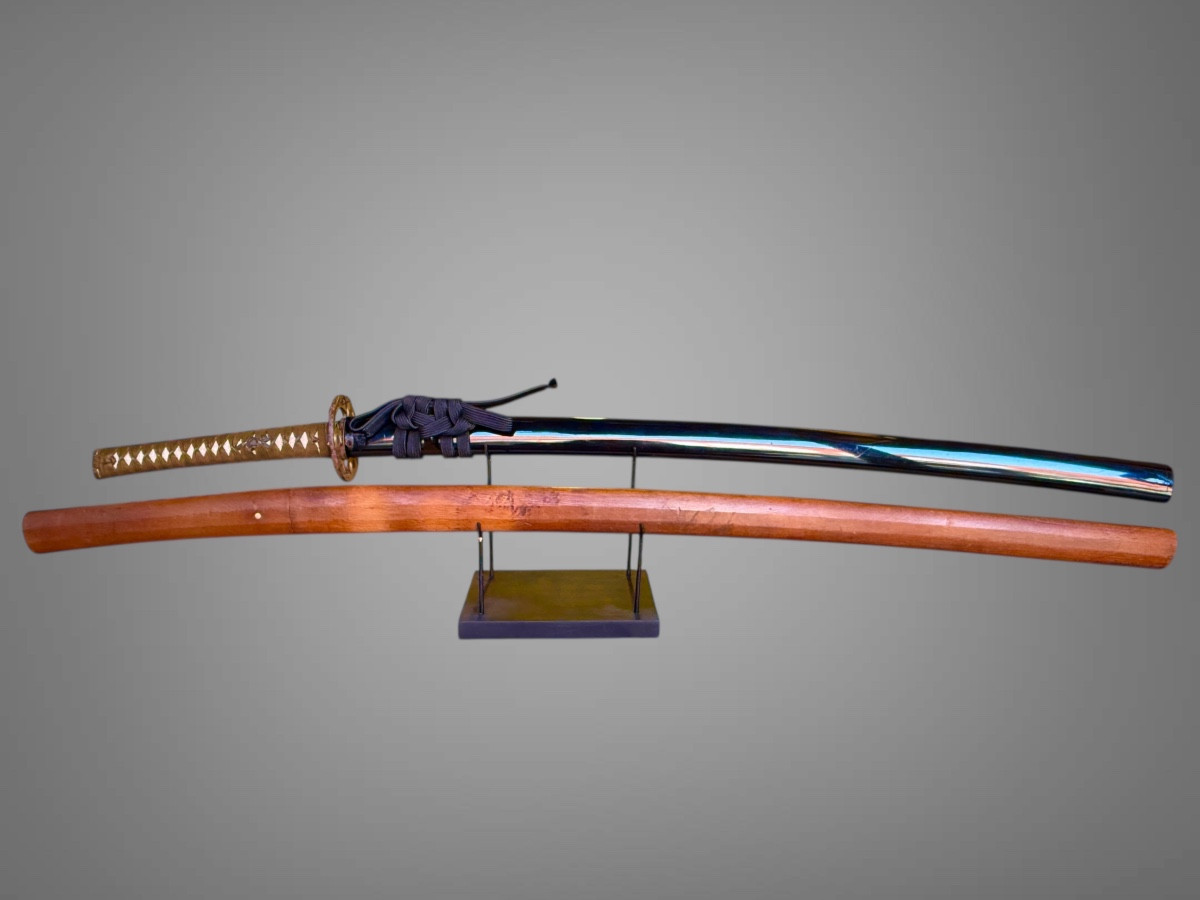


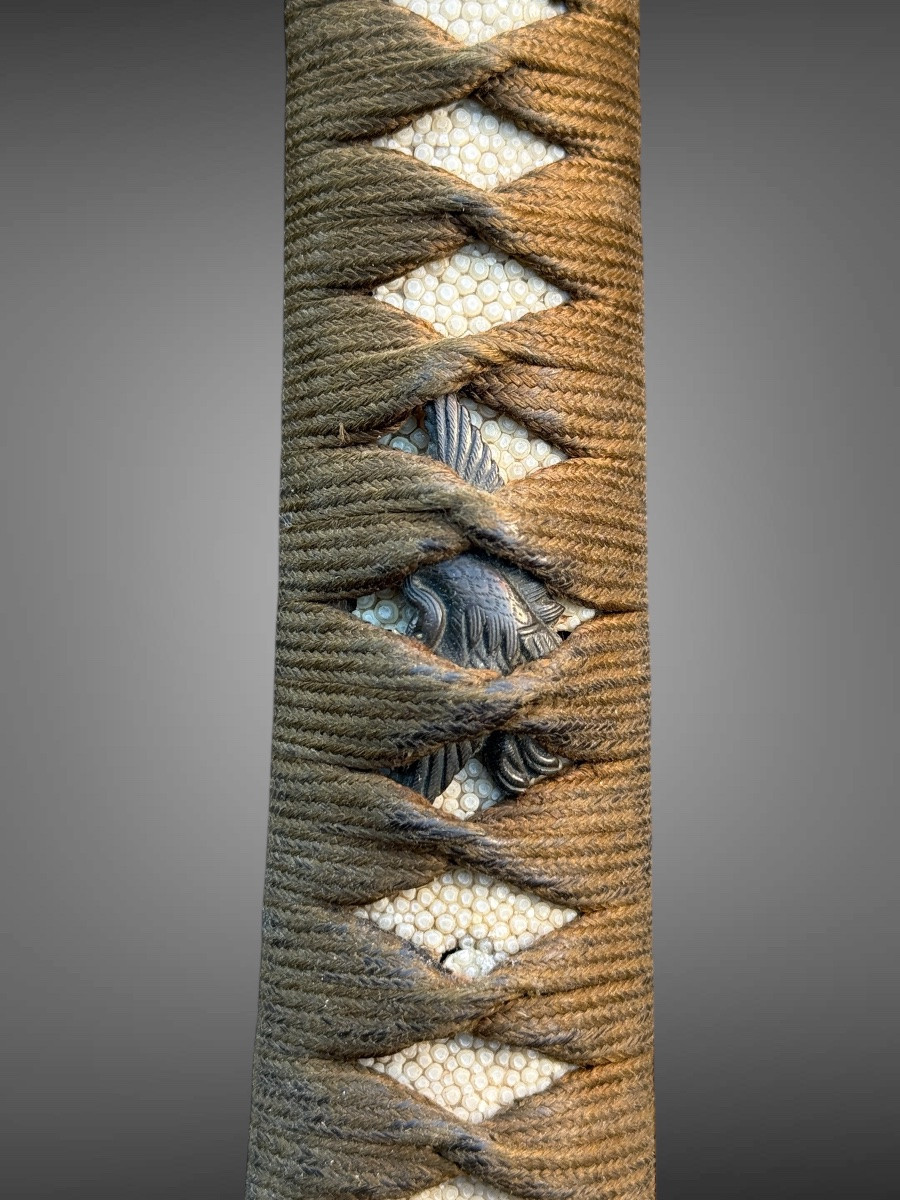
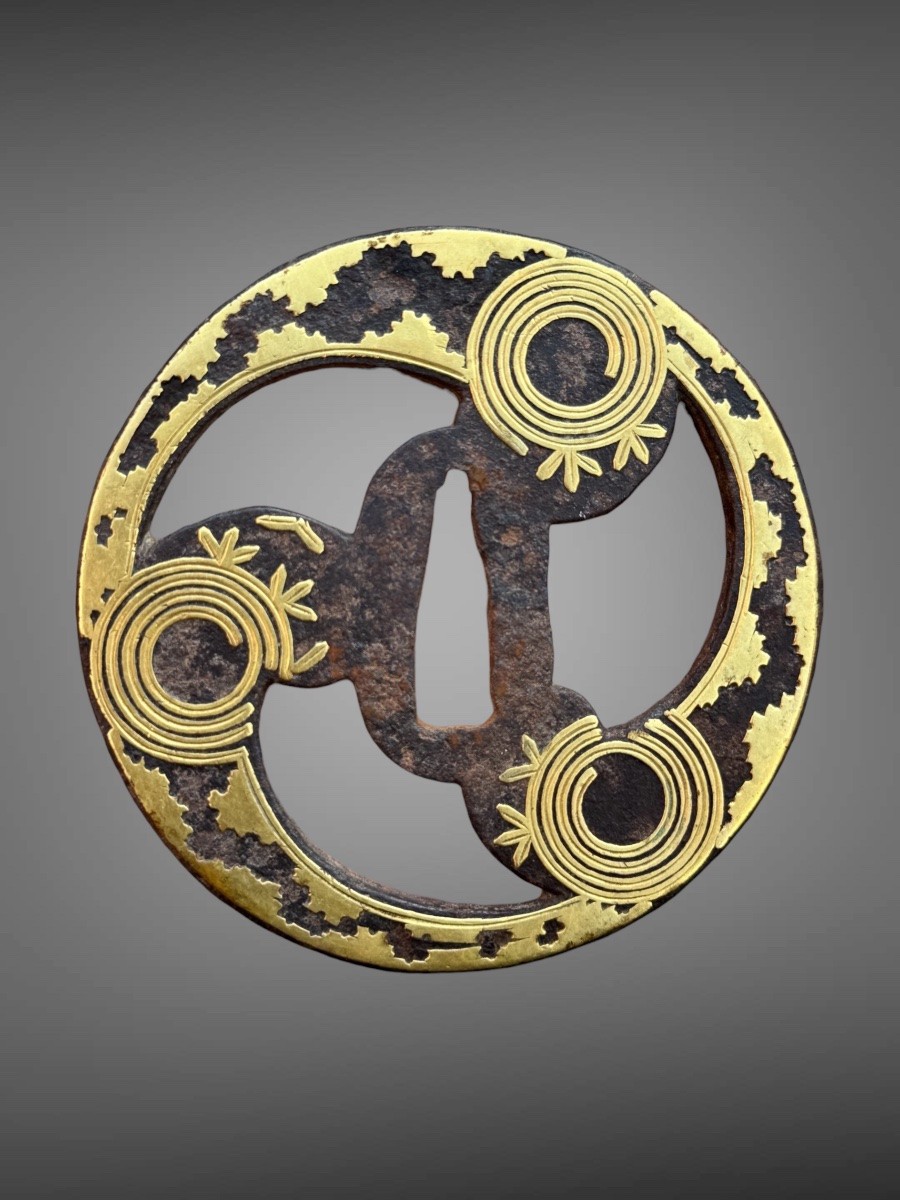
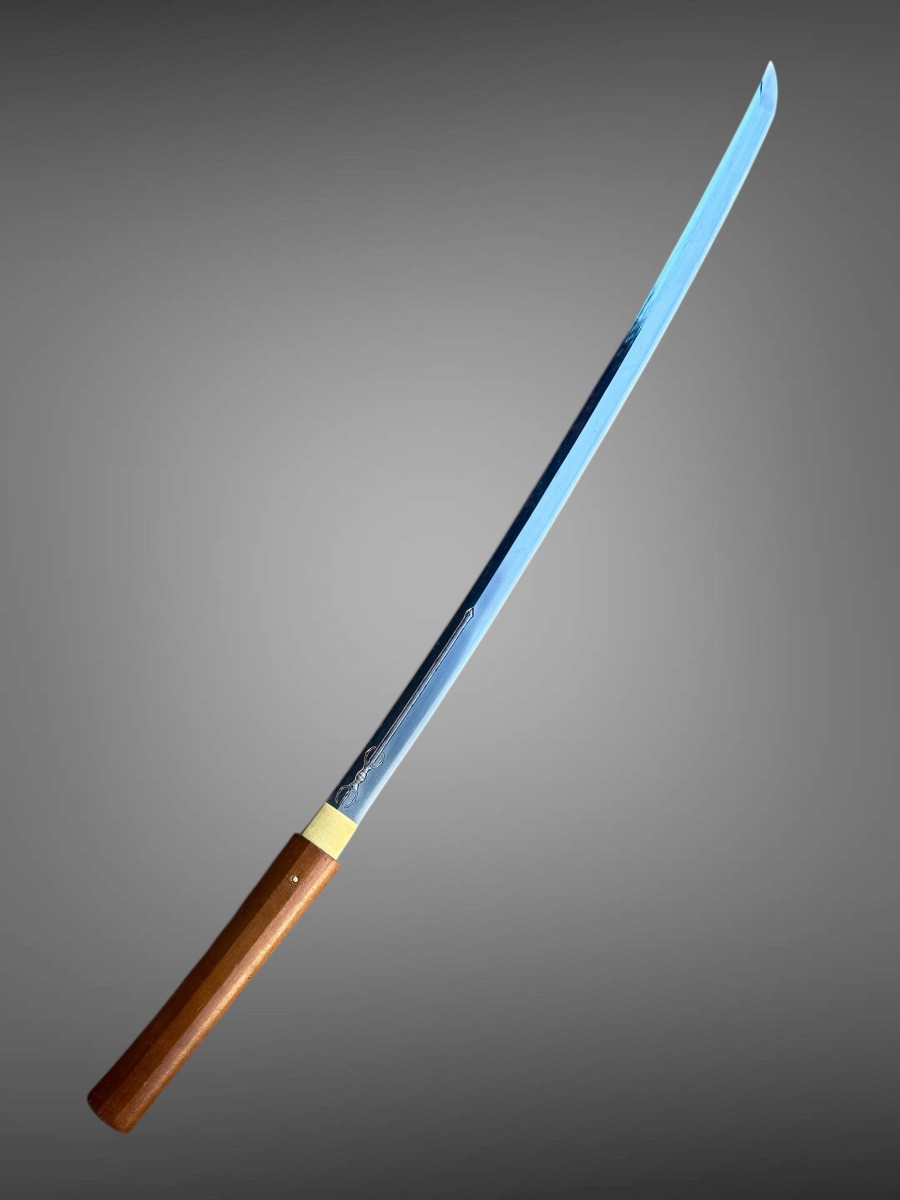

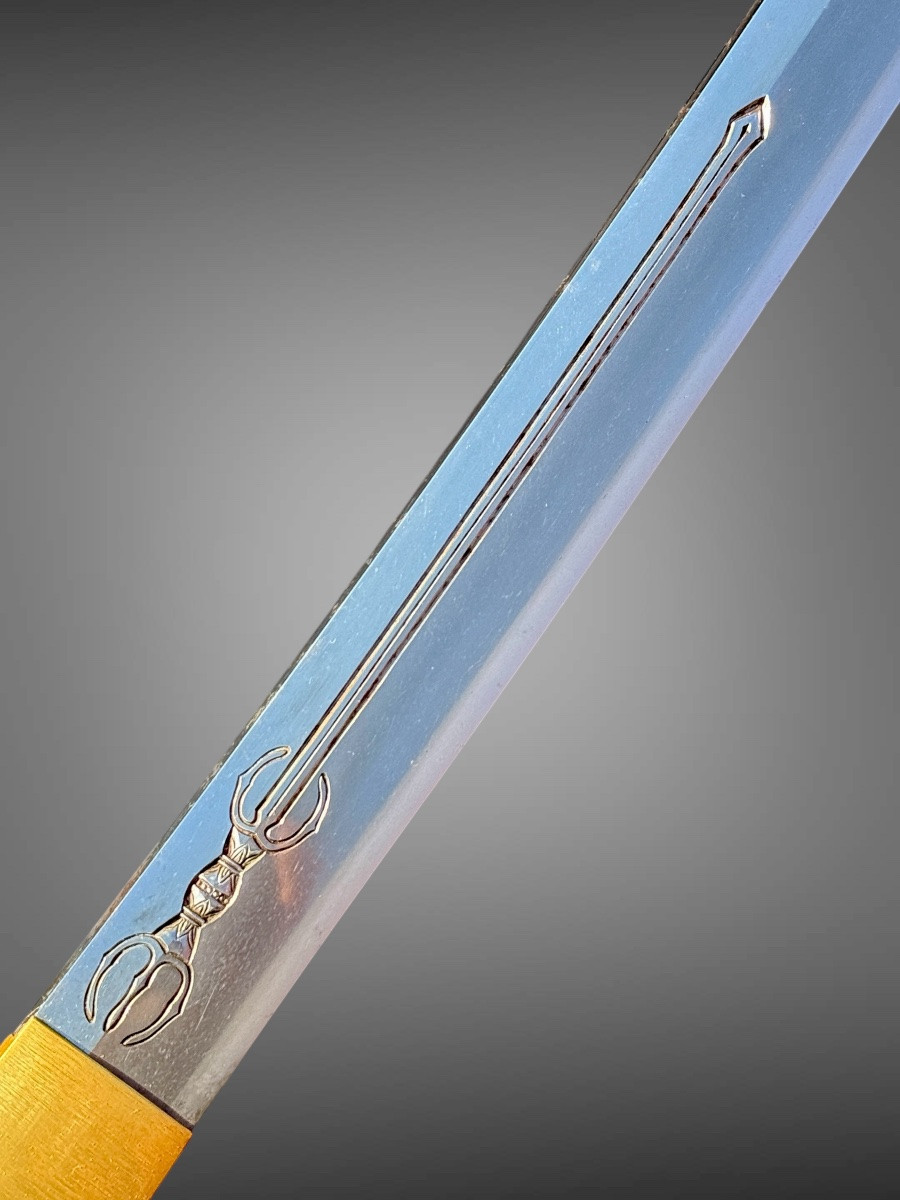
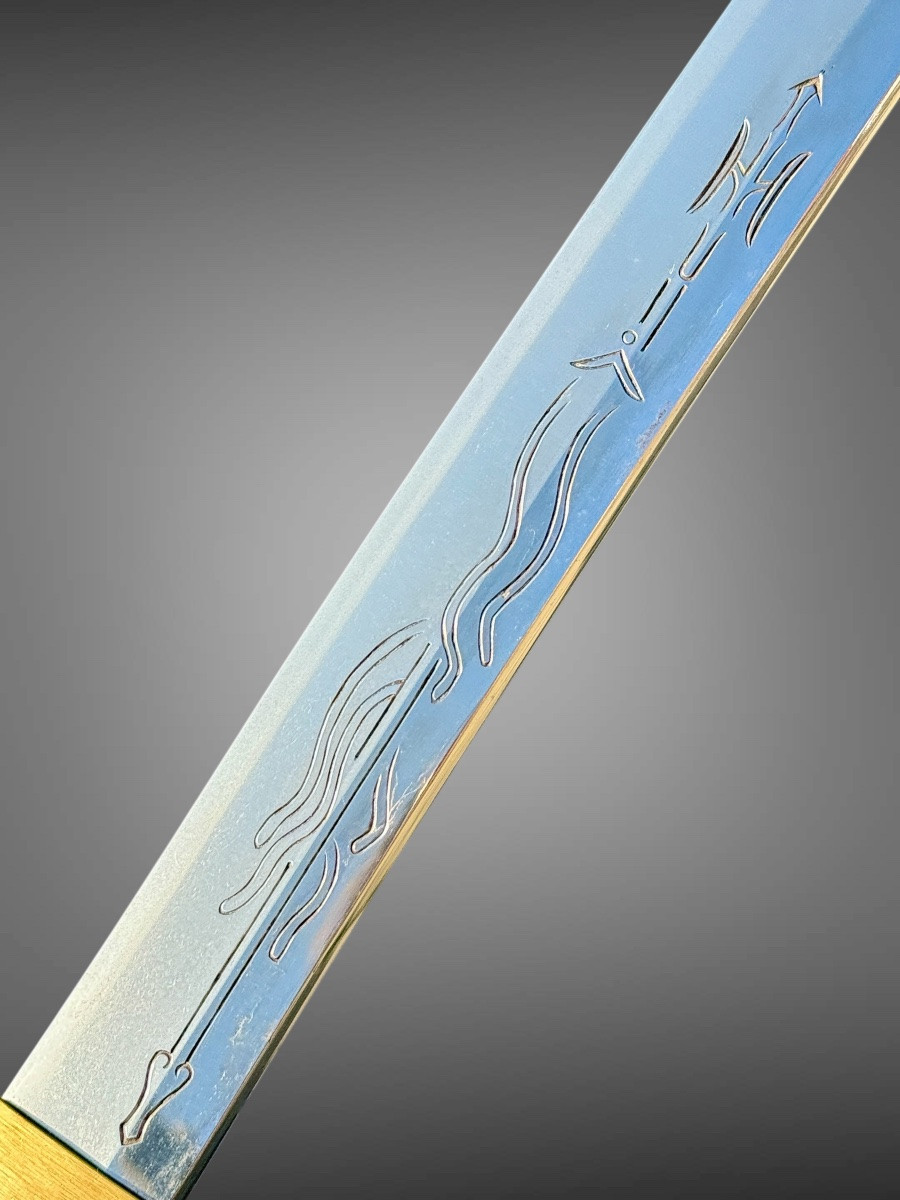
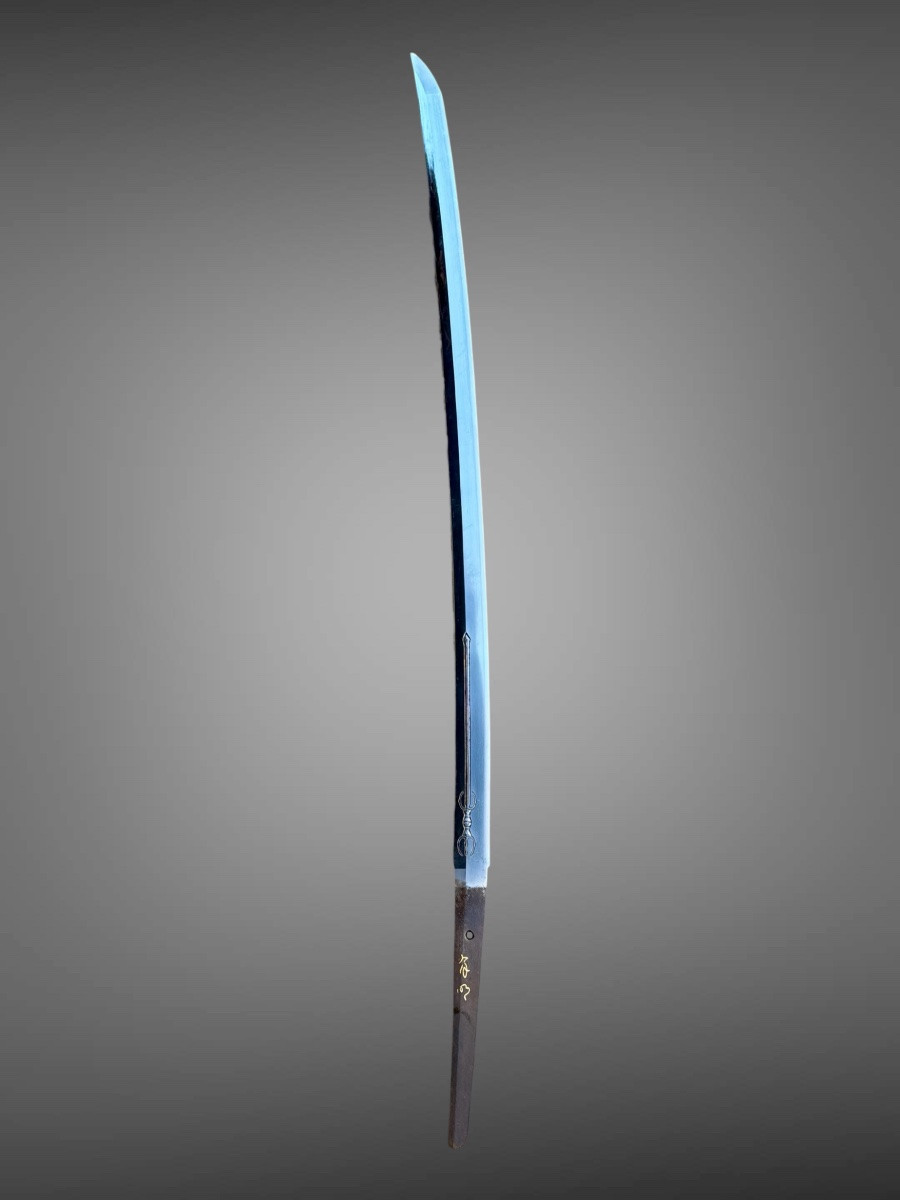
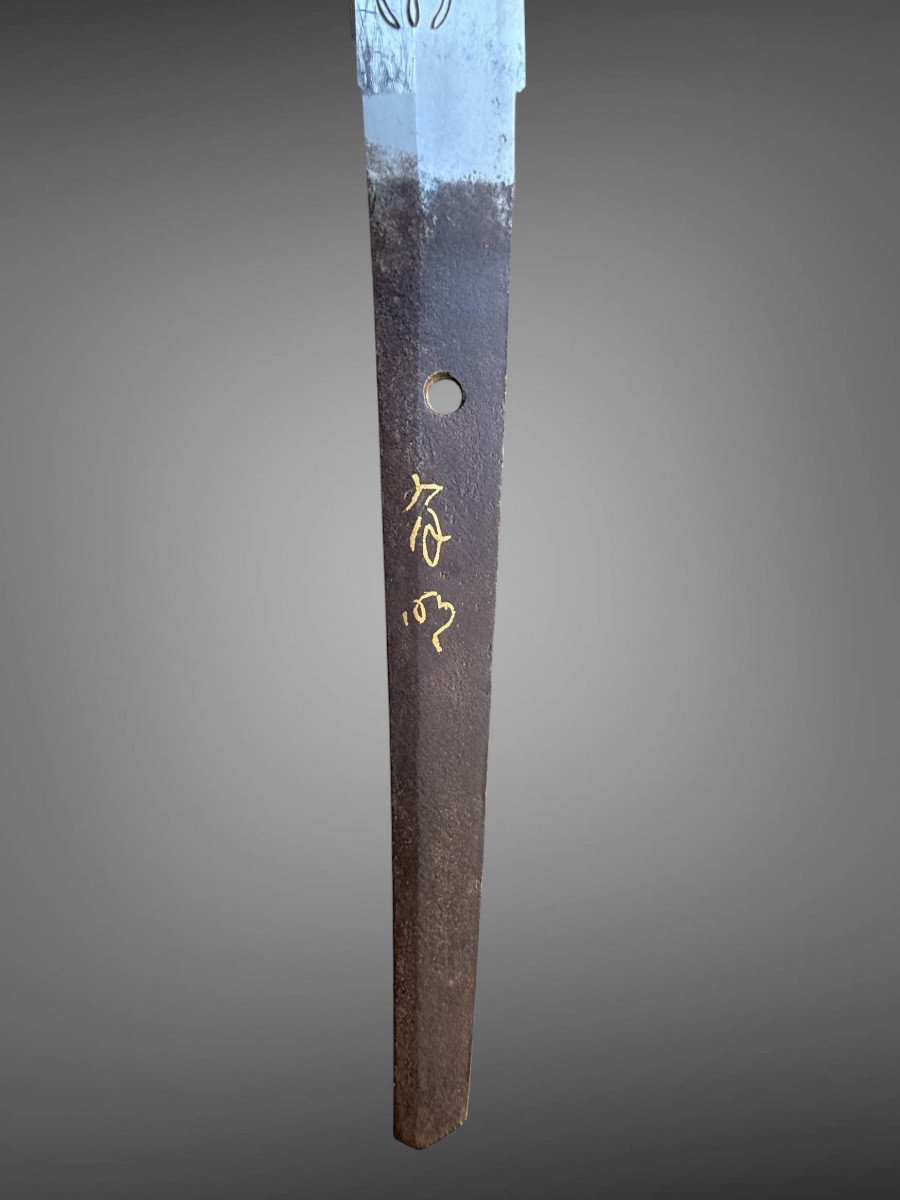

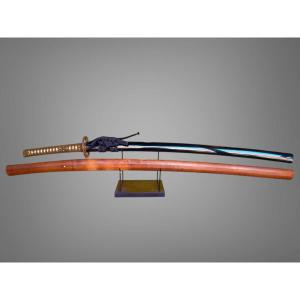


JAPAN - Keisho Era (1596-1615). Samurai katana mounted in shirasaya style. KASHIRA in chased, patinated, and gilded copper depicting stylized plant motifs. FUSHI in finely chased copper with a shakudo patina, gilded and silvered, decorated with ships in foaming waves. TSUKA in wood covered with ray skin and green silk braid. Menukis in chased, patinated, and gilded copper depicting wild geese (kari, an auspicious bird associated with autumn). Tsuba maru-gata in wrought iron, chased and richly gilded, decorated with swirling motifs and pierced with a cyclic symbol. Saya in glossy black lacquered wood. Simple habaki in gilded copper adorned with horizontal striations. Straight blade, regular, straight, and well-defined hamon, it is decorated on one side with a horimono (engraving) depicting the suken, the straight sword of Fudo Myo-O, the guardian of the faith, and on the other with the spear of Bishamonten (Celestial God, guardian of the North and one of the three kami of war). The tang is pierced once and decorated with two gold letters in Japanese cursive script, shodo. This is an esoteric inscription believed to exorcise evil spirits. It is attributed to Higo Daijyo Sadakuni. Sold with stand, silk carrying case, and NBTHK Hozon certificate. NBTHK, also known as Nihon Bijutsu Touken Hozon Kyokai (the Society for the Preservation of Japanese Art Swords), is one of the oldest Japanese sword evaluation organizations in modern Japan. Dimensions: 105 x 8 x 8 cm. Blade length with tang: 93 cm. Cutting edge length: 72.5 cm. Curvature (sori): 1.4 cm. Notes: This blade is attributed to Higo Daijyo Sadakuni, who was active during the Keicho period (1596-1615) in Echizen Province (present-day Fukui Prefecture). He belonged to the Echizen Shimosaka school, one of the most prestigious schools in the province during the Edo period, and was a prominent figure within it. He is said to have been the younger brother of the first genealogist, Yasutsugu, the founder of the school. Sadakuni was the master of Kotetsu in the art of horimono (blade engraving). The Daijyo was an official rank bestowed only upon highly skilled swordsmiths at the time. The first genealogist, Yasutsugu, is said to have been the founder of the Echizen school. He was born in the city of Shimosaka, Shiga Prefecture, at the end of the Muromachi period (late 16th century). He pursued his career there until the beginning of the Keicho era (1596). However, he moved to Echizen Province due to the relocation of the lord he served. He was eventually noticed and supported by Matsudaira Hideyasu, the third son of Tokugawa Ieyasu, the founder of the Edo government. Hideyasu was the feudal lord of Echizen Province during the early Edo period. With Hideyasu's support, the first generation of Yasutsugu was able to establish the Echizen Shimosaka school of swordmaking. The school's renown spread nationwide. On Hideyasu's recommendation, the first generation of Yasutsugu became Okakaekaji (master swordsmith) for the Tokugawa shogun's family, meaning he exclusively forged swords for the shogun's family. Yasutsugu was recognized by both the first and second Tokugawa shoguns.
Explore similar pieces and discover your ideal find:
Edged Weapons