




Follower Of Antonio Allegri Known As Correggio (1489 - 1534), Adoration Of The Shepherds
Follower of Antonio Allegri known as Correggio (1489 - 1534), 17th century
Adoration of the Shepherds (The Night)
Oil on canvas, 142 x 101 cm
with frame 158 x 117
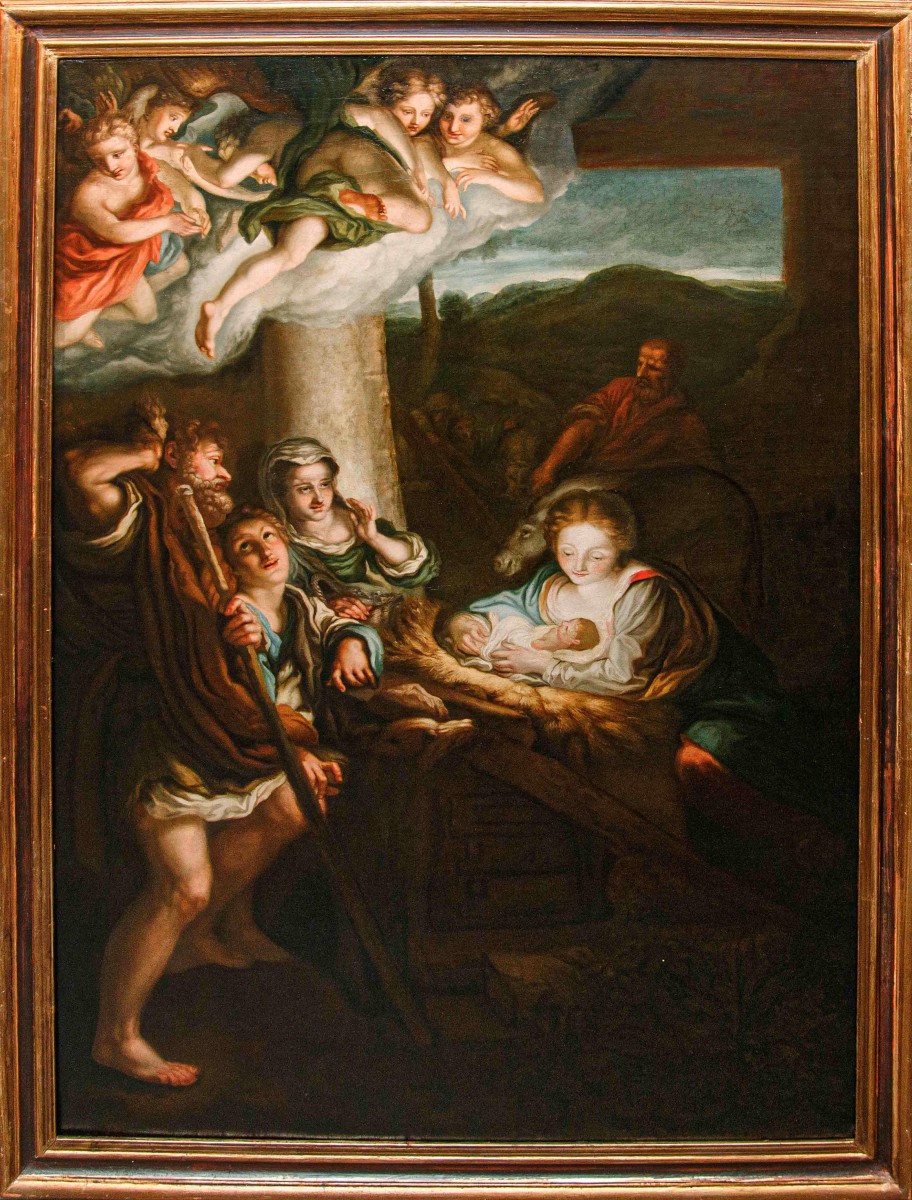
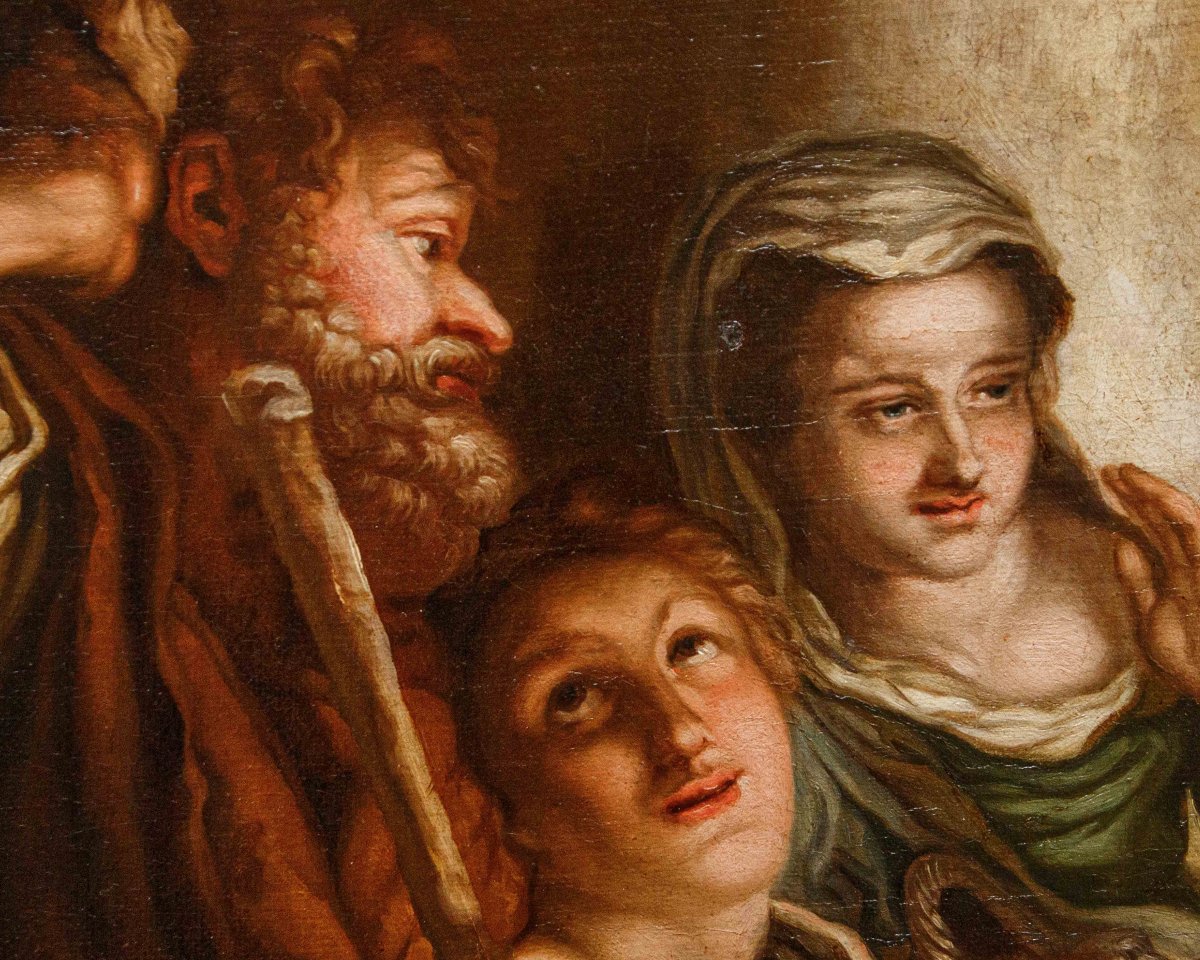
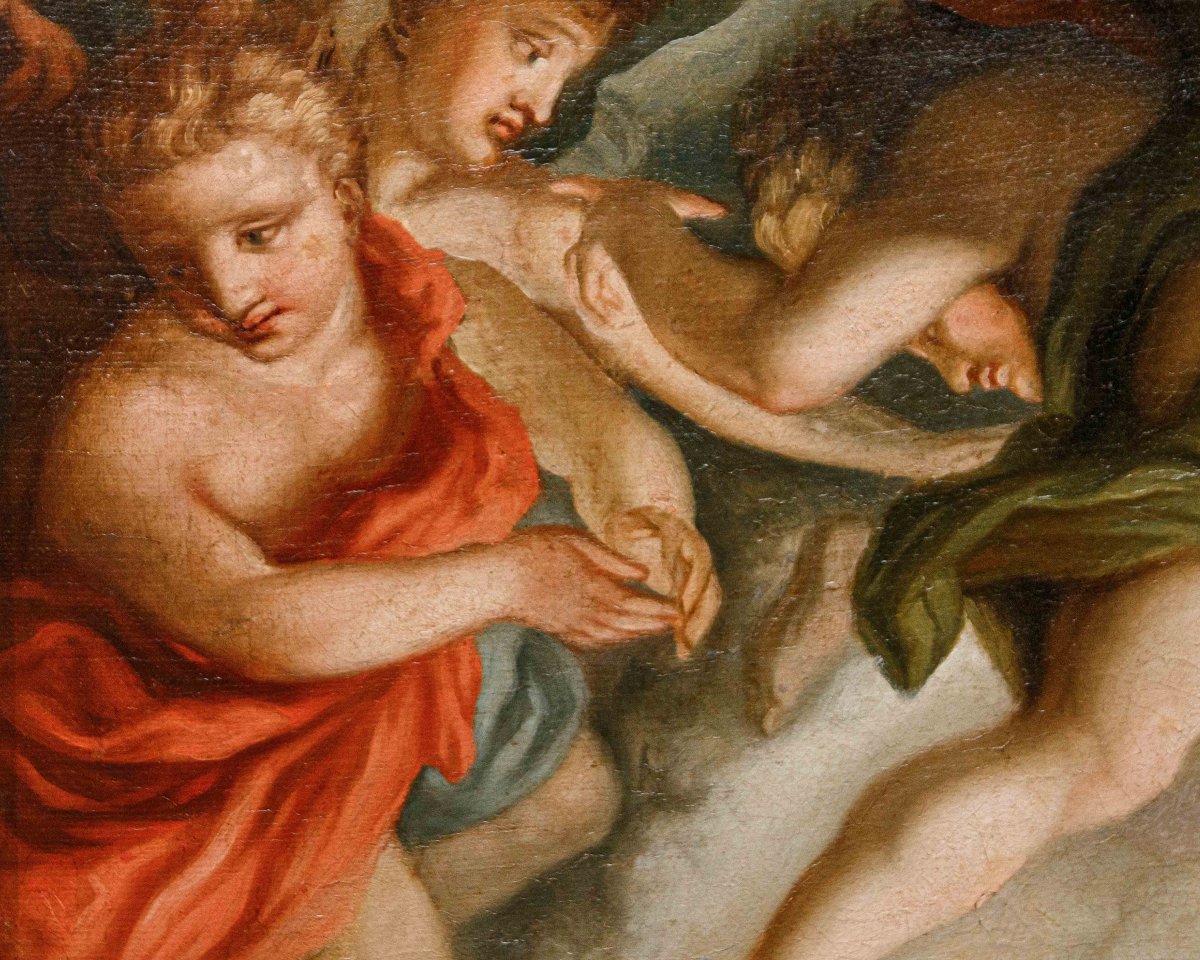
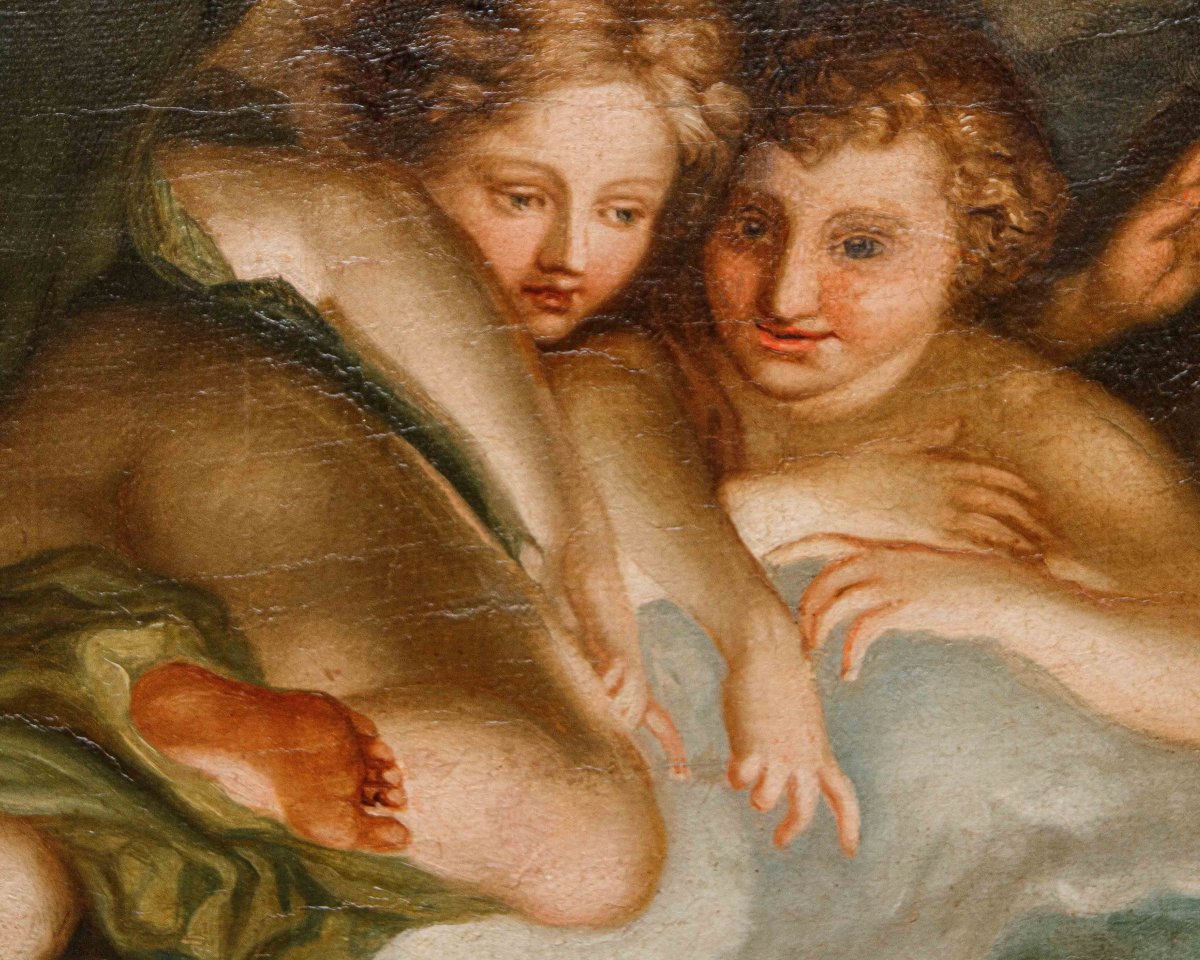
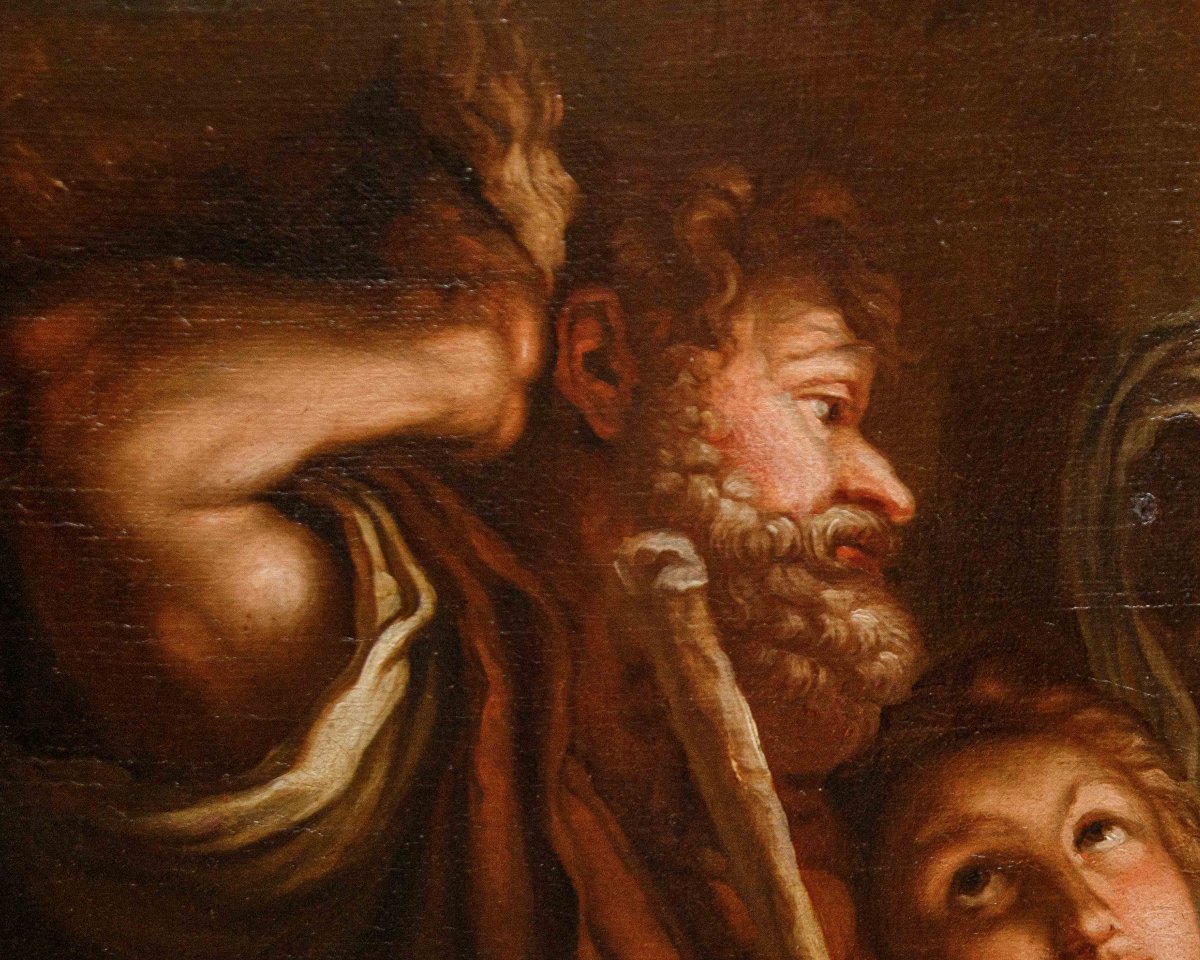
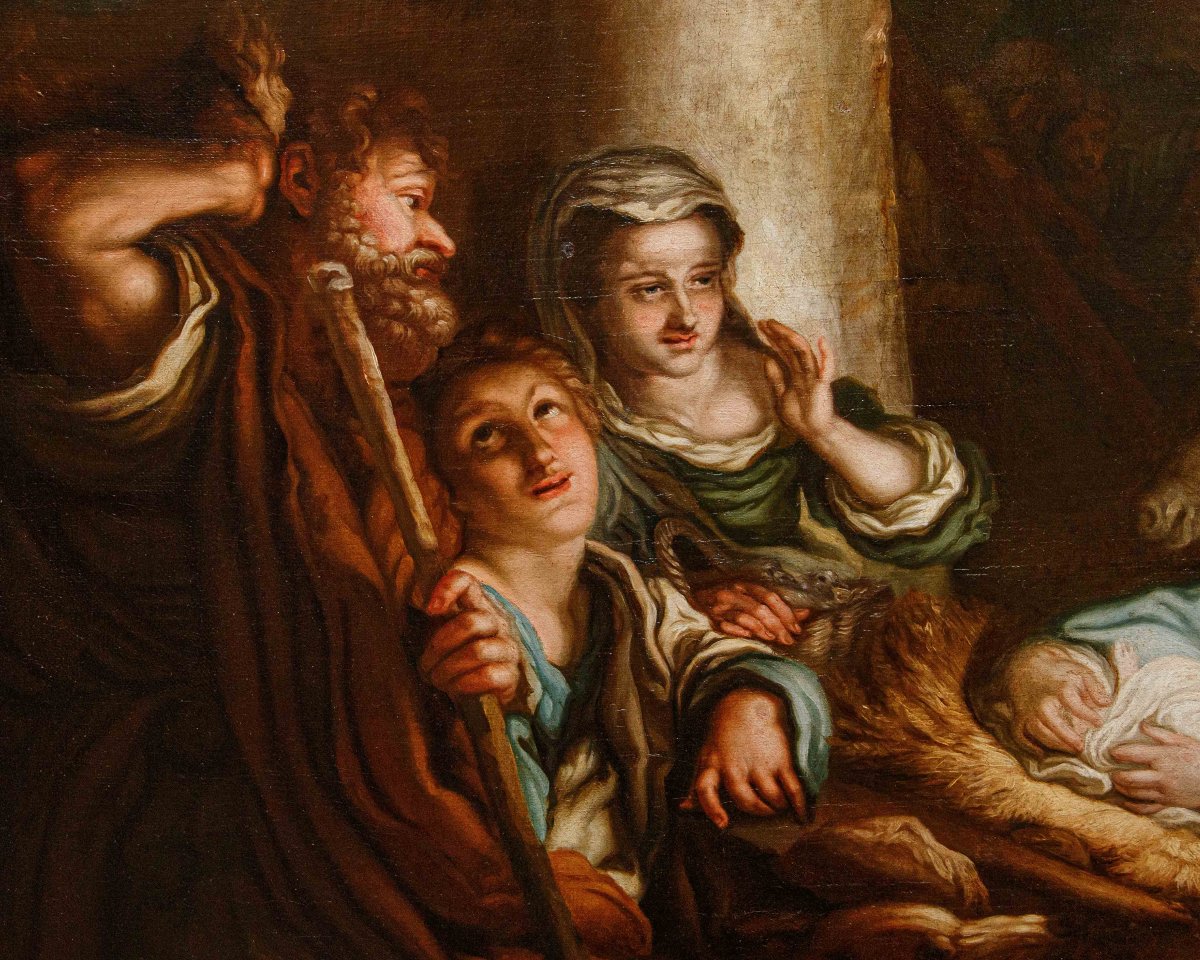
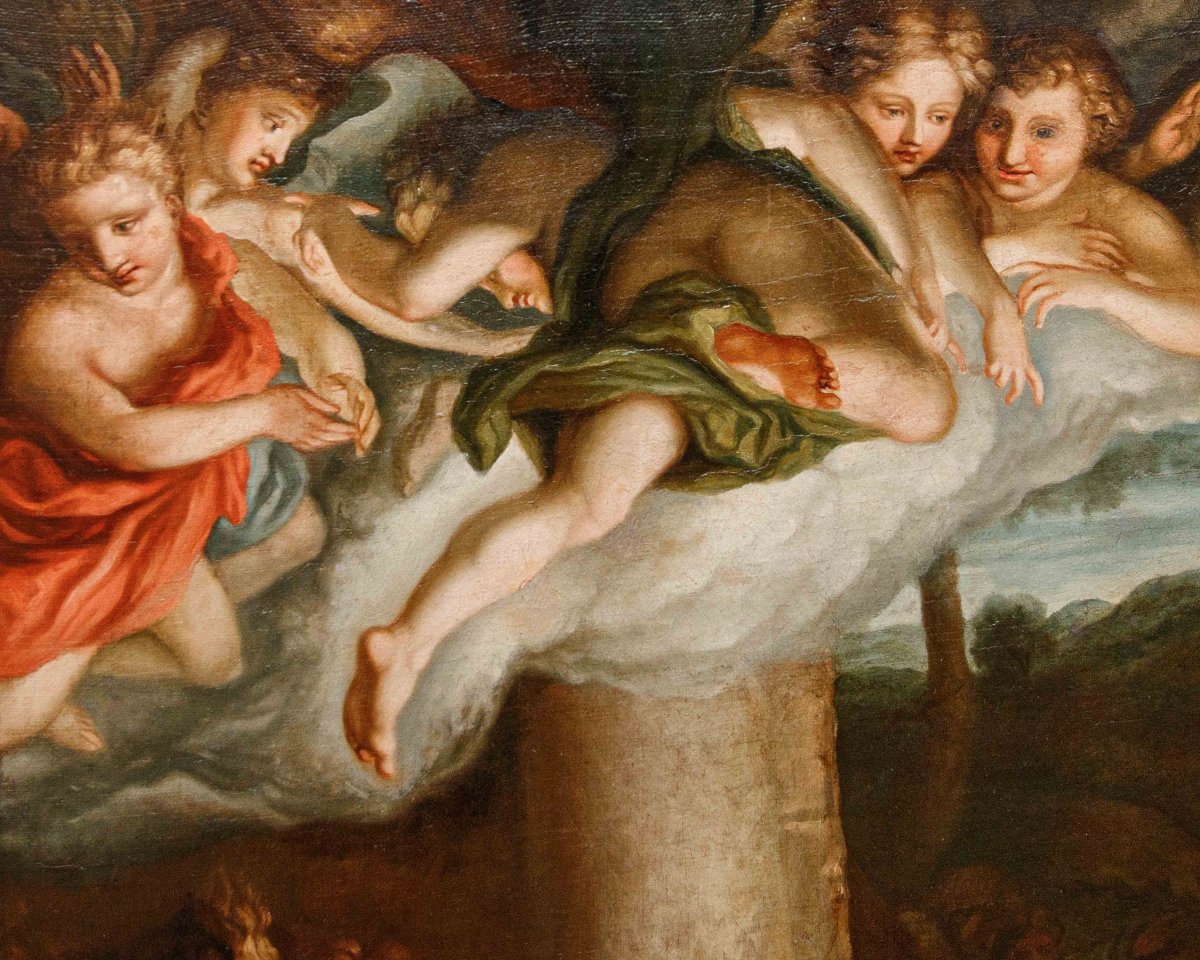
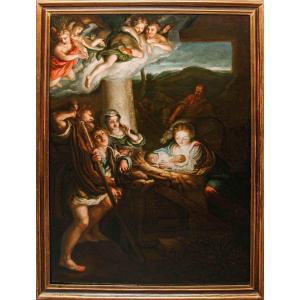
The painting presented here is the work of a follower of Antonio Allegri known as Correggio, active during the 17th century, and is part of the long and successful tradition of derivations inspired by the Emilian master's Adoration of the Shepherds, universally known as La Notte. The painting clearly takes up the compositional structure and the invention of light that made Correggio's masterpiece famous, adapting them to a sensibility now fully seventeenth-century, attentive to emotional effects and the direct involvement of the viewer. The scene is set in a night stable, dominated by the contrast between the surrounding darkness and the supernatural light emanating from the body of the Baby Jesus. The Virgin, placed in the foreground, contemplates her Son with a sweet and collected expression, while the light that emanates from the newborn brightens his face and hands, creating an effect of intense domestic intimacy. Shepherds line up around her, caught in attitudes of surprise and wonder, with gestures and glances that visually translate the emotion of divine revelation. In the background, immersed in a denser dim light, appear Saint Joseph, the donkey and the ox, according to consolidated iconographic tradition. Above, among the clouds illuminated by silver glare, a group of angels animates the upper part of the canvas, introducing a dynamic and festive element that balances the composure of the earthly scene. The presence of ruined architecture, allusive to the ancient pagan world that gives way to the new Christian era. The work effectively translates one of the most innovative features of Correggio Night: the use of light as a tangible manifestation of the divine. This device, which in the sixteenth-century painting had marked a decisive turning point in Italian nocturnal painting, is taken up by the follower with more marked and theatrical accents, in line with the now established Baroque taste. Light not only shapes the volumes and guides the gaze, but becomes a narrative and emotional tool, capable of loading the scene with strong spiritual tension. The extraordinary success of the Correggio Night, commissioned in 1522 by Alberto Pratoneri for the church of San Prospero in Reggio Emilia and completed by 1530, contributed significantly to the diffusion of this iconographic model. Admired for over a century in its original location and celebrated by artists such as Diego Velazquez, Rubens and Jean Boulanger, the work was acquired in the seventeenth century by the Dukes of Este and subsequently transferred to Dresden, where it is still preserved today. It was precisely this long season of celebration and study that favored the birth of numerous replicas, variations and reinterpretations, among which this Adoration of the Shepherds should be placed. The painting therefore presents itself as a significant testimony to the persistence of Correggio's legacy in the seventeenth century, capable of combining the master's luminous lyricism with a more immediate and devotional language.
Adoration of the Shepherds (The Night)
Oil on canvas, 142 x 101 cm
with frame 158 x 117
The painting presented here is the work of a follower of Antonio Allegri known as Correggio, active during the 17th century, and is part of the long and successful tradition of derivations inspired by the Emilian master's Adoration of the Shepherds, universally known as La Notte. The painting clearly takes up the compositional structure and the invention of light that made Correggio's masterpiece famous, adapting them to a sensibility now fully seventeenth-century, attentive to emotional effects and the direct involvement of the viewer. The scene is set in a night stable, dominated by the contrast between the surrounding darkness and the supernatural light emanating from the body of the Baby Jesus. The Virgin, placed in the foreground, contemplates her Son with a sweet and collected expression, while the light that emanates from the newborn brightens his face and hands, creating an effect of intense domestic intimacy. Shepherds line up around her, caught in attitudes of surprise and wonder, with gestures and glances that visually translate the emotion of divine revelation. In the background, immersed in a denser dim light, appear Saint Joseph, the donkey and the ox, according to consolidated iconographic tradition. Above, among the clouds illuminated by silver glare, a group of angels animates the upper part of the canvas, introducing a dynamic and festive element that balances the composure of the earthly scene. The presence of ruined architecture, allusive to the ancient pagan world that gives way to the new Christian era. The work effectively translates one of the most innovative features of Correggio Night: the use of light as a tangible manifestation of the divine. This device, which in the sixteenth-century painting had marked a decisive turning point in Italian nocturnal painting, is taken up by the follower with more marked and theatrical accents, in line with the now established Baroque taste. Light not only shapes the volumes and guides the gaze, but becomes a narrative and emotional tool, capable of loading the scene with strong spiritual tension. The extraordinary success of the Correggio Night, commissioned in 1522 by Alberto Pratoneri for the church of San Prospero in Reggio Emilia and completed by 1530, contributed significantly to the diffusion of this iconographic model. Admired for over a century in its original location and celebrated by artists such as Diego Velazquez, Rubens and Jean Boulanger, the work was acquired in the seventeenth century by the Dukes of Este and subsequently transferred to Dresden, where it is still preserved today. It was precisely this long season of celebration and study that favored the birth of numerous replicas, variations and reinterpretations, among which this Adoration of the Shepherds should be placed. The painting therefore presents itself as a significant testimony to the persistence of Correggio's legacy in the seventeenth century, capable of combining the master's luminous lyricism with a more immediate and devotional language.
4 800 €
Period: 17th century
Style: Other Style
Condition: Good condition
Material: Oil painting
Width: 101
Height: 142
Reference (ID): 1691162
Availability: In stock
Print