



Alabaster Sculpture Depicting The Virgin And Child Cornucopia, 16th Century
Madonna and Child with Cornucopia
Alabaster, Flanders, third quarter of the 16th century
Dimensions: height 38 cm
Provenance: Dutch private collection
Style: in the tradition of Southern Netherlandish Renaissance sculpture, with stylistic affinities to the work of Jan Mone and his followers.
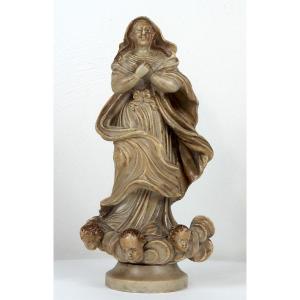
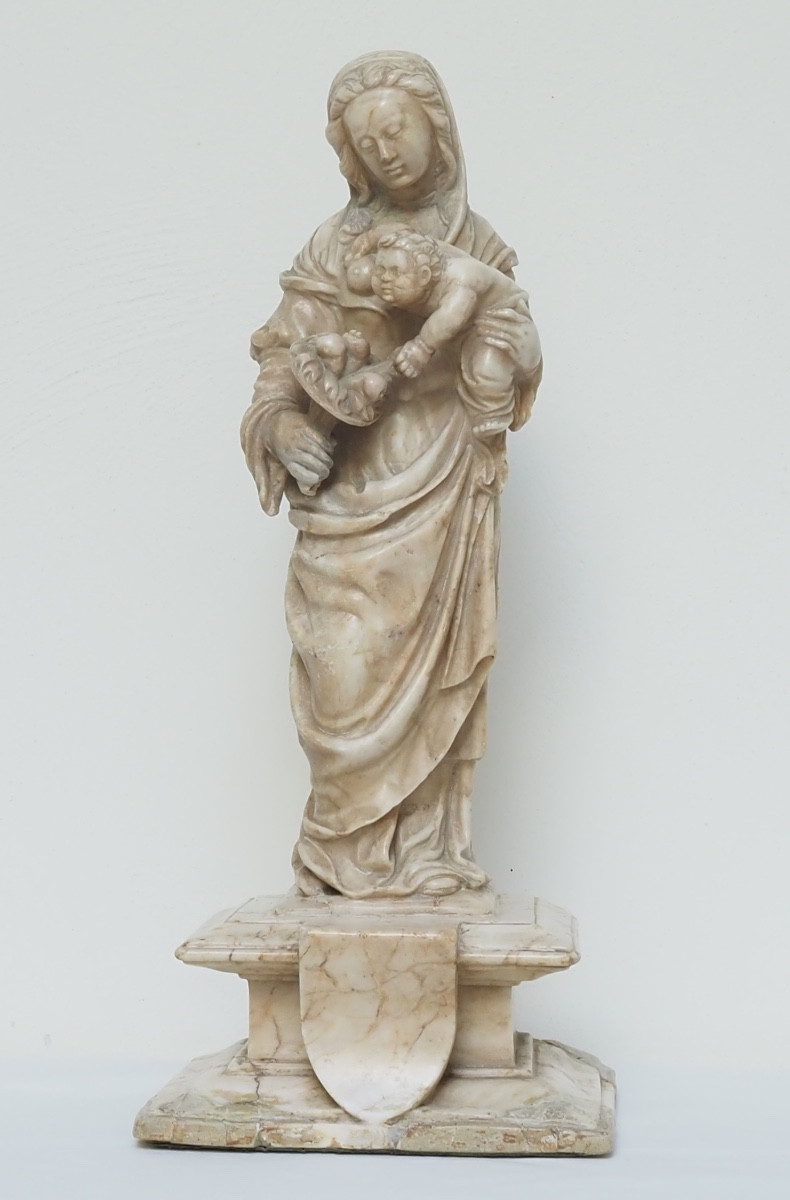
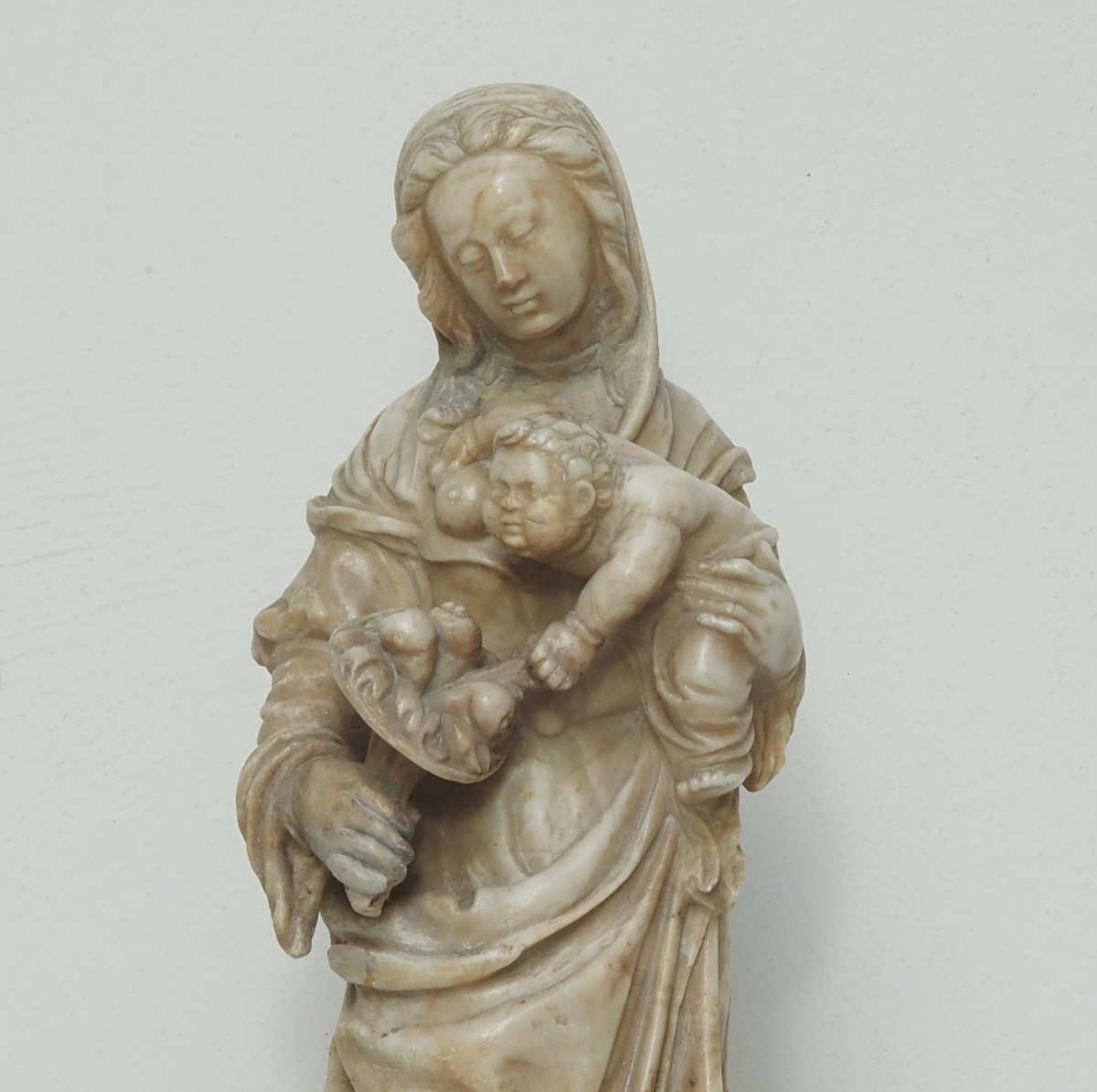
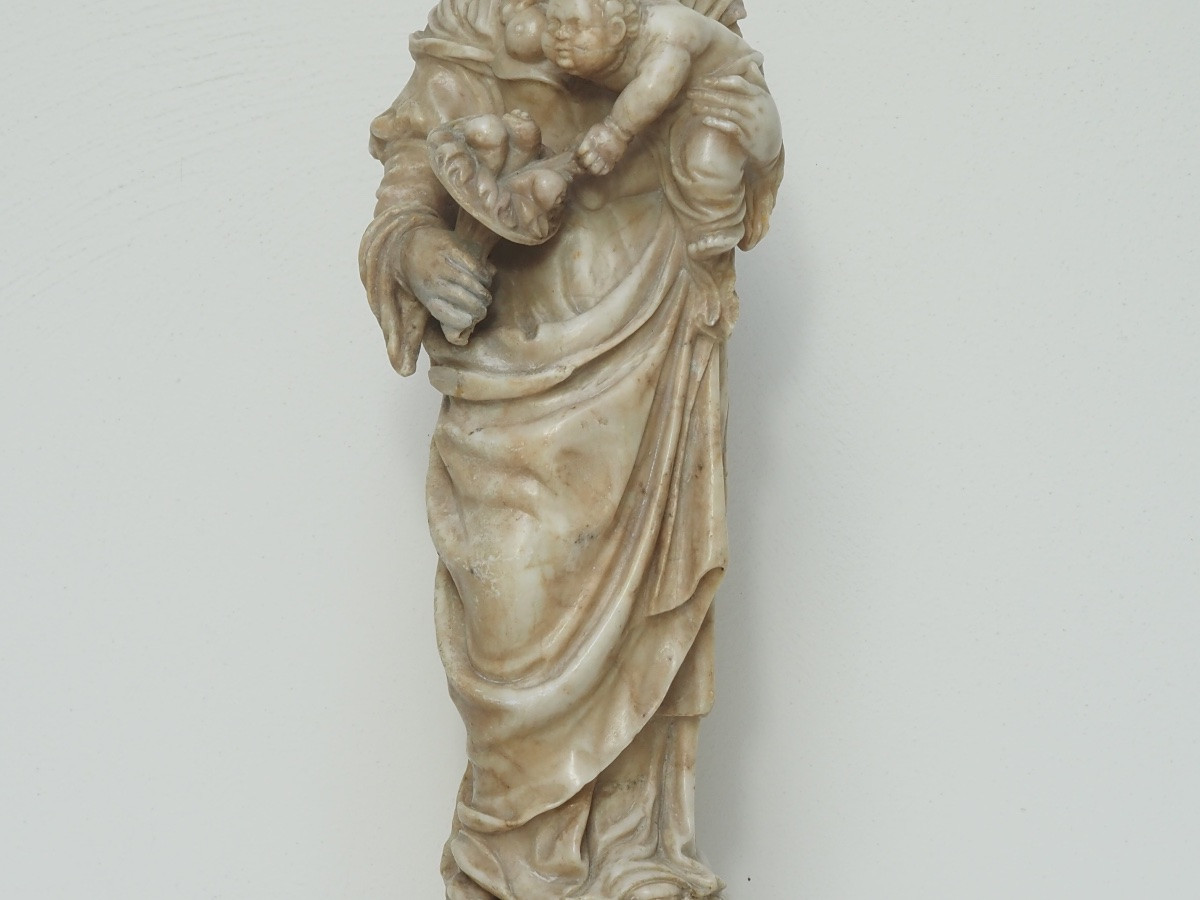
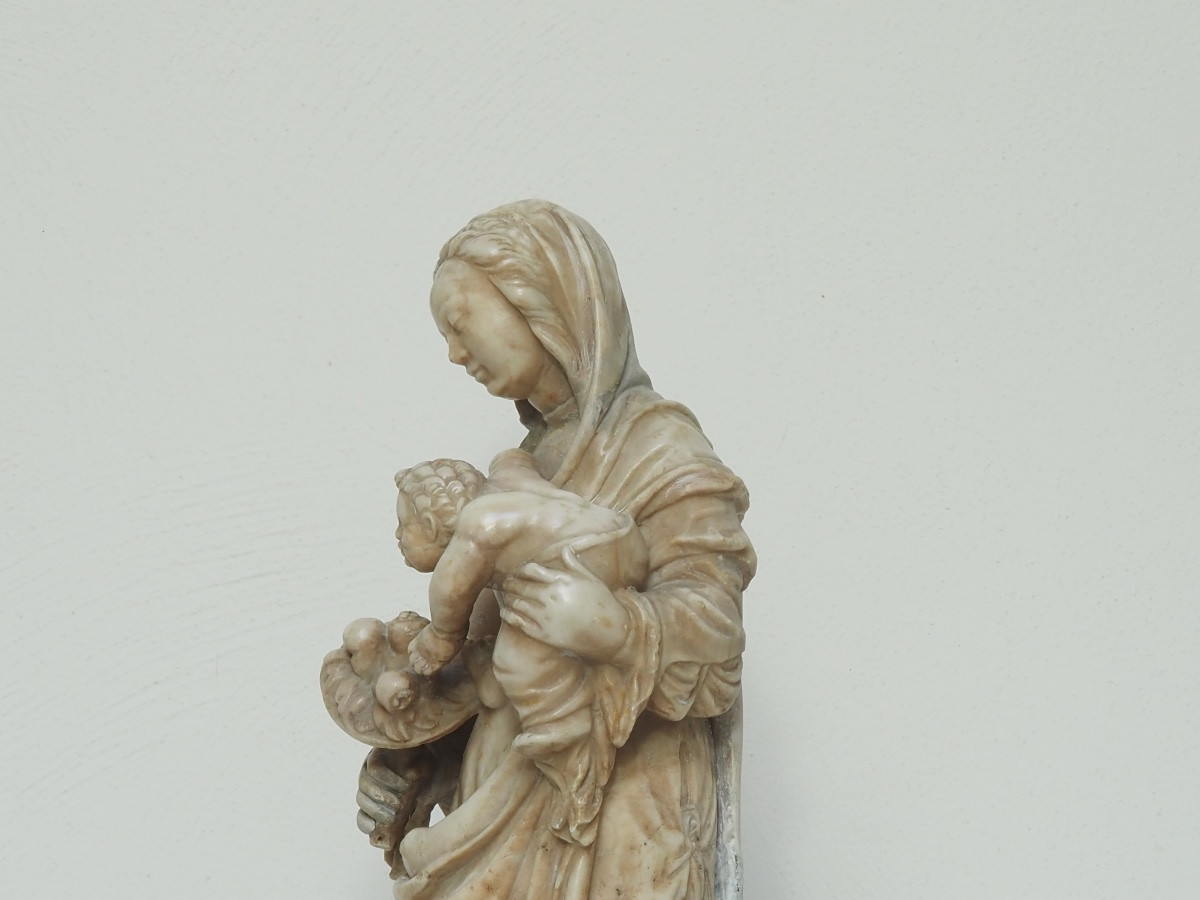
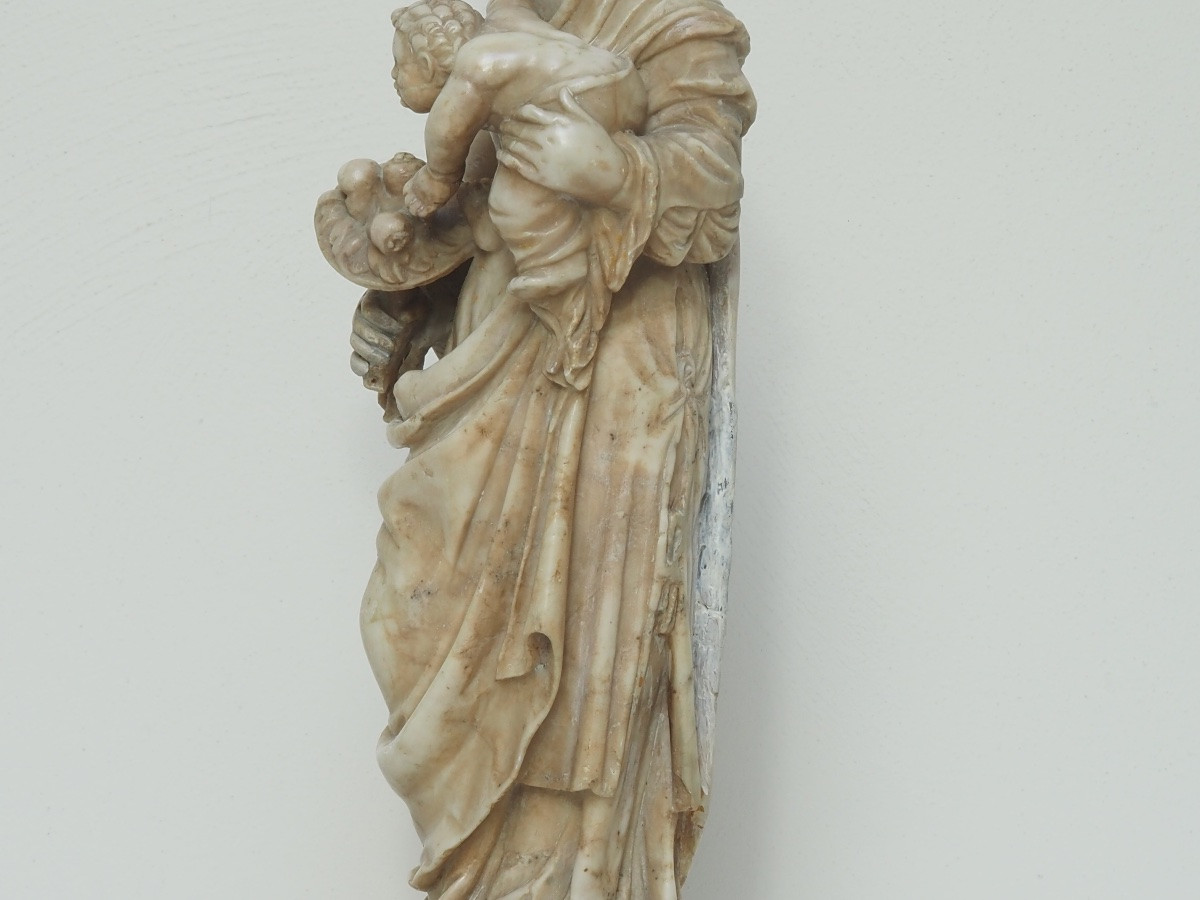
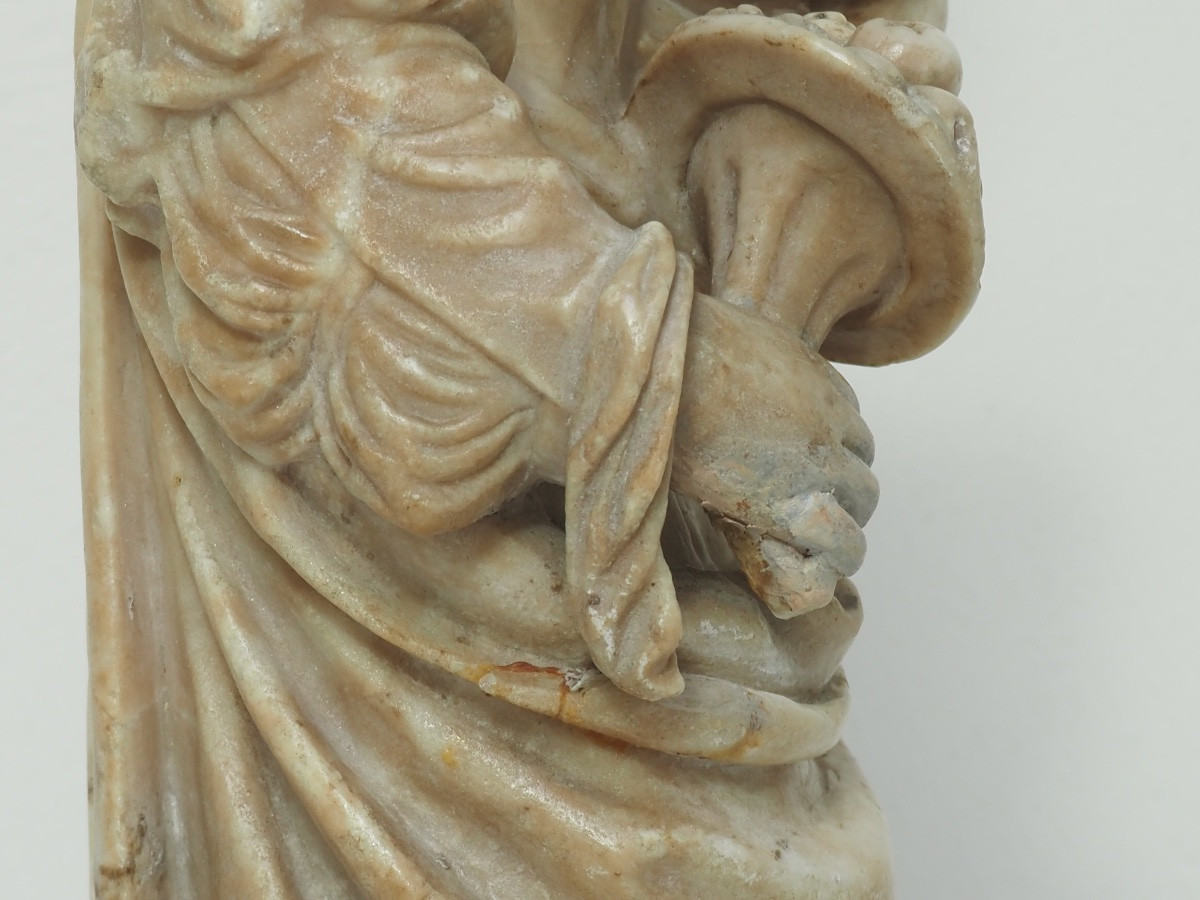
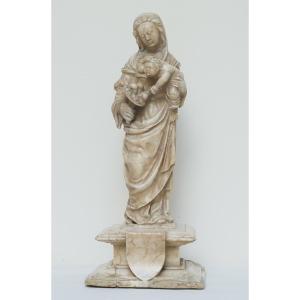
This alabaster sculpture depicts a standing Madonna holding the Christ Child on her left arm. In her right hand, she holds a cornucopia, a symbol of fertility and divine providence. The Christ Child is rendered in a lively and expressive manner, reaching with his left hand toward the fruits in the cornucopia, while his right hand extends toward the partially exposed breast of Mary. This gesture refers to the iconographic motif of the nursing Virgin (Maria lactans), in which nourishment from the mother’s breast symbolizes both spiritual and physical sustenance. The sculpture thus conveys not only maternal tenderness but also profound theological symbolism surrounding Mary as the nourisher of Christ and, more broadly, of the faithful.
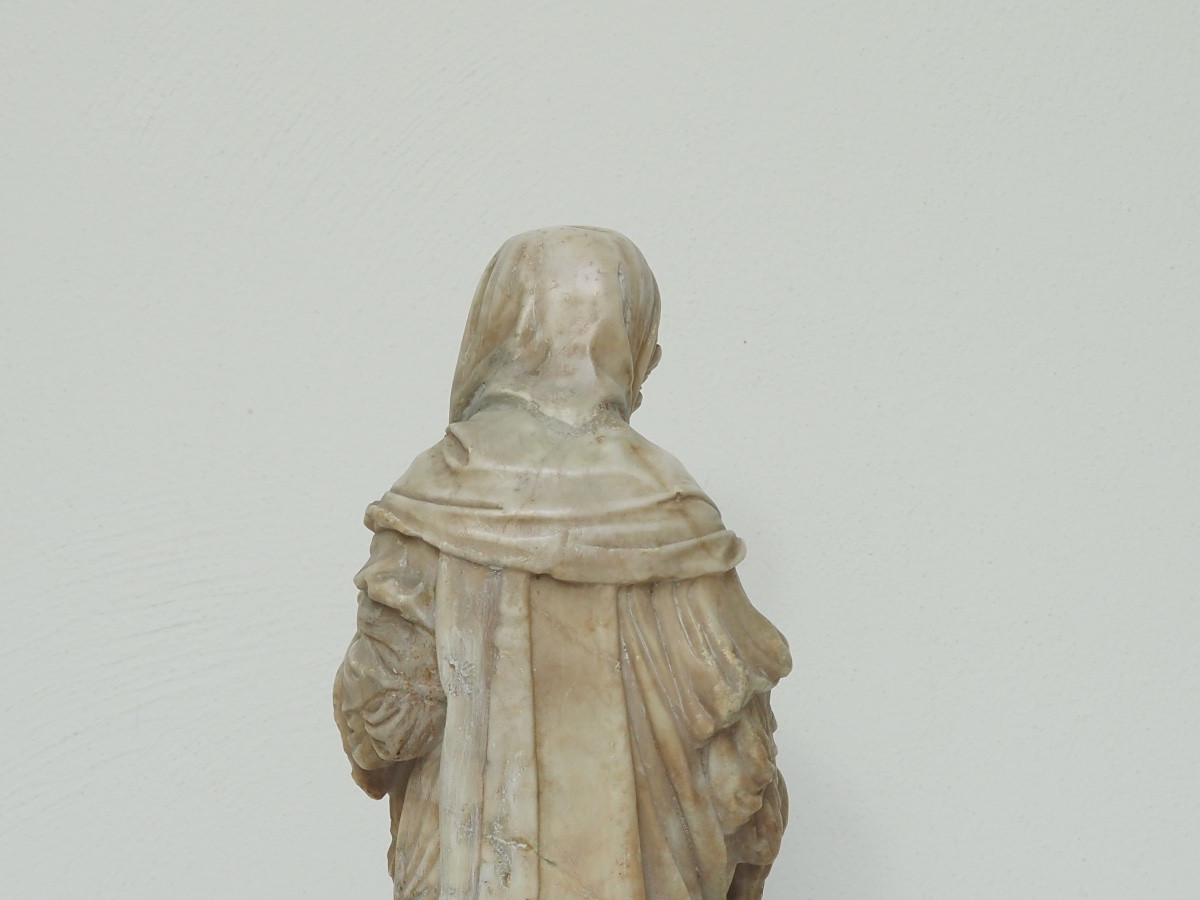
The Madonna is veiled and dressed in a richly draped garment, the fabric falling in soft, flowing folds over her body. The handling of the drapery is refined yet retains a degree of stylization characteristic of the transitional period between the late Gothic and the Renaissance. The cloth follows the contours of the body in an elegant manner without pronounced accentuation, thereby contributing to the sculpture’s sacred and restrained appearance.
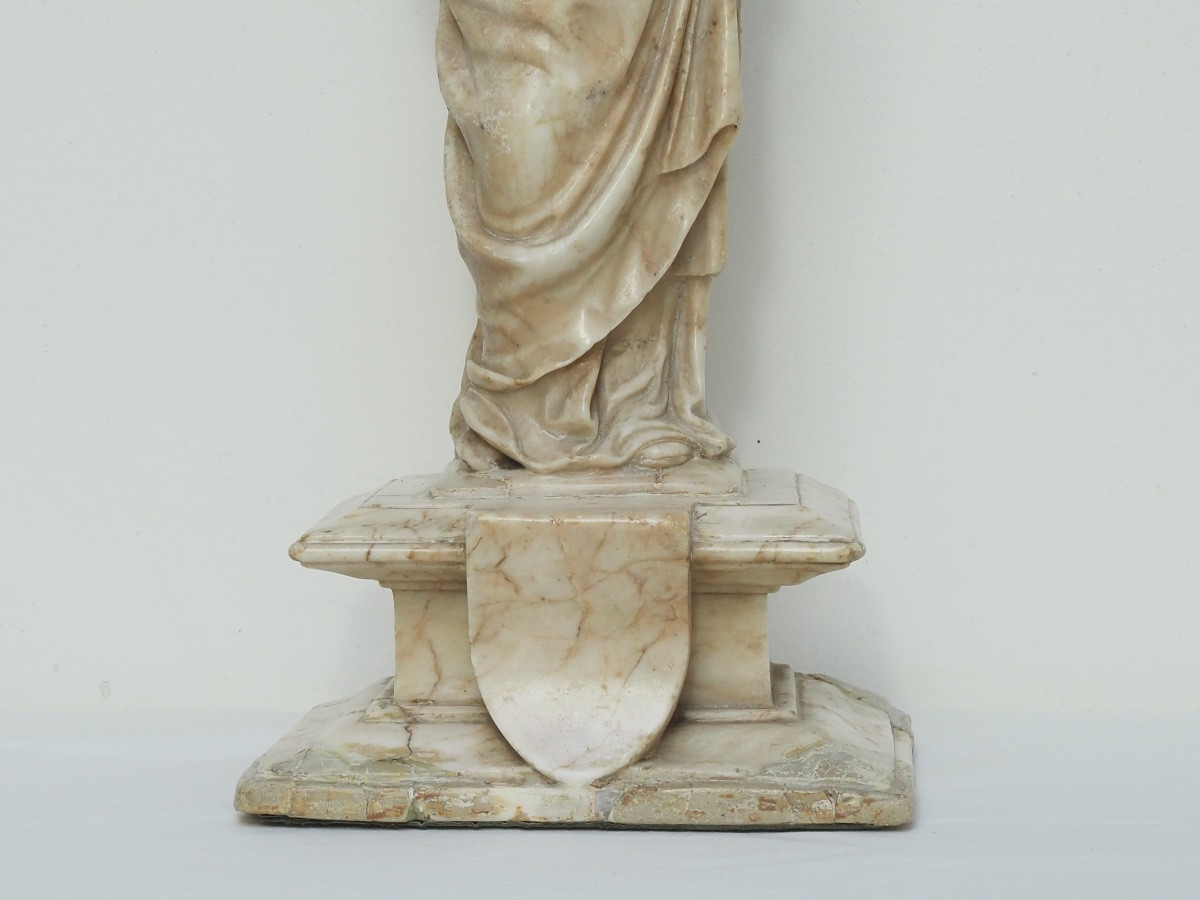
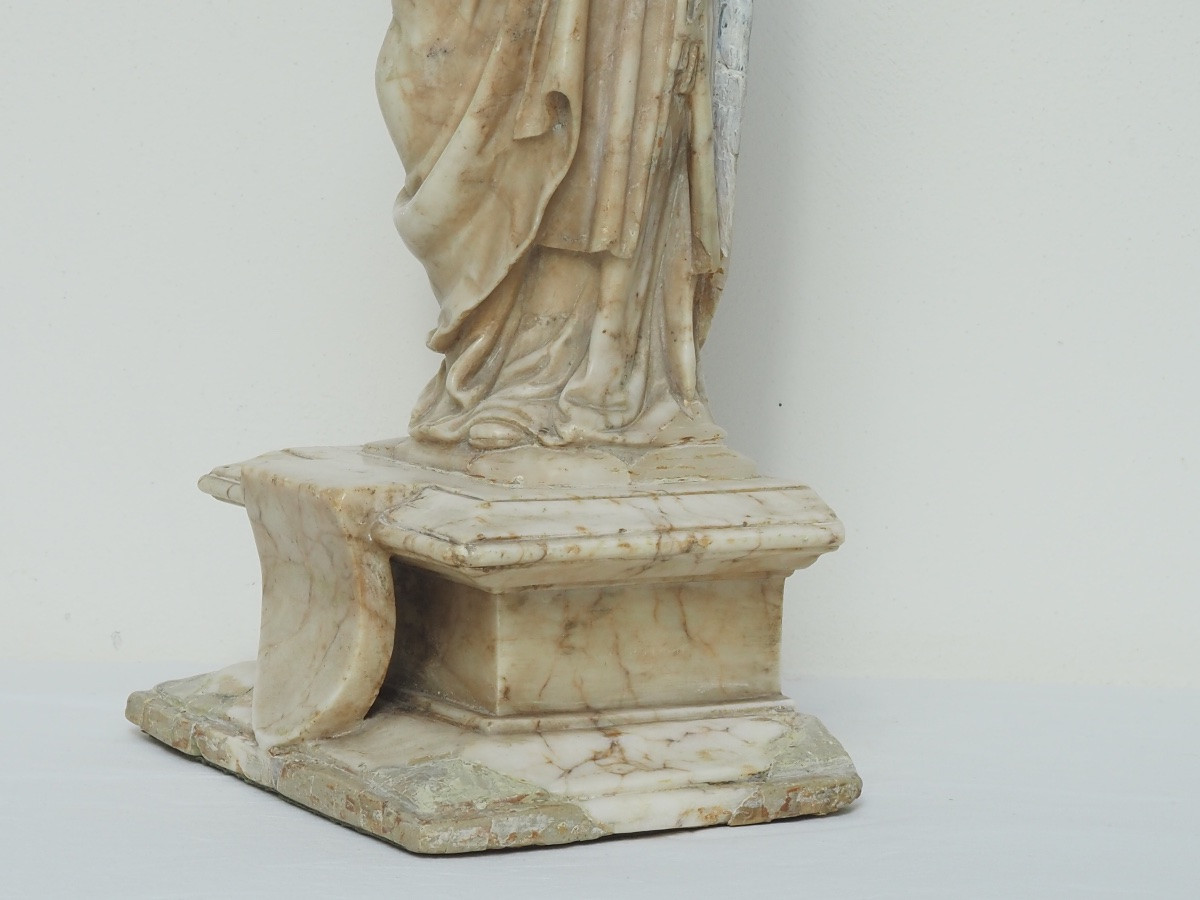
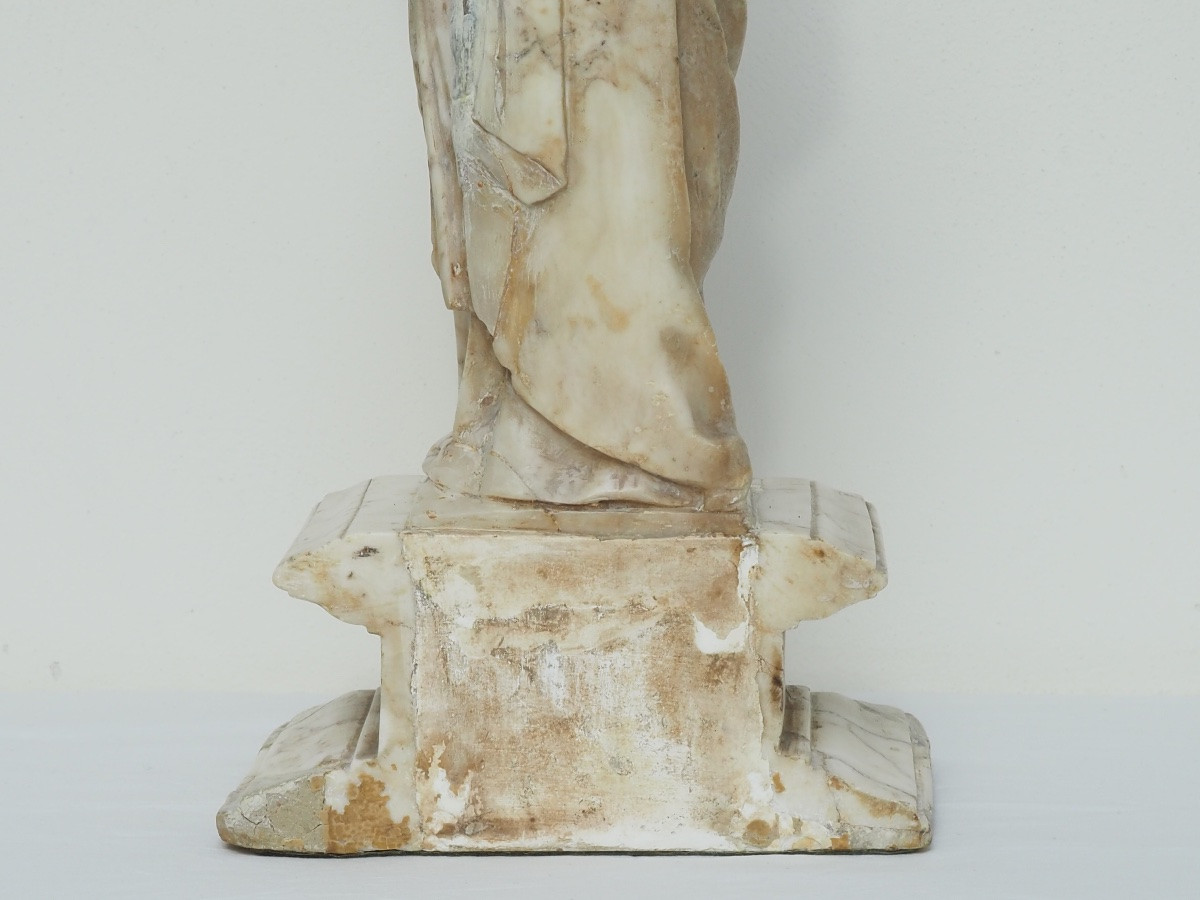
The ensemble rests on a moulded base, featuring a shield-shaped cartouche on the front. This shield was likely intended to bear a family coat of arms. It is possible that the owner never had the arms applied, or that they were originally painted and that the polychromy has since worn away over time. In any case, the presence of this heraldic shield indicates that the sculpture functioned within a private chapel or as part of a small retable.
Stylistically, the work relates closely to sculpture produced in Mechelen in the mid-16th century. In particular, it shows affinities with the oeuvre of Jan Mone (active c. 1520–1540), a sculptor who played a key role in introducing Renaissance forms into the Southern Netherlands and who is renowned for his finely carved alabaster sculptures, his classical approach to proportions, and the harmonious, serene compositions of his figures. His style resonated strongly in Mechelen workshops specializing in alabaster devotional figures and retables.
However, given the dating around 1575, the sculpture described here cannot be attributed directly to Jan Mone, but may instead be associated with his pupil Jacques Dubroe(u)ck (1505–1584) or his workshop. Dubroe(u)ck, who was both an architect and a sculptor, is known for a statue of Saint Bartholomew in the Church of St Waltrude in Mons (Belgium), which displays stylistic similarities to the present work, particularly in the treatment of the drapery. The soft facial features and restrained expression of the Madonna, as well as the dynamic relationship between mother and child in this sculpture, are consistent with this Southern Netherlandish tradition.
Condition: the sculpture shows evidence of several restorations, notably to the hand, neck, and back of the Madonna, as well as to the base. In several areas, old joins and small fills are visible. The sculpture has recently been professionally cleaned, and earlier restorations have been examined.
Period: 16th century
Style: Renaissance, Louis 13th
Condition: Fully restored
Material: Alabaster
Height: 38 cm.
Reference (ID): 1691024
Availability: In stock