THIS OBJECT WAS SOLD
Miniature Portrait Of A Cleric, Anonymous, Circa 1700, Possibly Thomas à Kempis




Miniature Portrait of a Cleric
Anonymous, circa 1700
Gouache on copper
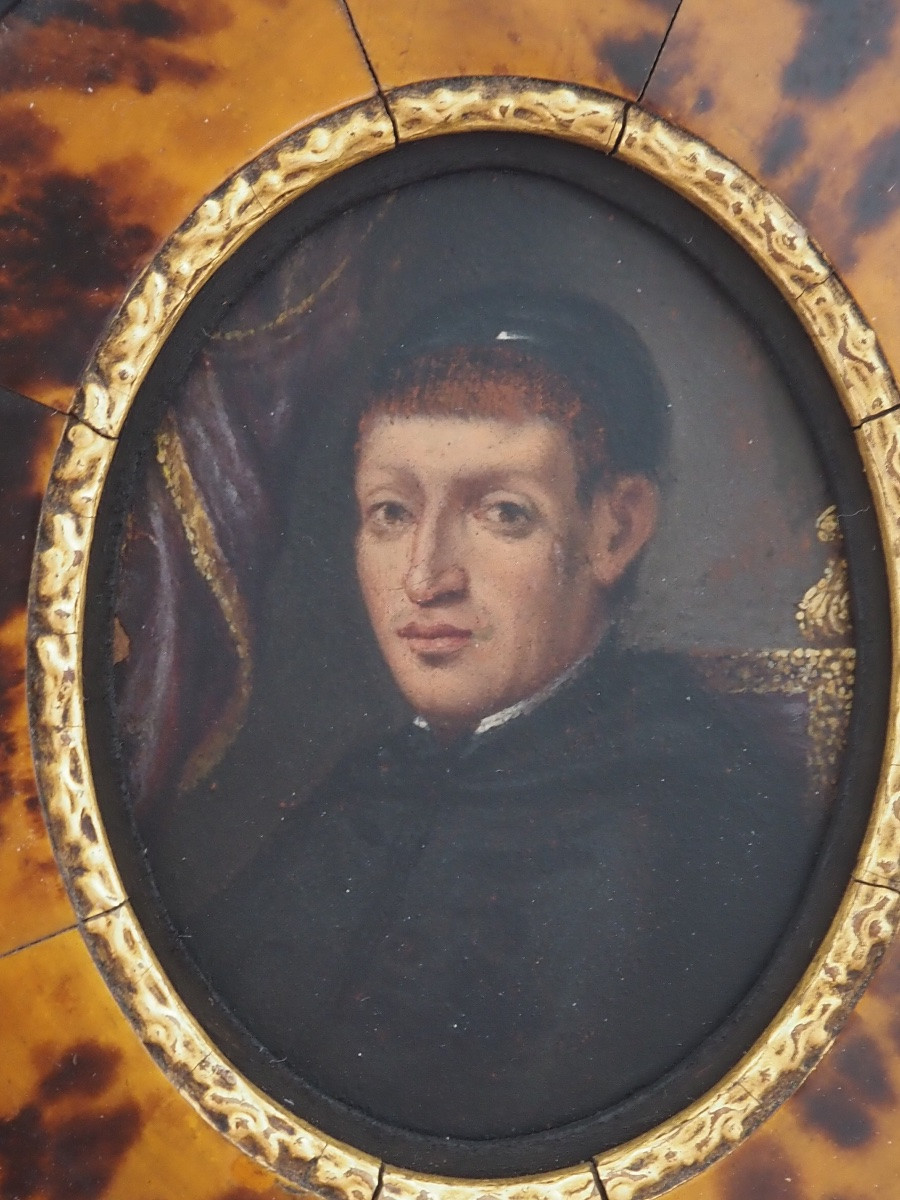
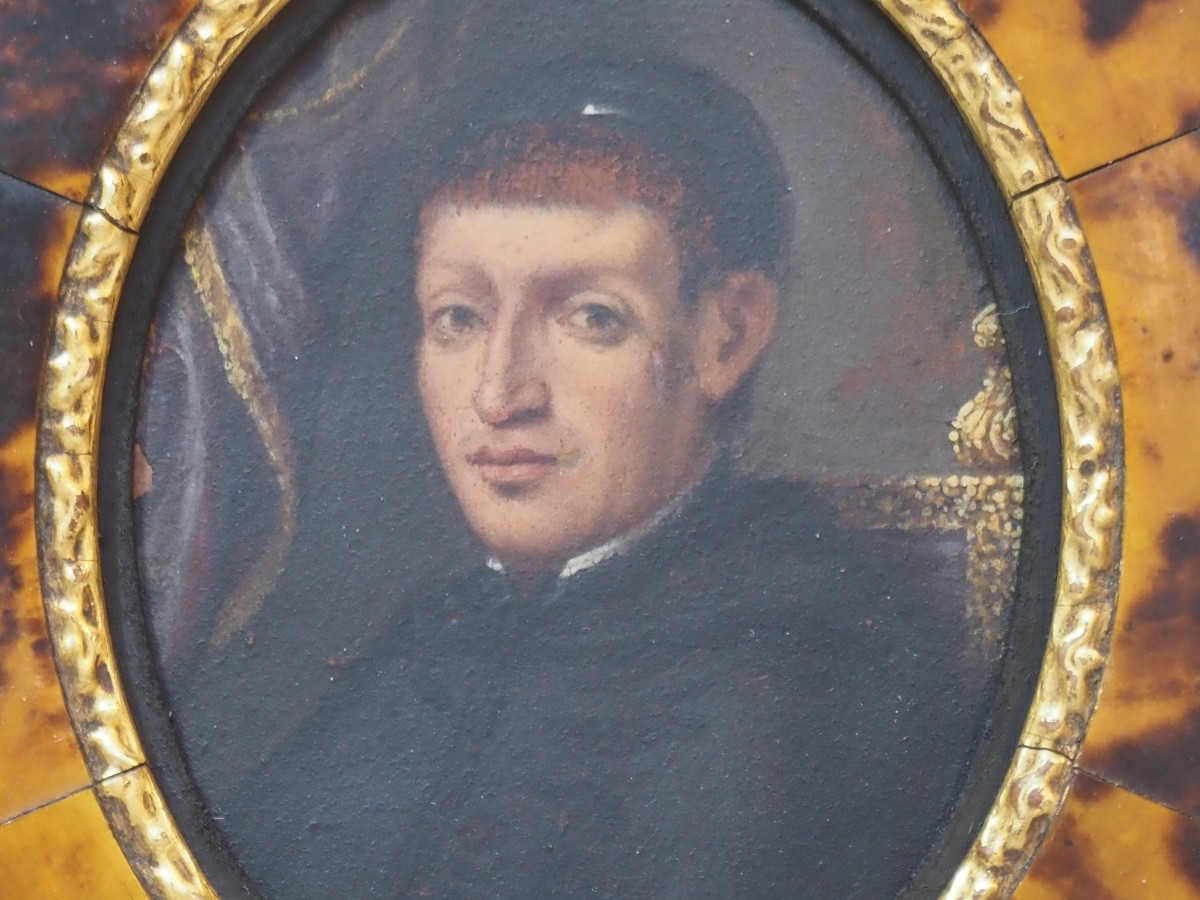
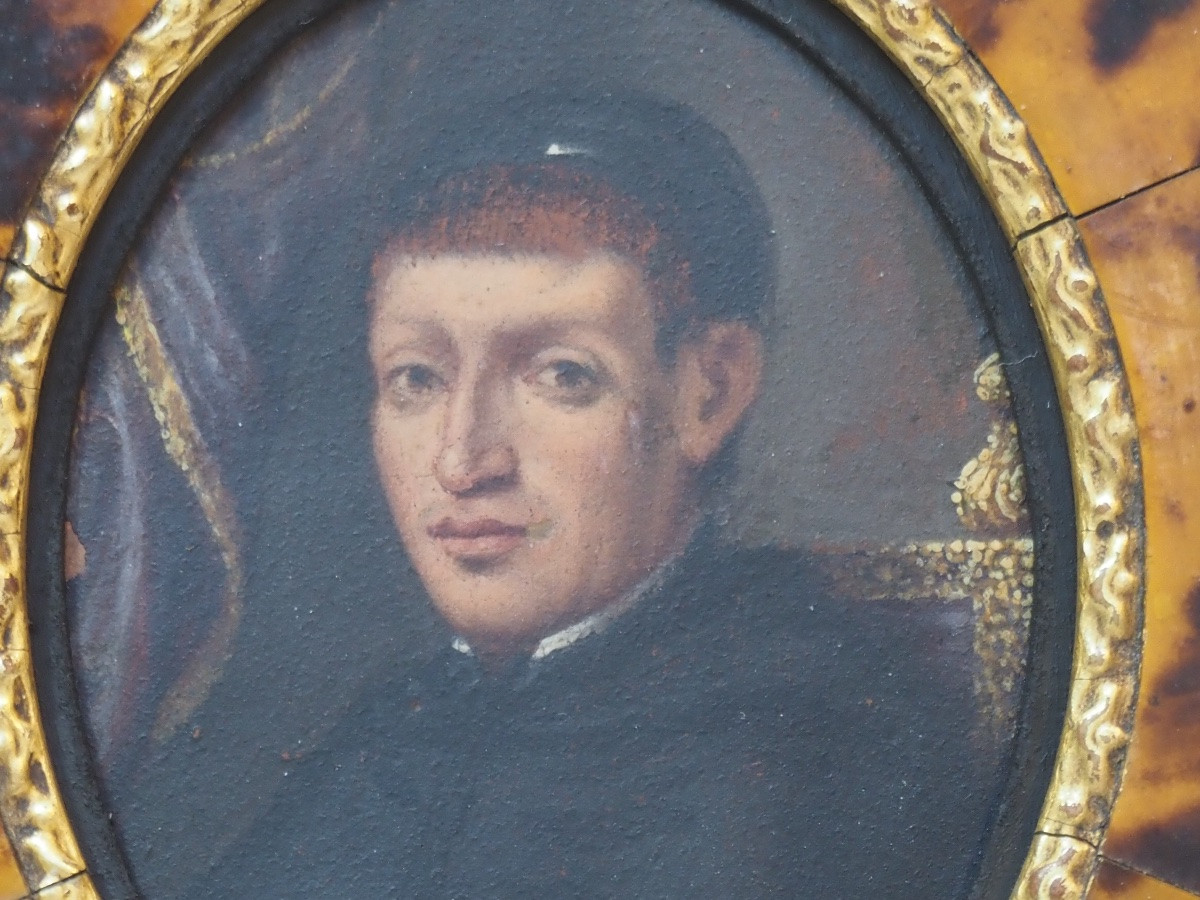
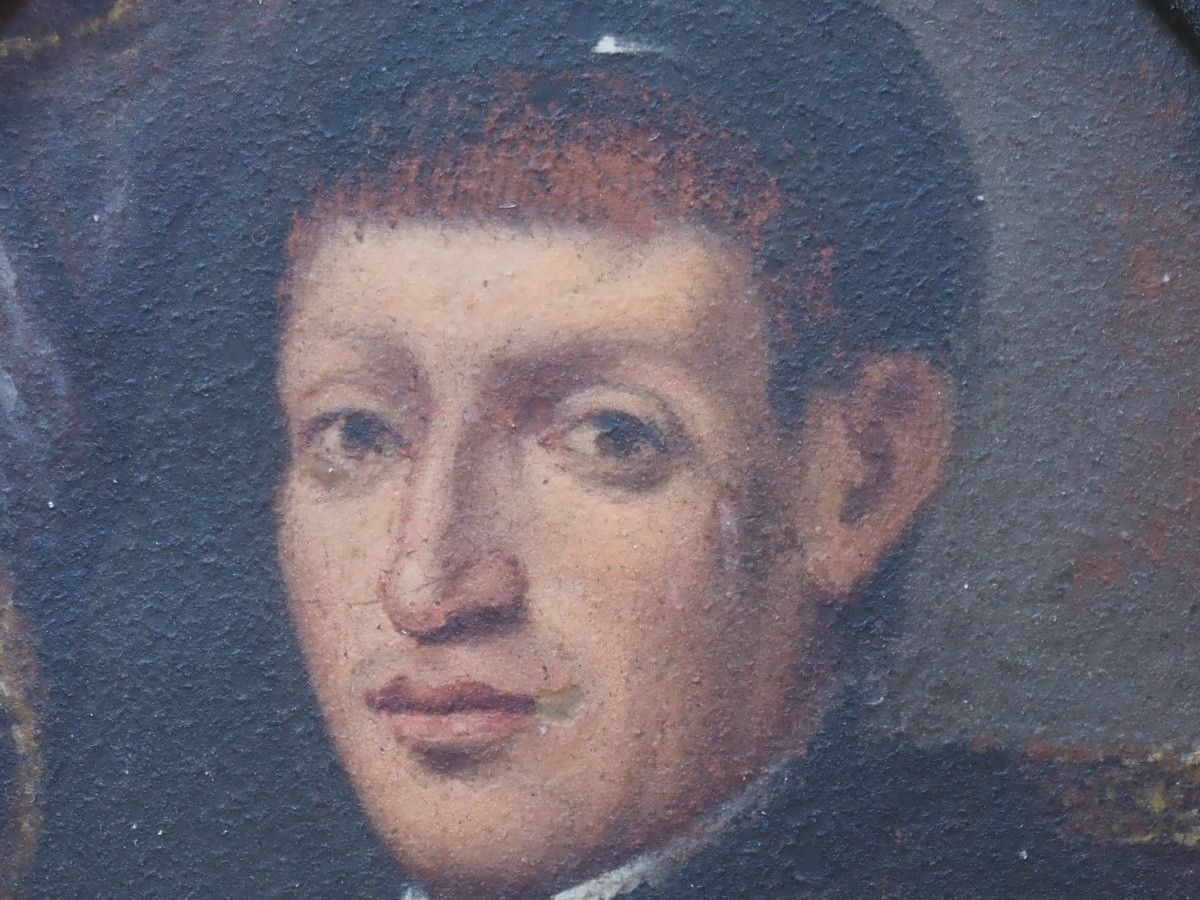
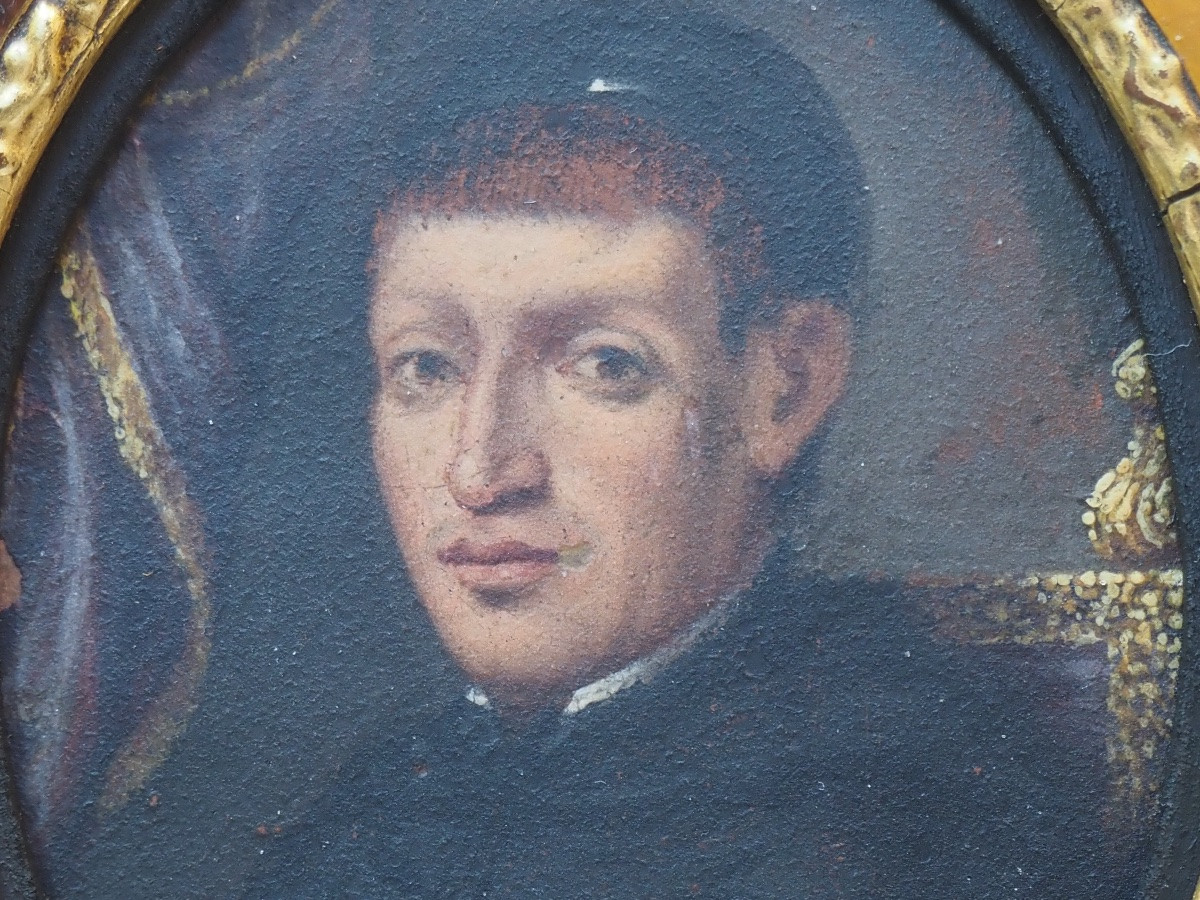
A finely painted miniature depicting a solemn cleric dressed in a black habit and wearing a simple black cap, with a narrow glimpse of a white undergarment visible at the neckline. The combination of black over white suggests an Augustinian canon rather than a secular priest. The sitter’s calm, introspective expression and the absence of worldly attributes evoke the ideal of humility and inner devotion characteristic of late medieval spirituality.
The figure most likely represents Thomas à Kempis (c. 1380–1471), the Augustinian canon and author of The Imitation of Christ. The modest attire, contemplative bearing, and devotional tone of the portrait correspond with later, idealised depictions of Thomas à Kempis, whose writings inspired renewed piety in the seventeenth and early eighteenth centuries. While the identification cannot be confirmed, the association remains plausible. (See, for comparison, two earlier portraits of Thomas à Kempis at the end of the image gallery).
The dating of this miniature to around 1700 is supported by several stylistic and technical features. The Renaissance-style chair on which the sitter rests, the draped curtain, a motif characteristic of seventeenth-century Dutch portraiture, and the use of copper as a support, all point to a production between the late seventeenth and early eighteenth centuries. Miniatures of this period were commonly painted on copper, whereas ivory became the preferred material in the nineteenth century.
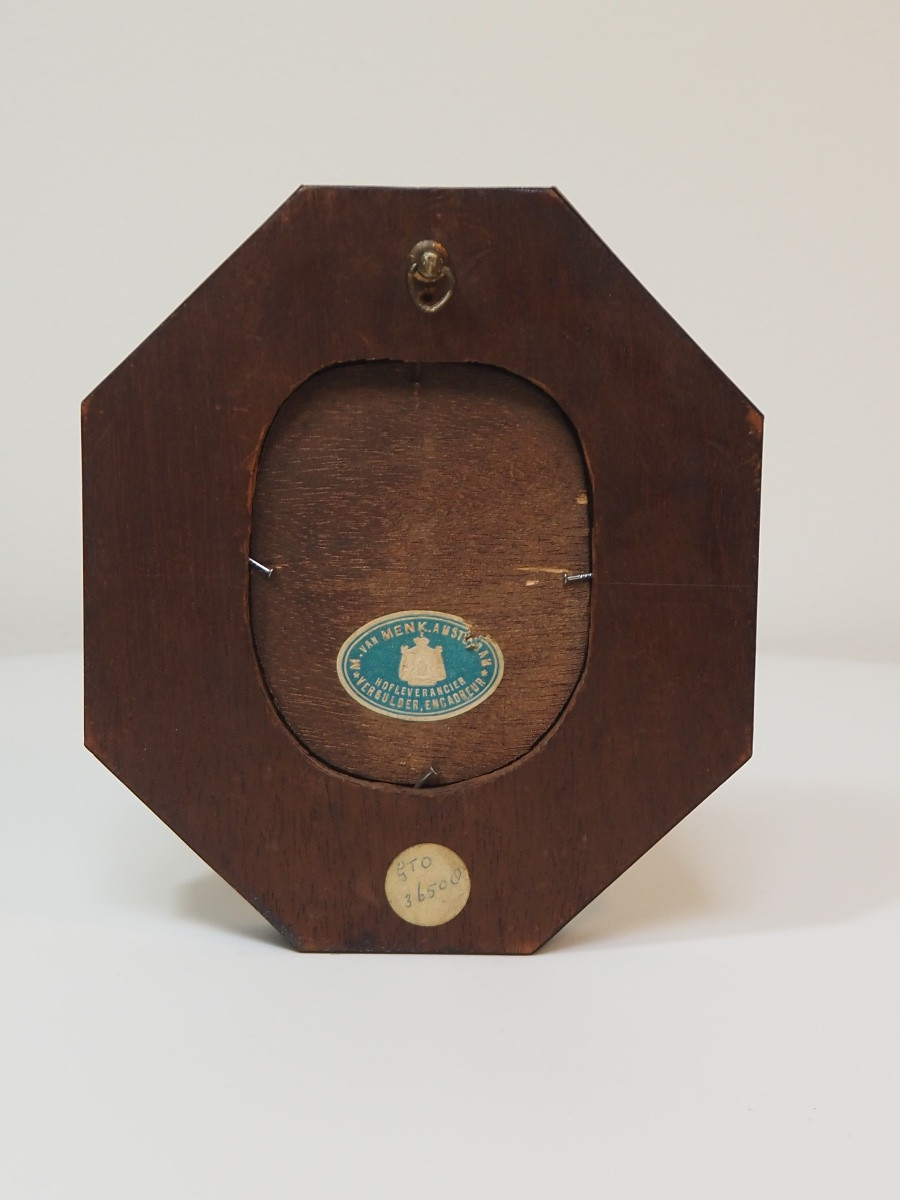
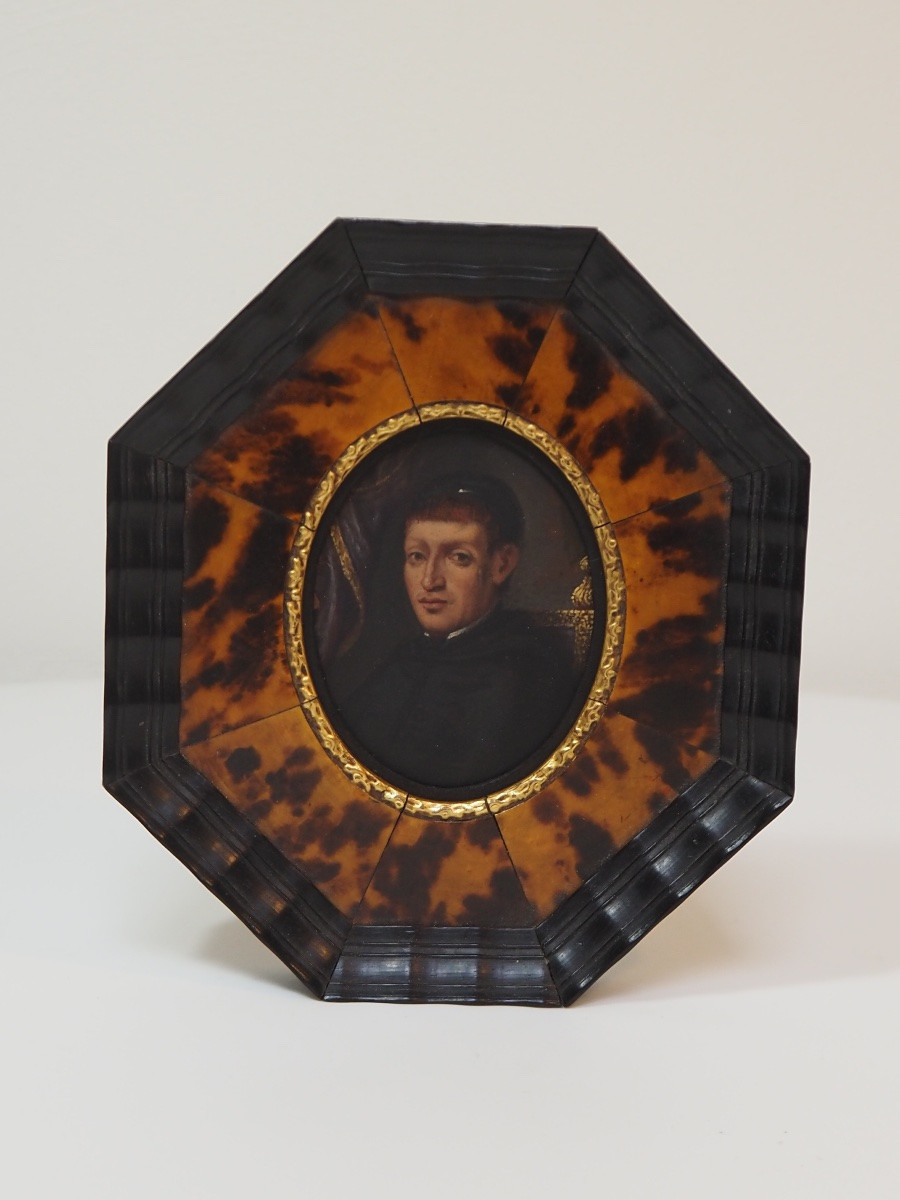
Set in a later octagonal frame
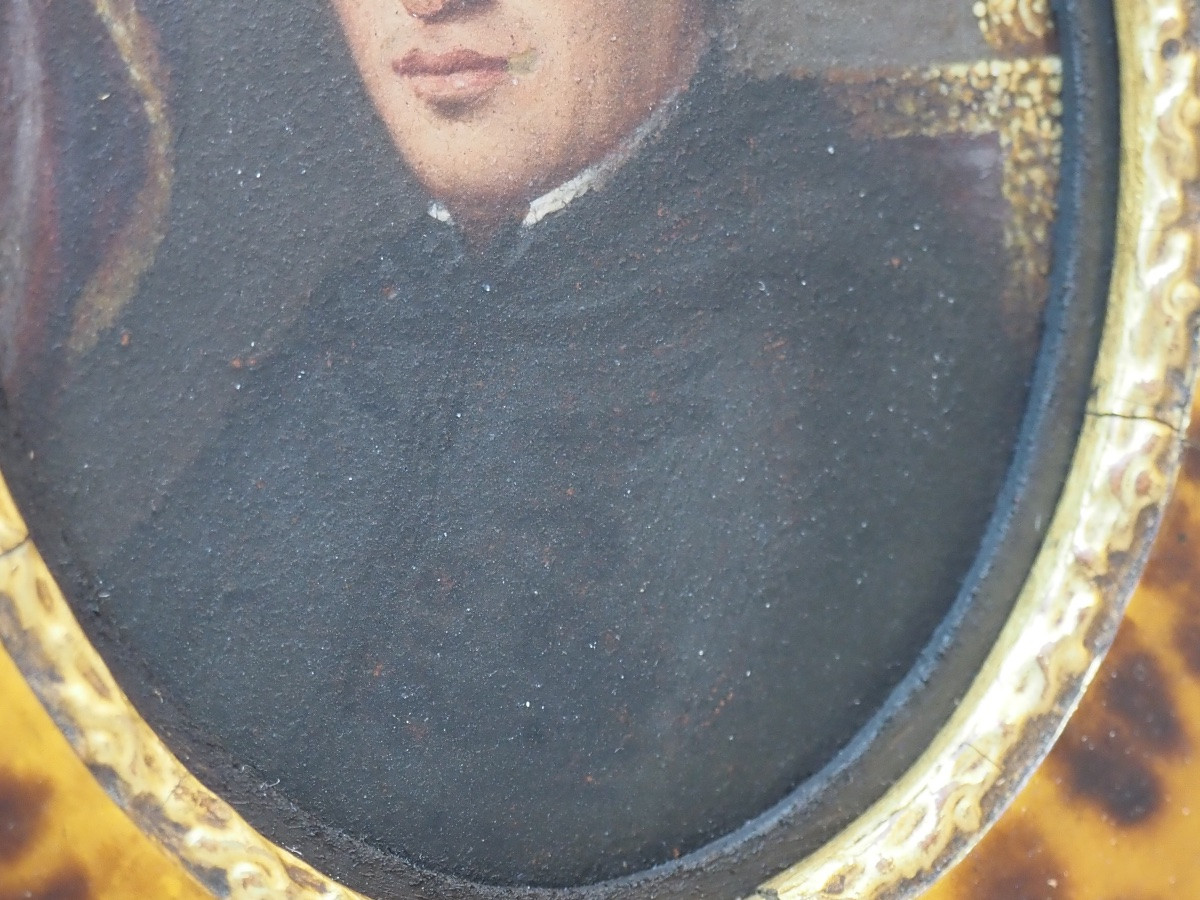
In good condition for its age, slight paint loss one the left side, some retouching
Anonymous, circa 1700
Gouache on copper
A finely painted miniature depicting a solemn cleric dressed in a black habit and wearing a simple black cap, with a narrow glimpse of a white undergarment visible at the neckline. The combination of black over white suggests an Augustinian canon rather than a secular priest. The sitter’s calm, introspective expression and the absence of worldly attributes evoke the ideal of humility and inner devotion characteristic of late medieval spirituality.
The figure most likely represents Thomas à Kempis (c. 1380–1471), the Augustinian canon and author of The Imitation of Christ. The modest attire, contemplative bearing, and devotional tone of the portrait correspond with later, idealised depictions of Thomas à Kempis, whose writings inspired renewed piety in the seventeenth and early eighteenth centuries. While the identification cannot be confirmed, the association remains plausible. (See, for comparison, two earlier portraits of Thomas à Kempis at the end of the image gallery).
The dating of this miniature to around 1700 is supported by several stylistic and technical features. The Renaissance-style chair on which the sitter rests, the draped curtain, a motif characteristic of seventeenth-century Dutch portraiture, and the use of copper as a support, all point to a production between the late seventeenth and early eighteenth centuries. Miniatures of this period were commonly painted on copper, whereas ivory became the preferred material in the nineteenth century.
Set in a later octagonal frame
In good condition for its age, slight paint loss one the left side, some retouching
Explore similar pieces and discover your ideal find:
Miniatures