THIS OBJECT WAS SOLD
Stained Glass Window Bearing The Arms Of Charles-alexandre De Calonne, Louis XVI Period.
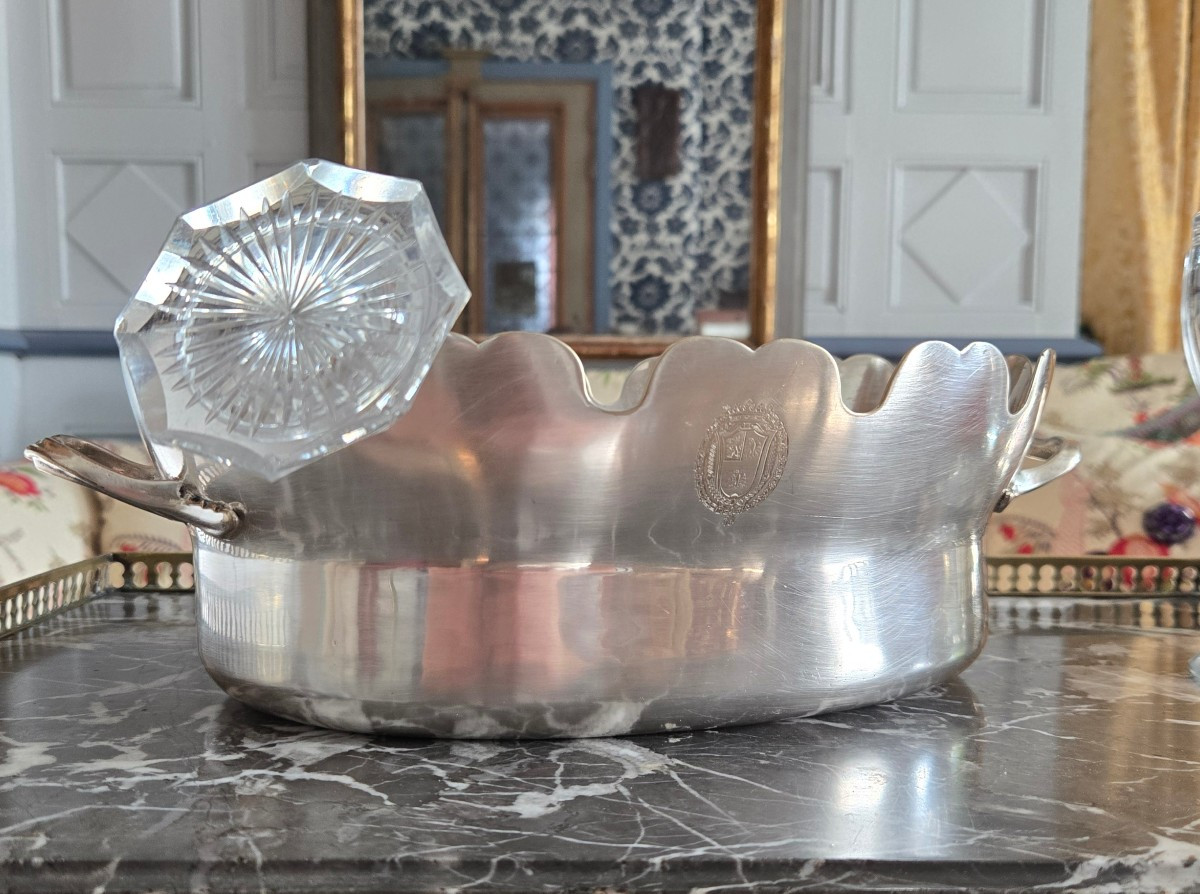

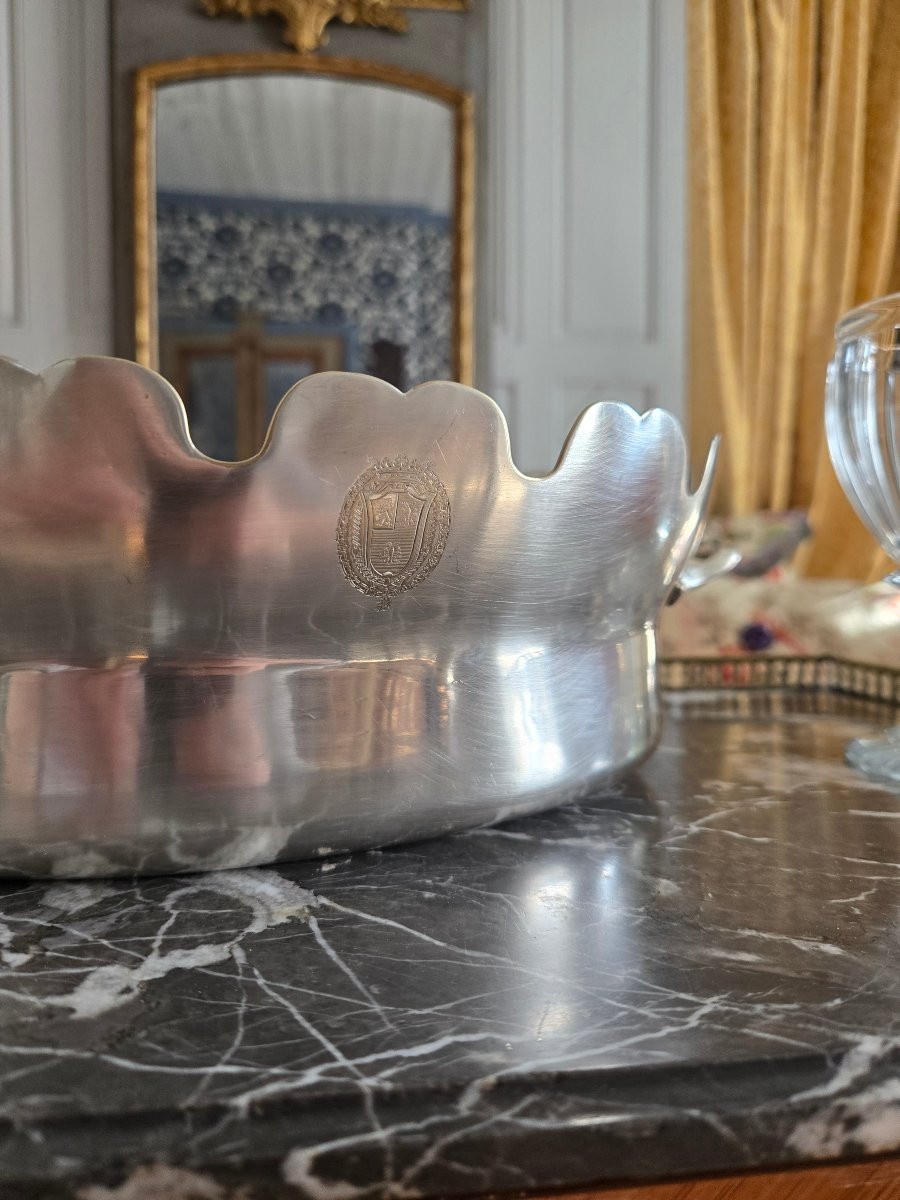

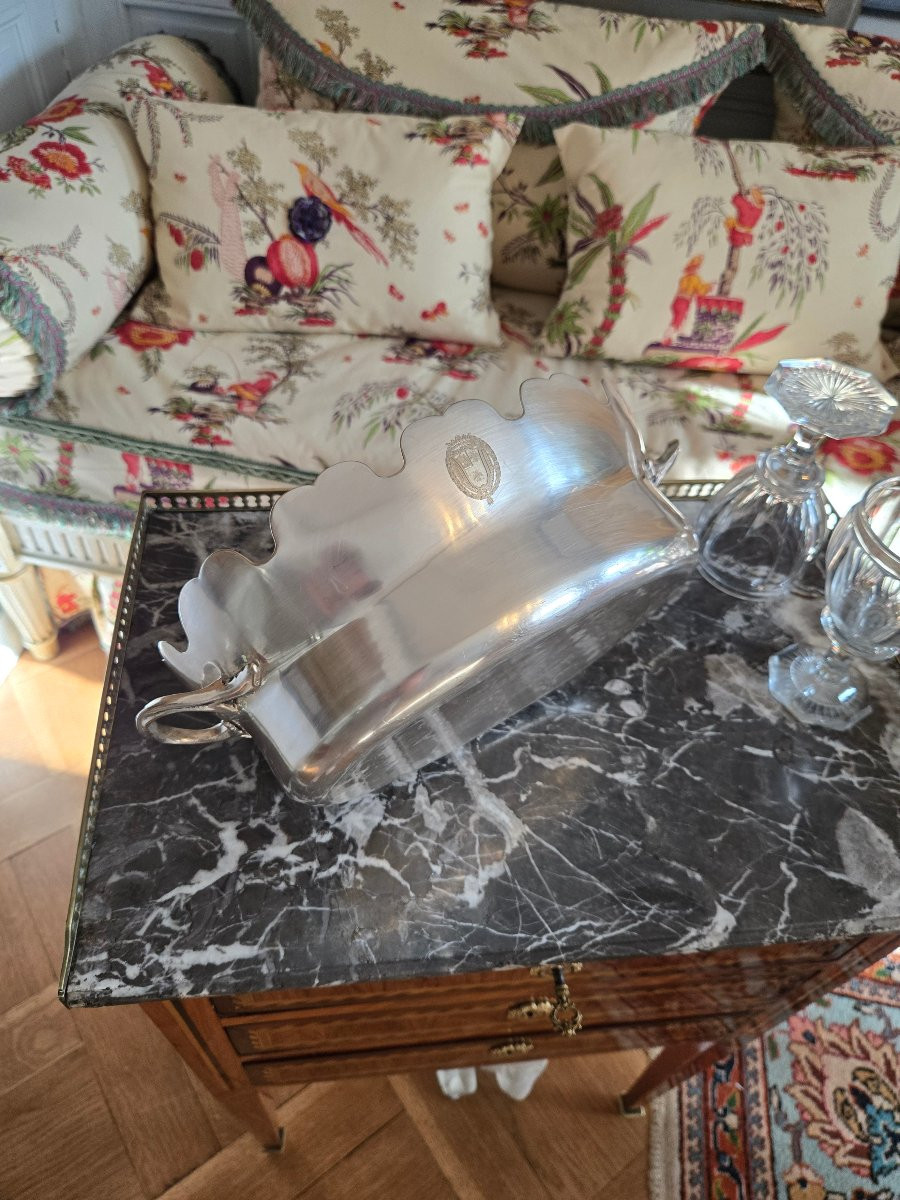
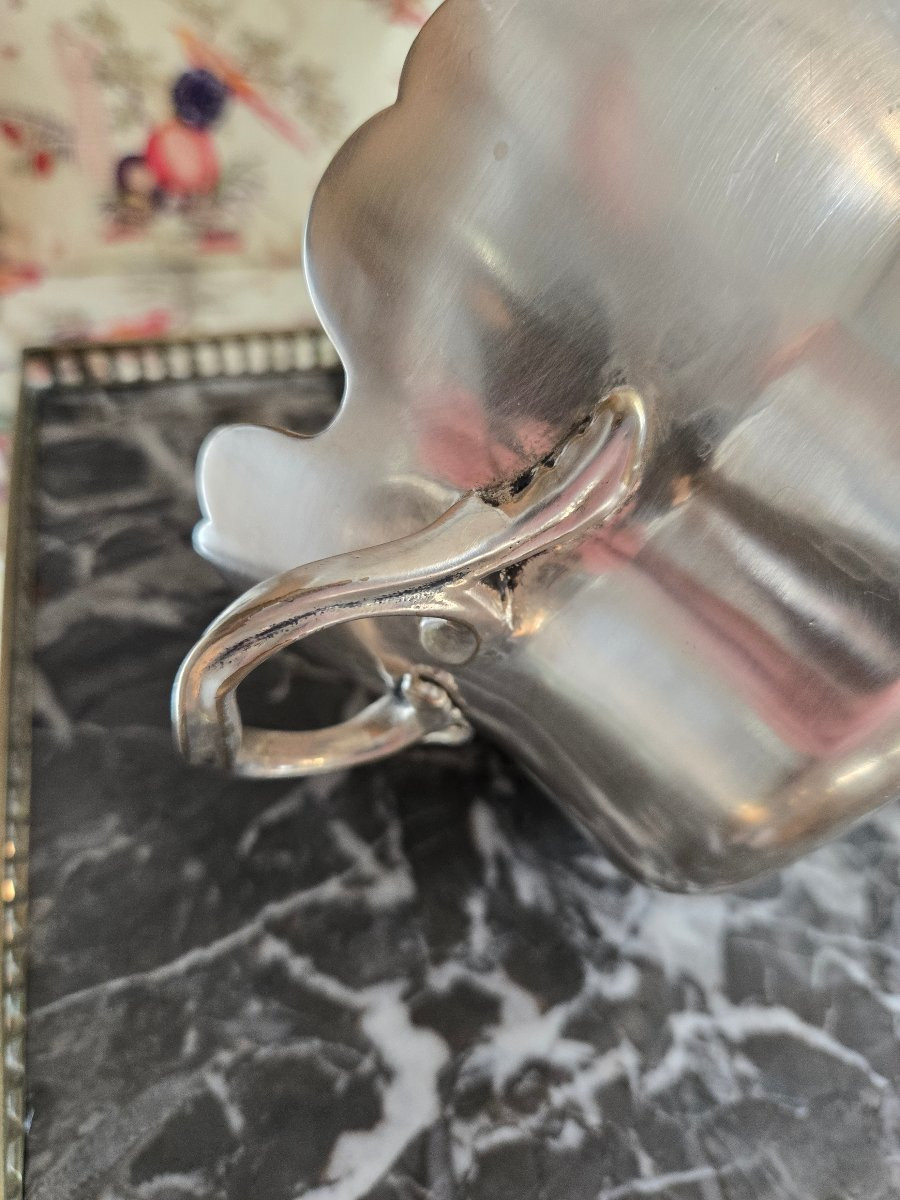
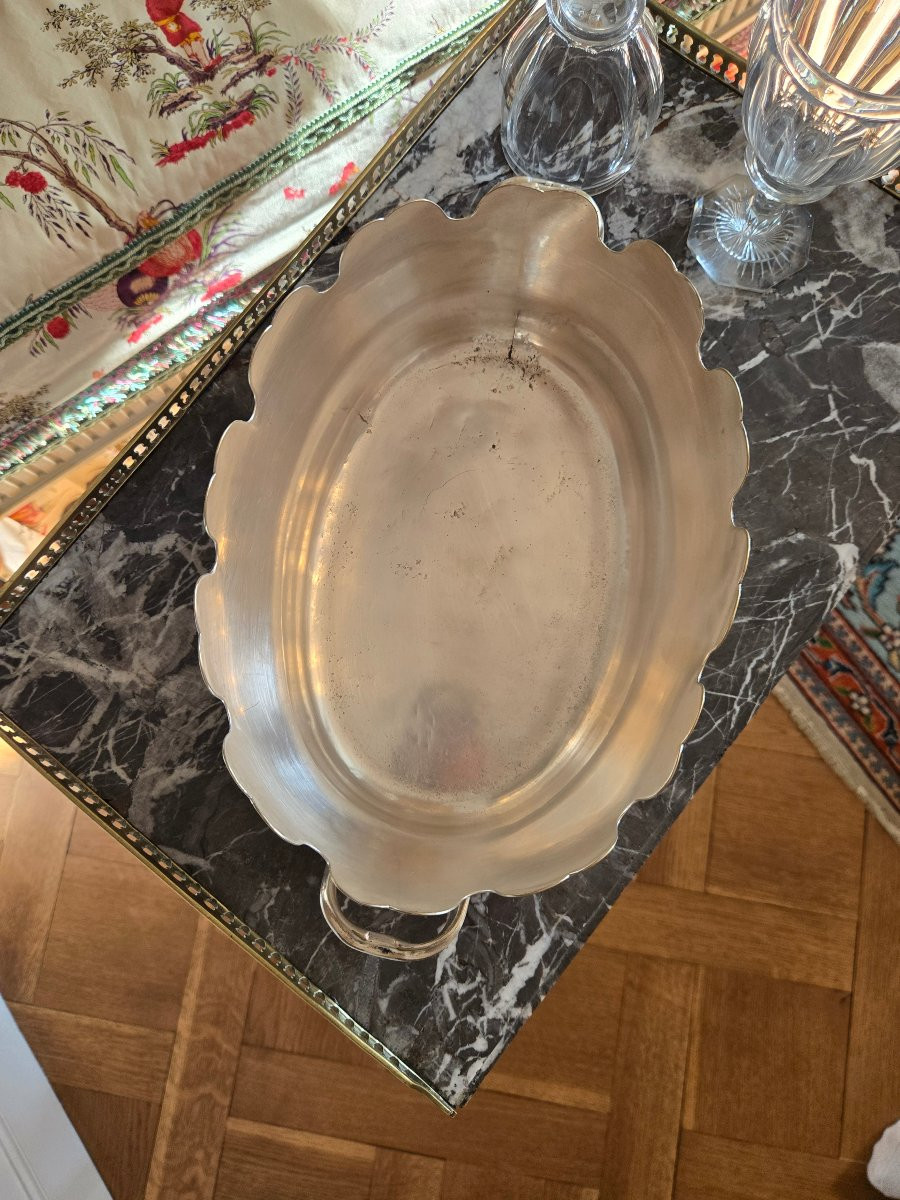

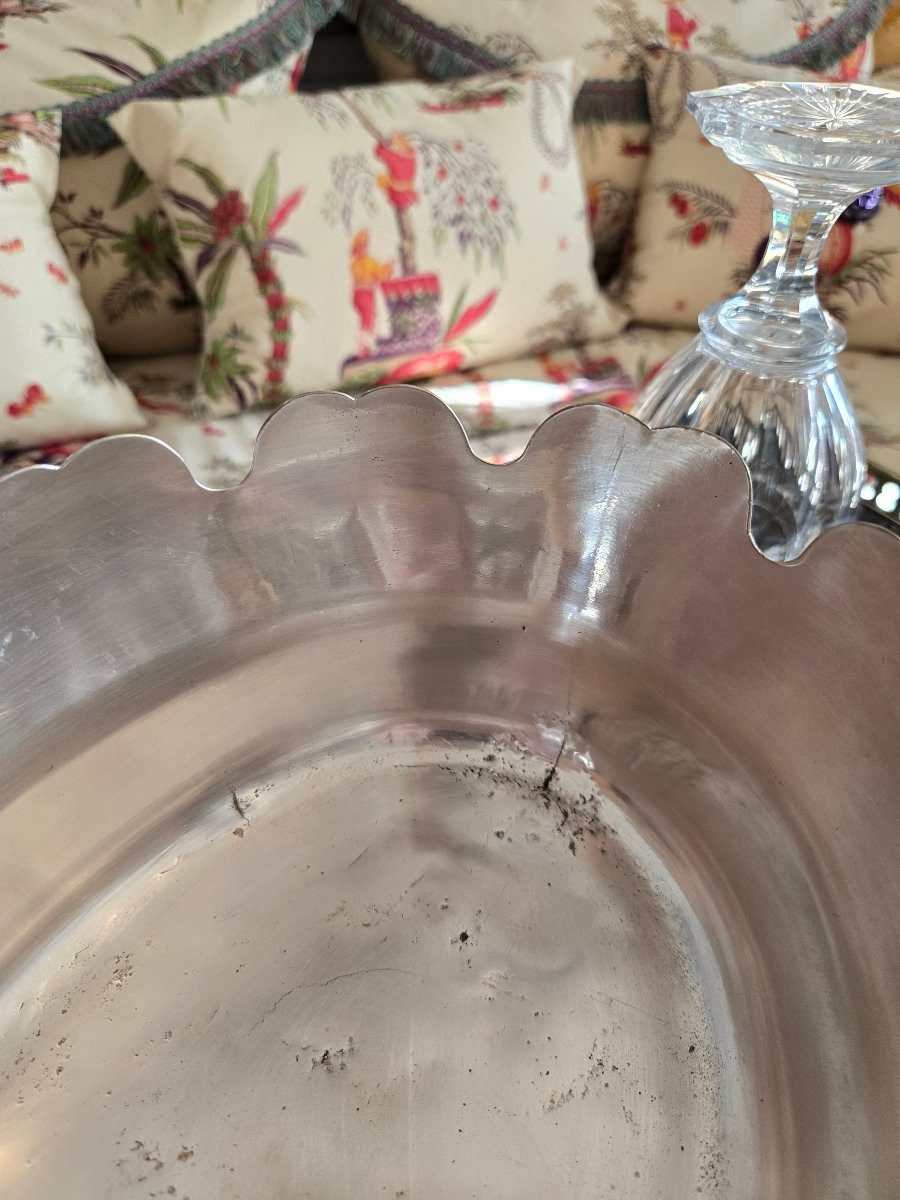
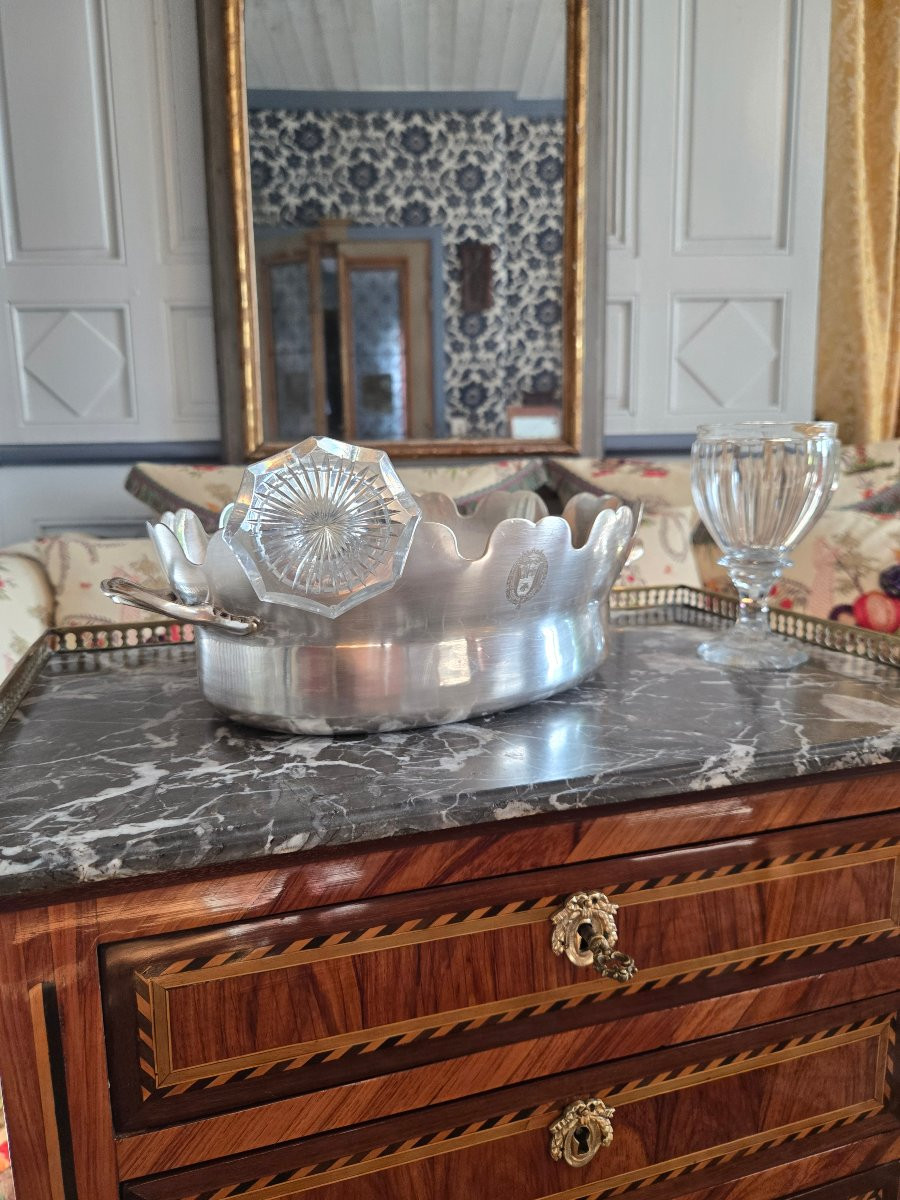
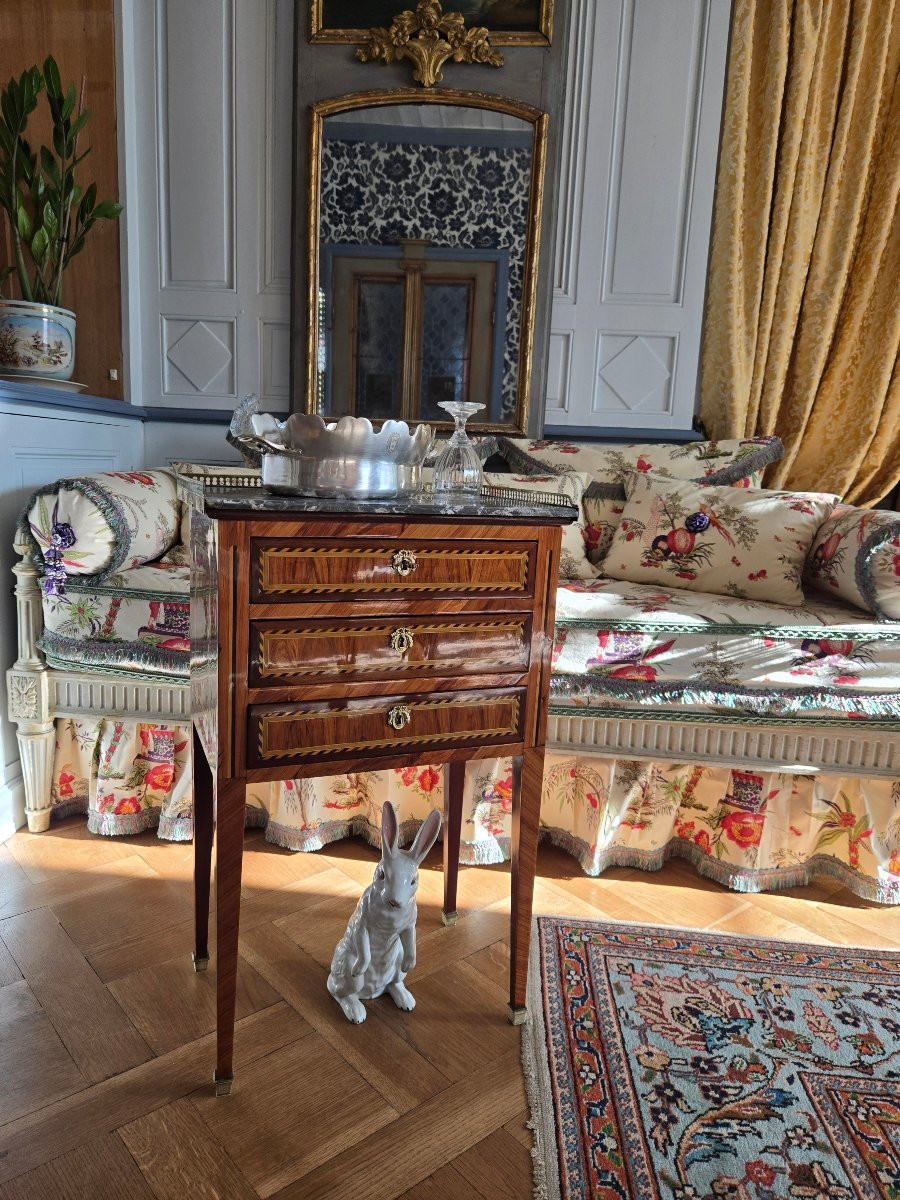
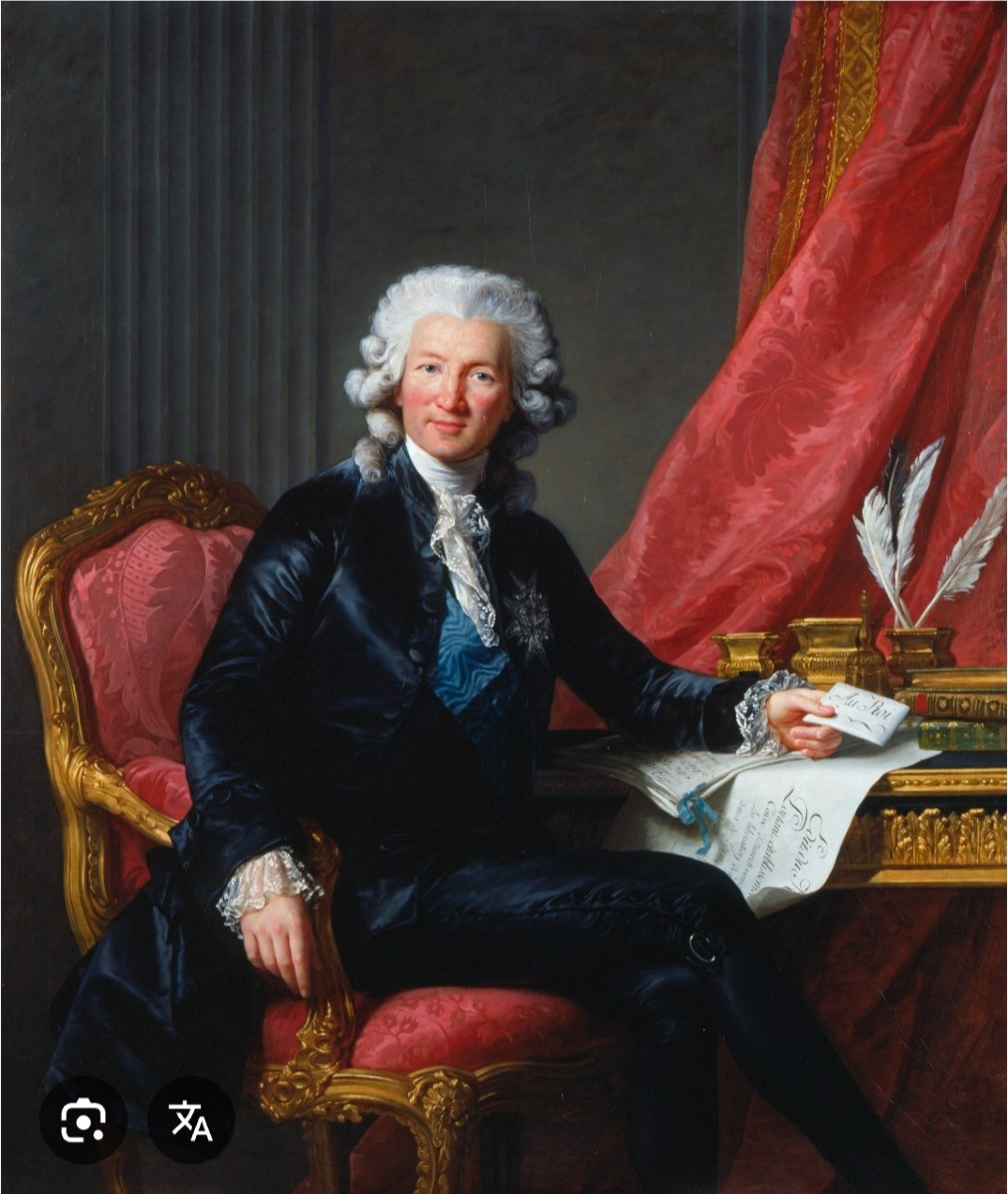
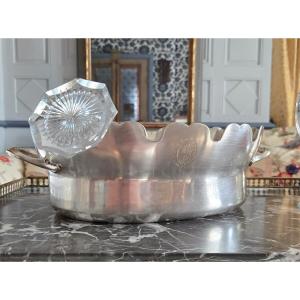


An interesting oval stained-glass window in silver-plated metal, made in France in the last quarter of the 18th century. It features a scalloped border with polylobed contours, typical of the decorative vocabulary of the late Louis XVI period, resting on a slightly recessed background. The whole is enlivened by two applied side handles, finely molded with opposing scrollwork, of excellent casting and workmanship. The sides are adorned with an engraved coat of arms, surrounded by a rich foliage design and surmounted by a noble coronet. These arms have been formally identified as those of Charles Alexandre de Calonne (1734–1802), a major figure in French political and financial life at the end of the Ancien Régime. The coat of arms corresponds precisely to that appearing on official tokens minted between 1783 and 1787, the period during which Calonne served as Controller-General of Finances. Identical examples are preserved in public collections, notably at the Musée Carnavalet, allowing for a solid and documented historical attribution. This stained-glass window belongs to the tradition of prestigious, heraldic service pieces intended for grand aristocratic houses or the immediate entourage of the highest state dignitaries, and constitutes a testament to the domestic luxury associated with the ruling elites of the waning monarchy. It is in good condition, with a beautiful antique patina and visible signs of use at the base, consistent with its age and function, without any structural damage. Charles-Alexandre de Calonne (1734–1802) – Historical Note: Born in Douai in 1734 into a family of magistrates of the Parliament of Flanders, Charles-Alexandre de Calonne received a brilliant legal education and embarked on a distinguished administrative career at a very early age. Advocate General at the Superior Council of Artois, then Attorney General at the Parliament of Flanders, he was appointed Master of Requests in 1763, before holding several major intendancies, notably that of the Three Bishoprics in Metz, then of Flanders and Artois in Lille from 1778. These positions allowed him to acquire an in-depth knowledge of provincial administration, the economy, and the financial mechanisms of the kingdom. Recognized for his managerial skills and political acumen, Calonne was summoned by Louis XVI when the royal finances were on the verge of collapse. On November 3, 1783, he was appointed Controller General of Finances, then Minister of State. Succeeding Necker in a context of crisis exacerbated by the American Revolutionary War, Calonne understood that the recovery of the kingdom could only be achieved through profound structural reforms. He devised a vast program aimed at restoring financial equilibrium: equality before the law in taxation, a land tax also affecting the nobility and clergy, monetary reform, and economic stimulus through public investment. Aware of the resistance to come, he obtained the convocation of the Assembly of Notables in 1787, hoping to have his reforms accepted by circumventing the opposition of the parliaments. The project failed due to the refusal of the privileged classes. Disavowed, Calonne was disgraced on April 9, 1787, and forced into exile. From 1789 onward, he played an active role in counter-revolutionary circles, attempting to warn European courts of the dangers of the Revolution. He did not return to France until 1802, where he died in Paris on October 29 of the same year. Contemporary historiography now considers Charles-Alexandre de Calonne one of the last great reformers of the monarchy, and for some historians, the one who, belatedly, made the last serious attempt at the financial and institutional rescue of the Ancien Régime. Historical and Heritage Significance: Through its identified and documented coat of arms, this stained-glass window constitutes a direct material testimony to French political and administrative history on the eve of the Revolution. It is a rare object, combining the art of dining, social prestige, and grand history, originating from the world of one of the major figures of the final years of the monarchy. Dimensions: Width 32.5 cm, Depth 20 cm, Height 10 cm
Explore similar pieces and discover your ideal find:
Coolers, Rafraichissoirs