

Children's Games - Tapestry, Flanders Manufactory, Oudenaarde, 17th Century - No. 1367
children’s games - Flemish Tapestry bu Audenarde Manufacture 17th century
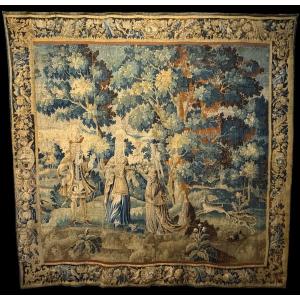
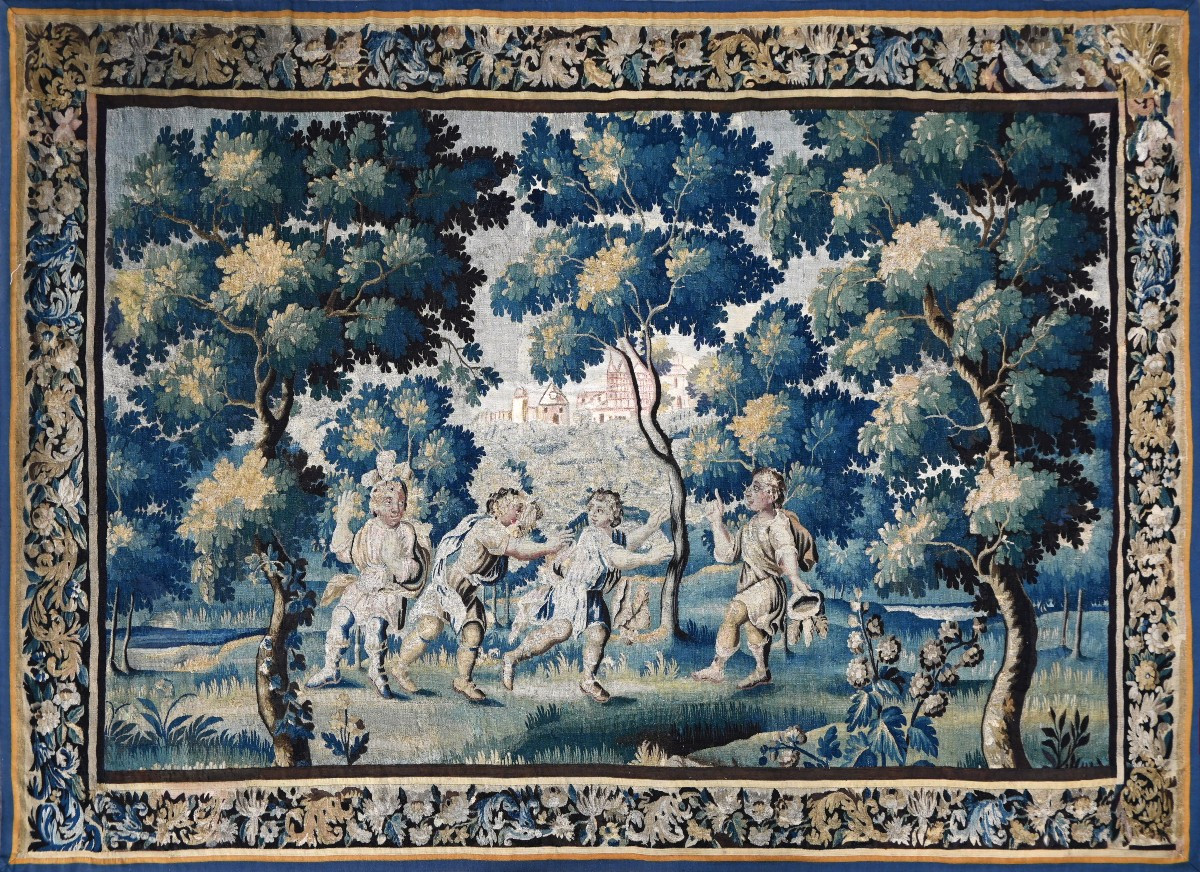
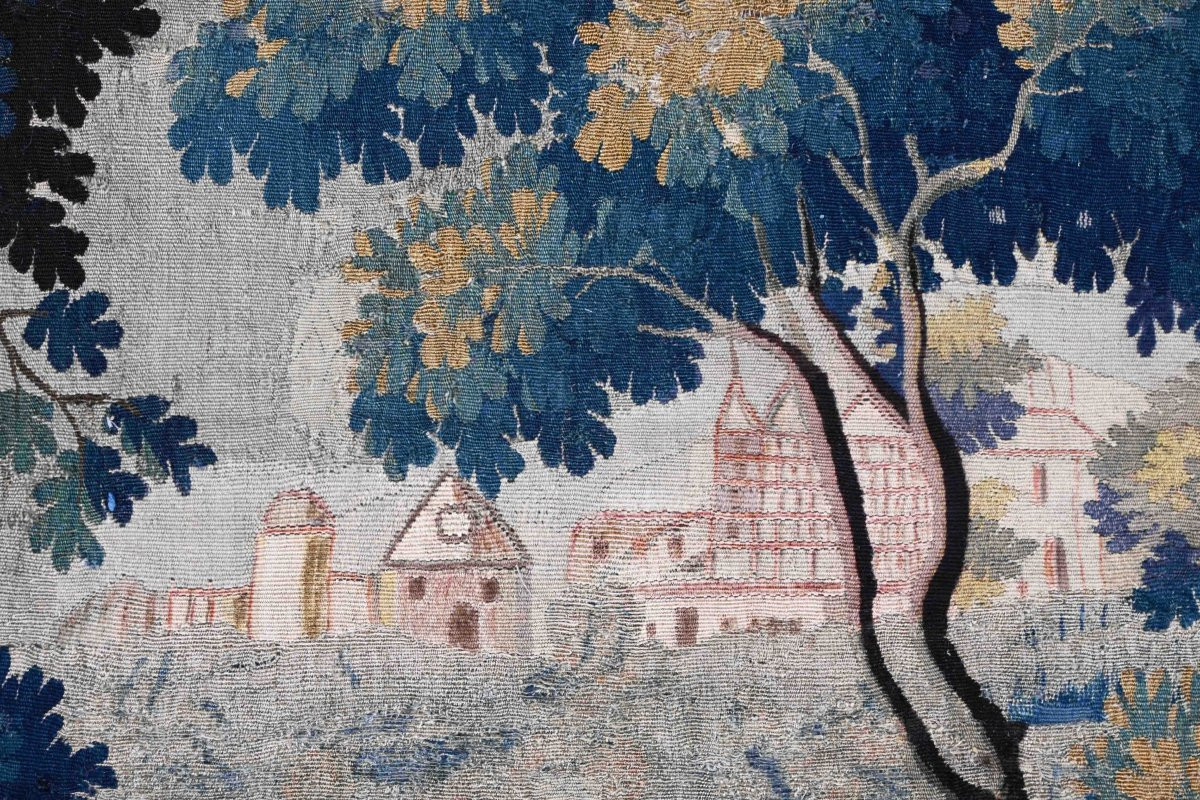
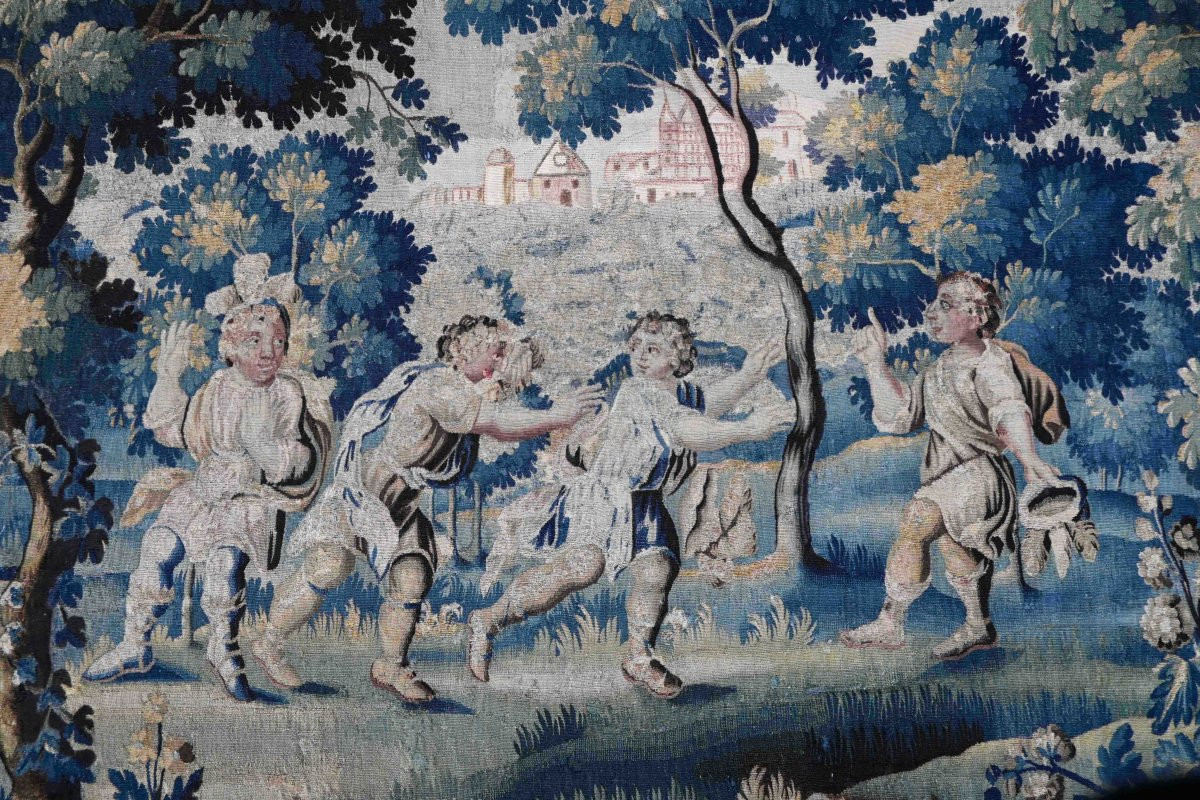
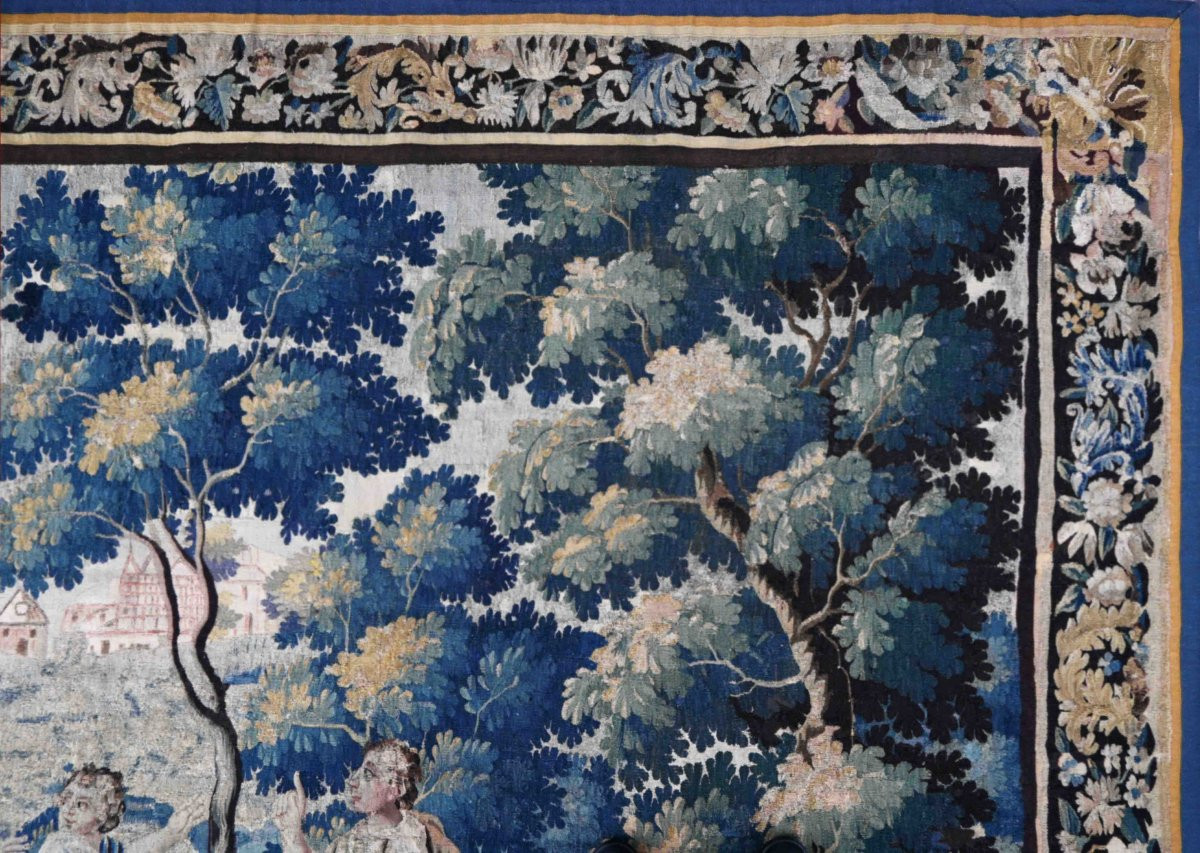
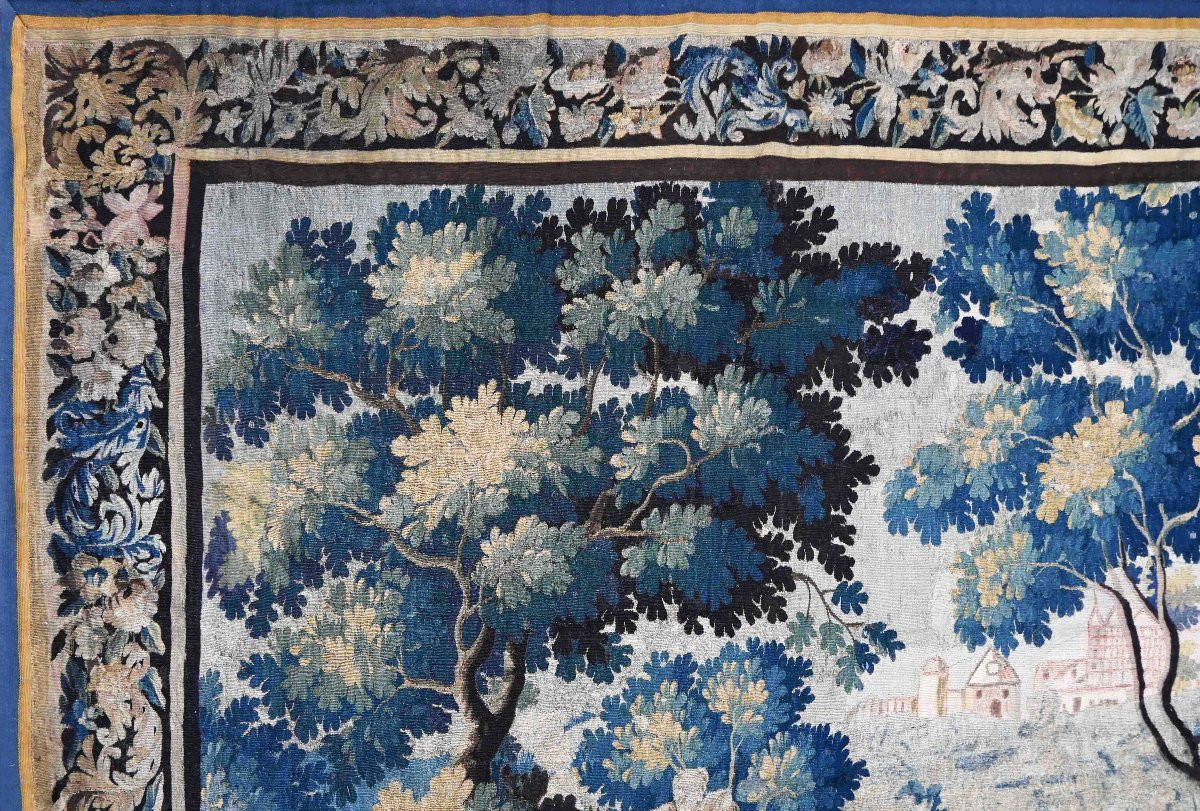
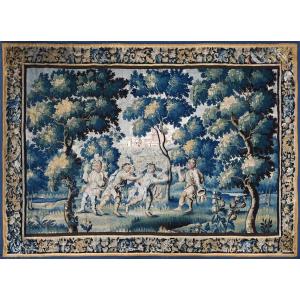
The scene unfolds in a bucolic landscape, dominated by lush vegetation in shades of blue, green, and ochre, characteristic of Flemish tapestries of this period. Tall trees frame the composition, creating a sense of depth and guiding the viewer’s eye toward the background, where a peaceful village with its buildings and a church can be seen—symbols of order and social stability.
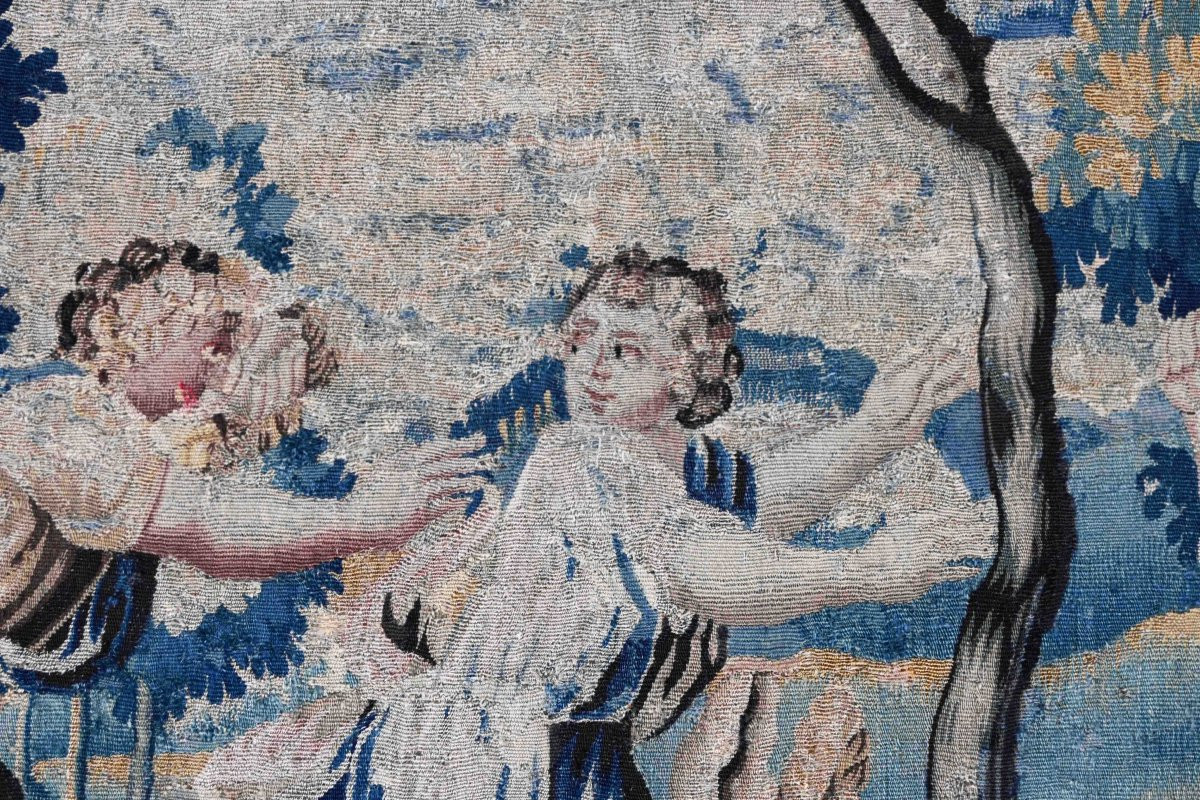
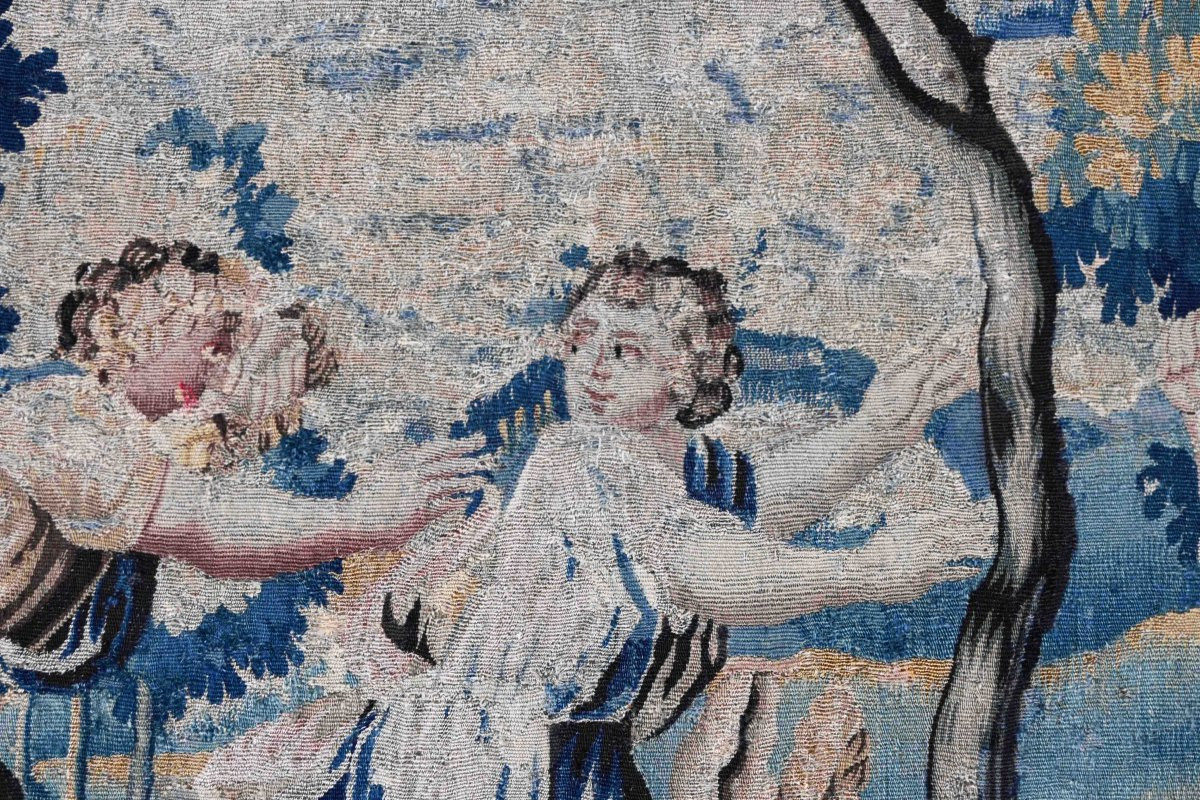
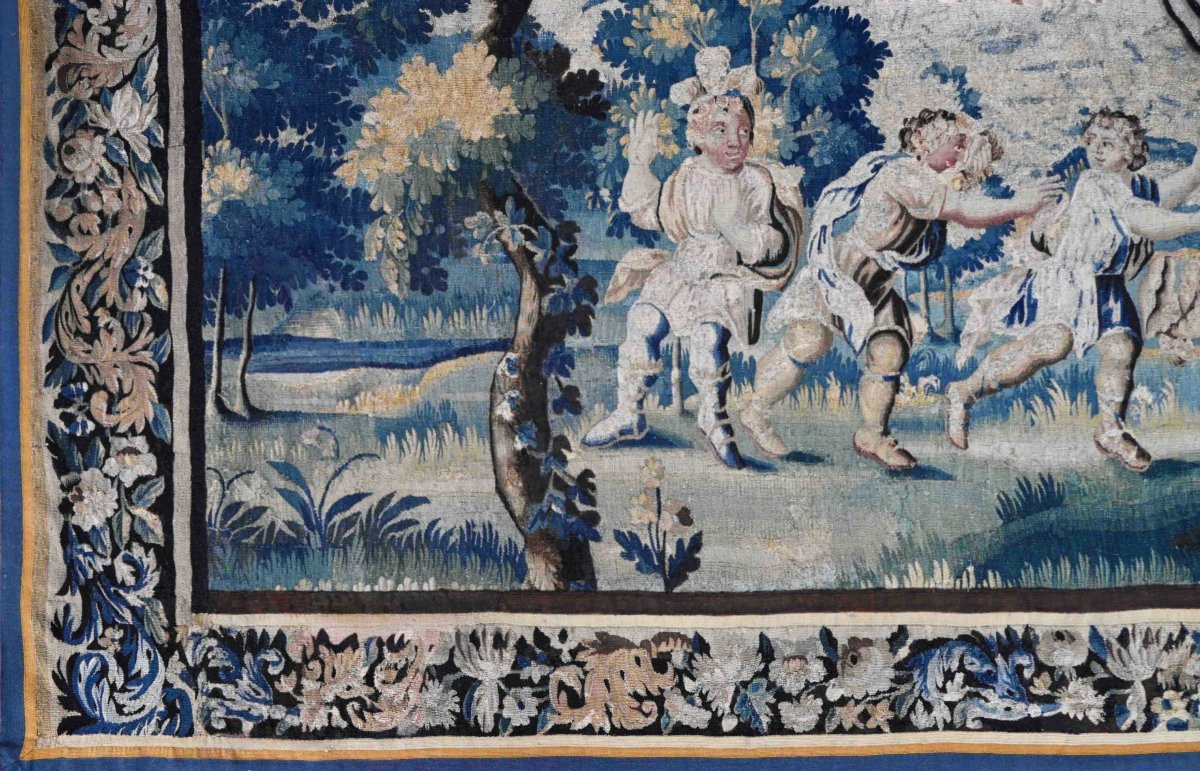
At the center, four children are depicted engaged in play. They wear garments inspired by peasant dress, yet carefully rendered, evoking an idealized vision of childhood rather than a strictly realistic scene. Their postures are lively and expressive: open gestures, bodies in motion, and animated interactions.
The subject: children’s games
The theme of children’s games was very popular in the seventeenth century, particularly in Flanders. It belongs to an artistic tradition that celebrates:
the innocence of childhood
the simple joy of rural life
harmony between humanity and nature
Here, play becomes a symbol of sociability and learning. Through these playful activities, children acquire the rules of communal life: sharing, rivalry, and cooperation. The scene may also be interpreted as an allegory of the cycle of life, in which childhood represents a carefree golden age.
The decorative border
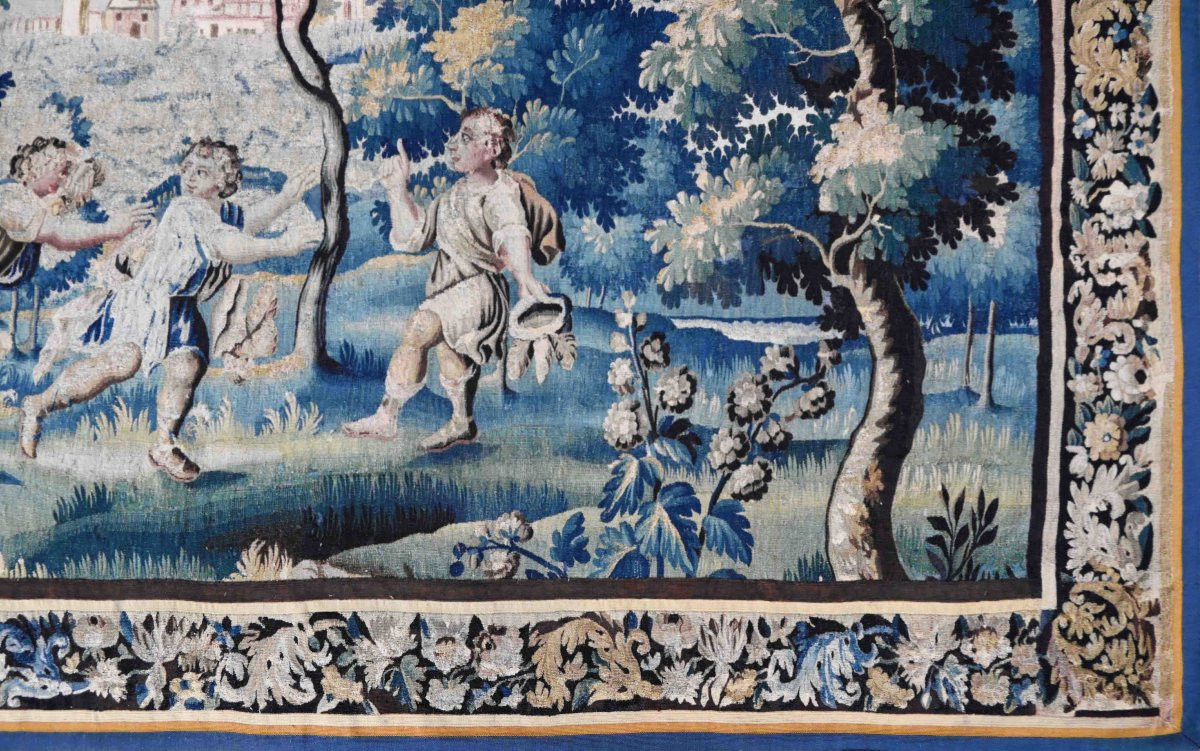
The tapestry is framed by a wide, richly ornamented floral border composed of scrolling foliage, stylized flowers, and leaves. This border is not merely decorative: it emphasizes the precious nature of the work and attests to the high social status of its patron. Tapestries were both works of art and symbols of prestige.
Interpretation and significance
Beyond its charming subject, this tapestry reflects an idealized vision of rural life and childhood, much appreciated by the aristocracy and bourgeoisie of the seventeenth century. It evokes a nostalgia for a simple, ordered world in which nature is generous and humankind lives in perfect harmony with its environment.
The scene unfolds in a bucolic landscape, dominated by lush vegetation in shades of blue, green, and ochre, characteristic of Flemish tapestries of this period. Tall trees frame the composition, creating a sense of depth and guiding the viewer’s eye toward the background, where a peaceful village with its buildings and a church can be seen—symbols of order and social stability.
At the center, four children are depicted engaged in play. They wear garments inspired by peasant dress, yet carefully rendered, evoking an idealized vision of childhood rather than a strictly realistic scene. Their postures are lively and expressive: open gestures, bodies in motion, and animated interactions.
The subject: children’s games
The theme of children’s games was very popular in the seventeenth century, particularly in Flanders. It belongs to an artistic tradition that celebrates:
the innocence of childhood
the simple joy of rural life
harmony between humanity and nature
Here, play becomes a symbol of sociability and learning. Through these playful activities, children acquire the rules of communal life: sharing, rivalry, and cooperation. The scene may also be interpreted as an allegory of the cycle of life, in which childhood represents a carefree golden age.
The decorative border
The tapestry is framed by a wide, richly ornamented floral border composed of scrolling foliage, stylized flowers, and leaves. This border is not merely decorative: it emphasizes the precious nature of the work and attests to the high social status of its patron. Tapestries were both works of art and symbols of prestige.
Interpretation and significance
Beyond its charming subject, this tapestry reflects an idealized vision of rural life and childhood, much appreciated by the aristocracy and bourgeoisie of the seventeenth century. It evokes a nostalgia for a simple, ordered world in which nature is generous and humankind lives in perfect harmony with its environment.
12 800 €
Period: 17th century
Style: Renaissance, Louis 13th
Condition: Perfect condition
Material: Wool
Width: 355 cm
Height: 240 cm
Depth: 0.5 cm
Reference (ID): 1689923
Availability: In stock
Print