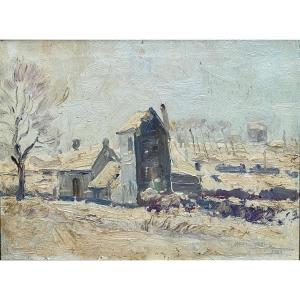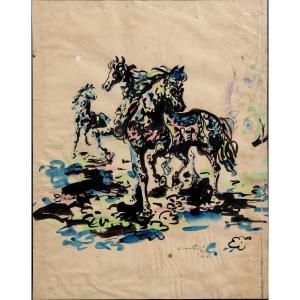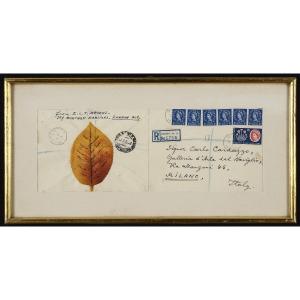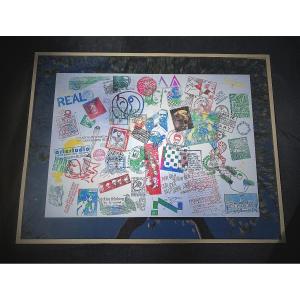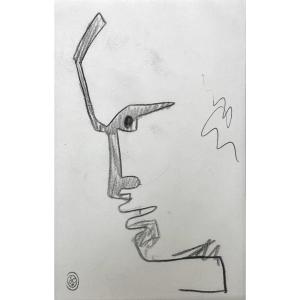
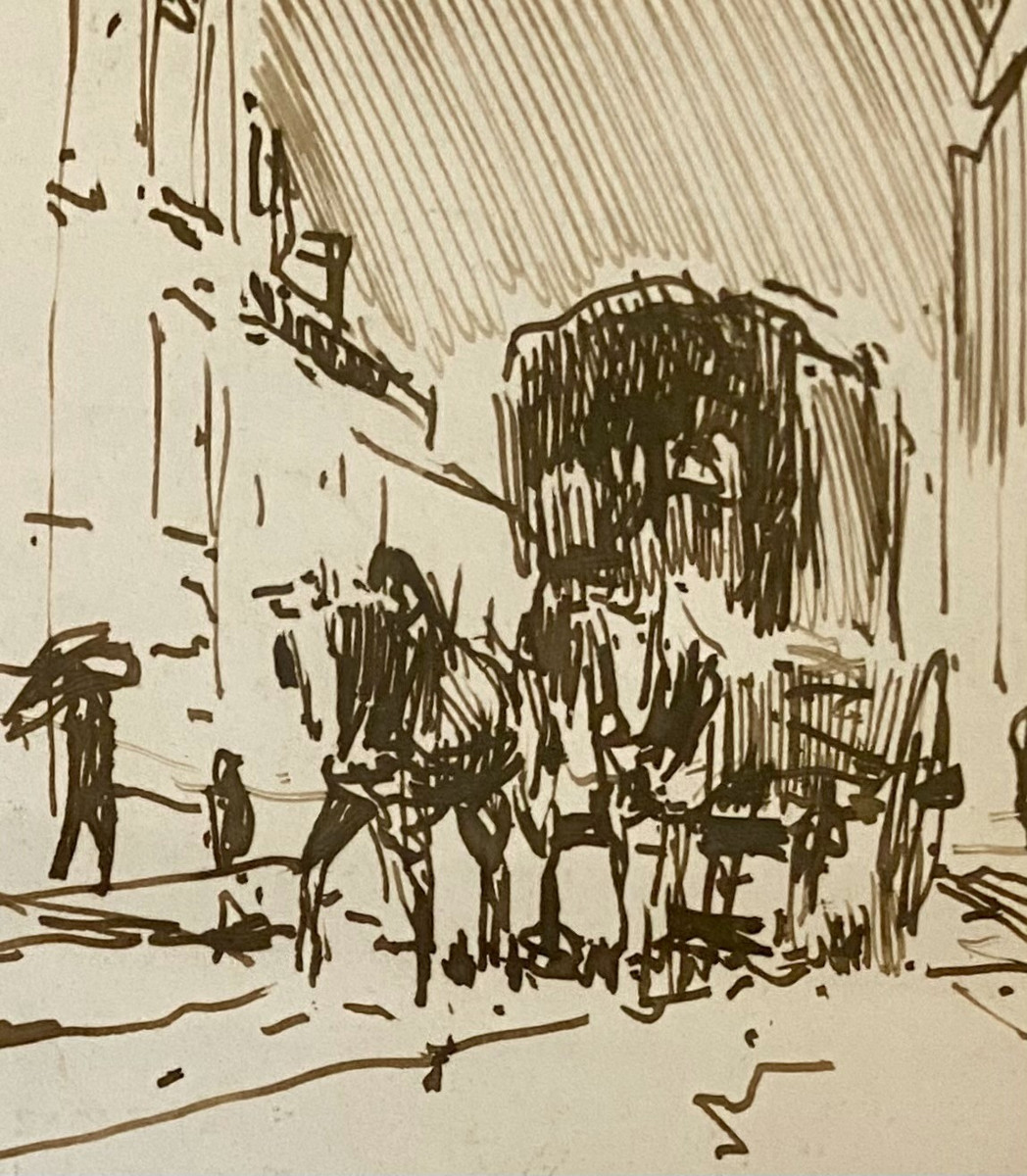



Alfred Théodore Joseph Bastien (brussels, 1873-1955). "snow". India Ink.
Artist: Alfred Bastien
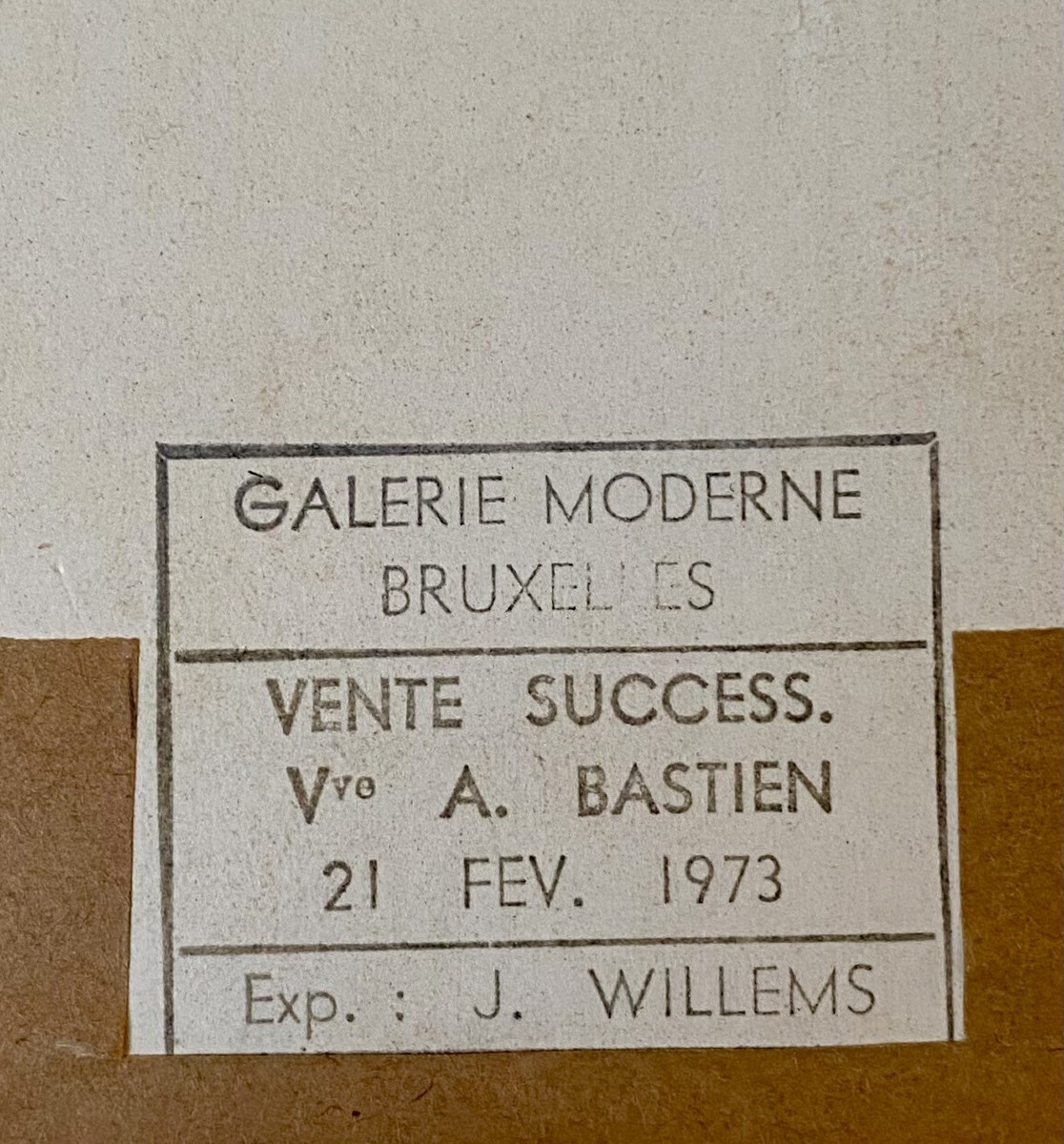
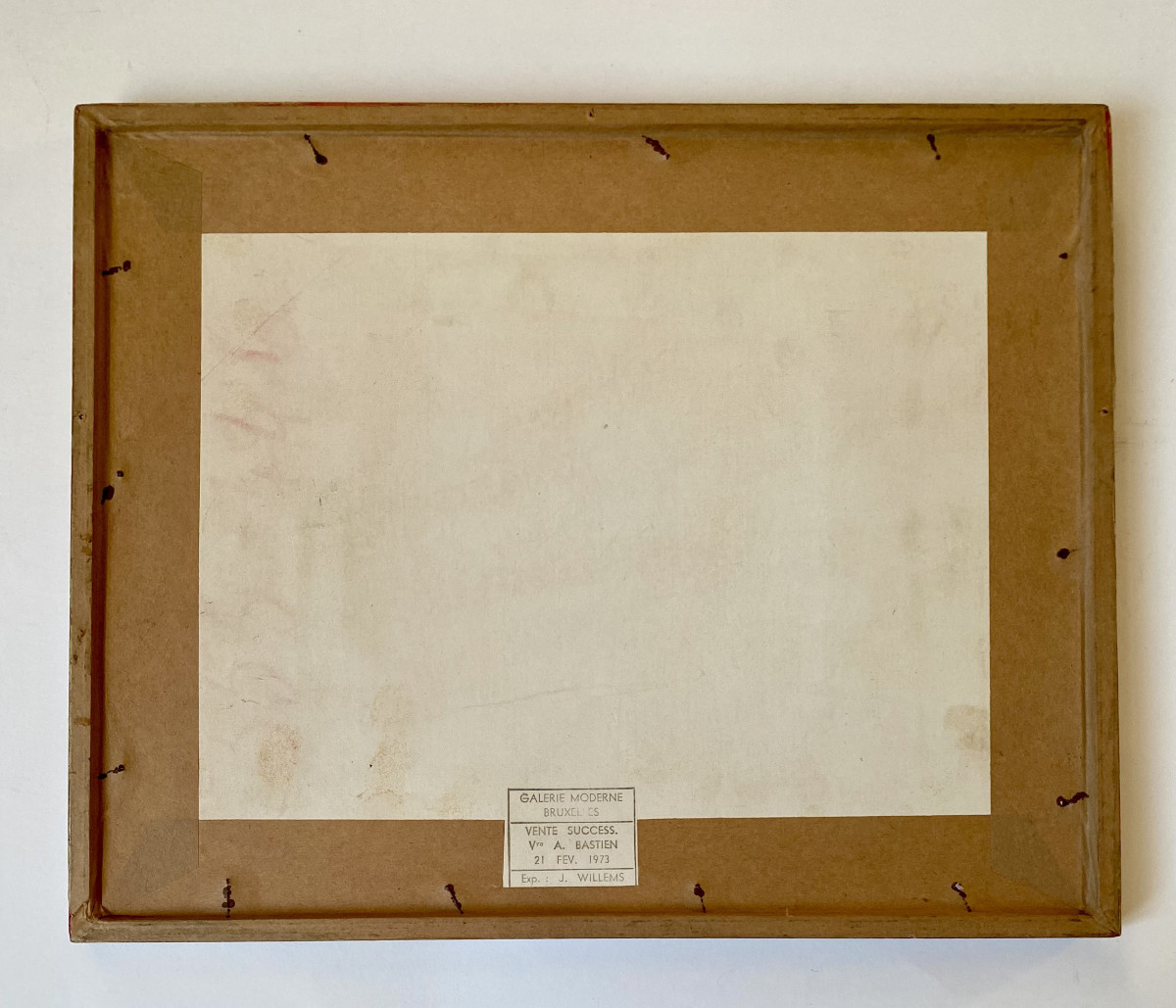
Gilt wood frame (signs of wear). Frame dimensions: 25.5 x 31.5 cm. Drawing dimensions: 12 x 14 cm. Monogrammed, titled "Snow." Excellent condition. Provenance: estate sale in 1973, expert: J. Willems.
All photographs were taken with the glass, hence some reflections or inaccuracies.
Alfred Théodore Joseph Bastien, born in Ixelles (Brussels) in 1873 and died in Uccle (Brussels) in 1955, was a Belgian painter and draftsman. Alfred Bastien studied at the Royal Academy of Fine Arts in Ghent under Jean Delvin in 1882 and at the Royal Academy of Fine Arts in Brussels under Jean-François Portaels in 1891. He then studied at the École des Beaux-Arts in Paris, where he studied the paintings of Courbet and Delacroix. He was influenced by the Impressionists. Like them, he focused on the effects of light and developed a subtle luminism that characterizes his watercolor landscapes, still lifes, and portraits. He visited numerous European countries, North Africa in 1897, the Belgian Congo in 1913, as well as India, Japan, China, and the islands of the South Pacific. During this period, Bastien was also a member of the Brussels-based Labeur circle. In 1911, at the instigation of King Albert, the Belgian government commissioned him, along with Paul Mathieu, Armand Apol, and Philippe Swyncop, to create a Panorama of the Congo for the 1913 Ghent International Exposition. Bastien went into exile in England in October 1914 before enlisting as a war volunteer in 1915. He was assigned to the artistic section of the Belgian army. Bastien was a professor of "painting from nature" at the Royal Academy of Fine Arts in Brussels from 1927 to 1945. Alfred Bastien held the position of director three times: from October 1928 to January 1929, from June 1929 to October 1930, and for a three-year term from September 1935 to September 1938. He also served as interim director of Paul Mathieu's Landscape Painting class following the latter's death for the 1932-1933 academic year. His works are held in the museums of Antwerp, Ixelles, the Royal Museums of Fine Arts of Belgium in Brussels, Ghent, the Charlier Museum, and the Gaspar Museum.
All photographs were taken with the glass, hence some reflections or inaccuracies.
Alfred Théodore Joseph Bastien, born in Ixelles (Brussels) in 1873 and died in Uccle (Brussels) in 1955, was a Belgian painter and draftsman. Alfred Bastien studied at the Royal Academy of Fine Arts in Ghent under Jean Delvin in 1882 and at the Royal Academy of Fine Arts in Brussels under Jean-François Portaels in 1891. He then studied at the École des Beaux-Arts in Paris, where he studied the paintings of Courbet and Delacroix. He was influenced by the Impressionists. Like them, he focused on the effects of light and developed a subtle luminism that characterizes his watercolor landscapes, still lifes, and portraits. He visited numerous European countries, North Africa in 1897, the Belgian Congo in 1913, as well as India, Japan, China, and the islands of the South Pacific. During this period, Bastien was also a member of the Brussels-based Labeur circle. In 1911, at the instigation of King Albert, the Belgian government commissioned him, along with Paul Mathieu, Armand Apol, and Philippe Swyncop, to create a Panorama of the Congo for the 1913 Ghent International Exposition. Bastien went into exile in England in October 1914 before enlisting as a war volunteer in 1915. He was assigned to the artistic section of the Belgian army. Bastien was a professor of "painting from nature" at the Royal Academy of Fine Arts in Brussels from 1927 to 1945. Alfred Bastien held the position of director three times: from October 1928 to January 1929, from June 1929 to October 1930, and for a three-year term from September 1935 to September 1938. He also served as interim director of Paul Mathieu's Landscape Painting class following the latter's death for the 1932-1933 academic year. His works are held in the museums of Antwerp, Ixelles, the Royal Museums of Fine Arts of Belgium in Brussels, Ghent, the Charlier Museum, and the Gaspar Museum.
100 €
Period: 20th century
Style: Modern Art
Condition: Excellent condition
Material: Paper
Length: 31,5 cm
Height: 25,5 cm
Reference (ID): 1689467
Availability: In stock
Print