THIS OBJECT WAS SOLD
Japanese Wakizashi Sword Mounted In Shirasaya With Nbthk Certificate - Edo Period (early 19th Century).
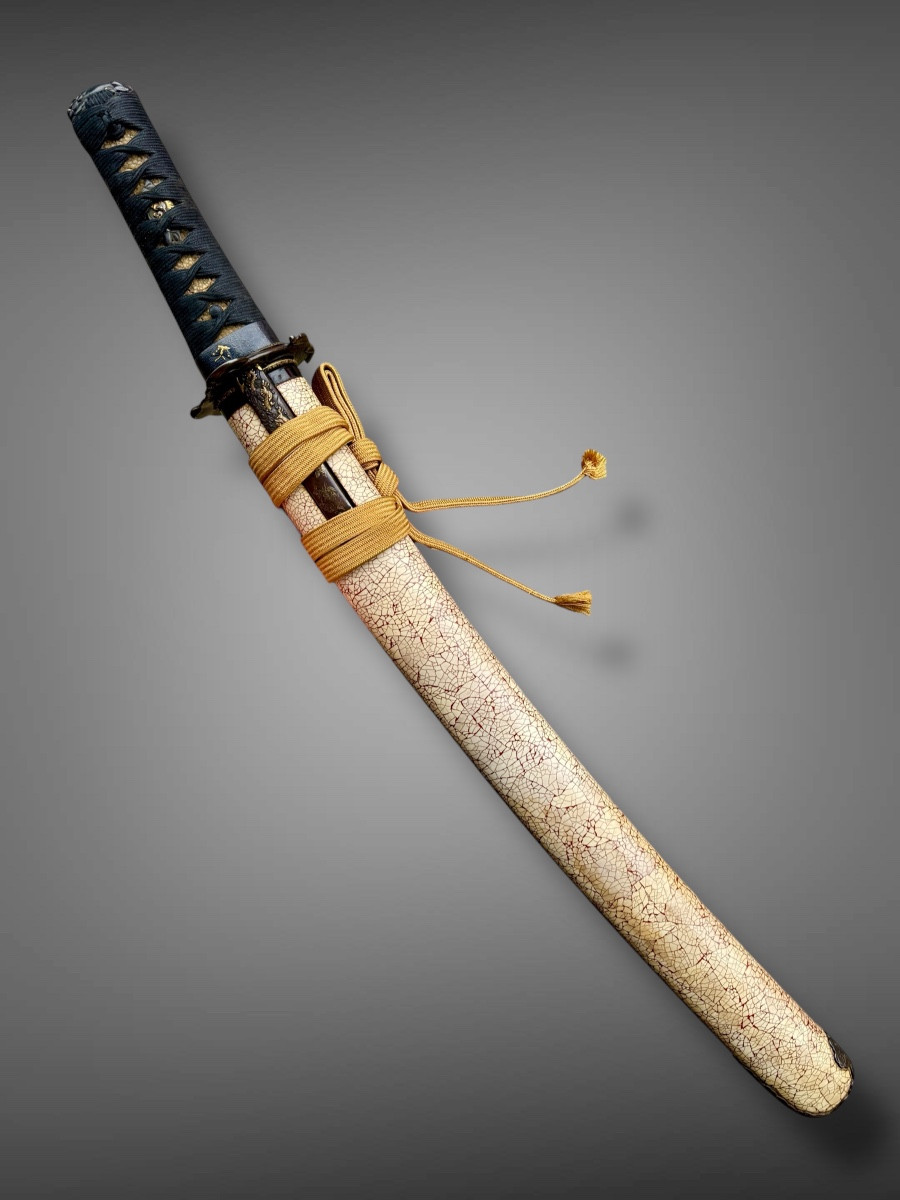
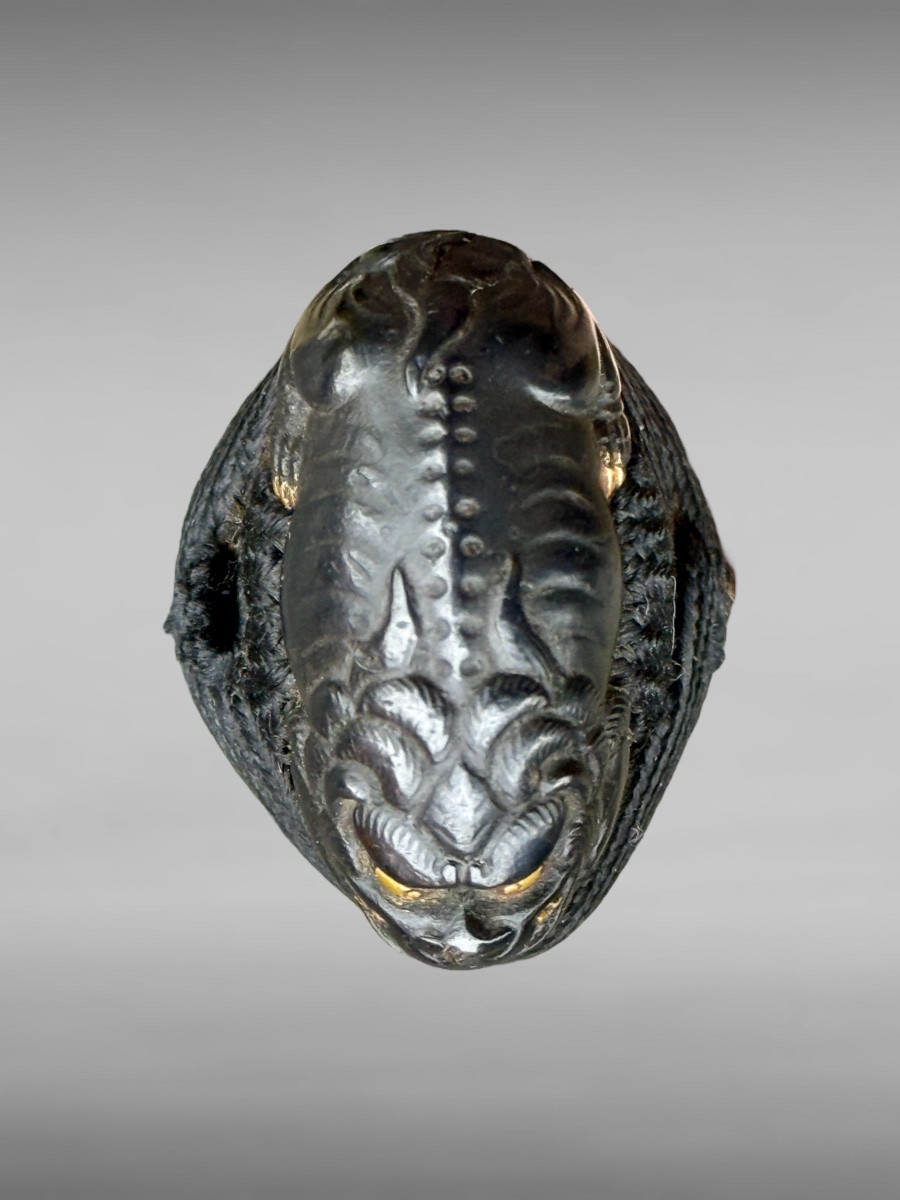
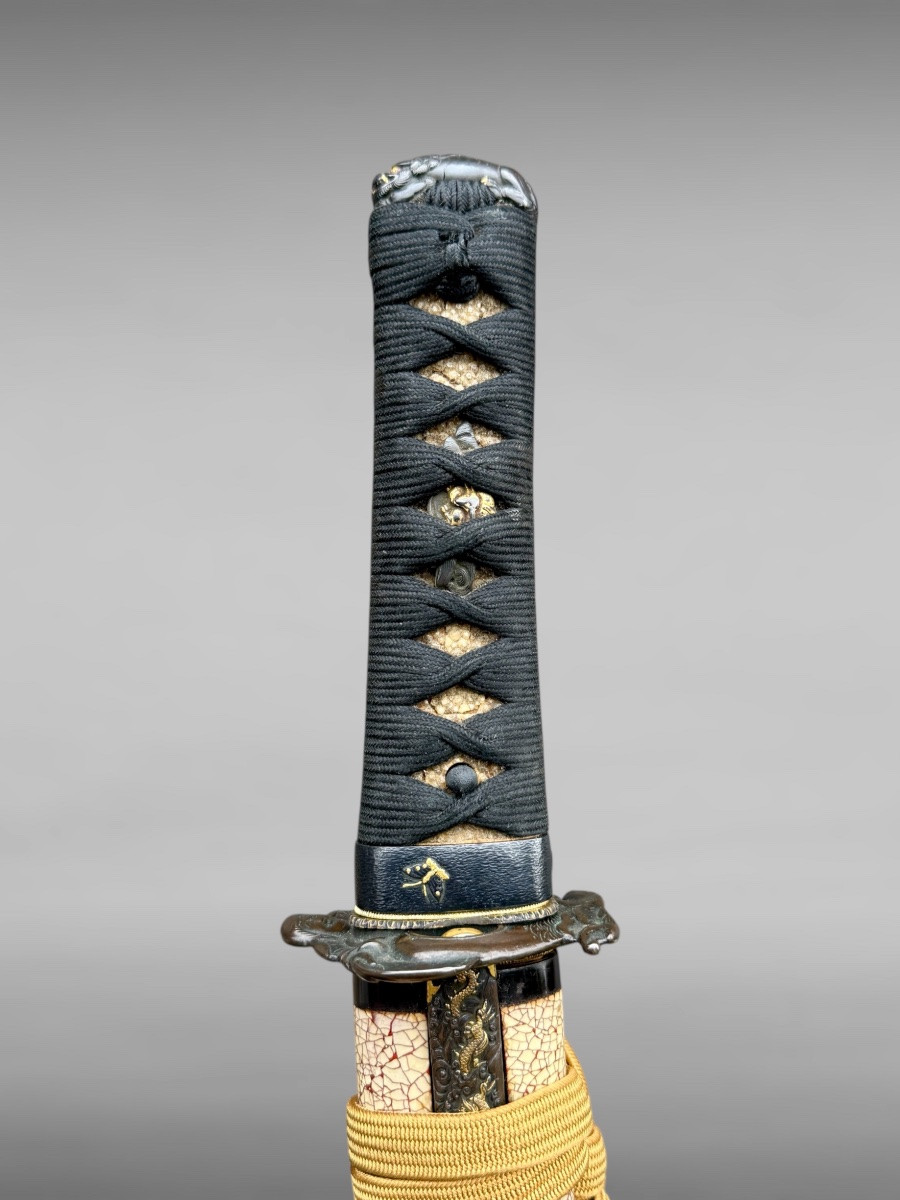
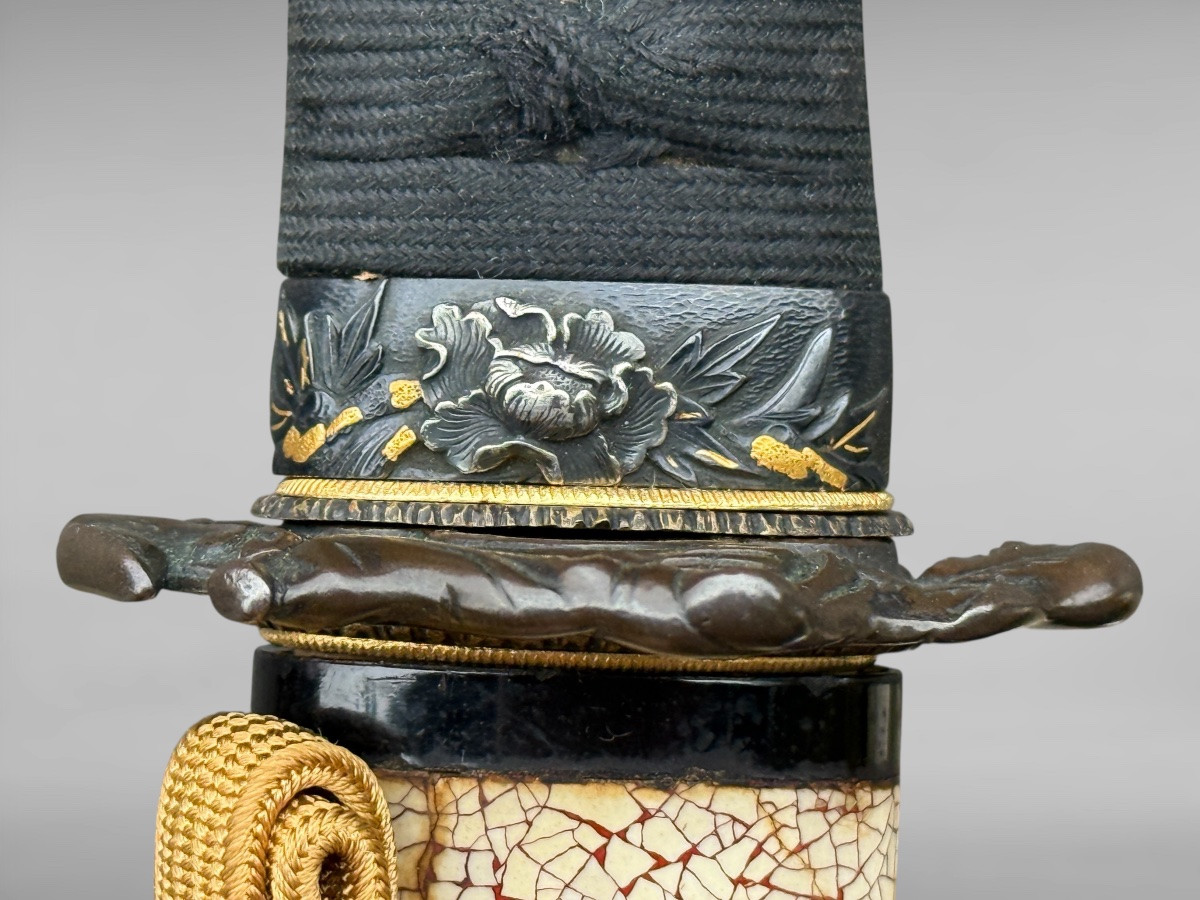
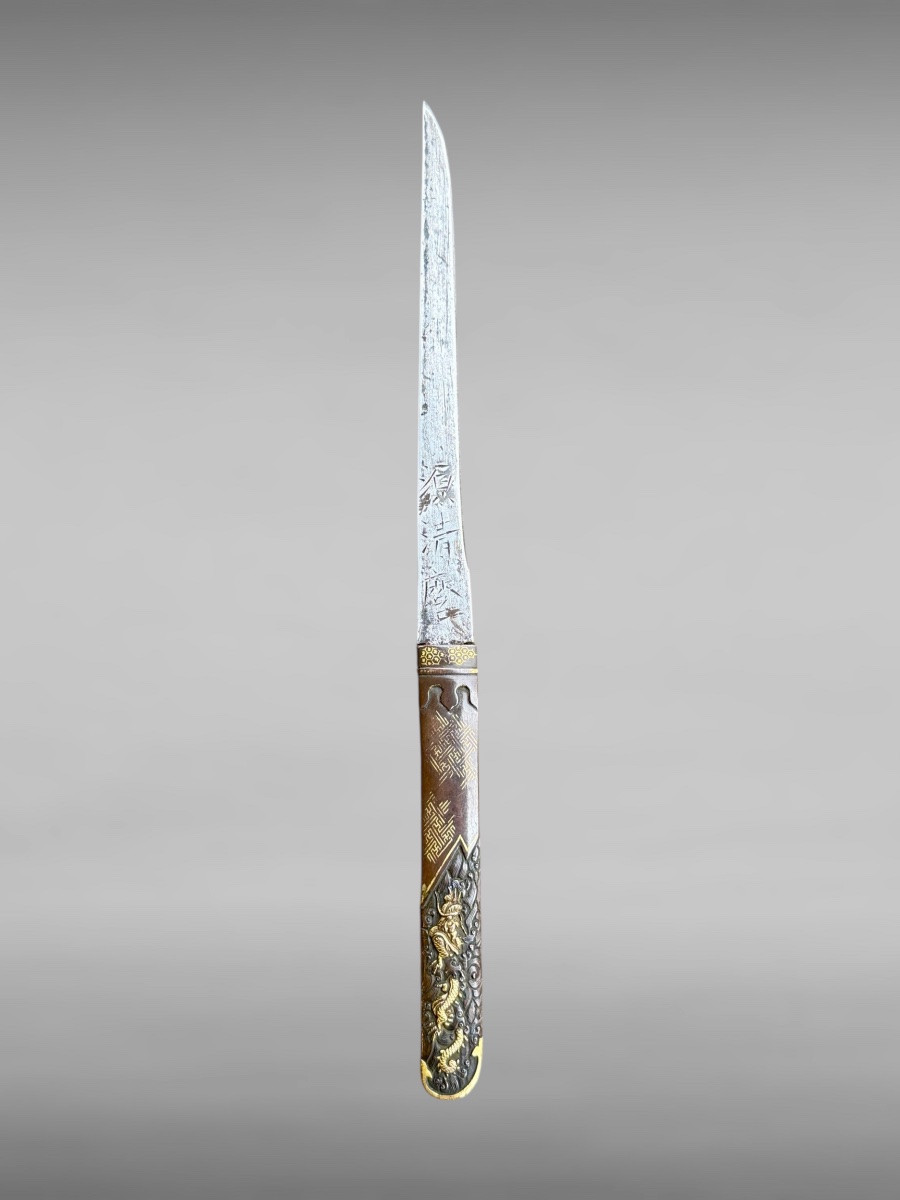
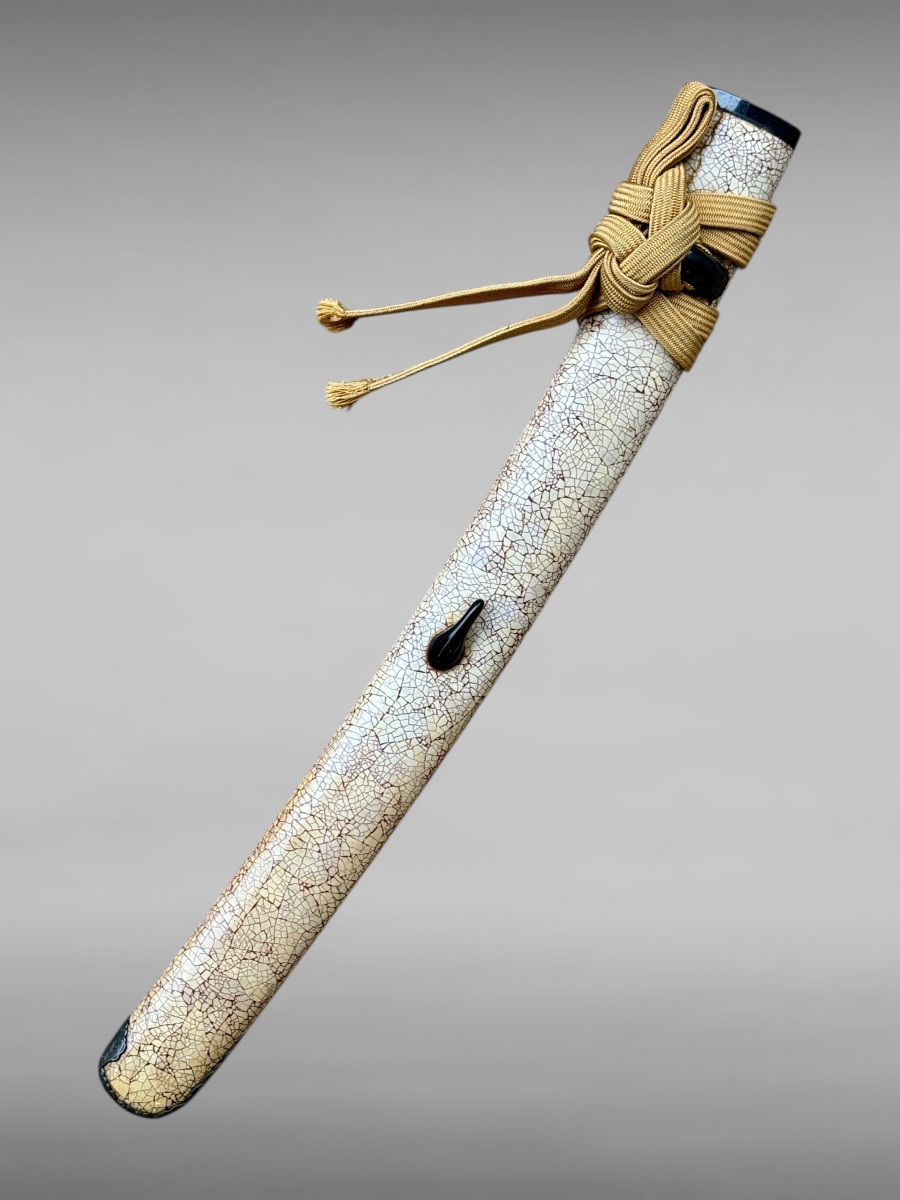
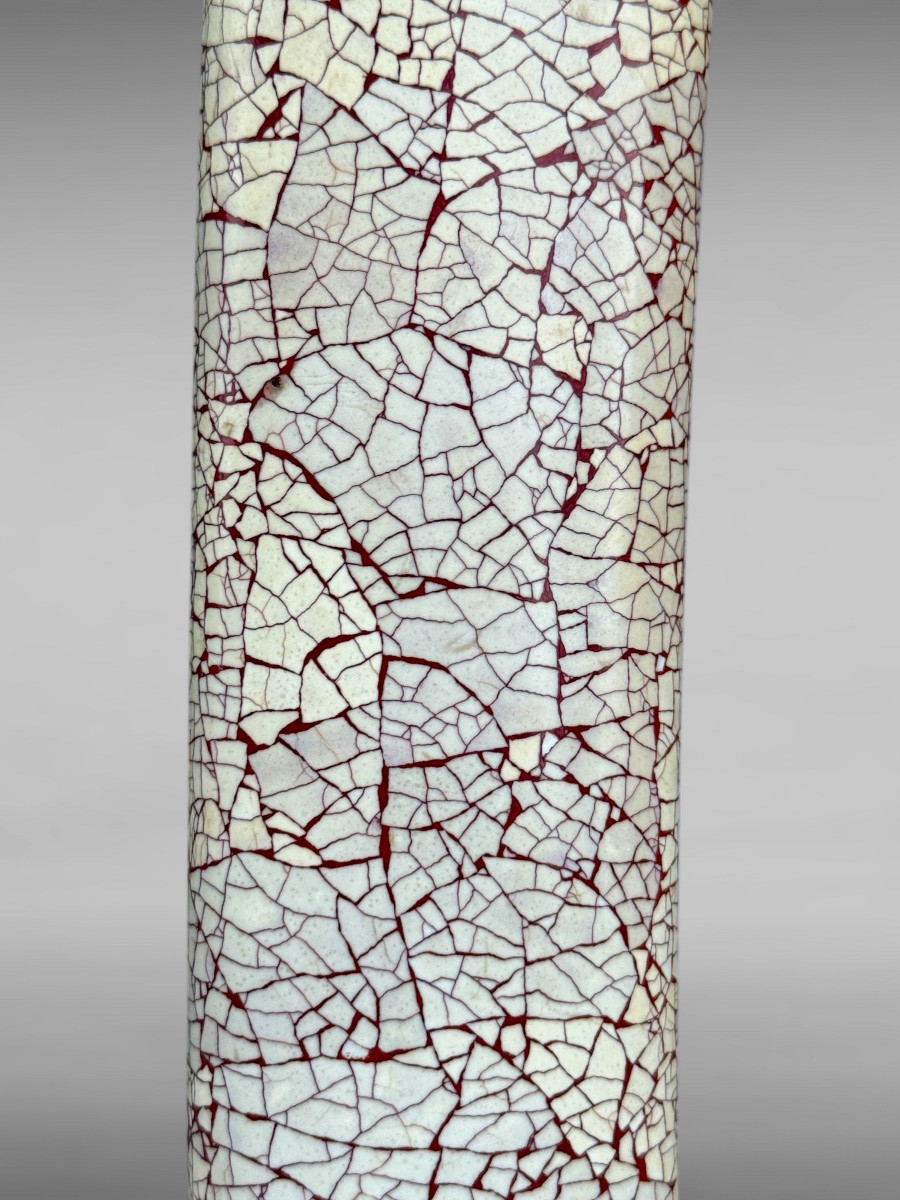
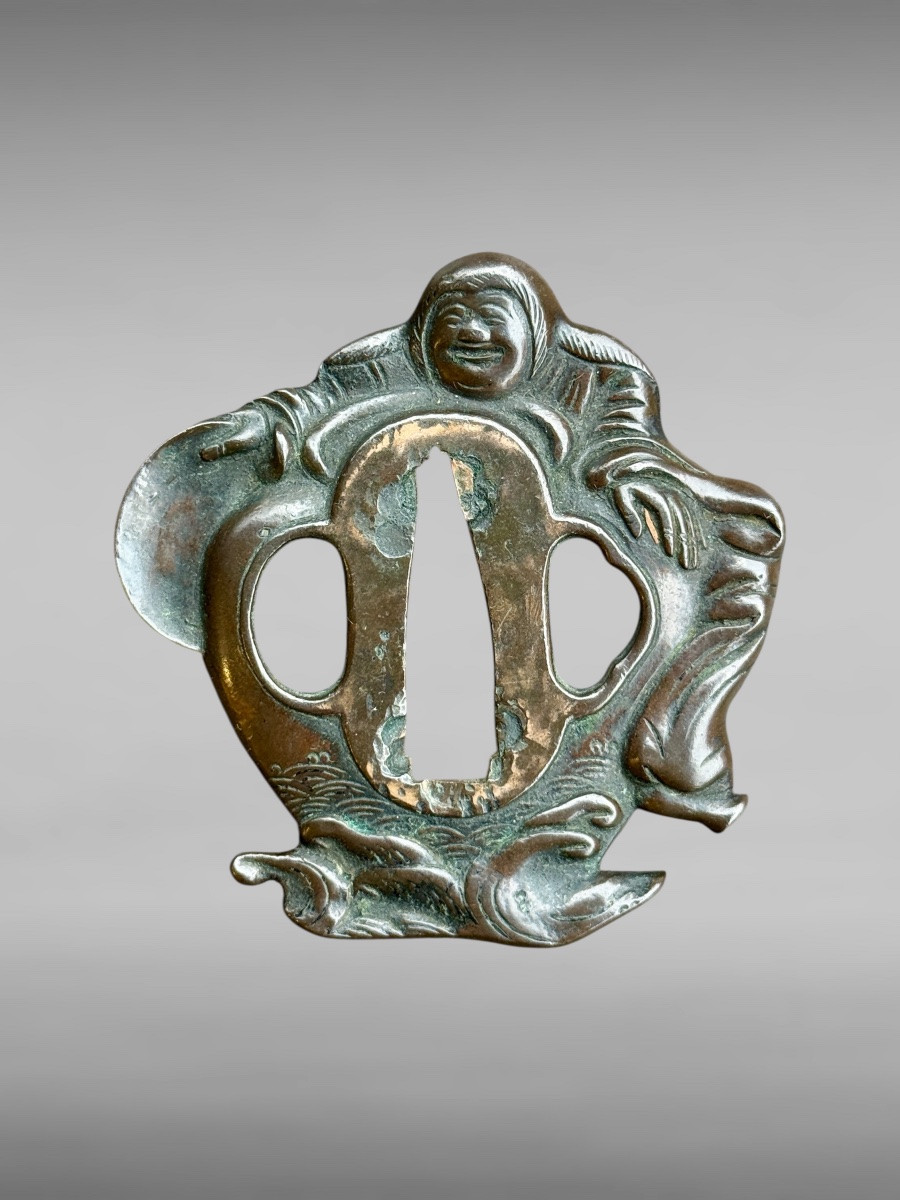
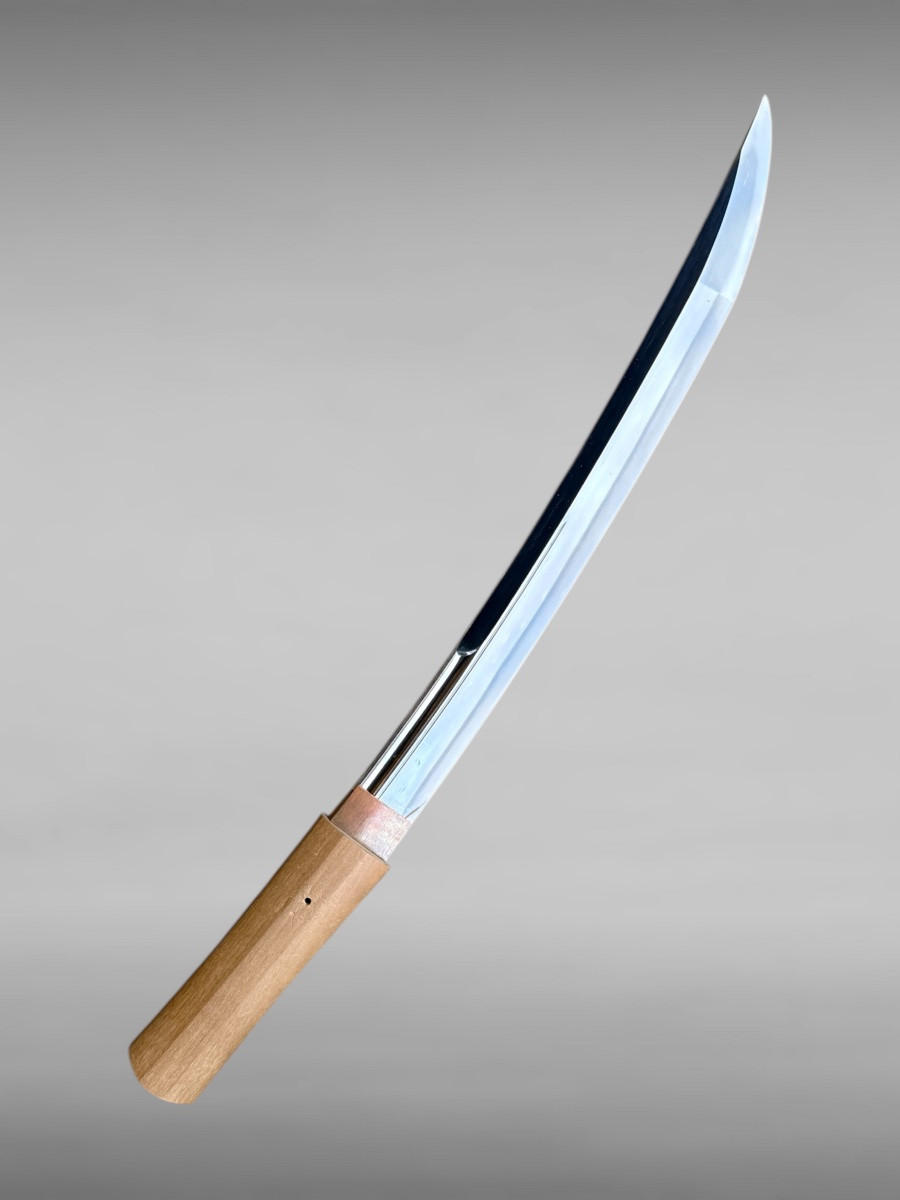
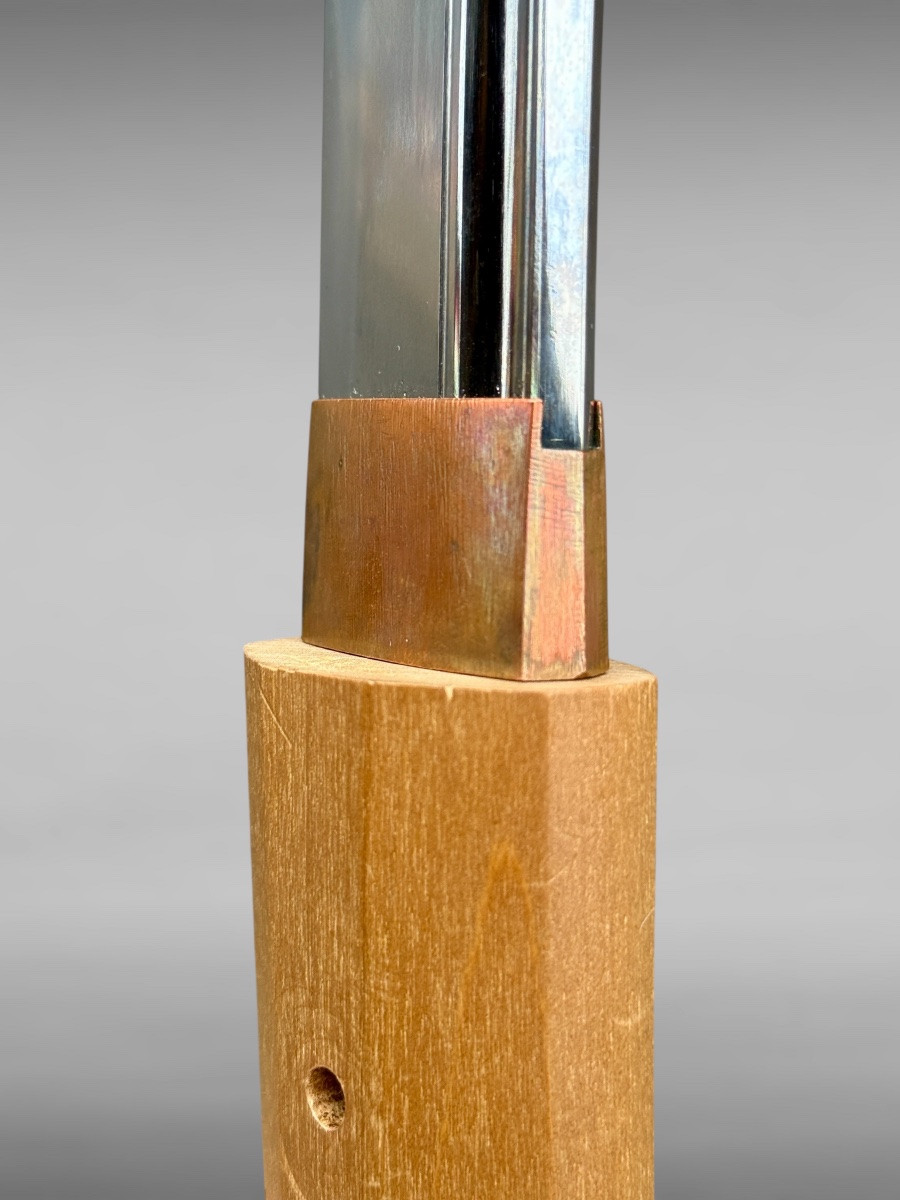
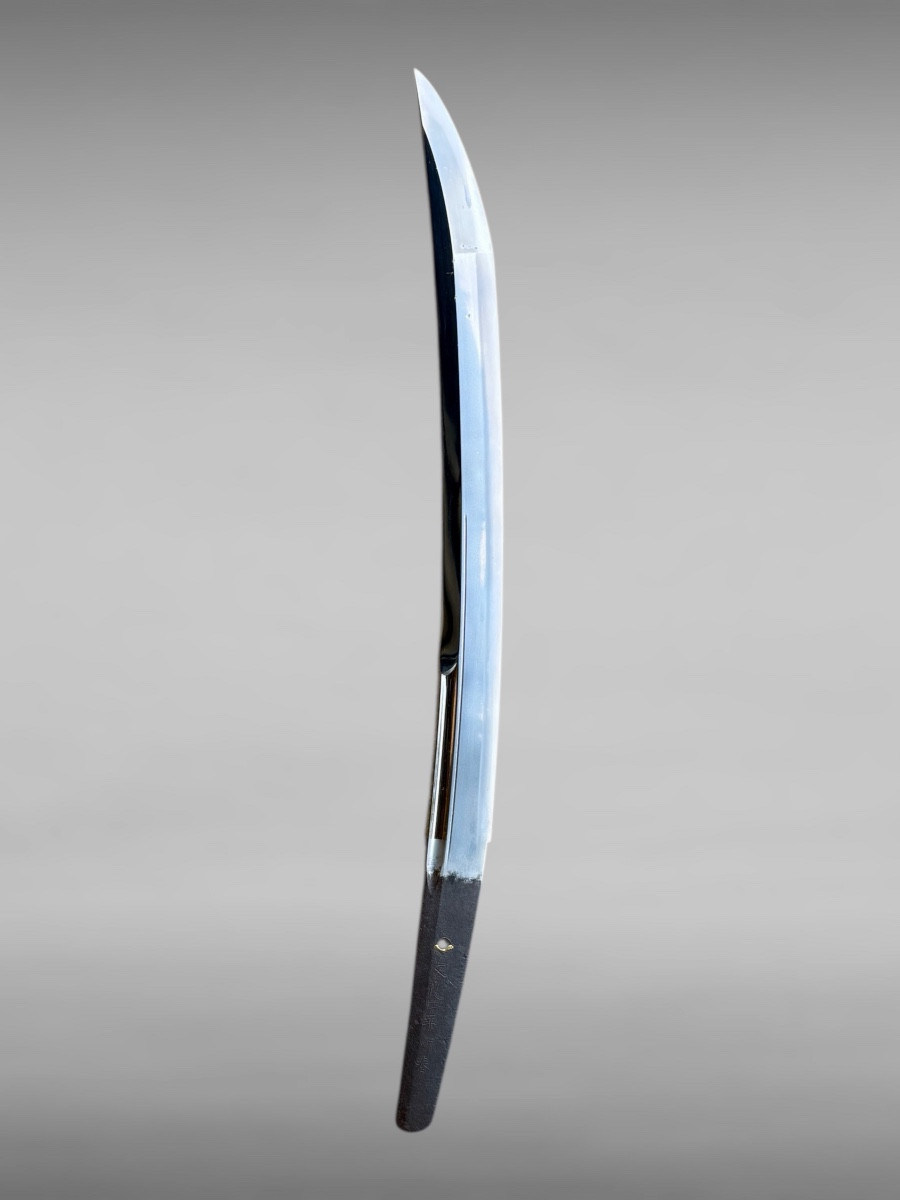
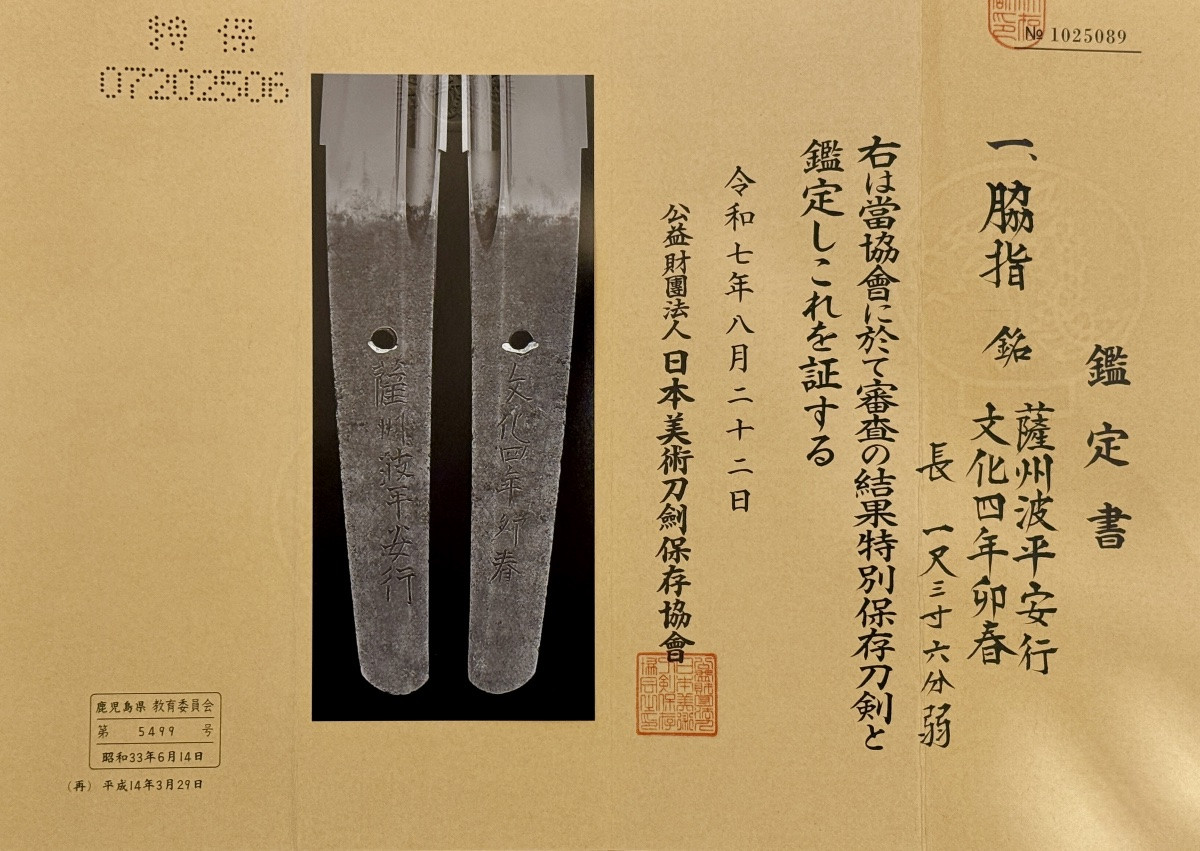
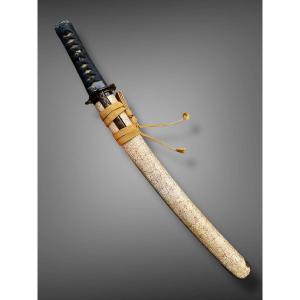


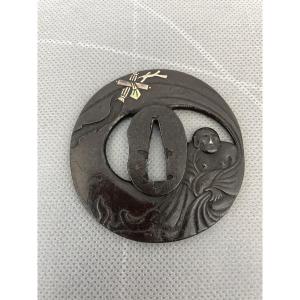
JAPAN - Edo Period (early 19th century). Samurai wakizashi in shirasaya style. Zoomorphic kashira in chased copper, patinated black and gold, depicting a shishi (a type of fish). Fushi in finely chased copper, patinated black, silver, and gold, depicting peonies and a butterfly on a textured background. Tsuka in wood covered with stingray skin and black silk braid. Menuki in chased, patinated, and gilded copper, seemingly depicting a rabbit. Tsuba in stamped and chased copper in the form of a shojo (a type of wooden spoon) in front of a sake jar, signed. Saya in wood, red lacquer, and eggshell; kojiri in chased and patinated copper depicting stylized clouds. Kozuka in chased, patinated, and gilded copper depicting a dragon in clouds, the blade signed. Simple habaki in copper. Straight blade, regular hamon, straight and well-defined, the tang pierced once, signed "Sasshu Naminohira Yasuyuki Bunka 4 n'en". Sold with stand, silk carrying case, and NBTHK Hozon certificate. NBTHK, also known as Nihon Bijutsu Touken Hozon Kyokai (the Society for the Preservation of Japanese Art Swords), is one of the oldest Japanese sword evaluation organizations in modern Japan. Dimensions: 61 x 7 x 6.5 cm. Blade length with tang: 57 cm. Cutting edge length: 44.2 cm. Blade weight: 535 g. Curvature (sori): 1.2 cm. Notes: Naminohira was a school of swordsmiths in Satsuma from the Heian period until the end of the Edo period.
Explore similar pieces and discover your ideal find:
Edged Weapons